South Korea keen to market nuclear technology to United Arab Emirates, and missile technology, too.

South Korea president, in UAE, backs return to nuclear power
MRO, ABU DHABI, United Arab Emirates (AP) 16 Jan 23, – South Korean President Yoon Suk Yeol said on Monday that his nation’s efforts to be carbon neutral by 2050 would rely in part on returning to nuclear power, even though his predecessor had tried to move away from atomic power.
Yoon’s comments at a summit in the United Arab Emirates, made in front of the country’s leader, Sheikh Mohammed bin Zayed Al Nahyan, served to underline Seoul’s commitment to nuclear power as it works to finish the Arabian Peninsula’s first atomic power plant. That could see South Korea in line for lucrative maintenance contracts and future projects in the UAE, which Seoul has grown closer to over recent years.
Yoon’s predecessor, President Moon Jae-in, sought to move South Korea away from nuclear power amid safety and graft scandals and Japan’s 2011 Fukushima nuclear disaster………..
Yoon traveled later Monday to the Barakah nuclear power plant in Abu Dhabi’s far western desert near Saudi Arabia with Sheikh Mohammed before a planned business summit back in the capital.
On his arrival back, Yoon told the summit that, using the Barakah plant as an example, he hoped the Emirates and South Korea could expand this “new model of cooperation” to include nuclear fuel, small reactors and other joint advances to third countries…….
Yoon’s embrace of nuclear power also provides a guarantee of sorts that South Korea remains invested in servicing the Barakah plant. France, also home to nuclear power plants and another Emirati business and military ally, has sought contracts here as well.
Already, Yoon’s four-day trip the UAE has seen a promise from Sheikh Mohammed to invest some $30 billion in the country. Heavyweight business leaders from Hyundai, Samsung and other companies also are taking part in the state visit.
On Sunday, Yoon also visited South Korean special forces stationed in the United Arab Emirates, a murky deployment that grew out of Seoul’s deal over the nuclear power plant. The Akh unit is comprised of some 150 troops………..
Already, the Emiratis have paid $3.5 billion for the Cheongung II, or “Heaven’s Bow,” surface-to-air missile system from South Korea …. https://www.mromagazine.com/2023/01/16/south-korea-president-in-uae-backs-return-to-nuclear-power/
Poland’s energy company agrees to buy France’s NOT YET DESIGNED so-called “small” Nuward nuclear reactor!

Poland’s Respect Energy considers deploying French SMR design
WNN, 16 January 2023
Polish renewable energy trader Respect Energy has signed an agreement with EDF to cooperate on the development of nuclear power projects in Poland based on France’s Nuward small modular reactor (SMR) technology.
“This agreement marks Respect Energy’s and EDF’s firm intention to jointly proceed with the development of SMR projects in Poland and confirms the strong interest towards Nuward technology which has been selected by the energy trader to expand its footprint in the nuclear energy field,” the companies said in a joint statement. “Respect Energy and EDF will now jointly start the evaluation process of specific new greenfield sites and continue to work on detailing the business and financing plans for this endeavour.”
In October 2021, EDF made an offer to the Polish government to build as many as six EPR units. The “non-binding preliminary offer” represented a range of options for Poland. It detailed the engineering, procurement and construction that would be needed for four to six EPR units, at either two or three sites. The EPR units would produce 1650 MWe each if selected – the Polish government announced late last year that it had selected Westinghouse technology for at least the first three of its planned fleet of reactors……………….
The Nuward project was launched in September 2019 by the French Alternative Energies and Atomic Energy Commission (CEA), EDF, Naval Group and TechnicAtome. The Nuward – consisting of a 340 MWe SMR plant with two pressurised water reactors (PWRs) of 170 MWe each – has been jointly developed using France’s experience in PWRs……………..
Nuward is currently in the conceptual design phase, which focuses on choosing the major technical features while delivering real competitive advantages. Belgian engineering firm Tractebel was contracted in May last year to conduct studies for the completion of the conceptual design of “the first SMR in the European Union”.
The next phase of the project, the basic design completion, is expected to start this year and to be completed by 2025. The design should be in the “advanced concept phase” between 2025 and 2030, during which time Nuward is expected to be certified and the supply chain developed.
Construction of a demonstration Nuward SMR is expected to start in 2030. The construction of that unit is anticipated to take three years.
In June, it was announced the Nuward design will be the case study for a European early joint regulatory review led by the French nuclear safety regulator with the participation of the Czech and Finnish nuclear regulators….. https://world-nuclear-news.org/Articles/Poland-s-Respect-Energy-considers-deploying-French
A bit of panic in the UK small nuclear reactor lobby?

‘No regrets?”
Quite a lot of people have regrets about the introduction of nuclear power.
And that’s even when the reactor types have been tested.
The new gee-whiz nuclear reactors haven’t even been tested.
Pipeline of ‘no-regrets’ new nuclear schemes needs ‘expediting’
New Civil Engineer16 JAN, 2023 BY ROB HORGAN
A pipeline of “no-regrets” new nuclear schemes must be fast-tracked if the UK is to meet its net zero carbon emission targets, according to an independent [how independent?] review set up to assess the UK’s decarbonisation plans.
It is one of 129 recommendations made by former energy minister Chris Skidmore in his government-ordered net zero review titled Mission Zero.
The report calls for the formation of Great British Nuclear (GBN) to be “expedited in early 2023” so that a “clear roadmap” of future schemes can be developed this year to tackle “rising power demand”.
The government first announced its intention to set up GBN to develop a project pipeline in its British Energy Security Strategy published in April last year.
Skidmore concludes that speeding up the formation of GBN will address industry concerns about a “lack of clarity on the pathway” to achieving the UK government’s ambition for nuclear energy to provide a quarter of power consumed within the country. (Nuclear energy currently supplies 15% of the UK’s power needs.)
The review concludes: “Building new nuclear is a no-regrets option, despite high upfront costs and long construction times”……………….

- YOU ARE HERE:LATEST
Pipeline of ‘no-regrets’ new nuclear schemes needs ‘expediting’
16 JAN, 2023 BY ROB HORGAN
A pipeline of “no-regrets” new nuclear schemes must be fast-tracked if the UK is to meet its net zero carbon emission targets, according to an independent review set up to assess the UK’s decarbonisation plans.
It is one of 129 recommendations made by former energy minister Chris Skidmore in his government-ordered net zero review titled Mission Zero.
The report calls for the formation of Great British Nuclear (GBN) to be “expedited in early 2023” so that a “clear roadmap” of future schemes can be developed this year to tackle “rising power demand”.
The government first announced its intention to set up GBN to develop a project pipeline in its British Energy Security Strategy published in April last year.
Skidmore concludes that speeding up the formation of GBN will address industry concerns about a “lack of clarity on the pathway” to achieving the UK government’s ambition for nuclear energy to provide a quarter of power consumed within the country. (Nuclear energy currently supplies 15% of the UK’s power needs.)
The review concludes: “Building new nuclear is a no-regrets option, despite high upfront costs and long construction times.
“In view of rising power demand, nuclear energy can provide reliable baseload power which is not weather dependent and can provide other services to power networks.”
It adds: “To achieve affordability and efficiency, the Government needs to commit to funding a fleet of projects. Recognising the start times for new build nuclear, a clear roadmap for nuclear deployment up to 2035 is required.”
The government is currently committed to building Sizewell C, while construction of Hinkley Point C continues to gather pace. Ambitions to develop a fleet of small nuclear reactors has also been widely supported by government in the past few years.
Skidmore’s review concludes that as well as delivering a pipeline of projects, the government must act to remove barriers to its nuclear ambitions.
It identifies “the main barrier for new nuclear projects is the need for stable, long-term policy and funding commitments given the long timeframes involved in the building of nuclear plants”.
It also points out that “rapid expansion of nuclear power could lead to some bottlenecks in supply chains and skills pools”.
However, the report stresses that “understanding the timings of different projects” would allow “any supply chain and skills pinch points [to] be identified early, allowing for coordinated action to prevent bottlenecks”.
The review also concludes that streamlining planning and consenting decisions would “ensure nuclear projects are not unnecessarily delayed”. Likewise, Skidmore’s review calls for the lengthy protocols required for innovations like SMRs to be accelerated.
National Infrastructure Commission chair Sir John Armitt supports Skidmore’s calls for clarity and accelerated action.
He said: “Chris Skidmore’s clarity in his call for accelerated action is as compelling as it is commendable, nailing the argument that inaction now will cost us all in the long run.
“Given the economic opportunities offered by leading the pack internationally, securing policy and funding stability over the coming years is paramount.”

Nuclear energy recommendations made in Skidmore’s net zero review:
- Expedite the set-up of Great British Nuclear in early 2023, ensuring required funding and skills are in place.
- Government and GBN to set out clear roadmap in 2023, including interim targets to reach 2050 ambition, and government to ensure funding is in place. As part of the roadmap, government should assess the possibility to increase the current ambitions, supporting the development of supply chain to service a fleet of projects.
- Roadmap to set out clear pathways for different nuclear technologies (including small modular reactors) and the selection process. This should consider how to use programmatic approach to deliver further cost reductions in a competitive environment.
- Government to deliver on siting strategy by 2024
UK police powers increased, to shut down climate protests
The police are to be given powers to shut down protests before they cause
widespread disruption, under plans being announced by ministers today. In a
move to clamp down on so-called guerrilla tactics used by groups such as
Just Stop Oil and Insulate Britain, officers will for the first time be
allowed to shut down protests before they cause disruption.
They will also
be able to treat a series of protests by the same group as one incident
when defining what can be classed as “serious disruption” under the
Public Order Bill going through parliament. The measures are designed to
give more clarity to the police about when they can intervene to disrupt
protests such as the blocking of roads or slow marching to cause
disruption.
Times 16th Jan 2023
Renewable energy is the only credible path forward -António Guterres

Renewable energy is the only credible path forward if the world is to avert
a climate catastrophe, UN Secretary-General António Guterres said on
Saturday, outlining a five-point plan for a just transition.
“Only renewables can safeguard our future, close the energy access gap, stabilize
prices and ensure energy security,” he said in a video message to the
13th Session of the International Renewable Energy Agency (IRENA) Assembly,
taking place this weekend in Abu Dhabi, United Arab Emirates. “Together,
let’s jumpstart a renewables revolution and create a brighter future for
all.
UN 14th Jan 2023
Prolonged outages of France’s nuclear reactors.
French power prices advanced after the start of two nuclear reactors were
pushed back, denting the nation’s ramp up in capacity at a time they are
most needed. French power for next month gained the most in two weeks,
rising as much as 3.9%. An oncoming cold snap in western Europe and rising
natural gas prices also provided bullish sentiment for electricity traders
across the region.
The prolonged outages will set back the recovery of the
nation’s nuclear capacity, which is the backbone of Europe’s integrated
power system. Availability at EDF’s nuclear fleet has increased in recent
weeks and is near the highest level in a year. The Chooz-1 unit is now due
to start on Feb 28, a month later than planned, while Blayais-1 was delayed
by 10 days to Feb. 11, according to data submitted to the grid.
Bloomberg 13th Jan 2023
TODAY. Nuclear toys for the boys. What fun!

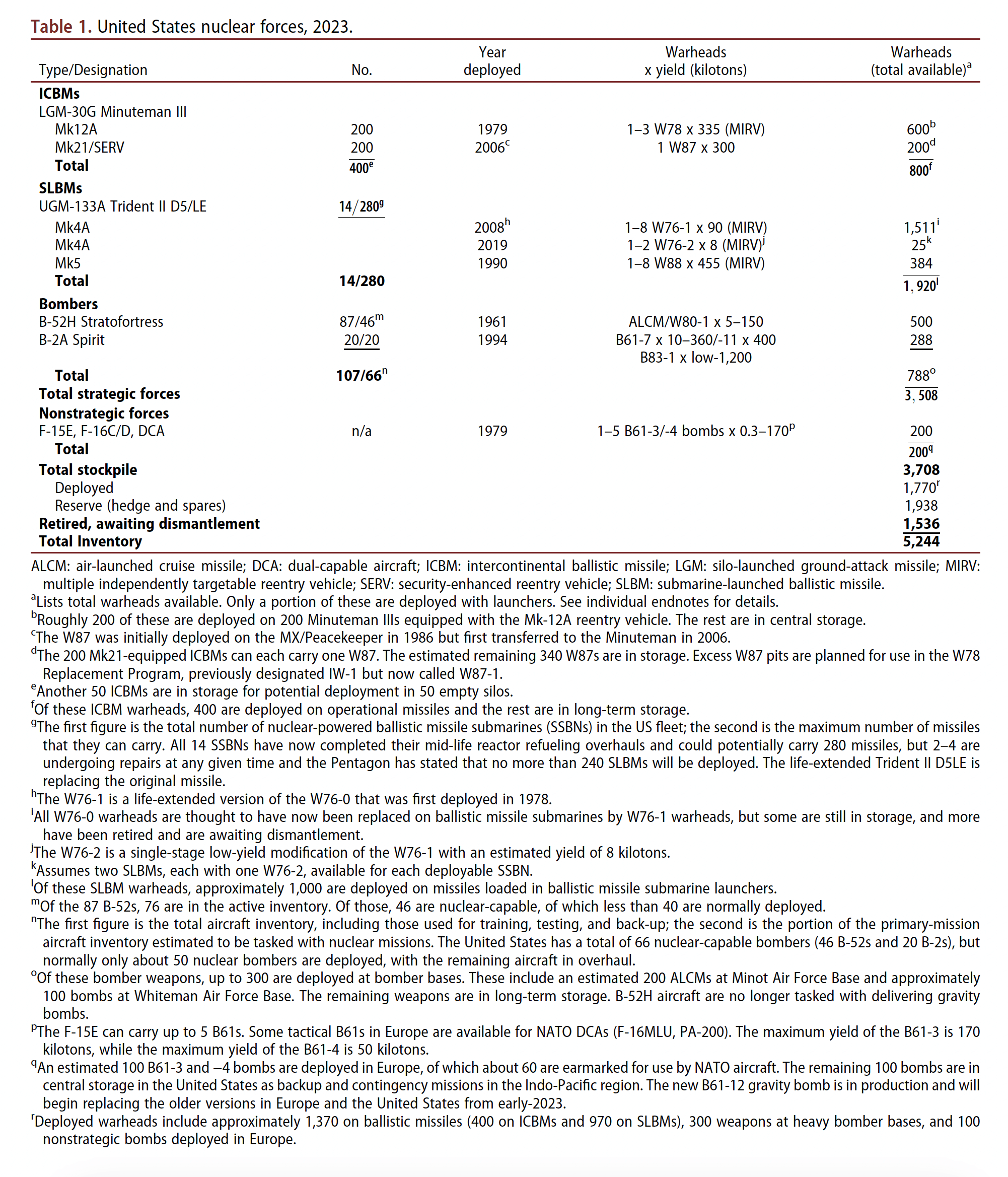
I’ve just been trawling through this weighty article – Nuclear Notebook: United States nuclear weapons, 2023. Yes, it’s quite an ordeal, trying to follow the machinations of the American nuclear-weapons-toys-boys, as explained in excruciating detail by Hans M. Kristensen and Matt Korda..
It all boils down to the fact that these tiny male brains think that it’s great fun to have these toys, play with them, tease and intimidate other boys with them, but of course, never use them.
Of course, it’s not just the Americans – it’s the Russians, Chinese, French, and oh boy, aren’t the Israelis itching to scare Iran? Mohammed Bin Salman? Wow – those Middle East boys are so ready to play this infantile, but suicidal, game.
Is it too late for women to take over this world, before the ecocide happens?
On January 24, 2023 at 10 a.m. EST, the Science and Security Board of the Bulletin of the Atomic Scientists will make the 2023 Doomsday Clock announcement.
CNN: Ukraine Has Become a ‘Weapons Lab’ for Western Arms

“We are interested in testing modern systems in the fight against the enemy and we are inviting arms manufacturers to test the new products here,”
Ukraine’s defense minister previously offered his country as a ‘testing ground’ for Western weapons makers https://news.antiwar.com/2023/01/16/cnn-ukraine-has-become-a-weapons-lab-for-western-arms/ by Dave DeCamp ,
Ukraine has turned into a “lab” for Western arms as the war has given the US and its allies an opportunity to see how their weapons fare in a conflict with a major military power like Russia, CNN reported on Monday.
A source familiar with Western intelligence on the war told CNN that Ukraine is “absolutely a weapons lab in every sense because none of this equipment has ever actually been used in a war between two industrially developed nations.” The source described it as “real-world battle testing.”
Back in July, Ukrainian Defense Minister Oleksii Reznikov offered his country as a “testing ground” for Western arms makers. “We are interested in testing modern systems in the fight against the enemy and we are inviting arms manufacturers to test the new products here,” he said.
Reznikov got his wish as the US, and its allies have significantly stepped up military aid since then, and the war has escalated as Russia began large-scale strikes on Ukrainian infrastructure in October. Russia’s success in its use of cheap kamikaze drones in the infrastructure attacks has influenced plans for Western arms makers.
The British arms maker BAE Systems has announced that it’s developing a new armored vehicle with added protection to defend it from kamikaze drone attacks from above. Multiple intelligence and military officials told CNN that making cheap single-use drones has become a priority of many defense contractors.
The CNN report said that for the US military, the war has become an “incredible source of data on the utility of its own systems.” For example, the US has seen that its HIMARS rocket launch system has been effective against Russian forces, while the
M777 howitzer has become less effective and less accurate over time.
The war in Ukraine has also created a demand for weapons that were beginning to become obsolete, such as the Stinger shoulder-fired anti-aircraft missiles. Raytheon stopped producing Stingers for years but now has been asked by the Pentagon to ramp up production as thousands have been shipped to Ukraine.
Diplomatic Cables Show Russia Saw NATO Expansion as a Red Line
Ukraine was the “line of last resort” that would complete Russia’s encirclement, said one defense expert, and its entry into NATO was universally viewed by the Russian political elite as an “unfriendly act.”
ACURA VIEWPOINT, Branko Marcetic, January 16, 2023
Nearly a year in, the war in Ukraine has cost hundreds of thousands of lives and brought the world to the brink of, in President Joe Biden’s own words, “Armageddon.” Alongside the literal battlefield has been a similarly bitter intellectual battle over the war’s causes.
Commentators have rushed to declare the long-criticized policy of NATO expansion as irrelevant to the war’s outbreak, or as a mere fig leaf used by Russian President Vladimir Putin to mask what Condoleezza Rice and Robert Gates recently called “his messianic mission” to “reestablish the Russian Empire.” Fiona Hill, a presidential advisor to two Republican administrations, has deemed these views merely the product of a “Russian information war and psychological operation,” resulting in “masses of the US public … blaming NATO, or blaming the US for this outcome.”
Yet a review of the public record and many dozens of diplomatic cables made publicly available via WikiLeaks shows that US officials were aware, or were directly told over the span of years, that expanding NATO was viewed by Russian officials well beyond Putin as a major threat and provocation, that expanding it to Ukraine was a particularly bright red line for Moscow, that it would inflame and empower hawkish, nationalist parts of the Russian political spectrum, and that it could ultimately lead to war.
In a particularly prophetic set of warnings, US officials were told that pushing for Ukrainian membership in NATO would not only increase the chance of Russian meddling in the country, but risked destabilizing the divided nation — and that US and other NATO officials pressured Ukrainian leaders to reshape this unfriendly public opinion in response. All of this was told to US officials in both public and private by not just senior Russian officials going all the way up to the presidency, but by NATO allies, various analysts and experts, liberal Russian voices critical of Putin, even, sometimes, US diplomats themselves.
This history is particularly relevant as US officials now test the red line China has drawn around Taiwan’s independence, risking military escalation that will first and foremost be aimed at the island state. The US diplomatic record regarding NATO expansion suggests the perils of ignoring or outright crossing another military power’s red lines, and the wisdom of a more restrained foreign policy that treats other powers’ spheres of influence with the care they treat the United States’ own.
An Early Exception
NATO expansion had been fraught from the start. The pro-Western Boris Yeltsin had told Bill Clinton he “saw nothing but humiliation for Russia if you proceed” with plans to renege on the verbal promises made years earlier not to enlarge NATO eastward, and warned it would be “sowing the seeds of mistrust” and would “be interpreted, and not only in Russia, as the beginning of a new split in Europe.”………………………………………………………………………….
Almost Complete Consensus
The thinkers and analysts that US officials conferred with likewise made clear the Russian elite’s anxieties over NATO and its expansion, and the lengths they might go to counteract it. Many were transmitted by then-US Ambassador to Russia William Burns, today serving as Biden’s CIA director.
Recounting his conversations with various “Russian observers” from both regional and US think tanks, Burns concluded in a March 2007 cable that “NATO enlargement and U.S. missile defense deployments in Europe play to the classic Russian fear of encirclement.” Ukraine and Georgia’s entry “represents an ‘unthinkable’ predicament for Russia,” he reported six months later, warning that Moscow would “cause enough trouble in Georgia” and counted on “continued political disarray in Ukraine” to halt it. In an especially prescient set of cables, he summed up scholars’ views that the emerging Russia-China relationship was largely “the by-product of ‘bad’ US policies,” and was unsustainable — “unless continued NATO enlargement pushed Russia and China even closer together.”
………………… “Ukraine was, in the long term, the most potentially destabilizing factor in US-Russian relations, given the level of emotion and neuralgia triggered by its quest for NATO membership,” went the counsel of Dmitri Trenin, then-deputy director of the Russian branch of the US-based Carnegie Endowment for International Peace, in a Burns-authored February 2008 cable. For Ukraine, he said prophetically, it would mean that elements within the Russian establishment would be encouraged to meddle, stimulating US overt encouragement of opposing political forces, and leaving the US and Russia in a classic confrontational posture.
Indeed, opposing NATO’s enlargement eastward, particulary in Ukraine and Georgia, was “one of the few security areas where there is almost complete consensus among Russian policymakers, experts and the informed population,” he cabled in March 2008. Ukraine was the “line of last resort” that would complete Russia’s encirclement, said one defense expert, and its entry into NATO was universally viewed by the Russian political elite as an “unfriendly act.” Other experts cautioned “that Putin would be forced to respond to Russian nationalist feelings opposing membership” of Georgia, and that MAPs for either would trigger a cut-back in the Russian military’s genuine desire for co-operation with NATO.
From Liberals to Hardliners
These analysts were reiterating what cables show US officials heard again and again from Russian officials themselves, whether diplomats, members of parliament, or senior Russian officials all the way up to the presidency, recorded in nearly three-dozen cables at least………………………………………………………………..
Selling NATO to Ukraine……………………………………………………..
“Experts tell us that Russia is particularly worried that the strong divisions in Ukraine over NATO membership, with much of the ethnic-Russian community against membership, could lead to a major split, involving violence or at worst, civil war,” Burns wrote in February 2008. Russia, he wrote, would then “have to decide whether to intervene; a decision Russia does not want to have to face.”………………………………
By December 2016, with fears of invasion ramping up, Putin told Biden personally that “the eastward expansion of the Western alliance was a major factor in his decision to send troops to Ukraine’s border,” the Washington Post reported.
………….. claims that Russian unhappiness over NATO expansion is irrelevant, a mere “fig leaf” for pure expansionism, or simply Kremlin propaganda are belied by this lengthy historical record. Rather, successive US administrations pushed ahead with the policy despite being warned copiously for years — including by the analysts who advised them, by allies, even by their own officials — that it would feed Russian nationalism, create a more hostile Moscow, foster instability and even civil war in Ukraine, and could eventually lead to Russian military intervention, all of which ended up happening.
“I don’t accept anyone’s red line,” Biden said in the lead-up to the invasion, as his administration rejected negotiations with Moscow over Ukraine’s NATO status. We can only imagine the world in which he and his predecessors had. https://usrussiaaccord.org/acura-viewpoint-guest-post-by-branko-marcetic-diplomatic-cables-show-russia-saw-nato-expansion-as-a-red-line/
Nuclear Notebook: United States nuclear weapons, 2023

The United States is modernizing its nuclear bomber force by upgrading nuclear command-and-control capabilities on existing bombers, developing improved nuclear weapons (the B61-12 and the new AGM-181 Long-Range Standoff Weapon (LRSO), and designing a new heavy bomber (the B-21 Raider).
Bulletin of the Atomic Scientists By Hans M. Kristensen, Matt Korda, January 16, 2023
t the beginning of 2023, the US Department of Defense maintained an estimated stockpile of approximately 3,708 nuclear warheads for delivery by ballistic missiles and aircraft. Most of the warheads in the stockpile are not deployed but rather stored for potential upload onto missiles and aircraft as necessary. We estimate that approximately 1,770 warheads are currently deployed, of which roughly 1,370 strategic warheads are deployed on ballistic missiles and another 300 at strategic bomber bases in the United States. An additional 100 tactical bombs are deployed at air bases in Europe. The remaining warheads — approximately 1,938 — are in storage as a so-called hedge against technical or geopolitical surprises. Several hundred of those warheads are scheduled to be retired before 2030. (See Table 1. on original)
In addition to the warheads in the Department of Defense stockpile, approximately 1,536 retired — but still intact — warheads are stored under the custody of the Department of Energy and are awaiting dismantlement, giving a total US inventory of an estimated 5,244 warheads. Between 2010 and 2018, the US government publicly disclosed the size of the nuclear weapons stockpile; however, in 2019 and 2020, the Trump administration rejected requests from the Federation of American Scientists to declassify the latest stockpile numbers (Aftergood 2019; Kristensen 2019a, 2020d). In 2021, the Biden administration restored the United States’ previous transparency levels by declassifying both numbers for the entire history of the US nuclear arsenal until September 2020 — including the missing years of the Trump administration.
This effort revealed that the United States’ nuclear stockpile consisted of 3,750 warheads in September 2020 — only 72 warheads fewer than the last number made available in September 2017 before the Trump administration reduced the US government’s transparency efforts (US State Department 2021a). We estimate that the stockpile will continue to decline over the next decade-and-a-half as modernization programs consolidate the remaining warheads.
The Biden administration’s declassification also revealed that the pace of warhead dismantlement has slowed significantly in recent years. While the United States dismantled on average more than 1,000 warheads per year during the 1990s, in 2020 it dismantled only 184 warheads (US State Department 2021a). …………………
In the past, the Obama and Biden administrations often declassified the warhead stockpile and dismantlement numbers around the time of major arms control conferences. That did not happen in 2022, however, and the Biden administration has so far not acted on requests from the Federation of American Scientists to disclose the numbers for 2021 or 2022. A decision to no longer declassify these numbers would not only contradict the Biden administration’s own practice from 2020, but also represent a return to Trump-era levels of nuclear opacity. Such increased nuclear secrecy undermines US calls for Russia and China to increase transparency of their nuclear forces.
The US nuclear weapons are thought to be stored at an estimated 24 geographical locations in 11 US states and five European countries (Kristensen and Korda 2019, 124). The location with the most nuclear weapons by far is the large Kirtland Underground Munitions and Maintenance Storage Complex (KUMMSC) south of Albuquerque, New Mexico. Most of the weapons in this location are retired weapons awaiting dismantlement at the Pantex Plant in Texas. The state with the second-largest inventory is Washington, which is home to the Strategic Weapons Facility Pacific and the ballistic missile submarines at Naval Submarine Base Kitsap. The submarines operating from this base carry more deployed nuclear weapons than any other base in the United States.
Implementing the New START treaty
The United States appears to be in compliance with the New Strategic Arms Reduction Treaty (New START) limits. ………………………………
If New START expired without a follow-on treaty in place, both the United States and Russia could upload several hundred extra warheads onto their launchers. This means that the treaty has proven useful thus far in keeping a lid on both countries’ deployed strategic forces. Additionally, both countries would lose a critical node of transparency into each other’s nuclear forces. As of December 8, 2022, the United States and Russia had completed a combined 328 on-site inspections and exchanged 25,017 notifications (US State Department 2022b)……………………………….
The Nuclear Posture Review and nuclear modernization…………
Just like previous NPRs, the Biden administration’s NPR rejected policies of nuclear “no-first-use” or “sole purpose,” instead preferring to leave the option open for nuclear weapons to be used under “extreme circumstances to defend the vital interests of the United States or its allies and partners” (US Department of Defense 2022b, 9)…………………….
The most significant change between the Biden and Trump NPRs was the walking back of two Trump-era commitments — specifically, canceling the new sea-launched cruise missile and retiring the B83-1 gravity bomb……………………………………….
The complete nuclear modernization (and maintenance) program will continue well beyond 2039 and, based on the Congressional Budget Office’s estimate, will cost $1.2 trillion over the next three decades. Notably, although the estimate accounts for inflation (Congressional Budget Office 2017), other estimates forecast that the total cost will be closer to $1.7 trillion (Arms Control Association 2017). Whatever the actual price tag will be, it is likely to increase over time, resulting in increased competition with conventional modernization programs planned for the same period. …………
The National Nuclear Security Administration (NNSA) and the Department of Defense have also proposed developing several other new nuclear warheads, including the W93 navy warhead. The NNSA’s Stockpile Stewardship and Management Plan (SSMP) of December 2020 doubled the number of new nuclear warhead projects for the next 20 years compared to its 2019 plan (National Nuclear Security Administration (NNSA) 2020b).
Nuclear planning and nuclear exercises
In addition to the Nuclear Posture Review, the nuclear arsenal and the role it plays is shaped by plans and exercises that create the strike plans and practice how to carry them out…………….
OPLAN 8010–12 consists of “a family of plans” directed against four identified adversaries: Russia, China, North Korea, and Iran. Known as “Strategic Deterrence and Force Employment,” OPLAN 8010–12 first entered into effect in July 2012 in response to Operations Order Global Citadel signed by the defense secretary. ……………………
OPLAN 8010–12 is a whole-of-government plan that includes the full spectrum of national power to affect potential adversaries. ……………………………..
This year’s Global Thunder exercise was delayed but will probably happen in early-2023.
These exercises coincide with steadily increasing US bomber operations in Europe since Russia’s invasion of Ukraine in 2014 and again in 2022…………………………………………….
the mission of the Bomber Task Force is to move a fully combat-ready bomber force into the European theater. “It’s no longer just to go partner with our NATO allies or to go over and have a visible presence of American air power,” according to the commander of the 2nd Bomb Wing. “That’s part of it, but we are also there to drop weapons if called to do so” (Wrightsman 2019). These changes are evident in the types of increasingly provocative bombers operations over Europe, in some cases very close to the Russian border (Kristensen 2022a)……………………………..
The close integration of nuclear and conventional bombers into the same task force can have significant implications for crisis stability, misunderstandings, and the risk of nuclear escalation because it could result in misperceptions about what is being signaled and result in overreactions…………………………………
Land-based ballistic missiles
The US Air Force operates a force of 400 silo-based Minuteman III ICBMs split across three wings: the 90th Missile Wing at F. E. Warren Air Force Base in Colorado, Nebraska, and Wyoming; the 91st Missile Wing at Minot Air Force Base in North Dakota; and the 341st Missile Wing at Malmstrom Air Force Base in Montana………………………………
The Minuteman III missiles completed a multibillion-dollar, decade-long modernization program in 2015 to extend their service life until 2030. Although the United States did not officially deploy a new ICBM, the upgraded Minuteman III missiles “are basically new missiles except for the shell,” according to Air Force personnel (Pampe 2012)………………………………………………………………….
To produce the new W87-1 warhead in time to meet the Sentinel’s planned deployment schedule, the NNSA has set an extremely ambitious production rate of at least 80 plutonium pits per year by 2030.
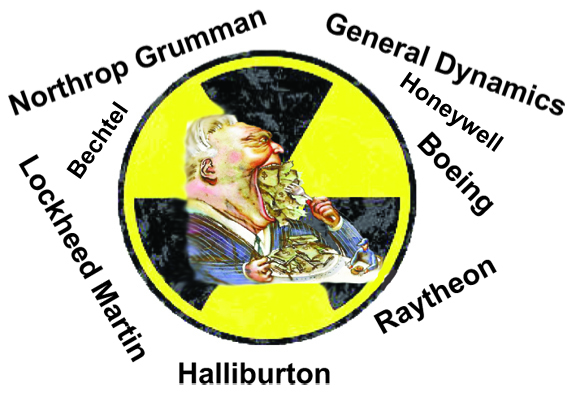
In October 2019, Lockheed Martin was awarded a $138 million contract to integrate the Mk21 reentry vehicle into the Sentinel, beating out rivals Boeing, Raytheon, Northrop Grumman, and Orbital ATK (which Northrop Grumman now owns and has been renamed to Northrop Grumman Innovation Systems) (Lockheed Martin 2019
………………………………………………….. In May 2021, the US Congressional Budget Office estimated that the cost of acquiring and maintaining the Sentinel would total approximately $82 billion over the 2021–2030 period — approximately $20 billion more than the Congressional Budget Office had previously estimated for the 2019–2028 period (Congressional Budget Office 2021, 2019)……………………………………
Nuclear-powered ballistic missile submarines
The US Navy operates a fleet of 14 Ohio-class ballistic missile submarines (SSBNs), of which eight operate in the Pacific from their base near Bangor, Washington, and six operate in the Atlantic from their base at Kings Bay,…………………………………………………….
Design of the next generation of ballistic missile submarines, known as the Columbia-class, is well under way……………………………………
Strategic bombers
The US Air Force currently operates a fleet of 20 B-2A bombers (all of which are nuclear-capable) and 87 B-52H bombers (46 of which are nuclear-capable)……………………
Each B-2 can carry up to 16 nuclear bombs (the B61-7, B61-11, and B83-1 gravity bombs), and each B-52 H can carry up to 20 air-launched cruise missiles (the AGM-86B)……………………..
The United States is modernizing its nuclear bomber force by upgrading nuclear command-and-control capabilities on existing bombers, developing improved nuclear weapons (the B61-12 and the new AGM-181 Long-Range Standoff Weapon (LRSO), and designing a new heavy bomber (the B-21 Raider).
Upgrades to the nuclear command-and-control systems that the bombers use to plan and conduct nuclear strikes include the Global Aircrew Strategic Network Terminal. This is a new, high-altitude, electromagnetic pulse-hardened network of fixed and mobile nuclear command-and-control terminals………………
Another command-and-control upgrade involves a program known as Family of Advanced Beyond Line-of-Sight Terminals, which replaces existing terminals designed to communicate with the MILSTAR military satellite constellation operated by the US Space Force. …………………………………………….
The missile itself is expected to be entirely new, with significantly improved military capabilities compared with the air-launched cruise missile, including longer range, greater accuracy, and enhanced stealth (Young 2016). This violates the 2010 White House pledge (White House 2010) that the “United States will not … pursue … new capabilities for nuclear weapons,” though the 2018 NPR and 2022 NPR eliminated such constraints……………………..
Upgrades to the nuclear command-and-control systems that the bombers use to plan and conduct nuclear strikes include the Global Aircrew Strategic Network Terminal. This is a new, high-altitude, electromagnetic pulse-hardened network of fixed and mobile nuclear command-and-control terminals. ………..
Another command-and-control upgrade involves a program known as Family of Advanced Beyond Line-of-Sight Terminals, which replaces existing terminals designed to communicate with the MILSTAR military satellite constellation operated by the US Space Force. ……………….
The heavy bombers are also being upgraded with improved nuclear weapons. This effort includes development of the first guided, standoff nuclear gravity bomb, known as the B61-12, which is ultimately intended to replace all existing gravity bombs……………………………… The Air Force is also developing a new nuclear air-launched cruise missile known as the AGM-181 Long-Range Standoff Weapon (LRSO).
……………………………………………………… The conversion of the non-nuclear B-1 host bases to receive the nuclear B-21 bomber will increase the overall number of bomber bases with nuclear weapons storage facilities from two bases today (Minot AFB and Whiteman AFB) to five bases by the 2030s (Barksdale AFB will also regain nuclear storage capability) (Kristensen 2020c).
Nonstrategic nuclear weapons
The United States has only one type of nonstrategic nuclear weapon in its stockpile: the B61 gravity bomb……………………
The Belgian, Dutch, German, and Italian air forces are currently assigned an active nuclear strike role with US nuclear weapons……………………………….
NATO is working on a broad modernization of the nuclear posture in Europe that involves upgrading bombs, aircraft, and the weapons storage system (Kristensen 2022c)……………………………
NATO is life-extending the weapons storage security system, which involves upgrading command and control, as well as security, at the six active bases (Aviano, Büchel, Ghedi, Kleine Brogel, Incirlik, and Volkel) and one training base (Ramstein). ……………………… it appears that an air base in the United Kingdom — believed to be RAF Lakenheath — has been quietly added to the list of bases receiving nuclear weapon storage site upgrades (US Department of Defense 2022e). …………………………….. more https://thebulletin.org/premium/2023-01/nuclear-notebook-united-states-nuclear-weapons-2023/
UK govt to tighten anti-protest restrictions, despite criticism from human rights groups
https://www.ft.com/content/57730f56-6966-4c35-8d32-67a52f5efe6e 16 Jan 23
Rishi Sunak will on Monday propose new measures to help the police stop disruptive public protest in Britain, heading further down a route that has drawn heavy criticism from civil rights groups.
The prime minister wants to broaden the legal definition of “serious disruption” in a new public order bill, to help police stop what he calls a “disruptive minority” who use tactics such as blocking roads or slow marching.
Sunak believes the public and business will support the government’s efforts to stop protesters causing serious disruption following a series of high-profile protests by groups such as Just Stop Oil and Insulate Britain. But Human Rights Watch, the international NGO, last week criticised the government for a series of recent measures, including restrictions on protest………
The government will this week table an amendment to the bill, currently in the House of Lords, which it says will give police “greater flexibility and clarity” over when to intervene to stop a “disruptive minority”.
Police have already been given additional powers to prevent protesters using what Downing Street calls “guerrilla tactics”, but police chiefs say there is uncertainty over what reaches the threshold of “serious disruption”.
The changes would mean that police will not need to wait for disruption to take place and can shut protests down before any “chaos” is caused, Downing Street said.
Police would not need to treat a series of protests by the same group as standalone incidents but would be able to consider their total impact; they would also be able to consider the cumulative effect of long-running campaigns over a number of weeks intended to cause repeat disruption. Sunak said: “The right to protest is a fundamental principle of our democracy, but this is not absolute.
A balance must be struck between the rights of individuals and the rights of the hard-working majority to go about their day-to-day business.” Recommended Extinction Rebellion Extinction Rebellion abandons disruptive climate protests in UK Sir Mark Rowley, Metropolitan Police commissioner, said: “Increasingly police are getting drawn into complex legal arguments about the balance between that right to protest and the rights of others to go about their daily lives free from serious disruption. “The lack of clarity in the legislation and the increasing complexity of the case law is making this more difficult and more contested.” But Hassan said last week: “A slew of legislation was passed last year where fundamental human rights are being challenged.
The protest law is something we are deeply concerned about. “When you talk about civic space and about people’s right to participate in a democratic society, the right to peaceful assembly and the right to protest are key pillars of that. We’ve seen an outright assault from this government on that.”
HRW also criticised government measures including a new elections act which will require voter identification in polls and the plan to allow offshore processing of asylum claims in Rwanda.
The IAEA expands mission in Ukraine to prevent nuclear accident
https://euromaidanpress.com/2023/01/16/the-iaea-expands-mission-in-ukraine-to-prevent-nuclear-accident/ European Pravda reports, referring to the Director General of the IAEA Rafael Mariano Grossi’s statement, that the International Atomic Energy Agency (IAEA) is expanding its presence in Ukraine to help prevent a nuclear accident during the ongoing war.
Earlier it was reported that Grossi would visit South Ukraine and Rivne NPPs, as well as the Chornobyl NPP, this week to announce the launch of missions consisting of two IAEA experts at each facility.
The IAEA already has a permanent presence of up to four experts at Zaporizhzhia NPP. Additionally, a team of two experts will also be deployed to Khmelnytsky NPP in the coming days.
The total number of the Atomic Energy Agency’s experts in Ukraine will increase to 11-12.
Slovenia Extends Nuclear Plant Operation Until 2043
Barron’s By AFP – Agence France Presse January 16, 2023
Slovenia’s sole nuclear plant has been granted the environmental and safety approval needed to extend its operations until 2043, the government said Monday……..
The Krsko nuclear plant, built in 1983 and located 100 kilometres (60 miles) east of the capital Ljubljana near the border with Croatia, had been scheduled to be switched off next year…….
Activist groups including Greenpeace have demanded the plant’s dismantling because of its age and earthquake risks in the region, but the government insists the plant has been upgraded to meet the highest safety and environmental requirements.
Monday’s authorisation “shows that there is no safety risks related to the plant’s operation,” Environment Minister Uros Brezan said.
Slovenia is planning the construction of a second nuclear reactor in Krsko, but the centre-left government has said the final investment decision will be adopted only if its two million citizens back the move at a referendum.
No date for the referendum has been set yet. …..https://www.barrons.com/news/slovenia-extends-nuclear-plant-operation-until-2043-01673887509
China urges Japan to safely dispose of nuclear-contaminated water
China Daily, Xinhua 2023-01-16
BEIJING — China once again urges Japan to take the reasonable concerns of relevant parties seriously and dispose of its nuclear-contaminated water in a science-based, open, transparent and safe manner, Chinese Foreign Ministry spokesperson Wang Wenbin said on Monday.
Wang made the remarks at a daily news briefing here in response to reports that Japan would pipe nuclear-contaminated water from the Fukushima nuclear power station into the ocean during the spring and summer this year.
Wang said that over the past two years, the international community has strongly questioned and opposed the unilateral and erroneous decision of the Japanese government to discharge nuclear-contaminated water into the ocean, and expressed grave concerns over the impact such an action would have on the marine environment and public health.
Wang said the majority of the Japanese public is also opposed to this irresponsible approach. When polled, 55 percent of respondents opposed the disposal of contaminated water into the ocean.
“It is regrettable that the concerns of all parties have yet to be given due attention or be addressed by Japan,” Wang said, adding that Japan has failed to provide scientific and credible explanations concerning the legitimacy of its plan, the accuracy of data on the nuclear-contaminated water, the effectiveness of the treatment system, and the uncertainties about the environmental impact.
The International Atomic Energy Agency (IAEA) has sent three technical task forces to Japan and so far, there has been no conclusive resolution on Japan’s proposal, Wang said, noting that the agency has also issued many requests to Japan, seeking clarifications or making recommendations for improved disposal plans………. more https://www.chinadaily.com.cn/a/202301/16/WS63c551cea31057c47eba9e94.html—
Germany aims for faster expansion of wind energy, not nuclear
Germany Targets Three New Windmills a Day for Energy Reboot. Chancellor
Scholz says faster expansion of renewables needed. He rules out further
nuclear power extension to ease crunch.
Bloomberg 14th Jan 2023
1 This Month
23 April – WEBINAR – Why new nuclear reactors are the wrong tools for decarbonization Thursday, April 23 • 1 AM – 2 AM AEST
World Nuclear Power. Reactors 1951-2026, 75 Years of Nuclear Power.
Interactive Map– https://dv.worldnuclearreport.org/

Chernobyl: The Lost Tapes – A good documentary on Chernobyl on SBS available On Demand for the next 3 weeks– https://www.sbs.com.au/ondemand/tv-program/chernobyl-the-lost-tapes/2352741955560

of the week–London Campaign for Nuclear Disarmament


Tell the Ukrainian Government to Drop Prosecution of Peace Activist Yurii Sheliazhenko
To see nuclear-related stories in greater depth and intensity – go to https://nuclearinformation.wordpress.com
-
Archives
- April 2026 (231)
- March 2026 (251)
- February 2026 (268)
- January 2026 (308)
- December 2025 (358)
- November 2025 (359)
- October 2025 (376)
- September 2025 (257)
- August 2025 (319)
- July 2025 (230)
- June 2025 (348)
- May 2025 (261)
-
Categories
- 1
- 1 NUCLEAR ISSUES
- business and costs
- climate change
- culture and arts
- ENERGY
- environment
- health
- history
- indigenous issues
- Legal
- marketing of nuclear
- media
- opposition to nuclear
- PERSONAL STORIES
- politics
- politics international
- Religion and ethics
- safety
- secrets,lies and civil liberties
- spinbuster
- technology
- Uranium
- wastes
- weapons and war
- Women
- 2 WORLD
- ACTION
- AFRICA
- Atrocities
- AUSTRALIA
- Christina's notes
- Christina's themes
- culture and arts
- Events
- Fuk 2022
- Fuk 2023
- Fukushima 2017
- Fukushima 2018
- fukushima 2019
- Fukushima 2020
- Fukushima 2021
- general
- global warming
- Humour (God we need it)
- Nuclear
- RARE EARTHS
- Reference
- resources – print
- Resources -audiovicual
- Weekly Newsletter
- World
- World Nuclear
- YouTube
-
RSS
Entries RSS
Comments RSS
 nuclear-news