Fukushima radioactive sludge storage container will be full of nuclear wastewater purification may be hindered.
September 26, 2022
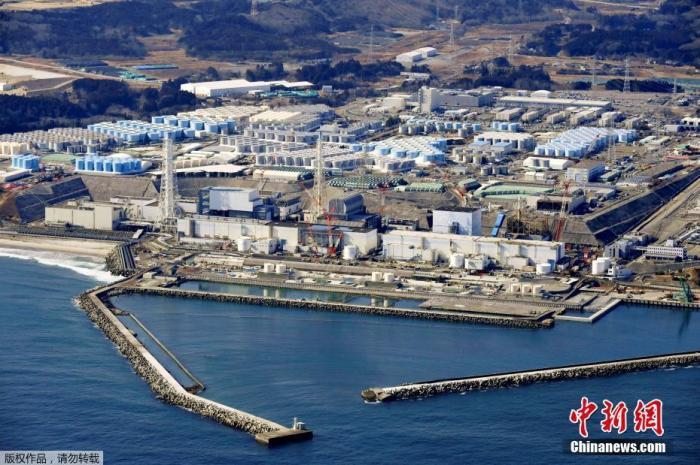
According to Kyodo News on the 25th, Tokyo Electric Power Company (TEPCO) stated that since the container for storing sludge generated during nuclear sewage treatment will be full by the end of April 2023 at the earliest. Work on the treatment of nuclear wastewater at the island’s first nuclear power plant may face obstacles.
A slurry-like mixture of liquids and solids is reported to be produced during the purification of nuclear wastewater from the Fukushima Daiichi Nuclear Power Plant with polynuclide removal equipment (ALPS). This sludge produces strong radiation, so during processing they are placed in special polyethylene containers and kept in radiation-blocking cement boxes.
As of August, the cement boxes in the factory area were 96% full, and if no measures are taken, they will be full by the end of April 2023 at the earliest. At that point, if there is nowhere for the sludge to pile up, the ALPS cannot continue to operate.
According to reports, there are currently 4,192 storage places for storage containers, and TEPCO plans to add 192 more on this basis. But even if the storage space is increased, the filling time can only be delayed by about a year. Therefore, the problem of reducing the amount of sludge generated is still under discussion.
TEPCO expects that storage can be reduced if equipment to extract moisture from sludge is activated. However, due to reasons such as seismic design re-evaluation, it is not yet possible to determine when the equipment will be put into use.
On March 11, 2011, an earthquake with a magnitude of 9.0 occurred in the waters off northeastern Japan and triggered a huge tsunami. Affected by the earthquake and tsunami, a large amount of radioactive material leaked from the Fukushima Daiichi Nuclear Power Plant.
On April 13, 2021, the Japanese government officially decided to discharge the Fukushima nuclear sewage into the sea after filtering and diluting it. However, in the process of nuclear sewage treatment, problems such as filter damage and excessive strontium-90 activity of the radioactive material after treatment were encountered successively. . Japan’s decision to discharge sewage into the sea was also strongly opposed by residents of Fukushima Prefecture and the National Federation of Fisheries Trade Unions in Japan.
No comments yet.
1 This Month

of the week – Shut Down Drone Warfare!


Tell the Ukrainian Government to Drop Prosecution of Peace Activist Yurii Sheliazhenko

Petition to revoke the licensing of the Near Surface Nuclear Disposal Facility (NSDF) at Chalk River. https://www.ourcommons.ca/petitions/en/Petition/Details?Petition=e-7247
To see nuclear-related stories in greater depth and intensity – go to https://nuclearinformation.wordpress.com
-
Archives
- April 2026 (103)
- March 2026 (251)
- February 2026 (268)
- January 2026 (308)
- December 2025 (358)
- November 2025 (359)
- October 2025 (376)
- September 2025 (257)
- August 2025 (319)
- July 2025 (230)
- June 2025 (348)
- May 2025 (261)
-
Categories
- 1
- 1 NUCLEAR ISSUES
- business and costs
- climate change
- culture and arts
- ENERGY
- environment
- health
- history
- indigenous issues
- Legal
- marketing of nuclear
- media
- opposition to nuclear
- PERSONAL STORIES
- politics
- politics international
- Religion and ethics
- safety
- secrets,lies and civil liberties
- spinbuster
- technology
- Uranium
- wastes
- weapons and war
- Women
- 2 WORLD
- ACTION
- AFRICA
- Atrocities
- AUSTRALIA
- Christina's notes
- Christina's themes
- culture and arts
- Events
- Fuk 2022
- Fuk 2023
- Fukushima 2017
- Fukushima 2018
- fukushima 2019
- Fukushima 2020
- Fukushima 2021
- general
- global warming
- Humour (God we need it)
- Nuclear
- RARE EARTHS
- Reference
- resources – print
- Resources -audiovicual
- Weekly Newsletter
- World
- World Nuclear
- YouTube
-
RSS
Entries RSS
Comments RSS
 nuclear-news
Leave a comment