Germany’s Environment Minister reaffirms the phaseout of nuclear power.
Speech by Federal Environment Minister Steffi Lemke on the draft of a
nineteenth law amending the Atomic Energy Act.
The phasing out of nuclear power, decided by a broad consensus in 2011, is coming.
Be proud, dear colleagues from the CDU / CSU , that you decided this with the FDP at the
time . That was responsible politics! Together we have settled a
decades-long social conflict. That is why this is not about Mr Trittin’s
life’s work, but about the fact that Mrs Merkel, as the responsible Federal
Chancellor at the time, implemented this nuclear phase-out in our country
with our support.
And you cannot hide the fact that you are now concerned
with reversing this decision with your draft law. With your draft law, you
not only want to enable an extension of the term until 2024, but beyond.
They want to turn back the wheel of nuclear history and that’s not going to
happen. It is irresponsible to treat this high-risk technology as if it
were a coffee maker that you turn on and off every once in a while, refill
with water, put in a new filter, and then turn it on again.
The valve leakage at the Isar 2 nuclear power plant is not a safety problem, but a
technical problem. Now we have to decide how to deal with it. In addition,
it is a mechanical problem that has been foreseeable for a long time, but
which means that the nuclear power plant will now have to be taken off the
grid in autumn, when we already have a problematic electricity situation
due to the lack of nuclear power plants in France.
The fact that this
information was not communicated to us in good time by the Bavarian nuclear
supervisory authority is something I will leave here without comment. We
will provide the necessary answers to the current energy situation. We are
driving the energy transition forward by massively expanding renewable
energies, focusing on energy efficiency and savings, and by using old
energy supply sources again this winter, thereby also enabling reserve
operation for two of the three nuclear power plants that are still in
operation if it becomes necessary.
German Environment Ministry 22nd Sept 2022
Nuclear Free Local Authorities (NFLA) want government assurances about new rules on compensation liability for nuclear accidents
New rules increasing the financial compensation payable by the nuclear
industry in the event of an accident have been welcomed by the Nuclear Free
Local Authorities, and a letter sent to a government energy minister
seeking assurance that the British public will be property protected.
Under amendments to the Paris Convention so far approved by most signatory
states, including Britain, the liability of nuclear plant operators to pay
compensation has increased to €700 million, with this figure increasing
by a further €100 million in each of the next five years.
Smaller amounts are payable by companies involved with the transportation of nuclear
materials. In the UK, the impact will be felt to the bottom line of EDF
Energy, which operates Britain’s nuclear power plants, and the Nuclear
Decommissioning Authority, with responsibility for transporting nuclear
materials.
Now Councillor David Blackburn, Chair of the NFLA Steering
Committee, has written to Lord Callanan, Minister of State with
responsibility for corporate governance and regulation in the nuclear
industry, to seek reassurance that nuclear operators will be required to
take out suitable insurance with private sector providers or make some
other financial provision to pay compensation in respect of an accident. He
is particularly concerned that ministers may attempt to subsidise the
industry by underwriting insurance provision or by downgrading their
operations to ‘low risk’ to reduce their liability.
NFLA 22nd Sept 2022
Liz Truss could break fracking election pledge to bypass local opposition
Liz Truss is considering designating fracking sites as nationally important
infrastructure, potentially cutting out local communities and breaking a
leadership election promise, the Guardian can reveal.
During her campaign
to be the Conservative party leader, Truss said new sites would only go
ahead with local consent. However, those familiar with discussions in the
Department for Business, Energy and Industrial Strategy (BEIS), led by
Jacob Rees-Mogg, say there have been discussions about pushing through
sites without local approval by designating them as nationally significant
infrastructure projects (NSIPs).
This means they would bypass normal local
planning requirements. The designations usually apply to infrastructure
such as roads, airports and energy sites.
Guardian 22nd Sept 2022
New Zealand will push for total ban on nuclear weapons – Jacinda Ardern
https://www.nzherald.co.nz/nz/new-zealand-will-push-for-total-ban-on-nuclear-weapons-jacinda-ardern/KMAJHPQARBHVY3ETZGUGOI7COA/ By Thomas Coughlan, 24 Sep, 2022
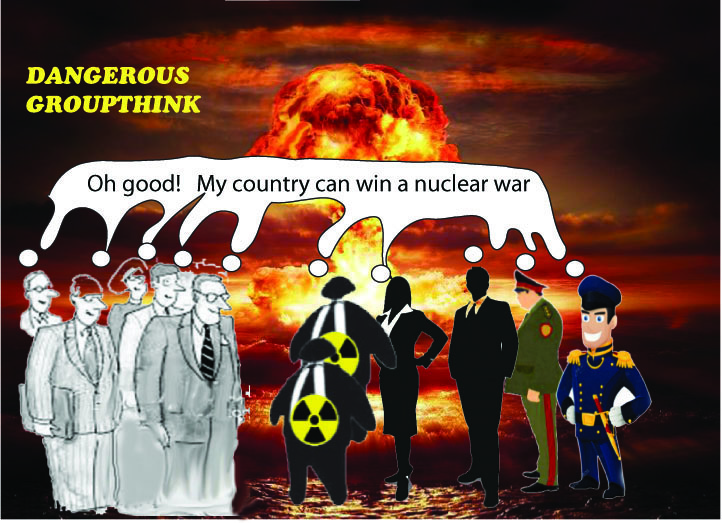
Prime Minister Jacinda Ardern said there is an “outlier” amongst countries that have nuclear weapons because Russia now appears to believe that a nuclear war can be won and fought, as she continued to push for the abolition of nuclear weapons.
Speaking to media after her address to the United Nations General Assembly, Ardern said New Zealand never believed the doctrine of Mutual Assured Destruction (MAD), which meant that countries would not start a nuclear war, because they believed they would be annihilated by their enemy in retaliation.
“New Zealand – no one wants to be proven right on this issue,” Ardern said.
“We’ve always had the view that so long as everyone holds them [nuclear weapons] that no one will push the button – New Zealand has never had the view that that is a good strategy or a safe strategy.”
arlier in the day, she told the United Nations that one country – a reference to Russia – believed it could fight and win a nuclear war.
“It takes one country to believe that their cause is nobler, their might stronger, their people more willing to be sacrificed,” Ardern said.
“None of us can stand on this platform and turn a blind eye to the fact that there are already leaders amongst us who believe this,” she said.
Russia’s apparent belief that it could start and win a nuclear war is a reversal from its position in January, when it made a pledge with other nuclear powers who were signatories to the Nuclear Non-Proliferation Treaty that “a nuclear war cannot be won and must never be fought”.
American and Russian leaders have been making some version of this statement since leaders Ronald Reagan and Mikhail Gorbachev first said it in 1985.
If the doctrine of MAD is gone, then the world could be closer to a nuclear war than ever before.
Ardern said Russia was an “outlier” and other countries had a far more stable nuclear policy.
“I wouldn’t take Russia’s position as indicative of the rest of the world.”
GETTING SERIOUS ABOUT THE THREAT OF HIGH ALTITUDE NUCLEAR DETONATIONS
War on the rocks, ROBERT “TONY” VINCENT, 23 Sept 22,
Aurora Borealis is the scientific term given to the natural light phenomenon of the Northern Lights. On July 9, 1962, the light phenomenon that Hawaiians watched was anything but natural. On that day, the Atomic Energy Commission, in collaboration with the Defense Atomic Support Agency, detonated a thermonuclear device in low Earth orbit. The test was codenamed Starfish Prime and it revealed an unfortunate lesson: Even one high altitude nuclear detonation is particularly effective at destroying satellites. Not only were satellites in the line of sight destroyed, but even satellites on the other side of Earth were damaged and rendered inoperable. Starfish Prime damaged or destroyed roughly one third of all satellites in low Earth orbit at the time.
The ongoing commercialization of space with cost effective bulk electronics presents a tantalizing target for nations with a space disadvantage to target long-before a conflict could escalate to nuclear exchange. Therefore, the Department of Defense should get serious about planning for and countering the threat of high altitude nuclear detonations, starting with its various science and technology funding organizations.
……………………….. The threat of nuclear explosions in space is marginalized because the potency of their effects is not widely known and the likelihood of nuclear attack in space is assumed to be negligible. Despite this skepticism, war planners should recognize that the growing number of satellites in space may change the incentive structures to disable them in some sort of nuclear attack. The dynamics of escalation are also not straightforward.
……………………… The Starfish Prime test surprised everyone with how effective an exo-atmospheric nuclear explosion was at destroying satellites. Nobel Prize winner Glenn Seaborg, co-discoverer of plutonium and Chairman of the Atomic Energy Commission from 1961 to 1971, wrote that, “To our great surprise and dismay, it developed that Starfish added significantly to the electrons in the Van Allen belts. This result contravened all our predictions.” Even more surprising was that the world’s first commercial communications satellite, Telstar, was launched the day after the Starfish Prime test and still suffered significant operational damage from residual radiation. Telstar lasted only eight months until it stopped responding in February, 1963 due to damaged electronics. …………………………………………………………..
The possibility of high altitude nuclear weapons targeting space assets is not a novel threat, but one that is historically dismissed. The nature of orbiting around Earth means that space assets are periodically exposed in highly predictable patterns. In fact, delivering a nuclear weapon into low earth orbit is an easier engineering challenge for a nation like North Korea than targeting the continental United States because the missile’s warhead has to survive the drag and heat of atmospheric reentry. Space assets are not just tempting targets but become more provocative with each supported military operation…… https://warontherocks.com/2022/09/getting-serious-about-the-threat-of-high-altitude-nuclear-detonations/
Unlocked: NATO prolongs the Ukraine proxy war, and global havoc
With diplomacy thwarted, the US and its allies plan for “open-ended” military and economic warfare against Russia — despite acknowledging that “the most dangerous moments are yet to come.”
As has been apparent since the Ukraine crisis erupted, US planning for open-ended proxy warfare against Russia has led it to sabotage any prospect of a negotiated end.
Substack Aaron Maté 22 Sept 22, Russia has announced plans to mobilize an additional 300,000 troops for the war in Ukraine. In his speech unveiling the expanded war effort, Vladimir Putin vowed to achieve his main goal of the “liberation of Donbas,” and issued a thinly veiled nuclear threat in the process. The move comes days ahead of planned referendums in breakaway Ukrainian areas to formalize Russian annexation.
Russia’s escalation ensures that the fighting is entering an even more dangerous phase. While Russia bears legal and moral responsibility for its invasion, recent developments underscore that NATO leaders have shunned opportunities to prevent further catastrophe and chosen instead to fuel it.
Putin’s announcement comes just after the Ukrainian military’s routing of Russian forces from Kharkiv, which relied extensively on US planning, weaponry and intelligence, sparked triumphant declarations that the tide has turned.
According to The Atlantic’s Anne Applebaum, “Americans and Europeans need to prepare for a Ukrainian victory,” one so overwhelming that it may well bring “about the end of Putin’s regime.”
Beyond the chorus of emboldened neoconservatives, Western officials are less sanguine.
“Certainly it’s a military setback” for Russia, a US official said of the Kharkiv retreat to the Washington Post. “I don’t know if I could call it a major strategic loss at this point.” Germany’s defense chief, General Eberhard Zorn, said that while Ukraine “can win back places or individual areas of the frontlines,” overall, its forces can “not push Russia back over a broad front.”
Whether or not it marked a major strategic loss for Russia, the battle in Kharkiv is already a major victory for NATO leaders seeking to prolong their proxy war in Ukraine and economic warfare next door.
Ukraine’s expulsion of Russian forces in the northeast, the New York Times reports, has “amplified voices in the West demanding that more weapons be sent to Ukraine so that it could win.”
“Despite Ukrainian forces’ startling gains in the war against Russia,” the Washington Post adds, “the Biden administration anticipates months of intense fighting with wins and losses for each side, spurring U.S. plans for an open-ended campaign with no prospect for a negotiated end in sight.”
As has been apparent since the Ukraine crisis erupted, US planning for open-ended proxy warfare against Russia has led it to sabotage any prospect of a negotiated end.
The US rejection of diplomacy around Ukraine has been newly substantiated by former White House Russia expert Fiona Hill. Citing “multiple former senior U.S. officials,” Hill reports that in April of this year “Russian and Ukrainian negotiators appeared to have tentatively agreed on the outlines of a negotiated interim settlement.” Under this framework, Russia would withdraw to its pre-invasion position, while Ukraine would pledge not to join NATO “and instead receive security guarantees from a number of countries.”
In confirming that US officials were aware of this tentative agreement, Hill bolsters previous news that Washington’s junior partner in London was enlisted to thwart it. As Ukrainian media reported, citing sources close to Ukrainian President Volodymyr Zelensky, UK Prime Minister Boris Johnson traveled to Kiev in April and relayed the message that Russia “should be pressured, not negotiated with.” Johnson also informed Zelensky that “even if Ukraine is ready to sign some agreements on [security] guarantees with Putin,” his Western patrons “are not.” The talks promptly collapsed.
In his speech announcing the expanded war effort, Putin invoked this episode. After the invasion began, he said, Ukrainian officials “reacted very positively to our proposals… After certain compromises were reached, Kyiv was actually given a direct order to disrupt all agreements.”
Having undermined the prospect of a negotiated peace in the war’s early weeks, proxy warriors in Washington are openly celebrating their success.
“I like the structural path we’re on here,” Republican Senator Lindsey Graham recently declared. “As long as we help Ukraine with the weapons they need and the economic support, they will fight to the last person.”
Graham’s avowed willingness to expend every “last person” in Ukraine to fight Russia is in line with a broader US strategy that views the entire world as subordinate to its war aims. As the Washington Post reported in June, the White House is willing to “countenance even a global recession and mounting hunger” in order to hand Russia a costly defeat. In Ukraine, this now means also countenancing the threat of nuclear disaster, as the crisis surrounding the Zaporizhzhia nuclear power plant has laid bare.
The prevailing willingness to sacrifice civilian well-being extends to the US public, as National Security Advisor Jake Sullivan has newly made clear. Appearing at the Aspen Security Conference, Sullivan was asked if he is worried about the “American people’s staying power” on the Ukraine proxy war, amid “criticism that we’re spending billions and billions to support Ukraine, and not spending it here.”
“Fundamentally not,” Sullivan responded. “It’s very important for Putin to understand what exactly he’s up against from the point of view of the United States’ staying power.” That staying power, Sullivan explained, was cemented in the $40 billion war funding measure overwhelmingly approved by Congress (including every self-identified progressive Democrat) in May……………………………………….
Allied NATO leaders are also vocally countenancing the Ukraine proxy war’s costs on their domestic populations. In response to the European sanctions, Russia has now halted gas deliveries to the EU via the key Nord Stream 1 pipeline. Having previously relied on Russia for close to 40 percent of its gas needs, European industries are facing layoffs, factory closures, and higher energy bills that “are pushing consumers to near poverty,” the Financial Times reports. https://mate.substack.com/p/unlocked-nato-prolongs-the-ukraine?utm_source=post-email-title&isFreemail=true&utm_medium=email
War fears at another Ukraine nuclear site
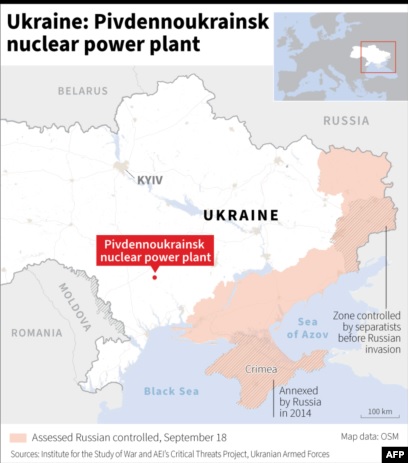
The Australian 22 Sept 22, A vast crater several metres deep in empty land strewn with wild grass bears witness to the shelling this week at the Pivdennoukrainskpower plant site in southern Ukraine, the latest sign of nuclear risk in the war-scarred nation.
Small shards of grey metal, similar to rocket and missile fragments that litter innumerable fighting-damaged Ukrainian places, dot the loamy earth gouged out by the impact.
“That’s where the blast of the explosion went towards,” said Ivan Zhebet, security chief at the Pivdennoukrainsk plant in the southern Mykolaiv region.
A compass reading by an AFP journalist indicated that it was fired from the southeast, territory under Russian control.
The shell struck shortly after midnight on Monday, just minutes after an air raid warning sounded in nearby Yuzhnourainsk, a town that had until then been relatively calm.
Others said they saw a flash of light in the sky.
All the residents questioned by AFP worried that the nuclear site — which directly provides jobs for 6,000 of the town’s 42,000-strong population and indirectly for many more — would be hit.
Pivdennoukrainskis the third nuclear site to be caught up in a conflict that began with Russia’s invasion in February………………………………………..
Nataliya Stoikova, a department head at Pivdennoukrainsk, said:
“The danger is really frightening. If something were to happen (at Pivdennoukrainsk) or Zaporizhzhia, the accident at Chernobyl would be almost small” by comparison. https://www.theaustralian.com.au/news/latest-news/war-fears-at-another-ukraine-nuclear-site/news-story/d81fe91e6bd375729e35eb4caaea2c95
Is Zaporizhzhia safer now?

What is “cold shutdown”? And what about the fuel pools?
Cold shutdown reduces risk of disaster at Zaporizhzhia nuclear plant – but combat around spent fuel still poses a threat
By Najmedin Meshkati, University of Southern California
Is Zaporizhzhia safer now? — Beyond Nuclear International Energoatom, operator of the Zaporizhzhia Nuclear Power Plant in the Ukrainian city of Enerhodar, announced on Sept. 11, 2022, that it was shutting down the last operating reactor of the plant’s six reactors, reactor No. 6. The operators have put the reactor in cold shutdown to minimize the risk of a radiation leak from combat in the area around the nuclear power plant.
The Conversation asked Najmedin Meshkati, a professor and nuclear safety expert at the University of Southern California, to explain cold shutdown, what it means for the safety of the nuclear power plant, and the ongoing risks to the plant’s spent fuel, which is uranium that has been largely but not completely depleted by the fission reaction that drives nuclear power plants.
What does it mean to have a nuclear reactor in cold shutdown?
The fission reaction that generates heat in a nuclear power plant is produced by positioning a number of uranium fuel rods in close proximity. Shutting down a nuclear reactor involves inserting control rods between the fuel rods to stop the fission reaction.
The reactor is then in cooldown mode as the temperature decreases. According to the U.S. Nuclear Regulatory Commission, once the temperature is below 200 degrees Fahrenheit (93 Celsius) and the reactor coolant system is at atmospheric pressure, the reactor is in cold shutdown.
When the reactor is operating, it requires cooling to absorb the heat and keep the fuel rods from melting together, which would set off a catastrophic chain reaction. When a reactor is in cold shutdown, it no longer needs the same level of circulation. The Zaporizhzhia Nuclear Power Plant uses pressurized water reactors.
How does being in cold shutdown improve the plant’s safety?
The shutdown has removed a huge element of risk. The Zaporizhzhia Nuclear Power Plant is a pressurized water reactor. These reactors need constant cooling, and the cooling pumps are gigantic, powerful, electricity-guzzling machines.
Cold shutdown is the state in which you do not need to constantly run the primary cooling pumps at the same level to circulate the cooling water in the primary cooling loop. The International Atomic Energy Agency (IAEA) has reported that reactor No. 6 is now in a cold shutdown state like the facility’s five other reactors, and will require less power for cooling. Now, at least if the plant loses offsite power, the operators won’t have to worry about cooling an operating reactor with cranky diesel generators.
And by shutting down reactor No. 6, the plant operators can be relieved of a considerable amount of their workload monitoring the reactors amid the ongoing uncertainties around the site. This substantially reduced the potential for human error.
The operators’ jobs are likely to be much less demanding and stressful now than before. However, they still need to constantly monitor the status of the shutdown reactors and the spent fuel pools.
What are the risks from the spent fuel at the plant?
The plant still needs a reliable source of electricity to cool the six huge spent fuel pools that are inside the containment structures and to remove residual heat from the shutdown reactors. The cooling pumps for the spent fuel pools need much less electricity than the cooling pumps on the reactor’s primary and secondary loops, and the spent fuel cooling system could tolerate a brief electricity outage.
One more important factor is that the spent fuel storage racks in the spent fuel pools at the Zaporizhzhia Nuclear Power Plant were compacted to increase capacity, according to a 2017 Ukrainian government report to the IAEA. The greater number and more compacted the stored spent fuel rods, the more heat they generate and so more power is needed to cool them.
There is also a dry spent fuel storage facility at the plant. Dry spent fuel storage involves packing spent fuel rods into massive cylinders, or casks, which require no water or other coolants. The casks are designed to keep the fuel rods contained for at least 50 years. However, the casks are not under the containment structures at the plant, and, though they were designed to withstand being crashed into by an airliner, it’s not clear whether artillery shelling and aerial bombardment, particularly repeated attacks, could crack open the casks and release radiation into the grounds of the plant.
The closest analogy to this scenario could be a terrorist attack that, according to a seminal study by the National Research Council, could breach a dry cask and potentially result in the release of radioactive material from the spent fuel. This could happen through the dispersion of fuel particles or fragments or the dispersion of radioactive aerosols. This would be similar to the detonation of a “dirty bomb,” which, depending on wind direction and dispersion radius, could result in radioactive contamination. This in turn could cause serious problems for access to and work in the plant.
Next steps from the IAEA and UN
The IAEA has called on Russia and Ukraine to set up a “safety and security protection zone” around the plant. However, the IAEA is a science and engineering inspectorate and technical assistance agency. Negotiating and establishing a protection zone at a nuclear power plant in a war zone is entirely unprecedented and totally different from all past IAEA efforts.
Establishing a protection zone requires negotiations and approvals at the highest political and military levels in Kyiv and Moscow. It could be accomplished through backchannel, Track II-type diplomacy, specifically nuclear safety-focused engineering diplomacy. In the meantime, the IAEA needs strong support from the United Nations Security Council in the form of a resolution, mandate or the creation of a special commission.
Najmedin Meshkati, Professor of Engineering and International Relations, University of Southern California
Hundreds Of Children Included In Ukrainian Public Kill-List

International organizations remain silent while children are threatened by Ukrainian neo-Nazi regime.
thefreeonline by Lucas Leiroz, researcher in Social Sciences at the Rural Federal University of Rio de Janeiro; geopolitical consultant.
Despite many complaints, appeals and critiques, the infamous Ukrainian website “Myrotvorets” remains active on the internet.
The site exposes the personal data of thousands of people considered enemies by the Ukrainian neo-Nazi regime, making it the largest public kill-list ever witnessed.
Journalist Olesya Buzina shot dead in Kiev Western media’s invented ‘Narrative’ ignores Ukraine’s public Kill List: ’12 journalists killed already’- must be deleted!
The most terrible point of this situation is that hundreds of ethnic Russian children are included in this list. Russian diplomats demand a position on the part of UNICEF on the matter, but international organizations remain silent.
“Publishing personal data, addresses and phone numbers, on minors is a crime. It’s like a menu for pedophiles or people doing human trafficking.”
Although Myrotvorets is officially an NGO, in practice it operates in a fully integrated manner with the Ukrainian government. The very purpose of the site is to provide a database of alleged “enemies” of the Ukrainian state, thus being much more of a Kiev intelligence department than an NGO.
The website project started precisely in 2014, as well as the beginning of the ethnic and political persecution against Russian citizens and Maidan’s opponents.
The word LIQUIDATED was placed on the entry of Russian photojournalist Andrei Stenin after his murder and many others listed and subsequently killed, including the Italian Andrea Rocchelli.
Also, it must be noted that many of the people included in the list were actually murdered, such as Russian journalist Daria Dugina, which shows that Ukrainian intelligence forces really use the data provided by Myrotvorets and try to “fulfill” the kill-list proposed by the website.
However, what is most shocking in this issue is the presence of children on this list. The Ukrainian government and its allied neo-Nazi organizations do not seem to distinguish who actually poses a threat to the Maidan’s political regime and who does not.
For them, everyone who opposes the government and publicly expresses their critical opinions must be exterminated, even innocent civilians and children.
According to a recent data survey by journalist Mira Terada, at least 327 children would have had their personal data exposed by Myrotvorets. Considering that Ukrainian forces really try to kill those on this list, the lives of these children are in danger.
Investigations into this topic increased after Faina Savekova, a 12-year-old girl from Lugansk, was added to the list for posting letters on the internet expressing pride for the Russian identity of her people and criticism against the current Ukrainian policies in her region.
After her data was exposed, Faina asked the UN for help, even writing letters to the Secretary General, which were never answered.
Russian journalist Veronika Naydenova, originally from Crimea but living in Germany, was added to the list in January, also after raising the inclusion of children, including 13-year-old Faina Savenkova, from the Lugansk People’s Republic.
“The same day my article was published, I was added to the list. But this hasn’t stopped me, I’ve written many articles since.”
UNICEF, which would be the UN office responsible for caring for children, also remained silent, showing the omission of international organizations in the face of the serious Ukrainian problem.
Currently, we know that Faina is just one of hundreds of children in the kill-list, but that has not changed the international silence.
On September 14, Russian diplomat at the UN Dmitry Polyanskiy made some comments on this matter on his social media. He criticized the omission on the part of the UN and called on UNICEF to comment on the case.
Polyanskiy was realistic and said that he does not expect legal or coercive action against Ukraine, but only a simple formal condemnation for these acts…………………….
Considering recent Ukraine’s history, in which murders, massacres of civilians and terrorist attacks have become commonplace, it is possible to say that these 327 children, as well as the thousands of other innocent people exposed by the site, are indeed in danger………………….. https://thefreeonline.com/2022/09/17/waiting-to-die-hundreds-of-children-included-in-ukrainian-public-kill-list/
New research on how nuclear war would affect Earth today – it won’t matter who is bombing whom

Kelly Kizer Whitt, 18 Sept 22,
A nuclear war would devastate our oceans and our world, with some effects lasting thousands of years. That’s the conclusion of a new study led by Cheryl Harrison at Louisiana State University in Baton Rouge. She said in a statement:
It doesn’t matter who is bombing whom. It can be India and Pakistan or NATO and Russia. Once the smoke is released into the upper atmosphere, it spreads globally and affects everyone.
These scientists’ simulations showed that it doesn’t matter whether the detonation of a nuclear arsenal came through a deliberate act of war, or through accident or hacking Their statement explained:
In all of the researchers’ simulated scenarios, nuclear firestorms would release soot and smoke into the upper atmosphere that would block out the sun, resulting in crop failure around the world. In the first month following nuclear detonation, average global temperatures would plunge by about 13 degrees Fahrenheit (7 degrees C), a larger temperature change than in the last Ice Age.
Ocean temperatures would drop quickly and would not return to their pre-war state even after the smoke clears. As the planet gets colder, sea ice expands by more than 6 million square miles and 6 feet deep in some basins blocking major ports including Beijing’s Port of Tianjin, Copenhagen and St. Petersburg. The sea ice would spread into normally ice-free coastal regions blocking shipping across the Northern Hemisphere making it difficult to get food and supplies into some cities such as Shanghai, where ships are not prepared to face sea ice.
The sudden drop in light and ocean temperatures, especially from the Arctic to the North Atlantic and North Pacific oceans, would kill the marine algae, which is the foundation of the marine food web, essentially creating a famine in the ocean. This would halt most fishing and aquaculture.
The scientists published their study in the peer-reviewed journal AGU Advances on July 7, 2022.
Where are the nuclear weapons?
Nine nations control more than 13,000 nuclear weapons on Earth, these scientists said. According to worldpopulationreview.com, the top three countries with nuclear weapons include Russia with 6,257, the United States with 5,550 and China with 350. The Treaty on the Non-Proliferation of Nuclear Weapons (NPT) aims to control the spread of nuclear weapons and reaches for disarmament.
In their study, the researchers simulated what would happen if the U.S. and Russia used 4,400 100-kiloton nuclear weapons. This would result in fires that would put more than 330 billion pounds of smoke and sunlight-absorbing black carbon into the upper atmosphere.
In another simulation, they imagined India and Pakistan detonating about 500 100-kiloton nuclear weapons. This would inject 11 to 103 billion pounds of smoke and soot into the upper atmosphere.
In all the simulations, the result was essentially the same.
The effect on marine life
With a blackened sky from the nuclear firestorm, oceans would receive less light and heat. This is especially true from the Arctic to the North Atlantic and North Pacific. Marine algae (seaweed), the base of the ocean’s food web, would die. Thus, a chain reaction would follow, creating a famine in the ocean. Fishing and aquaculture would mostly come to an end. So marine life suffers from both the initial blast and the resulting new ocean conditions.
Ocean waters would take longer to recover than on land. The changes to Arctic sea ice alone would probably last thousands of years, ushering in what the scientists called a Nuclear Little Ice Age.
Events other than nuclear war with similar results
Nuclear war isn’t the only event that could lead to these results of devastation in the ocean and on land. Massive wildfires and volcanic eruptions could eject enough soot into the atmosphere for similar results. Massive volcanic eruptions in the past have even caused multiple mass extinction events on Earth. Harrison said:
We can avoid nuclear war, but volcanic eruptions are definitely going to happen again. There’s nothing we can do about it, so it’s important when we’re talking about resilience and how to design our society, that we consider what we need to do to prepare for unavoidable climate shocks. We can and must, however, do everything we can to avoid nuclear war. The effects are too likely to be globally catastrophic.
China, and others, see the International Atomic Energy Agency as biased in supporting AUKUS nuclear submarines plan

Ed note. My problem with the IAEA is that it is NOT an impartial body, on matters nuclear
China accuses IAEA of issuing a ‘lopsided’ report on AUKUS nuclear submarines plan, more https://www.abc.net.au/news/2022-09-14/china-iaea-lopsided-aukus-nuclear-submarines-report/101441254 By foreign affairs reporter Stephen Dziedzic 15 Sept 22
China’s Foreign Affairs Ministry has launched a furious attack on the UN nuclear watchdog over AUKUS, accusing the International Atomic Energy Agency (IAEA) of issuing a “lopsided” report about Australia’s plan to build nuclear submarines while ignoring widespread concerns about its ramifications for non-proliferation.
Key points:
- The IAEA issued a report to member states which said it was “satisfied with the level of engagement” from Australia, the UK and US
- A Chinese Foreign Ministry spokeswoman slammed the report, saying China was “gravely concerned about the substance” of it
- China has lobbied against AUKUS accusing the three countries of undermining the non-proliferation treaty
Last week the IAEA sent member states a confidential report on Australia’s move to develop the submarines drawing on nuclear submarine technology provided by the United States and the United Kingdom.
China has lobbied relentlessly against the deal in international forums, accusing the three countries of undermining the non-proliferation treaty and fuelling a regional arms race.
However Reuters reported last Friday that the IAEA issued a confidential report to member states which said it was “satisfied with the level of engagement” with the agency from all three nations so far.
Earlier this week the IAEA Director General Rafael Grossi struck a similar tone while addressing the agency’s Board of Governors, saying the Secretariat had held four “technical meetings” with the three AUKUS members so far and suggesting it was comfortable with the way they were handling the matter.
But on Tuesday Chinese Foreign Ministry spokeswoman Mao Ning slammed the report, saying China was “gravely concerned about the substance.”
“This report lopsidedly cited the account given by the US, the UK and Australia to explain away what they have done, but made no mention of the international community’s major concerns over the risk of nuclear proliferation that may arise from the AUKUS nuclear submarine cooperation,” she said.
“The report turns a blind eye to many countries’ solemn position that the AUKUS cooperation violates the purpose and object of the NPT.”
IAEA report finds AUKUS non-proliferation risks ‘limited’
While China has repeatedly attacked Australia, the United States and the United Kingdom over the agreement, this is the first time it has publicly excoriated the IAEA over the matter.
US and Australian officials have privately accused Beijing of gross hypocrisy over its public attacks on AUKUS, pointing out that China has been rapidly developing its own fleet of nuclear powered submarines — including submarines capable of launching nuclear weapons.
But nuclear non-proliferation advocates have also raised serious concerns about AUKUS, suggesting that it will establish a dangerous precedent by allowing a non-nuclear state to acquire nuclear propulsion technology for the first time.
Indonesian diplomats have also repeatedly made it clear they’re uneasy about the plan, and the country’s foreign ministry recently claimed recently that it won widespread support at the United Nations nuclear non-proliferation review conference for its plan to monitor nuclear material in submarines more closely.
Reuters reported last week that the IAEA report acknowledged Australia’s argument that the non-proliferation risks posed by AUKUS were limited because it would only be provided with “complete, welded” nuclear power units which would make removing nuclear material “extremely difficult.”
It reportedly also said the material within the units could not be used in nuclear weapons without chemical processing which requires facilities which Australia does not have and will not seek.
Australia needs a non-nuclear submarine – the TKMS TYPE 218SG would be fine – just do it, Richard Marles!

This article is definitely worth the read! Highly possible we may not be getting nuclear subs in Australia – and the reasons why!
National Times The Answer is staring Richard Marles in the Face. ( Article by Politics Australia) 17 Sept 22

It was fomer Australian Prime Minister Scott Morrison’s rank incompetence, stupidity and arrogance that has landed Australia in its Submarine replacement program dilemma.
But all this goes back the Liberal Party and its bizarre idea to buy French Nuclear Submarines and have them convert back to a conventional propulsion system. This meant a complete redesign of the existing hull to accommodate diesel engines, fuel tanks and bank of batteries.
Just what were our Defence Planners thinking, obviously the French must have been laughing all the way to the bank.
All this was done in the face of existing and proven conventionally designed submarines. Submarines that were available at the time.

It was only because Scott Morrison wanted to appear the big man by cancelling the French submarine contract and tugging his forelock to the British and the Americans who held out the distant promise of Australia buying British or American Nuclear Submarines. In reality it was about basing existing American submarines here for them to operate out of Australia.
As it turns out the current and forecast British and American building programs have no scope to add in an extra eight or so submarines for Australia’s needs and never intended to.
Then there was Peter Dutton’s desperate political pitch that Australia could lease a couple of Nuc Boats from the Americans, another stupid idea.

At present Richard Marles is doing an ‘all the way with LBJ’ routine, sticking to the script with Australia purchasing Nuclear Submarines. Having Nuc Boats isn’t just a matter of tying them up at the Port of Darwin, Freemantle, or Sydney. There needs to be specific infrastructure to accommodate, service and maintain these expensive pieces of kit and that is something Australia does not have.
Sure, the proponents of Nuclear Submarines will argue that Nuc Boats have unlimited range and would be able to conduct long range patrols right up into the South China Sea, in cooperation with the Americans, and remain on station undetected for weeks and weeks on end.
While in theory this is true, Nuc Boats and to a lesser degree conventional submarines are governed by the same logistical problem that faced the Germans in WWII and that is the amount of food they need to carry.
Politics Australia can assure our readers that a Nuc Boat’s endurance is governed by the amount food it can carry which obviously limits its time on station.
So, let’s look at some basic economics.
If it were to occur, Australia might purchase a current Virginia class submarine which costs $US3.6 billion ($5.2 billion) but as reported in the Australian Financial Review by Andrew Tillett who reports that estimates for the new design put the price tag at between $US5.8 billion ($8.4 billion) and $US6.2 billion ($9 billion) per boat.
However, the cost of a German 218 class submarine is $1.36 Billion.
For instance, the German 212A, 214 and 218 class submarines are very capable and are equipped with Air Independent Propulsion.
The Air Independent Propulsion allows submarines to stay underwater longer before surfacing to recharge the battery that powers its systems. The battery is charged by a diesel engine that needs air to operate.
As such, the Type 218SG Submarine can last underwater two times longer than Australia’s current Collins Class submarines. “That makes the submarine even more stealthy and mysterious because it can be all over the place without coming up,”
They have a crew of 30 and can stay submerged for 3-4 weeks.
Australia could buy 10 class 212A or 218 submarines off the shelf for approximately $15B by around 2030,
It’s widely known the Germans are very keen to do a deal with Australia over Submarine purchases.
The conventional Submarines are quieter than nuke boats and could be maintained in Australia.
Nuclear submarines are unmaintainable in Australia and would have to be maintained in the USA. Crews in the vicinity of 100 to 137 add to the costs, and if ever delivered, it won’t be until at least 2045 at a cost of more than $150B.
Food for thought, isn’t it?
Richard Marles has to stop dithering and tugging his forelock to the Americans and think about Australia’s needs first and not those of the Americans and their anti-China stance.
Richard Marles can order German, Japanese, Spanish or Swedish conventional submarines and have them delivered in a timely manner whilst still maintaining Australia’s best interests.
Stop dithering Richard Marles and just ‘do it’
How we got to an $850 billion Pentagon budget – “independent” think tanks are funded by weapons corporations.

Speaking Security Newsletter | Note n°173 | 16 September 2022, Stephen Semler
Situation
The Senate might vote on the fiscal year 2023 military budget this month. Or it might not; nobody’s sure. What’s for certain is that the bill the Senate considers will have at least as much as $850 billion for the Pentagon. In other words, we’re staring down a $72 billion year-to-year increase in military spending with this legislation: The FY2022 version of the same bill (National Defense Authorization Act, or NDAA) licensed $778 billion for the Pentagon.
How we got to an $850 billion Pentagon budget
In March, Joe Biden proposed increasing annual military spending by $35 billion—to $813 billion—as part of his FY2023 budget request. In June, the House Armed Services Committee (HASC) added another $37 billion on top of that before advancing the $850 billion bill to the House floor for approval.
This decision was reportedly a matter of course for the committee. According to one HASC member, there was “almost no debate” on dumping another $37 billion on top of Biden’s own proposed increase. An overlooked reason why the committee’s move was so automatic was the ‘expertise’ that made a $72 billion year-to-year increase seem appropriate or even natural.
Think tanks are said to be free from the ugly forces that bias in-house policy planning—namely, all the lobbying and campaign cash that encourage members of Congress to make decisions based on parochial interests and not the public’s. The problem is that establishment think tanks are corrupted by the same monied interests members of Congress are. In this case, we’re talking about the arms industry.
Every think tank represented in a House Armed Services Committee hearing to provide expert testimony from January 1, 2020 through September 16, 2022 that disclosed its donors received funding from military contractors (the one that didn’t disclose its donors was the hawkish American Enterprise Institute).
The result? Military contractors were able to launder their profit-driven interests through ostensibly non-political institutions, while powerful lawmakers on the HASC got their parochially-driven policy positions validated by ostensibly unbiased ‘expertise’.
In effect if not juridically, Ukraine was becoming a member of the NATO alliance. THE WORLD SPLIT APART

THE WORLD SPLIT APART 2.0: Introduction Russian & Eurasian Politics, GORDON M. HAHN 21 Sept 22,
Nearly a decade ago I began warning that NATO expansion and the West’s failure to understand that Russian national security interests not a Russian desire to ‘recreate the USSR’ or ‘former Russian empire’ would lead to a world split apart between the West and ‘the rest’ (Sino-Russian ‘strategic partnership and those states oriented towards it).…………………………………………………………………………..
NATO expansion to Ukraine continued with Ukrainian membership replaced by deep Western and NATO involvement in Ukraine’s politics and military and gradually deepening after the 2014 Maidan revolt. In effect if not juridically, Ukraine was becoming a member of the NATO alliance.
In this regard, it is important to point out that the famous Article 5 of the NATO Charter is not a blanket, mandatory obligation to engage directly in military action in defense of an alliance member under attack by an alliance non-member state. It merely requires consultations and assistance, which can but does not necessarily have to be the commitment of member-states’ forces directly to the battlefield.
Assistance can include the provision of weapons, training, intelligence, and other forms of indirect assistance. This was already happening in Ukraine as a result of NATO policies. Russian President responded with his invasion rapidly to both escalating that level of NATO military and intelligence assistance to Ukraine and accelerating the bifurcation of the world between the West and the rest.
For all intents and purposes NATO and the entire West are at war with Russia and escalation to a more direct confrontation is just over the horizon. This course of events has deepened and consolidated the Sino-Russian alliance by any other name and that alliance’s efforts to rally to its side the rest of the rest. The world is becoming split apart as never before – an outcome globalization was not supposed to being about. The ‘new cold war’ is driving towards a greater bifurcation of the world into two camps than the confrontation between communism and capitalism ever engendered. Continuation to follow. https://wordpress.com/read/feeds/33462456/posts/4272028238
THE WORLD SPLIT APART 2.0: Introduction — Russian & Eurasian Politics
Nevada files motion regarding Yucca Mountain Nuclear Waste Project, launches dedicated website with educational resources.

Nevada’s staunch bi-partisan opposition to the project
Nevada Governor Steve Sisolak, CARSON CITY, NV – September 20, 2022
Today, Nevada Governor Steve Sisolak and the Nevada Agency for Nuclear Projects announced the filing of a new legal motion to bring an end to failed federal plans to construct a repository for the nation’s highly radioactive waste at Yucca Mountain, 65 miles northwest of Clark County’s populated areas.
The motion is being filed before the United States Nuclear Regulatory Commission. It asks the Nuclear Regulatory Commission to resume the adjudicatory portion of the licensing procedures so that Nevada may take specific additional steps aimed at stopping the project.
As a companion to the legal motion, today, the State launched a new webpage with resources recapping the failed policies that led to the designation of the Yucca Mountain Project and the geographic flaws in the site.
“It is time to take the lessons learned from the Yucca Mountain experiment and chalk them up to experience,” Governor Sisolak said. “This is a fight that Nevada has battled since 1987. The past three Presidential Administrations have agreed that Yucca Mountain is unworkable. It is time for this Administration and the Department of Energy to follow through and support the case made by Nevada’s leaders, legislators, experts and legal team.”
“I’ve opposed every attempt to revive the failed Yucca Mountain project, and it’s time we take this unsuitable site off the table once and for all,” said Senator Catherine Cortez Masto. “I support Nevada’s efforts to end the licensing process for Yucca Mountain, and I will continue to work with all stakeholders at the federal, state, local, and Tribal levels to find a safe, workable, and consent-based alternative.”
“For years, I have been fighting alongside our delegation to prevent Nevada from ever becoming the nation’s dumping ground for nuclear waste because it threatens our state’s security, economy, and public health,” said Senator Jacky Rosen. “That’s why I’m strongly supporting Nevada’s actions to finally put an end to Yucca Mountain, taking steps that would block future misguided efforts to try to revive this ill-conceived project against our state’s consent.”……………………………………………………………..
“Year after year, we’ve had to fight to ensure that Nevada does not become our nation’s dumping ground for nuclear waste,” said Rep. Susie Lee (NV-03). “I’m proud to sit on the Appropriations Committee’s Subcommittee on Energy and Water, where I’ve successfully blocked any funding going toward reviving Yucca Mountain, and I have worked with the Department of Energy to secure a commitment to finding consent-based alternatives to the proposed nuclear repository at Yucca Mountain. Now, it’s time to put an end to this failed project once and for all. That’s why I support the state of Nevada’s efforts to end the licensing for Yucca Mountain and to open the door to a productive consent-based solutions for nuclear waste storage.”
Videos and podcasts on the new webpage feature Nevada technical experts and document the project’s flaws, ill-conceived efforts to address site weaknesses with engineered barriers, and the need for nuclear waste and spent fuel solutions that are grounded in a robust consent-based siting process.
Nevada’s staunch bi-partisan opposition to the project and the history behind it is also featured on the webpage in an interview with former Nevada Rep. Jim Bilbray before his death last year about the so-called “Screw Nevada Bill,” that singled out Yucca Mountain as the nation’s sole repository site.
After more than three decades, continuing to pursue a license for the Yucca Mountain Project would expend additional time, millions more taxpayer dollars on a project that Nevada has demonstrated time and again will fail to securely and safely house the nation’s nuclear waste. The motion filed by the State today is the first step towards putting an end to thirty years of failed policy and acting on the need for a more fair, consent-based process to address the nuclear waste disposal needs of the United States. https://gov.nv.gov/News/Press/2022/2022-09-20_Yucca_Mountain_Nuclear_Waste/
1 This Month
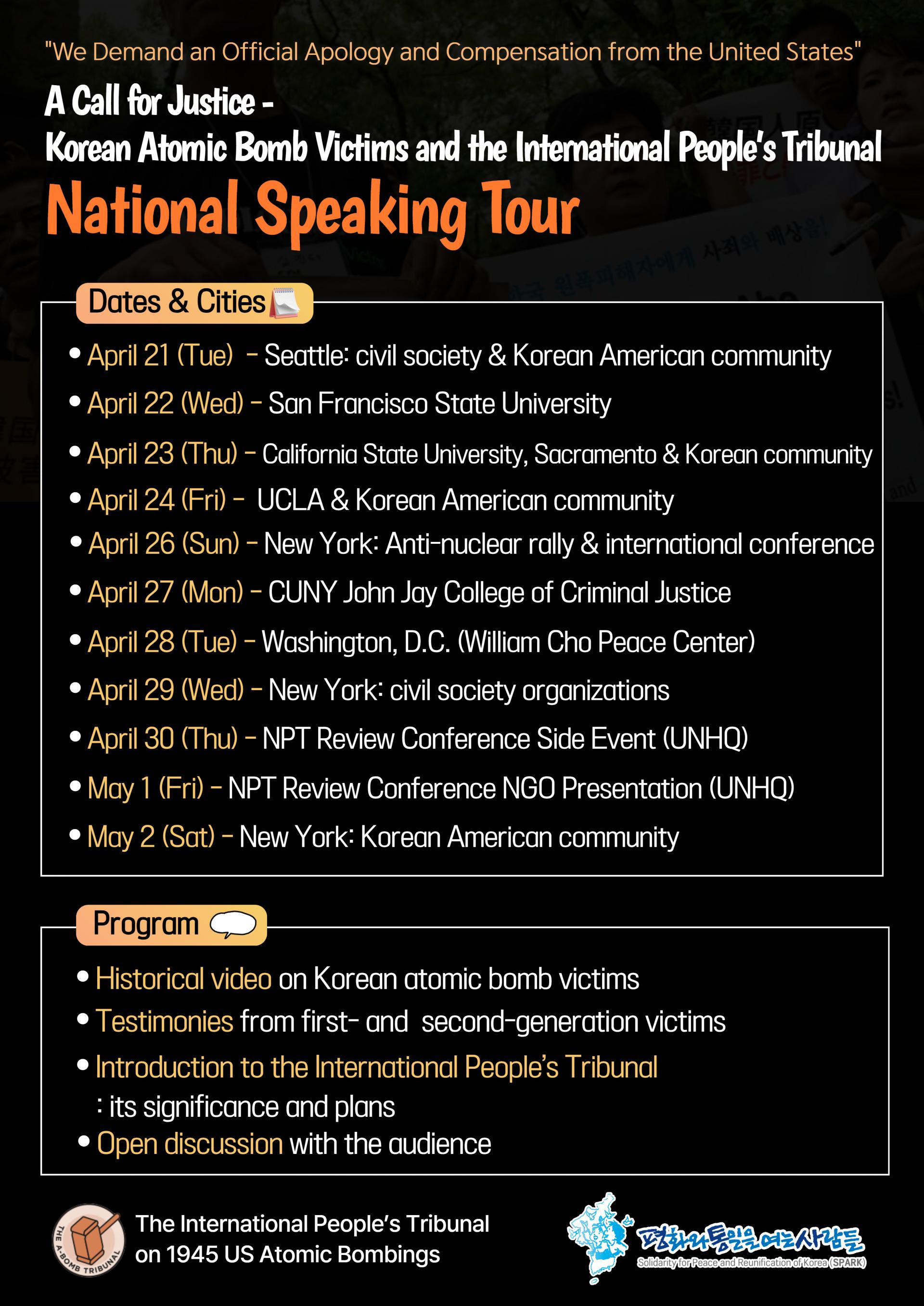
23 April – WEBINAR – Why new nuclear reactors are the wrong tools for decarbonization Thursday, April 23 • 1 AM – 2 AM AEST
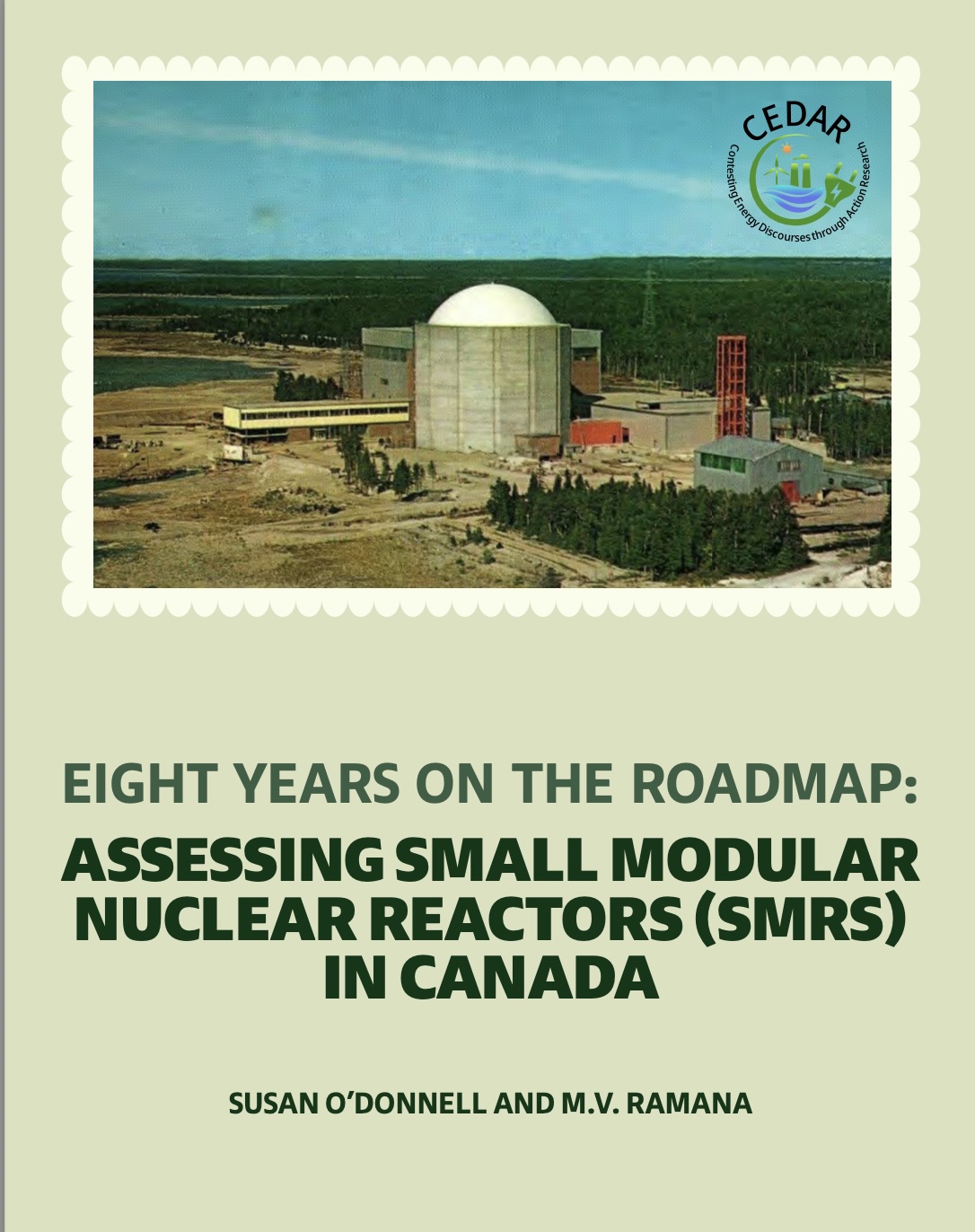

Pine Ridge Uranium is the real threat, not Tehran- Tell Burgum: Stop the Extraction.
Chernobyl: The Lost Tapes – A good documentary on Chernobyl on SBS available On Demand for the next 3 weeks– https://www.sbs.com.au/ondemand/tv-program/chernobyl-the-lost-tapes/2352741955560
To see nuclear-related stories in greater depth and intensity – go to https://nuclearinformation.wordpress.com
-
Archives
- April 2026 (275)
- March 2026 (251)
- February 2026 (268)
- January 2026 (308)
- December 2025 (358)
- November 2025 (359)
- October 2025 (376)
- September 2025 (257)
- August 2025 (319)
- July 2025 (230)
- June 2025 (348)
- May 2025 (261)
-
Categories
- 1
- 1 NUCLEAR ISSUES
- business and costs
- climate change
- culture and arts
- ENERGY
- environment
- health
- history
- indigenous issues
- Legal
- marketing of nuclear
- media
- opposition to nuclear
- PERSONAL STORIES
- politics
- politics international
- Religion and ethics
- safety
- secrets,lies and civil liberties
- spinbuster
- technology
- Uranium
- wastes
- weapons and war
- Women
- 2 WORLD
- ACTION
- AFRICA
- Atrocities
- AUSTRALIA
- Christina's notes
- Christina's themes
- culture and arts
- Events
- Fuk 2022
- Fuk 2023
- Fukushima 2017
- Fukushima 2018
- fukushima 2019
- Fukushima 2020
- Fukushima 2021
- general
- global warming
- Humour (God we need it)
- Nuclear
- RARE EARTHS
- Reference
- resources – print
- Resources -audiovicual
- Weekly Newsletter
- World
- World Nuclear
- YouTube
-
RSS
Entries RSS
Comments RSS
 nuclear-news