Marshall Islands calls off talks after no US response on nuclear legacy plan

Giff Johnson, Editor, Marshall Islands Journal / RNZ Pacific correspondent, Editor, Marshall Islands Journal / RNZ Pacific correspondent 24 Sept 22,
On the eve of the US Pacific Islands Summit in Washington, a key ally in the region called off a scheduled negotiating session for a treaty Washington views as an essential hedge against China in the region.
The Marshall Islands and the United States negotiators were scheduled for the third round of talks this weekend to renew some expiring provisions of a Compact of Free Association when leaders in Majuro called it off, saying the lack of response from Washington on the country’s US nuclear weapons testing legacy meant there was no reason to meet.
Marshall Islands leaders have repeatedly said the continuing legacy of health, environmental and economic problems from 67 US nuclear tests from 1946-1958 must be satisfactorily addressed before they will agree to a new economic package with the US.
Washington sees the Compact treaties with the Marshall Islands, Federated States of Micronesia, and Palau, which stretch across an ocean area larger than the continental US, as key to countering the expansion of China in the region.
“The unique security relationships established by the Compacts of Free Association have magnified the US power projection in the Indo-Pacific region, structured US defense planning and force posture, and contributed to essential defense capabilities,” said a new study released September 20 in Washington, DC by the United States Institute of Peace, “China’s Influence on the Freely Associated States of the Northern Pacific.”
China’s naval expansion is increasing the value of the US relationship with the freely associated states (FAS)………………………..
US and Marshall Islands negotiators have both said they hope for a speedy conclusion to the talks as the existing 20-year funding package expires on September 30, 2023. But the nuclear test legacy is the line in the sand for the Marshall Islands.
“The entire Compact Negotiation Committee agreed – don’t go,” said Parliament Speaker Kenneth Kedi, who represents Rongelap Atoll, which was contaminated with nuclear test fallout by the 1954 Bravo hydrogen bomb test at Bikini Atoll and other weapons tests.
“It is not prudent to spend over $100,000 for our delegation to travel to Washington with no written response to our proposal. We are negotiating in good faith. We submitted our proposal in writing.” But he said Friday, “there has been no answer or counter proposal from the US.”
US and Marshall Islands officials had been aiming to sign a “memorandum of understanding” at the summit as an indication of progress in the discussions, but that now appears off the table…………………
Marshall Islands President David Kabua, while affirming in his speech at the UN that the Marshall Islands has a “strong partnership” with the US, added: “It is vital that the legacy and contemporary challenges of nuclear testing be better addressed” (during negotiations on the Compact of Free Association). “The exposure of our people and land has created impacts that have lasted – and will last – for generations.”
The Marshall Islands submitted a proposed nuclear settlement agreement to US negotiators during the second round of talks in July. The US has not responded, Kedi and other negotiating committee members said Friday in Majuro.
……………………………… “We live with the problem (from the nuclear tests),” said Kelen, a displaced Bikini Islander. “We know the big picture: bombs tested, people relocated from their islands, people exposed to nuclear fallout, and people studied. We can’t change that. What we can do now is work on the details for this today for the funding needed to mitigate the problems from the nuclear legacy.”
Kedi said he was tired of US attempts to argue over legal issues from the original Compact of Free Association’s nuclear test settlement that was approved 40 years ago before the Marshall Islands was an independent nation.
That agreement, which provided a now-exhausted $150 million nuclear compensation fund, was called “manifestly inadequate” by the country’s Nuclear Claims Tribunal, which over a two-decade period determined the value of claims to be over $3 billion.
“Bottom line, the nuclear issue needs to be addressed,” Kedi said…………………..
President Kabua is scheduled to participate in the White House-sponsored US Pacific Islands Summit on September 28-29.
Meanwhile, the members of his Compact negotiating team are in Majuro waiting for a response from the US government to their proposal to address the nuclear legacy. https://www.rnz.co.nz/international/pacific-news/475398/marshall-islands-calls-off-talks-after-no-us-response-on-nuclear-legacy-plan
A Nebraska county of only 625 people contained nearly 100 deep underground nuclear missiles, so the US Air Force halted a green-power project that would have revitalized its economy

MSN lvaranasi@insider.com (Lakshmi Varanasi) 22 Sept 22,
- There are hundreds of underground nuclear missiles across Colorado, Nebraska, Wyoming, North Dakota, and Montana.
- The US Air Force says wind turbines can’t be constructed within a 2-mile radius of these missiles.
- Due to underground missiles, a wind turbine project in Banner County, Nebraska, was limited in scope.
The Democrats’ new climate and tax bill will invest billions in clean energy. Here are 21 high-paying green careers for people who want to save the planet. (Business Insider)
- There are many occupations out there that help the environment, such as wind turbine service technician.
- The Inflation Reduction Act could mean more clean energy jobs created.
- Here are the 21 fastest-growing green jobs that also have an annual pay greater than the overall median pay.
Saving the earth and having a lucrative career aren’t always mutually exclusive, and the Democrats’ big climate and tax bill that just passed could mean even more investment in green jobs.
The Inflation Reduction Act could mean many more workers will be needed to fill various clean energy and other jobs in the coming years. The bill also says it will cut carbon emissions by about 40% by 2030……………………………… (Read the original article on Business Insider)
In Nebraska’s Banner County, the remains of Cold War America are buried right below the surface.
During the 1960s, when the US was locked in a nuclear stalemate with the then-Soviet Union, it began planting hundreds of nuclear missiles across rural swaths of the country like Colorado, Nebraska, Wyoming, North Dakota and Montana in case it needed to shoot them into the enemy camp at a given moment.
Now, those missiles are preventing the region from harnessing its most valuable resource: strong, gusty winds.
The Flat Water Free Press, an independent news outlet in Nebraska, reported last week that in 2019, the US Air Force began to thwart a wind turbine project in the state’s southwest Banner County.
Two renewable energy companies, Invenergy and Orion Renewable Energy Group, had singled out Banner for its “world class winds,” the Flat Water Free Press reported. They were ready to construct a combined 300 turbines across the region.
Each turbine would have brought in an additional $15,000 in annual income to the landowner whose property it would be built on. The capital from the turbines would have flushed into Banner’s school system and revitalized the 625-person county.
But the Air Force contended that the turbines would pose a “significant safety hazard” to pilots — especially during storms or blizzards. The Air Force decided that the turbines needed to be constructed 2.3 miles away from each other to ensure that pilots had enough space to land without potentially digging their wheels into a missile. Until then, a quarter mile between each turbine was had been sufficient.
“The new guidelines, explained to residents earlier this spring, significantly cut the number of possible turbines that could be constructed.”
Banner’s residents have been left frustrated and disillusioned by the Air Force’s new guidelines. “This resource is just there, ready to be used,” one Banner landowner said. “”How do we walk away from that?” Read the full story by The Flat Water Free Press here. https://www.msn.com/en-us/news/us/a-nebraska-county-of-only-625-people-contained-nearly-100-deep-underground-nuclear-missiles-so-the-us-air-force-halted-a-green-power-project-that-would-have-revitalized-its-economy/ar-AA126fRl?li=BBnbcA1
World powers must take Putin’s threat seriously, stop the escalation and seek a diplomatic solution.

Beware the prospect of a nuclear calamity
Marwan Bishara, Senior political analyst at Al Jazeera. 22 Sept 22,
The world’s indifference to the prospect of a nuclear disaster, today, is frankly insane.
For the past few months, Western experts have downplayed the probability that the Ukraine war would lead to nuclear escalation between Russia and the West. Since Putin first put Russia’s nuclear arsenal on alert back in February, many experts have argued that he was merely posturing in a bid to throw his “adversaries off balance”.
However, Putin’s most recent threats of using such weapons — made in a televised speech on Wednesday morning — must not be taken lightly, regardless of his motivation or intention. He said that Western officials have threatened Russia with nuclear weapons, a charge that US President Joe Biden denied during his speech to the United Nations General Assembly hours later. Putin also announced a partial mobilisation and his support for upcoming referendums in four Russian-controlled regions of Ukraine that could pave the way for their annexation by Moscow.
It’s one thing for the West to dismiss as irrelevant the threat of Putin firing, for instance, a secretary. However, any chance he may fire his nukes should be taken seriously, regardless of how remote the possibility is.
In fact, the West has so far avoided imposing a no-fly zone over Ukraine or transferring long-range missiles and other weapons that may threaten Russian territory for fear of the Kremlin’s retaliation against Europe…………………………………
as past Russian and American wars have shown – whether in Vietnam, Afghanistan, Iraq or elsewhere – a troops surge may win him time but won’t necessarily win him the war. That’s why he coupled his decision for a military surge with a nuclear warning, putting the West on notice: back off or face the consequences.
Hence the seriousness of Putin’s threat to use weapons of mass destruction. The threat is “not a bluff” as he put it, nor a bluster; it rather sounds desperate and deliberate. It is also the biggest escalation since the invasion began seven months ago and the biggest troop mobilisation since the end of the Cold War.
Some are now sounding a warning about Putin’s potential use of tactical nuclear weapons on the battlefield. …………………..
In theory, the use of these weapons, which are short-range and designed for limited strikes, sounds implausible considering Ukraine’s geographic proximity and Russia’s nuclear doctrine which underlines the defensive use of nuclear weapons or when the very existence of Russia is threatened……………………..
In short, the danger of a nuclear calamity is real if the war continues to escalate, whether by design or default; whether stemming from strategic or tactical use of nuclear weapons, or from the bombing of a nuclear plant.
None of it is inevitable and all of its totally avoidable. Nuclear powers have lost or ended conventional wars in the past without resorting to nuclear weapons. That’s why world powers have a duty to stop the escalation and to seek a diplomatic solution sooner rather than later.
Putin may be directly responsible for this war of aggression against Ukraine, but the West’s insistence on NATO’s expansion to Russia’s border and its sabre rattling in Ukraine have also been terribly provocative and reckless.
The war has been a disaster for all, especially Ukraine. It will get worse. That’s why cooler heads must prevail. Before it is too late. Those still hoping to win must remember that there is no winning a nuclear war. https://www.aljazeera.com/opinions/2022/9/22/beware-the-prospect-of-a-nuclear-calamity
NuScale Faces Class Action Lawsuit Brought by Former Employees

https://www.wweek.com/news/courts/2022/09/20/nuscale-faces-class-action-lawsuit-lawsuit-brought-by-former-employees/ By Lucas Manfield, September 20, 2022
Former employees of NuScale, a Tigard company that designs nuclear reactors, have filed suit in U.S. District Court in Portland, alleging the company denied them $100 million in proceeds when it went public earlier this year.
NuScale began trading under the ticker symbol SMR after a merger with a Special Purpose Acquisition Company in May. It was valued at nearly $1.9 billion, thanks to its innovative nuclear reactor design, which was recently greenlit by the U.S. Nuclear Regulatory Commission. The company emerged from research at Oregon State University.

The lawsuit is being brought by 13 former employees who allege that the company diluted the value of their stock without their approval using an “unlawful amendment” to an agreement between them and company. It’s similar to a lawsuit filed earlier this year, before NuScale went public, but this version is a class action on behalf of at least 600 shareholders.
They’re asking for $200 million in damages, along with the return of the money lost in the dilution.
After nearly going broke, NuScale’s founders sold a majority of the company to the Texas-based multinational conglomerate Fluor Corporation for $3.5 million in 2011. Fluor is named as a defendant in the lawsuit.
“They’re screwing the employees of the company,” says Timothy DeJong of the Stoll Berne law firm, who represents the former employees, most of whom were once NuScale executives.
NuScale released a statement to WW saying the “claims are without merit” and promised to defend itself in “the appropriate forum.” Fluor did not immediately respond to a request for comment.
Is UK government’s nuclear power policy scientifically feasible? – asks House of Commons Science and Technology Committee .
The deadline to submit to the Commons Science and Technology Committee’s
inquiry on the Government’s approach to developing new nuclear power is
fast approaching. The Committee of MPs is accepting written evidence
submissions until Friday 30 September.
The Committee’s inquiry is looking
for evidence from experts on what is required for the Government to achieve
its aim to approve up to eight new nuclear fission reactors by 2030, as
committed in its energy security strategy, and for nuclear to supply 25% of
electricity by 2050.
More than half of the UK’s 11 nuclear reactors are due
to be retired by 2025 with no immediate replacements, an approach which was
criticised in a recent Public Accounts Committee report. The Science and
Technology Committee’s inquiry is examining how the gap in nuclear
generating capacity, which currently accounts for around 15% of the UK’s
electricity, will be filled and energy supply protected.
Other issues in
scope of the Committee’s inquiry are: the funding and regulation of nuclear
power, including provisions in the Energy Security Bill introduced into
Parliament this year; the status of the different nuclear power
technologies, including fusion, and their role in achieving the net zero by
2050 target; the technical challenges facing the next generation of nuclear
power plants; what further research and development is required to build
capacity and how the management of nuclear waste can be improved.
The House of Commons Science and Technology Committee scrutinises the Government and
exists to ensure that policies and decision-making are based on solid
scientific evidence and advice.
HoC Science & Technology Committee 22nd Sept 2022
https://committees.parliament.uk/work/6864/delivering-nuclear-power/
US Media Held Murdered Russian Journalist to a Dangerous Standard
Whether or not one agrees with what they are saying, journalists of every nationality deserve protection from those who would use violence to silence them.
FAIR, LUCA GOLDMANSOUR, 23 Sept 22
After the August 20 car-bomb assassination of Darya Dugina, the daughter of a Russian ultranationalist political philosopher, US media outlets quickly branded the 29-year-old as an agent in Russia’s “disinformation war.” Rather than treating her as a member of the civilian press, they seemed to downplay her death as a casualty of war.
CNN (8/27/22) ran an article to this effect, failing to characterize her murder as an assassination, instead stating Dugina was “on the front lines” of Russia’s war effort, linking her to “Russia’s vast disinformation machine.” NPR (8/24/22) reported that Dugina was a “Russian propagandist” whose killing signaled the war was coming to Russian elites in their own territory. Foreign Policy (8/26/22) called Dugina a “dead propagandist” whose “martyrdom” did more to achieve her goals in death than she could have hoped for in life.
It is certainly true that during her life, Dugina, who espoused the philosophy of Russian Eurasianism, an expansionist political doctrine veiled as an objective analysis of Russian interests, had very little impact on Western audiences. This is true of most Russian journalists, despite the frequent warnings in US corporate media about the threat posed by Russian media messages. For instance, RT, often considered the foremost Russian outlet in the West, accounted for only 0.04% of Britain’s total viewing audience in 2017 (New Statesman, 2/25/22), and reached about 0.6% of the UK’s online population from February 2021 to the start of 2022—and this was before Western media platforms sharply restricted access to RT and other pro-Moscow outlets in the wake of the invasion of Ukraine.
Far more prevalent for Western viewers is the constant barrage of pro-NATO, pro-Western propaganda that vastly overstates the significance of Russian disinformation. Such was the case when CNN noted that Dugina ran a “disguised English-language online platform that pushed a pro-Kremlin worldview to Western readers.” By “disguised,” CNN is suggesting that the site she worked for, United World International, engaged in outright deception by not disclosing its Russian origins—much like CNN does not describe itself as a US-based outlet, but rather as a “world leader in online news and information.”
Whether UWI is purposefully misleading or not, CNN‘s underlying assumption is that Western audiences are so fickle that the most minimal exposure to pro-Kremlin viewpoints represents a threat to national security. It’s this stance that turns journalists with foreign ideologies into the equivalent of enemy combatants.
If CNN thinks disclosure is what separates journalism from propaganda, it might have disclosed the biases of the sources it used to contextualize Dugina’s murder. The article mostly relied on information from the Atlantic Council’s Digital Forensic Research Lab and the Center for European Policy Analysis, both of which are “used to promote the information interests of the US-centralized power alliance in Europe and North America” (Transcend.org, 9/5/22) and are funded by the US government, European allied nations and weapons manufacturers.
Whether or not one agrees with what they are saying, journalists of every nationality deserve protection from those who would use violence to silence them. So when CNN or other Western media downplay the assassination of Dugina on the grounds that she spread Russian propaganda, or even disinformation, that supported a war of aggression and other war crimes, they are setting a standard that puts their own colleagues at risk. (The exceptionalism that holds that US institutions can avoid the consequences faced by others is, of course, a central pillar of US propaganda.)
US corporate media have a long track record of advocating for illegal US aggression while knowingly parroting their government’s false pretenses. The New York Times, for instance, hasn’t opposed a US war since its tacit disapproval of Ronald Reagan’s invasion of Grenada in 1983 (FAIR.org, 8/23/17). The Times advocated for the illegal invasions of Afghanistan and Iraq (8/8/01, 2/12/03); the CIA’s attempted regime change in Syria (8/26/13); and US drone wars in Pakistan, Yemen and Somalia (2/6/13). With the body count from these conflicts far surpassing that of Russia’s invasion of Ukraine, how would the assassination of a New York Times editorial board member differ from Dugina’s murder? Aside, of course, from the fact that Dugina supported Washington’s geopolitical adversary…………………….. more https://fair.org/home/us-media-held-murdered-russian-journalist-to-a-dangerous-standard/
Moscow unlikely to use nuclear weapons, say ex-Russian generals
Former Russian generals tell Al Jazeera that while the prospect of nuclear war remains slim, the situation could quickly escalate.
Aljazeera, 24 Sept 22,
Russia is unlikely to use nuclear weapons in Ukraine unless NATO puts boots on the ground, two retired Russian generals have told Al Jazeera.
“If the collective West attacks Russia with its conventional armed forces, then Russia’s response could very well be nuclear since there is no comparison between the West’s conventional military potential and that of Russia,” said Evgeny Buzhinsky, a retired lieutenant general who served as the Russian military’s top arms control negotiator from 2001 to 2009.
However, Buzhnisky stressed that Russia had little to gain from using nuclear weapons in Ukraine under the present circumstances.
He argued that the Russian military did not need nuclear weapons to achieve its strategic objectives, such as destroying transport infrastructure used to deliver Western arms shipments or damaging the country’s electricity network.
Mutual destruction
At the same time, Buzhinsky warned that initiating a nuclear attack would almost certainly put Moscow and Washington on a dangerous escalating spiral.
“There can be no limited use of nuclear weapons – to think otherwise is an illusion,” he said.
“Any nuclear conflict between Russia and the United States will lead to complete mutual destruction.”
A similar assessment was given by Leonid Reshetnikov, a retired lieutenant general who spent more than 40 years working in the Soviet and Russian foreign intelligence services.
Reshetnikov told Al Jazeera that the prospect of Russia using tactical nuclear weapons in Ukraine was “impossible and would make little military sense” right now.
He argued that such a move would be a sharp deviation from the risk-averse strategy that Russia has pursued in Ukraine so far, noting that the Kremlin waited nearly seven months before declaring a partial mobilisation.
NATO troops becoming directly involved in the conflict could change Moscow’s calculus, however.
“The United States and practically all of Europe are already participating in this conflict by providing Ukraine with weapons, intelligence, instructors, and volunteers,” Reshetnikov said………………………………………….
Meanwhile, NATO Secretary-General Jens Stoltenberg told the Reuters news agency that the security bloc would “make sure that there is no misunderstanding in Moscow about the seriousness of using nuclear weapons,” while adding that it had not observed any changes in Russia’s nuclear posture.
In an interview with Britain’s Guardian newspaper, Mykhailo Podolyak, a senior aide to Ukrainian President Volodymyr Zelenskyy, urged other nuclear powers to commit to “swift retaliatory nuclear strikes” against Russia if Moscow attempted to use its weapons in Ukraine. https://www.aljazeera.com/news/2022/9/23/little-military-sense-for-nuclear-weapons-ex-russian-.
Poland distributes iodine pills as fears grow over Ukraine nuclear plant
WARSAW, Sept 22 (Reuters) – Poland, concerned about fighting around Ukraine’s Zaporizhzhia nuclear power plant, has distributed iodine tablets to regional fire departments to give to people in the event of radioactive exposure, a deputy minister said on Thursday…………………………………… (subscribers only) more https://www.reuters.com/world/europe/poland-distributes-iodine-pills-fears-grow-over-ukraine-nuclear-plant-2022-09-22/
At U.N., Micronesia denounces Japan plan to release Fukushima water into Pacific
UNITED NATIONS, Sept 22 (Reuters) – The president of the Pacific island state of Micronesia denounced at the United Nations on Thursday Japan’s decision to discharge what he called nuclear-contaminated water from the Fukushima Daiichi Nuclear Power Station into the Pacific Ocean………………… (subscribers only) more https://www.reuters.com/world/asia-pacific/un-micronesia-denounces-japan-plan-release-fukushima-water-into-pacific-2022-09-22/
s
Nuclear Weapon Development and Manufacturing Needs More Cybersecurity, Watchdog Says

Next Gov, By Kirsten Errick,.Tech Reporter, SEPTEMBER 23, 2022
The National Nuclear Security Administration, its contractors and subcontractors need to take cyber steps, according to a new report.
As the National Nuclear Security Administration and its contractors increasingly utilize advanced computers and digital systems to “integrate information systems into nuclear weapons, automate manufacturing equipment and rely on computer modeling to design weapons,” it needs to implement foundational cybersecurity risk management because these systems can be targets of cybersecurity attacks, according to a report released on Thursday.
The Government Accountability Office report noted that federal law and policies identify six practices for a cybersecurity management program. These practices are as follows: “identify and assign cybersecurity roles and responsibilities for risk management”; “establish and maintain a cybersecurity risk management strategy for the organization”; “document and maintain policies and plans for the cybersecurity program”; assess and update organization-wide cybersecurity risks”; designate controls that are available for information systems or programs to inherit”; and “develop and maintain a strategy to monitor risks continuously across the organization.”
However, GAO found that NNSA and its contractors have not fully implemented these key cybersecurity practices. NNSA has three types of technology or digital environments: traditional informational technology, operational technology and nuclear weapons information technology. GAO stated that NNSA has not fully implemented the cybersecurity practices in its operational technology and nuclear weapons information technology environments………………………………………….
GAO made nine recommendations for NNSA. For example, GAO suggested that the agency should fully implement a continuous cybersecurity monitoring strategy; determine the resources needed for operational technology efforts; delegate risk management roles and responsibilities; develop a nuclear weapons risk strategy; enhance oversight and monitoring of subcontractor cybersecurity. …. https://www.nextgov.com/cybersecurity/2022/09/nuclear-weapon-development-and-manufacturing-needs-more-cybersecurity-watchdog-says/377578/
Australia’s foreign minister warns of ‘catastrophic’ impact of Indo-Pacific war during UN address
9 News, By Savannah Meacham • Associate Producer Sep 24, 2022
Foreign minister Penny Wong has used her first major speech to the United Nations to warn of the impact of a war in the Indo-Pacific region, invoking the China-Taiwan tensions in all but name.
Wong not only condemned the invasion of Russia in Ukraine in her speech but she also forewarned the “catastrophic” impact conflict in the Indo-Pacific would have on Australia and the other Asia-Pacific nations.
“In my own region, where geopolitical contest becomes ever sharper, we must ensure that competition does not escalate into conflict,” Wong said.
“Because if conflict were to break out in the Indo-Pacific, it would be catastrophic – for our people and our prosperity.
“And with the Indo-Pacific’s centrality to global prosperity and security, the cost would extend far beyond our region and reach into every life.”
Wong questioned how countries can “apply the brakes” against rising tensions, like the one in the Indo-Pacific.
“It is up to all of us to ask ourselves how can we each use our state power, our influence, our networks, our capabilities, to avert catastrophic conflict?” she asked.
“How do we acquit our responsibilities to constrain tensions – to apply the brakes before the momentum for conflict in our region or beyond becomes unstoppable?”
In recent months, tensions have been developing between China and Taiwan.
Wong is addressing the UN to remind the group of Australia’s desire to have a seat on the council in 2029. She will support this by outlining Australia’s “resolve” to battle growing conflicts in the Asia Pacific.
“The Australian people want to be better, more involved, and more helpful members of the Pacific family,” Wong said.
“Australians want to enhance our defence, maritime and economic cooperation with Pacific Island Countries. And we want to be the Pacific’s partner of choice for development and security.
“It is why we seek a seat on the UN Security Council for 2029-2030. It is why we seek reform of the Security Council, with greater permanent representation for Africa, Latin America, and Asia, including India and Japan.”
‘We cannot leave it to the big powers’
She outlined Australia’s goal to become a significant player on the world stage and urge smaller countries to set their own fate aside from the one allegedly decided by global superpowers.
“It reminds us that each nation must make its own choices, and exercise its own agency. We cannot leave it to the big powers. And we cannot be passive when big powers flout the rules,” she said……………………. more https://www.9news.com.au/national/australian-foreign-minister-penny-wong-warns-of-impact-of-war-in-indo-pacific-united-nations-speech/e514adc1-9b31-4ed6-8d48-62f4b3cbb324
It was set to be Nebraska’s largest wind project. Then the military stepped in.
Flatwater Free Press. By Natalia Alamdari, 16 Sept 22,
“…………………….. With about 150,000 acres leased by energy companies, this county of just 625 people stood poised to become home to as many as 300 wind turbines.
It would have been the largest wind project in the state, bringing in loads of money for the landowners, the developers, the county and local schools.
But then, an unexpected roadblock: The U.S. Air Force.
Under the dusty fields of Banner County are dozens of nuclear missiles. Housed in military silos dug more than 100 feet into the ground, the Cold War relics lie in wait across rural America, part of the country’s nuclear defenses.
For decades, tall structures like wind turbines needed to be at least a quarter mile away from the missile silos.
But earlier this year, the military changed its policy.
Now, they said, turbines now can’t be within two nautical miles of the silos. The switch ruled out acres of land that energy companies had leased from locals — and wrested a potential windfall from dozens of farmers who’d waited 16 years for the turbines to become reality.
The stalled Banner County project is unique, but it’s one more way that Nebraska struggles to harness its main renewable energy resource.
Oft-windy Nebraska ranks eighth in the country in potential wind energy, according to the federal government. The state’s wind energy output has improved markedly in recent years. But Nebraska continues to lag far behind neighbors Colorado, Kansas and Iowa, all of whom have become national leaders in wind.
The Banner County projects would have grown Nebraska’s wind capacity by 25%. It’s now unclear how many turbines will be possible because of the Air Force’s rule change.
“This would have been a big deal for a lot of farmers. And it would have been an even bigger deal for every property owner in Banner County,” Young said. “It’s just a killer. Don’t know how else to say it.”
LIVING WITH NUKES………………………..
Today, there are decommissioned silos scattered throughout Nebraska. But 82 silos in the Panhandle are still active and controlled 24/7 by Air Force crews.
Four hundred intercontinental ballistic missiles — ICBMs — are burrowed in the ground across northern Colorado, western Nebraska, Wyoming, North Dakota and Montana. The 80,000-pound missiles can fly 6,000 miles in less than a half-hour and inflict damage 20 times greater than the bombs dropped on Hiroshima in World War II.
“If we ever get bombed, they say this is the first place they’re going to bomb, because of the silos that we’ve got here,” said farmer Tom May.
Every acre of May’s property sits within the two miles of a missile silo. Under the new Air Force rule, he can’t put a single wind turbine on his ground……….
Banner County had what developers called “world-class wind.” Many landowners were eager – signing away their acres came with the promise of roughly $15,000 per turbine per year. The turbines were also going to pump money into the county and school system, said county officials and company executives.
“In Banner County, it would have reduced property taxes to damn near nothing,” Young said they were told.
Eventually, two companies – Invenergy and Orion Renewable Energy Group – finalized plans to put up wind turbines in Banner County.
Environmental impact studies were completed. Permits, leases and contracts were signed.
Orion had 75 to 100 turbines planned, and hoped to have a project operating by this year.
Invenergy was going to build as many as 200 turbines. The company had qualified for federal tax credits to start the project and had even poured the concrete pads that the turbines would sit upon, covering them back up with earth so farmers could use the land until construction began.
But discussions with the military starting in 2019 brought the projects to a screeching halt. Wind turbines pose a “significant flight safety hazard,” an Air Force spokesman said in an email. Those turbines didn’t exist when the silos were built. Now that they dot the rural landscape, the Air Force said it needed to reevaluate its setback rules. The final number it settled on was two nautical miles — 2.3 miles on land …….
…………………………………… For most landowners, the news came as a gutpunch. They said they support national security and keeping service members safe. But they wonder: Is eight times as much distance necessary?
“They don’t own that land. But all of a sudden, they have the power to strike the whole thing down, telling us what we can and can’t do,” Jones said. “All we’d like to do is negotiate. 4.6 miles [diameter] is way too far, as far as I’m concerned.”
………………………………………. By 2010, Nebraska was 25th in the country at producing wind-generated power — the bottom of the pack among windy Great Plains states.
The reasons fueling the lag were uniquely Nebraskan. Nebraska is the only state served entirely by publicly owned utilities, mandated to deliver the cheapest electricity possible.
Federal tax credits for wind farms only applied to the private sector. With a smaller population, already cheap electricity and limited access to transmission lines, Nebraska lacked the market to make wind energy worthwhile.
A decade of legislation helped change that calculus. Public utilities were allowed to buy power from private wind developers. A state law diverted taxes collected from wind developers back to the county and school district — the reason the Banner wind farms may have shrunk taxes for county residents………………………………..
John Hansen, president of the Nebraska Farmers Union, said pushback over wind farms has ramped up in recent years. But it’s a loud minority, he said. Eighty percent of rural Nebraskans thought more should be done to develop wind and solar energy, according to a 2015 University of Nebraska-Lincoln poll……………
“This resource is just there, ready to be used,” Brady Jones, John Jones’ son, said. “How do we walk away from that? At a time when we’re passing legislation that would vastly increase investment in wind energy in this country? That energy’s got to come from somewhere.” https://flatwaterfreepress.org/it-was-set-to-be-nebraskas-largest-wind-project-then-the-military-stepped-in/
Italy’s far-right leader Giorgia Meloni favours return to nuclear power and increased gas production.
The front-runner to become Italy’s next prime minister in elections on
Sunday plans to focus on natural gas and nuclear energy, along with other
temporary market interventions to mitigate the country’s energy crisis.
The most recent opinion polls favour Giorgia Meloni, leader of the far-right
Fratelli d’Italia party, to win over her main rival Enrico Letta, leader of
the centre-left Democratic party. Much of the political campaign to replace
outgoing premier Mario Draghi has focused on the current tight energy
supplies, exacerbated by the Russian war in Ukraine, and skyrocketing
bills, which continue to pile pressure on Italian businesses and
households.
Gas, nuclear and EU green policies have emerged as contention
points. Meloni, who has teamed up with centre-right allies Matteo Salvini
and former premier Silvio Berlusconi, supports the reactivation of the
country’s long-shuttered nuclear power plants and an increase in domestic
gas production.
Montel 22nd Sept 2022
https://www.montelnews.com/news/1352753/front-runner-in-italian-election-focuses-on-gas-nuclear
World’s richest countries fall short on renewable energy targets
Eleven of the 20 largest economies got a C or worse on a renewable energy report
card, which assessed their plans to reach net zero and their targets for
producing and using renewable energy. Most of the world’s 20 largest
economies, known as the G20, lack ambitious renewable energy targets or are
falling short of their climate commitments, according to a report by
climate and renewable energy advocacy groups.
The G20, which includes 19 countries and the European Union (EU) and Spain as a permanent guest, is
responsible for around 80 per cent of global energy-related emissions. This
gives the group significant responsibility to reduce emissions as well as
influence over the world’s pace to decarbonise, says Mike Peirce at the
Climate Group, a UK nonprofit that advocates for climate action.
Peirce, along with others from the Climate Group and a renewable energy research
group called REN21, analysed data on renewable energy development within
G20 countries to rank their progress towards renewable energy goals. A
“sustainable energy transition” is a top priority to be discussed
during the G20’s annual conference in Bali in November.
New Scientist 20th Sept 2022
Australian Capital Territory consumers reap rewards of 100 pct renewables as wind and solar farms hand back windfall profits.
The ACT is the only region of Australia’s main grid spared from sharp
increases in electricity bills, and its consumers can thank the shift to
100 per cent renewables and the structure of their deals with wind and
solar farms.
The ACT government has written contracts with 11 wind and
solar farms to provide the equivalent amount of electricity consumed by
homes and businesses in the ACT each year. The nature of these deals –
called contracts for difference (CfDs) – means that if the wholesale market
trades below the agreed strike price, the government (and consumers), top
up the difference to the wind and solar farms.
But if the wholesale prices are above the strike price – as they have been by a big distance over the
last six months – then the wind and solar farms must return these windfall
gains to ACT consumers. And in the last quarter, as wholesale prices soared
to record highs – and an average of more than $300/MWh in NSW – the wind
and solar farms paid back a total of $58 million to electricity consumers
in the ACT, shielding them from any significant bill hikes.
Renew Economy 22nd Sept 2022
1 This Month
23 April – WEBINAR – Why new nuclear reactors are the wrong tools for decarbonization Thursday, April 23 • 1 AM – 2 AM AEST
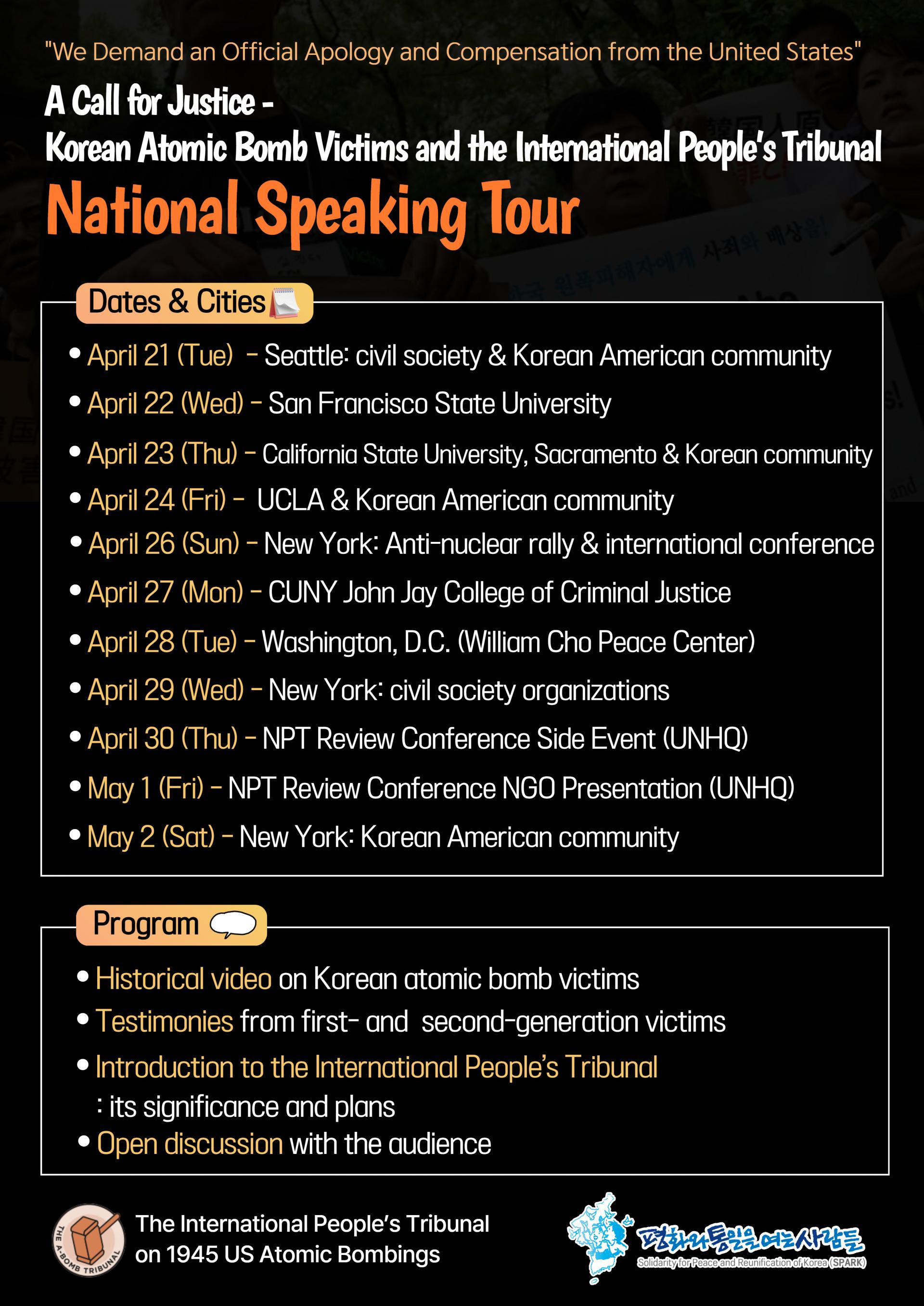
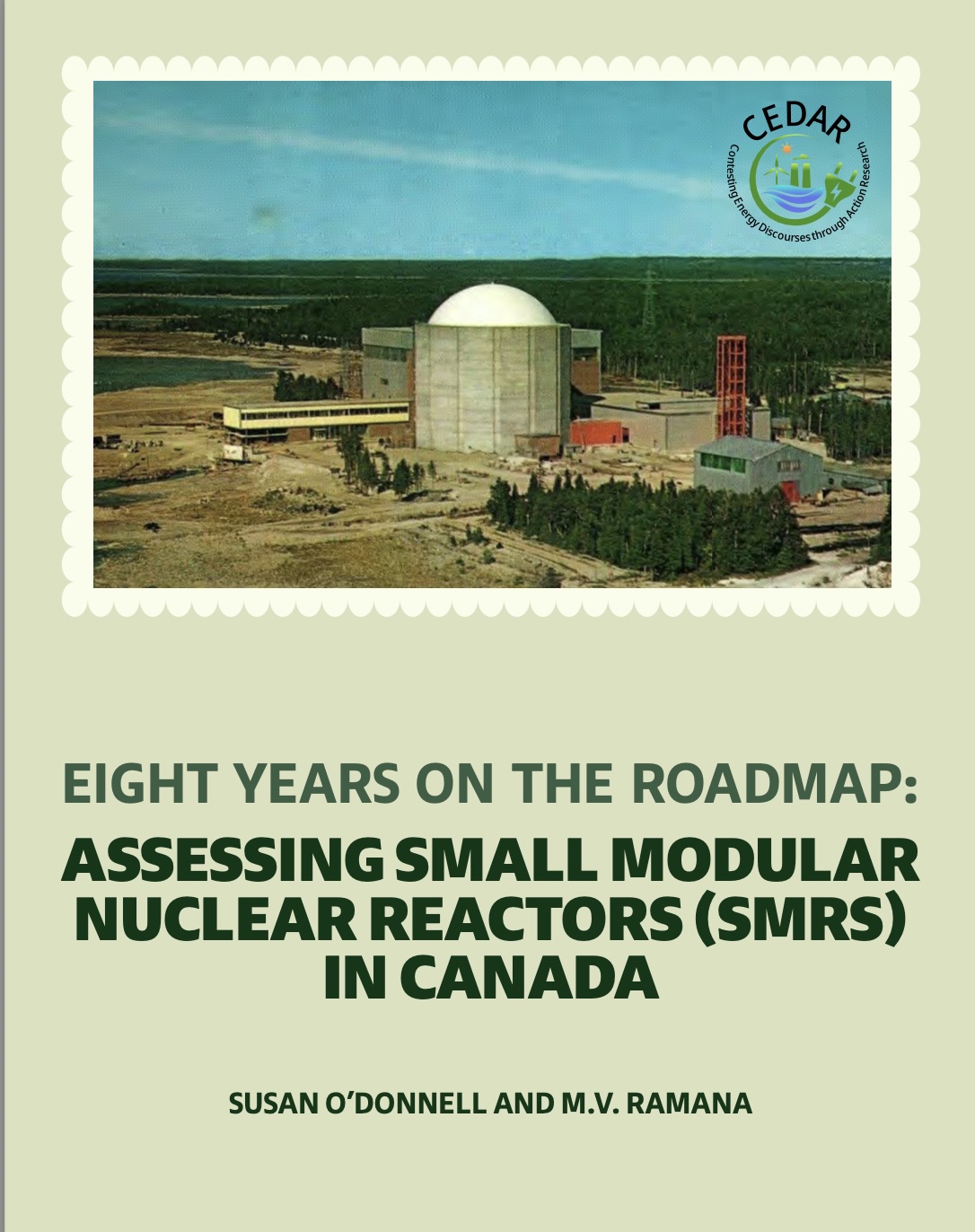

Pine Ridge Uranium is the real threat, not Tehran- Tell Burgum: Stop the Extraction.
Chernobyl: The Lost Tapes – A good documentary on Chernobyl on SBS available On Demand for the next 3 weeks– https://www.sbs.com.au/ondemand/tv-program/chernobyl-the-lost-tapes/2352741955560
To see nuclear-related stories in greater depth and intensity – go to https://nuclearinformation.wordpress.com
-
Archives
- April 2026 (275)
- March 2026 (251)
- February 2026 (268)
- January 2026 (308)
- December 2025 (358)
- November 2025 (359)
- October 2025 (376)
- September 2025 (257)
- August 2025 (319)
- July 2025 (230)
- June 2025 (348)
- May 2025 (261)
-
Categories
- 1
- 1 NUCLEAR ISSUES
- business and costs
- climate change
- culture and arts
- ENERGY
- environment
- health
- history
- indigenous issues
- Legal
- marketing of nuclear
- media
- opposition to nuclear
- PERSONAL STORIES
- politics
- politics international
- Religion and ethics
- safety
- secrets,lies and civil liberties
- spinbuster
- technology
- Uranium
- wastes
- weapons and war
- Women
- 2 WORLD
- ACTION
- AFRICA
- Atrocities
- AUSTRALIA
- Christina's notes
- Christina's themes
- culture and arts
- Events
- Fuk 2022
- Fuk 2023
- Fukushima 2017
- Fukushima 2018
- fukushima 2019
- Fukushima 2020
- Fukushima 2021
- general
- global warming
- Humour (God we need it)
- Nuclear
- RARE EARTHS
- Reference
- resources – print
- Resources -audiovicual
- Weekly Newsletter
- World
- World Nuclear
- YouTube
-
RSS
Entries RSS
Comments RSS
 nuclear-news