DPP sacrifices Taiwan people’s interests by lifting ban on Japan‘nuclear food’ for political gain
Deceit and Betrayal

February 13, 2022
The surprise lifting of a ban on importing food from five prefectures in Japan around the site of the 2011 Fukushima nuclear disaster by the Democratic Progressive Party (DPP) authority has sparked anger in the island of Taiwan.
After being banned for more than a decade, the “nuclear food” as it is known by Taiwan people, will finally be allowed to return to the island’s dinner tables, which is regarded by local media and observers as another betrayal of the public opinion by the DPP authority after the reauthorization of ractopamine-enhanced pork imports from the US.
Importing toxic food and generously gifting scarce masks to the US in the face of local emergency shortages, the DPP has engaged in countless cunning political calculations against the interests of the Taiwan people, to enhance international visibility or initiate skewed “international cooperation.”
To pursue its political interests and separatist conspiracy, the DPP goes against the will of people on the island, negatively impacting public health and safety, said Ni Yongjie, deputy director of the Shanghai Institute of Taiwan Studies. “It is messing up Taiwan with fascist-like deeds.”
Artificial arguments down people’s throats
Following the Fukushima nuclear power plant disaster caused by the massive in 2011, Taiwan’s authorities banned food imports from Fukushima for over a decade. In 2018, the island held an anti-nuclear food referendum where Taiwan people supported the existing ban with 7.79 million votes.
However, the sudden announcement by the DPP authority to lift the ban is not a change in public opinion in Taiwan. The Japan Times said that island’s leader, Tsai Ing-wen, prioritized Japan-related food issues in trying to win Japan’s support for Taiwan’s entry into the Comprehensive and Progressive Agreement for Trans-Pacific Partnership (CPTPP).
In the face of fierce public protest, Tsai asserted that since 2016, the local authorities have completed six assessment and investigative reports, and enacted strengthening measures on the imported foods monitoring.
Ironically, local media cited expert analyses as saying that much of the leaked radioactive material is still radioactive.
The Chinese Kuomintang (KMT) party revealed that the DPP intentionally shortened the policy notice period from 60 to 10 days, and only Kaohsiung, Taichung, and New Taipei City presently have radiation inspection equipment, Tsai and the DPP’s alleged commitment has only been lip service.
Some DPP members on January 16 suggested that the food should be referred to as “Fu food” rather than “nuclear food.” “Fu food” may refer to Fukushima food but also means “blessed food” in Chinese, a term likely more acceptable to Taiwan people.
The DPP even released a so-called poll on February 9, indicating that 58.7 percent of the public support the distribution of Fukushima food
The KMT revealed that the “poll” only used “Japanese food” as a substitute, failed to mention the radiation risk associated with such food.

“It showed DPP’s hand by directly announcing the embrace of ‘nuclear food’ by the end of month,” Ni sighed. “The DPP authority completely forgets about public interests.”
By opening the door to “nuclear food,” the DPP authority rush to improve relations with Japan. The DPP regards Japan as a main ally on the “international stage” that can help with DPP’s secessionist strategy, Ni said.
Put Taiwan people aside
Looking back at Tsai’s recent years in office, the island has been gripped by concerns over food safety and public health.
Taiwan reportedly started importing ractopamine-enhanced pork from the US in January 2021, after the island’s DPP-dominated legislative body approved acts to lift restrictions on such pork.
Ractopamine is banned from food production in at least 160 countries and regions including the European Union. Regardless of the 70 percent dissent by the Taiwan residents, as a local poll showed, the DPP actively paved the way for imports of the controversial pork to appease the US.
Head of Taiwan’s health authority Chen Shih-chung once said he was willing to “eat ractopamine-enhanced pork for three consecutive months” as importing the pork could enhance Taiwan’s “international status,” though such attempts did nothing to quell public anger.
During the COVID-19 pandemic, the Tsai authority further enraged the Taiwan public by utilizing essential anti-epidemic supplies including medical masks and vaccines to pursue its separatist agenda.
In March 2020, DPP reportedly signed a “jointly statement” with the US and promised to provide it with 10,000 medical masks per week. A month later, the DPP announced a total of 16 million donated masks globally.
Ironically, the DPP made the promise when the island seriously lacked masks. As Taiwan media reported in February and March of 2020, local residents were only allowed to buy two or three masks each week. There were long queues at the pharmacies at that time.
In May 2021, the DPP authority announced the purchase of 10 million doses of COVID-19 vaccines from local producers Medigen Vaccine Biologics Corp (MVC) and United BioPharma (UB) at a cost of NT$750-881 ($26.9-31.6) per dose, much more expensive than the vaccine produced by the world’s current major brands including Oxford-AstraZeneca ($4) and Moderna ($15), reported Taipei-based United Daily News in June 2021. Prior to that, DPP had rejected vaccines provided by the Chinese mainland, and turned down private purchases or donations even amid severe vaccine shortages.
According to an exclusive report by Reuters in June 2021, UB-612 vaccine is developed by private US firm COVAXX. Sources told Reuters that Erik Prince, former head of Blackwater, invested in COVAXX in 2020.
Blackwater is known for providing intelligence, training, and security services to the US army and government. After the real entity behind the development of the UB-612 vaccine was revealed, Taiwan social media platforms were flooded with recriminations about DPP’s lies to the people in the interests of American big business and a possible US-led political alliance.
“The government uses large amount of public money to purchase the [UB-612] vaccine in the name of ‘supporting a Taiwan-developed vaccine; but the fact is, the vaccine is from the US,” Taiwan’s TV commentator Huang Chih-hsien wrote on Facebook in June 2021.

The DPP authority have frequently caused public anger due to their traitorous behaviors during the past years, and they are aware of the anger caused, Ni said. “They just don’t care, as long as this separatist party can benefit,” he said.
Sadly, the DPP’s behaviors were paid by the whole of Taiwan, Ni noted. “The consequences of it ignoring food security and public health will be borne by all the residents and their offspring on the island,” he told the Global Times.
Fukushima residents rally against plan to discharge nuclear-contaminated water into sea

16 February 2022
Protests have been held in Japan’s Fukushima Prefecture against the government’s controversial plan to release contaminated water from the wrecked Fukushima Daiichi nuclear power plant into the Pacific Ocean.
Dozens of local residents gatheredin front of the Fukushima prefectural government office building on Tuesday, calling for the cancellation of the move, while also demanding protection for the ocean, as they waved banners with slogans written in several languages in a bid to bring international attention to their concerns.
The Fukushima Daiichi nuclear plant, located on Japan’s northeast coast, was crippled after going into meltdown following an earthquake and tsunami in 2011.
Around 1.25 million tons of water, used to cool the reactors after the meltdown, are currently stored in tanks in and around the plant.
Local polls have shown that more than 70 percent of non-governmental organizations in Fukushima object to the plan of releasing the radioactive water into the ocean. Many people worry the plan will cause great harm to their health.
“If nuclear contaminated water is discharged into the sea, people may be affected by eating fish or other sea food. This may bring sustained harm to people’s health. Since the release plan will take a long time to complete, I am worried the harm will increase day by day,” said a local resident.
“I want to protect the health and future of younger generations, so I oppose dumping the contaminated water into the ocean,” said another local resident.
The protesters also voiced concern that Tokyo Electric Power Company (TEPCO), the operator of the nuclear power plant, had failed to fully disclose information about the Fukushima nuclear disaster or verify the data about the nuclear contaminated water.
“Although the release plan says the radioactive water will be diluted before being discharged into the sea, the total amount of nuclear elements in the water will not change at all. So I think it’s not right to dump the wastewater into the ocean and spread contamination,” said a local resident.
Tuesday’s protest took place as a team from the International Atomic Energy Agency (IAEA) was slated to conduct safety reviews at the plant.
The 15-member team arrived in Japan on Monday to review the government’s plan to release the treated radioactive water into the ocean from the destroyed Fukushima nuclear plant — a review that Tokyo hopes will instill confidence in the plan, which is opposed by neighboring countries.
The task force, headed by Gustavo Caruso, director of the IAEA’s Office of Safety and Security Coordination, is due to stay in Japan through Friday.
Japan and the IAEA have agreed to compile an interim report on the review later this year.
Last April, the then-Japanese Prime Minister Yoshihide Suga said TEPCO would be allowed to release nuclear contaminated water from Fukushima into the Pacific Ocean starting in 2023, leading to a massive outcry from both local residents and the international community.
Local fishing communities expressed opposition as well, saying that the water discharge would undermine years of work to restore confidence in seafood from the region.
The radioactive water, which increases in quantity by about 140 tons a day, is now being stored in more than 1,000 tanks, and space at the site is expected to run out around next autumn.
To meet international standards before disposal, the nuclear wastewater, however, needs to be filtered to remove harmful isotopes. The process, however, cannot remove tritium, an isotope of hydrogen that experts say will be harmful to human health in large doses.
Japan nuclear watchdog to boost monitoring spots for TEPCO ‘treated’ water release
Smooth propaganda spinning from NHK, ‘treated’ water instead of the reality: radioactive water!
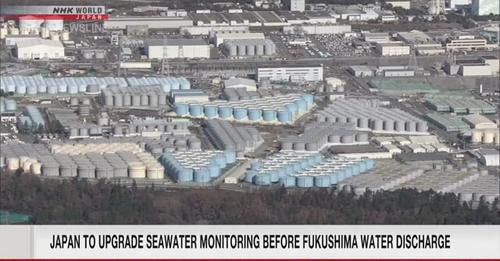
February 16, 2022
Japan’s nuclear watchdog has decided to boost maritime monitoring spots in anticipation of the release of treated water from the damaged Fukushima Daiichi nuclear plant.
The plant operator, Tokyo Electric Power Company, or TEPCO, plans to release treated water into the sea, starting from around spring next year.
Water, which has either been used to cool molten fuel or seeped into damaged reactor buildings, has become contaminated with radioactive materials.
TEPCO is treating the water by filtering out most of the radioactive substances. But the filtered water still contains tritium.
The utility plans to discharge the treated water after diluting the tritium level to well below national standards.
The Nuclear Regulation Authority on Wednesday discussed ways to measure levels of radioactive substances in the seawater, based on advice from an expert panel of the Environment Ministry.
The authority decided to increase its tritium monitoring locations from 12 to 20, and to lower the minimum detectible level to enable more precise measurements.
It will adopt these enhancements this spring. This would allow for comparison of water before and after release.
The total of tritium monitoring locations, including those of the Environment Ministry, will be increased to around 50, mainly within 10 kilometers of the release spot.
The head of the authority, Fuketa Toyoshi, called for sufficient confirmation to prevent substandard measurements and errors, noting that analysis of tritium takes time and analytic laboratories are limited.
TEPCO claims that impacts from exposure to treated water are minimal, but fears of damage based on rumors remain strong, especially among local residents.
The government and the plant operator hope that stepped-up monitoring would help ease such concerns.
Statement calling for a review of the volcanic impact assessment in the new regulatory standards for the restart of nuclear power plants in light of the Tonga eruption

February 15, 2022
1. Occurrence of the Funga-Tonga-Hunga Ha’apai eruption
On January 15, 2022, a large-scale eruption occurred at the submarine volcano on the island of Hunga Tonga-Hunga Ha’apai, located about 65 km north of Nuku’alofa (Tongatapu Island), the capital of the Kingdom of Tonga (hereinafter referred to as the “HTHH eruption”). The plume rose to an altitude of 15 to 6 km and formed an umbrella-shaped plume with a diameter of about 500 km (radius of about 250 km) in just a few tens of minutes. The aerosol is thought to have reached the stratosphere.
The shock wave (aerial vibration) from the HTHH eruption traveled around the globe, and it is said that the sound of the explosion was heard even in New Zealand, more than 2,000 km away.
A tsunami of up to 1.2 meters in height was also observed in Japan (Kominato, Amami City), causing damage such as the capsizing of fishing boats. The Tongan government announced that the tsunami reached a maximum height of 15 meters. These tsunamis are believed to have been events that cannot be explained by conventional tsunami mechanisms, and while some believe they were caused by aerial vibration, others point to changes in water levels caused by the caldera sinking.
Furthermore, discoloration of the seawater, thought to be caused by volcanic activity, has been confirmed to have spread as far as 300 km, and experts in Japan and abroad are not sure if this is the end of the eruption.
Based on the scale of the plume, it is believed that the eruption may have released about 10 km3 of volcanic material, about the same level as the 1991 eruption of Pinatubo volcano in the Philippines, which also caused global cooling, and the volcanic explosion index (VEI) is thought to be around 5-6.
2. Eruption that was not predicted or warned in advance
The islands of Hunga Tonga and Hunga Ha’apai are both separate islands at the edge of a huge submarine caldera crater (1,800 m high and 20 km wide), and although they are known to have been active about 1,000 years ago, they were quiet volcanoes until a major eruption occurred in 2009.
Then another eruption occurred in 2014-2015, and the land was united to form the island of Hunga Tonga-Funga Ha’apai (HTHH). However, although there were some who pointed out the possibility of activity, the island was basically considered to be normally quite quiet and so on.
In December 2021, prior to the HTHH eruption, HTHH erupted again. In December 2021, prior to the HTHH eruption, HTHH erupted again, this time to a height of about 16 km, but experts who visited the site afterwards said that they saw nothing unusual.
The HTHH eruption was not predicted or warned of such a large-scale eruption.
3. There are many things that we do not understand with our current knowledge
The cause of the tsunami that struck Japan is still unclear, and its mechanism has not been elucidated. Although it is comparable to the Pinatubo eruption, its behavior is very different from that of the Pinatubo eruption. Yujiro Suzuki, associate professor of volcanic physics at the Earthquake Research Institute of the University of Tokyo, analyzed the spread of the plume based on images taken by satellites and compared it to simulations of the volume of plumes from Pinatubo and other volcanoes, estimating that the volume of plumes per second is about three times that of Pinatubo. Associate Professor Suzuki said, “I’ve never seen a plume expand at such a rate before, and I’m very surprised.” I am very surprised. On the other hand, the amount of volcanic ash and pumice, as well as sulfur dioxide, which is considered to be the cause of climate change, is low, and it is predicted that climate change will be avoided, but it is not clear why the amount of sulfur dioxide is low.
The HTHH eruption is also a submarine volcano, and there is much less knowledge about it than about land volcanoes, so there is much we do not know. Janine Krippner, a volcanologist at the Smithsonian Institution in the U.S., says, “At this point, we have far more questions than we know,” but in any case, with the current level of science and technology, it is impossible to accurately understand all the events and phenomena associated with volcanic eruptions. In any case, with the current level of science and technology, it is impossible to accurately understand all the events and phenomena associated with volcanic eruptions, and it has become clear once again that predicting volcanic events is extremely difficult.
4. Similarities between Japan and Tonga, and the possibility of a large-scale submarine eruption in Japan Although the HTHH eruption is comparable to the Pinatubo eruption, which is said to be the largest eruption in the 20th century, it is not a rare phenomenon, as Japan has experienced many eruptions of a larger scale than this in the past. Japan is the world’s largest volcanic country, with about 7% of all active volcanoes (volcanoes that have erupted within the past 10,000 years), and 111 of them. As an island nation surrounded by the sea on all sides, about one-third of the active volcanoes are located in the Izu-Ogasawara Islands and the Nansei Islands. Professor Yoshiyuki Tatsumi of Kobe University points out the similarities between the geography of Tonga and the Japanese archipelago, especially the Izu-Ogasawara and Mariana Islands, and suggests that eruptions like the HTHH eruption could occur in Japan in the future. It is still fresh in our minds that the August 2021 eruption of Fukutoku Okanoba, a submarine volcano, caused a great deal of pumice to drift to the Japanese archipelago, which caused tension among those involved in nuclear power plants, but this was a much smaller eruption than the HTHH eruption. In recent years, it has become clear that a huge lava dome has formed in the Onikkai Caldera, which had a catastrophic eruption about 7,300 years ago, but this eruption is much larger than the HTHH eruption. There is no other way to say that we do not know.
5. Errors in volcanic impact assessment to date
(1) The HTHH eruption once again demonstrated the limitations of current volcanology and also showed that disasters caused by volcanic events are real and cannot be ignored.
However, the volcanic impact assessment conducted by the Nuclear Regulatory Commission (NRC) as part of its determination of compliance with the new regulatory standards has, in effect, been trivialized as if a massive eruption (an eruption in which underground magma erupts to the surface at once, resulting in a massive pyroclastic flow with an eruption volume of more than tens of km3) could not occur. The March 7, 2018 “Basic Concept on ‘Evaluation of Volcanic Activity with Volcanic Events that Cannot be Designed for’ in the Volcanic Impact Assessment Guide for Nuclear Power Plants” (hereinafter referred to as the “Basic Concept on Mega Eruptions”) embodies this concept, and the injustice of this concept was explained by the Liaison Committee in its March 13, 2018 report. However, the Nuclear Regulatory Commission (NRC) has since issued a report on this issue.
However, the Nuclear Regulatory Commission (NRC) not only ignored our statement, but also revised the Volcanic Impact Assessment Guide on December 18, 2019, and formally incorporated the “Basic Concept on Massive Eruptions” into the Guide.
(2) The revised Volcanic Impact Assessment Guide acknowledges that the process leading to a major eruption is not fully understood and that a major eruption would cause serious and severe damage to a wide area if it were to occur. The risk is acceptable if (1) the current activity is not considered imminent (non-imminent), and (2) there is no scientifically reasonable concrete evidence for the possibility of a major eruption during the operational period (lack of concrete evidence) (Section 4.1(2)).
However, even catastrophic eruptions of VEI 7, which are even larger than giant eruptions, have occurred since prehistoric times, such as the eruptions of Mount Paektu (around 960) and Tambora (1815), and the Volcano Guide, which relies on the scientifically totally meaningless fact of whether there have been any observed cases since prehistoric times in areas around Japan, is wrong in its assumptions.
Since the process leading to an eruption has not been fully elucidated, it is difficult to show the imminence of (1) and the concrete evidence for (2), and in effect, the risk of a huge eruption is being ignored (there have been no cases in which the risk of a huge eruption has been considered).
(3) What is more problematic is that the framework seems to exclude even large eruptions that do not lead to large eruptions.
The Revised Volcanological Guide states that if a volcano has had a major eruption in the past and the possibility of a major eruption is judged to be sufficiently small, the largest eruption since the last major eruption should be assumed (Section 4.1(3)).
For example, Aso Caldera has had four catastrophic eruptions (ejecta volume of over 100 km3) in the past, but the largest eruption since the last catastrophic Aso 4 eruption was the Kusasenrigahama pumice eruption (ejecta volume of about 2 km3), which is not even a huge eruption.
(4) As mentioned above, the HTHH eruption may be a VEI6 class eruption, and we cannot deny the possibility that it will continue to be active and develop into a huge eruption. What we learned from this eruption is that large-scale eruptions can occur in Japan, and therefore we should not ignore the risk of such eruptions, and that there are many things we do not know with the current level of volcanology. Trying to downplay and trivialize the risk of a large-scale eruption is not a “socially accepted idea,” but merely a bias or desire of those who do not want to shut down nuclear power plants. The Nuclear Regulation Authority (NRA), whose mission is to protect the safety of citizens from nuclear disasters, should not be allowed to endanger the lives and bodies of many people living in the vicinity of nuclear power plants over a wide area based on such assumptions and wishes. If there were no nuclear power plants in the vicinity of a volcano, even if an eruption occurred, as in the case of the Pinatubo eruption, recovery and reconstruction would be possible within a few years to a decade. The presence of a nuclear power plant will cause the spread of radioactive materials, making the area around the plant uninhabitable for a long time. Without bringing up the rights of future generations or intergenerational ethics, it is hard to imagine that the law even permits the operation of nuclear power plants without taking such risks into consideration.
(5) Furthermore, in the past volcanic impact assessments, only a cursory assessment of the effects of submarine volcanoes has been made, but the August 2021 eruption of the Fukutoku Okanoba submarine volcano and the recent HTHH eruption have made it clear that there are too many things about the behavior of submarine volcanoes that are not understood by current science. It has become clear that there are too many things we don’t know about the behavior of underwater volcanoes. Rather than ignoring what science does not understand in this regard, it is necessary to thoroughly conduct conservative assessments to ensure the safety of nuclear power plants even in the event of unforeseen events.
6 The Nuclear Regulatory Commission should completely review the method of volcanic impact assessment and other aspects.
In this way, the HTHH eruption has shown how the volcanic impact assessment has been based on wrong criteria.
The government’s accident investigation report on the Fukushima Daiichi nuclear power plant accident (TEPCO Fukushima Nuclear Accident Independent Investigation and Verification Commission) proposes a shift in risk perception, stating that before the Fukushima Daiichi nuclear accident, “natural phenomena can cause events that exceed the current state of academic knowledge, and the traditional precautionary approach of preparing for such extremely rare events must always be considered in parallel.
In other words, the report recommends that “Japan should bear in mind that it is a ‘disaster-prone country’ that has been struck by various natural disasters since ancient times, and humbly confront the threats of the natural world and the scale and time scale of tectonic movements. In the case of accidents and disasters that cause enormous damage over a wide area, such as the accident at the Fukushima Daiichi Nuclear Power Plant, it is necessary to establish a new concept of disaster prevention that requires appropriate safety and disaster prevention measures to be taken regardless of the probability of occurrence, both in government and business” (pp. 412-413 of the Final Report).
The current volcano guide clearly contradicts these recommendations. The Nuclear Regulatory Commission (NRC) should take the opportunity of the HTHH eruption to completely review the methods of volcanic impact assessment, etc., based on the conservative assumption that a large-scale eruption will actually occur, correctly taking into account the indefiniteness of science and the limitations of current volcanology.
http://www.datsugenpatsu.org/bengodan/news/22-2-15/?fbclid=IwAR2K3y4tGW-_XTc0Vc7Sxkuq4Tm-B3YDIOeEH-EZhuFBq9Ne5nEaz3J1giA
The second court of appeal in the Children’s De-exposure Trial

February 15, 2022
The “Children’s De-exposure Trial” for the Fukushima nuclear accident was held at the Sendai High Court on February 14. This is the second time the court has heard the case since the appeal trial began in October last year.
In order to protect their children from radiation exposure, parents and children in Fukushima are suing the government, Fukushima Prefecture, Fukushima City and other local governments. In March last year, the Fukushima District Court ruled that the parents and children lost the case. The case has been moved to the Sendai High Court. The related article on this site is at the end of this article.
Imagine how unbearable it must be!
At the second court session held on the 14th, what attracted me (Uneri) the most was the statement by Mr. A, the plaintiff (who was living in Fukushima at the time of the accident). The words of people who lived in Fukushima at the time of the accident have a strong appeal to the listeners. It is a long text, but I am hesitant to cut it down, so I will introduce it in a slightly abbreviated form.
Statement of Opinion by Plaintiff Male A
My name is A. I am a plaintiff. I would like to talk about a basic misconception about the nuclear accident.
There is a common misconception that an unprecedented earthquake and unexpected tsunami caused an unexpected nuclear accident. But this is a big misunderstanding. Accidents at nuclear power plants caused by earthquakes and tsunamis were predicted, and because of this, seismic reinforcement and work to raise the seawalls were carried out, and accidents at some plants were avoided (Tokai Daini Nuclear Power Plant, for example).
Because nuclear accidents were anticipated, the measures to be taken in the event of an accident were also determined in detail. After the JCO accident in 1999, these measures were compiled into a series of laws called "nuclear disaster prevention," which culminated in the Act on Special Measures Concerning Nuclear Emergency Preparedness.
What I would like to argue is the fact that the government and Fukushima Prefecture did not follow these procedures and forced us, the residents, to be exposed to radiation. The SPEEDI (System for Prediction of the Effects of Emergency Radioactivity) data, which was up and running less than two hours after the earthquake and should have been used for emergency evacuation, was not made public until March 23, 2011, more than 10 days after the nuclear accident. The Nuclear Safety Technology Center (NSTC), which was managing SPEEDI at the time, sent more than 30 faxes to the Fukushima prefectural government in the morning of March 13, 2011, as well as email attachments from late at night on March 11, but the prefecture still did not release this data either. Fukushima Prefecture explained that they could not release the data because they did not have information on the source of the emissions, but this explanation is completely unreasonable. This is because the guidelines for dealing with the accident ("Guidelines for Environmental Radiation Monitoring in Emergencies") included a response plan for cases where there was no source information.
It is not only about predicting the diffusion of radioactive materials. In terms of actual measurements, information was concealed and data acquisition was obstructed. From the morning of the day after the earthquake, the staff of the Fukushima Nuclear Energy Center went to the vicinity of the Fukushima Daiichi Nuclear Power Plant to take actual measurements of radioactive materials released into the environment, following the "guidelines" mentioned above. On March 12, five monitoring sites were monitored, and on March 13, ten sites were monitored, but then the Ministry of Education, Culture, Sports, Science and Technology stopped the monitoring, according to a person who was involved in the monitoring at the time. As a result, the actual measurements from March 14 to 17, when the contamination caused by the nuclear accident was most serious, are missing.
As a result, the residents of the affected areas were left without being informed of the massive spread of radioactive materials, the fact that the plant had melted down, or how to evacuate. In other words, the purpose of nuclear disaster prevention, which is to protect the residents from radiation exposure, could not be achieved due to the inaction and interference of the government. This is why we claim that we were forced to suffer unnecessary radiation exposure.
At the end of March 2011, the Fukushima Prefectural Board of Education decided to start classes at schools in the prefecture from April 6 to 8 without measuring radiation levels, and in early April, the Nuclear Safety Commission began to consider whether the exposure limit for residents in areas with high radiation levels should be raised from 1 millisievert to 20 millisievert per year. On April 10, it was reported that the Ministry of Education, Culture, Sports, Science and Technology (MEXT) is planning to set the annual exposure limit for students at 20 millisieverts. On April 10, it was reported that the Ministry of Education, Culture, Sports, Science and Technology is planning to set an annual exposure limit of 20 millisieverts for children, which means that this standard will be applied even to children in order to prevent the expansion of the evacuation zone.
In this way, the government and Fukushima Prefecture hid information and prevented residents from evacuating at the beginning of the nuclear accident, and later, when it became clear how serious the contamination was, they raised the radiation dose limits for residents (instead of expanding the evacuation zone). Needless to say, all of these actions were against the law, against justice, against international common sense, and against humanism.
As a result, everyone in the disaster area, myself included, did not know how much radiation we had been exposed to, and thus we spent the first ten years of the accident with health concerns. Whenever I had a prolonged cold, a sore throat, or a lumpy feeling, I would think, "What if this is ......? You can imagine how unbearable these days are. In the affected areas, there are many people who are sincerely worried about the health and future of their children, but are unable to speak out about it. Who has created such a society? Wasn't it created by those who turn a blind eye to acts that are against the law, against justice, against international common sense, and against humanism?
In response to this situation, isn't it time to remove the unreasonable things that have been imposed on the disaster area and change the injustice? I sincerely and earnestly hope that the court will make an appropriate decision.
Plaintiff A's statement of opinion
It was a very impressive statement. To “imagine” the unbearable suffering of people. It is something that we all need to keep in mind.
At the meeting after the trial
At a meeting held in Sendai City after the court session, there was a briefing on the “3/11 Children’s Thyroid Cancer Trial,” which was filed in the Tokyo District Court last month. Ken’ichi Ido, a lawyer for “De-exposure of Children” is also involved in this trial.
On January 27th, six young men between the ages of 17 and 27 who were living in Fukushima Prefecture at the time of the accident filed a lawsuit against TEPCO, claiming damages. The reason for their claim is that their thyroid cancer was caused by radiation exposure. They were between 6 and 16 years old at the time of the accident. All of them have undergone surgery. Four of them had recurrences and had to have surgery again. Four of them have had their thyroid glands completely removed and have been forced to take hormones for the rest of their lives. Four of them have had total thyroidectomies and will have to take hormones for the rest of their lives. One of them has also been diagnosed with metastasis to the lungs, and we don't know what will happen to him. This is the situation. Since nearly 300 cases of thyroid cancer have already been found in Fukushima Prefecture, which should have been one or two cases per one million people per year, we will fight the case on the grounds that the only possible cause is radiation exposure.

The theory of over-diagnosis and various other arguments have been used to say that there is no causal relationship between cancer and exposure. (The prefectural residents' health survey review committee and UNSCEAR (United Nations Scientific Committee on the Effects of Atomic Radiation) have issued such opinions. In response to this, there has already been a bashing movement, saying, "Don't file a lawsuit if exposure is not the cause. However, if the causal relationship is denied here, all of the various cancers and health hazards that are actually occurring will be denied. The fiction that the government is trying to create, that "there was no health damage at all" despite the fact that so much radiation was released by the nuclear accident, will be accepted. I believe that this is a trial that we cannot lose.

It takes a lot of courage to go to court now, and the six young people took their time and consulted with their families before making their decision. The reason for their decision is partly because they are worried about their own future, but also because nearly 300 young people are living with the same kind of suffering and anxiety. These people are being torn apart, so they have a strong desire to give courage and encouragement to these people. I think that's where he made his decision in the end.
Attorney Ido

The “Thyroid Cancer Trial” is a trial in which people who have unfortunately been diagnosed with thyroid cancer hold Tokyo Electric Power Company responsible for their condition. The “Children’s De-exposure” is an appeal for the right to protect children to the maximum extent possible to prevent them from getting such diseases. Both are very important. We need to pay attention to them.
At the meeting, the lawyers also pointed out the recent “very unconscionable thing” that happened. I have not been able to introduce it on this site, so I will write about it here.
Former Prime Ministers’ EU letter issue
In a letter to the European Commission, five former prime ministers, including Junichiro Koizumi, Naoto Kan, and Tomiichi Murayama, wrote that “many children are suffering from thyroid cancer (due to the nuclear accident). The government and Fukushima Prefecture are protesting vehemently against this.
In a letter to the European Commission, he wrote, "Many children are suffering from thyroid cancer (due to the nuclear accident). It is not appropriate."
Reconstruction Minister Nishimei

The prefectural government and Fukushima Prefecture are fiercely protesting against the report. We have written to you to request that you provide us with objective information based on scientific findings."
Governor Uchibori
How do you see this trend? At the post-court meeting, Mr. Ido said
It reminded me of the attack on "Yummy Shinbo". In the end, by bashing the "nosebleeds" in "Yummy Shinbo," people couldn't talk about the fact that many children had nosebleeds. Such a social atmosphere was created to erase the nosebleeds as a fact. I think that the powers that be want to make the thyroid cancer case a success story like the one they had at that time. However, it is inconceivable that there is no health hazard after such a huge accident. We need to appeal this fact at every opportunity. We must not allow the facts to disappear.
I agree. Uneri Unera also strongly protests. In the prefectural health survey, thyroid cancer was found in more than 250 people, and more than 200 operations were performed to remove it. It must be true that “many children are suffering from thyroid cancer. The only basis for Uchibori’s opinion that “the prefectural health survey shows no link between cancer and radiation exposure” is that “we have not been able to find a clear link between the two at this time. The only basis for the view that “there is no link between cancer and radiation exposure” is that “we have not been able to find a clear link between the two at this time.” In my opinion, it is much more factual to point out that “many people are suffering” rather than to argue forcefully that there is no link.
There are many people for whom it is more convenient to say that there were no health problems caused by the Fukushima accident. There are many people who would be better off if it were stated that there were no health problems caused by the Fukushima accident. Even ordinary people who have lived in the Tokyo metropolitan area, such as myself, might feel more comfortable if they knew that there was no such thing. This is because the responsibility of living in a society that has been promoting nuclear power plants without actively resisting them would be lessened.
However, in the case of the sensitive subject of low-dose exposure, the moment we give in to the temptation to say that there was no damage, we will lose sight of all the actual damage. Until the day comes when we can say, “There really was no damage to our health” (unfortunately, I don’t think that day will ever come), I think we should focus on the fact that there are people who are actually suffering and worried.
It’s OK to be scared, to cry, to be angry
At the end of the meeting, a different plaintiff from the one who gave an opinion in court took the microphone. She is a woman who has raised two children in Fukushima. I would like to end this report with her words.
When we filed the lawsuit in August 2014, my second son said, "Mom, I want to take a day off from school to say something," and spoke at the meeting. The son who spoke at that time is now 15 years old. He has been sick since he was in the fifth grade and is now in the third grade. He will take the entrance exam this year, but he only went to junior high school for the first semester. I don't know if it was because of the radiation. I don't know if it is because of the radiation or not, but he used to be fine, but now he is like that. As I mentioned earlier about the nosebleeds, both my first and second sons had many nosebleeds at that time, and I had to move left and right. I was really scared and didn't know what to do. I was really frustrated when we lost the case in Fukushima, and I am determined not to lose in Sendai. It's okay to be scared, to cry, to be angry. So that one day we can laugh at the end. I would like to make this happen.
One of the plaintiffs

The next court date has been set for May 18.
Japan Federation of Bar Associations writes to Prime Minister Kishida, urging him to consider other ways to release treated water into the ocean

February 15, 2022
The Japan Federation of Bar Associations (JFBA) submitted an opinion letter to Prime Minister Fumio Kishida and others opposing the release of treated water from the TEPCO’s Fukushima Daiichi Nuclear Power Plant into the ocean, arguing that the procedures for obtaining social consensus are insufficient. The letter urges that other methods be considered instead of discharging the water into the sea.
The letter emphasizes the fact that the Nuclear Citizens’ Committee, made up of engineers and researchers, has proposed a method of storing the treated water by mixing it with cement or sand and hardening it. The report emphasized the fact that the Citizens’ Committee on Nuclear Energy, made up of engineers and researchers, proposed a method of storing treated water by mixing it with cement and sand.
It was a ritualistic meeting.
The government held seven meetings the year before last to hear opinions from agriculture, forestry, and fisheries groups, as well as chiefs from within and outside the prefecture, attended by the vice ministers of the relevant ministries. However, since there were almost no questions, the opinion piece criticizes the meetings as “ritualistic. The government and TEPCO only held the briefings with the conclusion that the waste would be released into the ocean. It cannot be said that they are listening to the voices of many citizens and reflecting them in their measures.
The Japan Federation of Bar Associations also sent the letter to the Minister of Economy, Trade and Industry, the Minister of the Environment, and the Chairman of the Nuclear Regulation Authority. (Keitaro Fukuchi)
https://news.yahoo.co.jp/articles/bd482f91d45a9db5f2b2d04511218a2c2f4ed15b?fbclid=IwAR3SZtUKj56m67BgLNp-7HQ9ESo6d1WuwDUQXh0YW4pJHLzkoU88UF4e1LQ
The Second Oral Argument of the Appeal Court at the Sendai High Court – At the previous date, the representative of the plaintiffs said, “The Fukushima District Court should make a proper decision on the issue of radiation exposure.
February 14, 2022
The second oral session of the “Children’s De-exposure Trial” was held on February 14, 2012. This case squarely questioned the risk of radiation exposure in Fukushima Prefecture after the nuclear accident and the negligence of the government. The second oral argument will be held on the afternoon of February 14 in Courtroom 101 of the Sendai High Court (Presiding Judge Masako Ishiguri). In the first oral argument held in October last year, Sumio Konno, the representative of the plaintiffs, made a statement. Sumio Konno, the representative of the plaintiffs, made a statement at the first oral argument in October last year, saying, “I hope the court will make a bloody decision on the issue of radiation and safe education for children. Please make a proper decision on the issues that the Fukushima District Court has thoroughly evaded. This summer marks eight years since the lawsuit was filed. This summer marks eight years since the lawsuit was filed, and a series of lawsuits will continue to be filed in Sendai, accusing the government and local governments of negligence in dealing with radiation exposure caused by the nuclear accident, including the health risks of low-dose radiation exposure and the dangers of internal exposure to insoluble radioactive particles.

My son ate snow in Tsushima.
The Fukushima District Court’s decision to deny the dangers and concerns of radiation and the future of our children, which we have been advocating, by simply following the arguments of the government and Fukushima Prefecture, filled us with frustration and emptiness.
I want the court to make a bloody decision on the issue of radiation and children’s safety education. Please make a proper decision on the issues that the Fukushima District Court has thoroughly evaded.
On behalf of the plaintiffs in the first trial, Ms. Konno made a statement in the courtroom of the Sendai High Court.
More than seven years have passed since the lawsuit was filed, and many of the child plaintiffs have graduated from junior high school without having the opportunity to receive education in a safe place or compensation. The remaining child plaintiffs will be graduating in March of the next year. During this period, some of the plaintiffs had to withdraw their complaints due to various reasons. Some of the plaintiffs’ mothers, out of desperation, evacuated with their children to safer places where they could receive their education.
At the time, I was working alone at the Onagawa Nuclear Power Plant (Miyagi Prefecture). He was working alone at the Onagawa Nuclear Power Plant in Miyagi Prefecture at the time, and his wife and children, who were living in Namie Town, evacuated to the Tsushima area like other townspeople. He later found out that the evacuation, which was supposed to be a way to escape the risk of radiation exposure, was actually a move to a more contaminated area.
My son, who was five years old at the time of the nuclear accident, was evacuated from the early morning of March 12 to the early morning of March 15, 2011, to the gymnasium of Tsushima High School in the Tsushima district of Namie Town. The area was highly contaminated due to the flow of radioactive plumes and is still designated as a difficult-to-return area. My son told me that he rolled up snow and ate it as ice cream. When I heard that story, I was shocked.
About half a year later, my son began to have a cold-like illness that lasted for about two years. I visited the hospital twice a month. The doctor said, ‘It’s a lowered immune system. If the town of Namie had been informed of the SPEEDI information at that time, they would have evacuated further away from the Tsushima area. I had exposed my son to radiation…. I am frustrated and angry with Fukushima Prefecture. Even now, only Fukushima residents are forced to be exposed to 20 millisieverts of radiation per year.
Since the accident at the nuclear power plant, Ms. Konno has consistently said, “Children cannot protect themselves. The frustration of not being able to protect her own children from the risk of radiation exposure is a feeling shared by the plaintiffs in the first trial.
It is up to us adults to protect our children. It’s our responsibility as adults. It is our minimum duty as adults.

(“We should avoid unnecessary radiation exposure.”)
The lawyers outlined their reasons for the appeal.
Lawyer Ido
The “School Environmental Hygiene Standards” do not include any standards for radioactive materials. There should be a standard for radiation exposure, and the fact that there is not is negligence on the part of the government. Children should be protected from radiation exposure at the level of environmental standards. I would like the court to make a straightforward judgment. It is true that the air dose has gone down, but the concentration of soil contamination will not go down easily. Most of the radioactive cesium in the soil is made up of insoluble fine particles. If these particles are taken into the body and internal exposure occurs, the biological half-life is thought to be as long as several decades, posing a serious danger. Using children as guinea pigs is unacceptable. Unnecessary radiation exposure that can be avoided should be avoided. In its written reply, the government claims that ‘exposure to about 1 millisievert per year is not worthy of legal protection. We hope that the court will reaffirm the natural principle that radiation exposure should be avoided whenever possible.
Koichi Mitsumae, Attorney at Law
The main issue in this lawsuit is how to measure the amount of radiation that the people of Fukushima have been exposed to as a result of the nuclear accident, and how to consider the effects of low-dose internal exposure on their health. It is extremely important that the results of the prefectural health survey be verified based on fair science. The degree of nondisclosure of information regarding the results of the survey is appalling. We call for a full hearing, including the examination of expert witnesses.
Attorney Kenzo Furukawa
”Should we evacuate or stay indoors? What should we eat and what should we drink? What should we eat and drink? The most important thing to make the right decision is accurate information. However, the decision of the first instance court was based on abstract theory and made no decision, allowing the government and Fukushima prefecture to hide information. In Namie Town, neither the national government nor the Fukushima Prefecture provided SPEEDI information, which led to the evacuation of many townspeople to the Tsushima area, where radiation doses were high, forcing them to be exposed to unnecessary radiation. If only the government and Fukushima Prefecture had provided the SPEEDI information, there are still people who would not have been exposed to radiation. The decision of the first trial must be fundamentally revised.
Yasuo Tanabe, Attorney at Law
The ICRP’s 2007 recommendation of a reference level of up to 20 millisieverts per year is unacceptable from the perspective of protecting the lives and health of children. The fact that Fukushima Prefecture decided to reopen schools prior to the April 19, 2011 notice by the Ministry of Education clearly exposed children to radiation doses that were several times higher at the very least. I hope the court will decide whether the government and Fukushima Prefecture acted illegally from the perspective of protecting the residents from radiation exposure.
Attorney Toshio Yanagihara
Until March 11, 2011, the Japanese government and legal system were completely unprepared for the consequences of the nuclear accident. “The Japanese government and legal system were completely unprepared for the nuclear accident until March 11, 2011, and even after the nuclear accident, the case has been left unresolved.
The court should make a correct judgment on the illegality of the orders and recommendations issued by the government, based on the basic premise that the plaintiffs in the first trial were sovereign citizens of this country and the subjects of human rights before and after the nuclear accident.
Shin-Yi Choi, Attorney at Law
After the nuclear power plant accident, the government’s policy has been based on ’20 millisieverts per year. The government has submitted a joint opinion as a theoretical basis that there is no proven health risk for radiation exposure of up to 100 millisieverts per year. On the other hand, the court of first instance did not take into account the risk of internal radiation exposure, especially insoluble radioactive particles. We hope that the appellate court will address this point head-on.

In the first trial, the court ruled that there was no danger of radiation exposure.
The “Children’s De-exposure Trial” was filed on August 29, 2014, and two lawsuits have been heard together.
One is an “administrative lawsuit” (commonly known as the Children’s Human Rights Lawsuit).
The first is an “administrative lawsuit” (commonly known as the Children’s Rights Lawsuit), in which public elementary and junior high school children in Fukushima Prefecture (plaintiffs) demand that cities and towns in Fukushima Prefecture (defendants) provide education in facilities that are safe in terms of radiation exposure.
The other is the “lawsuit for state compensation” (commonly known as the “parent-child lawsuit”).
The parents and children who were living in Fukushima Prefecture on March 11, 2011 demanded that the government and Fukushima Prefecture implement “five unreasonable measures” (1) concealing necessary information such as SPEEDI and monitoring results, (2) not allowing the children to take stable iodine pills, (3) reopening schools under the standard of 20 mSv per year, which is 20 times the limit of radiation exposure for the general public, and (4) not allowing the children to go to school after the accident. (3) reopening schools at 20 mSv/year, which was 20 times the limit of radiation exposure for the general public, (4) not allowing children to evacuate en masse when they should have done so at the beginning of the accident, and (5) using Mr. Shunichi Yamashita and others to promote false safety information.
On March 4, 2020, they realized the witness examination of Shunichi Yamashita (Professor at Nagasaki University and Vice President of Fukushima Medical University), who was appointed as the “Radiation Health Risk Management Advisor” for Fukushima Prefecture immediately after the nuclear accident.
However, on March 1 last year, the Fukushima District Court (presiding judge: Toji Endo) dismissed the plaintiffs’ case in its entirety and handed down a judgment dismissing the case.
Regarding the demand that education be conducted in facilities with a safe environment, Judge Endo ruled that “the 20 mSv/year standard cannot be considered immediately unreasonable,” that “it is not sufficient to find that the increase in cases of thyroid cancer discovered through thyroid examinations (Prefectural Health Survey) is due to the effects of radiation caused by the nuclear accident in question,” and that “the It is possible to carry out education at the public junior high schools attended by the plaintiffs while decontamination and remediation measures are taken,” and “It cannot be said that there is any illegality in deviating from or abusing the discretionary authority of the Board of Education, nor can it be said that there is any concrete risk of exposure to radiation to a degree that would adversely affect the maintenance of human health. The court dismissed the case, saying, “Since it is not recognized that there is a concrete risk of exposure to radiation to a degree that would adversely affect human health, it is not recognized that there is an illegal violation of the plaintiffs’ moral rights pertaining to their lives and bodies.
Kenichi Ido, the head of the defense team, posted the following message on his website before the second oral argument.
In this brief, we will present the criteria for abuse and derogation in the exercise of administrative power and argue that the exercise of discretionary power by the government and Fukushima Prefecture that exceeds these criteria is illegal and invalid beyond the permissible range. We will also present the method of interpretation of international human rights law that should serve as the standard for the exercise of discretionary power. In addition, I will argue against the claims of the State and Fukushima Prefecture, especially against the State’s claim that the benefit of not being exposed to 1 millisievert per year is not worthy of legal protection. The father, one of the appellants, is also scheduled to give an opinion. The argument will reach its climax. I ask for your attention.
http://taminokoeshimbun.blog.fc2.com/blog-entry-595.html?fbclid=IwAR2MxmccoLNchTmjs-KEfAnUI-MO5LjYKhU4t1MfbmoNztymfNiFEHszhR8
IAEA promises ‘objective review’ of Fukushima treated water discharge
Objective review from a partner in crime!

Feb 14, 2022
An International Atomic Energy Agency mission to Japan pledged Monday to conduct an objective and science-based safety review of a plan to discharge treated low-level radioactive water into the sea from the crippled Fukushima No. 1 nuclear plant.
The IAEA task force made the pledge in a meeting with government officials in Tokyo, a day before visiting the plant severely damaged by the 2011 earthquake and tsunami for inspection, as the discharge plan has drawn opposition from China and South Korea, as well as local fishing communities.
The task force will conduct the five-day review in Japan in an “objective, credible and science-based manner and help send a message of transparency and confidence to the people in Japan and beyond,” said Gustavo Caruso, director and coordinator at the IAEA’s Department of Nuclear Safety and Security.
The inspection is aimed at helping ensure the discharge plan proceeds in line with international safety standards and without harming public health or the environment, according to the Vienna-based agency.
Monday’s meeting involved the IAEA team and officials from the economy ministry, the Foreign Ministry and plant operator Tokyo Electric Power Company Holdings Inc.
Caruso said the government needs to find the best way to handle the treated water from the standpoint of safety and sustainability, as Tokyo’s efforts will be vital for further promoting international understanding on the issue.
Keiichi Yumoto, director general for nuclear accident disaster response at the economy ministry, said the government will fully cooperate with the IAEA review.
Tokyo considers it extremely important to have safety evaluations from the IAEA, Yumoto said.
The task force, established last year, is made up of independent and highly recognized experts with diverse technical backgrounds from various countries including China and South Korea, as well as personnel from IAEA departments and laboratories, according to the agency.
The findings from the mission will be compiled into a report by the end of the year, according to the IAEA.
The review will also be reflected in deliberations over the discharge plan, submitted by Tepco, carried out by the Nuclear Regulation Authority, according to Yumoto.
Water that has become contaminated after being pumped in to cool melted reactor fuel at the plant has been accumulating at the complex, also mixing with rainwater and groundwater at the site.
Tokyo decided last April to gradually discharge the water, treated through an advanced liquid processing system that removes radionuclides except tritium, into the Pacific Ocean after dilution starting next year.
Through an undersea tunnel, treated water is to be released into the sea about 1 kilometer away from the Fukushima plant from around spring 2023.
IAEA task force members are not expected to work in a national capacity but serve in their individual professional roles and report to Director General Rafael Mariano Grossi.
In response to the government’s request for assistance, Grossi said the IAEA will support Japan before, during and after the release of the water.
The safety review had been initially scheduled for mid-December but was postponed due to the rapid spread of the highly contagious omicron variant of the coronavirus.
https://www.japantimes.co.jp/news/2022/02/14/national/fukushima-water-iaea/
Fukushima man returning home wants to tell sons about his ‘error’

February 14, 2022
FUTABA, Fukushima Prefecture–The town where Yuji Onuma in his youth dreamed up a slogan promoting the “bright future” that nuclear power promised remains deserted and a shell of its former self.
But Onuma, 45, is now hoping to pass along a different message to his sons of the dangers of nuclear power, as he plans to continue visiting his former home after more than a decade away.
Evacuees from this town, cohost to the crippled Fukushima No. 1 nuclear power plant, are being allowed to stay overnight at their homes for the first time in 11 years since the nuclear disaster.
The temporary stays are ahead of a full return envisaged in the limited area of Futaba in summer this year. Futaba is the only municipality where all residents remain evacuated.
OVERNIGHT STAY REKINDLES MEMORIES
An Asahi Shimbun reporter accompanied Onuma, his wife and their two sons as they returned home from Jan. 29 through 30 on a “preparatory overnight stay” program that started on Jan. 20.
Around noon on Jan. 29, Onuma was in the Konokusa district of Futaba, 6 kilometers to the northwest of the nuclear plant, with his wife and two sons.
The district is designated a “difficult-to-return” zone, where an evacuation order remains in place because of the high levels of radiation from the triple meltdown at the plant, and is outside the area for the preparatory stay program.
Houses in the district were seen with entrances closed off with barricades.
“Damage from the nuclear disaster is not always easy to see, but I still want you to know something about it,” he told his family as they walked along a street.
Onuma pointed to a barbershop that he used to go to as a young boy. He also pointed to the home of a classmate and a road he would take to go to a driving school.
“There were people’s livelihoods in every single one of these houses before we were evacuated,” he told his family members in the midst of the totally deserted landscape.
“Oh!”
The abrupt shout came from Yusei, the oldest of Onuma’s sons. Right before the eyes of the 10-year-old was a house that was flattened by the massive tremor of the Great East Japan Earthquake, which triggered a tsunami and the nuclear disaster, on March 11, 2011.
A rainwater drainage pipe covered with moss was seen lying on the ground. A tree was spotted growing through an opening between the tiles of the house’s roof.
Difficult-to-return zones account for more than 90 percent of the landmass of Futaba, where no one has yet returned to live. Ties with fellow townspeople have grown so thin that Onuma learned about the deaths of his neighbors and a classmate only through an information bulletin of the town government.
“It’s so sad,” Onuma said. “I could have offered incense for them if only it had not been for the nuclear disaster.”
The preparatory overnight stay program started in the area designated a “specified reconstruction and revitalization base,” where the evacuation order is expected to be lifted in June.
In the designated area, many houses have been demolished. Onuma’s home stands alone, surrounded by empty lots.
Onuma also had planned to have his home demolished, as no elementary school or junior high school was likely to be reopened any time soon.
What the youngest of his sons said changed his mind. Onuma quoted 8-year-old Yusho as saying, when the family was visiting Futaba last March, “I like Futaba. I want to come to Futaba again.”
Encouraged by his son’s remarks, Onuma in April began improving the living conditions at his home, including tidying it up and decontaminating it.
He said he hopes to keep returning here with his family during summer vacations and on other occasions so he can see how the community will continue changing in the future.
ARCHITECT OF FUTABA’S ONCE PROUD SLOGAN
An overhead signboard once greeted visitors to a central shopping street in Futaba’s downtown area. It carried a slogan saying, “Nuclear power is the energy of a bright future,” which Onuma submitted when he was an elementary school pupil to win a local competition.
Being the author of the iconic slogan was, for some time following the nuclear disaster, a source of distress for Onuma.
He once thought that atomic energy could be entrusted to provide people’s power needs for the future. However, in the twinkling of an eye, the nuclear accident changed the lives of so many people.
Onuma said he has a different view of nuclear power now.
“I have to tell my children everything, including my own ‘error,’ so the same thing will never be repeated,” Onuma said.
He planted pansies, which can mean “remembrance” in the language of flowers, on a flower bed outside his home.
“I hope to convey pre-disaster remembrances of Futaba to my children,” he said. “And I also hope to go on creating new ‘remembrances’ in this town, where the clocks have stood still for 10 years and 10 months and counting.”
EVACUATION ORDER MAY BE LIFTED IN JUNE
Futaba was home to 7,140 residents when the quake and tsunami struck. The town remains totally evacuated due to the nuclear disaster that resulted, and its residents are taking shelter across 42 of Japan’s 47 prefectures.
Part of Futaba’s difficult-to-return zones has been designated a specified reconstruction and revitalization base. The town government is hoping to have the evacuation order lifted in the reconstruction base area in June.
The preparatory overnight stay program, which allows evacuees who want to return to spend the night at their homes in advance to prepare for their lives there, started in Futaba on Jan. 20.
Many townspeople of Futaba, in the meantime, have rebuilt their lives in other communities to which they have evacuated. Only 19 individuals from 13 households had applied for a preparatory overnight stay by Jan. 27, with Onuma’s two sons being the only minors among them.
The town government has set the goal of having 2,000 residents, including new settlers, five years after the evacuation order is lifted.
When parties including the Reconstruction Agency and the town government took a survey last year, however, some 60 percent of Futaba’s residents said they had decided against returning, and only about 10 percent said they wished to return.
‘Not a dumping ground’: Pacific condemns Fukushima water plan
Northern Mariana Islands says proposal for wastewater from stricken plant to be stored on site must be considered urgently.

By Catherine Wilson – 14 Feb 2022
The Commonwealth of the Northern Mariana Islands says there is a viable alternative to Japan’s plan to dump more than 1 million tonnes of treated water from the crippled Fukushima nuclear power station into the Pacific Ocean, and it requires urgent consideration.
The wastewater is a product of efforts to cool the nuclear reactors at Fukushima that were badly damaged in the March 2011 earthquake and tsunami.
The Northern Mariana Islands, a United States territory with a population of about 51,659 people, is located only 2,500km (1,553 miles) southeast of Japan. The islands’ leaders have declared that Japan’s plan, officially announced last year, is unacceptable.
“The expectation is that the discharge will not happen until 2023. There is time to overturn this decision,” Sheila J Babauta, a member of the Northern Mariana Islands’s House of Representatives, told Al Jazeera in an interview last month. In December, its government adopted a joint resolution opposing any nation’s decision to dispose of nuclear waste in the Pacific Ocean.
“The effort that went into the creation of the joint resolution exposed research and reports from Greenpeace East Asia highlighting alternatives for the storage of Japan’s nuclear waste, including the only acceptable option, long-term storage and processing using the best technology available,” Babauta said.
Currently, Japan intends to dispose of all the wastewater, which will be treated, over a period of about 30 years.
Anxiety is high among local Japanese fishers and coastal communities. And its plan has met with vocal opposition from neighbouring countries, including China, South Korea and Taiwan, as well as Pacific Island countries and the Pacific Islands Forum, the intergovernmental organisation for the region.
“This water adds to the already nuclear polluted ocean. This threatens the lives and livelihoods of islanders heavily reliant on marine resources. These include inshore fisheries as well as pelagic fishes such as tuna. The former provides daily sustenance and food security, and the latter much needed foreign exchange via fishing licences for distant water fishing nation fleets,” Vijay Naidu, adjunct professor at the School of Law and Social Sciences at the University of the South Pacific in Fiji, told Al Jazeera.
It was the use of the Pacific Islands for nuclear weapons testing by the US, the United Kingdom and France from the 1940s to late last century which has driven heated opposition among islanders to any nuclear-related activities in the region.
Radioactive contamination from more than 300 atmospheric and underwater nuclear tests rendered many locations, especially in the Republic of the Marshall Islands and French Polynesia, uninhabitable and led to irreversible long-term health disorders in affected communities.
Satyendra Prasad, the Chair of Pacific Islands Forum Ambassadors at the United Nations, reminded the world in September last year of the Pacific’s “ongoing struggle with the legacy of nuclear testing from the transboundary contamination of homes and habitats to higher numbers of birth defects and cancers”.
In 1985, regional leaders established the South Pacific Nuclear Free Zone Treaty, prohibiting the testing and use of nuclear explosive devices and the dumping of radioactive wastes in the sea by member states, including Australia, New Zealand and Pacific Island nations.
“For us in the Pacific, the Pacific Ocean has become a proving ground, a theatre of war, a highway for nuclear submarines and waste. The Pacific is not a dumping ground for radioactive waste water,” Maureen Penjueli, Co-ordinator of the Pacific Network on Globalisation, added.
Running out of space
When the earthquake and tsunami struck the Fukushima power plant, three nuclear reactors went into meltdown.
The process of decommissioning the disaster-hit site, which could take up to four decades, includes pumping cooling water through the affected infrastructure to prevent overheating. About 170 cubic metres of treated wastewater is accumulating every day and now fills at least 1,000 tanks around the site.
The Japanese government says it needs to release the water because it is running out of space to store it all.
It says it consulted with other countries in the region after announcing its plan in April last year, conducting briefings with Pacific Island Forum countries and the organisation’s secretariat. It adds that it will cooperate with the international community and adhere to relevant international standards.
“In November last year, experts from laboratories of the IAEA [International Atomic Energy Agency], France, Germany, and the Republic of Korea visited Japan to collect samples such as fish. These samples will be divided and sent to these laboratories for analysis,” a spokesperson for Japan’s Ministry of Foreign Affairs told Al Jazeera.
“The sea area monitoring will be strengthened from one year before the discharge, which is expected to start in spring 2022 under the current plan. The concentration measurement of the nuclides regulated by law, including tritium and carbon-14, will be measured prior to the discharge into the sea, and reports of the results will be made public.”
Last year, Rafael Mariano Grossi, the director-general of the IAEA, expressed support for Japan’s decision.
“We will work closely with Japan before, during and after the discharge of the water,” Grossi said. “Our co-operation and our presence will help build confidence, in Japan and beyond, that the water disposal is carried out without an adverse impact on human health and the environment.”
The US has also given its backing to Japan.
Babauta believes storage space is available at the Fukushima Daiichi site and on nearby land in Japan’s Futaba and Okuma districts.
In a report published in 2020, Greenpeace argued that “the only acceptable solution” was for Japan to continue the long term storage and processing of the contaminated water.
“This is logistically possible and it will allow time for more efficient processing technology to be deployed as well as allowing the threat from radioactive tritium to diminish naturally,” the environmental group said. Greenpeace said that while the Japanese government had considered allocating land for storage in Okuma and Futaba, ocean discharge was seen as easier and less time-consuming.
The wastewater storage option is also favoured by the expert civil society organisation, the Citizens Committee on Nuclear Energy (CCNE), which is supported by Tilman Ruff, associate professor at the Institute for Global Health at the University of Melbourne in Australia.
“Their [CCNE’s] recommendation for the management of the water is that, the first thing to do would be to store it in properly built secure long-lived large tanks similar to the ones that Japan uses for its national oil and petroleum reserves … The argument that they make, which, I think, is really very valid, is that, if this water was stored not for an indeterminant period, but even for a period of about 50-60 years, then, by then, the tritium will have decayed to a tiny fraction of what it is today and hardly be an issue,” Ruff told Al Jazeera.
The Japanese government insists the effect of the radiation on human health as a result of the discharge is small, specifying that it will amount to 0.00081 mSv/year (millisievert of radiation per year), a fraction of the natural radiation exposure level, estimated at 2.1 mSv/year. But medical experts have serious concerns about the enormous volume of wastewater and the potential fallout of even minimal amounts of Tritium, a radioactive isotope that will not be removed during treatment.
“Tritium is a normal contaminant from the discharges, the cooling water from normal reactor operations, but this is the equivalent of several centuries worth of normal production of tritium that’s in this water, so it is a very large amount,” Ruff said.
“The government says that it will dilute the water so that it doesn’t exceed the concentration limits that are regulated … It might allow you to tick a regulatory requirement, but it doesn’t actually reduce the amount of radioactivity going into the environment and the amount of radioactivity that is being released here is really critical,” added Ruff, who is a Nobel laureate and co-president of the International Physicians for the Prevention of Nuclear War.
He says that the human and environmental consequences of even very low levels of radiation exposure cannot be discounted.
“Obviously, the higher the level of exposure [to radiation], the greater the risk, but there is no level below which there is no effect,” Ruff said. “That is now really fairly conclusively proven, because in the last decade or so there have been impressive very large studies of large numbers of people exposed to low doses of radiation. At levels even a fraction of those that we receive from normal background [radiation] exposure from the rocks, from cosmic radiation. At even those very low levels, harmful effects have been demonstrated.”
For Babauta and other Pacific Islanders, any effect is untenable.
For now, she says that it is vital that the Northern Mariana Islands have “a seat at the decision-making table. Major decisions such as these impact the core of our lives as Pacific Islanders, thus impacting our children’s future and generations to come.”
https://www.aljazeera.com/news/2022/2/14/not-a-dumping-ground-pacific-condemns-fukushima-water-plan
Standoff ending, Ukraine and Russia both claim victory — Anti-bellum
And for the same thing: Russian troops returning to barracks. To put matters in perspective, NATO troops, arms and equipment continue to flood into what the military alliance claims as its eastern flank, from the Arctic Circle to the Caucasus, notwithstanding Maria Zakharova’s statement below. ==== 112 UkraineFebruary 15, 2022 Ukraine, together with partners, manages […]
Standoff ending, Ukraine and Russia both claim victory — Anti-bellum
1 This Month

of the week – Shut Down Drone Warfare!


Tell the Ukrainian Government to Drop Prosecution of Peace Activist Yurii Sheliazhenko

Petition to revoke the licensing of the Near Surface Nuclear Disposal Facility (NSDF) at Chalk River. https://www.ourcommons.ca/petitions/en/Petition/Details?Petition=e-7247
To see nuclear-related stories in greater depth and intensity – go to https://nuclearinformation.wordpress.com
-
Archives
- March 2026 (251)
- February 2026 (268)
- January 2026 (308)
- December 2025 (358)
- November 2025 (359)
- October 2025 (376)
- September 2025 (257)
- August 2025 (319)
- July 2025 (230)
- June 2025 (348)
- May 2025 (261)
- April 2025 (305)
-
Categories
- 1
- 1 NUCLEAR ISSUES
- business and costs
- climate change
- culture and arts
- ENERGY
- environment
- health
- history
- indigenous issues
- Legal
- marketing of nuclear
- media
- opposition to nuclear
- PERSONAL STORIES
- politics
- politics international
- Religion and ethics
- safety
- secrets,lies and civil liberties
- spinbuster
- technology
- Uranium
- wastes
- weapons and war
- Women
- 2 WORLD
- ACTION
- AFRICA
- Atrocities
- AUSTRALIA
- Christina's notes
- Christina's themes
- culture and arts
- Events
- Fuk 2022
- Fuk 2023
- Fukushima 2017
- Fukushima 2018
- fukushima 2019
- Fukushima 2020
- Fukushima 2021
- general
- global warming
- Humour (God we need it)
- Nuclear
- RARE EARTHS
- Reference
- resources – print
- Resources -audiovicual
- Weekly Newsletter
- World
- World Nuclear
- YouTube
-
RSS
Entries RSS
Comments RSS
 nuclear-news