Nuclear submarine visiting Gibraltar puts people and the environment in danger
Gibraltar fury erupts as US submarine told to leave Rock over ‘nuclear risk’

A US submarine has been urged to leave Gibraltar in order to stop putting the Rock at “nuclear risk”. Express UK, By MICHAEL CURZON, Tue, Jan 4, 2022. The USS Albany made a scheduled port visit in Gibraltar on December 30, 2021. Ecological campaigners criticised the visit as putting the Rock at a ”nuclear risk” over the New Year period and demanded the submarine to “leave”.
Spanish non-governmental organisation Verdemar Ecologistas en Acción said the presence of nuclear submarines at the rock puts thousands of people – along with the environment – at risk.
It said: “Campo de Gibraltar does not want to participate in any submarine war.
“We continue to insist that these submarines are floating bombs and put our families and our environment at risk.”
The organisation was equally critical in December following reports of a UK Astute-class vessel docking in Gibraltar. ………….
t also doubled down on its insistence that the submarine “leave and stop putting at nuclear risk” the Cadiz coast of the Strait of Gibraltar.
The USS Albany made a further stop in December off the coast of Limassol, Cyprus and engaged in coordinated operations with NATO.
Additional reporting Maria Ortega. https://www.express.co.uk/news/world/1544360/gibraltar-news-us-submarine-nuclear-risk-uss-albany
Falkland Islands in a nuclear-free zone, yet Britain deployed 31nuclear weapons there.
UK Deployed 31 Nuclear Weapons During Falklands War, January 5, 2022 British warships in 1982 were armed with dozens of nuclear depth charges in a nuclear-free zone in Latin America, Richard Norton-Taylor reports. Consortium News, By Richard Norton-Taylor Declassified UK.
The revelation is contained in a new file released to the National Archives. Marked “Top Secret Atomic,” it shows that the presence of the nuclear weapons caused panic among officials in London when they realized the damage, both physical and political, they could have caused.
The military regime in Argentina claimed the Falkland islands and invaded on April 2, 1982. The U.K. government under Margaret Thatcher dispatched a naval task force to the South Atlantic to retake the islands.
A Ministry of Defence (MoD) minute, dated April 6, 1982, referred to “huge concern” that some of the “nuclear depth bombs” could be “lost or damaged and the fact become public.” The minute added: “The international repercussions of such an incident could be very damaging.”
Nuclear depth bombs are deployed from navy ships to attack submerged submarines.
The unidentified official who wrote the minute continued:
“The secretary of state [John Nott] will wish to continue the long-established practice of refusing to comment on the presence or absence of UK nuclear weapons at any given location at any particular time.”
Heated Row
The existence of the weapons provoked a heated row between the MoD and the Foreign Office. The latter asked the MoD to “unship” the weapons. The Navy refused to do so……………………………….
Nuclear Free Zone
The Foreign Office was also anxious about the presence of the nuclear weapons because of the 1967 Treaty of Tlatelolco. This established a nuclear free zone in Latin America and surrounding waters, including the Falklands.
Although Britain had signed and ratified the treaty’s protocols other countries, including Argentina, had not done so. According to Freedman, Margaret Thatcher insisted that no ship carrying nuclear weapons would enter the three-mile territorial waters around the Falklands which would be a “potential breach” of the Tlatelolco treaty.
The MoD admitted in 2003 that British ships in the task force carried nuclear weapons and that a weapon container had been damaged. But the number of weapons had not been revealed before this document was transferred to the National Archives in Kew, south west London.
But a number of documents from the file have been weeded by the MoD or the Cabinet Office. They include an intriguing note, dated April 11, 1982, beginning “The Chiefs of Staff believe…” What they believed we are not allowed to know.
What About Gibraltar?
Many more documents are missing from a separate file, now declassified, entitled “Gibraltar: Impact of the Falklands Crisis”.
Gibraltarians, like the Falkland Islanders, inhabited a British “Overseas Territory” and were concerned because Spain supported Argentine claims of sovereignty over the islands just as it claimed Gibraltar, the large rock and British base on the southern tip of the Iberian peninsula.
Whitehall weeders have withheld no fewer than 73 documents from the Gibraltar file. They have done so under exemptions in the Freedom of Information Act, and, specifically, sections 27(i), 40 (2), and 41.
These cover information whose disclosure might “prejudice” the interest of the U.K. abroad, “personal data” and “information provided in confidence.” Passages in other documents in the file have also been excised.
What has the British government to hide? Documents declassified previously may offer some clues. Thatcher repeatedly expressed concern about the implications of the Falklands crisis for Gibraltar.
Despite the public rhetoric, successive U.K. governments have been prepared to negotiate about sovereignty of the Falklands and sought a joint sovereignty agreement with Spain over Gibraltar in 2000 and again in 2002. This article is from Declassified UK. https://consortiumnews.com/2022/01/05/73354/
What we know about North Korea’s nuclear weapons and their military power
 | |||
What we know about North Korea’s nuclear weapons and their military power. After talks between the US and North Korea failed in 2019, Kim Jong-un has steadily been growing his military arsenal, but does the nation have any nuclear weapons?. By Robbie Purves, Birmingham Live, 5 JAN 2022 Kicking off their new year with a bang, North Korea has reportedly launched a ballistic missile, landing it in the East Sea, or Sea of Japan.
Fired from the land, it is suspected to be smaller than previous launches as an attempt to show military might, while avoiding large economic sanctions……..
Not only this, but they have an estimated 40 nuclear warheads. These can be carried by missiles that could reach, Los Angeles, Chicago and New York with ease.
Some military experts have warned they could possess technology to make them manoeuvrable mid-flight and therefore harder to detect.
North Korea blatantly violates UN Security Council resolutions regularly, but has highlighted hypocrisy.
Their neighbours, South Korea, launched a ballistic missiles from a submarine in September 2021, making it the first nation to do so without nuclear weapons.
The South’s president, Moon Jae-in, said the test was “Not a response to North Korea” but noted “the reinforcement of our missile capabilities can be a clear deterrent to North Korea’s provocations.”
South Korea, a long time ally of the US, has the capability to make a nuclear warhead, but has chosen not to do so.
Worryingly for peace in the region, the top People Power Party 2022 presidential candidate Yoon Seok-youl, has stated he would demand the US redeploy tactical nuclear weapons in the South.
After talks between then President Donald Trump and Kim Jong-un failed in 2019 despite much promise, tensions have steadily risen.
https://www.birminghammail.co.uk/news/world-news/what-know-north-koreas-nuclear-22653340
Ireland’s EU commissioner Mairead McGuinness insists that nuclear power is ”green”, amidst backlash over the EU ”taxonomy”
McGuinness insists EU move to label nuclear and gas ‘green’ based on science
Comments come amid backlash towards draft of so-called taxonomy
Naomi O’Leary Europe Correspondent, Irish Times, , Jan 4, 2022 Ireland’s EU commissioner Mairead McGuinness has insisted that a controversial plan to classify some nuclear and gas power energy as “green” for investment purposes is based on scientific advice.
It comes amid a backlash towards a draft of the so-called taxonomy, which is a labelling system for economic activities deemed to be “green” and is intended to drive investment towards achieving the European Union’s goals of carbon neutrality by 2050.
The draft was issued on New Year’s Eve, hours before a deadline to release it within 2021. The Commission has been forced to deny this was an attempt to slip the proposals out with little notice.
The deeply contentious file falls under Ms McGuinness’ brief as commissioner for financial stability, Financial Services and Capital Markets Union, putting the Irish former Fine Gael MEP in the hot seat as EU member states and political groups tussle over the topic.
Setting standards
The taxonomy is intended to set standards for what kind of activities businesses can present as “green”. There are plans to make it apply also to EU funds, potentially driving a flood of money towards the sectors included.
Under the draft plans, nuclear power plant investments could be labelled as green if it is a “transitional” fuel and receives a permit before 2045. Any project must include funding, plans and a site for the safe disposal of radioactive waste………
The draft proposal has been sent to member states and the European Parliament and will now be subject to discussions. It could be blocked if a qualified majority of at least 20 member states, or half the MEPs in the European Parliament, vote to oppose it.
Austria’s climate minister responded to the draft by threatening to “sue” if the plan for nuclear went ahead as described. Meanwhile, some in the nuclear industry protested the proposed tightened standards were too strict. The issue also caused discord between the Green and Social Democrat parties in Germany’s new coalition.
Ms McGuinness said in a statement to The Irish Times that the Commission’s work in the area “is based on robust, science-based criteria” and that the taxonomy regulation “gives a prominent role to scientific advice and advice from experts across the economy and civil society”………….. https://www.irishtimes.com/business/energy-and-resources/mcguinness-insists-eu-move-to-label-nuclear-and-gas-green-based-on-science-1.4768772
Xcel in Minnesota wants to use different nuclear waste casks from the approved TN-40 type
Xcel seeks change in Prairie Island nuclear waste storage
The Minneapolis-based utility says it’s not seeking to store more spent nuclear fuel at the plant than the amount it was authorized in 2009. But Xcel wants flexibility to use a different type of storage cask as long as the design is approved by the federal Nuclear Regulatory Commission. News Tribune, By: Kirsti Marohn / MPR News, Jan. 4, 2022
BRAINERD, Minn. — Xcel Energy is asking state regulators for permission to change how it stores radioactive waste at its Prairie Island nuclear plant in Red Wing, Minnesota.
The Minneapolis-based utility says it’s not seeking to store more spent nuclear fuel at the plant than the amount it was authorized in 2009. But Xcel wants flexibility to use a different type of storage cask as long as the design is approved by the federal Nuclear Regulatory Commission.
Changing the storage technology likely would cut costs and make it easier to transport the waste to a future storage site outside of Minnesota, said Pam Gorman Prochaska, Xcel’s director of nuclear regulatory policy.
“That’s really the motivating factor behind this change request,” she said. “It’s saving our customers money, and it’s the ability to move the fuel off site sooner.”
Xcel’s request comes amid ongoing debate over what to do with growing stockpiles of spent fuel at the nation’s nuclear reactors, which can remain radioactive for thousands of years.
The federal government’s past efforts to establish a permanent storage site at Yucca Mountain, Nevada, stalled in the face of local opposition. The Biden administration recently announced plans to look for interim storage sites in communities that agree to accept it.
Meanwhile, a private company recently received approval from the Nuclear Regulatory Commission for an interim storage site in Texas, but it’s facing opposition from political leaders. A second interim storage site in southeast New Mexico is also seeking NRC approval…….
Xcel plans to continue operating the Prairie Island nuclear reactors through the end of their current licenses, which expire in 2033 and 2034. The utility says it hasn’t yet decided whether to seek an extension.
Change of design
In 2009, the Public Utilities Commission authorized Xcel to more than double the amount of waste it stores at Prairie Island to 64 casks. Currently, 47 casks at the plant have been loaded with spent fuel, Prochaska said.
The casks used to store waste at Prairie Island are a bolted metal cask known as TN-40, chosen in 1989. Prairie Island is the last plant still using that design, Prochaska said.
Most plants in the U.S. — including Monticello — are using a system of welded steel canisters that slide into a concrete bunker, she said.
Xcel says switching to a different cask design could allow the spent fuel to be transported to an off-site storage facility sooner.
The two interim storage sites in Texas and New Mexico could accept the canisters, but are not authorized to accept TN-40 casks, Prochaska said.
Local impacts
The Minnesota Department of Commerce decided that Xcel’s request warranted a supplemental environmental review, because it represents new information and raises environmental justice concerns related to the nearby Prairie Island Indian Community.
Heather Westra, a consultant for Prairie Island’s tribal council, which has objected in the past to storing nuclear waste at the plant, said the tribe doesn’t have specific safety concerns about Xcel’s request to switch cask designs, but is hoping that the change will speed up the movement of waste off Prairie Island.
“Whether you put an additional 20 TN-40 casks or 20 type-to-be-determined, the material is still there,” she said. “And so the larger problem still exists that the material is there, and it’s not going anywhere.”
Like other host communities, the tribe receives very little benefit from having a nuclear plant right next door, just 700 yards from the nearest homes, Westra said.
“This situation was not one of the tribe’s creation, but it’s nevertheless something that the tribe is burdened with,” she said.
Prochaska said a draft environmental impact statement will be completed early next year, and will be followed by additional public hearings before the Minnesota Public Utilities Commission decides on the request.
“Whether you put an additional 20 TN-40 casks or 20 type-to-be-determined, the material is still there,” she said. “And so the larger problem still exists that the material is there, and it’s not going anywhere.”
Like other host communities, the tribe receives very little benefit from having a nuclear plant right next door, just 700 yards from the nearest homes, Westra said.
“This situation was not one of the tribe’s creation, but it’s nevertheless something that the tribe is burdened with,” she said.
Prochaska said a draft environmental impact statement will be completed early next year, and will be followed by additional public hearings before the Minnesota Public Utilities Commission decides on the request.
Xcel also is seeking to extend the Monticello plant’s license until 2040, and is requesting authorization from the Public Utilities Commission to increase the amount of spent fuel stored there. That process could take two years, Prochaska said. https://www.duluthnewstribune.com/business/energy-and-mining/7339515-Xcel-seeks-change-in-Prairie-Island-nuclear-waste-storage
The time to act is now — IPPNW peace and health blog
[The following presentation was made by Jasmine Owens, Lead Organizer and Policy Coordinator at Physicians for Social Responsibility (IPPNW’s US affiliate) at an event sponsored by the Peace and Planet network on 4 January. IPPNW is a member of the network, which has called on the postponed NPT Review Conference to “fulfill the Nuclear Nonproliferation […]
The time to act is now — IPPNW peace and health blog
Interim storage facility completed by March, no prospects for final disposal

January 3, 2022
At the interim storage facility for the waste from the decontamination of Fukushima Prefecture, about 90% of the planned amount of waste has been delivered, and the Ministry of the Environment has said that it will be mostly completed by March of this year.
On the other hand, there is no prospect for the final disposal of the waste, which is required by law to be done outside Fukushima Prefecture by 2045.
At the interim storage facility being built around the TEPCO’s Fukushima Daiichi Nuclear Power Plant, about 14 million cubic meters of waste, including soil, plants and trees from decontamination in Fukushima Prefecture, is planned to be brought in.
According to the Ministry of the Environment, 12.45 million cubic meters, or 89% of the planned amount, had been brought in by December 23, and the ministry plans to complete the delivery of the remaining 1.55 million cubic meters by March of this year.
On the other hand, these wastes are required by law to be disposed of outside of Fukushima Prefecture by March 2045, and the Ministry of the Environment has said that it will present options for the structure and area of the final disposal site by fiscal 2024, but there is no prospect for the location or method.
In addition, in order to reduce the amount of final disposal, a demonstration project is underway to recycle soil from the decontamination process for use in public works nationwide, but there has been no significant movement outside of Fukushima Prefecture.
TEPCO slow to respond to growing crisis at Fukushima plant

January 2, 2022
Radioactive waste generated from treating highly contaminated water used to cool crippled reactors at the Fukushima No. 1 nuclear power plant has thrown up yet new nightmarish challenges in decommissioning the facility, a project that is supposed to be completed in 30 years but which looks increasingly doubtful.
The continuous accumulation of radioactive slurry and other nasty substances, coupled with the problem of finding a safe way to dispose of melted nuclear fuel debris at reactors No. 1, No. 2 and No. 3, has plant operator Tokyo Electric Power Co. frantically scratching around for ideas.
One problem is that storage containers for the tainted slurry degrade quickly, meaning that they constantly have to be replaced. Despite the urgency of the situation, little has been done to resolve the matter.
Fuel debris, a solidified mixture of nuclear fuel and structures inside the reactors melted as a consequence of the triple meltdown triggered by the 2011 earthquake and tsunami disaster has to be constantly cooled with water, which mixes with groundwater and rainwater rainwater that seep into the reactor buildings, producing more new radioactive water.
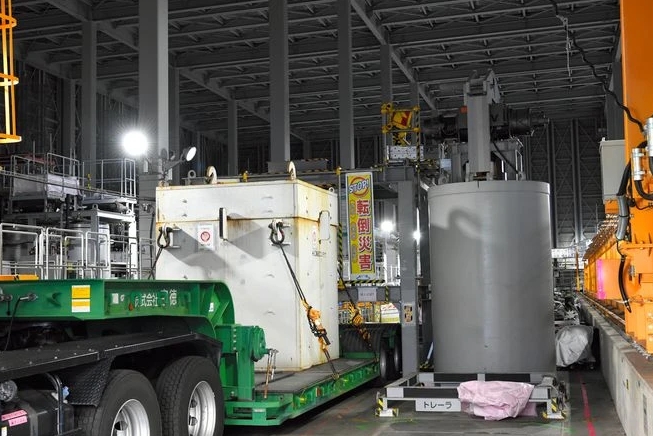
The contaminated water that accumulates is processed via an Advanced Liquid Processing System to remove most of radioactive materials. The ALPS is housed in a 17-meter-tall building situated close to the center of the plant site.
Reporters from the Japan National Press Club were granted a rare opportunity in late November to visit the crippled facility to observe the process.
The building houses a large grayish drum-like container designed especially to store radioactive slurry. The interior of each vessel is lined with polyethylene, while its double-walled exterior is reinforced with stainless steel.
ALARMING DEVELOPMENTS
The use of chemical agents to reduce radioactive substances from the contaminated water in the sedimentation process produces a muddy material resembling shampoo. Strontium readings of the generated slurry sometimes reach tens of millions of becquerels per cubic centimeter.
TEPCO started keeping slurry in special vessels in March 2013. As of November, it had 3,373 of the containers.
Because the integrity of the vessels deteriorates quickly due to exposure to radiation from slurry, TEPCO and the Nuclear Regulation Authority (NRA) predict that durability of the containers will reach the limit after exposure to an accumulated total of 5,000 kilograys of radiation–a level equivalent to 5 million sieverts.
Based on that grim forecast, TEPCO speculated the vessels will need replacement from July 2025.
But the NRA accused TEPCO of underestimating the impact of the radiation problem. It blasted the operator for measuring slurry density 20 centimeters above the base of the container when making its dose evaluation.
“As slurry forms deposits, the density level is always highest at the bottom,” a representative of the nuclear watchdog body pointed out.
The NRA carried out its own assessment in June 2021 and told TEPCO that 31 containers had already reached the end of their operating lives. Its findings also showed an additional 56 would need replacing within two years.
The NRA told TEPCO to wake up and “understand how urgent the issue is since transferring slurry will take time.”
In August, TEPCO conducted a test where slurry with relatively low radiation readings was moved from one container to another. The work took more than a month to complete due to mechanical troubles and other reasons.
An analysis of the radioactive materials’ density data collected during the transfer procedure also turned up another challenge to be overcome. The NRA in October said there was an unacceptable risk of radioactive substances being released into the air during the process and insisted that the refilling method be radically reviewed and changed.
TEPCO is currently considering what steps to take, including covering the workspace with plastic sheets.
Slurry in some containers in need of replacement have strontium levels of more than 1,000 times that of the one in the August test.
TEPCO says that the “container covers will be opened and closed remotely.” But it has not revealed how it plans to safely deal with such readings to carry out the vital work.
It was envisioned that equipment to dehydrate hazardous materials to prevent radiation leakage could be built, but as yet there is no finished design for the device.
With no drastic solutions in sight, a succession of containers will reach the end of their shelf lives shortly.
ANOTHER NIGHTMARE PROBLEM
Radioactive slurry is not the only stumbling block for decommissioning.
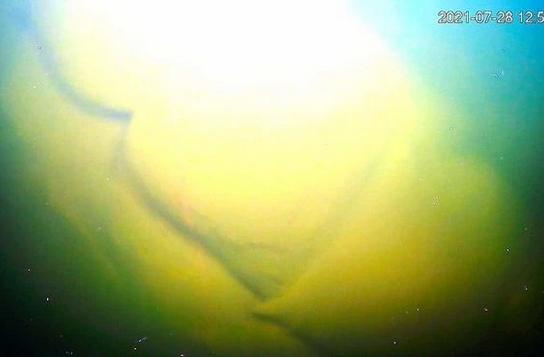
In the immediate aftermath of the 2011 disaster, TEPCO stored contaminated water in the underground spaces below two buildings near the No. 4 reactor. In doing so, bags full of a mineral known as zeolite were placed in the temporary storage pools to absorb cesium so as to reduce the amount of radioactive substances.
Twenty-six tons of the stuff are still immersed in the dirty water on the floors under the buildings. Radiation readings of 4 sieverts per hour were detected on their surfaces in fiscal 2019, enough to kill half of all the people in the immediate vicinity within an hour.
TEPCO plans to introduce a remotely controlled underwater robot to recover the bags, starting no earlier than from fiscal 2023, However, it has not determined how long this will take or where to store the bags once they are retrieved.
In addition, radioactive rubble, soil and felled trees at the plant site totaled 480,000 cubic meters as of March 2021, leading TEPCO to set up a special incinerator. The total volume is expected to top 790,000 cubic meters in 10 years, but where to dispose of the incinerated waste remains unclear.
TEPCO is in a race against time. That’s the view of Satoshi Yanagihara, a specially appointed professor of nuclear engineering at the University of Fukui who has specialist knowledge on processes to abandon reactors.
“Now, only 30 years remain before the target date of the end of decommissioning set by the government and TEPCO,” said Yanagihara.
As decommissioning work is due to shortly enter a crucial stage, such as recovering nuclear fuel debris on a trial basis from as early as 2022, Yanagihara noted the need for careful arrangements before forging ahead with important procedures.
“The government and TEPCO need to grasp an overall picture of the massive task ahead and discuss how to treat, keep and discard collected nuclear debris and the leftover radioactive waste with local residents and other relevant parties,” he said.
(This article was written by Yu Fujinami and Tsuyoshi Kawamura.)
Robots to probe inside Fukushima reactor
Jan. 2, 2022
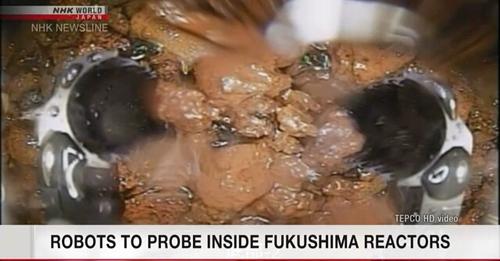
The operator of the crippled Fukushima Daiichi nuclear power plant is planning to conduct robotic probes and collect samples from damaged reactors this year.
The work will be a key step in the effort to decommission the plant.
The No.1, 2 and 3 reactors suffered meltdowns following a major earthquake and tsunami in 2011.
Nuclear fuel melted and collapsed into the reactors’ containment vessels. It mixed with surrounding metal parts and formed solid fuel debris.
Tokyo Electric Power Company plans to begin a robotic survey of the No.1 reactor in mid-January. The survey is expected to take about six months.
The robots will use ultrasonic devices to locate and measure the thickness of the deposits.
Utility officials say they also hope to collect samples.
Preparation to retrieve fuel debris from the No.2 reactor is underway with a robotic device that was developed in the UK.
It is now undergoing performance tests in Japan.
Tokyo Electric Power Company is planning to collect a few grams of debris with the robot by the end of this year. It hopes to gradually increase the amount to be retrieved.
Removal and safe storage of the extremely radioactive debris is thought to be one of the biggest challenges in the decommissioning process.
Anger as European Union is poised to subsidise the corrupt and rapacious nuclear industry

Germany and Austria have expressed their fury over a French victory on EU rules that would open the door to new investment in nuclear power. The European Commission’s proposed new “taxonomy” rules will allow private investment in atomic energy to be linked to climate policy subsidies as well as funding for gas-fuelled power stations to replace coal-fired generators.
Incensed Austrian ministers compared the Brusselsdecision, which was rushed through late on New Year’s Eve, to Adolf Hitler’s 1941 “Nacht und Nebel”, night and fog, decree to round upand destroy all resistance to the Nazis.
“The EU commission took a step towards greenwashing nuclear power and fossil gas yesterday in a night and fog action,” Leonore Gewessler, the Austrian climate protection minister, said. “They are harmful to the climate and the environment and destroy the future of our children.”
Greenpeace UK has urged Boris Johnson not to allow gas or nuclear to be included in Britain’s own green investment rules. “This loophole could be a drain for Europe’s climate ambitions, as they switch from phasing out dirty fuels, to phasing out dirty fuels only when it seems convenient. The UK must resist being pulled into this failing approach,” Doug Parr, the chief scientist and policy director of British Greenpeace, said.
Times 2nd Jan 2022
https://www.thetimes.co.uk/article/eu-capitals-at-odds-on-nuclear-power-kd2fsznr6
Changing patterns for spreading misinformation on pandemics and climate change.
Covid conspiracy theorists turn on climate change , GUY BELL/ALAMY
Groups spreading misinformation about Covid-19 lockdowns and vaccines are starting to use the same language to spread conspiracy theories about climate change, experts have warned.
As the impact of the pandemic and need for restrictions begins to wane, Covid-19 conspiracy theorists are starting to use terms such as “green lockdowns”, according to analysts at the Institute for Strategic Dialogue.
The term refers to the belief that, in future, people will be regularly forced to stay at home and restrict their travel and social contacts to reduce carbon emissions and tackle climatechange.
There is no evidence for such claims. Ciaran O’Connor, an analyst at the institute, said that conspiracy theorists would try to framemeasures to tackle climate change in a similar way to lockdowns — as a
“loss of civil liberties and loss of freedoms”.
Such arguments would present campaigns urging people to take fewer flights, use their cars less
often and eat less meat as attacks on individual freedoms rather than as efforts to avert the worst impacts of climate change through collective action.
Dr Jonathan Bright, an associate professor at the Oxford Internet Institute, said: “I think people are going to be thinking about climate change misinformation quite a lot [in 2022].” O’Connor said that such
conspiracy theorists are increasingly turning away from mainstream social media sites, warning: “Telegram has become the platform of choice for far-right, extreme right wing groups, for conspiracy communities [and] for extremist communities in general. Facebook and YouTube… they do have community guidelines, they do enforce them.
Times 3rd Jan 2022
https://www.thetimes.co.uk/article/covid-conspiracy-theorists-turn-on-climate-change-lk72pgklv
European Commission’s divisive plan to label nuclear power ”green”, revealed on the sly?

“Short of digging an actual hole, the European Commission couldn’t have tried harder to bury this proposal”
” we get a document written behind closed doors and published on New Year’s Eve,”
EU labels nuclear power ‘green’, Germany calls it dangerous, Sydney Morning Herald, By John Chalmers, January 4, 2022 Brussels: The German government has condemned nuclear energy as dangerous, slamming European Union proposals that would let the technology remain part of the bloc’s plans for a climate-friendly future.
Germany is on course to switch off its remaining three nuclear power plants at the end of this year and phase out coal by 2030, whereas its neighbour France aims to modernise existing nuclear reactors and build new ones to meet its future energy needs. Berlin plans to rely heavily on natural gas until it can be replaced by non-polluting sources for energy.
The opposing paths taken by two of the EU’s biggest economies have resulted in an awkward situation for the bloc’s Executive Commission.
“We consider nuclear technology to be dangerous,” German government spokesman Steffen Hebestreit told reporters in Berlin, noting that the question of what to do with radioactive waste that will last for thousands of generations remains unresolved.
Hebestreit added that Germany “expressly rejects” the EU’s assessment of atomic energy, has repeatedly stated this position towards the commission and is now considering next steps.
The European Union has rejected accusations that it waited until New Year’s Eve to publish the divisive proposals to allow some natural gas and nuclear energy projects to be labelled as sustainable, saying “we weren’t trying to do it on the sly”.
The commission’s decision to include gas and nuclear investments in the European Union’s “sustainable finance taxonomy” rules was circulated in a draft proposal late on December 31 and leaked to some media organisations.
“Short of digging an actual hole, the European Commission couldn’t have tried harder to bury this proposal,” said Henry Eviston, spokesman on sustainable finance at the European Policy Office of the environmental group WWF.
“When the question was whether renewables are green, the commission gave citizens three chances to provide their opinion. For fossil gas and nuclear, we get a document written behind closed doors and published on New Year’s Eve,” he said in an online posting………………………………….
The European Commission will now collect comments to its draft until January 12 and hopes to adopt a final text by the end of the month. After that, the text can be discussed with EU governments and Parliament for up to six months. But it is unlikely to be rejected because that would require 20 of the 27 EU countries, representing 65 per cent of EU citizens, to say “no”.
The aim of the agreement is to send a signal to private investors as to what the EU considers acceptably “green” and stop greenwashing, whereby companies or investors overstate their eco-friendly credentials. The deal will also set limits on what governments can use EU recovery funds to invest in.
https://www.smh.com.au/world/europe/eu-labels-nuclear-power-green-germany-calls-it-dangerous-20220104-p59lmt.html
Facebook’s gigantic data farm planned for Netherlands causing a severe energy problem

Facebook has been hit by an outcry over plans to build a giant data centre in the Netherlands that will use as much electricity as the nation’s railway system or a major city.
Meta, the social media giant’s parent company, says it has stipulated that the 166-hectare (410-acre) complex at Zeewolde must be run from renewable power sources.
However, the plan is rapidly becoming the biggest headache for a new, fragile coalition government because its sheer scale threatens the nation’s climate change targets.
Times 2nd Jan 2022
Pro nuclear shills use UK’s energy crisis to promote nuclear, but with government action, renewable energy would solve the problem

Government failure behind energy crisis, Chartist, By Dave Toke -31/12/2021 The only thing wrong with renewables is that we’ve not built nearly enough of them, says Dave Toke. Amidst a global shortfall of gas supplies in relation to demand (and a global increase in gas prices), the anti-renewables lobbies are busy blaming a lack of wind and solar (wot, solar too?) for the soaring energy prices. It’s nonsense of course to pin the blame on renewables for a combination of a global oil and gas crisis and the UK’s unique market vulnerability to natural gas supply squeezes, but that’s precisely what is happening. The truth is we’d be much more secure and greener with a much higher proportion of energy coming from renewables backed up with a revived storage network that successive UK governments have allowed to run down.
Of course we’ve had fossil fuel energy price surges and crises for decades, but now, suddenly, to read some papers and a lot of tweets, I’m told mainly from fossil fuel lobbyists, it’s the fault of renewables! Remarkable!
Some are even using the crisis to boost the case for nuclear power. Now that’s ironic, given that five out of 14 of EDF’s nuclear units are offline as I write! With nuclear, of course, it’s always going to be better in the future (and never is). Certainly, the idea that the UK relying on 3.2GW units (like Hinkley C and the planned Sizewell C) for its security at times of pressure is a guarantee of system security needs rather clearer analysis than is being done at the moment. (By the way, did you know that the first Hinkley C – like EPR in China – got shut down this summer because of radioactive leaks? Somebody please tell me when it gets back online.)………………..
We need much, much more renewables. Currently, the UK generates about 100TWh a year of wind and solar, compared to around 900TWh of natural gas consumption. How on earth can you blame wind and solar for a failure to meet gas demand when the Government has so far incentivised only a small fraction of the renewable energy generation required to phase out reliance on natural gas? It’s gaslighting on a grand scale (pun intended).
And, yes, there’s easily enough renewables to do the job. All of UK energy could be supplied from offshore wind occupying less than less than 8 per cent of the UK’s offshore waters, not counting all the solar and other renewable energy resources in the UK. https://www.chartist.org.uk/government-failure-behind-energy-crisis/
Five world powers vow to prevent spread of nuclear weapons

Five world powers vow to prevent spread of nuclear weapons
https://www.aljazeera.com/news/2022/1/3/five-world-powers-vow-to-prevent-spread-of-nuclear-weapons
In a joint statement, permanent members of UN Security Council pledge
to ensure a nuclear war is never fought, amid rising world tensions.
Five global nuclear powers have pledged to prevent atomic weapons from
spreading and to ensure a nuclear war is never fought, in a rare joint
statement ahead of a review of a key nuclear treaty later this year.
The statement on Monday said that the United States, United Kingdom,
Russia, China and France – who are the permanent members of the United
Nations Security Council – consider it their primary responsibility to
avoid war between the nuclear states and to reduce strategic risks,
while aiming to work with all countries to create an atmosphere of
security.
“We believe strongly that the further spread of such weapons must be
prevented,” it said, adding, “A nuclear war cannot be won and must
never be fought.”
The Russian-language version of the statement read, “We declare there
could be no winners in a nuclear war, it should never be started.
“As the use of nuclear arms would have far-reaching consequences, we
also confirm that nuclear arms – as long as they exist – should serve
defensive aims, deterrence against aggression and prevention of war.”
Russia hopes the pledge will reduce world tensions, while saying a
summit of permanent UN Security Council members remains necessary.
“We hope that, in the current difficult conditions of international
security, the approval of such a political statement will help reduce
the level of international tensions,” Moscow’s foreign ministry said
in a statement.
Kremlin spokesman Dmitry Peskov told the RIA Novosti news agency that
Moscow still considered a summit between the world’s major nuclear
powers to be “necessary”.
The foreign ministry also said it hoped the agreement will “help build
confidence and form the foundations of future control over offensive
and defensive arms”.
France also released the statement, underscoring that the five powers
reiterated their determination for nuclear arms control and
disarmament. They would continue bilateral and multilateral approaches
to nuclear arms control, it said.
China said the pledge will “increase mutual trust” and reduce the risk
of nuclear conflict.
“The joint statement issued by the leaders of the five nuclear-weapon
states will help increase mutual trust and replace competition among
major powers with coordination and cooperation,” the official Xinhua
news agency quoted vice foreign minister Ma Zhaoxu as saying.
Tensions between Russia and the West have sky-rocketed in recent
months over Ukraine, with the US and its allies warning Moscow of a
massive coordinated sanctions response if it invades its ex-Soviet
neighbour.
1 This Month
26 April – Chernobyl: Inside the Meltdown airs on National Geographic on Sunday 26th April from 4pm

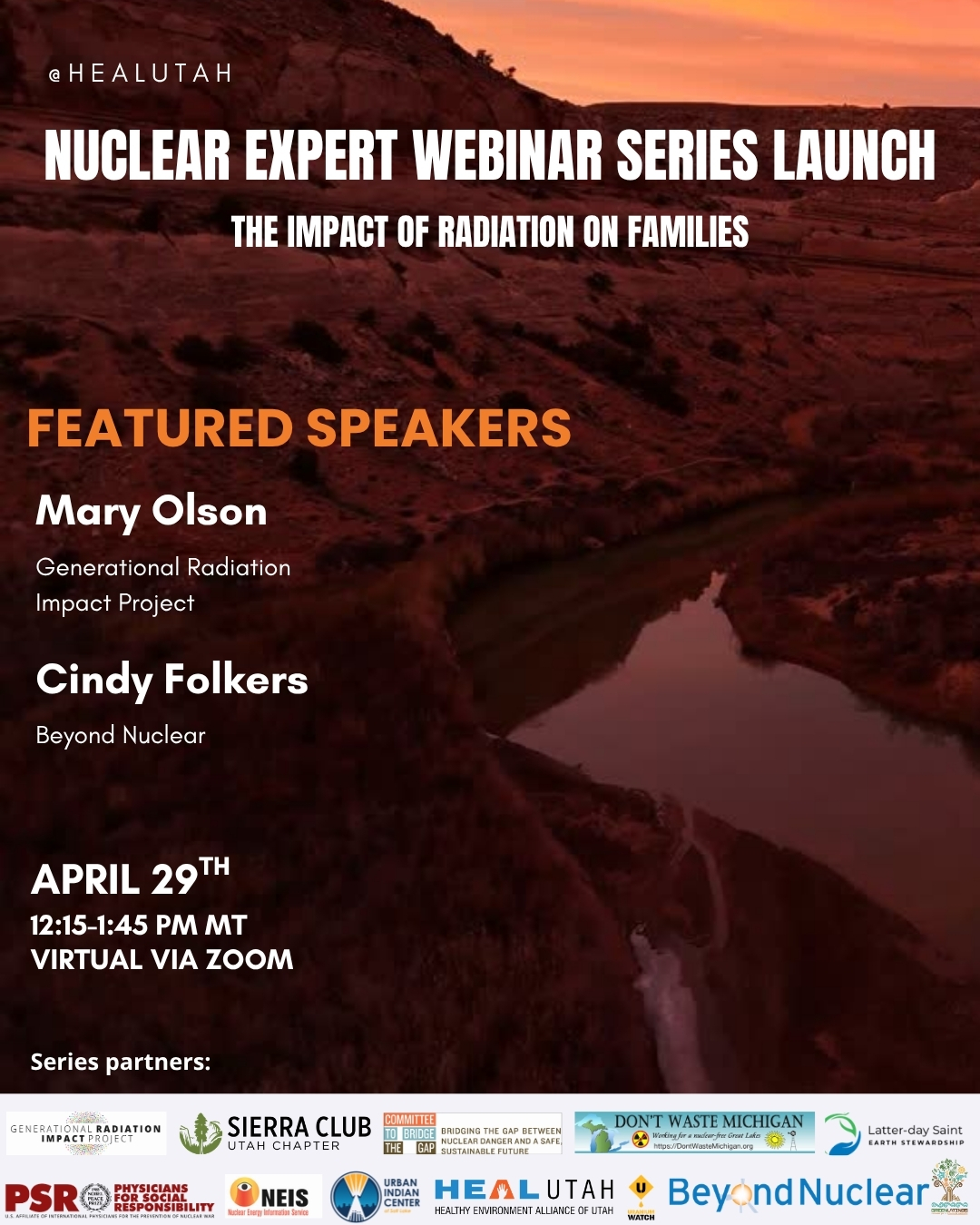
29 April – Nuclear Expert Webinar #1 – Radiation Impacts on Families with Mary Olson and Cindy Folkers
- 12:15 PM MT – 1:45 PM MT
- Location: Virtual – REGISTER TODAY

4 May -West Suburban Peace Coalition to discuss Iran war at May Educational Forum
Monday, May 4, 7:00 – 8:00 PM Central Standard Time
Title: : How Trump’s Narrative Tries to Shape the Reality of the War on Iran.
Contact Walt Zlotow, zlotow@hotmail.com 630 442 3045 for further information
14 May – online event From Bombs to Data Centres: the Face of Nuclear Colonialism

Pine Ridge Uranium is the real threat, not Tehran- Tell Burgum: Stop the Extraction.
Chernobyl: The Lost Tapes – A good documentary on Chernobyl on SBS available On Demand for the next 3 weeks– https://www.sbs.com.au/ondemand/tv-program/chernobyl-the-lost-tapes/2352741955560
To see nuclear-related stories in greater depth and intensity – go to https://nuclearinformation.wordpress.com
-
Archives
- April 2026 (327)
- March 2026 (251)
- February 2026 (268)
- January 2026 (308)
- December 2025 (358)
- November 2025 (359)
- October 2025 (376)
- September 2025 (257)
- August 2025 (319)
- July 2025 (230)
- June 2025 (348)
- May 2025 (261)
-
Categories
- 1
- 1 NUCLEAR ISSUES
- business and costs
- climate change
- culture and arts
- ENERGY
- environment
- health
- history
- indigenous issues
- Legal
- marketing of nuclear
- media
- opposition to nuclear
- PERSONAL STORIES
- politics
- politics international
- Religion and ethics
- safety
- secrets,lies and civil liberties
- spinbuster
- technology
- Uranium
- wastes
- weapons and war
- Women
- 2 WORLD
- ACTION
- AFRICA
- Atrocities
- AUSTRALIA
- Christina's notes
- Christina's themes
- culture and arts
- Events
- Fuk 2022
- Fuk 2023
- Fukushima 2017
- Fukushima 2018
- fukushima 2019
- Fukushima 2020
- Fukushima 2021
- general
- global warming
- Humour (God we need it)
- Nuclear
- RARE EARTHS
- Reference
- resources – print
- Resources -audiovicual
- Weekly Newsletter
- World
- World Nuclear
- YouTube
-
RSS
Entries RSS
Comments RSS
 nuclear-news