President Biden should pledge never to use nuclear weapons first
President Biden should pledge never to use nuclear weapons first, The Hill, BY THOMAS GRAHAM, JR. AND JONATHAN GRANOFF, — 01/03/22 President Biden can make the world a dramatically safer place by declaring that it is now the policy of the United States never to use nuclear weapons first. Such a pledge is consistent with international legal obligations, fulfills campaign promises, and diminishes the risk of using a nuclear weapon. It would make countries subject to the nuclear weapons threats less nervous in a crisis, when irrationality can lead to disaster. It would add to global stability by lowering the political currency of nuclear weapons.
And significantly, it would help strengthen the Nuclear Nonproliferation Treaty (NPT), the world’s most important arms control treaty. Pursuant to Article VI of the treaty, five nuclear weapons states — United Kingdom, United States, Russia, China, and France — have pledged to “pursue negotiations in good faith on effective measures relating to cessation of the nuclear arms race at an early date and to nuclear disarmament.”
The NPT needs such a boost. Notwithstanding the commitment to disarmament, the five nuclear weapons states, plus the four others not in the treaty — India, Israel, Pakistan, and North Korea — are spending enormous amounts of money modernizing or expanding their nuclear arsenals, or both. Because of the omicron surge in New York, an important 50-year review conference for the treaty (the tenth five-year review), which was supposed to take place next week, has been postponed for the second year in a row (the scheduled 2020 conference was also cancelled due to a winter COVID surge). Meanwhile, nuclear tensions continue to rise, making progress toward meeting the NPT’s goals critically important.
Normally the NPT gets reviewed every five years. At these periodic review conferences, every nation in the world (except the four that aren’t NPT parties) analyze the state of the treaty’s nonproliferation and nuclear disarmament obligations, and strike agreements to strengthen proliferation constraints and make tangible progress toward a nuclear weapons-free world…………….
there is one step the U.S. can take which would help reverse the present dangerous situation: declaring it will never use nuclear weapons first. That would lend credibility to the sincerity of U.S. commitment to fulfilling its disarmament pledges under the NPT.
When brought into deployment practice, a no-first-use posture could make us all dramatically safer. Today, the nuclear posture of the U.S. and Russia supports continuing to threaten to use nuclear weapons first. In practice this tends to keep the arsenals close to Cold War hair-trigger alert status. Such conduct ignores the most important principle of international civilized order and diplomacy: pacta sunt servanda, solemn promises among nations must be kept. Failure to keep arms control commitments — in the nuclear age — could mean the annihilation of civilization.
A no-first-use pledge is consistent with the platform of the Democratic Party on which President Biden campaigned, which states, “(The) sole purpose of our nuclear arsenals should be to deter — and, if necessary retaliate against — a nuclear attack, and we will work to put that belief into practice, in consultation with our allies and military.” A U.S. pledge would challenge all nuclear weapons states to make similar pledges.
Presidents Ronald Reagan and Mikhail Gorbachev got it right when they agreed that a nuclear war can never be won and must never be fought.
Reagan and Gorbachev helped reduce the number of nuclear weapons from more than 65,000 in 1985 to fewer than 14,000 today. This process rested on arms control agreements such as the NPT.
Affirming that the sole purpose of the U.S. nuclear arsenal is to deter attack would respect the NPT, diminish the extremity of the status quo, and help move from an environment of irrational threat to a shared recognition of common security interests and the realistic pursuit of human security. https://www.dell.com/en-au/work/shop/business-laptops-ultrabooks-and-tablets/vostro-5410-laptop/spd/vostro-14-5410-laptop/smc9wnv5410c09aub?gacd=9695171-8007-5761040-272319172-0&dgc=ST&gclsrc=aw.ds&&gclid=EAIaIQobChMI_ISr8_uW9QIVu4GsAh2EXA_HEAEYASAEEgJoSfD_BwE
German government struggles to unite on EU energy proposal
German government struggles to unite on EU energy proposal, DW, 4 Jan 22,
The EU Commission’s proposal to classify nuclear power and natural gas plants as “green” investments has sparked debate in Germany’s new coalition government. Conflict is also brewing between EU states.
Less than a month after Germany’s new coalition government was sworn in, it is facing a major test: To find a united stance in response to a controversial proposal by the EU Commission, published on New Year’s Eve.
The EU Commission wants to label natural gas and nuclear power as climate-friendly, and include investments in both energies on its long-awaited taxonomy list — a green labeling system for investments in the energy sector.
The list is part of the bloc’s plans to decarbonize the European economy and build clean power plants, which will require the investment of billions of euros.
Under the draft proposal, the gas and nuclear plants must meet certain criteria: Investment in new nuclear plants as they are planned in France, the Netherlands, and Poland, can be considered “sustainable” only if respective states ensure they meet the latest technology standards, and provide a concrete plan for the disposal for high-level radioactive waste.
Natural gas plants could also be granted a green label for a limited period of time, provided certain criteria are met. These could involve limits on the amount of greenhouse gas emitted or proving that the plants can also be operated with green hydrogen or low-carbon gas.
The classification of economic activities by the EU Commission under the so-called taxonomy is intended to enable investors to switch their investments to more sustainable technologies and companies.
Divided coalition………………
Climate and Economy Minister and Vice-Chancellor Robert Habeck, told German press agency dpa that he felt the EU proposal “waters down the good label for sustainability.”
“It’s questionable whether this greenwashing will be accepted by the financial markets anyway,” the Green politician said.
Environment Minister Steffi Lemke (Greens) also rated the EU proposal as “questionable.”………….
Klaus Jacob of the Research Center for Environment Policy at Berlin’s Freie Universität says the debate within the government was completely foreseeable.
“This isn’t a predetermined breaking point in the coalition,” Jacob told DW…………………….
Nuclear phaseout nearing completion
The three governing coalition parties are, however, in agreement when it comes to the phaseout of nuclear energy. Germany’s last nuclear power plants are due to be decommissioned just a year from now.
The decision to phase out nuclear power was made during the 1998-2003 coalition between the SPD and Greens under Chancellor Gerhard Schröder, in response to the realization that there was no way to store nuclear waste safely. Almost two decades earlier, Germany’s anti-nuclear protests gave birth to the Green Party and the phaseout has long been one of its core policies.
Angela Merkel’s coalition government of center-right Christian Democrats and FDP then rolled back the phaseout. But in 2011, after the accident at the Fukushima atomic power plant in Japan, Merkel made an about-turn and decided to push through with the phaseout after all.
Referring to the EU’s plans to green label nuclear energy, Environment Minister Lemke said the Commission “creates the great danger of blocking and damaging really viable, sustainable investments in favor of dangerous nuclear power.”……………
EU fissure
The 27 EU member states now have until January 12 to comment on the Commission’s draft. But it’s unlikely that the proposal can be blocked. Besides Germany, only Austria, Luxembourg, Denmark, and Portugal have voiced criticism.
Implementation can only be prevented if at least 20 EU countries (representing at least 65% of the total EU population) or at least 353 members of parliament vote against it.
Other EU countries are continuing to push nuclear energy and campaign for it to be included on the EU’s list of sustainable energy sources eligible for investment — prominently France which holds the rotating EU presidency and is heading for presidential elections in April.
Austria, meanwhile, is threatening to go to the European Court of Justice to stop the draft from being passed.
Edited by Rina Goldenberg https://www.dw.com/en/german-government-struggles-to-unite-on-eu-energy-proposal/a-60319292
Will Biden stay the course toward nuclear disarmament?

When President Joe Biden took office last year, a historic shift in U.S. nuclear policy seemed likely. Now, with ongoing threats from Russia and China, experts say moving away from nuclear weapons may be more difficult. CS Monitor, By Robert Burns Associated Press, 4 Jan 22,
Joe Biden’s arrival in the White House nearly a year ago seemed to herald a historic shift toward less U.S. reliance on nuclear weapons and possibly a shrinking of their numbers. Even an American “no first use” pledge – a promise to never again be the first to use a nuclear weapon – seemed possible.
The outlook will be clearer when the Biden administration completes its so-called nuclear posture review – an internal relook at the numbers, kinds, and purposes of weapons in the nuclear arsenal, as well as the policies that govern their potential use. The results could be made public as early as January.
The biggest unknown is how forcefully Mr. Biden will weigh in on these questions, based on White House calculations of the political risk. During his years as vice president, Mr. Biden talked of new directions in nuclear policy. But heightened concerns about China and Russia would seem to improve the political leverage of Republicans seeking to portray such change as a gift to nuclear adversaries.
Tom Z. Collina, policy director at Ploughshares Fund, an advocate for nuclear disarmament, says the China and Russia problems complicate the politics of Mr. Biden’s nuclear review but should not stop him from acting to reduce nuclear dangers.
“We do not want a new nuclear arms race with either nation and the only way to prevent that is with diplomacy,” Mr. Collina said. “We must remember the main lesson we learned in the Cold War with Russia – the only way to win an arms race is not to run.”………………………
The Pentagon has not publicly discussed details of the nuclear review, but the administration seems likely to keep the existing contours of the nuclear force – the traditional “triad” of sea-, air-, and land-based weapons, which critics call overkill. It also may embrace a $1 trillion-plus modernization of that force, which was launched by the Obama administration and continued by Mr. Trump.
It’s unclear whether Mr. Biden will approve any significant change in what is called “declaratory policy,” which states the purpose of nuclear weapons and the circumstances under which they might be used.
The Obama administration, with Mr. Biden as vice president, stated in 2010 that it would “only consider the use of nuclear weapons in extreme circumstances to defend the vital interests of the United States or its allies and partners.” It did not define “extreme circumstances.”
Eight years later, the Trump administration restated the Obama policy but got more specific. “Extreme circumstances could include significant non-nuclear strategic attacks. Significant non-nuclear strategic attacks include, but are not limited to, attacks on the U.S., allied, or partner civilian population or infrastructure, and attacks on U.S. or allied nuclear forces, their command and control, or warning and attack assessment capabilities.”…………… https://www.csmonitor.com/USA/Foreign-Policy/2022/0103/Will-Biden-stay-the-course-toward-nuclear-disarmament
UN chief welcomes P5 statement on nuclear war prevention
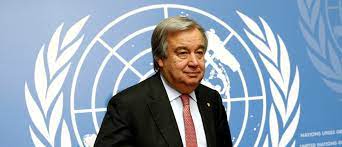
UN chief welcomes P5 statement on nuclear war prevention https://news.cgtn.com/news/2022-01-04/UN-chief-welcomes-P5-statement-on-nuclear-war-prevention-16xs8fIorHa/index.htmlCGTN UN Secretary-General Antonio Guterres has hailed a joint statement by the leaders of Russia, China, the United States, Britain and France on the prevention of nuclear war.
“The Secretary-General welcomes the joint statement by the nuclear-weapon States on the prevention of nuclear war and avoidance of arms races,” UN chief’s spokesperson Stephane Dujarric said in a statement on Monday.
Progress in nuclear waste cleanup at Idaho nuclear site
US close to ending buried nuke waste cleanup at Idaho site, KEITH RIDLER, Associated Press, Jan. 3, 2022,
BOISE, Idaho (AP) — A lengthy project to dig up and remove radioactive and hazardous waste buried for decades in unlined pits at a nuclear facility that sits atop a giant aquifer in eastern Idaho is nearly finished, U.S. officials said.
The U.S. Department of Energy said last week that it removed the final amount of specifically-targeted buried waste from a 97-acre (39-hectare) landfill at its 890-square-mile (2,300-square-kilometer) site that includes the Idaho National Laboratory.
The targeted radioactive waste included plutonium-contaminated filters, graphite molds, sludges containing solvents and oxidized uranium generated during nuclear weapons production work at the Rocky Flats Plant in Colorado. Some radioactive and hazardous remains in the Idaho landfill that will receive an earthen cover.
The waste from Rocky Flats was packaged in storage drums and boxes before being sent from 1954 to 1970 to the high-desert, sagebrush steppe of eastern Idaho where it was buried in unlined pits and trenches. The area lies about 50 miles (80 kilometers) west of the city of Idaho Falls.
The cleanup project, started in 2005, is named the Accelerated Retrieval Project and is one of about a dozen cleanup efforts of nuclear waste finished or ongoing at the Energy Department site.
The project involving the landfill is part of a 2008 agreement between the Energy Department and state officials that required the department to dig up and remove specific types and amounts of radioactive and hazardous material.
The agency said it removed about 13,500 cubic yards (10,300 cubic meters) of material — which is the equivalent of nearly 50,000 storage drums each containing 55 gallons (208 liters).
Most of the waste is being sent to the U.S. government’s Waste Isolation Pilot Plant in New Mexico for permanent disposal. Some waste will be sent to other off-site repositories that could be commercial or Energy Department sites.
The Energy Department said it is 18 months ahead of schedule in its cleanup of the landfill.
“The buried waste was the primary concern of our stakeholders since the beginning of the cleanup program,” Connie Flohr, manager of the Idaho Cleanup Project for the Energy Department’s Office of Environmental Management, said in a statement. “Completing exhumation early will allow us to get an earlier start on construction of the final cover.”……
The Lake Erie-sized Eastern Snake River Plain Aquifer supplies farms and cities in the region. A 2020 U.S. Geological Survey report said radioactive and chemical contamination in the aquifer had decreased or remained constant in recent years. It attributed the decreases to radioactive decay, changes in waste-disposal methods, cleanup efforts and dilution from water coming into the aquifer. https://www.nhregister.com/news/article/US-eyes-finish-of-buried-nuclear-waste-cleanup-at-16746645.php
Climate Noise Has Obscured Nuclear Dump Cronyism and Nuclear Impacts of Coal Mine – Why Bother With Traffic Light System for Induced Earthquakes? — RADIATION FREE LAKELAND
Originally posted on Keep Cumbrian Coal in the Hole: The following letter has just been sent to the Coal Mine Planning Inspector Mr Stephen Normington following a letter from the Rt Hon Greg Hands, Minister of State for Energy, Clean Growth and Climate Change (this Govnt department appointed the coal mine boss as “invaluable” nuclear…
Climate Noise Has Obscured Nuclear Dump Cronyism and Nuclear Impacts of Coal Mine – Why Bother With Traffic Light System for Induced Earthquakes? — RADIATION FREE LAKELAND
Excerpts – ”……………………..should the coal mine be approved by government, then a seismic Traffic Light System at least as stringent as that for the oil and gas industry should be part of the conditions imposed. The empirical evidence (presented by Radiation Free Lakeland at the Planning Inquiry) is unequivocal in its findings that coal mining produces earthquakes of far greater magnitude and frequency than that of fracking. Despite this Greg Hands MP states that there will be no Traffic Light System for the coal mine.
In tandem with the absence of a seismic Traffic Light System is the outrageous allowance of 6mm/s Peak Particle Velocity as agreed by the Inquiry’s Rule 6 Parties and Developer for ground movements as a result of the deep mining proposed. As you will be aware the PPV at which “receptors” will make complaints is 1mm/s.
An observer of the bulk of the Planning Inquiry would have had no idea of the uniquely dangerous sense of place regarding the planned coal mine. If this same coal mine was anywhere in the world the climate impacts would be the same.
………. But this coal mine is not anywhere in the world. It is five miles from Sellafield, the worlds riskiest nuclear waste site, under the arguably most radioactively contaminated sea in the world and directly beneath the radioactively contaminated Cumbrian Mud Patch………
our concerns lay with the undeniable connections/cronyism between the coal mine and the proposed Geological Disposal Facility.
The Government’s refusal to consider a seismic Traffic Light System for the earthquake inducing coal mine is a case in point.
Mark Kirkbride the CEO of West Cumbria Mining was appointed in 2019 as an “invaluable” adviser to the Government (Committee on Radioactive Waste Management) on the digging of big holes for a Geological Disposal Facility for Heat Generating Nuclear Wastes and for shallower Near Surface Disposal of Low and Intermediate Level Nuclear Wastes.
We are painfully aware, as no doubt is government nuclear dump advisor Mark Kirkbride, that a seismic Traffic Light System for an earthquake inducing deep undersea coal mine would also impact negatively on the facilitation of an even deeper hole for a GDF. The Irish Sea area adjacent to the coal mine is in the frame for a GDF.
…….. which is far more than the sum of its (more widely reported) climate/jobs parts. Should this coal mine go ahead the people and environment of Cumbria and the planet WILL be exposed to deep radiological, immediate and irreversible impacts that will make the more widely reported and not to be sneezed at climate impacts pale into insignificance.
The whole thing feels like a massive stitch up in which the climate issues have been used as a smoke screen to hide the nuclear impacts of this coal mine. If Leonardo DiCaprio (of “Don’t Look Up” fame) thinks climate campaigners have it bad he should walk a mile in the shoes of nuclear safety campaigners! https://keepcumbriancoalinthehole.wordpress.com/2022/01/03/climate-noise-has-obscured-nuclear-dump-cronyism-and-nuclear-impacts-of-coal-mine-why-bother-with-traffic-light-system-for-induced-earthquakes/
‘Don’t look up’ – A piercing commentary on our malfunctioning society — Under a Banyan tree — Barbara Crane Navarro

I wish I didn’t feel so vindicated seeing the recent Netflix movie, ‘Don’t look up’. It would have been a lot better to live in a society that isn’t so accurately portrayed in the film. Critics arguing that civilization is not that stupid, greedy or inured to ignore a comet heading towards the earth completely […] […]
‘Don’t look up’ – A piercing commentary on our malfunctioning society — Under a Banyan tree — Barbara Crane Navarro
Nuclear news – week to 4 January

As Omicron rips around the world, attention turns to medical science. In this ever-changing story, conspiracy theories are rife, and trust in science is shaken. Trust in science is diminished, too, in climate change. By and large, media and governments seem content with a ”business as usual” policy.
And now, the European Union is about to declare that nuclear power has miraculously become ”clean”, ”green” and ”sustainable” – worthy of tax-payer funding – this is a real blow to the credibility of science.
Why a U.S.-Russia War Would Inevitably Be a Globe-Annihilating Nuclear War.
Will the European Commission buy into the lie that nuclear power is clean and green? Angry response in Europe to the draft European Commission plans to accept nuclear power ”climate-friendly” – eligible for tax-payer financial help.
Land and water ecosystems ‘stressed to a critical point’ .
Nuclear Twilight – the ”limited” nuclear war.
Germany, France, Britain, U.S. discuss Ukraine crisis, Iran nuclear talks.
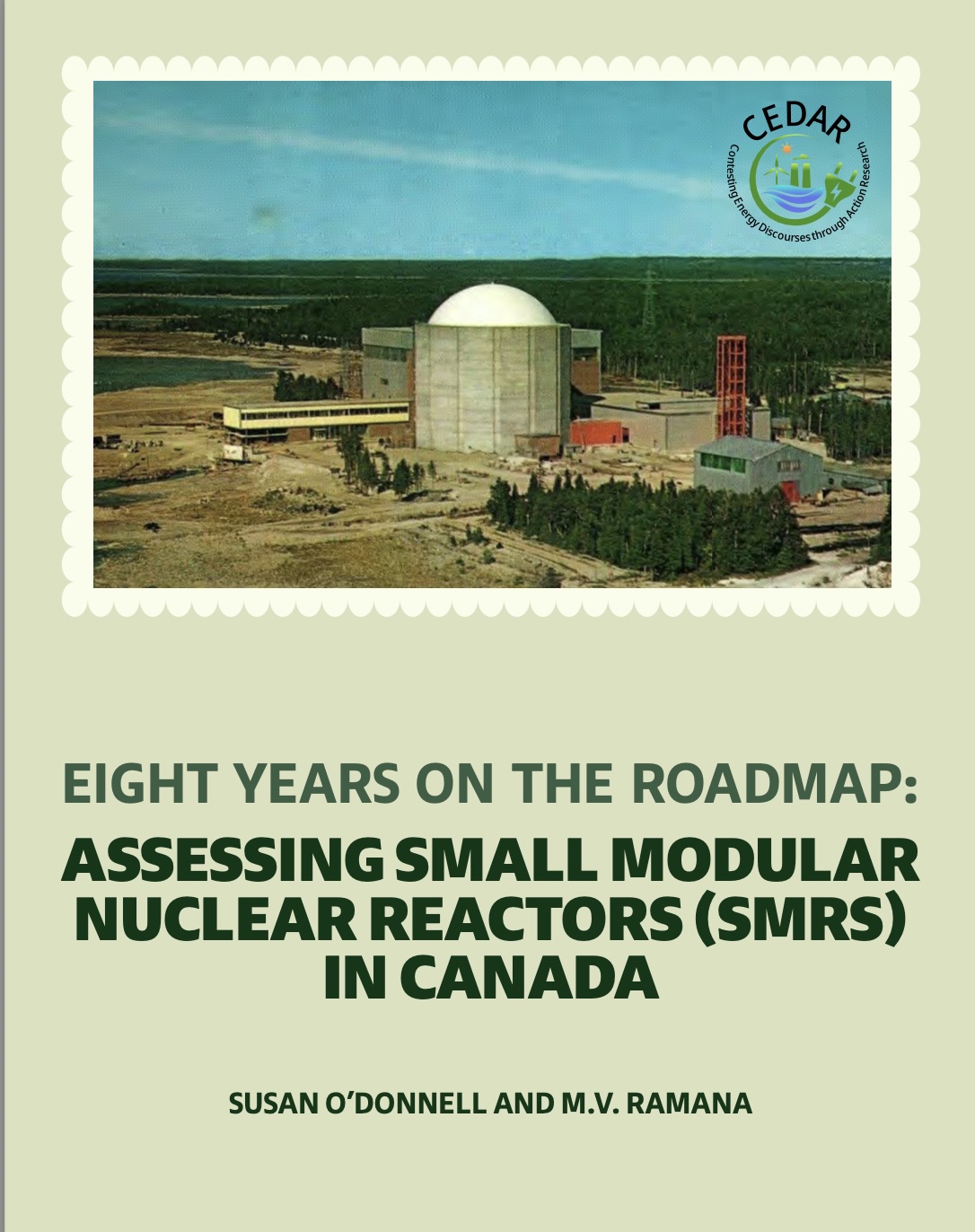
The murky world of financing Small Nuclear Reactors (SMRs).
Increased compensation for those damaged by nuclear accident – OECD.
Threat of nuclear war: Not a thing of the past. UN Nuclear Ban Treaty conference postponed again because of Covid-19.
Radioactive radiation could damage biological tissue also via a previously unnoticed mechanism.
More fusion folly — Beyond Nuclear International
World urgently needs a Paris-style agreement for biodiversity .
COP 27 – the risk of the climate summit becoming a stalemate.
Our Oceans Are Not Sewers.
UKRAINE. A Ukrainian invasion could go nuclear: 15 reactors would be in a war zone. Ukraine aims to produce enough uranium for nuclear energy needs.
GERMANY.
- German Greens fight plan to funnel billions of euros into the nuclear industry via deceptive taxonomy ”sustainable” label. Q&A: Why is Germany phasing-out nuclear power and why now? Nuclear power in the EU taxonomy and Germany’s position. (Extract) A technology that leaves behind hazardous wastes ”cannot be sustainable”.
- Germany’s Brokdorf nuclear station closes, so activists end their 35 year vigil against it. Germany shuts down half of its remaining nuclear plants. Germany will pull the plug on three of its last six nuclear power stations.
- In Germany, coal-produced electricity has dropped, along with nuclear, while renewable-provided electricity continues to increase.
EUROPE. Dismantling of nuclear reactor will be expensive, but provide jobs for several decades. Germany aiming for far-reaching methods to reduce carbon emissions across all sectors. European Commission drafts plan to label gas and nuclear investments as ”green”. EU Commission’s draft taxonomy plan – ”a licence to greenwash”.
JAPAN. Growing radioactive waste crisis at Fukushima nuclear power plant. Despite widespread opposition, Japan plans to dump water from Fukushima plant into the Pacific Ocean. Japan’s plan for dumping nuclear waste-water into the sea. Protesters call for abolition of nuclear weapons. Naoto Matsumura Guardian Of Fukushima in TokyoPop March 2022. Japan to implement compensation rules for losses by Fukushima rumors.
USA.
- Biden’s First Year Foreign Policy Record May Be Worse than Trump’s .
- Pentagon retains aircraft carrier, strike group in Mediterranean to confront Russia.
- NuScale’s Small Nuclear Reactors (SMRs) to go public with the dodgy Special Purpose Acquisition Company System . Japan to help build Bill Gates’ high-tech Natrium nuclear reactor in Wyoming.
- Wastes. Harry Reid’s legacy – a staunch opponent of Yucca nuclear waste disposal site. USA reclassifies nuclear waste, with new interpretation, making it easier to move to storage. State of New Mexico demands federal investigation into Waste Isolation Pilot Plant (WIPP) and federal nuclear programs. Vermont nuclear decommissioning committee drafting advisory opinion on nuclear waste policy. Yucca Mountain remains in debate over nuclear waste storage.
UK.
- UK govt delays final decision on Sizewell nuclear project. Britain’s National Infrastructure Commission (NIC) advises government against new nuclear power projects. Risky for UK to plan for small and advanced nuclear reactors.
- Britain under pressure to follow Joe Biden’s plan to honour nuclear test veterans.
- Scottish MP slams UK plans to increase nuclear arsenal. Consider the potential risks of having nuclear submarines at Devonport Dockyard .
- Plutonium found on a beach near Sellafield.
- Strong local Council opposition to Hartlepool plan for hosting Britain’s nuclear waste dump . Hard to swallow the manipulations going on in nuclear waste decisions on UK’s Geological Disposal Facility
- Why nuclear power is a bad way to balance renewable energy . UK’s fossil fuel use at an all-time low , as renewables generate 67% of Britain’s electricity.
- What it’s like to live in an energy efficient ‘power home’ I haven’t had to put my heating on in December .
FRANCE.
France to lead the European Council – a worrying situation as Macron cosies up to polluting corporations, especially nuclear. Massive leak of tritium at France’s Tricastin nuclear power plant. Nuclear authorities dismiss a massive tritium leak from nuclear reactor as unimportant. But should they? France’s oldest nuclear power plant, shut in 1985, still highly radioactive.
With 15 nuclear reactors shut down, France faces risk of power cuts. France’s electricity consumers face curbs as EDF struggles with problems and shutdowns. Long and difficult dismantling of EDF’s graphite technology nuclear reactors to continue.
CHINA. China hits back at ‘double standards’ amid US tech war, Washington’s nuclear weapon concerns.
SWEDEN. Rare stoppage in Sweden’s Forsmark nuclear power station.
KAZAKHSTAN. Kazakhstan may build nuclear power plant to provide electricity for energy-guzzling Bitcoin mining. Bitcoin miners in Kazakhstan will rely on government building new nuclear power plant.
INDIA. India Launches Nuclear Submarine With ‘Vertical Launch System’. India, Pakistan exchange list of nuclear power installations.
FINLAND. FINLAND. Finland’s underground nuclear waste facility in construction, seeks operating licence.
IRAN. Iran launches rocket into space as nuclear talks continue. Will 2022 Bring A Revived Iran Nuclear Deal — Or A Hard-Line Plan B?SOUTH KOREA. South Korea presidential contender vows to seek nuclear-powered submarines, months after Australia’s Aukus deal.
AUSTRALIA. Australia’s nuclear-free collective efforts and achievements in 2021. The Australian government’s Kimba nuclear waste decision rides roughshod over Australia’s obligations under international law.
Angry response in Europe to the draft European Commission plans to accept nuclear power as ”climate-friendly” – eligible for tax-payer financial help.
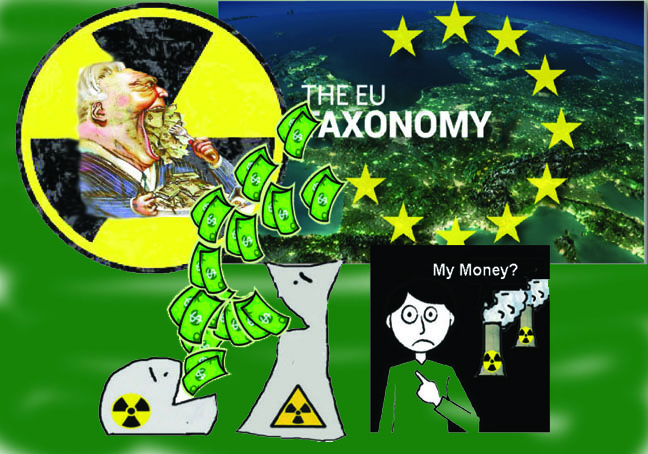
BRUSSELS (AP) — Draft European Union plans that would allow nuclear and gas energy to remain part of the bloc’s path to a climate-friendly future came under immediate criticism over the weekend from both environmentalists and some governing political parties in EU member nations.
In draft conclusions seen by The Associated Press, the EU’s executive commission proposes a classification system for defining what counts as an investment in sustainable energy. Under certain conditions, it would allow gas and nuclear energy to be part of the mix.
The plans would have a huge impact on nuclear-fired economies like France and on Germany’s gas-fueled power plants since they might have had to fundamentally change their strategies.
….. The plans still need the backing of a large majority of the 27 member states and a simple majority in the European Parliament. But the initial thrust from the EU Commission is a key element of the procedure for passage.
“Classifying investments in gas and nuclear power as sustainable contradicts the Green Deal,” the EU’s initiative that is intended to make the bloc climate-neutral by 2050, said Ska Keller, the president of the Green group in the European Parliament.
…..German Economy Minister Robert Habeck criticized the plan to classify investments in gas and nuclear power plants as climate-friendly.
“The EU Commission’s proposals water down the good label for sustainability,” Habeck, who represents the Germany’s environmentalist Greens in the country’s coalition government, told German news agency dpa. “We don’t see how to approve the new proposals of the EU Commission,” he said.
“In any case, it is questionable whether this greenwashing will even find acceptance on the financial market,” Habeck stressed, referring to the practice of painting investments as sustainable when they actually are not.
In Austria, Climate Protection Minister Leonore Gewessler from the Greens also sharply rejected the proposed regulation, saying “the EU Commission took a step towards greenwashing nuclear power and fossil gas in a night and fog action.”
“They are harmful to the climate and the environment and destroy the future of our children,” Gewessler said.
The environmental NGO Greenpeace called the Commission draft proposals “a licence to greenwash.”
“Polluting companies will be delighted to have the EU’s seal of approval to attract cash and keep wrecking the planet by burning fossil gas and producing radioactive waste, said Greenpeace’s Magda Stoczkiewicz.
Especially nuclear power remains extremely controversial in Europe, where many are still vividly remember the fear following the 1986 nuclear accident in Chernobyl, Ukraine. In Germany, children weren’t allowed to play outside anymore for months, couldn’t go mushroom hunting for years and the farmers had to destroy their entire harvest the year it happened………. https://spectrumnews1.com/ca/orange-county/ap-top-news/2022/01/02/eu-draft-on-financing-nuclear-and-gas-plants-raises-ire
Growing radioactive waste crisis at Fukushima nuclear power plant

The continuous accumulation of radioactive slurry and other nasty substances, coupled with the problem of finding a safe way to dispose of melted nuclear fuel debris at reactors No. 1, No. 2 and No. 3, has plant operator Tokyo Electric Power Co. frantically scratching around for ideas.
One problem is that storage containers for the tainted slurry degrade quickly, meaning that they constantly have to be replaced.
TEPCO slow to respond to growing crisis at Fukushima plant, THE ASAHI SHIMBUN, by Yu Fujinami and Tsuyoshi Kawamura, January 2, 2022, Radioactive waste generated from treating highly contaminated water used to cool crippled reactors at the Fukushima No. 1 nuclear power plant has thrown up yet new nightmarish challenges in decommissioning the facility, a project that is supposed to be completed in 30 years but which looks increasingly doubtful.
The continuous accumulation of radioactive slurry and other nasty substances, coupled with the problem of finding a safe way to dispose of melted nuclear fuel debris at reactors No. 1, No. 2 and No. 3, has plant operator Tokyo Electric Power Co. frantically scratching around for ideas.
One problem is that storage containers for the tainted slurry degrade quickly, meaning that they constantly have to be replaced. Despite the urgency of the situation, little has been done to resolve the matter.
Fuel debris, a solidified mixture of nuclear fuel and structures inside the reactors melted as a consequence of the triple meltdown triggered by the 2011 earthquake and tsunami disaster has to be constantly cooled with water, which mixes with groundwater and rainwater rainwater that seep into the reactor buildings, producing more new radioactive water.
The contaminated water that accumulates is processed via an Advanced Liquid Processing System to remove most of radioactive materials. The ALPS is housed in a 17-meter-tall building situated close to the center of the plant site.
Reporters from the Japan National Press Club were granted a rare opportunity in late November to visit the crippled facility to observe the process.
The building houses a large grayish drum-like container designed especially to store radioactive slurry. The interior of each vessel is lined with polyethylene, while its double-walled exterior is reinforced with stainless steel.
ALARMING DEVELOPMENTS The use of chemical agents to reduce radioactive substances from the contaminated water in the sedimentation process produces a muddy material resembling shampoo. Strontium readings of the generated slurry sometimes reach tens of millions of becquerels per cubic centimeter.
TEPCO started keeping slurry in special vessels in March 2013. As of November, it had 3,373 of the containers.
Because the integrity of the vessels deteriorates quickly due to exposure to radiation from slurry, TEPCO and the Nuclear Regulation Authority (NRA) predict that durability of the containers will reach the limit after exposure to an accumulated total of 5,000 kilograys of radiation–a level equivalent to 5 million sieverts.
Based on that grim forecast, TEPCO speculated the vessels will need replacement from July 2025.
But the NRA accused TEPCO of underestimating the impact of the radiation problem. It blasted the operator for measuring slurry density 20 centimeters above the base of the container when making its dose evaluation.
“As slurry forms deposits, the density level is always highest at the bottom,” a representative of the nuclear watchdog body pointed out.

The NRA carried out its own assessment in June 2021 and told TEPCO that 31 containers had already reached the end of their operating lives. Its findings also showed an additional 56 would need replacing within two years.The NRA told TEPCO to wake up and “understand how urgent the issue is since transferring slurry will take time.”………………..
With no drastic solutions in sight, a succession of containers will reach the end of their shelf lives shortly.
ANOTHER NIGHTMARE PROBLEM Radioactive slurry is not the only stumbling block for decommissioning.
In the immediate aftermath of the 2011 disaster, TEPCO stored contaminated water in the underground spaces below two buildings near the No. 4 reactor. In doing so, bags full of a mineral known as zeolite were placed in the temporary storage pools to absorb cesium so as to reduce the amount of radioactive substances.
Twenty-six tons of the stuff are still immersed in the dirty water on the floors under the buildings. Radiation readings of 4 sieverts per hour were detected on their surfaces in fiscal 2019, enough to kill half of all the people in the immediate vicinity within an hour.
TEPCO plans to introduce a remotely controlled underwater robot to recover the bags, starting no earlier than from fiscal 2023, However, it has not determined how long this will take or where to store the bags once they are retrieved.
In addition, radioactive rubble, soil and felled trees at the plant site totaled 480,000 cubic meters as of March 2021, leading TEPCO to set up a special incinerator. The total volume is expected to top 790,000 cubic meters in 10 years, but where to dispose of the incinerated waste remains unclear.
TEPCO is in a race against time. That’s the view of Satoshi Yanagihara, a specially appointed professor of nuclear engineering at the University of Fukui who has specialist knowledge on processes to abandon reactors.
“Now, only 30 years remain before the target date of the end of decommissioning set by the government and TEPCO,” said Yanagihara.As decommissioning work is due to shortly enter a crucial stage, such as recovering nuclear fuel debris on a trial basis from as early as 2022, Yanagihara noted the need for careful arrangements before forging ahead with important procedures.
“The government and TEPCO need to grasp an overall picture of the massive task ahead and discuss how to treat, keep and discard collected nuclear debris and the leftover radioactive waste with local residents and other relevant parties,” he said.https://www.asahi.com/ajw/articles/14503708
Britain’s National Infrastructure Commission (NIC) advises government against new nuclear power projects.
UK NIC backs alternatives to nuclear, Renew Extra Weekly, 2 Jan 21, The UK Government asked the National Infrastructure Commission (NIC) for its advice on whether an additional new nuclear plant, beyond the proposed Sizewell C project, was needed to deliver the UK’s sixth Carbon (reduction) Budget, due in 2035. In response, the NIC said no, it was not needed or viable for 2035, since new nuclear was slow to deploy. It asserted that ‘it is highly unlikely that a new large scale nuclear plant is deliverable in the next 15 years; trying and failing would jeopardise delivery of the sixth Carbon Budget’. Instead it backed renewables, hydrogen and low/negative carbon technology- which is said could be deployed faster.
It noted that ‘since 1990, nuclear projects have faced significant delays all around the world. Even just in Europe around half of all plants have faced at least a 50% delay in construction, and 1 in 4 plants have faced at least a 90% delay in construction’. So it said that ‘any nuclear project schedule estimate should be expected to take at least 50% longer than planned. If a new project began development next year and took the same amount of time as the Hinkley Point C project is expected to take to complete, it would not come online until at least the mid 2040s’. So that put it well outside the 2035 timeframe.

Small Modular/advanced reactors might be a faster option, but the NIC said ‘relying on significant capacity being deployed before 2035 would be risky’. It pointed out that ‘no SMR has gone through the Generic Design Assessment process and some developer proposals are conditional on government support to progress project development. There are no SMRs in operation in countries similar to the UK.
To fill the same capacity gap illustrated in the BEIS modelling, at least six SMRs would be needed by 2035, if not more. This would require compressing the normal delivery timeline and doing things in parallel rather than in sequence, significantly increasing the risk of delays. Delivery success will also be dependent on the capability of the developer.’
Alternatives likely to be faster
Instead of these nuclear options, for delivery within the timeframe to 2035, it backed ‘renewables with a combination of gas power plants with carbon capture and storage, hydrogen fired gas plants and bioenergy with carbon capture & storage’. It said ‘these alternatives are more likely to be deliverable at scale in the next 15 years’. …………………..
even without costing analysis, it said its analysis clearly demonstrated ‘that a third new nuclear plant is not necessary to reach the 2035 emissions target and that more gas CCS, hydrogen powered gas plants, and BECCS could be deployed instead. Whilst these technologies are yet to be deployed at scale, the Commission considers them to be a lower delivery risk than nuclear.’ And it claimed that its proposed alternative technology mix was supported by analysis previously conducted for the Commission and by other bodies such as National Grid ESO & the Climate Change Committee. …………………
It’s odd that the NIC plunge into CCS and Hydrogen, rather than talking about renewables more. Maybe they are taken for granted. But if, led by wind and solar, they could be expanded much faster than BEIS and NIC envisage, then maybe we could forget about fossil CCS, BECCS and also Sizewell C. That might be helped if tidal stream technology could also get going- with CfD help, it ought to be able to by 2030. Geothermal too, for heat and power. All NIC says is that, from the BEIS analysis, it’s clear that ‘significant volumes of renewables are needed to deliver a low carbon power system by 2035. This is supported by previous analysis for the Commission and others. Rapid cost reductions and short and reliable build profiles mean that renewables will be the backbone of any future GB power system’. OK, fine, but we need details & plans now for faster expansion, along with a much improved commitment to energy saving! https://renewextraweekly.blogspot.com/2022/01/uk-nic-backs-alternatives-to-nuclear.html
German Greens fight plan to funnel billions of euros into the nuclear industry via deceptive taxonomy ”sustainable” label

German Greens lead attack on EU plan to label nuclear power ‘sustainable’. Brussels’ proposal is central to European goal of channelling billions of euros into green investments, Ft.com, Mehreen Khan in Brussels and Joe Miller in Frankfurt 3 Jan 21,
Germany, Austria and Luxembourg have hit out at Brussels’ plans to classify nuclear power as a sustainable technology in the EU’s landmark labelling system for green investment, which is central to Europe’s plans to decarbonise the bloc’s economy. German economy minister Robert Habeck, who is a member of the Green party in the country’s governing coalition, said: “It is questionable whether this greenwashing will even find acceptance on the financial market.” He told German press agency DPA on Saturday: “In our view, there was no need for this addition to the taxonomy rules.”
Brussels’ proposal is part of a so-called “taxonomy” list, which aims to help channel billions of euros of investment needed to decarbonise the bloc’s economy. The plan, the first attempt by a leading regulator to bring clarity to investors seeking to put private capital into sustainable economic activity, covers about 80 per cent of the bloc’s emissions and is intended to be a “gold standard” for markets to decide what is truly green or not. But the process has been beset by fierce political infighting inside the European Commission and its member states.
Leonore Gewessler, Austria’s minister for climate and energy, said on Saturday that Vienna would consider suing the European Commission if the classification of nuclear power as green went ahead. Claude Turmes, Luxembourg’s energy minister, meanwhile called the inclusion of nuclear power a “provocation”. The inclusion of nuclear power is widely seen as a victory for the French government which has urged Brussels to ensure the new rules do not punish a technology that provides almost two-thirds of French electricity. Nuclear reactors do not generate CO2 emissions but produce highly toxic waste…………..
The Brussels draft text will form part of a consultation with EU countries and independent experts that will run until January 12. However, anti-nuclear EU governments do not have the power to veto the taxonomy, which diplomats say is likely to win majority support in the EU Council. Astrid Matthey, one of the independent experts who advises the commission on the rules, criticised the draft for “contradicting the very purpose of the taxonomy”.
“The conditions under which both technologies are to be included are far from ensuring that we reach the Paris climate targets and do-no-significant-harm to the environment. There is still a long way to go for this draft to become aligned with the Green Deal and the EU’s environmental targets”, said Matthey. https://www.ft.com/content/92ab113f-ab17-4492-be65-56c9173cfc53
Biden’s First Year Foreign Policy Record May Be Worse than Trump’s
In many ways, Biden has actually been worse than Trump, for example, in his expansion of Special Forces operations in Africa, his aggressive stance on war in Ukraine, and in his use of human rights as a weapon to try to rally public opinion against China and Russia.
Biden has also been more dishonest—as in Syria, for example, where Trump admitted that the U.S. military was there to control the oil, while Biden deceptively claimed they were there to help the Syrian people.
The next three years could be very dangerous if tensions between the U.S., Russia and China continue to escalate. Deteriorating domestic conditions—evident in skyrocketing inflation and a rising cost of living—may also lead to greater domestic unrest, which the Biden administration could try to circumvent by trying to mobilize people against a foreign enemy.
Biden’s First Year Foreign Policy Record May Be Worse than Trump’s Covert Action By Jeremy Kuzmarov – December 31, 2021 His administration has escalated dangerous conflicts with Russia and China while increasing the military budget, expanding deadly sanctions and sustaining forever wars.
AM endorsed Biden for president as a lesser evil to the neofascism of Donald J. Trump and the modern-day GOP. At the same time, we warned readers about Biden’s past and long record as a Cold Warrior and hawk.
Biden’s first year in office has shown that the past was indeed a prologue to the future.
Continue readingMore fusion folly — Beyond Nuclear International

Fusion reactors present unsolved risks and still produce nuclear waste
More fusion folly — Beyond Nuclear International Nuclear fusion has been a long-held ambition of the nuclear industry and
governments who support nuclear power for decades. Since the end of the
Second World War, governments around the world, backed by elements of their
scientific communities, have always lauded fusion power as the ‘next
step’ above and beyond fission that is almost within reach, yet many
billions has so far been spent over the past seven decades on what has
often been called by its critics an ‘energy pipedream’.
Nuclear Free Local Authorities (NFLA) has rarely commented on nuclear fusion, given such
energy projects have yet to be commercially realised. All have foundered
around the complex challenges in developing such technology, many of which
in the third decade of the 21st century remain unsolved. In summary, to
date, none of the experimental reactors in operation have produced more
energy than was put into them.
Beyond Nuclear 2nd Jan 2022
https://beyondnuclearinternational.org/2022/01/02/more-fusion-folly/
Bitcoin miners in Kazakhstan will rely on government building new nuclear power plant
Kazakhstan bitcoin miners could use nuclear energy as gov’t might build power plant, Kazakhstan’s government is discussing a plan to build a nuclear power plant, which might boost the country’s Bitcoin (BTC) and crypto mining industries in the long run. Micky.com By Jet Encila -January 2, 2022…….. construction might take up to 10 years……..
Since September’s crackdown, an estimated 88,000 mining rigs have been smuggled across the border from China, increasing electricity demand in many places, based on multiple sources.
Not only in Central Asia, but also in the United States and Europe, the cooperation between mining and nuclear energy providers is deepening.
In the United States, a handful of miners have already begun getting power from nuclear reactors, while in Ukraine, the national nuclear energy supplier has been collaborating with miners at Europe’s largest nuclear plants in an attempt to mitigate financial losses.
—https://micky.com.au/kazakhstan-bitcoin-miners-could-use-nuclear-energy-as-govt-might-build-power-plant/
1 This Month
26 April – Chernobyl: Inside the Meltdown airs on National Geographic on Sunday 26th April from 4pm
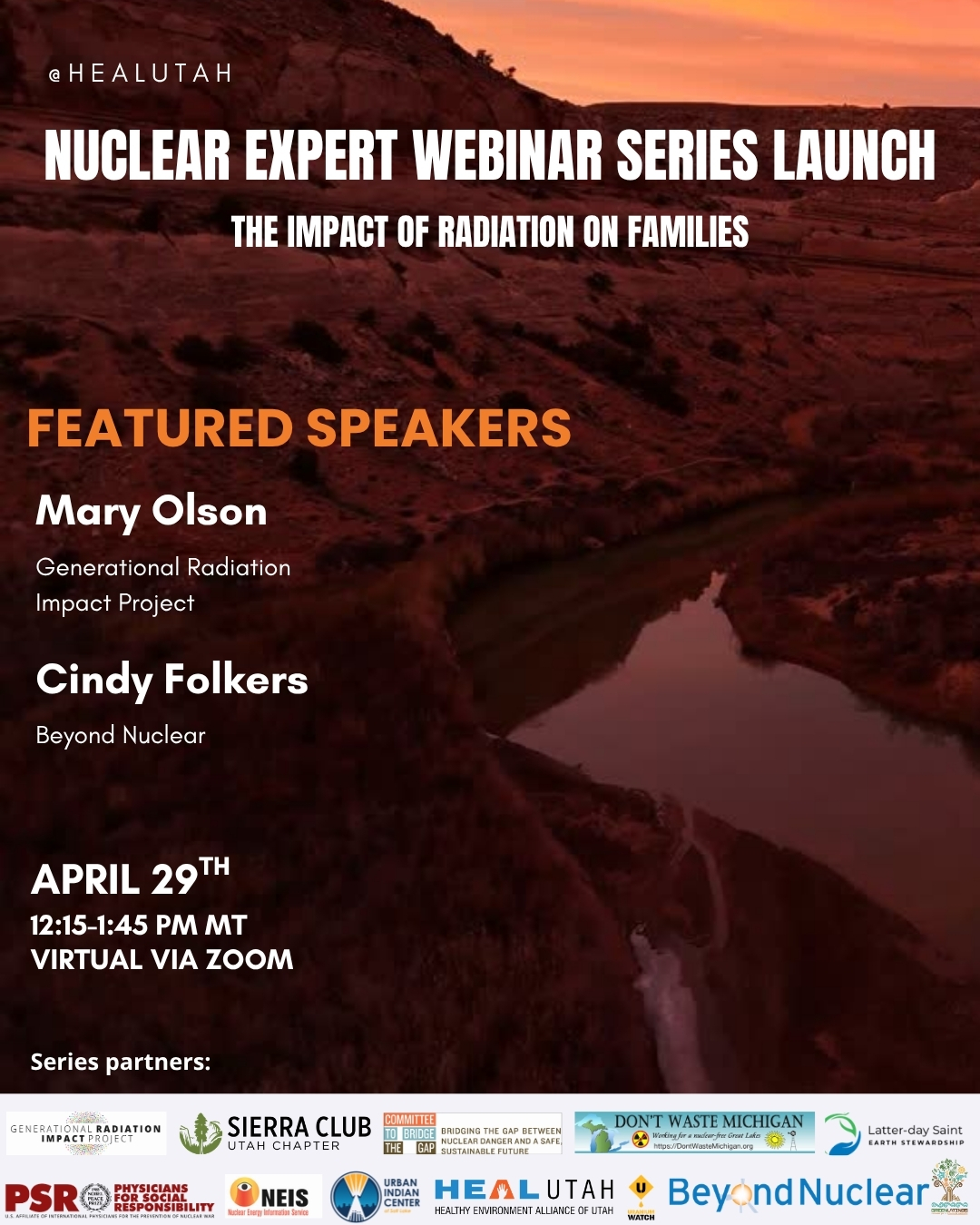
29 April – Nuclear Expert Webinar #1 – Radiation Impacts on Families with Mary Olson and Cindy Folkers
- 12:15 PM MT – 1:45 PM MT
- Location: Virtual – REGISTER TODAY

4 May -West Suburban Peace Coalition to discuss Iran war at May Educational Forum
Monday, May 4, 7:00 – 8:00 PM Central Standard Time
Title: : How Trump’s Narrative Tries to Shape the Reality of the War on Iran.
Contact Walt Zlotow, zlotow@hotmail.com 630 442 3045 for further information
14 May – online event From Bombs to Data Centres: the Face of Nuclear Colonialism

Pine Ridge Uranium is the real threat, not Tehran- Tell Burgum: Stop the Extraction.
Chernobyl: The Lost Tapes – A good documentary on Chernobyl on SBS available On Demand for the next 3 weeks– https://www.sbs.com.au/ondemand/tv-program/chernobyl-the-lost-tapes/2352741955560
To see nuclear-related stories in greater depth and intensity – go to https://nuclearinformation.wordpress.com
-
Archives
- April 2026 (327)
- March 2026 (251)
- February 2026 (268)
- January 2026 (308)
- December 2025 (358)
- November 2025 (359)
- October 2025 (376)
- September 2025 (257)
- August 2025 (319)
- July 2025 (230)
- June 2025 (348)
- May 2025 (261)
-
Categories
- 1
- 1 NUCLEAR ISSUES
- business and costs
- climate change
- culture and arts
- ENERGY
- environment
- health
- history
- indigenous issues
- Legal
- marketing of nuclear
- media
- opposition to nuclear
- PERSONAL STORIES
- politics
- politics international
- Religion and ethics
- safety
- secrets,lies and civil liberties
- spinbuster
- technology
- Uranium
- wastes
- weapons and war
- Women
- 2 WORLD
- ACTION
- AFRICA
- Atrocities
- AUSTRALIA
- Christina's notes
- Christina's themes
- culture and arts
- Events
- Fuk 2022
- Fuk 2023
- Fukushima 2017
- Fukushima 2018
- fukushima 2019
- Fukushima 2020
- Fukushima 2021
- general
- global warming
- Humour (God we need it)
- Nuclear
- RARE EARTHS
- Reference
- resources – print
- Resources -audiovicual
- Weekly Newsletter
- World
- World Nuclear
- YouTube
-
RSS
Entries RSS
Comments RSS
 nuclear-news