Trickle of residents return to Fukushima’s last deserted town
Jan. 21, 2022
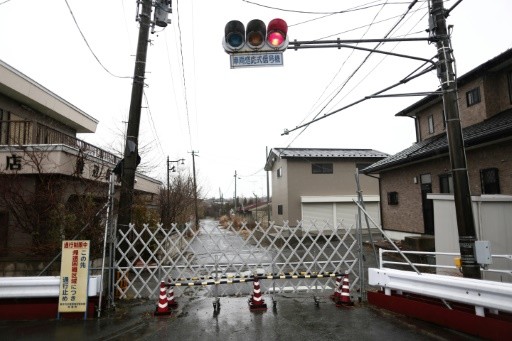
TOKYO – Five former residents of the last remaining uninhabited town near Japan’s stricken Fukushima nuclear plant returned on Thursday to live there for the first time since the 2011 disaster.
Following extensive decontamination, numerous areas around the plant in northeast Japan have been declared safe after a huge earthquake and tsunami triggered a meltdown over a decade ago.
TV footage showed the returnees inspecting the buildings, with one testing a tap outside his house.
“It’s out! This is the first time in 10 years and 11 months that running water comes out,” he said.
Futaba, whose population of around 5,600 was forced to flee over radiation fears, had been the final deserted municipality in the Fukushima region.
But restrictions were lifted in a small part of the town in March 2020 and the government is preparing to lift the cordon on a wider area later this year.
A local official told AFP that five people from four households are returning to live in Futaba on a trial basis, the first of just 15 people who have applied to a scheme, working towards a permanent return to the town.
The group had already been back to visit Futaba, but Thursday marks the first time they will stay overnight.
They can live there as part of the trial until at least June, when the wider cordon is expected to be lifted and their residence can become permanent, the official said.
The scheme “aims to ensure that residents will be able to live without problems, by, for example, checking if the sewers function well and there are facilities to support everyday life”, a cabinet office official in charge of supporting Fukushima residents told AFP.
More than 18,400 people died or remain missing after the 9.0-magnitude quake and tsunami on March 11, 2011 which sparked the nuclear disaster at the Fukushima Daiichi plant.
The government has undertaken an extensive decontamination programme in the region, literally scraping layers of topsoil, among other methods to remove radiation.
It has gradually declared areas safe for residents to return, with just 2.4 percent of the prefecture still covered by no-go orders as of last year.
But in some places, evacuees have been reluctant to return even after measures are lifted, worried about persistent radiation or fully resettled in other places.
No comments yet.
1 This Month

of the week – Shut Down Drone Warfare!


Tell the Ukrainian Government to Drop Prosecution of Peace Activist Yurii Sheliazhenko

Petition to revoke the licensing of the Near Surface Nuclear Disposal Facility (NSDF) at Chalk River. https://www.ourcommons.ca/petitions/en/Petition/Details?Petition=e-7247
To see nuclear-related stories in greater depth and intensity – go to https://nuclearinformation.wordpress.com
-
Archives
- March 2026 (251)
- February 2026 (268)
- January 2026 (308)
- December 2025 (358)
- November 2025 (359)
- October 2025 (376)
- September 2025 (257)
- August 2025 (319)
- July 2025 (230)
- June 2025 (348)
- May 2025 (261)
- April 2025 (305)
-
Categories
- 1
- 1 NUCLEAR ISSUES
- business and costs
- climate change
- culture and arts
- ENERGY
- environment
- health
- history
- indigenous issues
- Legal
- marketing of nuclear
- media
- opposition to nuclear
- PERSONAL STORIES
- politics
- politics international
- Religion and ethics
- safety
- secrets,lies and civil liberties
- spinbuster
- technology
- Uranium
- wastes
- weapons and war
- Women
- 2 WORLD
- ACTION
- AFRICA
- Atrocities
- AUSTRALIA
- Christina's notes
- Christina's themes
- culture and arts
- Events
- Fuk 2022
- Fuk 2023
- Fukushima 2017
- Fukushima 2018
- fukushima 2019
- Fukushima 2020
- Fukushima 2021
- general
- global warming
- Humour (God we need it)
- Nuclear
- RARE EARTHS
- Reference
- resources – print
- Resources -audiovicual
- Weekly Newsletter
- World
- World Nuclear
- YouTube
-
RSS
Entries RSS
Comments RSS
 nuclear-news
Leave a comment