Boris Johnson avoids detail on how China will be removed from Sizewell C deal.
Boris Johnson avoided details when specifically asked about China’s
state-owned energy company’s role in Sizewell C – and how they will be
removed from the nuclear project amid concerns over national security. EDF
and China General Nuclear (CGN) are joint developers of Sizewell C taking
80% and 20% shares respectively, though the Financial Times has previously
reported that Whitehall is looking to push out CGN.
At Prime Minister’s Questions, shadow business secretary Matthew Pennycook told Mr Johnson that
“the Government’s Integrated Review concluded the Chinese state poses a
systemic challenge to our national security” and asked him to explain
“precisely how and when his Government intends to remove the CGN’s
interest from the Sizewell C nuclear project?”
Mr Johnson responded: “We
don’t want to see undue influence by potentially adversarial countries in
our critical national infrastructure and so that’s why we have taken the
decisions we have.” The National Security and Investment Bill, currently
going through parliament, is looking to give the government further powers
to screen and potentially block sensitive foreign investments.
Mr Pennycook later responded on Twitter: “We need certainty on the future of China’s
involvement in UK nuclear power and clarity about how and when the
Government intends to remove China’s state-controlled nuclear energy
company from involvement in any future UK project.”
East Anglian Daily Times 25th Nov 2021
https://www.eadt.co.uk/news/boris-johnson-sizewell-c-china-removal-8516062
Labour has called for clarity on how the government plans to remove China’s state-owned energy company from nuclear power projects in the UK.
Labour has called for clarity on how the government plans to remove
China’s state-owned energy company from nuclear power projects in the UK.
Asked about Chinese involvement in nuclear projects at Bradwell and
Sizewell during Prime Minister’s Questions (PMQs) yesterday, Boris
Johnson said the UK “do[es] not want to see undue influence by
potentially adversarial countries in our critical national
infrastructure” and highlighted new national security rules on investment
that come into force in January. Johnson added that more information would
be “forthcoming” about what it will decide about the Bradwell B
project.
Construction News 25th Nov 2021 https://www.constructionnews.co.uk/government/nuclear-pm-urged-to-elaborate-on-potential-removal-of-chinese-firms-25-11-2021/
New nuclear for Scotland- would be a tragic mistake?
SafeEnergy E Journal No.92. December 21, New Nuclear in Scotland Leader of the Scottish Labour Party, Anas Sarwar, says nuclear power should be part of the mix on energy. He has also called for a statutory “just transition commission” to be established to help workers move out of the oil and gas industry. He said: “I think we have to be honest about future opportunities and I think nuclear power has to be part of the mix. “I’m not saying nuclear power has to be the priority, or the lead. But it has to be part of the mix to have a diverse energy supply.” Sarwar insisted nuclear power could mean lower fuel bills for consumers at a time of rising inflation.
In September Sarwar announced plans for a Scottish Energy Transition Commission to outline how Scotland can protect and create highly skilled jobs in the transition to a net-zero economy. The commission will be chaired by pro-nuclear former Labour Energy Minister Brian Wilson. It will support the development of Scottish Labour energy policy and advise on how the transition to netzero can deliver for the working people of Scotland. It will also look at the failures of the current energy market, which has led to spiking prices this winter, the role of public energy companies and Scotland’s energy mix. (2)

The Bella Caledonia website described Wilson as “a devout nuclear enthusiast”. Sarwar told the BBC that “I think we should consider potential new (nuclear power) plants” (3) and certainly with a nuclear lobbyist chairing this is where they’ll end up. Journalist Dominic Hinde points out: “This is a little odd in that Scotland already meets almost a hundred per cent of its electricity needs from renewables and is set to surpass this. Most emissions now come from heating, agriculture and transport.” (4)
Dr Richard Dixon, Director of Friends of the Earth Scotland, called Scottish Labour’s drift towards nuclear power “a tragic mistake”. Nuclear is slow to build, eye-wateringly expensive and dangerous. There is still no agreed solution for nuclear waste, which will need monitoring for many thousands of years. It is neither a solution to short-term energy needs nor to the climate crisis.
Dixon said the Scottish Energy Transition Commission is Scottish Labour’s plan to keep the pressure up on the Scottish government’s official Just Transition Commission, and should have been welcome, but giving it to the former ‘Minister for Hunterston’ devalues it. Anas Sarwar was quoted saying he supports a “diverse energy supply”, which is standard union code for more nuclear – and thinks “nuclear is a key part of that and it’s something that I think we should fundamentally explore”. For many years the Scottish Conservative manifesto for every election said we should have two new nuclear power stations in Scotland. It became a running joke because they knew it was never going to happen and they quietly dropped any mention of nuclear a couple of elections ago. The tragedy of Labour finding a new enthusiasm for the ultimate unsustainable form of energy is that it was a Labour First Minister who put a stop to the nuclear industry’s ambitions in Scotland. Jack McConnell, despite massive pressure from Tony Blair’s government, said in 2005 that Scotland would use planning powers to block any proposals for new reactors in Scotland unless there was an answer to the question of permanent storage of radioactive waste, something that is no closer today than it was then. Scottish Labour’s drift into being pro-nuclear will please no-one but the GMB union and Brian Wilson. It is a betrayal of one of their greatest achievements in government in Scotland. (5)
Meanwhile, North Ayrshire Conservative councillor Tom Marshall has called for a new state-of-theart ‘mini’ nuclear reactor to be built at Hunterston. (6)
According to a Panelbase survey for The Times 37% of Scots asked about the idea of building nuclear power stations in Scotland as fossil-fuel use is cut back expressed support, while only 32% were opposed. When asked if they supported nuclear power to replace energy currently produced by fossil fuels, 57% of respondents felt it was probably or definitely necessary while 26% indicated it was not or probably not necessary. A further 17% were undecided. Liam Kerr, net-zero and energy spokesman for the Scottish Conservatives, called on the SNP to abandon its opposition to nuclear energy. (7)
Others joining a pro-nuclear clamour include Magnus Linklater who complains that “Without Torness, in a wind-free summer like this year’s, Scotland will have to rely on oil and gas courtesy of Vladimir Putin, imports from Norway or — irony of ironies — nuclear power from France.” (8)
And Lord Bird, co-founder of The Big Issue, has somehow got the misconceived idea that nuclear power can help to solve fuel poverty. Brian Wilson, the former UK energy minister, has supported his call. (9)
Unsurprisingly, the GMB union is also demanding the Scottish Government thinks again on nuclear power. (10)
See 1 page briefing on why nuclear power isn’t a solution to climate change here: https://www.no2nuclearpower.org.uk/wp/wpcontent/uploads/2021/11/Nuclear_no_solution_to_Climate-October-2021.pdfhttps://www.no2nuclearpower.org.uk/wp/wp-content/uploads/2021/11/SafeEnergy_No92.pdf
UK’s Ministry of Defence makes unprecedented attempt to dismantle dead nuclear submarines
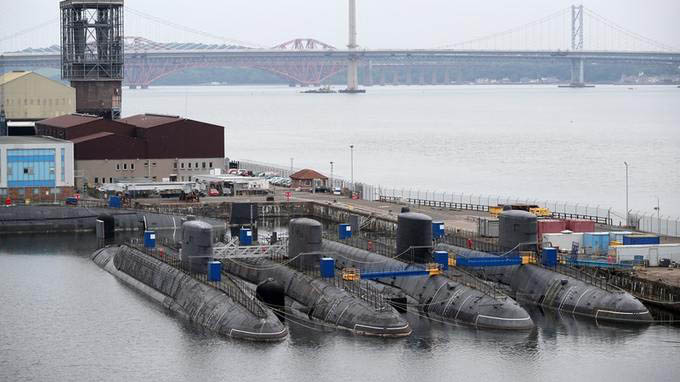
SafeEnergy E Journal No.92. December 21 , Submarine Dismantling The UK’s Submarine Dismantling Project hopes to dismantle 27 of the UK’s de-fuelled, nuclearpowered submarines after they have left service with the Royal Navy.
A demonstrator submarine is being used to define and refine the dismantling process. At Rosyth, the removal of low-level radioactive waste from the first two submarines, Swiftsure and Resolution, has been successfully and safely completed. As the unique approach is developed, work continues with the removal of low-level radioactive waste from a third submarine, Revenge. A fully developed process for steady state submarine dismantling should be ready by 2026. As the demonstrator programme progresses, the outcomes will provide more certainty in the future costs to dismantle the Devonport-based submarines. It is not MoD policy to pre-announce the funding of its projects for reasons of protecting commercial interests.”
REVENGE, entered the dry dock in Rosyth in late March 2020 to commence its LLW removal. The intent is to remove all LLW including large components such as steam generators and pressurisers. No nation has yet attempted this complex and challenging undertaking, so the MoD is currently putting in place the techniques necessary to remove all LLW for the first time to comply with safety and sustainability standards. https://www.no2nuclearpower.org.uk/wp/wp-content/uploads/2021/11/SafeEnergy_No92.pdf
Are small nuclear reactors actually small, safe, economic ?
Can Small Nuclear Reactors Really Help The Climate? QuickTake, Jonathan Tirone 27 Nov 2021 (Bloomberg) — Much of the world has been turning away from nuclear power, with its aging plants, legacy of meltdowns and radioactive waste. But some governments, big companies and billionaires including Bill Gates and Warren Buffett are convinced the technology can help save the planet.
1. How small is small? Of the more than 70 such reactors that the International Atomic Energy Agency lists as in some stage of design or development, the smallest are less than 5 meters (16 feet) in diameter and 10 meters in height. (The plant that would be built to operate the reactor would be bigger, of course.) SMRs typically have less than 300 megawatts of generating capacity, about a third of that of existing reactors.
…………. Do SMRs already exist? The only ones currently in commercial operation are two 35-megawatt units on a floating power plant deployed by Russia in the Arctic in 2020. China expects to begin trials in 2026 on an SMR being built near an existing power plant on Hainan island. The first commercial SMR project in the U.S., planned for the site of the Idaho National Laboratory, will consist of six reactors capable of producing a combined 462 megawatts. It’s supposed to be operational by the end of this decade.
…………….. smaller reactors would ideally be located closer to population centers, increasing the possible danger from an accident. And like their larger brethren, SMRs produce radioactive waste that must be stored safely for centuries.
………….. What are the economic challenges? Cost competitiveness is an uphill climb. U.S. manufacturer NuScale Power LLC, to cite one example, is aiming for an SMR that can sell power for $55 per megawatt-hour. Yet wind power in much of the world is now about $44 a megawatt-hour, solar is $50, and in some regions, renewable energy will be below $20 a megawatt-hour by the end of the decade, according to BloombergNEF. A 2020 study by professors at the University of British Columbia found that on a lifetime basis, the cost of electricity produced by SMRs could be 10 times greater than the cost of electricity produced by diesel fuel.
Who’s investing in SMRs? Electricite de France, China National Nuclear, Japan’s Toshiba and Russia’s Rosatom are pushing SMR designs, as is NuScale. Gates and Buffett have teamed up to build and test a reactor at an abandoned coal plant in Wyoming. Rolls-Royce Holdings Plc raised 455 million pounds ($608 million) to fund the development of SMRs, with almost half of the financing coming from the U.K government.
Read more at: https://www.bloombergquint.com/quicktakes/can-small-nuclear-reactors-really-help-the-climate-quicktake
Belene nuclear plant: Bulgarian far-right leader threatens to send opponents to a labour camp
Belene nuclear plant: Bulgarian far-right leader threatens to send opponents to a labour camp, By Krassen Nikolov | EURACTIV.bg 26 Nov 21,
Kostadin Kostadinov, leader of the pro-Russian far-right party ‘Vazrazhdane’ (Revival), started his first term as an MP by threatening to deport all those who oppose the Belene nuclear power plant to the town’s communist-era forced labour camp.
The Belene NPP is an unfinished project that dates back to the 1980s. Bulgaria has invested €600 million in it. 26 Nov 2021 ……..
Vazrazhdane’ won just under 5% in the parliamentary elections due to its consistent policy of disparaging the pandemic, resistance to COVID vaccines and green certificates. Now the party is beginning to expand on the energy issue. Vazrazhdane has 13 out of 240 MPs in the new parliament…….
Belene NPP is the last remaining project of the so-called Russian Grand Slam in Bulgaria, which was agreed between the Presidents of Bulgaria and Russia Georgi Parvanov and Vladimir Putin. The others were the South Stream gas pipeline and the Burgas-Alexandroupolis oil pipeline. https://www.euractiv.com/section/politics/short_news/belene-nuclear-plant/
CSIRO study proves climate change driving Australia’s 800% boom in bushfires.

CSIRO study proves climate change driving Australia’s 800% boom in bushfires, The Age, By Mike Foley, November 26, 2021 Climate change is the dominant factor causing the increased size of bushfires in Australia’s forests, according to a landmark study that found the average annual area burned had grown by 800 per cent in the past 32 years.
The peer-reviewed research by the national science agency, CSIRO — published in the prestigious science journal, Nature — reveals evidence showing changes in weather due to global warming were the driving force behind the boom in Australia’s bushfires.
Lead author and CSIRO chief climate research scientist Pep Canadell said the study established the correlation between the Forest Fire Danger Index – which measures weather-related vegetation dryness, air temperature, wind speed and humidity – and the rise in area of forest burned since the 1930s.
“It’s so tight, it’s so strong that clearly when we have these big fire events, they’re run by the climate and the weather,” Dr Canadell said.
Prime Minister Scott Morrison went to the COP26 climate talks in Glasgow to commit Australia to reach net zero emissions by 2050, and to upgrade his expectations for Australia’s 2030 carbon cuts, but he defied a global push to commit to phasing out fossil-fuel use. Instead, the Coalition government is backing a significant expansion of the gas industry, which it predicts will be 13 per cent larger in 2050 than it is now.
Under the federal government’s gas industry strategy, taxpayers will support the private sector to develop viable new gas fields and develop an extensive network of new pipelines and related infrastructure.
The bushfire royal commission identified climate change as a key risk to ongoing bushfire catastrophe but did not make recommendations about reducing greenhouse emissions to curb the threat.
The CSIRO report found other factors have an impact on the extent and intensity of bushfires such as the amount of vegetation or fuel load in a forest, the time elapsed since the last fire, and hazard reduction burning. But Dr Canadell said the study showed the link between weather and climate conditions and the size of bushfires was so tight, it was clear these factors far outweighed all other fire drivers…………….
oyal c
Mega-fires, which burn more than 1 million hectares, have “markedly” increased with three of the four recorded from 1930 occurring since 2000, while the gap between big blazes has had a “rapid decrease”, the study says.
Last year, the bushfire royal commission reported fuel-load management through hazard reduction burning “may have no appreciable effect under extreme conditions” that typically cause loss of life and property. https://www.theage.com.au/politics/federal/csiro-study-proves-climate-change-driving-australia-s-800-percent-boom-in-bushfires-20211126-p59cgr.html
November 26 Energy News — geoharvey

Science and Technology: ¶ “Britain’s Ancient Fortresses For Nature” • Though made by man, hedgerows form a vital reservoir of biodiversity in human-dominated landscapes where many species might otherwise struggle to survive. By nurturing pollinating insects, they can enhance the yield of crops. And they do it all while pulling carbon out of the atmosphere. […]
November 26 Energy News — geoharvey
Nuclear power for MINDLESS, ENDLESS, ENERGY use – Data ”Farms” and Bitcoin – theme for November 21.

When you think about the stupidity of eternal wastage of energy , it’s hard to beat the system of the supposed ”CLOUD”. Every pointless little email, little emoji, tweet, and all the other bits of digital junk produced goes not up into the disappearing ether, but down into a dirty great computer server, just one of the accumulating number of dirty great computer servers. Far from being ”farms”, these collections of steel enclosed machines actually produce nothing, but they do CONSUME massive amounts of electricity.
No wonder that the nuclear industry loves them!
The nuclear industry also loves crypto-currency, Bitcoin being the current top favourite of energy-guzzling systems.
A pernicious trio – data farms, cryptocurrency, and nuclear power – leading the world into eternal energy consumption and environmental degradation.

Robots to probe Fukushima No.1 reactor from Jan.

Thursday, Nov. 25, 2021
NHK has learned that the operator of the Fukushima Daiichi nuclear plant plans to start a delayed robot survey of a damaged reactor from mid-January.
Officials of Tokyo Electric Power Company say preparations are well under way to send submersible robots inside the containment vessel of the No.1 reactor.
The probe is part of efforts to remove molten fuel debris from the reactor that suffered a meltdown accident due to the 2011 earthquake and tsunami.
The utility originally planned to start the robot survey of the reactor in 2019.
It has been postponed because preparations, such as making a hole in the door of the vessel for the robots to go through, have taken time.
The officials say they are now installing equipment to remotely control the robots, and expect to carry out a survey for more than six months from mid-January.
They plan to use a total of six robots with different functions to find and examine nuclear debris, or deposits of a mixture of molten fuel and reactor parts, inside the containment vessel.
The robots will use ultrasonic devices to locate and measure how much debris there is, and how thick the deposit is. They are also expected to collect a small amount of samples.
Previous surveys at the plant confirmed the presence of deposits believed to be fuel debris in the No.2 and No.3 reactors, which also suffered meltdowns, but not in the No.1 reactor.
TEPCO to start ocean investigation by the end of the month.
November 26, 2021
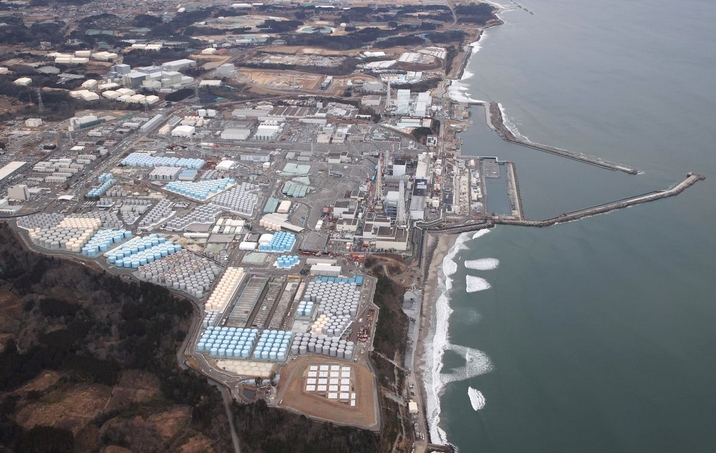
On April 25, it was learned that Tokyo Electric Power Company (TEPCO) has decided to start an oceanographic survey by the end of the month to lay an undersea tunnel for the release of treated water from the Fukushima No. 1 Nuclear Power Plant. After completing the survey, the company will start laying the tunnel, aiming to start releasing the water in spring 2023. According to the officials, TEPCO had initially expected to start the survey in September, but was forced to postpone it due to difficulties in forming a consensus with neighboring municipalities.
In August, TEPCO announced a process plan to construct an undersea tunnel, run pipes through it, and drain the water into the sea about one kilometer offshore from the plant. In this submarine survey, in addition to magnetic surveys to ascertain the condition of the seabed, including confirmation of unexploded ordnance and other hazardous materials, diving surveys will be conducted as necessary. A submarine boring survey using a workboat will also be conducted.
The submarine tunnel is expected to be about 2.5 meters in diameter, and pipes will be cut through the bedrock of the seabed from the vicinity of the No. 5 and No. 6 reactors at the plant. We had considered the idea of draining the water into the sea near the east side of the plant, but we chose to go offshore where the tritium contained in the treated water would be more diffused. It is believed that the decision was based on the fact that there are no fishing rights in the waters about one kilometer offshore and that there would be little opposition from fishermen concerned about harmful rumors.
On the 17th of this month, the government announced the results of its assessment that the radiation dose in the surrounding waters due to the release of treated water was far below the safety standards set by the government and international organizations, and that the impact of radiation on the surrounding residents and the environment was “extremely minor.
The decision to release the treated water was made in April this year by the then government of Yoshihide Suga, and Prime Minister Fumio Kishida, who inspected the plant in October, said that it was a very important issue that could not be postponed.
https://www.sankei.com/article/20211126-MVPMX33MAFNVHAA5MPOA4ULOV4/
Part of the frozen soil barrier may have thawed at the Fukushima Daiichi Nuclear Power Plant. Steel pipes are being driven into the ground to stop groundwater flow.
Nov. 25, 2021
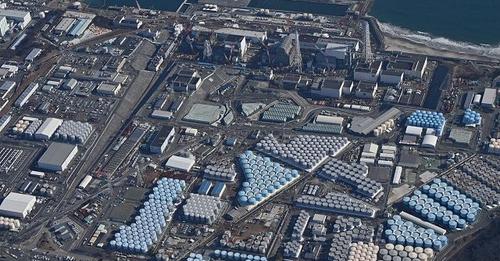
Tokyo Electric Power Company (TEPCO) announced on November 25 that it may have thawed part of the frozen soil barrier wall built around the No. 1 to No. 4 reactors at the Fukushima Daiichi Nuclear Power Plant (Okuma and Futaba towns, Fukushima Prefecture) to prevent the inflow of groundwater. The company has announced that it will try to stop the flow of water by driving several steel pipes into the wall. The project will start as early as early December, and if the temperature in the ground continues to rise, additional steel plates will be driven in.
According to TEPCO, a thermometer installed in the ground at the intersection of the southwest side of Unit 4 and the underground tunnel for drainage confirmed that the temperature exceeded zero degrees Celsius in late August. Since late September, the temperature has sometimes been above 10 degrees Celsius. A spokesperson explained at a press conference that the groundwater level outside the wall was high, and water pressure may have created a water path.
The steel pipe is 35 centimeters in diameter and up to six meters long. Nine of them will be driven into the ground outside the frozen soil wall, which may have thawed, to create a wall three to four meters wide.
The freezing wall, which has been in operation since 2017, was built to prevent groundwater from flowing into the reactor building, where melted nuclear fuel (debris) remains from the accident, and to reduce the amount of contaminated water generated. The wall is about 1.5 kilometers long. About 1,600 freezing pipes (30 meters long) were driven into the ground. The freezing pipes are about 1,600 tubes (30 meters long) driven into the ground and circulated with a cooling liquid of 30 degrees Celsius to freeze the surrounding soil. (Kenta Onozawa)
https://www.tokyo-np.co.jp/article/144800
Economic Cost Of Peak Population: Japan, China, The World. — One Finite Planet

The world has reached peak child, and is headed towards peak population. Many economic metrics collapse between peak child and peak population, resulting in bear stock markets and even collapses, all if the real economy and outside their investment portfolios, most people are relatively unaffected. Economic Ponzi Scheme Metrics. Peak Child and National Economies. Market […]
Economic Cost Of Peak Population: Japan, China, The World. — One Finite Planet
Bellona signs open letter to prevent nuclear energy and fossil gas from being labelled as green

(Signed by 129 reputable European and international organisations)
Granting nuclear and fossil gas the label of sustainability would undermine the EU’s climate targets, divert much-needed investments in the green transition and jeopardize the credibility of the entire European Green Deal. Olaf ScholzFederal Minister of Finance
and Vice Chancellor
11016 Berlin
Germany
Dear Federal Minister,
We are extremely concerned by the announcement of the European Commission’s President, Ursula von der Leyen, to likely label both nuclear energy and fossil gas as sustainable in the context of the EU’s taxonomy. According to media coverage, it was the absence of a strong German voice against nuclear in the European Council on 21/22 October that directly contributed to this decision. In your role as current finance minister and future Chancellor, we call on you to swiftly and decisively confirm the German veto against labelling nuclear as a sustainable form of energy and highlight that the Commission’s attempt to shape this discussion during the sensitive time of a new government being formed in Germany is not acceptable.
The EU taxonomy regulation is meant to provide guidelines for the necessary future-oriented investments for Europe’s economic transition. Nuclear energy, however, is unsustainable due to severe safety risks, environmental pollution and the unsolved waste problem. Fossil gas emits large quantities of climate-damaging greenhouse gases, especially methane, along its extraction and transport chain. Granting nuclear and fossil gas the label of sustainability would undermine the EU’s climate targets, divert much-needed investments in the green transition and jeopardize the credibility of the entire European Green Deal.
Dear Federal Minister, Germany has embarked upon a clear path to phase out nuclear power by the end of next year. NGOs from across Europe count on you to take an equally clear stance against nuclear energy but also fossil gas at the European level. more https://bellona.org/news/climate-change/2021-11-bellona-signs-open-letter-to-take-action-to-prevent-nuclear-energy-and-fossil-gas-from-being-labelled-as-green
These 129 reputable European and international organisations have signed up to letter opposing inclusion of nuclear and gas as being ”sustainable” and ”green”.

| France Nature Environnement, France CEE Bankwatch Network European Environmental Bureau (EEB) The Green Tank, Greece Umanotera – Slovenian Foundation for Sustainable Development, Slovenia Umweltinstitut München e.V., Germany Socio-ecological union international Climate Strategy Group Andy Gheorghiu Consulting, Germany Green Liberty, Latvia 10 BürgerBegehren Klimaschutz Bürgerbewegung Finanzwende, Germany AnsvarligFremtid, Denmark Klimabevægelsen i Danmark (350 Denmark), Denmark Naturschutzbund Deutschland e.V., Germany BirdLife Europe uranium-network.org, Germany eco-union, Spain Mouvement Ecologique (FoE-Luxembourg), Luxemburg urgewald, Germany 20 .ausgestrahlt, Germany 350.org Europe Deutscher Naturschutzring, Germany Stowarzyszenie Pracownia na rzecz Wszystkich Istot, Poland Legambiente, Italy Carbon Market Watch Health and Environment Justice Support (HEJSupport) Counter Balance ZERO – Association for the Sustainability of the Earth System, Portugal Clean Air Action Group, Hungary 30 Alofa Tuvalu, Tuvalu Réseau pour la transition énergétique CLER, France Creatura Think & Do Tank, Finland Women Against Nuclear Power, Finland Women for Peace, Finland The Alliance of the Associations Polish Green Network, Poland FMKK – The Swedish Anti Nuclear Movement, Sweden Polish Ecological Club Mazovian Branch, Poland Stowarzyszenie Ekologiczne EKO-UNIA, Poland Stowarzyszenie Ekologiczno-Kulturalne “Wspólna Ziemia”, Poland 40 Arbeitskreis Indianer Nordamerikas, Austria EuroNatur Stiftung, Germany Our Fish E3G – Third Generation Environmentalism Bioland e.V., Germany Deutsche Umwelthilfe e.V., Germany Germanwatch e.V., Germany Fair Finance International National Society of Conservationists – Friends of the Earth Hungary, Hungary Nucléaire Stop Kernenergie – Belgium 50 Tegengas/Dégaze – Belgium IPPNW (International Physicians for the Prevention of Nuclear War), German affiliate, Germany Urgenda Foundation, The Netherlands Focus Association for Sustainable Development, Slovenia Milieudefensie, The Netherlands Za Zemiata/Friends of the Earth Bulgaria, Bulgaria Fair Finance Guide, Sweden Corporate Europe Observatory Jihočeské matky, z.s., Czech Republic | WEED e.V. – World Economy, Ecology and Development, Germany 60ShareAction Global Witness Reclaim Finance, FranceFossielvrij NL, The Netherlands Bürgerinitiative “Kein Atommüll in Ahaus” e.V., GermanyThe Peace Movement of Orust, Sweden Global Nature Fund, Germany Climate Action Network International Transport & Environment NewClimate Institute gGmbH, Germany 70 Miljöringen lovisa Finland Réaction en chaîne humaine pour l’arrêt du nucléaire France Calla – Association for Preservation of the Environment, Czech republic Réseau “Sortir du nucléaire”, France BI “Stoppt Temelin”, Germany GLOBAL 2000 – Friends of the Earth Austria, Austria Suomen luonnonsuojeluliitto (Finnish Association for Nature Conservation), Finland Forum Ökologie & Papier, Germany Plattform gegen Atomgefahren Salzburg (PLAGE), Austria Gas Free Pensions, Europe 80 Réseau Action Climat France PSR / IPPNW Switzerland (Physicians for Social Respon sibility /International Physicians for the Prevention of Nuclear War) Greenpeace Begegnungszentrum für Aktive Gewaltlosigkeit, Austria Hiilivapaa Suomi, Finland Food & Water Action Europe, Europe International Network for Sustainable Energy – Europe ReCommon, Italy Inter-Environnement Wallonie, Belgique 90 Campagna “Per il Clima Fuori dal Fossile”, Italy Movimento No TAP/SNAM Brindisi, Italy Redazione emergenzaclimatica.it, Italy BankTrack, the Netherlands TerraBlu, Italy Bellona Europa, Belgium Bellona Deutschland, Germany Forum Ambientalista O.d.V., Italy Climate Action Network, Europe Associazione Tarantola Rubra, Italy 100 Friends of the Earth, Europe Trivelle Zero Molise, Italy Environmental Coalition on Standards, Belgium Collettivo No al Fossile Civitavecchia, Italy WWF Forlì-Cesena, Italy Coordinamento ravennate Fuori dal Fossile, Italy The Swedish Anti-Nuclear Movement, Branch Gävle, Sweden NOAH Friends of the Earth Denmark Wiener Plattform Atomkraftfrei, Austria Parents For Future Vienna, Austria 110 Trivelle Zero Marche, Italy Parents for Future Gütersloh, Germany A Sud, Italy European Alliance for the Self-determination of Indigenous Peoples, Austria/France/Germany/Switzerland Mom Loves Taiwan Forum Ökologisch-Soziale Marktwirtschaft e.V., Germany WISE Netherlands atomstopp_atomkraftfrei leben!, Austria Freistädter Mütter gegen Atomgefahr, Austria Grandparents For Future Austria 120 Parents For Future Oberösterreich, Austria Frauen für den Frieden Schweiz Bund für Umwelt und Naturschutz Deutschland (BUND) e.V – Friends of the Earth Germany, Germany nternational Commission for the Protection of the Alps (CIPRA International), Liechtenstein Rete “Legalità per il clima”, Europe Collectif anti-nucléaire Ouest, France Fédération anti-nucléaire Bretagne, France GasExit Greenpeace, Russia 129 |
1 This Month


Pine Ridge Uranium is the real threat, not Tehran- Tell Burgum: Stop the Extraction.
Chernobyl: The Lost Tapes – A good documentary on Chernobyl on SBS available On Demand for the next 3 weeks– https://www.sbs.com.au/ondemand/tv-program/chernobyl-the-lost-tapes/2352741955560
To see nuclear-related stories in greater depth and intensity – go to https://nuclearinformation.wordpress.com
-
Archives
- April 2026 (288)
- March 2026 (251)
- February 2026 (268)
- January 2026 (308)
- December 2025 (358)
- November 2025 (359)
- October 2025 (376)
- September 2025 (257)
- August 2025 (319)
- July 2025 (230)
- June 2025 (348)
- May 2025 (261)
-
Categories
- 1
- 1 NUCLEAR ISSUES
- business and costs
- climate change
- culture and arts
- ENERGY
- environment
- health
- history
- indigenous issues
- Legal
- marketing of nuclear
- media
- opposition to nuclear
- PERSONAL STORIES
- politics
- politics international
- Religion and ethics
- safety
- secrets,lies and civil liberties
- spinbuster
- technology
- Uranium
- wastes
- weapons and war
- Women
- 2 WORLD
- ACTION
- AFRICA
- Atrocities
- AUSTRALIA
- Christina's notes
- Christina's themes
- culture and arts
- Events
- Fuk 2022
- Fuk 2023
- Fukushima 2017
- Fukushima 2018
- fukushima 2019
- Fukushima 2020
- Fukushima 2021
- general
- global warming
- Humour (God we need it)
- Nuclear
- RARE EARTHS
- Reference
- resources – print
- Resources -audiovicual
- Weekly Newsletter
- World
- World Nuclear
- YouTube
-
RSS
Entries RSS
Comments RSS
 nuclear-news