Melting Arctic sea ice linked to ”worsening fire hazards” in Weatern USA
Arctic sea ice melt has driven an increase in “fire-favourable
weather” across the western US over the past four decades, according to
new research.
The study, published in Nature Communications, finds that low
Arctic sea ice levels during July to October have knock-on impacts in the
atmosphere that push the jet stream northwards. This tends to bring hotter
and drier conditions in the western US over the following autumn, resulting
in more frequent and intense fires in the region, the authors find.
They add that this mechanism may strengthen over the coming decades as the
Arctic melts further, making the western US “even more susceptible to
destructive fire hazards”.
Carbon Brief 25th Nov 2021
Tepco to repair Fukushima nuclear station’s partially melted protective ice wall.

Ice Wall to Halt Groundwater Flow at Japan’s Fukushima Nuclear Plant to Be Repaired https://thewire.in/world/ice-wall-to-halt-groundwater-flow-at-japans-fukushima-nuclear-plant-to-be-repaired
Tokyo Electric Power Co (Tepco) will launch remedial works at the stricken plant after ice wall tests indicated partial melting. Tokyo: Tokyo Electric Power Co (Tepco) will launch remedial works at the stricken Fukushima Daiichi nuclear plant to strengthen an ice wall intended to halt the flow of groundwater after testing indicated partial melting.
The work could begin as early as the start of December, according to a presentation from the plant operator dated Thursday, part of a costly and troubled effort to secure the site following the 2011 earthquake and tsunami.
The ice wall is intended to limit the seepage of groundwater into the plant, which has created large amounts of toxic water being stored by Tepco in tanks.
Japan plans to release more than 1 million tonnes of water into the sea after treating it. The water contains the radioactive isotope tritium, which cannot be removed.
USA rehearsed dropping nuclear weapons 20km from Russian border
 | |||
US rehearsed dropping nuclear weapons 20km from Russian border – Moscow
US rehearsed dropping nuclear weapons 20km from Russian border – Moscow, Rt.com23 Nov, 2021 , American nuclear-capable bombers have flown dozens of sorties across Eastern Europe in the past few weeks as part of drills designed to probe Russian readiness in case of an atomic war, Russia’s defense minister has claimed.
Speaking after a meeting his Chinese counterpart, Wei Fenghe, in Moscow on Tuesday, Sergey Shoigu said that there has been “a significant intensification of activity from US strategic bomber aviation near the borders of Russia.”
According to him, “over the past month, around 30 missions have been flown near the borders of the Russian federation, around two and a half times more than in the same time period last year.”
Shoigu added that recent American exercises, codenamed Global Thunder, saw “ten strategic bombers practicing their ability to use nuclear weapons against Russia at almost the same time from the west and the east. The minimum distance from our border was 20km.”
……….. Both Russia and NATO have accused each other of stepping up warplane flights close to the border, and last year Moscow blasted a “provocative” move from Washington to dispatch American B-1B nuclear bombers into Ukrainian airspace for the first time in history. Russian fighter jets and anti-air rockets were scrambled in response. https://www.rt.com/russia/541089-us-testing-ability-nuclear-attack-moscow/
Preparations for discharging treated water into the ocean in earnest at TEPCO’s Fukushima Daiichi Nuclear Power Plant

November 26, 2021
The Tokyo Electric Power Company (TEPCO) announced on April 26 that it will begin a survey on April 27 to construct an undersea tunnel that will connect to the outlet of the Fukushima Daiichi Nuclear Power Plant (Okuma and Futaba towns, Fukushima Prefecture), 1 km offshore, in order to proceed with a plan to release contaminated water into the sea after purification and treatment. In December, preparations began for the construction of a shaft to temporarily store the treated water, with the aim of releasing the water in the spring of 2023. In December, preparations began for the construction of a shaft to temporarily store the treated water, and the move to release the water in the spring of 2003 will be in full swing.
According to TEPCO, magnetic sensors will be used to check the seafloor at the drilling site for any obstructions in order to conduct a ground survey by boring.
Then, over a period of about a month starting in early December, the geology will be examined by drilling 10 to 30 meters into the seabed at three points along the construction route of the undersea tunnel, about 400 meters offshore from the plant, about 700 meters, and about 1 kilometer from the discharge port.
From early December to March next year, a 10-plus meter square hole will be dug at the site along the coast east of Unit 5, where a shaft will be installed. The timing of the construction of an undersea tunnel connecting the shaft to the discharge port has not yet been decided.
Explanations to the local community have been difficult, and there is deep-rooted opposition, especially from the fishing industry.
The release of treated water into the ocean is strongly opposed by people in the fishing industry, and explanations to the local community by TEPCO and the government have been difficult.
Even now, seven months after the government’s decision, TEPCO has not been able to apply for the facility plan to the Nuclear Regulation Authority. TEPCO is continuing to explain the plan to the people concerned by carrying out the seabed survey and preparatory work ahead of the plan. (Kenta Onozawa)
https://www.tokyo-np.co.jp/article/144947
Waste Isolation Pilot Plant (WIPP) gets 13,000th nuclear waste shipment, and plans for much more
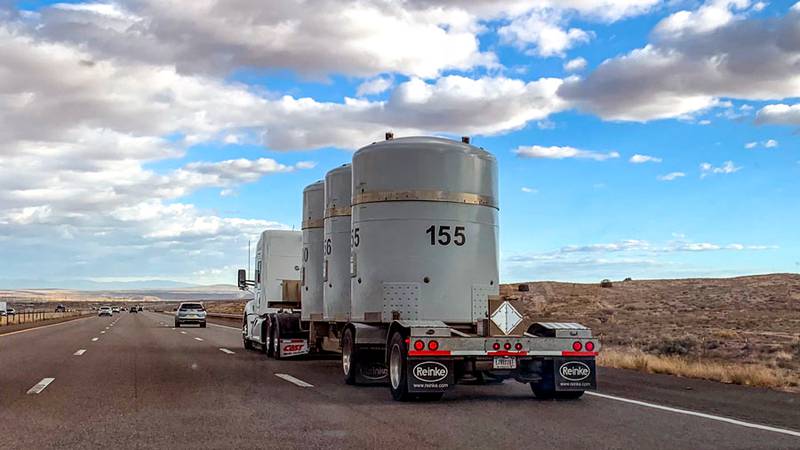
Waste Isolation Pilot Plant gets 13K nuclear waste shipments, plans to ‘ramp up’ to 17 a week, Adrian Hedden, Carlsbad Current-Argus 24 Nov 21, A 13,000th shipment of nuclear waste was delivered to the Waste Isolation Pilot Plant repository near Carlsbad Nov. 11, marking a milestone since the facility first began accepting waste in 1999.
The shipment was made up of transuranic (TRU) waste from the U.S. Department of Energy’s Idaho National Laboratory from that facility’s Advanced Mixed Waste Treatment Project.
About half of WIPP’s shipments in its lifetime came from the Idaho lab, about 6,600……..
Of the 13,000 shipments of waste sent to WIPP in the last two decades, 775 were considered remote-handled (RH) waste, handled in shielded casks and emplaced in the walls of the WIPP underground – an underground salt deposit that gradually buried the waste permanently and blocks radiation.
To get that waste to the WIPP facility from nuclear sites owned by the DOE around the country, truck drivers logged about 15 million miles, per a DOE news release, without a “serious injury” or radiological release.
……. WIPP’s first shipment was delivered for disposal from Los Alamos in March 1999, and the site went on to dispose of waste from 13 facilities around the U.S.
The final shipment from Rocky Flats and Environmental Technology Site in Colorado came in 2005, and the 10,000 shipment was received – also from Idaho – in 2011.
The first RH waste shipment was disposed of at WIPP in 2007, and the facility hasn’t receive RH waste since 2014, although the process of resuming RH waste was underway and expected to take about three years.
…….. WIPP will continue to prioritize shipments from Los Alamos and Idaho, Knerr said, for the “bulk” of the next decade.
Reinhard Knerr, manager of the DOE’s Carlsbad Field Office said increasing shipments can be achieved ahead of an ongoing rebuild of the facility’s ventilation system planned to go into service in 2025 or 2026.
“We believe we’re going to be ready to resume increased shipments well before that,” he said.
To achieve that goal, Knerr said WIPP must complete multiple projects: filling and closing out the 7th waste disposal panel by 2022 and finishing emplacement in Panel 8 by 2025.
Then, he said WIPP hopes to emplace waste in Panels 11, 12 in the coming years and Panel 13 by 2034.
Plans were recently announced to mine Panels 11 and 12, described by WIPP officials as “replacement” panels for capacity lost in an accidental radiological release in 2014 that led to a three-year halt of WIPP’s primary operations.
To support the increase in waste emplacement and mining, Knerr said a fourth shift was intended to be added to the WIPP workforce.
“We have to make sure that we are mining,” Knerr said. “That includes the access drifts as well as mining out the panels themselves. We need to be sure that we have enough staff on site to support not only the mining needs that we have, but the waste emplacement as well.” https://www.currentargus.com/story/news/local/2021/11/26/waste-isolation-pilot-plant-gets-13-k-nuclear-waste-shipments/8739296002/
Fukushima Daiichi Under Volcanic Pumice Risk
November 21, 2021
Volcanic floating pumice stones have been causing problems for coastal communities in Japan since August. The floating pumice began showing up in Okinawa near Japan’s southernmost territory first. Japan’s Agency for Marine-Earth Science and Technology predicts the pumice raft may show up around Chiba prefecture by the end of November. Chiba is directly east of Tokyo. The agency provided a video of their pumice raft plume path prediction on their website.

The plume prediction model shows it to be offshore of Fukushima prefecture by November 30th. This does have some potential to create problems at the Fukushima Daiichi disaster site. TEPCO acknowledges this here. The primary concern is units 5 and 6. Units 1 to 3 suffered meltdowns and no longer depend on any ocean cooling. The cooling system for the reactor vessels of those units is a closed-loop system that reuses treated contaminated water. This system has no dependency on the ocean to complete the cooling process. The spent fuel pools for units 1 to 3 have closed-loop cooling systems that are also not dependent on the ocean for heat exchanging. Unit 4 had no fuel in the reactor vessel during the 2011 disaster and has had all of the spent fuel removed from the spent fuel pool.
Units 5 and 6 had all of the fuel removed from the reactor vessels and was placed in the respective spent fuel pools. Unit 5 holds 1542 units of spent fuel while unit 6 holds 1884, which includes some offloaded fuel from unit 4. Additionally, 168 pieces of unused fuel in unit 5’s spent fuel pool and 428 pieces of unused fuel at unit 6 are among the total amounts. The newest fuel in these two spent fuel pools is roughly 10 years old. We explain the decay heat process of spent fuel in this report.
Both reactor units use the RHR cooling system to cool the spent fuel pools. This consists of a pump system in the reactor building basement and a seafront pump facing the port. Both units 5 and 6 had replacement pumps installed at the seafront after the 2011 disaster. In 2019 the reactor building RHR pump in unit 6 failed and needed to be replaced. In 2014 the RHR pump for unit 5 failed. TEPCO was able to “share” the RHR system from unit 6 to cool unit 5’s spent fuel pool. This kept the pool within regulated temperature ranges.
The main concern with units 5 and 6 would be the potential heat up of the spent fuel pools if the pumice raft were to hit Fukushima Daiichi. Both units have significant amounts of spent fuel in their pools with both being over 1000 fuel assemblies each in inventory. By contrast, unit 1 has 392 assemblies in the spent fuel pool, and unit 2 has 615. Over ten year old spent fuel has less ability to generate heat. Typically by the 5-year mark spent fuel can be stored in dry casks due to the decay in heat generation potential.
If the pools were to lose cooling access, water could be replaced by portable piping or hose. In a longer-term situation, a portable heat exchanger similar to those used on the spent fuel pools of units 1 to 3 could be brought in. The time frame for TEPCO to implement such a plan is unknown as that level of emergency planning has not been released to the public.
The common pool is the other cause for concern. The building that houses the common pool has an extensive series of cooling units on the roof. It is assumed that this system isn’t dependent on any seafront cooling exchange but we do not have enough detailed information about the systems to state this with 100% certainty.
The port area for units 5 and 6 does have a silt fence in place that would help reduce pumice infiltration into the areas of the cooling pumps. It could greatly reduce the possibility of pumice reaching the pump intakes but it isn’t 100% effective.

If pumice infiltration appears likely TEPCO has a plan to install additional fencing and oil collection type booms to block the port areas. TEPCO’s report also cites that the metal fence on the pump intakes for units 5 and 6 have a 9mm hole spacing that may be sufficient to stop larger pieces of pumice from reaching the pumps. As of 11.23.21 TEPCO has not released any updates to the situation at the plant related to the pumice issue. The plume is expected to pass by the plant over the next week leaving this an open issue to monitor.
Hat tip to Fukushima Diary who initially discovered the issue.
Hunterston nuclear reactor 3 closed, but there will be decades from defuelling through dismantling
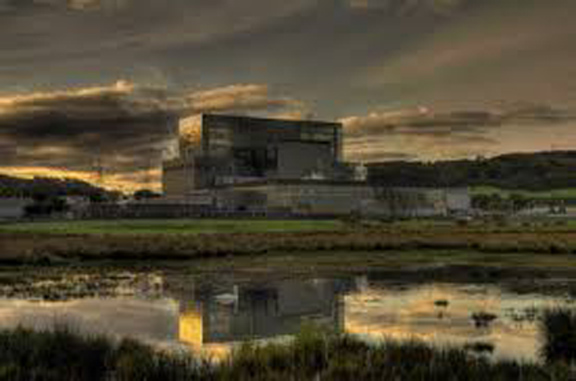
SafeEnergy E Journal No.92. December 2 Hunterston Reactor 3 is expected to come off line at the end of November and Reactor 4 before 7th January 2022. There would then be 2 months of statutory outage and then defueling would commence. EDF is hoping to despatch 4 rather than 2 spent fuel flasks every week to Sellafield during defueling.
Defueling will take around three years and will continue to draw on the skills of EDF’s specialist staff and contractors. It will then take around 5 or 6 years to prepare the plant for a period of 40 to 50 years of care and maintenance. Final dismantling could begin around 2070. https://www.no2nuclearpower.org.uk/wp/wp-content/uploads/2021/11/SafeEnergy_No92.pdf
Bipartisan USA lawmakers Press Biden to stop Canadian plan to store nuclear waste near Lake Huron.
Michigan reps press Biden to stop Canadian plan to store nuclear waste near Lake Huron. Melissa Nann Burke, The Detroit News, 26 Nov 21, Washington — Bipartisan Michigan lawmakers are pressing President Joe Biden to talk to the Canadian government about stopping the proposal for a permanent repository for radioactive waste near Lake Huron.
U.S. Reps. Dan Kildee, D-Flint Township; Andy Levin, D-Bloomfield Township; and Peter Meijer, R-Grand Rapids Township, spoke out ahead of Biden’s recent meeting with Canadian Prime Minister Justin Trudeau, expressing their opposition to the plans.
“We are disappointed the Canadian government has proposed building a permanent nuclear waste repository in the Great Lakes basin, threatening the drinking water of more than 40 million people on both sides of the border,” the lawmakers said in a joint statement.
“We ask President Biden to work with Prime Minister Trudeau to ensure that no nuclear waste is permanently stored in the shared Great Lakes water basin.”
The representatives pointed out the Canadian government opposed any potential sites for permanently storing nuclear waste located within shared water basins when the United States was investigating sites in the 1980s, noting the Americans ultimately chose another site “out of respect for our Canadian friends.”……………..
This month, the NWMO began a three-dimensional seismic survey in South Bruce as part of its ongoing study to determine the site’s suitability for the deep geological repository.
Kildee in September introduced a resolution in the House expressing opposition to the site in South Bruce, joined by a bipartisan group of lawmakers from Great Lakes states. https://www.detroitnews.com/story/news/politics/2021/11/26/biden-pressed-stop-canadian-nuclear-waste-storage-near-lake-huron/8725074002/
What might trip up the Rolls Royce plan for small nuclear reactors?

Fix the Planet newsletter: Can small nuclear power go big? Small modular reactors are being pitched as an affordable and fast way to decarbonise power grids but questions about the technology abound, New Scientist EARTH, 25 November 2021, By Adam Vaughan
”……… nuclear power did have a showing in Glasgow, at official events in the conference, deals on the sidelines and cropping up as a subject during press briefings.
One new technology popped up a few times: small modular reactors (SMRs), mini nuclear plants that would be built in a factory and transported to a site for assembly. A UK consortium led by Rolls-Royce wants to build a fleet in the country to export around the world as a low carbon complement to renewables. During COP26 the consortium received £210 million from the UK government. More private investment is expected soon.
Yet questions abound. Why should this technology succeed where large nuclear plants have failed to take off in recent years, beyond China? If they are small, will they make a sizeable enough dent in emissions? And will they arrive in time to make a difference to a rapidly warming world?……
What exactly is planned?
The reactors that Rolls-Royce SMR wants to build have been six years in development, with their roots in ones the company previously built for nuclear submarines. Despite being billed as small, the new reactor design is fairly large. Each would have 470 megawatts of capacity, a good deal bigger than the 300 MW usually seen as the ceiling for an SMR.
The consortium hopes to initially build four plants on existing nuclear sites around the UK. Ultimately it wants a fleet of 16 , enough to replace the amount of nuclear capacity expected to be lost in the UK this decade as ageing atomic plants retire. Later down the line, the SMRs could be exported around the world too.
Alastair Evans at Rolls-Royce SMR. says the first SMR would cost about £2.3 billion and could be operational by 2031. Later versions may fall to £1.8 billion, he claims. That may seem cheap compared to Hinkley, but an offshore wind farm with twice the capacity costs about £1 billion today, and that figure will be even lower in a decade’s time………….
What might trip them up?
SMRs have been in development for years but have made little inroads to date. The UK government has been talking about them for much of the past decade, with nothing to show. Progress elsewhere around the world has been slow, too. Outside of Russia there are no commercial SMRs connected to power grids. Even China, one of the few countries that has built new nuclear plants in recent years, only started construction of a demo SMR earlier this year, four years late. It wasn’t until last year that leading US firm NuScale had its design licensed by US authorities.
Paul Dorfman at the non-profit Nuclear Consulting Group, a body of academics critical of nuclear power, says the nuclear industry has always argued economies of scale will bring down costs so it is hard to see why going small will work. He says modularisation – making the reactors in factories – will only bring down costs if those factories have a full order book, which may not materialise. “It’s chicken and egg on the supply chain,” he says. He also notes the plants will still create radioactive waste (something another potential next gen nuclear technology, fusion, does not). And he fears nuclear sites near coasts and rivers will be increasingly vulnerable to the impacts of climate change, such as storm surges as seas rise.
What’s next? The Rolls-Royce SMR group this month submitted its reactor design for approval by the UK nuclear regulator, a process that could take around five years. It now needs to pick three locations for factories and start constructing them. The group also needs to win a Contract for Difference from the UK government, a guaranteed floor price for the electricity generated by the SMRs…….. https://www.newscientist.com/article/2299113-fix-the-planet-newsletter-can-small-nuclear-power-go-big/
Nuclear fusion for UK – to save the dying nuclear industry, and UK as a nuclear weapons state?
SafeEnergy E Journal No.92. December 21, Fusion Four sites in England and one in Scotland are on the final shortlist of sites to be the home of the UK’s prototype fusion energy plant. The government is backing plans for the Spherical Tokamak for Energy Production (Step) with a final decision on its location expected at the end of 2022. The UK Atomic Energy Authority (UKAEA) hope the plant will be operational by the early 2040s. The five shortlisted sites are: Ardeer, North Ayrshire; Goole, East Riding of Yorkshire; Moorside, Cumbria; Ratcliffe-on-Soar, Nottinghamshire; Severn Edge, Gloucestershire; They were whittled down from a longlist of 15 sites, which included Chapelcross near Annan and Dounreay. (1 …………
The Scottish Campaign for Nuclear Disarmament (CND) has said that this latest effort to extol the virtues of nuclear fusion as a “low carbon” source of energy is to keep the industry “alive” due to the UK being a “nuclear weapon state”. (5)………https://www.no2nuclearpower.org.uk/wp/wp-content/uploads/2021/11/SafeEnergy_No92.pdf
Nicola Sturgeon reaffirms the Scottish Government’s opposition to nuclear power

Nicola Sturgeon has renewed the Scottish Government’s opposition to
nuclear power as part of the country’s drive towards net zero. The First
Minister ruled out any new nuclear power stations in Scotland in direct
opposition to calls from trade unions, backed by Labour’s Anas Sarwar,
for nuclear to be considered as a replacement to fossil fuels.
At First Minister’s Questions in Holyrood Sturgeon insisted it was was an
expensive option for taxpayers. She told SNP MSP Bill Kidd: “Renewables,
hydrogen and carbon capture and storage provides the best pathway to net
zero by 2045 and will deliver the decarbonisation we need to see across
industry, heat and transport. “We believe that nuclear power represents
poor value for consumers.”
Daily Record 25th Nov 2021
https://www.dailyrecord.co.uk/news/politics/nicola-sturgeon-rules-out-nuclear-25544965@ChristinaMac1
Boris Johnson avoids detail on how China will be removed from Sizewell C deal.
Boris Johnson avoided details when specifically asked about China’s
state-owned energy company’s role in Sizewell C – and how they will be
removed from the nuclear project amid concerns over national security. EDF
and China General Nuclear (CGN) are joint developers of Sizewell C taking
80% and 20% shares respectively, though the Financial Times has previously
reported that Whitehall is looking to push out CGN.
At Prime Minister’s Questions, shadow business secretary Matthew Pennycook told Mr Johnson that
“the Government’s Integrated Review concluded the Chinese state poses a
systemic challenge to our national security” and asked him to explain
“precisely how and when his Government intends to remove the CGN’s
interest from the Sizewell C nuclear project?”
Mr Johnson responded: “We
don’t want to see undue influence by potentially adversarial countries in
our critical national infrastructure and so that’s why we have taken the
decisions we have.” The National Security and Investment Bill, currently
going through parliament, is looking to give the government further powers
to screen and potentially block sensitive foreign investments.
Mr Pennycook later responded on Twitter: “We need certainty on the future of China’s
involvement in UK nuclear power and clarity about how and when the
Government intends to remove China’s state-controlled nuclear energy
company from involvement in any future UK project.”
East Anglian Daily Times 25th Nov 2021
https://www.eadt.co.uk/news/boris-johnson-sizewell-c-china-removal-8516062
Labour has called for clarity on how the government plans to remove China’s state-owned energy company from nuclear power projects in the UK.
Labour has called for clarity on how the government plans to remove
China’s state-owned energy company from nuclear power projects in the UK.
Asked about Chinese involvement in nuclear projects at Bradwell and
Sizewell during Prime Minister’s Questions (PMQs) yesterday, Boris
Johnson said the UK “do[es] not want to see undue influence by
potentially adversarial countries in our critical national
infrastructure” and highlighted new national security rules on investment
that come into force in January. Johnson added that more information would
be “forthcoming” about what it will decide about the Bradwell B
project.
Construction News 25th Nov 2021 https://www.constructionnews.co.uk/government/nuclear-pm-urged-to-elaborate-on-potential-removal-of-chinese-firms-25-11-2021/
New nuclear for Scotland- would be a tragic mistake?
SafeEnergy E Journal No.92. December 21, New Nuclear in Scotland Leader of the Scottish Labour Party, Anas Sarwar, says nuclear power should be part of the mix on energy. He has also called for a statutory “just transition commission” to be established to help workers move out of the oil and gas industry. He said: “I think we have to be honest about future opportunities and I think nuclear power has to be part of the mix. “I’m not saying nuclear power has to be the priority, or the lead. But it has to be part of the mix to have a diverse energy supply.” Sarwar insisted nuclear power could mean lower fuel bills for consumers at a time of rising inflation.
In September Sarwar announced plans for a Scottish Energy Transition Commission to outline how Scotland can protect and create highly skilled jobs in the transition to a net-zero economy. The commission will be chaired by pro-nuclear former Labour Energy Minister Brian Wilson. It will support the development of Scottish Labour energy policy and advise on how the transition to netzero can deliver for the working people of Scotland. It will also look at the failures of the current energy market, which has led to spiking prices this winter, the role of public energy companies and Scotland’s energy mix. (2)

The Bella Caledonia website described Wilson as “a devout nuclear enthusiast”. Sarwar told the BBC that “I think we should consider potential new (nuclear power) plants” (3) and certainly with a nuclear lobbyist chairing this is where they’ll end up. Journalist Dominic Hinde points out: “This is a little odd in that Scotland already meets almost a hundred per cent of its electricity needs from renewables and is set to surpass this. Most emissions now come from heating, agriculture and transport.” (4)
Dr Richard Dixon, Director of Friends of the Earth Scotland, called Scottish Labour’s drift towards nuclear power “a tragic mistake”. Nuclear is slow to build, eye-wateringly expensive and dangerous. There is still no agreed solution for nuclear waste, which will need monitoring for many thousands of years. It is neither a solution to short-term energy needs nor to the climate crisis.
Dixon said the Scottish Energy Transition Commission is Scottish Labour’s plan to keep the pressure up on the Scottish government’s official Just Transition Commission, and should have been welcome, but giving it to the former ‘Minister for Hunterston’ devalues it. Anas Sarwar was quoted saying he supports a “diverse energy supply”, which is standard union code for more nuclear – and thinks “nuclear is a key part of that and it’s something that I think we should fundamentally explore”. For many years the Scottish Conservative manifesto for every election said we should have two new nuclear power stations in Scotland. It became a running joke because they knew it was never going to happen and they quietly dropped any mention of nuclear a couple of elections ago. The tragedy of Labour finding a new enthusiasm for the ultimate unsustainable form of energy is that it was a Labour First Minister who put a stop to the nuclear industry’s ambitions in Scotland. Jack McConnell, despite massive pressure from Tony Blair’s government, said in 2005 that Scotland would use planning powers to block any proposals for new reactors in Scotland unless there was an answer to the question of permanent storage of radioactive waste, something that is no closer today than it was then. Scottish Labour’s drift into being pro-nuclear will please no-one but the GMB union and Brian Wilson. It is a betrayal of one of their greatest achievements in government in Scotland. (5)
Meanwhile, North Ayrshire Conservative councillor Tom Marshall has called for a new state-of-theart ‘mini’ nuclear reactor to be built at Hunterston. (6)
According to a Panelbase survey for The Times 37% of Scots asked about the idea of building nuclear power stations in Scotland as fossil-fuel use is cut back expressed support, while only 32% were opposed. When asked if they supported nuclear power to replace energy currently produced by fossil fuels, 57% of respondents felt it was probably or definitely necessary while 26% indicated it was not or probably not necessary. A further 17% were undecided. Liam Kerr, net-zero and energy spokesman for the Scottish Conservatives, called on the SNP to abandon its opposition to nuclear energy. (7)
Others joining a pro-nuclear clamour include Magnus Linklater who complains that “Without Torness, in a wind-free summer like this year’s, Scotland will have to rely on oil and gas courtesy of Vladimir Putin, imports from Norway or — irony of ironies — nuclear power from France.” (8)
And Lord Bird, co-founder of The Big Issue, has somehow got the misconceived idea that nuclear power can help to solve fuel poverty. Brian Wilson, the former UK energy minister, has supported his call. (9)
Unsurprisingly, the GMB union is also demanding the Scottish Government thinks again on nuclear power. (10)
See 1 page briefing on why nuclear power isn’t a solution to climate change here: https://www.no2nuclearpower.org.uk/wp/wpcontent/uploads/2021/11/Nuclear_no_solution_to_Climate-October-2021.pdfhttps://www.no2nuclearpower.org.uk/wp/wp-content/uploads/2021/11/SafeEnergy_No92.pdf
UK’s Ministry of Defence makes unprecedented attempt to dismantle dead nuclear submarines
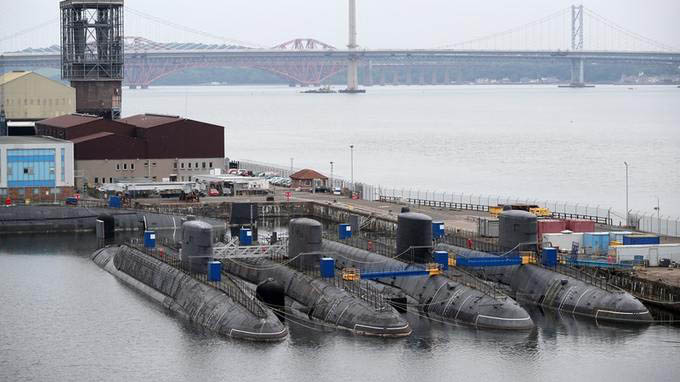
SafeEnergy E Journal No.92. December 21 , Submarine Dismantling The UK’s Submarine Dismantling Project hopes to dismantle 27 of the UK’s de-fuelled, nuclearpowered submarines after they have left service with the Royal Navy.
A demonstrator submarine is being used to define and refine the dismantling process. At Rosyth, the removal of low-level radioactive waste from the first two submarines, Swiftsure and Resolution, has been successfully and safely completed. As the unique approach is developed, work continues with the removal of low-level radioactive waste from a third submarine, Revenge. A fully developed process for steady state submarine dismantling should be ready by 2026. As the demonstrator programme progresses, the outcomes will provide more certainty in the future costs to dismantle the Devonport-based submarines. It is not MoD policy to pre-announce the funding of its projects for reasons of protecting commercial interests.”
REVENGE, entered the dry dock in Rosyth in late March 2020 to commence its LLW removal. The intent is to remove all LLW including large components such as steam generators and pressurisers. No nation has yet attempted this complex and challenging undertaking, so the MoD is currently putting in place the techniques necessary to remove all LLW for the first time to comply with safety and sustainability standards. https://www.no2nuclearpower.org.uk/wp/wp-content/uploads/2021/11/SafeEnergy_No92.pdf
1 This Month

of the week – Shut Down Drone Warfare!


Tell the Ukrainian Government to Drop Prosecution of Peace Activist Yurii Sheliazhenko

Petition to revoke the licensing of the Near Surface Nuclear Disposal Facility (NSDF) at Chalk River. https://www.ourcommons.ca/petitions/en/Petition/Details?Petition=e-7247
To see nuclear-related stories in greater depth and intensity – go to https://nuclearinformation.wordpress.com
-
Archives
- April 2026 (68)
- March 2026 (251)
- February 2026 (268)
- January 2026 (308)
- December 2025 (358)
- November 2025 (359)
- October 2025 (376)
- September 2025 (257)
- August 2025 (319)
- July 2025 (230)
- June 2025 (348)
- May 2025 (261)
-
Categories
- 1
- 1 NUCLEAR ISSUES
- business and costs
- climate change
- culture and arts
- ENERGY
- environment
- health
- history
- indigenous issues
- Legal
- marketing of nuclear
- media
- opposition to nuclear
- PERSONAL STORIES
- politics
- politics international
- Religion and ethics
- safety
- secrets,lies and civil liberties
- spinbuster
- technology
- Uranium
- wastes
- weapons and war
- Women
- 2 WORLD
- ACTION
- AFRICA
- Atrocities
- AUSTRALIA
- Christina's notes
- Christina's themes
- culture and arts
- Events
- Fuk 2022
- Fuk 2023
- Fukushima 2017
- Fukushima 2018
- fukushima 2019
- Fukushima 2020
- Fukushima 2021
- general
- global warming
- Humour (God we need it)
- Nuclear
- RARE EARTHS
- Reference
- resources – print
- Resources -audiovicual
- Weekly Newsletter
- World
- World Nuclear
- YouTube
-
RSS
Entries RSS
Comments RSS
 nuclear-news