In 2021 be aware of the deceitful ”environmental” nuclear front groups
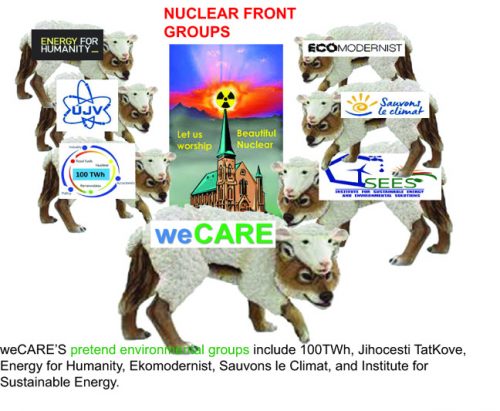
In 2021, The desperate nuclear lobby will be revving up their propaganda.
Their favourite medium for pro nuclear spin is to set up, or take over, an environmental group. These fake environmental groups abound, especially in the USA.
However, Europe has its fair share. They have recently banded to gether to pressure the European Union to include nuclear power in “new green deals”. They’ll peddle the same old lies:
- that dirty nuclear power is “clean”
- that nuclear power (useless against climate change, and very vulnerable to climate change) will “fix climate change”.
- that nuclear power (prohibitively expensive) is ”economical”
- that radioactive trash (a massive unsolved problem)” is ”not a problem”
- that new nuclear power (essential for the nuclear weapons industry) has ”nothing to do with nuclear weapons”
They’ve just sent a letter, a load of absolute codswallop to the European Commission, aserting that nuclear power is essential, and demanding government funding to develop the (non-existent) Next Generation new nuclear gimmicks.
Human Rights and the UN Treaty on the Prohibition of Nuclear Weapons
|
Australia: The UN Treaty on the Prohibition of Nuclear Weapons: Corrs Human Rights Day event recap https://www.mondaq.com/australia/human-rights/1019602/the-un-treaty-on-the-prohibition-of-nuclear-weapons-corrs-human-rights-day-event-recap
23 December 2020 Corrs Chambers Westgarth On 10 December 2020, Corrs marked Human Rights Day with an ‘In Conversation’ event focused on the UN Treaty on the Prohibition of Nuclear Weapons (Treaty).
The event brought together leading experts in the field of nuclear disarmament and the humanitarian impacts of a nuclear event, including;
Discussion between the panellists focused on the significance of the Treaty and how it may shape future obligations of states and corporates in connection with nuclear weapons and nuclear disarmament. The Treaty currently has 51 parties and 86 signatories and is set to enter into force on 22 January 2021, cementing a categorical ban on nuclear weapons, 75 years after their first use. Australia has yet to ratify the Treaty. A number of themes that emerged from the conversation are explored below. Why is this conversation so critical?The panellists agreed that the prohibition of nuclear weapons is perhaps more urgent now than ever before. In early 2020, the Doomsday Clock – which symbolises the gravest existential dangers facing humankind – was moved to 100 seconds to midnight, indicating that humankind was closer to the apocalypse than ever in history. This movement was attributed to the increased threats of nuclear war and the continued global failure to address climate change. The adjustment was described as indicative of ‘the most dangerous situation that humanity has ever faced’. This is unsurprising. Today, there remain around 13,500 nuclear weapons in the hands of only a few states. Many are in a high operational readiness, and have the ability to be rapidly deployed. It is well understood that the use of even a fraction of these weapons would result in unimaginable loss of human life and have long-term effects on human health, the environment and global food supplies. The World Health Organisation (WHO) has consistently found that all the world’s health resources would not be effective in responding to even a singlenuclear attack. A paradigm shiftThe Treaty was born out of a shift in focus from the assumed defence and international security benefits of nuclear weapons to the catastrophic humanitarian consequences they would incur. The Red Cross, ICAN and members of civil society played a vital role in shaping that discussion. Dr Durham noted that this shift in momentum began when then President of the ICRC Jakob Kellenberger addressed the Geneva Diplomatic Corp in the lead up to the Non Proliferation Treaty Review Conference in 2010, declaring that the debate on nuclear weapons must be guided not by ‘military doctrine and power politics’, but by ‘human beings, . the fundamental rules of international humanitarian law, and . the collective future of humanity’. The humanitarian focus of the discourse continued its momentum with a series of conferences convened to consider the humanitarian impact of nuclear weapons in Norway (2013), Mexico (2014) and Austria (2014). Dr Durham and Dr Ruff reflected on their respective involvement in these conferences, observing how they provided a platform to discuss the humanitarian consequences of nuclear weapon use at the international level, significantly shifting the debate and bringing to bear increased urgency in the need to ban nuclear weapons. Legal significance and relationship with other treatiesWhen the Treaty enters into force, it will be the first international legal instrument which makes nuclear weapons illegal, prohibiting their development, testing, production, acquisition, stockpiling, use, deployment or threat of use. The Treaty will also prohibit the provision of assistance to any state in the conduct of prohibited activities. It is notable that, even with all their destructive power, nuclear weapons are the last form of weapons of mass destruction to be prohibited. The Treaty will only bind those states which have formally signed and ratified it, which means that non-parties (such as Australia) do not have any formal obligations under the Treaty. Other nuclear weapons treaties, including the nearly universal Treaty on the Non-Proliferation of Nuclear Weapons (NPT) which has been in force since 1970, will continue as a cornerstone in the international legal framework governing nuclear weapons. In this regard, Dr Durham observed that the NPT and the Treaty are complimentary rather than conflicting in their shared aspiration to eliminate nuclear weapons. Legal ramifications for the commercial sectorFor businesses, the Treaty will begin a process of stigmatisation of companies that are involved in the production of nuclear weapons. It may also render their operations unlawful. Tara Gutman observed that the impact of the Treaty’s prohibitions is already being felt, noting that:
In addition, state parties to the Treaty are expected to make the manufacture of nuclear weapons or their components unlawful under domestic laws in their territories. How these matters impact the commercial sector in the coming years will be interesting to follow. What’s next?The panellists reminded us that the entry into force of the Treaty is but a step on what has been a long path towards nuclear disarmament. Other nuclear weapons treaties, including the nearly universal Treaty on the Non-Proliferation of Nuclear Weapons (NPT) which has been in force since 1970, will continue as a cornerstone in the international legal framework governing nuclear weapons. In this regard, Dr Durham observed that the NPT and the Treaty are complimentary rather than conflicting in their shared aspiration to eliminate nuclear weapons. Legal ramifications for the commercial sectorFor businesses, the Treaty will begin a process of stigmatisation of companies that are involved in the production of nuclear weapons. It may also render their operations unlawful. Tara Gutman observed that the impact of the Treaty’s prohibitions is already being felt, noting that:
In addition, state parties to the Treaty are expected to make the manufacture of nuclear weapons or their components unlawful under domestic laws in their territories. How these matters impact the commercial sector in the coming years will be interesting to follow. What’s next?The panellists reminded us that the entry into force of the Treaty is but a step on what has been a long path towards nuclear disarmament. |
|
Australia’s Prime Minister Scott Morrison could stop the persecution of Australian citizen Julian Assange
|
Rex Patrick, Independent senator, January 5, 2021 A British judge has rejected the US Justice Department’s effort to have Wikileaks publisher Julian Assange extradited to the United States to face espionage charges for obtaining and publishing secret documents that revealed war crimes. The decision of Judge Vanessa Baraitser to deny the extradition request has given Assange an important legal victory in his efforts to avoid extradition for actions many would regard as inherent to media freedom – the right of journalists to obtain and publish information and to protect confidential sources. However, in her ruling Judge Baraitser dismissed the arguments of Assange’s lawyers in relation to these matters, saying she was satisfied that the American authorities made their extradition request in good faith, that the case was not politically driven, and that Assange was not merely acting as a journalist. |
|

Seven regions in Italy to take legal action against plan for nuclear waste dumping
  Row after 7 regions tapped to take nuclear waste. https://www.ansa.it/english/news/2021/01/05/row-after-7-regions-tapped-to-take-nuclear-waste_b9f64a6e-95fc-442e-8bf0-f67284e0fec8.html Edazione ANSAROME Row after 7 regions tapped to take nuclear waste. https://www.ansa.it/english/news/2021/01/05/row-after-7-regions-tapped-to-take-nuclear-waste_b9f64a6e-95fc-442e-8bf0-f67284e0fec8.html Edazione ANSAROME
05 January 2021, ANSA) – ROME, – A row has erupted in Italy after seven regions were named as having 67 potential sites to take nuclear waste. The industry and environment ministries gave decommissioning company SOGIN the go ahead to draft the national map of areas potentially suitable for the waste.
The regions involved are Piedmont, Tuscany, Lazio, Puglia, Basilicata, Sardinia and Sicily. All seven have announced legal action against the move. The centre-right opposition was also up in arms. Nationalist League leader Matteo Salvini, the leader of the opposition, called the government “incompetent”. His partner, the smaller nationalist Brothers of Italy (FdI) party, said “it is folly to publish the SOGIN map in the midst of a COVID crisis”. (ANSA). |
|
The risk of USA – Iran military showdown before Trump leaves office
Are the US and Iran headed for a military showdown before Trump leaves office? The Conversation Clive Williams
Campus visitor, ANU Centre for Military and Security Law, Australian National University, January 4, 2021 Tensions are running high in the Middle East in the waning days of the Trump administration.
Over the weekend, Iran’s foreign minister, Mohammad Javad Zarif, claimed Israeli agents were planning to attack US forces in Iraq to provide US President Donald Trump with a pretext for striking Iran.
Just ahead of the one-year anniversary of the US assassination of Iran’s charismatic General Qassem Soleimani, the head of Iran’s Revolutionary Guards also warned his country would respond forcefully to any provocations.
Today, we have no problem, concern or apprehension toward encountering any powers. We will give our final words to our enemies on the battlefield.
Israeli military leaders are likewise preparing for potential Iranian retaliation over the November assassination of senior Iranian nuclear scientist Mohsen Fakhrizadeh — an act Tehran blames on the Jewish state.
Both the US and Israel have reportedly deployed submarines to the Persian Gulf in recent days, while the US has flown nuclear-capable B-52 bombers to the region in a show of force.
And in another worrying sign, the acting US defence secretary, Christopher Miller, announced over the weekend the US would not withdraw the aircraft carrier USS Nimitz and its strike group from the Middle East — a swift reversal from the Pentagon’s earlier decision to send the ship home.
Israel’s priorities under a new US administration
Israeli Prime Minister Benjamin Netanyahu would like nothing more than action by Iran that would draw in US forces before Trump leaves office this month and President-elect Joe Biden takes over. It would not only give him the opportunity to become a tough wartime leader, but also help to distract the media from his corruption charges.
Any American military response against Iran would also make it much more difficult for Biden to establish a working relationship with Iran and potentially resurrect the 2015 Iran nuclear deal.
It’s likely in any case the Biden administration will have less interest in getting much involved in the Middle East — this is not high on the list of priorities for the incoming administration. However, a restoration of the Iranian nuclear agreement in return for the lifting of US sanctions would be welcomed by Washington’s European allies.
This suggests Israel could be left to run its own agenda in the Middle East during the Biden administration.
Israel sees Iran as its major ongoing security threat because of its support for Hezbollah in Lebanon and Palestinian militants in Gaza.
One of Israel’s key strategic policies is also to prevent Iran from ever becoming a nuclear weapon state. Israel is the only nuclear weapon power in the Middle East and is determined to keep it that way.
While Iran claims its nuclear program is only intended for peaceful purposes, Tehran probably believes realistically (like North Korea) that its national security can only be safeguarded by possession of a nuclear weapon.
In recent days, Tehran announced it would begin enriching uranium to 20% as quickly as possible, exceeding the limits agreed to in the 2015 nuclear deal.
This is a significant step and could prompt an Israeli strike on Iran’s underground Fordo nuclear facility. Jerusalem contemplated doing so nearly a decade ago when Iran previously began enriching uranium to 20%.
How the Iran nuclear deal fell apart……….. https://theconversation.com/are-the-us-and-iran-headed-for-a-military-showdown-before-trump-leaves-office-152606
Treaty on the Prohibition of Nuclear Weapons: The Road There and the Road Ahead.
 Treaty on the Prohibition of Nuclear Weapons: The Road There and the Road Ahead. https://www.commondreams.org/views/2021/01/05/treaty-prohibition-nuclear-weapons-road-there-and-road-ahead?utm_campaign=shareaholic&utm_medium=Social&utm_source=twitter For those of us who have been part of the anti-nuclear movement, this moment in history is one filled with possibilities.byMadelyn Hoffman, Ryan Swan, On January 22, 2021, the world will take a major step toward global nuclear disarmament when the Treaty on the Prohibition of Nuclear Weapons (TPNW) enters effect. This is one step closer to realizing the vision the survivors of the 1945 atomic bombings of Hiroshima and Nagasaki (Hibakusha) have spoken about all over the world. They have never given up their efforts to prevent another collision between humans and nuclear weapons and end every talk with “No More Hibakusha, No More Hiroshimas and No More Nagasakis.” Their message of preventing further nuclear catastrophe is now recognized and embodied in this groundbreaking new Treaty. Anti-nuclear organizing efforts need to honor the determination, commitment and vision of Hibakusha, even if achieving the end goal of nuclear abolition requires taking just one step at a time. Treaty on the Prohibition of Nuclear Weapons: The Road There and the Road Ahead. https://www.commondreams.org/views/2021/01/05/treaty-prohibition-nuclear-weapons-road-there-and-road-ahead?utm_campaign=shareaholic&utm_medium=Social&utm_source=twitter For those of us who have been part of the anti-nuclear movement, this moment in history is one filled with possibilities.byMadelyn Hoffman, Ryan Swan, On January 22, 2021, the world will take a major step toward global nuclear disarmament when the Treaty on the Prohibition of Nuclear Weapons (TPNW) enters effect. This is one step closer to realizing the vision the survivors of the 1945 atomic bombings of Hiroshima and Nagasaki (Hibakusha) have spoken about all over the world. They have never given up their efforts to prevent another collision between humans and nuclear weapons and end every talk with “No More Hibakusha, No More Hiroshimas and No More Nagasakis.” Their message of preventing further nuclear catastrophe is now recognized and embodied in this groundbreaking new Treaty. Anti-nuclear organizing efforts need to honor the determination, commitment and vision of Hibakusha, even if achieving the end goal of nuclear abolition requires taking just one step at a time.
The Road to the TPNW An early significant development was the conclusion of the Treaty on the Nonproliferation of Nuclear Weapons (NPT), negotiated throughout the 1960s and entering force in 1970. Its aims were to curtail the spread of nuclear weapons and commit those states already in possession of such weapons to work toward disarmament. While the NPT has proved largely effective on the nonproliferation front, its disarmament achievements have been unsatisfactory, as nuclear weapon states (NWS) have continuously failed to pursue “negotiations in good faith on effective measures relating to the cessation of the nuclear arms race… and to nuclear disarmament, and on a treaty on general and complete disarmament” as the NPT requires them to do (Article VI). Non-nuclear weapon state (NNWS) frustration with the lack of disarmament progress has grown over the years and finally reached a tipping point after the 2014 Ukraine Crisis and reinvigorated major power nuclear competition. The Marshall Islands brought an unprecedented case before the International Court of Justice claiming that the nuclear weapon states had failed to live up to their NPT disarmament obligations, which – while dismissed on suspect jurisdictional grounds – gained widespread international attention and support. Around this same time in 2014, the New Agenda Coalition proposed the idea of a convention banning nuclear weapons to serve as an “effective measure” implementing Article VI.. Negotiations began in 2016 and, in summer 2017, 122 nations came together in support of the historic TPNW. Garnering its 50th ratification in late October 2020, the TPNW is now set to enter force on January 22, 2021 and will round out the chemical weapons and biological weapons conventions in banning the last outstanding weapon of mass destruction. The Road Ahead—Obstacles to Overcome Not unexpectedly, the NWS have maintained firm opposition to the TPNW, with the U.S. casting it as an illegitimate and “dangerous” challenger to the NPT. It asserts that the TPNW fails to recognize the strategic context in which nuclear weapon states find themselves and that it “is and will remain divisive in the international community,” threatening the global nonproliferation regime by permitting “forum-shopping” opportunities for states seeking to skirt the NPT’s strict International Atomic Energy Agency-overseen (IAEA) verification protocols. This characterization is clearly suspect and motivated by self-interest. Countering it is an important first step. Statements from TPNW drafting states specifically emphasize the mutually-reinforcing relationship between the two treaties. Far from being in competition with the NPT, the TPNW specifically complements it by legally augmenting Article VI. The TPNW text also renders dubious the alleged forum-shopping concerns. TPNW Article 3 specifies that each state party “at a minimum, maintain its [IAEA] safeguards obligations in force at the time of entry into force of this Treaty” and that those states which have “not yet done so shall conclude with the [IAEA] and bring into force a comprehensive safeguards agreement.” This battle over narrative is particularly important now in the leadup to the next quinquennial NPT Review Conference (RevCon) this coming spring. A central RevCon issue will be how – and if – RevCon final documents acknowledge the TPNW in the event consensus is reached. The NWS have been fiercely opposed to any mention of the TPNW and the U.S. has urged states not to accede to (or recognize) it. Formal acknowledgement in the RevCon process would be a significant step toward overcoming NWS attempts to stymie the TPNW and toward paving the way for ultimate integration of the treaty into the NPT and broader international legal framework. Such entrenchment would make it more and more difficult for the NWS to continue to belittle the TPNW and perpetually procrastinate on their disarmament obligations. Carpe Diem For those of us who have been part of the anti-nuclear movement, this moment in history is one filled with possibilities. When the majority of the world’s peoples feel the need to mobilize and, once and for all, put a sense of urgency behind the need to eliminate the threat of nuclear weapons, it feels like a “now or never” moment. We must all take advantage of this moment to push for greater TPNW awareness. Those of us who live in the NWS have a unique responsibility to move our governments to understand that, once the TPNW becomes law, mere possession of nuclear weapons, let alone “upgrading and modernizing them” to the tune of trillions of dollars, will be understood as illegal by a growing number of the world’s nations. Everything must be done to apply concerted pressure on NWS governments. In the U.S., calls, e-mails and letters to our Senators should be issued, urging them to acknowledge the Treaty and its validity and value. Discontent with the allocation of enormous tax-payer dollars to gratuitously dangerous nuclear arsenal modernization should also be emphasized. At the international level, the NNWS must insist on formal acknowledgement of the TPNW as a condition for their consent to any eventual NPT RevCon final documents. The International Campaign to Abolish Nuclear Weapons and other NGOs should also continue their public relations campaigns in NWS ally states to pressure domestic governments to recognize the TPNW as valid international law. Madelyn Hoffman is co-chair of the Green Party USA’s Peace Action Committee and was the Green Party of New Jersey’s candidate for U.S. Senate in 2018 and 2020. She was the director of NJ Peace Action (formerly NJ SANE founded in 1957) from 2000 to 2018.
Ryan Swan, J.D., M.Phil., is an incoming doctoral student in peace and conflict studies at the University of Bonn. He has professional experience in security policy analysis and serves on the Green Party USA’s Peace Action Committee. |
|
Chris Hedges: The Empire is Not Done with Julian Assange — Rise Up Times

“WikiLeaks and you personally are facing a battle that is both legal and political,” Weinglass told Assange. “As we learned in the Pentagon Papers case, the U.S. government doesn’t like the truth coming out….”
Chris Hedges: The Empire is Not Done with Julian Assange — Rise Up Times
Opinion: Trump has made nuclear disaster much more likely: don’t expect much better from Biden.
 Rex Newman, 6 Jan 21, Trump did not just leave a hawkish nuke weapons problem. The evil, dumb son of a bitch was going to start testing nuclear weapons again. Tactical nukes. All treaties abrogated. Exploding nuclear bombs to stop hurricanes. He was aiming to use tactical nukes. Space wars. He has made a nuclear accident, a hundred times more likely. He has done it by deregulatings nuke reactors supervision so stupidly and capriciously post Fukushima. By not setting up programs to make reactors infratrucure more safe, since fukushima.
Especially in the face of increased earhquake and hurricane activity. San louis obisbo. S carolina for earthquakes. 23 coastal reactors for hurricanes.
The nuclear reactor corruption in ohio, three reactors with holes in their heads ready to blow kept open w ratepayers subaidizing them. Came from the disgusting repuklikans and trump.
The second plutonium pit factory. One man nuclear obliteration of the world. 3 more nuke catastrophes inl woolsey brunswick. Hawkish is a terrible euphemistic understatement for trumps nuke policies though i have heard it before. Probly one or more of the 94 shitty old nuclear complexes will blow w nuclear waste fuel fires. 20 pounds of hi level nuke waste from a nuclear reactor, w cs137 plutonium st90 co60 in it will kill a person in 20 minutes who is 15 ft from it. The reactors make tons of that shit every year. 100 billions of a gram of any of that shit especially polonium and cesium will murder a person. A diver i knew was exposed to an open box of iridium used to check ship hulls. 100 grams of the shit destroyed half the divers body and killed his diver mate, 50 feet under water.
Dont expect so much better from biden as he reappoints victoria nuland ,who put the neonazis in power in ukraine. There will be onw or two nuke catastrophes in the usa and ukraine the media cant hide like inl brunswig and woolsey. The economy will continue to go to shit. There will be an uprising against biden. Hopefully a bunch of trump nazis will be wiped out.
Nuclear waste to be dumped in landfills nothing done about hanford or los alamos or san onofre at san diego tens of thousands of tons of the worst hilevel nuke waste possible store above ground in flimsy cannisters in new mexico texas az idaho, wash, san onofre that will exlode catch fire and poison the usa. Americium241 as poisonous as plutonium cheap smoke detectors full of that shit poisoning ladfills across the usa. Depleted uranium everywhere. Dozens of nuclear meltdowns. The artic is full of millions of tons of nuclear waste from old american russian french and uk nuke subs. From reactors dumped into the sea.
90 thousand acres of nuclear waste and nuc reactor garbage and nuke fallout from two meltdowns burned into the air at the idaho national lab fire. 70 years with 60 reactors and thousands of tons of the worst radioactive crap possible burned.into the air, in 2018 under trumps watch.
Decommissioning of Oyster Creek nuclear station – a nasty precedent for closing down of other USA reactors.
|
The decommissioning at Oyster Creek was funded by ratepayers and amounted to almost $1 billion when it was sold, presumably for significantly less than its billion-dollar-fund balance. Authoritative sources had previously estimated the cost to decommission Oyster Creek at over $1.4 billion. The original decommissioning schedule was to occur over a 60-year period, but the new owners are betting they can decommission the plant faster, and for significantly less than their investment, pocketing the difference. The quicker they can do this, the more they earn. Of course, if they find they bit off more than they can chew and look like they are on a pathway to failure, they can pack up their wrenches and backhoes and abandon the project, leaving New Jersey ratepayers to fund whatever actions remain to safely complete decommissioning. Seems like a win-win for both buyer and seller. For the new owner, if the challenges exceed their abilities, they can simply cut and run before depleting their newly acquired billion-dollar decommissioning fund. For the seller, they have unloaded an unpleasant responsibility in a way that’s sadly reminiscent of the actions of a deadbeat dad. Current questions on nuclear subsidiesThe current question before the BPU on subsidies presents a rare opportunity for regulators to exert some leverage considering tangential, but critical, questions on nuclear energy. Are safety practices sufficient to deter today’s technology-savvy terrorists? How reliable are their storage processes for spent fuel and what are the long-term plans for its disposal or relocation? What are the plans for the eventual decommissioning of remaining New Jersey nuclear reactors that combined are almost five times the size of Oyster Creek? Are we comfortable following the path blazed by Oyster Creek with the potential of a pre-emptive sale if the new owners make their way out of Dodge before the sheriff shows up …. |
|
Holtec wants to build new nuclear reactor at site of USA’s oldest, most dangerous nuclear station
 New Jersey nuclear plant proposed at site of old reactor PBS, Jan 5, 2021
LACEY, N.J. (AP) — The company that’s in the process of mothballing one of the nation’s oldest nuclear power plants says it is interested in building a new next-generation nuclear reactor at the same site in New Jersey.
Holtec International last month received $147.5 million — $116 million of which will come from the U.S. Department of Energy — to complete research and development work on a modern nuclear reactor that could be built at the site of the former Oyster Creek Nuclear Generating Station in the Forked River section of Lacey Township, New Jersey.
Holtec owns that facility and oversaw its shutdown in 2018……
company spokesperson Joe Delmar said Holtec is “actively engaged with the Nuclear Regulatory Commission” about the project, but has not yet formally applied to build the reactor…..
Jeff Tittel, director of the New Jersey Sierra Club and a longtime opponent of the Oyster Creek plant, called the proposal “a threat to health and safety.”
“Things are going from bad to worse,” he said. “What was supposed to be the cleanup and ending of the Oyster Creek nuclear plant is now being looked at for another nuclear power plant. The whole point of closing and decommissioning this site was to get rid of the oldest and probably most dangerous nuclear plant. Putting all of that nuclear material in one area that is vulnerable to climate impacts like sea-level rise is a disaster waiting to happen.”……. https://www.pbs.org/newshour/economy/new-nuclear-plant-could-rise-at-site-of-former-one-in-nj
Canada shows how nuclear reactors are not needed for production of technetium-99m
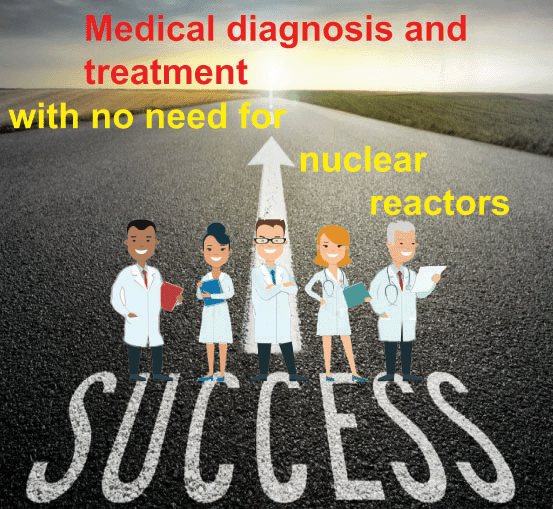
these cyclotrons can be used to reliably create technetium-99m regionally and without the need for reactor-based materials.
Cyclotron-produced technetium-99m approved by Health Canada, TRIUMF,
Now, a new cyclotron-based approach to producing this critical diagnostic tool has received Health Canada approval, greenlighting the made-in-Canada technology for national implementation and opening the door to a greener, more reliable way to make technetium-99m.
The approval represents a critical milestone for the TRIUMF-led Cyclomed99 consortium, which spearheaded the innovative research effort. The consortium, including partners BC Cancer, the University of British Columbia (UBC), the Lawson Health Research Institute, and the Centre for Probe Development and Commercialization, is the first in the world to obtain full regulatory approval for cyclotron-based production.
It also a turning point for the consortium‘s licensee ARTMS Inc., the TRIUMF spin-off company bringing this technology to market. ARTMS’ technology makes technetium-99m production possible on many of the world’s most common medical cyclotrons, enabling regional production of this critical isotope within local communities.
“Medical isotopes help so many people every day. It’s critical to have a stable, multi-faceted supply chain to avoid unexpected disruptions to their availability,” said Paul Schaffer, Associate Laboratory Director, Life Sciences at TRIUMF and Associate Professor at UBC’s Faculty of Medicine. “The approval of cyclotron-produced technetium-99m by Health Canada is an important milestone for this Canadian innovation that will ultimately deliver direct benefit for Canadian patients.”
While the Health Canada approval brings new promise for patients and researchers, it also highlights an important chapter in Canadian innovation, one which saw a focused national research effort produce an effective solution to a global problem.
The path towards cyclotron-produced technetium-99m ……
In 2009, following unplanned disruptions at NRU (which historically provided up to half of the world’s technetium-99m via molybdenum-99 generators), the Government of Canada initiated the Non-reactor-based Isotope Supply Contribution Program (NISP) which challenged researchers to find a new way to produce critical medical isotopes—in particular, technetium-99m.
Led by Schaffer and TRIUMF‘s Dr. Tom Ruth, scientists and engineers from TRIUMF joined partners at BC Cancer, the Centre for Probe Development Commercialization (CPDC), the Lawson Health Research Institute, and the University of British Columbia to launch a national collaboration to answer the NISP call: the ‘CycloMed99‘ consortium.‘
A new way to produce technetium-99m
The consortium’s proposal detailed a new and innovative technology to enable the production of technetium-99m using medical cyclotrons. These compact particle accelerators already operate in regional healthcare centres worldwide, producing isotopes by bombarding a target material with a proton beam and extracting the desired species. The process is safe and precise, employing stable targets and producing little to no long-lived radioactive waste. And, with the right target and extraction systems, these cyclotrons can be used to reliably create technetium-99m regionally and without the need for reactor-based materials.
“Cyclotron centres across Canada can produce these isotopes locally and on-demand, and we have shown the path that can be used to achieve regulatory approval,” said Francois Bénard, senior executive director of research at BC Cancer, professor of radiology and associate dean of research at UBC’s faculty of medicine. “The same approach can be followed at other sites in Canada and internationally. This has been a shared vision of many researchers across the country, and we have to recognize the many collaborators who worked for years to make this announcement possible.”
This bright future will first take shape at TRIUMF‘s Institute for Advanced Medical Isotopes (IAMI), where a state-of-the-art TR-24 medical cyclotron will offer production capacity for the Lower Mainland‘s technetium-99 needs. In addition, IAMI will serve as a hub for radiopharmaceutical research, providing access to leading-edge facilities and expertise in accelerator technology and isotope science. The Institute will further catalyze the Vancouver region’s diverse nuclear medicine sector by convening researchers, students, academic collaborators, not-for-profits, government, and industry partners.
“With support from the Canadian government and our partners, we have developed an effective solution to the medical isotope crisis, one that will improve health outcomes and reaffirm Canada’s role as a global leader in isotope production and research. … …https://www.triumf.ca/headlines/cyclotron-produced-technetium-99m-approved-health-canada?fbclid=IwAR1d-vA4gmCfoY1HWJqwPBs_KkmGHMfwxGKVK41bnPNeD2I7Yr-vHkaVf4o
Biden Plans Renewed Nuclear Talks With Russia While Punishing Kremlin
Biden Plans Renewed Nuclear Talks With Russia While Punishing Kremlin, Adviser Says. The president-elect also plans to pursue a “follow-on negotiation” with Iran over its missile capabilities if Tehran re-enters compliance with the nuclear deal.
NYT, By David E. Sanger, Jan. 3, 2021
President-elect Joseph R. Biden Jr.’s incoming national security adviser said on Sunday that the new administration would move quickly to renew the last remaining major nuclear arms treaty with Russia, even while seeking to make President Vladimir V. Putin pay for what appeared to be the largest-ever hacking of United States government networks.
In an interview on “GPS” on CNN, Jake Sullivan, who at 44 will become the youngest national security adviser in more than a half century, also said that as soon as Iran re-entered compliance with the 2015 nuclear deal — which he helped negotiate under President Barack Obama — there would be a “follow-on negotiation” over its missile capabilities.
“In that broader negotiation, we can ultimately secure limits on Iran’s ballistic missile technology,” Mr. Sullivan said, “and that is what we intend to try to pursue through diplomacy.”
He did not mention that missiles were not covered in the previous accord because the Iranians refused to commit to any limitations on their development or testing. To bridge the impasse, the United Nations passed a weakly worded resolution that called on Tehran to show restraint; the Iranians say it is not binding, and they have ignored it.
Taken together, Mr. Sullivan’s two statements indicated how quickly the new administration would be immersed in two complex arms control issues, even as Mr. Biden seeks to deal with the coronavirus pandemic and the economic shocks it has caused. But the first issue to arise, renewing the New Start, will be made more complex because of Mr. Biden’s vow to assure that Moscow pays for the hacking of more than 250 American government and private networks, an intrusion that now appears far more extensive than first thought.
Mr. Biden has said that after the government formally determines who was responsible for the attack, “we will respond, and probably respond in kind.” But that means moving to punish Russia while keeping New Start — a remnant of the era when nuclear rather than cyber was the dominant issue between the two countries — from lapsing and setting off a new arms race. ……… https://www.nytimes.com/2021/01/03/us/politics/biden-russia-iran.html
Indonesia’s nuclear ambitions could prove disastrous for the Southeast Asian region
More dangerously, Indonesia’s nuclear stakeholders have traditionally run into trouble selling the idea of nuclear energy to their constituents given widespread fear over Indonesia being prone to earthquakes and volcanic activity given its unique position within the Pacific’s ‘Ring of Fire’.
|
Will Indonesia become a nuclear power? https://www.trtworld.com/magazine/will-indonesia-become-a-nuclear-power-43025 6 Jan 21, In spite of its nuclear ambitions, Indonesia does not yet have the capacity to manage its nuclear waste disposal, which could prove disastrous for the Southeast Asian region.
Indonesia may be taking steps to revive its nuclear ambitions under President Joko Widodo’s government. In February 2020, Luhut Binsar Pandjaitan, Indonesian minister of maritime affairs and former chief of staff to Widodo, publicly proclaimed that powerful nations like the United States do not see Indonesia as a serious international player due to its lack of nuclear weapons. His statement quickly captured local news headlines. The retired four-star army general turned political heavyweight is a major proponent behind recent interest in acquiring nuclear reactor technology to capitalize on Indonesia’s wealth of mineral resources. If Indonesia takes the nuclear track, it would be a major departure from its traditional foreign policy footing. Historically, Indonesia organised the Bandung Conference in 1955 which gave rise to a global Non-Aligned Movement (NAM) of African and Asian states who collectively opted out of aligning with either the United States or Russia during the dawn of the cold war. Nuclear pivot Continue reading |
British tax-payers’ £ 132 billion cost for 120 years of nuclear decommissioning
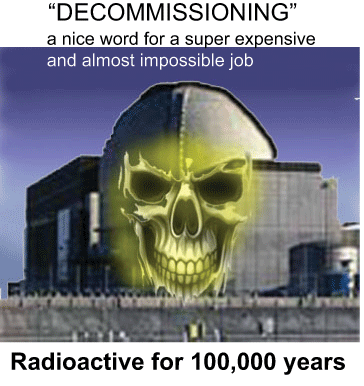 Brinkwire 4th Jan 2021, It has been warned that a “perpetual” lack of information about the condition of the nuclear facilities in Britain means that decommissioning for 120 years would not be complete and cost billions of pounds.
The decommissioning of UK civil nuclear power plants, including the Torness power plant in East Lothian and the Hunterston B power plant in Ayrshire, would cost the taxpayer about £ 132 billion, according to a new estimate, and will not be finished for 120 years.
The Public Accounts Committee blames the U.K. in its sober analysis. Government for a “sorry saga” of massively ineffective contracts, “weak” government monitoring and a “persistent” lack of awareness of the condition of nuclear installations. The Nuclear Decommissioning Authority (NDA) has left decades of inadequate information on the status and location of dangerous and
radioactive materials with a history of a lack of awareness about the condition of the sites it is responsible for safeguarding, the study warned. The NDA recognizes that it still does not have a complete understanding of the condition of the 17 sites in its custody, including the 10 former Magnox power plants, the report from the committee said.
According to the latest NDA figures, the decommissioning of UK civilian nuclear power plants would cost an incredible £ 132 billion for current and future generations of British taxpayers, and the work will not be finished for 120 years, with a huge effect on the lives of people living
near the plants, the study said.
Australian government hypocrisy about its small nuclear reactor deal with China
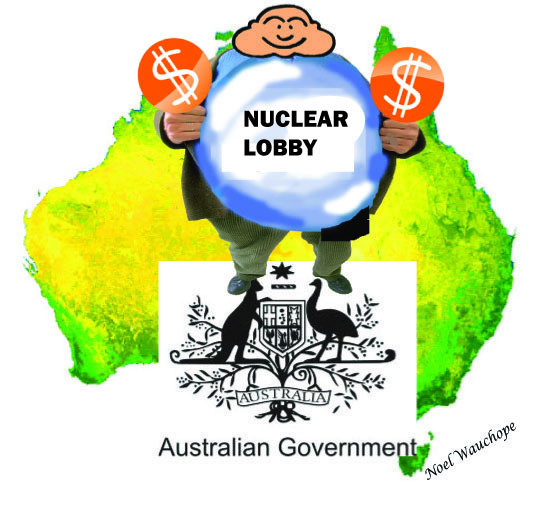
Double standards on research cooperation with China, Independent Australia 4 January 2021, The Government is hypocritical in its approval of Australia’s nuclear research body to work with China on the development of nuclear reactors, writes Noel Wauchope.
PRIME MINISTER Scott Morrison’s Liberal Coalition Government seems to remain in silent approval of the Australian Nuclear Science and Technology Organisation’s (ANSTO) partnership with a Chinese company to develop Generation IV nuclear technologies such as small nuclear reactors.
But it’s a different story when it comes to the Morrison Government’s concern to put a stop to the Victorian Labor Government’s cooperation with China in developing agricultural, communications and medical research.
We hear very little about the Australian Government’s research connections with China, managed under the Australia-China Science and Research Fund (ACSRF), which has the aim of ‘supporting strategic science, technology and innovation collaboration of mutual benefit to Australia and China’.
One remarkable collaboration between Australia and China is in the strategic partnership between ANSTO and the Shanghai Institute of Applied Physics (SINAP) to develop the Thorium Molten Salt Nuclear Reactor (TMSR) and other Generation IV nuclear reactor designs.
In March 2019, Dr Adi Paterson, then CEO of ANSTO, welcomed renewal of this agreement and was reported as stating that it was “consistent with ANSTO and Australia’s interest in and support of Generation IV reactor systems”. This statement was made at a time when Australia’s federal and state laws clearly prohibited the development of nuclear reactors.
The Age quoted anonymous senior Federal Government sources who reveal that the Australian Government may use its powers to tear up a research agreement between the Victorian Government and China’s Jiangsu province. This agreement was signed in 2012 and renewed in 2019……….
The USA partly funds the Australian Strategic Policy Institute, which strongly advises against cooperative research with China. And, of course, Victorian Liberal Opposition leader Michael O’Brien was quick to join in the chorus, condemning the Labor Government for having the deal with China.
All this makes it all the more inexplicable as to why the Australian Government should have an agreement with China to develop nuclear reactors. Under federal law, Australia prohibits establishing nuclear installations. ……..
There has been virtually no media coverage of Dr Adi Paterson’s deal with China, which goes back to 2015. I have previously written about this and the secrecy under which it was conducted.
Indeed, ANSTO’s operations and its funding have been conducted in secrecy, under the comfortable shroud of national security.
Right now, there is a move to corporatise the nuclear medicine facility at Lucas Heights as a separate entity to ANSTO. At the same time, the Government is in an unseemly rush to set up a nuclear waste dump near Kimba in South Australia. In the midst of all this came the sudden unexplained resignation of the CEO, Dr Adi Paterson.
The silence on all this is disturbing. It must be especially so for the small rural community of Kimba and for the Indigenous Title Holders as they wait in limbo for the vexed question of the nuclear waste dump to be solved. For the rest of South Australia, that is a concern, too. Victorians may well wonder why their medical research cooperation with China is seen as so dangerous. Meanwhile, is it okay for Australia’s nuclear research body, ANSTO, to work with China on the development of small nuclear reactors? https://independentaustralia.net/politics/politics-display/double-standards-on-research-cooperation-with-china,14664
1 This Month

of the week – Shut Down Drone Warfare!


Tell the Ukrainian Government to Drop Prosecution of Peace Activist Yurii Sheliazhenko

Petition to revoke the licensing of the Near Surface Nuclear Disposal Facility (NSDF) at Chalk River. https://www.ourcommons.ca/petitions/en/Petition/Details?Petition=e-7247
To see nuclear-related stories in greater depth and intensity – go to https://nuclearinformation.wordpress.com
-
Archives
- April 2026 (68)
- March 2026 (251)
- February 2026 (268)
- January 2026 (308)
- December 2025 (358)
- November 2025 (359)
- October 2025 (376)
- September 2025 (257)
- August 2025 (319)
- July 2025 (230)
- June 2025 (348)
- May 2025 (261)
-
Categories
- 1
- 1 NUCLEAR ISSUES
- business and costs
- climate change
- culture and arts
- ENERGY
- environment
- health
- history
- indigenous issues
- Legal
- marketing of nuclear
- media
- opposition to nuclear
- PERSONAL STORIES
- politics
- politics international
- Religion and ethics
- safety
- secrets,lies and civil liberties
- spinbuster
- technology
- Uranium
- wastes
- weapons and war
- Women
- 2 WORLD
- ACTION
- AFRICA
- Atrocities
- AUSTRALIA
- Christina's notes
- Christina's themes
- culture and arts
- Events
- Fuk 2022
- Fuk 2023
- Fukushima 2017
- Fukushima 2018
- fukushima 2019
- Fukushima 2020
- Fukushima 2021
- general
- global warming
- Humour (God we need it)
- Nuclear
- RARE EARTHS
- Reference
- resources – print
- Resources -audiovicual
- Weekly Newsletter
- World
- World Nuclear
- YouTube
-
RSS
Entries RSS
Comments RSS
 nuclear-news