We must halt war funding and slash the giant Pentagon budget.

As We Work to Prevent Iran War, It’s Time to End All Our Wars, We must halt war funding and slash the giant Pentagon budget.LAUREN WALKER / TRUTHOUT, 21 Dec 19
Progressives are rightly mobilizing in force against with Iran. Preventing another war is certainly imperative. In addition, we must recognize it is past time to end the endless wars in Iraq and Afghanistan. With a foreign policy that is increasingly synonymous with war, will profit-minded Pentagon contractors and a politicized military leadership win another year of pointless world domination, as if it’s all a big game of Risk?
Pentagon contractors saw their stock prices — and their CEOs’ stock holdings — spike after the Trump administration courted war by killing Iranian military commander Maj. Gen. Qassim Suleimani. And those same contractors checked a major item off their Christmas lists in early December with the bipartisan passage of a military spending bill that provides another year of funding for endless war and another year of champagne-popping profits. The Pentagon spending deal was made just days before The Washington Post published a harrowing account of how military leaders covered up the failure of the war in Afghanistan, painting the clearest picture yet of how the military has misled the public for nearly 20 years.
The spending bill, known as the National Defense Authorization Act, handed $738 billion to the military, including $71.5 billion in war funding, as part of a prior agreement that puts the Pentagon on a path toward record-breaking spending. Just days before news of the “Afghanistan Papers” broke, the negotiation cut a handful of critical antiwar provisions that were included in an earlier House-passed version.
This calls for a do-over. In February, budget negotiations for 2021 will begin. The game is rigged, in that total military spending for 2021 was already set at $740 billion by the 2019 Bipartisan Budget Act. Apologists for the forever wars and Pentagon profiteers are guaranteed at least one more year of soaring Pentagon spending.
But while the money will be spent, the stakes are still life and death. The 2021 budget could spell the end of the wars if Congress sees fit to finally take on its rightful role as the sole declarer of wars……..
Progressive Measures Left on the Cutting Room FloorThe 2020 military budget negotiations left some game-changing progressive measures on the cutting room floor. Those measures are exactly what progressives need to dust off and rally behind.
A House version of the bill that passed over the summer included the same egregious level of spending, but it also imposed some long-overdue limits on presidential war powers, including measures that would have prevented further U.S. complicity in the war in Yemen, limited presidential power to start a war with Iran, and made major steps toward finally ending the forever wars in Iraq and Afghanistan. The House version also would have prevented the president from shifting military funds to build a wall at the southern border; prevented spending on a new class of more “usable” nuclear weapons; and protected the right of trans people to serve openly in the military. Despite its major flaw — a deeply excessive Pentagon budget — the House version would have done a lot to minimize the damage.
None of those progressive provisions made it into the final deal. Instead, the most progressive advance in the new bill is a provision for paid parental leave for federal employees. The leave policy is an important and welcome change, and long overdue, but it was also a hastily passed, partial measure that leaves much to be desired.
First, End the Wars
Barring another Trump stunt to throw a bone to hungry progressives, the military budget for 2021 must involve a tougher negotiation that results in real changes to Pentagon and presidential war powers. No parade of partial victories is worth the continuation of endless war, or the bankrupting of our nation that the $6.4 trillion (and counting) federal war budget represents.
The country has been at war in Afghanistan for 18 years, the longest war in U.S. history, and so far, the 21st century has been a story of constantly expanding Pentagon power. The war budget for 2020 — for Afghanistan, Iraq, Syria and elsewhere — is $71 billion, though it’s widely acknowledged that the war fund has also become a convenient way for military leaders to skirt legal spending limits. A new war with Iran would only increase the feeding frenzy….
Any meaningful reining in of the Pentagon budget must start with ending the wars, both because of the savings inherent in finally bringing the troops home (and the contractors, weaponry and entire machinery of war with them), but also because a reduced Pentagon budget will depend on establishing a common perception of our relative safety in the world. As long as the country remains at war, the Pentagon is politically untouchable. …….https://truthout.org/articles/as-we-work-to-prevent-iran-war-its-time-to-end-all-our-wars/?eType=EmailBlastContent&eId=08b186de-b971-4949-b6b1-4ce07a2e3cf6

UK nuclear weapons programme £1.3bn over budget.
BBC 10th Jan 2020, UK nuclear weapons programme £1.3bn over budget. The Ministry Of Defence’s “poor management” of Britain’s nuclear weapons programme has led to rising costs and lengthy delays, according to the government spending watchdog.
Nuclear energy for Uganda – a bad option
|
Our nuclear energy option a bad deal, Daily Monitor, TUESDAY JANUARY 7 2020 BY SAM MUCUNGUZI In September 2019, Uganda signed an Inter-Governmental Agreement (IGA) with Russia to build capacity to exploit nuclear technology for energy, medical and other peaceful purposes (the definitions for peaceful can be looked at another day). The government selected Buyende, Nakasongola, Mubende, Lamwo and Kiruhura districts as the potential sites for nuclear power stations. State minister for Energy Simon D’Ujanga attributes the selection of these districts to the presence of water bodies nearby, As we are obsessed with nuclear energy, all seven of Germany’s nuclear power plants are slated to close by 2022, but where will the European country safely bury nearly 28,000 cubic meters of radioactive waste that will stay there for the next million years, as CNN reported? ……. According to the summary of nuclear generation plan from an AF-Consult Switzerland Limited report, the high case scenario for Uganda’s nuclear would involve the setting up of a two-unit nuclear power plant of an installed capacity of 2,300 megawatts (MW). In this scenario, the plant would be commissioned in 2028. Putting up two units with an installed capacity of 2,000MW and the first unit of these two would be commissioned in 2031.The low case scenario would involve the setting up of a one-unit, 1, 000MW nuclear power station, and commissioned in 2034. The summary said the capital expenditure for Uganda’s nuclear power programme 2020–2040 would be about Shs37.2 trillion for the best case scenario. For the low case scenario, the capital expenditure would be Shs18.6
The financing of this project will most likely be oil money which is anticipated at $3.6b ( about Shs13.6 trillion) annually from oil and gas. Oil will last for 25 years, however, if the current and future generation is to benefit, we need to stop looking at investments that don’t worsen the already damaged environment and worsening climate change.
If the superpower with experience, money and technology is closing who are we to venture into this risky and dangerous energy source?
Government has ignored to look at the smart and clean options of renewable energy generation for Uganda. Solar energy, for instance, is cheap, safe and clean, we have all year round good weather. Noor complex for example, located in Sahara desert (Morocco) will produce 580 MW when completed in 2020, and aims to produce enough energy to power over one million homes by the end of the year and reduce carbon emissions by an estimated 760,000 tonnes per year. This is slightly below what Uganda consumes at peak power demand by only 45mw. Noor only cost $625m. Coordinator, Citizens’ Concern Africa https://www.monitor.co.ug/OpEd/Letters/nuclear-energy-government-Inter-Governmental-Agreement-bad-deal/806314-5409596-sua1p0/index.html
|
|
Nuclear weapons systems don’t make either Russians or Americans safer
Is Russia’s 100-Megaton Nuclear Torpedo More Trouble Than Its Worth? The National Interest, Lyle J. Goldstein, The National Interest•January 8, 2020
Key Point: The development of new weapons systems may benefit the military-industrial complex, but they don’t benefit the safety of Russians or Americans.
|
The “collateral damage” of the Russia investigation becomes ever more apparent. From the breakdown of American institutional norms between the executive and the legislature, to increasing distrust regarding the law enforcement and intelligence apparatus to regional crises, for example in Syria, that seem to spin increasingly out of control, the probe has brought both U.S. domestic and foreign policy making to a the point of crisis. Yet these calamities, which are largely advantageous to newspaper subscriptions and cable news ratings, may mask a deeper and more fundamental threat: the accelerating pace of a nuclear arms race [гонка ядерных вооружений] between Moscow and Washington……. https://news.yahoo.com/russias-100-megaton-nuclear-torpedo-020000145.html |
|
Two earthquakes strike near Iran nuclear plant
|
Two earthquakes strike near Iran nuclear plant, By Artemis Moshtaghian, CNN, 8 Jan 2020, Two earthquakes struck near a nuclear power plant in southwestern Iran on Wednesday morning, just over a week after another quake hit the region.
The first quake, measuring 4.9 magnitude, struck just before 9.00 a.m. local time in Bushehr province, according to the United States Geological Survey (USGS). Around 30 minutes later a second quake, this time measuring 4.5 magnitude, struck the same province which runs along the Iranian coastline. The quake epicenters were within 20 kilometers of the city of Borazjan — a short distance from the country’s Bushehr nuclear power plant. Another earthquake, measuring 5.1 magnitude, struck the same region less than two weeks ago. In a dramatic day for Iran, the two quakes happened just hours after the country fired a number of missiles at two Iraqi bases housing US troops, in retaliation for the US’ killing of a top Iranian general last week. In the wake of Qasem Soleimani’s killing last week, Iran said it was ending its commitment to the 2015 nuclear deal with world powers. Opened in August 2010, Bushehr is not only Iran’s first nuclear plant but the first civilian reactor in the Middle East. Another earthquake, measuring 5.1 magnitude, struck the same region less than two weeks ago. In a dramatic day for Iran, the two quakes happened just hours after the country fired a number of missiles at two Iraqi bases housing US troops, in retaliation for the US’ killing of a top Iranian general last week. In the wake of Qasem Soleimani’s killing last week, Iran said it was ending its commitment to the 2015 nuclear deal with world powers. Opened in August 2010, Bushehr is not only Iran’s first nuclear plant but the first civilian reactor in the Middle East. History of deadly quakesIran is no stranger to tectonic activity. The country sits on a major fault line between the Arabian and Eurasian plates, and has experienced many earthquakes in the past……https://www.msn.com/en-us/news/world/two-earthquakes-strike-near-iran-nuclear-plant/ar-BBYK7JS |
|
Donald Trump plays with possible nuclear crisis in Iran
 Trump risks nuclear crisis in Iran, The Hill, BY REBECCA KHEEL – 01/06/20 President Trump is increasingly facing the possibility of a nuclear crisis with Iran, as Tehran takes its biggest step back from the 2015 nuclear deal. Trump risks nuclear crisis in Iran, The Hill, BY REBECCA KHEEL – 01/06/20 President Trump is increasingly facing the possibility of a nuclear crisis with Iran, as Tehran takes its biggest step back from the 2015 nuclear deal.
Iran’s decision to stop adhering to limits in the Obama-era nuclear agreement comes just days after Trump authorized a drone strike that killed Gen. Qassem Soleimani, posing a major test of the Trump administration’s gambit to withdraw from the international accord. While Iran hasn’t kicked out nuclear inspectors, and has even left open the possibility of coming back into compliance, experts say Sunday’s announcement by Tehran brings the deal closer to collapse than ever before……. Iran had set an early January deadline for its next step away from the deal, even before last week’s U.S. strike in Baghdad killed Soleimani, the Quds Force leader. But his unexpected death has ratcheted up tensions between the United States and Iran, stoking fears about a military confrontation and making any step away from the nuclear deal now that much more fraught. “The degree of their abandonment of the JCPOA may have come about as a result” of Soleimani’s death, Takeyh said, using the acronym for the official name of the deal. On Sunday, Iran announced it would no longer adhere to the deal’s limits on uranium enrichment. Trump responded to the news Monday by tweeting in all caps that “Iran will never have a nuclear weapon!”….. Despite saying it was no longer bound by the deal’s limits, Iran did not immediately announce actions to increase its uranium enrichment and reiterated its pledge to come back into compliance with the deal if it gets sanctions relief. Iran also maintained that its nuclear program is not a weapons program. Iran also said it would continue cooperating with International Atomic Energy Agency (IAEA) inspectors. The IAEA said Monday its “inspectors continue to verify and monitor activities in the country.”….https://thehill.com/policy/defense/477047-trump-risks-nuclear-crisis-in-iran |
|
Small Modular Nuclear Reactors – just a speculative technology, no use against climate change

|
Environmentalists Say Small Nuclear Reactors Aren’t A Climate Change But David Thompson of Leap4ward says the technology is too new and won’t be implemented soon enough to have an impact on climate change. Thompson says the province shouldn’t be investing in “speculative technology” and should instead be focusing renewable energy sources that have been proven to work in New Brunswick, such as wind, solar and hydro. “The renewable sources of energy that we’ve talked about to the premier, some of them can be put in place and operating in maybe three, three and a half years,” he said. Thompson says in comparison, SMRs could take 10 years or more to perfect. “We haven’t got 10 years for something that might work, and another 10 years to build it after it’s proven to work, or even longer than that to put in place enough of it so that it’ll make some kind of difference,” he said. “At the end of it we still have the problem of nuclear waste and we will have the problem of radiation.” Interest in SMR and nuclear energy has been growing in recent months as a green energy alternative, but the modular reactor technology is still in the very early stages. Thompson says climate change is a growing issue and more needs to be done sooner rather than later. “Climate change can’t wait for something that might work, and what if it doesn’t work? What if it isn’t economically feasible after 10 years?” he said. He says not only have wind, solar, and hydro been proven to work, but they’re low-cost and easy to implement. Thompson has sent a letter to Premier Blaine Higgs outlining his concerns and asking him to pull funding from SMRs. “We applaud him for the decision he made to cut all funding to the speculative Joi [Scientific] hydrogen fuel project, but we’re even more concerned about these companies who are getting government money—and attempting to get more—to build these modular reactors,” he said. “By not putting renewable energy in place now in New Brunswick, we’re not doing the right thing. We need action on climate change now.” |
|

Trump urges Britain, Germany, France, Russia and China to dump the Iran nuclear deal
 Trump urges dumping of Iran nuclear deal, news.com.au, 9 Jan 2020,
The decision by the UK and other signatories to try to maintain the Iran nuclear deal has been criticised by US President Trump. US President Donald Trump has called on the world’s major powers to abandon the “defective” Iran nuclear deal.
Trump said the “time has come” for Britain, Germany, France, Russia and China to dump the Joint Comprehensive Plan of Action (JCPOA).
Under the deal, Iran agreed to limit its nuclear programme and allow in international inspectors in return for the easing of economic sanctions.
But at a White House press conference on Wednesday, in which he gave his reaction to the overnight Iranian attacks on air bases housing US forces in Iraq, Trump said the “very defective JCPOA expires shortly anyway and gives Iran a clear and quick path to nuclear breakout”.
Trump said the US would immediately impose “additional punishing economic sanctions” on Tehran until Iran changes its behaviour,” citing the nuclear programme.
Since Trump pulled out of the deal in 2018 and started a “maximum pressure” campaign of sanctions against Iran, tensions have steadily escalated.
“Iran must abandon its nuclear ambitions and end its support for terrorism. The time has come for the United Kingdom, Germany, France, Russia and China to recognise this reality,” the President added.
“They must now break away from the remnants of the Iran deal – or JCPOA – and we must all work together towards making a deal with Iran that makes the world a safer and more peaceful place.”
However, just hours before Trump’s remarks, UK Prime Minister Boris Johnson said the deal remains the “best way of preventing nuclear proliferation in Iran. https://www.news.com.au/world/breaking-news/trump-urges-dumping-of-iran-nuclear-deal/news-story/535d6f4704348e8ebac6f0e96f45403c
Don’t Worry About Iranian Nukes Anytime Soon, Nuclear Experts Say
Don’t Worry About Iranian Nukes Anytime Soon, Nuclear Experts Say“I see no signs of Iran rushing to build a bomb, and doing so would almost certainly not be in their best interest,” said one expert. BuzzFeed News, Dan Vergano, 7 Jan 2020,
Iran’s announcement that it would be abandoning the last remaining restrictions placed on the country under a landmark nuclear arms limitation agreement doesn’t mean it will soon have nukes, arms control experts told BuzzFeed News.
“Is this a sign that Iran is racing toward a bomb? Absolutely not,” nuclear nonproliferation expert Corey Hinderstein of the Nuclear Threat Initiative told BuzzFeed News. “We are not seeing behavior that points in that direction.”
The Iranian government on Sunday announced it was walking away from limits on centrifuges — high-speed spinning machines that separate out weapons-quality uranium — agreed to in 2015 and endorsed by the United Nations Security Council. The move came after the US killing of Iranian general Qassem Soleimani on Friday, in an airstrike at Baghdad’s airport. On Tuesday, Iranian state television said Tehran had launched “tens” of missiles at Iraq’s Al Asad air base, which houses US troops, in retaliation.
“The Islamic Republic of Iran’s nuclear program no longer faces any operational restrictions,” Sunday’s statement from Iran’s official news service said. “From here on, Iran’s nuclear program will be developed solely based on its technical needs.”
Along with an outburst of World War III memes, the announcement triggered an all-caps response from President Donald Trump, stating that Iran would never have nuclear weapons……. https://www.buzzfeednews.com/article/danvergano/iran-nuclear-bomb-uranium-soleimani
Australian government plans to transport nuclear wastes 1000s of kilometres, a dangerous plan in view of bushfires
 Transporting nuclear wastes across Australia in the age of bushfires, Independent Australia, By Noel Wauchope | IN 2020, the final decision on a site for Australia’s interim National Radioactive Waste Facility will be announced, said Resources Minister Matt Canavan on 13 December.
He added: I will make a formal announcement early next year on the site-selection process.”
With bushfires raging, it might seem insensitive and non-topical to be worrying now about this coming announcement on a temporary nuclear waste site and the transport of nuclear wastes to it. But this is relevant and all too serious in the light of Australia’s climate crisis.
The U.S. National Academies Press compiled a lengthy and comprehensive report on risks of transporting nuclear wastes — they concluded that among various risks, the most serious and significant is fire:…..
Current bushfire danger areas include much of New South Wales, including the Lucas Heights area, North and coastal East Victoria and in South Australia the lower Eyre and Yorke Peninsulas. If nuclear wastes were to be transported across the continent, whether by land or by sea, from the Lucas Heights nuclear reactor in Sydney to Kimba in South Australia, they’d be travelling through much of these areas. Today, they’d be confronting very long duration, fully engulfing fires.

Do we know what route the nuclear wastes would be taking to Kimba, which is now presumed to be the Government’s choice for the waste dump? Does the Department of Industry Innovation and Science know? Does the Australian Nuclear Science and Technology Organisation (ANSTO) know? Well, they might, but they’re not going to tell us.
We can depend on ANSTO’s consistent line on this :
‘In line with standard operational and security requirements, ANSTO will not comment on the port, routes or timing until after the transport is complete.’
That line is understandable of course, due to security considerations, including the danger of terrorism.
Spent nuclear fuel rods have been transported several times, from Lucas Heights to ports – mainly Port Kembla – in great secrecy and security. The reprocessed wastes are later returned from France or the UK with similar caution. Those secret late-night operations are worrying enough, but their risks seem almost insignificant when compared with the marathon journey envisaged in what is increasingly looking like a crackpot ANSTO scheme for the proposed distant Kimba interim nuclear dump. It is accepted that these temporary dumps are best located as near as practical to the point of production, as in the case of USA’s sites.
Australians, beset by the horror of extreme bushfires, can still perhaps count themselves as lucky in that, compared with wildfire regions in some countries, they do not yet have the compounding horror of radioactive contamination spread along with the ashes and smoke.
Fires in Russia have threatened its secret nuclear areas……
Many in America have long been aware of the transport danger:
The state of Nevada released a report in 2003 concluding that a steel-lead-steel cask would have failed after about six hours in the fire and a solid steel cask would have failed after about 11 to 12.5 hours. There would have been contamination over 32 square miles of the city and the contamination would have killed up to 28,000 people over 50 years.
The State of Wyoming is resisting hosting a nuclear waste dump, largely because of transportation risks as well as economic risks. In the UK, Somerset County Council rejects plans for transport of wastes through Somerset.
In the years 2016–2019, proposals for nuclear waste dumping in South Australia have been discussed by government and media as solely a South Australian concern. The present discussion about Kimba is being portrayed as just a Kimba community concern.
Yet, when the same kind of proposal was put forward in previous years, it was recognised as an issue for other states, too.
Most reporting on Australia’s bushfires has been excellent, with the exception of Murdoch media trying to downplay their seriousness. However, there has been no mention of the proximity of bushfires to Lucas Heights. As happened with the fires in 2018, this seems to be a taboo subject in the Australian media.
While it has never been a good idea to trek the Lucas Heights nuclear waste for thousands of kilometres across the continent – or halfway around it by sea – Australia’s new climate crisis has made it that much more dangerous. Is the bushfire apocalypse just a one-off? Or, more likely, is this nationwide danger the new normal? https://independentaustralia.net/environment/environment-display/transporting-nuclear-wastes-across-australia-in-the-age-of-bushfires,13465
Trump’s unpredictability on Iran adds to weapons proliferation dangers
 Trump’s unpredictability is making nuclear-nonproliferation advocates nervous as the US takes an aggressive posture against Iran, Business Insider, DAVE MOSHER, JAN 8, 2020,
- Tensions between Iran and the US have escalated dramatically in recent weeks, most notably with President Donald Trump ordering the assassination of Iranian Maj. Gen. Qassem Soleimani.
- Trump has vowed potentially disproportionate attacks against Iran if the country retaliates against Americans.
- Nuclear-weapons experts aren’t immediately concerned about a “tactical” (or limited) nuclear strike against Iranian targets, but they said Trump as president made it a much likelier possibility.
- If the US or its allies used even one nuclear weapon in combat, it would end a 75-year streak of nonuse, with global and lasting consequences.
- “It’s possible people around the world will get together to ban these things. But I think the reality is that we’d see nuclear weapons used not on a frequent basis, but on a more regular basis,” one researcher said…… https://www.businessinsider.com.au/trump-iran-attack-tactical-nuclear-weapons-war-consequences-2020-1?r=US&IR=T
UK Leading Labour leadership candidate Rebecca Long-Bailey would use nuclear weapons
|
8 January 2020 Leading Labour leadership candidate Rebecca Long-Bailey has said she would be prepared to use nuclear weapons as prime minister.It is a marked contrast to the policy of outgoing leader Jeremy Corbyn, a passionate and long-standing advocate of nuclear disarmament. Ms Long-Bailey, a staunch defender of Mr Corbyn’s failed leadership of the party, has previously been accused of being his “continuity candidate”. Asked on BBC Radio 4’s Today programme whether she would be prepared to launch a nuclear strike, Ms Long-Bailey said: “If you have a deterrent you have to be prepared to use it.”…. https://au.news.yahoo.com/rebecca-long-bailey-labour-leadership-nuclear-weapons-134918253.html |
|
|

The idea of a “Nuclear Second Strike”: NOT morally justifiable , NOT ‘acceptable.’
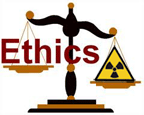 The Dubious Moral Justification for a Nuclear Second Strike https://www.commondreams.org/views/2020/01/08/dubious-moral-justification-nuclear-second-strike The Dubious Moral Justification for a Nuclear Second Strike https://www.commondreams.org/views/2020/01/08/dubious-moral-justification-nuclear-second-strike
The aim of presenting the case for the continued possession of these terrifying weapons that hold the potential to destroy all life on earth this way seems to be to convince citizens that nuclear weapons are morally justifiable and thus somehow ‘acceptable.’ Firstly, consider that, given the short reaction time needed to retaliate to a first strike, leaders would have to bypass normal administrative and civic oversight processes, the very mechanisms designed to curb politicians’ excesses and keep their more base instincts in check, to launch a second strike. As such, a second strike can only be launched in anger or, more aptly, rage. Arguably, they would be more volatile in this state than even when contemplating the launch of a nuclear first strike; where some calculus, however sinister, is required on the part of those whose finger is on their country’s nuclear button. Secondly, consider the argument that reserving the right to launch a second strike is necessary to maintain the peace as it acts as a deterrent. For the threat of a nuclear second strike to serve as a credible deterrent, it has to be disproportionate. The threatened response will have to be massive to the point of being genocidal whether subject to a barrage of one, two or more missile attacks in an initial strike. By its very nature, this implies that there is limited strategic or tactical value (in military terms) in the use of nuclear weapons during a second strike. Their main (sole?) value lies in the capacity to sow terror in the hearts and minds of the nation’s enemies by invoking the spectre of annihilation. Leaders’ proclamations of their willingness to launch a second strike thus amounts to a taunt; a goading of their adversaries along the lines of, “Go ahead, try me if you dare and see how terrible the consequences will be.” The message that one’s nation will be satisfied with nothing less than an attack which results in the total destruction of their enemies signals that restoring any semblance of ‘normalcy’ or détente between adversaries will not be possible after a nuclear exchange. In so doing, it forecloses the possibility of reconciliation or the restoration of relations between survivors in warring nations and ensures their eternal enmity. This thought is cause for despair considering that the scattered survivors left in the broken nations that were involved in a nuclear confrontation would have to rely on each other more than ever given the catastrophic global consequences of even a minor nuclear exchange between nuclear powers. Lastly, lest we forget, for all the efforts which politicians put into drawing a distinction between a nuclear first and second strike, nuclear weapons are still nuclear weapons and retain the characteristics of nuclear weapons whether used in a first or second strike. A crucial characteristic of nuclear weapons is that they are indiscriminate and do not distinguish between civilians and combatants. It follows that the louder one declares one’s willingness to carry out disproportionate and less-targeted strikes that are of limited strategic or tactical military value, the fewer qualms one has about the taking of civilian lives. Based on the reasons outlined above, a nuclear second strike can only be described as an act of vengeance. Thus, when leaders proudly put forward the position that their nation reserves the right to use nuclear weapons only as a second strike, they effectively proclaim that they represent a vengeful and wrathful people. Is this the societal value that citizens of nuclear-armed countries would like leaders to embrace in their behalf? Is this the sort of sentiment that the rank-and-file citizen in a nuclear-armed country would like to echo across the ages to their grandchildren and grandchildren’s children? If not, and if leaders’ disavowal of launching a nuclear first strike is as sincere as they would have us believe, for what reason should any nation continue to possess nuclear weapons? If the reason seems unclear, then it may be worthwhile for the average citizen of goodwill in a nuclear-armed country to resolve this new year to urge their leaders to renew their commitments to arms control and ultimately, the elimination of these genocidal weapons. And should the approval of one’s descendants or the appeal to advance our shared universal values not be sufficient to persuade them to resolve to do so, bear in mind that the continued existence of a nation’s nuclear arsenal means that its citizens must continue to entrust their protection and wellbeing to leaders who, as part of their job requirement, must be both quick to anger and harbour homicidal tendencies. One leaves it to the reader to decide if this is the sort of leader the individual citizen or their compatriots deserve at a time when democracy and hard-won freedoms seem to be on the retreat domestically the world over and assassination and targeted killing appear to have become an integral tool of foreign policy. Gerard Boyce is an Economist and Senior Lecturer in the School of Built Environment and Development Studies at the University of KwaZulu-Natal (Howard College) in Durban, South Africa. He writes in his personal capacity and can be reached at gdboyce@yahoo.com.
|
|
New Zealand veterans await nuclear radiation genetic testing study
|
New Zealand veterans await nuclear radiation genetic testing study, https://www.rnz.co.nz/news/national/406922/new-zealand-veterans-await-nuclear-radiation-genetic-testing-study 8 Jan 2029Veterans deployed to the Mururoa Atoll will wait another two months to find out whether their children and grandchildren may be genetically impacted by nuclear radiation.
A Mururoa Nuclear Veterans Group teamed up with Otago University last year to produce a study about whether the families of veterans deployed to Mururoa Atoll in 1973, may have been affected by their parents’ exposure to radiation. University of Otago researcher David McBride is leading the study and said “the public need to know” what veterans had been facing and he hoped this study could help them in their quest for more support for their families. About 145 people participated in the study which took six weeks. It is now being peer reviewed for the New Zealand Medical Journal. “When and if our study is peer reviewed favourably then published, I’m hoping that’s not going to take too long,” he said. He said he suspected the veterans group would have to wait until March or April at the latest. “One of the most out-of-the-ordinary things you can have is exposure to nuclear radiation,” he said. “It certainly was a traumatising experience and they are right inthe fact that they may have passed defect onto their children and grandchildren.” |
|
Australia Will Lose to Climate Change
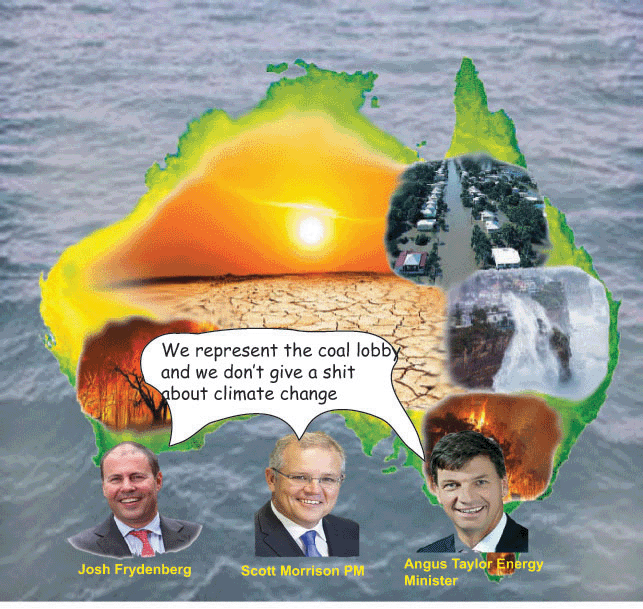
Australia Will Lose to Climate Change https://www.theatlantic.com/science/archive/2020/01/australia-caught-climate-spiral/604423/ Even as the country fights bushfires, it can’t stop dumping planet-warming pollution into the atmosphere.
But now Australia is buckling under the conditions that its fossil fuels have helped bring about. Perhaps the two biggest kinds of climate calamity happening today have begun to afflict the continent.
 The first kind of disaster is, of course, the wildfire crisis. In the past three months, bushfires in Australia’s southeast have burned millions of acres, poisoned the air in Sydney and Melbourne, and forced 4,000 tourists and residents in a small beach town, Mallacoota, to congregate on the beach and get evacuated by the navy. A salvo of fires seems to have caught the world’s attention in recent years. But the current Australian season has outdone them all: Over the past six months, Australian fires have burned more than twice the area than was consumed, combined, by California’s 2018 fires and the Amazon’s 2019 fires.
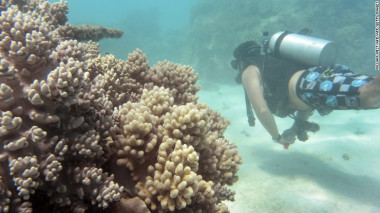 The second is the irreversible scouring of the Earth’s most distinctive ecosystems. In Australia, this phenomenon has come for the country’s natural wonder, the Great Barrier Reef. From 2016 to 2018, half of all coral in the reef died, killed by oceanic heat waves that bleached and then essentially starved the symbiotic animals. Because tropical coral reefs take about a decade to recover from such a die-off, and because the relentless pace of climate change means that more heat waves are virtually guaranteed in the 2020s, the reef’s only hope of long-term survival is for humans to virtually halt global warming in the next several decades and then begin to reverse it.
Meeting such a goal will require a revolution in the global energy system—and, above all, a rapid abandonment of coal burning. But there’s the rub. Australia is the world’s second-largest exporter of coal power, and it has avoided recession for the past 27 years in part by selling coal.
Though polls report that most Australians are concerned about climate change, the country’s government has so far been unable to pass pretty much any climate policy. In fact, one of its recent political crises—the ousting of Prime Minister Malcolm Turnbull in the summer of 2018—was prompted by Turnbull’s attempt to pass an energy bill that included climate policy. Its 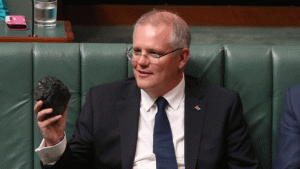 current prime minister, Scott Morrison, actually brought a lump of coal to the floor of Parliament several years ago while defending the industry. He won an election last year by depicting climate change as the exclusive concern of educated city-dwellers, and climate policy as a threat to Australians’ cars and trucks. He has so far attempted to portray the wildfires as a crisis, sure, but one in line with previous natural disasters.
In fact, it is unprecedented. This season’s fires have incinerated more than 1,500 homes and have killed at least 23 people, Prime Minister Morrison said on Saturday.* There were at least twice as many fires in New South Wales in 2019 as there were in any other year this century, according to an analysis by The New York Times. Climate change likely intensified the ongoing epidemic: Hotter and drier weather makes wildfires more common, and climate change is increasing the likelihood of both in Australia. Last year was both the hottest and driest year on record in the country.
Perhaps more than any other wealthy nation on Earth, Australia is at risk from the dangers of climate change. It has spent most of the 21st century in a historic drought. Its tropical oceans are more endangered than any other biome by climate change. Its people are clustered along the temperate and tropical coasts, where rising seas threaten major cities. Those same bands of livable land are the places either now burning or at heightened risk of bushfire in the future. Faced with such geographical challenges, Australia’s people might rally to reverse these dangers. Instead, they have elected leaders with other priorities.
1 This Month
26 April – Chernobyl: Inside the Meltdown airs on National Geographic on Sunday 26th April from 4pm
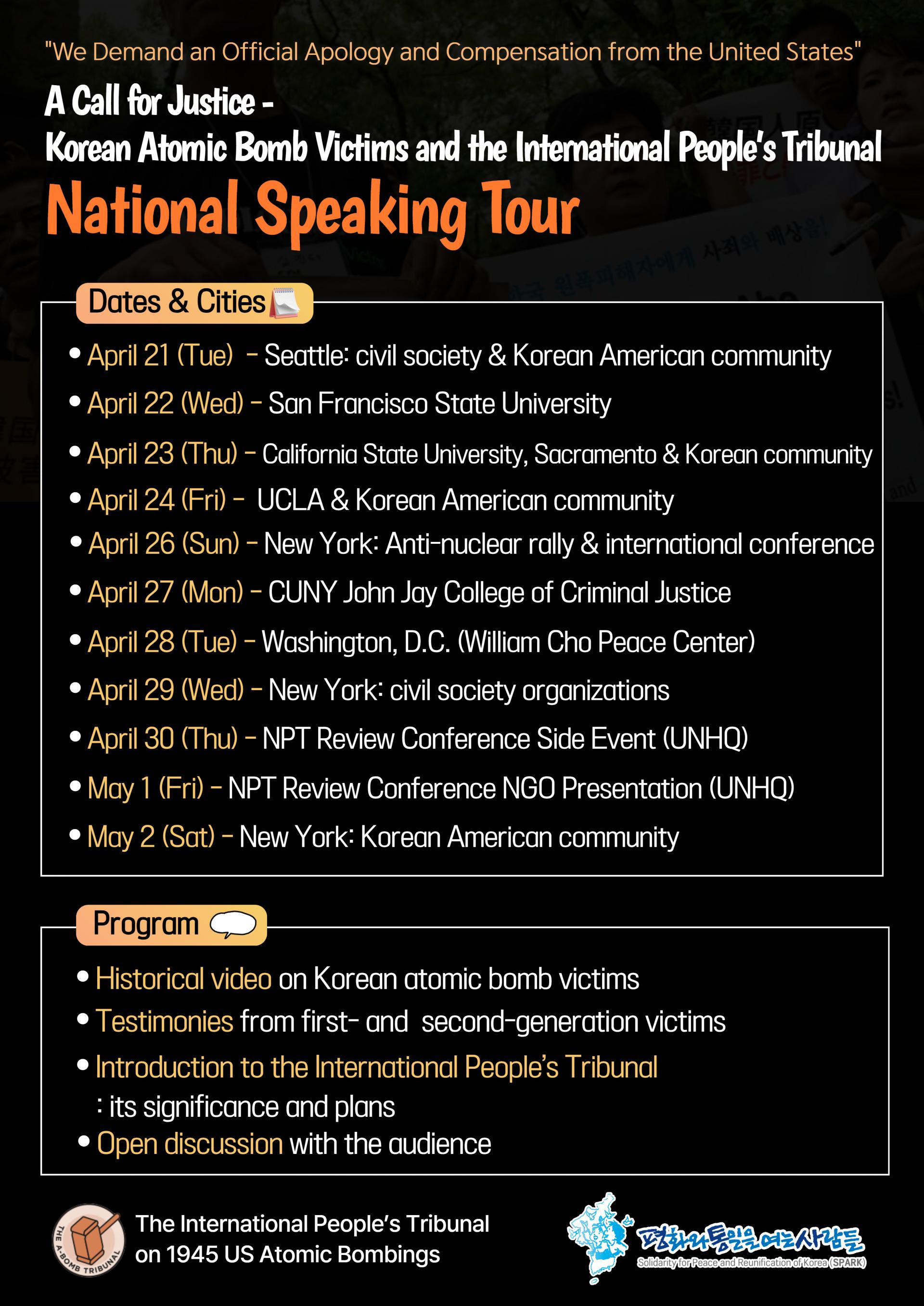
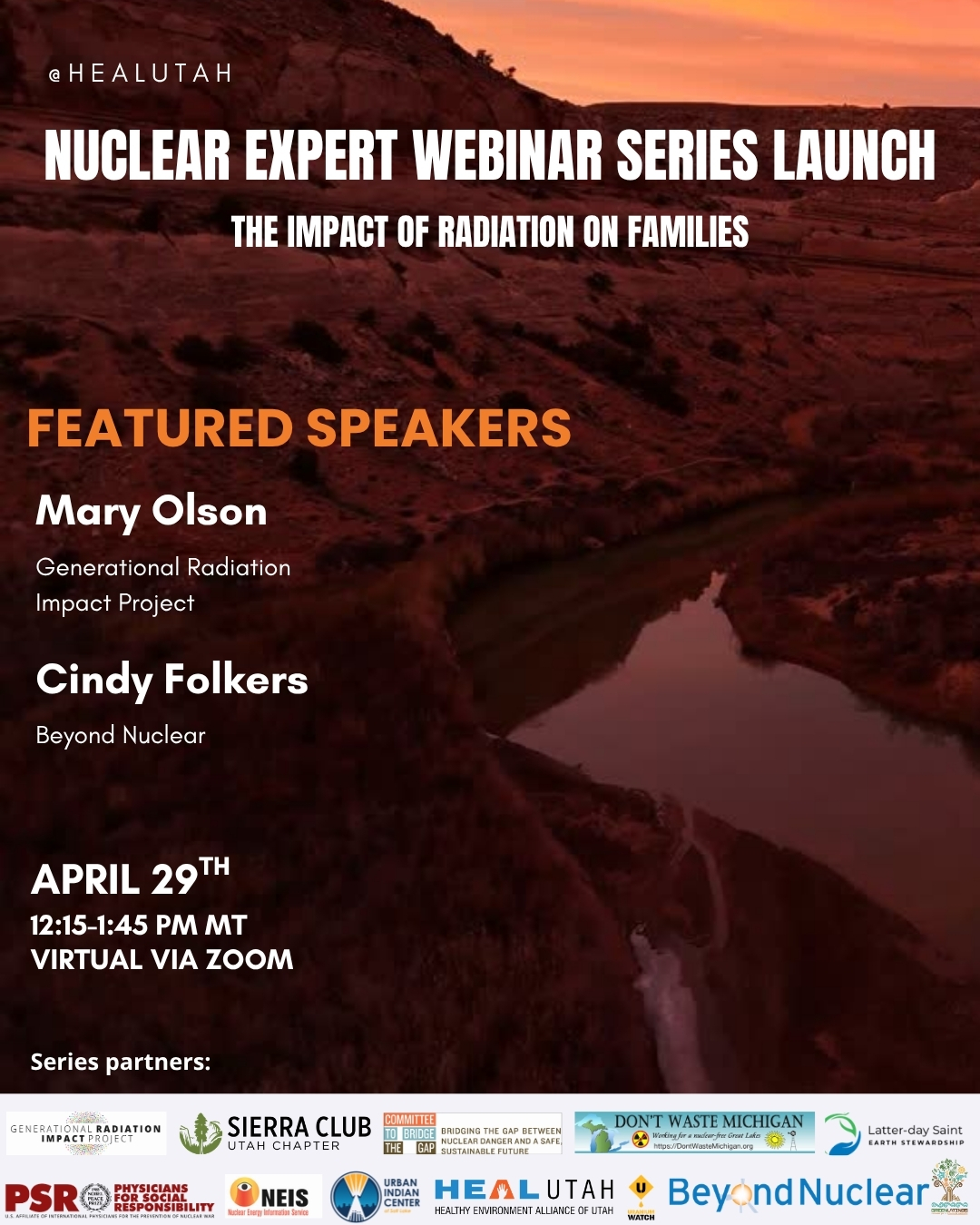
29 April – Nuclear Expert Webinar #1 – Radiation Impacts on Families with Mary Olson and Cindy Folkers
- 12:15 PM MT – 1:45 PM MT
- Location: Virtual – REGISTER TODAY

4 May -West Suburban Peace Coalition to discuss Iran war at May Educational Forum
Monday, May 4, 7:00 – 8:00 PM Central Standard Time
Title: : How Trump’s Narrative Tries to Shape the Reality of the War on Iran.
Contact Walt Zlotow, zlotow@hotmail.com 630 442 3045 for further information
14 May – online event From Bombs to Data Centres: the Face of Nuclear Colonialism

Pine Ridge Uranium is the real threat, not Tehran- Tell Burgum: Stop the Extraction.
Chernobyl: The Lost Tapes – A good documentary on Chernobyl on SBS available On Demand for the next 3 weeks– https://www.sbs.com.au/ondemand/tv-program/chernobyl-the-lost-tapes/2352741955560
To see nuclear-related stories in greater depth and intensity – go to https://nuclearinformation.wordpress.com
-
Archives
- April 2026 (317)
- March 2026 (251)
- February 2026 (268)
- January 2026 (308)
- December 2025 (358)
- November 2025 (359)
- October 2025 (376)
- September 2025 (257)
- August 2025 (319)
- July 2025 (230)
- June 2025 (348)
- May 2025 (261)
-
Categories
- 1
- 1 NUCLEAR ISSUES
- business and costs
- climate change
- culture and arts
- ENERGY
- environment
- health
- history
- indigenous issues
- Legal
- marketing of nuclear
- media
- opposition to nuclear
- PERSONAL STORIES
- politics
- politics international
- Religion and ethics
- safety
- secrets,lies and civil liberties
- spinbuster
- technology
- Uranium
- wastes
- weapons and war
- Women
- 2 WORLD
- ACTION
- AFRICA
- Atrocities
- AUSTRALIA
- Christina's notes
- Christina's themes
- culture and arts
- Events
- Fuk 2022
- Fuk 2023
- Fukushima 2017
- Fukushima 2018
- fukushima 2019
- Fukushima 2020
- Fukushima 2021
- general
- global warming
- Humour (God we need it)
- Nuclear
- RARE EARTHS
- Reference
- resources – print
- Resources -audiovicual
- Weekly Newsletter
- World
- World Nuclear
- YouTube
-
RSS
Entries RSS
Comments RSS
 nuclear-news