LIPA Customers To Subsidize Upstate Nuclear Power Plants.wshu, By JAY SHAH 29 Jan 2020 Long Island Power Authority ratepayers could spend more than $800 million over the next decade to help fund upstate nuclear power plants.
Russian Space Agency confirms plans to launch nuclear-powered space tug by 2030 Space Daily, by Staff Writers Moscow (Sputnik) Jan 29, 2020 The secrecy-laden project, in development since 2010, is intended to facilitate the transportation of large cargoes in deep space, including for the purpose of creating permanent bases on other planets in our solar system.Roscosmos plans to deliver a nuclear-powered space tug into orbit by the year 2030, agency first deputy director Yuri Urlichich has confirmed.
As we begin this new decade, our world faces great peril from two intertwined existential threats: climate change and nuclear war. Failing to solve these two issues may lead to the end of life as we know it. This year’s US presidential campaign has had no significant questioning or dialogue on the risk of nuclear war. We must demand responses from presidential candidates as to their understanding of the threat posed by the continued existence of nuclear weapons.
One need only look at the map and see that this won’t work. Reading the details it’s even worse. Trump’s supposed “Peace Plan” leaves approximately 15 Jewish settler enclave-exclave ghettos within Palestinian Territory. Israel would maintain “overriding security responsibility for the State of Palestine“. Furthermore, it allows for “punitive demolitions following acts of terrorism“, by […]
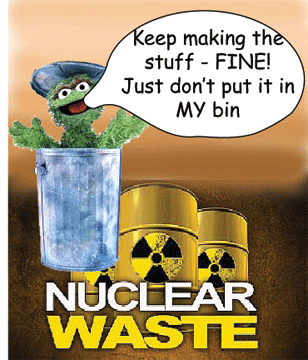
Ontario Power Generation (OPG) is running out of time to find a permanent solution for storing radioactive nuclear waste.
Dry storage containers, the current method of storing contaminated items, have a minimum life span of fifty years and is ‘80s technology, according to the Nuclear Waste Management Organization (NWMO), a non-profit overseen by the government.
A permanent dumpsite is needed for low and intermediate-level nuclear waste. The secure Bruce nuclear site in Kincardine, Ont., is the proposed location but it’s on the unceded territory of the Saugeen Ojibway Nation (SON).
The items, including contaminated worker clothing and tools, could be radioactive for 100 years while resins, filters and used reactor components could be toxic for 100,000 years, according to NWMO.
These items need to be buried in something called a deep geologic repository (DGR), which will be buried 680 metres underground, deeper than the CN Tower is tall.
A ratification vote has been called by the SON and will be held collectively on Chippewas of Saugeen First Nations at the James Mason Memorial, Culture & Recreation Centre and on Chippewas of Nawash First Nation at the Cape Croker Community Centre on Jan. 31.
Talks with OPG and several information sessions have been held to date. A detailed information booklet is available for the nearly 4,000 band members who are eligible to vote.
The voting age has been lowered to 16 and there will be a special information session for young people on Jan. 25-26 at the Outdoor Education Centre, between Sauble Beach and Wiarton.
Two community members said concerns over the proposal have been heightened by the accidental emergency broadcast message that was sent to thousands of people from the Pickering nuclear plant early on Sunday, Jan. 12.
London resident Jane Meathrel said in a Facebook post, the waste site should be located “as far away as possible from the Great Lakes. I do not trust ‘the experts’ that it is not dangerous.”
Concerns about the adverse impacts on water quality are a key reason people around the power plant are saying no to nuclear waste being buried so close to their homes and livelihoods. Many rely on the fish from Lake Huron for food and income.
“We the people who live on this continent are well aware that we have the worlds greatest freshwater resources,” said Sue Boles, who leases land for a cottage in Neyaashiinigaaming. “We have a duty and an obligation to protect it for future generations and the world.”
Boles brings her grandson to the beach near her cottage to swim every year.
President and CEO of Bruce Power, Mike Rencheck, was not available for comment, but said on their website, “We recognize our role and work to ensure our decision-making process incorporates environmental, social, cultural and economic systems.”
Saugeen resident and band member Kim George is voting no and if she had a voice when the plant was first built, she would have said no then too.
“I think most of us have always had an underlying fear of the nuke plant,” she said. “The planned nuclear DGR is compounding that fear.”
Online voting has begun for off-reserve band members and will be open until Jan. 31.
Even with a yes vote, there will still be many years, possibly decades before the facility is built.
Ontario Power Generation has guaranteed that if the vote is no, they will abide by the decision and begin to look for another location.
Also see
These findings may have serious implications for plans to use steel canisters for vitrified high-level reprocessing waste. France, Germany, Britain…. A very long list. “Nuclear waste storage plans aren't as safe as we thought, experts warn” https://t.co/qpjHEGW55O
When Fred Boyce and dozens of other boys joined the Science Club at Fernald State School in 1949, it was more about the perks than the science. Club members scored tickets to Boston Red Sox games, trips off the school grounds, gifts like Mickey Mouse watches and lots of free breakfasts. But Fernald wasn’t an ordinary school, and the free breakfasts from the Science Club weren’t your average bowl of cereal: the boys were being fed Quaker oatmeal laced with radioactive tracers.
The Fernald State School, originally called The Massachusetts School for the Feeble-Minded, housed mentally disabled children along with those who had been abandoned by their parents. Conditions at the school were often brutal; staff deprived boys of meals, forced them to do manual labor and abused them. Boyce, who lived there after being abandoned by his family, was eager to join the Science Club. He hoped the scientists, in their positions of authority, might see the mistreatment and put an end to it
We didn’t know anything at the time,” Boyce said of the experiments. “We just thought we were special.” Learning the truth about the club felt like a deep betrayal.
The boys didn’t find out the whole story about their contaminated cereal for another four decades. During a stretch between the late 1940s and early 1950s, Robert Harris, a professor of nutrition at the Massachusetts Institute of Technology, led three different experiments involving 74 Fernald boys, aged 10 to 17. As part of the study, the boys were fed oatmeal and milk laced with radioactive iron and calcium; in another experiment, scientists directly injected the boys with radioactive calcium.
The Fernald students’ experiment was just one among dozens of radiation experiments approved by the Atomic Energy Commission. Between 1945 and 1962, more than 210,000 civilians and GIs were exposed to radiation, often without knowing it. What seems unthinkable in today’s era of ethics review boards and informed consent was standard procedure at the dawning of the Atomic Age.
3 video testimonies from Fukushima residents, some displaced, describing their personal experiences and traumas because of the Fukushima nuclear disaster and Earthquake
In this video (part 1 of a series) Junko, a mother and ex decommissioning worker describes the health situation in answer to a question put to her by Rachel Clark (Japanese translator) on behalf of the team at nuclear-news.net and Nuclear Hotseat.
Junko describes the health effects on her children and workers cleaning up the soil in contaminated areas.
In this video 2 families compare the risk of staying in place (as recommended by the nuclear industry post Fukushima and another finally that left quickly. A mother and daughter develop Thyroid abnormalities for listening to the Japanese authorities.
There is an understandable lack of trust in the government program and one of the evacuees did not want to give the Fukushima medical Hospital any personal information preferably.
Radiation Causing Unusual Changes: What’s Happening to Children? (This video as well as others have been continually taken down on request of persons unknown.. you have to wonder why?) [Arclight2011]
By tokyobrowntabby This video is from a webcast program called “ContAct,” webcasted on July 14, 2011 by OurPlanet-TV ( http://www.ourplanet-tv.org/?q=node/287 ) an independent net-based media.
Translation by EX-SKF( http//:ex-skf.blospot.jp ) & tokyobrowntabby and captioning by tokyobrowntabby. (Who had to stop translating and had most of her (TBT)videos removed)
On Sunday the 27 April 2013 in a little room somewhere off Grays Inn road London, a meeting took place. In this meeting was Ms Tamara Krasitskava of the Ukrainian NGO “Zemlyaki”.
In this meeting she quoted that only 40 percent of the evacuees that moved to Kiev after the disaster are alive today! And lets leave the statistics out of it for a moment and we find out of 44,000 evacuated to Kiev only 19,000 are left alive. None made it much passed 40 years old
…..3.2 million with health effects and this includes 1 million children…
T .Kraisitskava
“….I was told to not talk of the results from Belarus as the UK public were not allowed to know the results we were finding!….”
* A draft movie report from Chernobyl Day meeting is now ready. It’s a speech by Tamara Krasitskava from Ukraine. She is a chairperson of Zemlyaki, Ukraine NGO in Kiev to represent evacuees from Pripyat city.
* Those who missed the meeting, and those who were there but want to enjoy her speech again, please watch it. And please let us know if you find a problem when you watch it.
Uploaded on 1 May 2013
* Tamara Krasitskava is a chairperson of Zemlyaki, Ukraine NGO in Kiev to represent those who had to collectively evacuate from Pripyat
* Speech was done by Russian, and interpreted into English.
* Chernobyl Day London Public Meeting was organized by “JAN UK” on Sat 27 April 2013. http://www.JANUK.org http://twitter.com/JAgainstNukesUK http://www.facebook.com/JapaneseAgain…
* The nuclear accident happened on Saturday 26 April 1986, 1:23am. It was, for the most of he residents, midnight of Friday 25 April.
Humanitarian and Activist Adi Roche accepts ‘Best Limited Series’ award on behalf of cast and crew of HBO and Sky’s mini-series ‘Chernobyl’
28 Jan 2020
In an unusual departure at tonight’s UK National Television Awards ceremony in London, one of Ireland’s leading humanitarian aid activists Adi Roche has accepted the award for Best New Drama which was won by the HBO and Sky’s acclaimed mini-series ‘Chernobyl’.
Sister Pictures and Sky invited Adi Roche to accept the award on their behalf in recognition of the inspiring work which she has been doing with the victims of the deadly Chernobyl nuclear accident over the past 3o years. Traditionally, the producers and cast of a film accept such awards.
In accepting the award Adi, Roche Founder and Voluntary CEO of Chernobyl Children International, said;
“This award-winning series revealed to a global TV audience the true heroes of Chernobyl.It has shone a light on the brave men and women who suffered and sacrificed, saving millions of lives…often at the cost of their own. So tonight I would also like to accept this award on behalf of all of them. Because, be in no doubt, by giving their very lives they prevented an even greater catastrophe… one that would have lasted thousands of years.”
The Liquidators – the men who saved the world
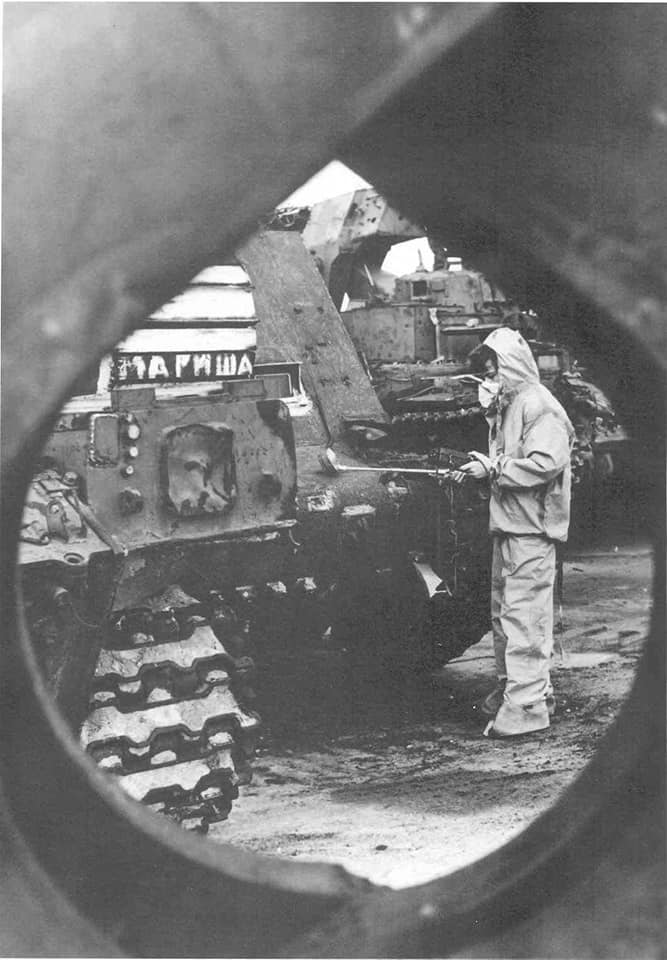
Adi has been honoured by these ‘Liquidators’ in the past for acknowledging their plight. Long-time friend and supporter Valeriy Zaytsyev, bestowed his ‘Liquidator medal’ on to Adi, a medal was received for his service in clean-up efforts following the 1986 Chernobyl nuclear disaster on April 6, 2016 in Gomel, Belarus. Zaytsyev was an officer in the Soviet Army and on May 30, 1986, one month after the accident, received orders to head to the 30km Chernobyl exclusion zone, where he participated in decontamination operations.
“While I was there, I came down with a high fever and after four days, blood poured from his mouth, nose and ears. In the years afterwards I lost all my teeth, was operated on for cataracts, a condition common among liquidators, and survived a heart attack.” (Valeriy Zaytsyvey).
Who is Adi Roche?
Roche was one of the first responders to the Chernobyl Disaster and has worked to protect countless vulnerable people since the immediate aftermath of the Chernobyl disaster in 1986 by providing support to children living in the affected areas. She formally founded Chernobyl Children International (CCI) a UN non-profit organisation in 1991 to develop programmes that restore hope, alleviate suffering and protect current and future generations in the Chernobyl regions.
“The impact of that shocking nuclear accident can never be undone: so many people across Europe and beyond continue to feel the impact of its deadly legacy to this day. My charity, Chernobyl Children International, works with those children, families and communities still affected, and we applaud this new telling of a story that had all but faded from people’s memories,” said Adi Roche.
Chernobyl Children International and the UN
In its campaign to raise worldwide awareness of the terrifying reality of the Chernobyl explosion, CCI has developed close working relations with the United Nations and is a United Nations Non-Governmental Organisations accredited development organisation, the only charity working in the region to be honoured with such status.
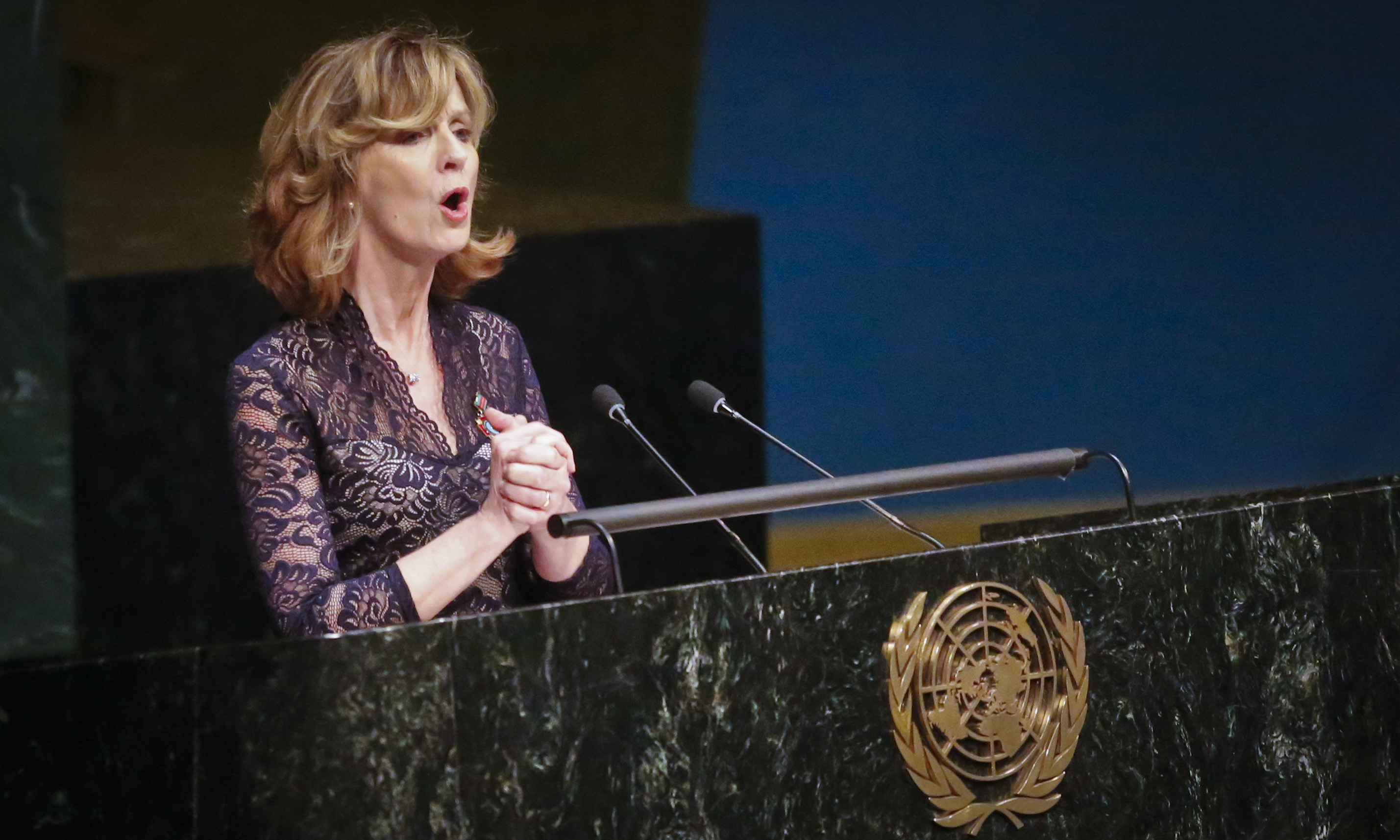
On the 26 of April 2016, Adi gave a landmark address to the UN General Assembly in New York. In an unprecedented move the Belarusian UN delegation provided Adi with their speaking time at the General Assembly discussion on Chernobyl in recognition of the international role Ireland and Chernobyl Children International has played in helping the victims of the Chernobyl catastrophe. It was the first time an ordinary person (non-diplomat/non-political person) has been extended the honour of speaking at the UN General Assembly during a country’s allocated time. The UN has also designated the 26 April as “International Chernobyl Disaster Remembrance Day.”
Adi Roche’s Work to Date
A National Television Award being accepted by someone who is a humanitarian and not a performer is a most unusual occurrence and is an amazing recognition of the contribution that CCI and the Irish people have made to support those affected by the nuclear fallout in Ukraine and Belarus. To date 26,500 children have visited Ireland on Rest and Recuperation breaks and €107 million has been given in aid.
Media enquiries to Sarah Cremin, Chernobyl Children International.
E: scremin@chernobyl-ireland.com T: 086-2453820 or 021-4558774
In a new report using estimated spread of highly toxic and radioactive particles has been reported in a new study. Looking at an area close to the Fukushima nuclear power plant disaster zone throws some light on a previously ignored aspect of possible health effects.
Highlights
•
The distribution of Cs-rich microparticles emitted from the FDNPP is determined.
•
Cs-rich microparticles account for a significant fraction of FDNPP-deposited Cs.
•
The timing and source of the Cs-rich microparticle formation has been estimated.
Over the past 9 years, the nuclear industry has reported on the dose of radiation (as found in bananas) as the primary danger to the health and well being of the citizens of the Fukushima Prefecture and surrounding prefectures. Using debatable measuring techniques they tell us that there are no major health effects. The dose method of measurement itself has been widely debated among UNSCEAR members and the wider scientific community.
There has also been some debate on the problems with the internal contamination of humans and animals and resultant health effects.
The new study shows us that this debate has now moved further away from the biased claims of the nuclear industry sponsored experts and towards the more balanced risk assessment proponents.
First is the issue of micro (nano) particles that can bypass the Blood Brain Barrier and lodge in the brain and this too, is an issue to wildlife, livestock and fish health also, those consuming such produce. There may also be an issue concerning the consumption of plant matter so contaminated with these micro-particles.
It raises some issues on the decontamination efforts being done by the Japanese Government concerning the movement of contamination from highly polluted forests that will never be cleaned up for hundreds of years (concerning radioactive Cesium 137 particularly) to decontaminated areas as had been reported recently in the Japanese media and elsewhere.
More studies need to be funded by independent scientists to connect the different studies and connect them together to reach a greater understanding of the process`s involved concerning health and environmental impacts from nuclear disasters. These new findings add weight to the United Nations Rapporteurs concerns discussed in his report on Japan.
Link to new report Jan 2020 (Picture above is from the report)
Abundance and distribution of radioactive cesium-rich microparticles released from the Fukushima Daiichi Nuclear Power Plant into the environment
Australia’s bushfires still dominate the climate news. Despite helpful rain, as of last Tuesday, 107 fires were still burning.-More extreme heat, and more fires, are predicted. Indeed, as I write, a new bushfire is reported, in Australian Capital Territory.
Still, Australia is far from the only climate story this week. Climate change could unlock new microbes and increase heat-related deaths. Deadly flooding and landslides are striking Brazil. Extreme weather is causing falling iguanas, rise of deadly spiders and swarms of locusts. And, no doubt of prime importance to “sensible” and “corporate” humans, Climate Change could blow up the economy and the banks aren’t ready.
The Bulletin of the Atomic Scientists has moved the “Doomsday Clock” to 100 minutes to midnight, its closest to doomsday since it began ticking, due to nuclear proliferation, failure to tackle climate change and “cyber-based disinformation”.
UK. Significant item – In UK deep disposal is planned for the mounting, costly and forever problem of nuclear wastes. Rolls Royce’s fantasy plan for so-called ‘mini’ nuclear reactors. In UK “big” nuclear power versus “small” (both unaffordable) at Wylfa
This “interim storage” initiative is a statement of the failure of the nuclear industry and the federal government to address the most toxic waste we have ever created.
Nuclear power: Recycling a bad idea, Citizens Awareness Network By DEB KATZ, 1/26/2020Nuclear industry advocates always seem to come up with grand ideas that nuclear power will “solve” our energy problems. Now it’s a solution to climate change.
Their solutions always downplay any problems with high-level nuclear waste claiming that nuclear power is safe and finding a solution for its toxic waste is easy. If it’s so easy, why don’t they have a workable solution? Is it really just peoples’ unreasonable fears that obstruct the industry and the federal government from creating a final solution?
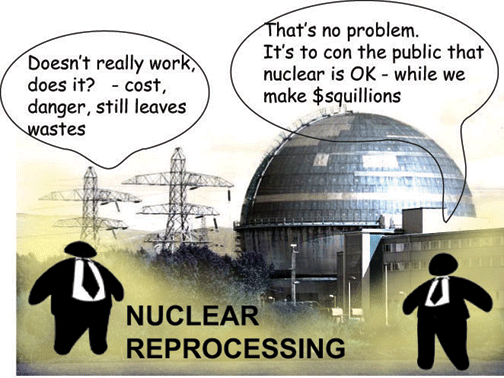
Originally we were told that there was no waste problem because the waste would be reprocessed and used again in bombs and new “breeder” reactors. That idea failed! Miserably! The only reprocessing facility for commercial nuclear waste that ever existed was West Valley in upstate New York and it shuttered after only five years because it contaminated the land and water around it with radiation. It remains a Superfund site to this day. Without the technology to safely reprocess it, nuclear fuel waste remains in fuel pools and dry storage at reactor sites all over the country.
Because of the threat of nuclear proliferation, where the waste is stolen and used as bomb material by evil forces, President Jimmy Carter ended the research on reprocessing and breeder reactors. Suddenly there was a “waste problem.” Carter commissioned a study to determine the best way to deal with the problem. The level of naivety, arrogance and thoughtlessness is remarkable. Some of the ideas included sending the waste into space, but a payload accident could contaminate the planet; placing the waste in a hole in Antarctica or Greenland ice and letting it melt down into the ocean bed was considered, but the waste would contaminate the ocean. Carter’s commission finally settled on deep geological burial in a hole or an abandoned mine.
All this was codified under the 1982 Nuclear Waste Policy Act (NWPA). Once established, investigations began to determine the best dump site/s. But every state that was identified as a potential site for a repository threatened to sue. Instituting the NWPA was in crisis. The NWPA was amended and Congress targeted Yucca Mountain because
Nevada had little political clout at the time.
After spending $14 billion of taxpayer money developing Yucca Mountain, it failed to meet the necessary criteria for safe isolation of the deadly material. With the failure of the federal government and the nuclear industry to establish Yucca Mountain as the national repository for nuclear waste, nuclear corporations were forced to establish onsite storage at their operating and shuttered reactor sites. Six out of nine reactors in New England have shuttered due to significant public opposition and their inability to compete with gas and renewables. These six sites are in varying degrees of cleanup. Without a “solution” as to dealing with the nuclear waste, these sites have devolved into ad hoc nuclear waste dumps. All have created onsite storage for their high level waste. It costs a lot to store the waste onsite — at least $5 million out of pocket for each year. This waste could remain onsite for decades if not centuries. So costs could really add up for corporations without any revenue. Naivety, arrogance, and thoughtlessness add up to a lot of money!
With waste piling up at shuttered reactor sites throughout the country, the industry has a perception problem. This is not a favorable image for an industry trying to reinvent itself as the answer to global warming. So what’s the industry’s answer? It wants to create “interim storage” dump sites in west Texas and New Mexico in working poor, Hispanic communities to make this problem disappear. These sites don’t have to meet the strict environmental standards that sunk Yucca Mountain— i.e., isolation from the environment for 1,000 years and isolation from groundwater for 10,000 years.
This “interim storage” initiative is a statement of the failure of the nuclear industry and the federal government to address the most toxic waste we have ever created. We don’t need more nukes; we don’t need half baked “solutions”. We need a commitment to put our best minds to solve this thorny problem. What is needed is a scientifically sound and environmentally just solution, not more magic or wish fulfillment. A qualified “panel” must be established and funded to create the standards required to meet the health and safety of the public and the planet, not the profit-driven, short-sighted monetary bottom line of a moribund industry.
Deb Katz is the executive director of the Citizens Awareness Network, which was founded locally in 1991 and has offices in Shelburne Falls and Rowe. Here’s a link to our website www.nukebusters.org.
There are at least six legal reasons why the extradition request by the US against WikiLeaks founder Julian Assange should be dismissed by the UK courts. The main extradition hearing is scheduled to commence 24 February 2020, with district judge Vanessa Baraitser presiding. The evidence to support Assange is compelling.
1. Client-lawyer confidentiality breached
2. The initial charge is flawed
1. Client-lawyer confidentiality breached
3. Initial charge relies on co-operation from Manning
4. Additional charges raised by the US are political
5. US legal precedent argues that Assange’s work is protected by the US Constitution
6. Threats of violence against Assange mean he’s unable to receive a fair trial
















 nuclear-news