189 nuclear and radioactive material incidents in 2019
 IAEA reports 189 nuclear and radioactive material incidents in 2019, https://www.power-technology.com/news/iaea-reports-189-nuclear-and-radioactive-material-incidents-in-2019/ By Ilaria Grasso Macola,
The International Atomic Energy Agency (IAEA) reported 189 incidents involving nuclear and radioactive material falling out of regulatory control in 2019, highlighting the nuclear sector’s need to improve its security measures.
According to data submitted to the IAEA Incident and Trafficking Database (ITDB), out of 189 incidents – reported by 36 countries on a voluntary basis – six involved trafficking, following a downward trend since a peak registered in 2006. Of the remaining 183, there was insufficient information to determine a connection with illegal activities.
“These cases highlight the international character of the issue of illicit trafficking and the need for cooperative efforts, such as the ITDB, to counter these threats and challenges we face globally.”Since 1993, a total of 3,686 incidents have been reported to the ITDB, of which 290 involved trafficking and malicious intent; 12 incidents included enriched uranium and two plutonium.
On Monday ministers of 140 countries signed a declaration to enhance global nuclear security and counter the threat of terrorism.
Romanian foreign minister and co-president of the conference Bogdan Aurescu said: “The adoption of a declaration at ministerial level is indicative of the continuous commitment to nuclear security of IAEA member states. It is a concise, politically driven and forward-looking document, adding value to the efforts of strengthening nuclear security worldwide.”
Three South Carolina lawmakers Pressed Trump for More Nuclear Funding
|
Wilson, Graham, Scott Pressed Trump for More Nuclear Funding, Letters Show, Aviation Pros, — Three South Carolina lawmakers, in the weeks before President Donald Trump’s fiscal year 2021 budget request was unveiled, lobbied the president to direct more money to the National Nuclear Security Administration and nuclear weapons, Colin Demarest, Aiken Standard, S.C. Feb. 13–ALEXANDRIA, Va. — Three South Carolina lawmakers, in the weeks before President Donald Trump’s fiscal year 2021 budget request was unveiled, lobbied the president to direct more money to the National Nuclear Security Administration and nuclear weapons work, in general, two memos reviewed by the Aiken Standard show. U.S. Sens. Lindsey Graham and Tim Scott and U.S. Rep. Joe Wilson, all Palmetto State Republicans, urged the president on Jan. 16 and 17, respectively, to revise the fiscal year 2021 “topline for the NNSA to $20 billion.” The two memos — one from senators and one from congressmen — are signed by a total 41 people. Not getting the $20 billion, they warned in writing, could jeopardize a slew of nuclear warhead programs as well as plutonium pit production, an enduring weapons mission with a majority stake in South Carolina — specifically the Savannah River Site, a sprawling nuclear reserve near Aiken that Wilson has represented for years…….. Trump’s fiscal year 2021 blueprint — unveiled Monday at a total $4.8 trillion — included $19.8 billion for the NNSA, the U.S. Department of Energy’s weapons-and-nonproliferation arm. About $15.6 billion of that was flagged for nuclear weapons programs, a roughly 25% increase compared to the 2020 enacted level. ….. https://www.aviationpros.com/aircraft/defense/news/21125621/wilson-graham-scott-pressed-trump-for-more-nuclear-funding-letters-show |
|
India’s problematic nuclear security
Mapping the Negative Indian Nuclear Security, https://moderndiplomacy.eu/2020/02/14/mapping-the-negative-indian-nuclear-security/ By Rabia Javed, 14 Feb 20, Nuclear security has been a key issue for South Asia for several decades since India conducted its nuclear tests in 1974. Indian struggle to attain the maximum number of weapons is still underway since New Delhi conducted its so called peaceful nuclear test. While living with the kind of achieving the maximum numbers of nuclear weapons by India, the Indian struggle to achieve the maximum is moving steadily forward without great exertion but with abundant support.That is unfortunate.
Overall, the issue mainly revolves around the dangerous bargain that India had with the United States (U.S.) under the civil nuclear cooperation. Countries with major powers has up till now bend the rules for making India’s nuclear program to maintain the cooperation U.S. had with India in nuclear trade. Supporting India was also done with the aim of countering China’s emergence as a super power and controlling its influence. These steps taken in support of India have encouraged New Delhi more in expanding her nuclear weapons program that is already expanding at a higher rate.
By and large, India has on various accounts progressed below par in a comprehensive international reportage, such as the Nuclear Threat Initiative’s Nuclear Security Index. There have been other many reports that have shown that India’s nuclear security is quite under the negative flex. Ignoring these reports, it still is continuing to expand her nuclear forces.
Traditionally, the growing and bulging danger of insider threats also highlights the importance of personnel reliability programs (PRPs).Interestingly such issues exist in Indian facilities at larger scale.
While turning down pages from the past one can found that, CISF man kills 3 colleagues at Kalpakkam atomic plant. The incident occurred was though a fresh example which must have considered as India’s serious shortcomings in securing its nuclear facilities. Where later estimates given by Stockholm International Peace Research Institute found that an estimate of around 110 nuclear bombs are stored in such or same facilities which are being guard by these security forces.
With large number of such incidents that started happening or being covered by mainstream media starting from 1993, there exists another important instance that happened in 2008.
A criminal gang was found in smuggling low grade uranium which can be used in a radiation dispersal device, from India to Nepal. However, in the same year another gang was caught in smuggling such materials that have close connections with an employee at India’s Atomic Minerals Division. Similar lapses had occurred in 2018 where, a uranium smuggling racket was busted by the Kolkata police with one kilogramme of radioactive material which has a market value of INR 30 million ($440,000). All of aforementioned factors highlight the security measure India has up till now in securing its facilities that cannot be ignored.
India is operating a plutonium production reactor, Dhruva, and a uranium enrichment facility that are not subject to IAEA safeguards. India’s build-up of South Asia’s largest military complex of nuclear centrifuges and atomic-research laboratories is somehow threatening efforts related to nuclear security and safety. These facilities will ultimately give India the ability to make more large-yield nuclear arms & hydrogen bombs. The international task force on the prevention of nuclear terrorism is of the view that the possibility of nuclear terrorism is increasing keeping in mind the rapid nuclear development by India. Whereas, U.S. officials and experts are of the view that India’s nuclear explosive materials are vulnerable to theft.
Amusingly, in India, nuclear facilities are guarded by Central Industrial Security Force (CISF) and CISF guard admitted that security at the installations needs more enhancements. Mysterious deaths of Indian nuclear scientists is a matter of concern as some were reported suicide and some were murdered. The possibility of nuclear secrecy gets out in the hands of terrorists cannot be ignored.
Such risks stemmed in part from India’s culture of widespread corruption. India has refused and rebuffed repeated offers of U.S. help in countering such issue and alignments. The U.S. president’s coordinator for arms control and weapons of mass destruction from 2009 to 2013, Gary Samore, stated that:
We kept offering to create a joint security project [with India] consisting of assistance of any and every kind. And every time they would say, to my face, that this was a wonderful idea and they should grasp the opportunity. And then, when they returned to India, we would never hear about it again.”
India has a dangerous history of unsafeguarded sensitive facilities, where exist larger insider threats of nuclear bomb being stolen by insiders with grievances, ill motives, or in the worst case, connections to terrorists.
At the bottom of this entire debate is a disturbing fact concerning how a country can be trusted with uranium and nuclear deals with over dozens of countries ignoring its security issues related to nuclear safety. What might change India’s calculation that more deals and weapons would not equates to more security? The safest route to reduce nuclear dangers on the subcontinent is through concerted efforts to improve relations. A nuclear arsenal built by proliferation, as India did in 1974, is inherently unstable.
Rolls Royce plans small nuclear reactors near Snowdonia National Park in Wales.
|
Rolls-Royce eyes Snowdonia nuclear site for first small modular reactor, https://www.constructionnews.co.uk/sustainability/rolls-royce-eyes-snowdonia-nuclear-site-for-first-small-modular-reactor-14-02-2020/BY MILES ROWLAND Engineering firm Rolls-Royce has said that the first of its planned small nuclear reactors could be built at a site near Snowdonia National Park in Wales.
Speaking to the BBC today, Rolls-Royce chief technology officer Paul Stein said there was a “high probability” that Trawsfynydd would be the site of the first such reactor, which would be assembled from pre-manufactured components. The site was previously home to a nuclear reactor, closed in 1991, and has an existing local nuclear supply chain. Stein said: “Trawsfynydd is a great first site for the [reactor]. Right now the jury’s out – there are a number of great sites around the country – but two of the three sites [under consideration] are in Wales.” He added: “With so-called brownfield sites, where there has been a nuclear reactor, we know the local population is happy, there is a skilled local population that used to run the plant, there’s a grid connection and the seismic condition of the site [is suitable].” Rolls-Royce announced last year that it was working with a consortium of companies including Laing O’Rourke, Bam Nuttall and Atkins to develop small modular reactors (SMRs), with Laing O’Rourke telling Construction News that it could use its offsite manufacturing facility to produce components. Once operational, each SMR could generate 440MW of energy, enough to power Cardiff, Swansea and Newport combined, according to Rolls-Royce. The reactors have a target cost of £1.8bn each by the time five stations have been constructed, though the first will not be completed until at least 2029. Wylfa in Anglesey has previously been identified by Rolls-Royce as another potential site for SMRs. |
|
Few permanent jobs in small modular nuclear reactors?
In Cumbria 12th Feb 2020, Plans to develop unique small nuclear reactors in Cumbria by Rolls-Royce should not be seen as a “saviour of the county”, one of its major rivals said.
in-Cumbria exclusively revealed in November that a consortium, led by
the engineering giant, was focusing its efforts on efforts on developing
its emerging Small Modular Reactors at existing nuclear licensed sites –
with Cumbria and Wales its top targets.
But John Coughlan, chief executive of TSP Engineering, based in Workington, said he was concerned that people would think the plans would prompt people to think thousands of jobs would be created. TSP Engineering is also developing its own version of the technology, and while Mr Coughlan acknowledged that they were rivals and that was a factor in him speaking out, he was also passionate about the local community. He said:
“Make no mistake. When Rolls-Royce talk about developing their reactors in Cumbria, they are talking about a construction site. “If they get the go-ahead for Cumbria, the reactors will be shipped in from elsewhere and built on the site. So you are probably looking at a large number of short-term construction jobs – say 1,000 – then only about 60 to 100 people with a permanent position there.
Plutonium-affected U.S. airmen, cancers, deaths, and a new legal ruling
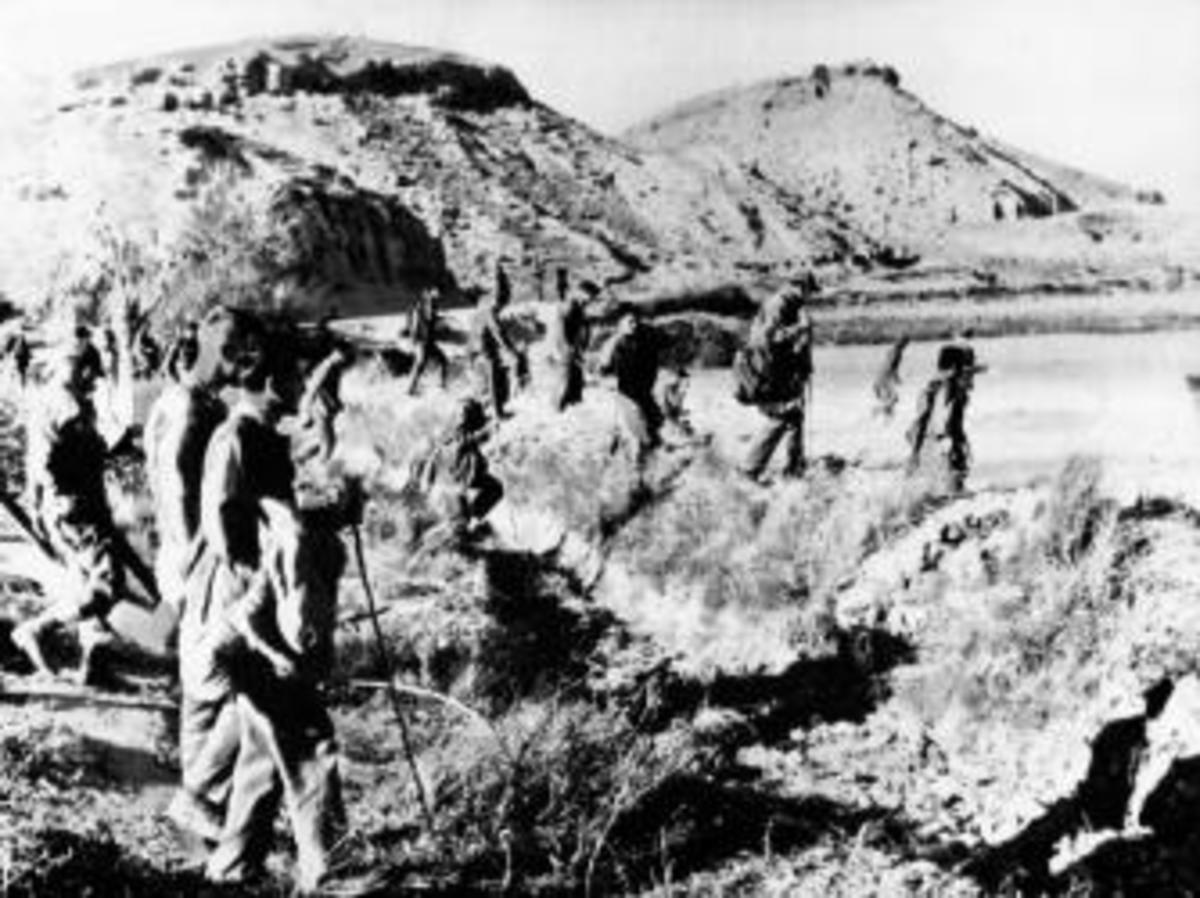
The Palomares disaster occurred on Jan. 17, 1966, when an American B-52 bomber on a Cold War patrol exploded during a midair refueling accident, sending four hydrogen bombs hurtling toward the ground. They were not armed, so there was no nuclear detonation, but the conventional explosives in two of the bombs blew up on impact, scattering pulverized plutonium over a patchwork of farm fields and stucco houses.
Plutonium is extremely toxic, but it often acts slowly. The alpha-particle radiation it gives off travels only a few inches and would not penetrate skin. But inhaled plutonium dust can lodge in the lungs and steadily irradiate surrounding tissue, gradually inflicting damage that can cause cancer and other ailments, sometimes decades later. A single microgram absorbed in the body is enough to be harmful; according to declassified Atomic Energy Commission reports, the bombs that blew apart at Palomares contained more than 3 billion micrograms.
|
For Many Who Cleaned Up a Nuclear Mess, a Key Ruling Comes Too Late
Air Force veterans who dealt with a Cold War-era atomic accident in Spain won the right to sue collectively for health benefits — but not before many had lost battles with cancer. https://www.nytimes.com/2020/02/11/us/palomares-air-force-nuclear.html By Dave Philipps SPRINGFIELD, Mo. — On Christmas Eve, Victor Skaar mailed a stack of letters to Air Force veterans he had served with in Palomares, Spain, scrawling a simple headline at the top of each one: “Great News!” Mr. Skaar, a retired chief master sergeant, was one of 1,600 troops scrambled by the Air Force in 1966 to clean up a classified nuclear disaster by collecting debris and shoveling up plutonium-laced soil. Many were later stricken with cancer and other ailments, and tried without success to get the federal government to take responsibility and pay for their medical care. He wanted to spread the word about an encouraging development: A lawsuit he had filed against the Department of Veterans Affairs had been certified as a class action, meaning that there was finally a chance to set the plutonium case straight, not just for him but for everyone who was there. But his letters soon began trickling back to him: Undeliverable. No forwarding address. One brought a reply from a widow. Each one in his mailbox made his heart sink. “For many of them, it’s too late,” he said of his comrades. “They’re gone.” As one of the first cases ever granted class-action status by the Court of Appeals for Veterans Claims, the Skaar lawsuit represents a major step forward for veterans with long-term health issues linked to toxic exposure in the service.
|
Cuts to public benefit programs,$billions to nuclear weapons – Trump’s 2021 budget
 Trump’s 2021 budget: More nuclear spending, less of almost everything else, Bulletin of the Atomic Scientists By Lawrence J. Korb, February 12, 2020 Trump’s 2021 budget: More nuclear spending, less of almost everything else, Bulletin of the Atomic Scientists By Lawrence J. Korb, February 12, 2020 The Trump administration’s budget request for 2021 has its priorities backward. Rather than expand the nuclear weapons budget at the expense of everything else, the United States could meet its goals with a much leaner nuclear force, leaving more money for the programs that will actually make the country safer.
Given that the US defense secretary has been arguing for the Pentagon to focus more resources on challenges from strategic competitors such as China and Russia, one would have expected that ships and combat aircraft programs would have received increased funding in the Trump administration’s latest request. But, in that request, not only did these programs not grow, they were actually cut back both from their projected increases and below fiscal 2020 levels. But what did grow in real terms was funding for nuclear weapons programs. In fiscal 2020, the Defense Department will spend about $25 billion on modernizing the weapons in its nuclear arsenal. For 2021, it seeks to grow that account by $4 billion, to a total of about $29 billion, a 16 percent increase. The National Nuclear Security Administration (NNSA), the part of the Energy Department that develops nuclear technology, wants to spend another $20 billion, a $3 billion (or 19 percent) increase over 2020. Together this means that the Trump administration proposes to spend about $50 billion on its nuclear weapon programs. If one adds what it will spend on cleaning up nuclear sites and on missile defense, that number climbs to about $75 billion. …….. To spend its money more wisely, the Trump administration needs to extend the New START treaty with the Russians and get back to the bargaining table, so it can begin cutting its nuclear arsenal to no more than 1,000 deployed nuclear weapons and cancel both the long range standoff weapon and the land-based portion of its nuclear modernization program. That will allow the United States to devote more of its limited resources to programs that actually make the country and the world safer. https://thebulletin.org/2020/02/trumps-2021-budget-more-nuclear-spending-less-of-almost-everything-else/ |
|
Decline and uncertainty in UK nuclear construction
Construction News 10th Feb 2020, Contractors hoping to work on nuclear builds have been forced to scale back their workforce in recent months, according to the head of the sector’s trade body. Nuclear Industry Association (NIA) chief executive Tom Greatrex told Construction News that the uncertain future for nuclear megaprojects such as the £16bn Wylfa Newydd , which was suspended by Hitachi in January 2019, has had a negative impact on construction firms
Greatrex said: “There’s a lot [of nuclear specialists] that have cut back their
headcounts. If they don’t feel there’s going to be any work to do in that
area, they’ll focus on other areas and costs will be cut.” He added that
the NIA was aware of “a few small companies that have ceased to trade”,
but declined to name them.
Trump’s 2021 budget boosts nuclear energy
Trump’s budget continues to boost nuclear energy, He proposed $1.2 billion for nuclear energy programs and R&D, The Verge, By Justine Calma@justcalma Feb 10, 2020, Donald Trump’s budget proposal for 2021 earmarks $1.2 billion for nuclear energy research and development and related programs. That’s significantly more than the $824 million Trump proposed in his budget the previous year. Even with the sizable increase in requested funds, the amount is less than the $1.5 billion that Congress allocated for nuclear energy last year.
Trump sold the bump in funding as a way to promote “revitalization of the domestic industry and the ability of domestic technologies to compete abroad.” His administration also wants to ramp up uranium production in the US, calling it “an issue of national security.”
Keeping the nation’s nuclear reactors online has been a priority for Trump since taking office. Two bills he signed into law sped up the development of advanced nuclear reactors and streamlined the permitting processes. He’s also allocated funds, including $300 million in this year’s proposal, toward a Versatile Test Reactor (VTR) meant to test and develop advanced reactor fuels and materials. Nuclear power currently makes up 20 percent of the US energy mix and half of its carbon-free electricity. Nevertheless, nuclear energy has struggled to gain a larger foothold in the US.
…….. Last week, Trump seemingly backed away from a proposed waste site at Yucca Mountain in Nevada, which has been controversial ever since it was proposed in 1987. The proposed dump for radioactive waste is political kryptonite for someone who might want the state’s votes (Trump lost Nevada in 2016). “Nevada, I hear you on Yucca Mountain and my Administration will RESPECT you!” Trump tweeted on February 6th. “My Administration is committed to exploring innovative approaches – I’m confident we can get it done!” Trump had previously asked for funds to complete the nuclear waste repository in previous budget proposals…….
Trump’s $4.8 trillion budget proposal still needs to make its way through Congress, where it’s likely to face a fight. But there has been bipartisan support for nuclear energy in the past — last year, Congress upped the 2020 budget for nuclear energy by nearly $700 million.
“This sends a strong message that the Department of Energy (DOE) is all in on new nuclear,” Rita Baranwal, assistant secretary for the Office of Nuclear Energy, said in a statement after Trump signed off on the 2020 spending bill in December…… https://www.theverge.com/2020/2/10/21131701/trump-budget-proposal-nuclear-energy-programs-spending
5.2-magnitude earthquake near Fukushima
 Japan is rattled by 5.2-magnitude earthquake near Fukushima, Daily Mail UK
- The earthquake struck around 20 miles off the coast of Fukushima province
- Witnesses said they had felt a 10-second long shake during the tremor today
- No tsunami warning has been put in place by Japan’s meteorological agency
By TIM STICKINGS , 12 February 2020 Japan was rattled by a 5.2-magnitude earthquake off the coast of Fukushima province today.
The quake struck just over 50 miles from the city of Fukushima where the nuclear disaster occurred in 2011.
Witnesses said they had felt a 10-second long shake during the tremor at around 7.30pm local time.
No tsunami warning has been put in place by Japan’s meteorological agency.
The US Geological Survey said today’s earthquake had struck at a depth of around 50 miles under the sea.
One witness told earthquake monitoring service EMSC that the quake produced a ‘weak but long shake’ lasting about 10 seconds.
Another said their heater had moved around on its four wheels while making a sound.
Officials in Fukushima prefecture warned residents that there could be aftershocks and directed them to official public safety advice. Energy company TEPCO, which runs four nuclear power plants in the prefecture, said it was awaiting further information about the earthquake’s impact. …..https://www.dailymail.co.uk/news/article-7995301/Japan-rattled-5-2-magnitude-earthquake-near-Fukushima.html
While the Australian government ignores Julian Assange’s plight, two MPs head to UK to help him
 MPs take Assange freedom campaign to UK
https://www.news.com.au/national/breaking-news/mps-take-assange-freedom-campaign-to-uk/news-story/633a9baa272bd155623423565e86e6b4 12 Feb 20,
Tasmanian independent MP Andrew Wilkie and Queensland Nationals MP George Christensen will travel to the United Kingdom to lobby for Julian Assange’s freedom Paul Osborne, Two Australian politicians will travel to the UK this weekend at their own expense to visit Julian Assange in jail and seek his release.
Tasmanian independent MP Andrew Wilkie and Queensland Nationals MP George Christensen, who chair a parliamentary group in support of the WikiLeaks founder, will pay a visit to Belmarsh Prison near London and lobby the British government.
Assange is set to face trial on February 24 to determine whether he should be extradited to the US, where he has been charged with 17 counts of spying and one count of conspiracy to commit computer intrusion.
Correcting Anti-Renewable Energy Propaganda
Correcting Anti-Renewable Energy Propaganda, Clean Technica B1 By Georg Nitsche, 12 Feb 20, In 1989, pro-nuclear lobbyists claimed that wind power couldn’t even provide 1% of Germany’s electricity. A few years later, pro-nuclear lobbyists ran ads in German newspapers, claiming that renewables wouldn’t be able to meet 4% of German electricity demand.
After the renewable energy revolution took off, in 2015, the pro-nuclear power “Breakthrough Institute” published an article claiming solar would be limited to 10–20% and wind to 25–35% of a power system’s electricity.
In 2017, German (pro-nuclear power) economist Hans-Werner Sinn tweeted that more than 50% wind and solar would hardly be possible. And in 2018, Carnegie Science reported a study claiming that “wind and solar could meet most but not all U.S. electricity needs.” According to one of the authors, their research indicates that “huge amounts of storage” or natural gas would need to supplement solar and wind power.
From a pro-renewable perspective, this is encouraging. The claims about the limits of renewable energy have moved from “not even 1% of electricity” to “most but not all of the electricity.” And yet, the anti-renewables message has always been the same: renewables will lead to a dead end.
In order to underscore their point, anti-renewable energy propagandists now publish incorrect cost figures that claim a fully renewable electric grid would be unaffordable or way more expensive than other options, such as, you guessed it, nuclear power. Continue reading
Uranium prices at rock bottom- doesn’t help the struggling nuclear industry
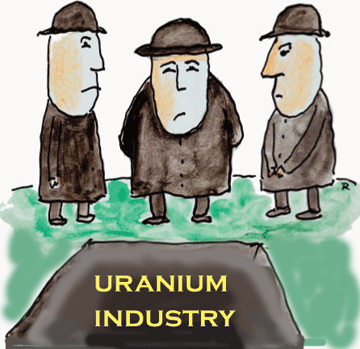 Uranium Week: The Nuclear Conundrum https://www.fnarena.com/index.php/2020/02/11/uranium-week-the-nuclear-conundrum/
By Greg Peel, Lack of demand continues to drag on uranium prices despite ongoing production curtailments, yet nuclear energy remains a matter of cost.
-Uranium spot prices drift lower
-Production curtailments ongoing
-Nuclear power a costly option
he world’s largest mining investment conference, now in its 26th year, began in Cape Town last week. Given the tenuous state of South Africa’s energy supply, the focus this year of the “Investing in African Mining Indaba” is on a transition from coal toward renewable and clean energy resources to deal with power shortages across the African continent. (Indaba means meeting.)
The five-day conference brought together representatives from 94 countries and regions, including more than 38 ministers, under the theme “Optimizing Growth and Investment in the Digitized Mining Economy.”
The CEO of the Minerals Council South Africa said at the conference the Council fully supports a transition from coal to non-fossil fuel forms of power generation such as wind and solar power and, where cost is not prohibitive, nuclear power.
“Where cost is not prohibitive” underscores the dilemma facing the global nuclear power and uranium mining industries at present. The US experience is one of US uranium miners being unable to compete with cheaper imports from the likes of Canada and Kazakhstan, with uranium prices near historically low levels. Yet the US nuclear power industry cannot compete with gas-fired and renewable power, despite historically low uranium prices.
Sellafield and Drigg, Today and tomorrow’s Flood Warning.
should be no new nuclear wastes arriving at Sellafield, no new so called
Small Modular Reactors on this floodplain ….and no new coal mine deep
under the Irish Sea. Cumbria (and the fallout is planetary) is ALREADY
under intolerable risks. Today’s flood warnings …fingers crossed.
Radioactive material ‘a magnet for groups with malicious intent’, warns UN nuclear watchdog chief
 Radioactive material ‘a magnet for groups with malicious intent’, warns UN nuclear watchdog chief. UN News, 10 Feb 20, Government ministers and other high-level representatives from more than 140 countries, on Monday adopted a new declaration to enhance global nuclear security and counter the threat of nuclear terrorism……
1 This Month
26 April – Chernobyl: Inside the Meltdown airs on National Geographic on Sunday 26th April from 4pm

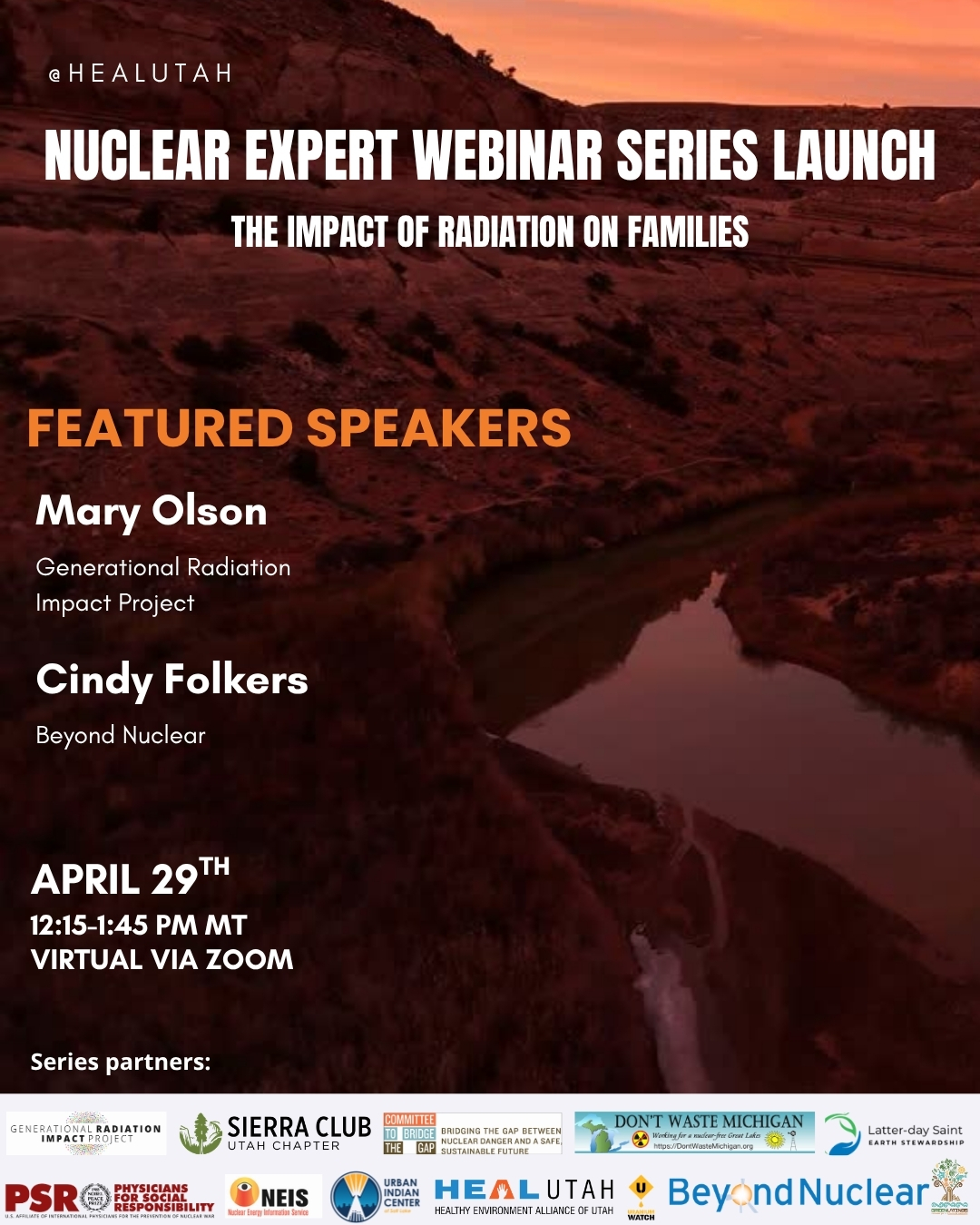
29 April – Nuclear Expert Webinar #1 – Radiation Impacts on Families with Mary Olson and Cindy Folkers
- 12:15 PM MT – 1:45 PM MT
- Location: Virtual – REGISTER TODAY

4 May -West Suburban Peace Coalition to discuss Iran war at May Educational Forum
Monday, May 4, 7:00 – 8:00 PM Central Standard Time
Title: : How Trump’s Narrative Tries to Shape the Reality of the War on Iran.
Contact Walt Zlotow, zlotow@hotmail.com 630 442 3045 for further information
14 May – online event From Bombs to Data Centres: the Face of Nuclear Colonialism

Pine Ridge Uranium is the real threat, not Tehran- Tell Burgum: Stop the Extraction.
Chernobyl: The Lost Tapes – A good documentary on Chernobyl on SBS available On Demand for the next 3 weeks– https://www.sbs.com.au/ondemand/tv-program/chernobyl-the-lost-tapes/2352741955560
To see nuclear-related stories in greater depth and intensity – go to https://nuclearinformation.wordpress.com
-
Archives
- April 2026 (300)
- March 2026 (251)
- February 2026 (268)
- January 2026 (308)
- December 2025 (358)
- November 2025 (359)
- October 2025 (376)
- September 2025 (257)
- August 2025 (319)
- July 2025 (230)
- June 2025 (348)
- May 2025 (261)
-
Categories
- 1
- 1 NUCLEAR ISSUES
- business and costs
- climate change
- culture and arts
- ENERGY
- environment
- health
- history
- indigenous issues
- Legal
- marketing of nuclear
- media
- opposition to nuclear
- PERSONAL STORIES
- politics
- politics international
- Religion and ethics
- safety
- secrets,lies and civil liberties
- spinbuster
- technology
- Uranium
- wastes
- weapons and war
- Women
- 2 WORLD
- ACTION
- AFRICA
- Atrocities
- AUSTRALIA
- Christina's notes
- Christina's themes
- culture and arts
- Events
- Fuk 2022
- Fuk 2023
- Fukushima 2017
- Fukushima 2018
- fukushima 2019
- Fukushima 2020
- Fukushima 2021
- general
- global warming
- Humour (God we need it)
- Nuclear
- RARE EARTHS
- Reference
- resources – print
- Resources -audiovicual
- Weekly Newsletter
- World
- World Nuclear
- YouTube
-
RSS
Entries RSS
Comments RSS
 nuclear-news