Close to 100 USA Environmental Rules now removed by Trump govt: here’s the list
The Trump Administration Is Reversing Nearly 100 Environmental Rules. Here’s the Full List. NYT, By NADJA POPOVICH, LIVIA ALBECK-RIPKA and KENDRA PIERRE-LOUIS May 6, 2020
After three years in office, the Trump administration has dismantled most of the major climate and environmental policies the president promised to undo.
Calling the rules unnecessary and burdensome to the fossil fuel industry and other businesses, his administration has weakened Obama-era limits on planet-warming carbon dioxide emissions from power plants and from cars and trucks, and rolled back many more rules governing clean air, water and toxic chemicals. Several major reversals have been finalized in recent weeks as the country has struggled to contain the spread of the new coronavirus.
In all, a New York Times analysis, based on research from Harvard Law School, Columbia Law School and other sources, counts more than 60 environmental rules and regulations officially reversed, revoked or otherwise rolled back under Mr. Trump. An additional 34 rollbacks are still in progress.
With elections looming, the administration has sought to wrap up some of its biggest regulatory priorities quickly, said Hana V. Vizcarra, a staff attorney at Harvard Law School’s Environmental and Energy Law Program. Further delays could leave the new rules vulnerable to reversal under the Congressional Review Act if Democrats are able to retake Congress and the White House in November, she said.
The bulk of the rollbacks identified by the Times have been carried out by the Environmental Protection Agency, which repealed and replaced the Obama-era emissions rules for power plants and vehicles; weakened protections for more than half the nation’s wetlands; and withdrew the legal justification for restricting mercury emissions from power plants.
At the same time, the Interior Department has worked to open up more land for oil and gas leasing by cutting back protected areas and limiting wildlife protections……
All told, the Trump administration’s environmental rollbacks could significantly increase greenhouse gas emissions and lead to thousands of extra deaths from poor air quality each year, according to energy and legal analysts.
Below, [on original] we have summarized each rule that has been targeted for reversal over the past three years.
Are there rollbacks we missed? Email climateteam@nytimes.com or tweet @nytclimate. https://www.nytimes.com/interactive/2020/climate/trump-environment-rollbacks.html
Bosnia aims to stop Croatia’splan for radioactive waste dump close to the border
|
Croatia and Bosnia at loggerheads over nuclear waste plan, Emerging Europe, May 7, 2020, Nikola Đorđević
Tensions are flaring between Bosnia and Herzegovina and Croatia over the latter’s controversial plan to store nuclear waste at Čerkezovac, a former military installation on the border between the two countries.
The location has been selected by the Croatian government as its designated site for the storage of its share of waste produced by the Krško nuclear power plant in Slovenia. Environmentalists have warned that the site could have serious consequences for the health of both the people in the area and the ecosystem. Last summer a number of protests against the plans to dump waste at Čerkezovac were held just over the border, in the town of Novi Grad, in Bosnia and Herzegovina’s Republika Srpska. Since then, the Croatian parliament has reconfirmed that the military installation in the Trgovska Gora mountains remains its preferred choice as the site of the nuclear waste disposal programme. Čerkezovac will be given over to Fond NEK, the entity responsible for decommissioning the Krško plant and the disposal of radioactive waste and spent nuclear fuel. Krško, opened in 1983, was set to be decommissioned in 2023, although Slovenia and Croatia have agreed to extend operation at the plant to 2043. Before the waste site can be built, an environmental study must be carried out: this has yet to happen. “We are talking about storing nuclear waste in a complex that is located 800 metres from the river Una,” says Mario Crnković, a member of the Green Team NGO which was involved in last year’s protests. “In Novi Grad alone, 15,000 people consume water from the river. It is also a national park, home to 325 species of animal, of which 92 are protected.” Green Team is not the only organisation that has raised concerns. Others have claimed that if the waste disposal plan proceeds, some 250,000 people could be in danger. Bosnian officials have also raised concerns publicly. Some have pointed out that Croatia intends to build the site in an area with a predominately ethnic Serb population. “The eventual building of the nuclear waste disposal site on Trgovska Gora is completely unacceptable because it would endanger the health of 250,000 people in 13 municipalities near the river Una, and have a negative effect on the environment,” says Staša Košarac, Bosnia and Herzegovina’s minister of foreign trade and economic relations……. Despite all the opposition, Croatia remains steadfast in its determination to go ahead with the plan. NGOs like Green Team have called on the Bosnian government to raise the issue at international level. “We expect Bosnia and Herzegovina as a state to act responsibly to stop this. We also expect experts from the non-governmental sector to be included in the process,” Mr Crnković concludes. https://emerging-europe.com/news/croatia-and-bosnia-at-loggerheads-over-nuclear-waste-plan/ |
|
Lithuania presses Belarus to delay use of nuclear fuel, for safety reasons
|
Lithuania urges Belarus not to use nuclear fuel delivered to new power plant https://bnn-news.com/lithuania-urges-belarus-not-to-use-nuclear-fuel-delivered-to-new-power-plant-213078 After Belarus announced that nuclear fuel has been delivered to its new Astravyets nuclear power plant, Lithuania has called on Minsk not to load it into power productions facilities before international safety recommendations have been met, according to the Lithuanian Foreign Ministry.
On Wednesday, May 6, the issue was discussed in a telephone conversation between Minister of Foreign Affairs of Lithuania Linas Linkevičius and Minister of Foreign Affairs of Belarus Vladimir Makei.
Therefore, we urge Belarus not to load nuclear fuel into its nuclear power station until full implementation of the recommendations by international experts. We agreed to consult regularly on all these issues,» told L. Linkevičius as quoted by the Lithuanian Foreign Ministry. Lithuania’s Ministry of Foreign Affairs also sent a diplomatic note to Belarus, requesting the neighbouring state to give priority to safety rather than to the construction schedule, and to avoid jeopardizing its own residents, as well as citizens in other countries. A positive step in this direction, as is expected by Lithuania and the European Union, would be to halt the launch of the Belarusian NPP and to immediately organize an official EU expert review of the implementation of the stress test recommendations under the National Action Plan, as well as to promptly welcome a group of international experts that would monitor the process, the Lithuanian Foreign Ministry wrote in the press release. |
|
South Korea sticking to its policy of phasing out nuclear power, switching to renewables
Seoul keeps to plan of weaning the country off nuclear fuel, expand renewables to 40%, Pulse, By Oh Chan-jong and Lee Eun-joo 8 May 20, South Korea on Friday kept its plan to phase out of nuclear fuel intact despite snowballing losses at state utility firms as the result, with a goal to replace energy sourcing with renewables to 40 percent by 2034 through retiring aged fossil and nuclear powered stations.
According to the ninth long-term plan announced by a working group under the Ministry of Trade Industry and Energy on Friday, the government plans to close all coal-fired power plants whose 30 years of operational years expire by 2034 and replace the fuel with liquefied natural gas (LNG). It will also reduce the number of nuclear power stations to 17 units by 2034 after a peak at 26 units in 2024.
Under the plan, the government will reduce dependence on nuclear and fossil fuel from current 46.3 percent to 24.8 percent by 2034 while expand dependence on renewables from 15.1 percent to 40 percent.
Renewable energy will take up 40 percent of total power supply by 2034, up from 15.1 percent. In addition to the closing down of 10 coal-fired plants as announced during the previous roadmap, 14 additional units will shut down by 2030. The government expected to be able to reach its goal announced in July, 2018, to reduce domestic greenhouse gas emissions by 32.5 percent by 2030.
“Stand-down” of activities at Michigan nuclear reactor, due to certain number of COVID-19 workers
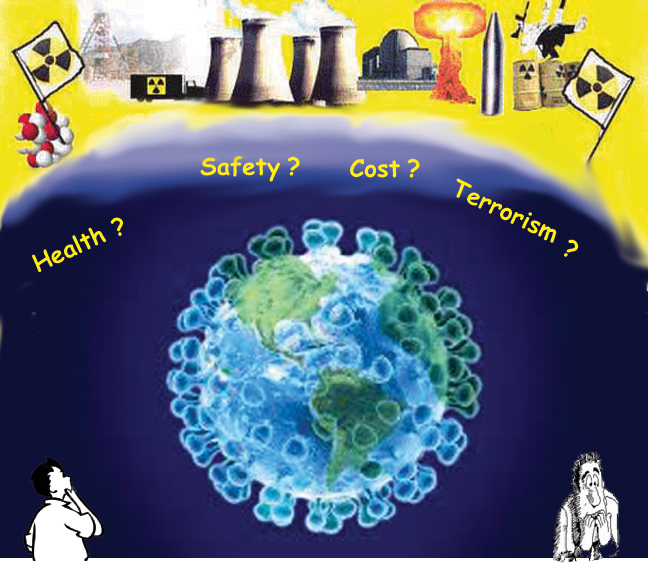 Pandemic concerns interrupt Michigan nuclear plant outage, S and P Global Platts, Author Michael McAuliffe EditorKeiron Greenhalgh CommodityElectric Power 8 May 20 Washington — Some work has resumed after a coronavirus pandemic-caused “stand-down” of activities at DTE Energy’s Fermi-2 nuclear reactor in Newport, Michigan, that interrupted a refueling and maintenance outage, company spokesman Stephen Tait said Thursday. The “stand-down,” in which contractor work was suspended, would add to the duration to the outage, which began March 21, but the company does “not provide estimates of outage or individual project durations,” Tait said.
DTE previously confirmed it had employees test positive for the novel coronavirus, but Tait said: “As a company, we are not releasing numbers of positive cases.”
The 1,205-MW plant is located in Monroe County, Michigan, and Kim Comerzan, health officer/director of the Monroe County Health Department, said in an interview Thursday the department is working with DTE Energy to determine the number of regular employees and contractors who have tested positive for the virus.
The stand-down began May 1, with some work resuming Monday. Normal crews that maintain the plant remained on the job over the weekend to ensure plant safety, according to Tait.
During refueling outages, hundreds of contract workers are brought in to supplement permanent staff and complete fuel replacement as well as a variety of maintenance tasks and inspections that can only been done with the reactor shut……..
Many nuclear units in the US and overseas have reduced the scope of outages to limit the number of on-site workers and are employing distancing measures to reduce the chance of spreading the novel coronavirus.
While some outages have been completed in shorter-than-normal times as a result, some have been extended both for health reasons and, in some European countries that are heavily reliant on nuclear power, because of a sharp drop in demand for power due to lockdowns related to the pandemic. https://www.spglobal.com/platts/en/market-insights/podcasts/focus/050620-lng-market-disruption-new-projects
Concern growing over plan for high level nuclear waste storage in West Texas
High Level Nuclear Waste Storage Facility in West Texas One Step Closer, Live, By Sonia Ramirez-Muñoz | May. 8, 2020 ANDREWS, TX – West Texas is becoming a hotbed for nuclear waste storage after the Nuclear Regulatory Commission released a report that recommended the approval of radioactive waste to be stored in Andrews County.
According to CBS7, Waste Control Specialists, which currently has a facility near the Texas-New Mexico border, and a joint venture called Storage Partners want to bring the country’s high-level nuclear waste to the Permian Basin…….
ANDREWS, TX – West Texas is becoming a hotbed for nuclear waste storage after the Nuclear Regulatory Commission released a report that recommended the approval of radioactive waste to be stored in Andrews County.
According to CBS7, Waste Control Specialists, which currently has a facility near the Texas-New Mexico border, and a joint venture called Storage Partners want to bring the country’s high-level nuclear waste to the Permian Basin.
Andrews County residents are concerned about becoming the new home for nuclear waste.
“Very dangerous,” said Elizabeth Padilla with the group ‘Save Andrews County’. “We’re talking about the nation’s spent fuel from nuclear reactors across the country. The waste that nobody wants. The high radioactive waste.”
Cities like Midland could also be impacted as the transport of the waste could go through the downtown area as well as Texas cities through which the nuclear waste will be transported through.
“Midland, in particular, it would definitely come right through the downtown area,” said Karen Hadden with SEED Coalition. “This material has to be isolated from living things for a million years, and there is no way that a facility in Texas, the one that’s being looked at, could do that.”
The Nuclear Regulatory Commission is now hosting public meetings where community members can provide public comment on the draft. The final environmental impact statement is scheduled to be released in May of next year. https://sanangelolive.com/news/texas/2020-05-08/high-level-nuclear-waste-storage-facility-west-texas-one-step-closer
General Michael Flynn Fired From The DIA – Russia Connections: A Summary — Mining Awareness +
Originally posted on Mining Awareness + : NB – Russia Annexed Crimea: February 20 – March 19 2014 https://en.wikipedia.org/wiki/Annexation_of_Crimea_by_the_Russian_Federation This article was published by the Center for American Progress Action Fund at The MoscowProject.org https://themoscowproject.org: “APRIL 2014 FLYNN FIRED FROM DIA INVOLVING MICHAEL FLYNN Flynn was reportedly bitter and angry when he was pushed out [1] of the D.I.A.; he…
via General Michael Flynn Fired From The DIA – Russia Connections: A Summary — Mining Awareness +
Michael Flynn’s involvement in shady nuclear deals with Saudi Arabia
Nov. 29, 2017 The overture follows an intense and secretive lobbying push involving Michael Flynn, Tom Barrack, Rick Gates and even Iran-Contra figure Robert McFarlane. The Trump administration is holding talks on providing nuclear technology to Saudi Arabia — a move that critics say could upend decades of U.S. policy and lead to an arms race in the Middle East.
The Saudi government wants nuclear power to free up more oil for export, but current and former American officials suspect the country’s leaders also want to keep up with the enrichment capabilities of their rival, Iran.
Saudi Arabia needs approval from the U.S. in order to receive sensitive American technology. Past negotiations broke down because the Saudi government wouldn’t commit to certain safeguards against eventually using the technology for weapons.
Now the Trump administration has reopened those talks and might not insist on the same precautions. Continue reading
The pandemic is a direct threat to Russia’s secret nuclear cities – says Rosatom chief
 Rosatom fears for its nuclear cities amid coronavirus pandemic, The head of
 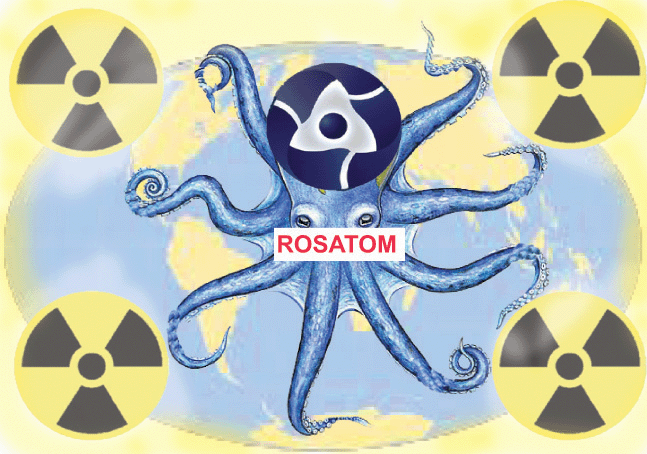 Russia’s state nuclear corporation has expressed concerns about the spread of the novel coronavirus to three of its so-called “nuclear cities,” including one that houses a top-secret research institute that helped develop the Soviet nuclear bomb. May 5, 2020 by Charles Digges charles@bellona.noThe head of Russia’s state nuclear corporation has expressed concerns about the spread of the novel coronavirus to three of its so-called “nuclear cities,” including one that houses a top-secret research institute that helped develop the Soviet nuclear bomb.
The cities hold a fabled place in Russia’s nuclear industry, which is managed by the state-controled Rosatom corporation. Most of them are closed to foreigners and even most Russians require special permission to enter them because of the top-secret facilities that many of them house.
In his most recent video appearance, Rosatom chief Alexei Likhachev said a special delivery of ventilators and personal protective equipment for medical workers has been sent to the city of Sarov and other closed towns where dozens of cases have been reported.
“This (pandemic) creates a direct threat to our nuclear towns,” Likhachev said in the video address on the Rosatom website – a communication method he has embraced since the beginning of the pandemic. “The situation in Sarov, Elektrostal, Desnogorsk is today particularly alarming.”
His remarks come as Russia reports a total of 155,370 cases of coronavirus infection and 1,451 deaths, making Russian the seventh most infected country, having surpassed China, Turkey and Iran last week.
The spread of the coronavirus has posed special challenges to the worldwide nuclear industry, where small groups of highly trained specialists are required to safely run reactors and manage nuclear fuel and radioactive waste services in close quarters.
In Russia, Rosatom has moved to sequester its nuclear technicians onsite at the plants and facilities where they work to minimize their exposure to carriers of the coronavirus.
Rosenergoatom, which is the utility subsidiary of Rosatom, hasn’t made clear precisely how many Russian nuclear workers have been put in isolation or ordered to shelter at their plants. But Rosatom controls a sprawling network of reactors, laboratories, commercial structures and fuel fabrication facilities that employ some 250,000 people.
Russia’s 11 commercial nuclear power plants operate a total of 38 nuclear reactors. Rosatom also has 36 power units at different stages of implementation in 12 countries around the world. It is currently constructing seven reactors overseas: two each in Bangladesh, Belarus and India, plus one unit in Turkey.
In a sense, Russian nuclear power and scientific facilities are uniquely designed to handle outbreaks of the virus. The 10 so-called “closed administrative territorial formations,” which were formed as part of the Soviet nuclear weapons program, are nearly entirely off limits for foreigners as well as most Russians.
The cities hosting Russia’s commercial nuclear plants, while less strictly separated from the rest of the country, are nonetheless surrounded by checkpoints and often require foreign visitors to get special permission to enter them.
As of last week, said Likhachev in his address, there were 47 infected personnel among the corporation’s ranks.
In the city of Sarov alone, there have been 23 cases of Covid-19, Likhachev said – 7 of them Rosatom employees.
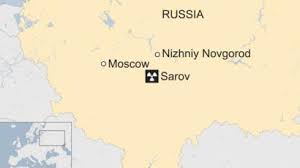
Known formerly as Arzamas-16, Sarov didn’t even appear on maps until the breakup of the Soviet Union in 1991. It remains home to the All-Russian Scientific Research Institute of Experimental Physics, which made headlines last year when five of its scientists died in a mysterious radiological explosion at a weapons testing site in the Russian Arctic.
The institute, which is now run by Rosatom, is an important part of Russia’s nuclear military complex. Likhachev indicated in his address that the workers who tested positive are affiliated with the institute.
In the city of Sarov alone, there have been 23 cases of Covid-19, Likhachev said – 7 of them Rosatom employees.
Known formerly as Arzamas-16, Sarov didn’t even appear on maps until the breakup of the Soviet Union in 1991. It remains home to the All-Russian Scientific Research Institute of Experimental Physics, which made headlines last year when five of its scientists died in a mysterious radiological explosion at a weapons testing site in the Russian Arctic.
The institute, which is now run by Rosatom, is an important part of Russia’s nuclear military complex. Likhachev indicated in his address that the workers who tested positive are affiliated with the institute.
International co-operation – essential for Coronavirus action, and for Climate action
 Coronavirus hasn’t killed globalisation – it proves why we need it The
 Conversation Sunil Venaik Associate Professor of International Business, The University of Queensland, May 6, 2020 “………………… One person practising social distancing during the pandemic might think their effect is negligible. But coronavirus is highly infectious: on one estimate, a single person with coronavirus could eventually infect 59,000 others.
Similarly, many countries seek to avoid responsibility for taking climate action by claiming their contribution to the global problem is small. The Australian government, for example, repeatedly points out it contributes just 1.3% to the world’s emissions total.
But on a per capita basis, Australia is one of the world’s highest emitters. And as a rich, developed nation, we must be seen to be taking action on cutting emissions if poorer nations are expected to follow suit. So actions Australia takes will have major global consequences.
Act quickly
In the two months it took the virus to spread from China and become a global pandemic, other nations could have readied themselves by amassing test kits, ventilators and personal protective equipment. But many nations did not adequately prepare.
Of course the world has had a far longer time to adapt to and mitigate climate change. The time lag between emissions and their consequences is years, even centuries. There has been ample opportunity to take progressive and thoughtful corrective action against climate change. Instead, the crisis has been met with complacency.
Challenges ahead
As others have noted, a major supplier of swabs used for coronavirus testing is based in Italy, and a German company is a primary supplier of chemicals needed for the tests. Many counties rely on foreign suppliers for ventilators, and an Indian firm – the world’s largest vaccine manufacturer – says once a COVID-19 vaccine is ready for mass production, it will supply large volumes to the world, at low cost.
It’s clear that international cooperation is critical for effective mass testing and treatment for the virus. Nations must work together to improve production and distribution, and resources must be shared.
So too is cooperation needed to deal with the worldwide economic downturn. The global recovery will be long and slow if nations adopt sovereign mindsets, putting up barriers to protect their own economies.
With the coronavirus as with climate change, working together is best way to secure humanity’s safety, health and well-being. https://theconversation.com/coronavirus-hasnt-killed-globalisation-it-proves-why-we-need-it-135077
Looking back to May 1986 – the exodus from Kiev, after the Chernobyl nuclear catastrophe

|
From the Guardian archive Chernobyl nuclear disaster Exodus from Kiev: aftermath of
 Chernobyl nuclear accident – archive, 1986 Chernobyl nuclear accident – archive, 1986
5 May 1986: Moscow has seen many Russians arriving by train from Kiev in the disaster area Martin Walker The first real signs of alarm among the Soviet public began to emerge over the weekend as Russians arriving by train from Kiev in the Chernobyl disaster area, began saying frankly that they were worried by radiation. “I am very glad to be able to be in Moscow at this time,” a young father, with two daughters, said on arrival at the Kiev Station in Moscow yesterday. “Of course I am worried about radiation. It is not something any government can control.”
There was no sign of any organised evacuation, and the exodus seems to be spontaneous, provoked by the highly publicised visit to the Chernobyl nuclear disaster area last Friday by the Prime Minister, Mr Nikolai Ryzhkov, and the party ideology chief, Mr Yegor Ligachev, perhaps the two most powerful men in the country after Mr Mikhail Gorbachev. Their visit to the area was clearly intended to continue the official campaign of reassurance and to fend off panic. It seems to be having the opposite effect, however. …… Japanese experts testing Moscow water, milk and foods in their embassy reported yesterday that they had found “low but distinct radiation,” which was the more alarming since winds had not carried the radiation direct to Moscow. The Japanese embassy and Japanese companies are now flying in milk, fruit and vegetables for their personnel. The head of the International Atomic Energy Agency, Dr Hans Blix, is to arrive in Moscow today, and Soviet authorities have promised to give him “full documentation” of the nuclear accident. But it is not clear whether he will be allowed to visit the site, or if he will be restricted to Moscow.
It emerged over the weekend that some rudimentary precautions were being recommended to the Soviet population. Soviet friends report that their children in Moscow schools had been told that some foodstuffs had been accidentally infected with rat poison in the city warehouses, and that all vegetables should be scrubbed and peeled. In Kiev, the Greek and Lebanese students still there have been warned by their Soviet liaison officials not to bathe or shower in the local water, nor to drink tap water, and to stay away from the local lake reservoir known as the Sea of Kiev. Bottled water had disappeared from Moscow shops yesterday…….. https://www.theguardian.com/environment/2020/may/05/exodus-from-kiev-aftermath-of-chernobyl-nuclear-accident-archive-1986
|
|
|
2020 hurtles toward the warmest year milestone
 Global warming pushes April temperatures into record territory, as 2020 heads for disquieting milestone, WP, By Andrew Freedman, May 5 Last month tied for the warmest April on record for the globe, as 2020 hurtles toward the warmest year milestone.New data, released Tuesday from the European Union’s Copernicus Climate Change Service, lends further support to the prediction that 2020 will rank among the top two warmest years recorded.
In April, the National Oceanic and Atmospheric Administration, using its own temperature monitoring data, reported that there is a 75 percent chance that 2020 will become the planet’s warmest year since instrument records began in 1880, and very likely long before that.
Human-caused climate change from increasing amounts of planet-warming greenhouse gases is vaulting temperatures higher, making it easier for a given month or year to set a new warmth milestone. Carbon dioxide is the most important long-lived greenhouse gas in the atmosphere, released by the burning of fossil fuels such as coal and oil for energy and transportation.
Daily carbon dioxide levels measured at the summit of Mauna Loa in Hawaii have reached 418 parts per million this month, the highest level in at least 3 million years. It’s expected that the monthly average value for 2020 will be set this month, and will be near 417 ppm, compared with last year’s measurement of 414.7 ppm.
The new Copernicus data shows a huge area of crimson red for the month of April, denoting much-above-average temperatures, across northern Asia, especially Siberia.
Temperatures were also well above average for the month across northern and coastal central Greenland, parts of Antarctica, areas of Alaska and the Arctic Ocean……. https://www.washingtonpost.com/weather/2020/05/05/global-warming-pushes-april-temperatures-into-record-territory-2020-heads-disquieting-milestone/
As U.S. military is plagued by COVID-19, Trump could end America’s endless losing wars, but will he?
 Trump Must Choose Between a Global Ceasefire and America’s Long Lost Wars
Like his predecessors from Truman to Obama, Trump has been caught in the trap of America’s blind, deluded militarism. Portside, May 5, 2020 Medea Benjamin and Nicolas J. S. Davies
As President Trump nears the end of his first term, he knows that at least some Americans hold him responsible for his broken promises to bring U.S. troops home and wind down Bush’s and Obama’s wars. Trump’s own day-in-day-out war-making has gone largely unreported by the subservient, tweet-baited U.S. corporate media, but Trump has dropped at least 69,000 bombs and missiles on Afghanistan, Iraq and Syria, more than either Bush or Obama did in their first terms, including in Bush’s invasions of Afghanistan and Iraq.
Undercover of highly publicized redeployments of small numbers of troops from a few isolated bases in Syria and Iraq, Trump has actually expanded U.S. bases and deployed at least 14,000 more U.S. troops to the greater Middle East, even after the U.S. bombing and artillery campaigns that destroyed Mosul in Iraq and Raqqa in Syria ended in 2017. Under the U.S. agreement with the Taliban, Trump has finally agreed to withdraw 4,400 troops from Afghanistan by July, still leaving at least 8,600 behind to conduct airstrikes, “kill or capture” raids and an even more isolated and beleaguered military occupation.
Now a compelling call by U.N. Secretary General Antonio Guterres for a global ceasefire during the Covid-19 pandemic has given Trump a chance to gracefully deescalate his unwinnable wars – if indeed he really wants to. Over 70 nations have expressed their support for the ceasefire. President Macron of France claimed on April 15th that he had persuaded Trump to join other world leaders supporting a U.N. Security Council resolution backing the Secretary General’s call. But within days it became clear that the U.S. was opposing the resolution, insisting that its own “counterterrorism” wars must go on, and that any resolution must condemn China as the source of the pandemic, a poison pill calculated to draw a swift Chinese veto.
So Trump has so far spurned this chance to make good on his promise to bring U.S. troops home, even as his lost wars and ill-defined global military occupation expose thousands of troops to the Covid-19 virus. The U.S. Navy has been plagued by the virus: as of mid-April 40 ships had confirmed cases, affecting 1,298 sailors. Training exercises, troop movements and travel have been canceled for U.S.-based troops and their families. The military reported 7,145 cases as of May 1, with more falling sick every day.
Trump plans to divert development aid for poor countries, to promoting the nuclear industry
|
In a list of official recommendations to President Trump last month, the Nuclear Fuels Working Group argued the U.S. needs to sell nuclear power technology abroad and battle the influence of countries like China and Russia that have become dominant suppliers. One way to do that, the group said, is to lift restrictions at the U.S. International Development Finance Corporation (DFC) to let the agency fund nuclear projects alongside other development work. But development groups worry that tapping the DFC to greenlight nuclear projects will do more to promote American interests than alleviate poverty.
“I struggle to see it as something they should be doing,” Conor Savoy, executive director of the Modernizing Foreign Assistance Network. There’s also a concern that the projects won’t benefit the poorer countries the DFC is charged with helping. Setting up nuclear power systems requires a higher level of infrastructure, meaning overseas projects might be more likely to find a home in Eastern Europe than Sub-Saharan Africa. “The DFC was supposed to invest in those countries very sparingly,” Savoy said of wealthier nations.
To access DFC funds for an initiative of this kind, the agency would have to lift its prohibition on supporting nuclear projects, a move that only requires an internal policy change, without any congressional action. The agency has signaled a willingness to make that change. “DFC welcomes the recommendation in the administration’s Nuclear Fuel Working Group report to remove DFC’s prohibition on financing nuclear power projects in developing countries. Access to affordable and reliable power is essential for developing countries to advance their economies,” the agency said in a statement Monday…….
The DFC was started in 2019, replacing its predecessor — the Overseas Private Investment Corporation — with double the funding and fewer restrictions on how to spend it. But the $60 billion agency also has an expanded mission: elevating the world’s poorest countries while also advancing U.S. foreign policy. Development experts, however, say there’s been an imbalance between those two goals in the agency’s short history…….
There’s been a skewing toward more national security areas. They’ve tried to counter that by highlighting their more development-focused projects, but in terms of volume of commitments, in terms of sheer volume of money, it does seem to be skewing more toward national security priorities and less toward development,” Savoy said…….. https://thehill.com/policy/energy-environment/496295-trumps-push-to-use-global-aid-for-nuclear-projects-alarms
|
|

U.S. Congress kept in the dark about government nuclear negotiations with Saudi Arabia
 U.S. should keep Congress informed about nuclear talks with Saudis: GAO, https://www.reuters.com/article/us-usa-saudi-nuclearpower/us-should-keep-congress-informed-about-nuclear-talks-with-saudis-gao-idUSKBN22G2X Timothy Gardner
6 May 20, WASHINGTON (Reuters) – The U.S. Departments of State and Energy should commit to regular briefings to relevant committees in Congress on talks about nuclear power cooperation with Saudi Arabia, a congressional watchdog said in a report on Monday.
The Government Accountability Office, or GAO, report said Congress should consider amending the 1954 Atomic Energy Act, or AEA, to require the briefings for the House Committee on Foreign Affairs and the Senate Committee on Foreign Relations about negotiations on nuclear power sharing.
Lawmakers concerned about nonproliferation issues associated with nuclear power development had complained they were being kept in the dark about Trump administration talks with Saudi Arabia, many of which were led by former Energy Secretary Rick Perry. Concern grew after Crown Prince Mohammed bin Salman told CBS in 2018 that the kingdom did not want to acquire a nuclear bomb, but would do so if its rival Iran did so.
Some U.S. lawmakers want the United States to insist that Saudi Arabia agree to a so-called gold standard that restricts enrichment and reprocessing, potential pathways to making fissile material for nuclear weapons. The United States struck such an agreement with the United Arab Emirates in 2009. If Saudi Arabia develops nuclear power without the gold standard, the UAE would likely seek to be released from its agreement.
Senators Robert Menendez, a Democrat, and Marco Rubio, a Republican, had asked the GAO last year to review U.S. agency negotiations with Saudi Arabia on nuclear power, partially because they were concerned the Energy Department, not the State Department took the lead.
The senators said they would explore legislative changes recommended by the GAO. “Congress must reassert its critical role in reviewing nuclear cooperation agreements to ensure these agreements do not pose an unnecessary risk to the United States” they said.
The senators said they would explore legislative changes recommended by the GAO. “Congress must reassert its critical role in reviewing nuclear cooperation agreements to ensure these agreements do not pose an unnecessary risk to the United States” they said.
1 This Month
23 April – WEBINAR – Why new nuclear reactors are the wrong tools for decarbonization Thursday, April 23 • 1 AM – 2 AM AEST


Pine Ridge Uranium is the real threat, not Tehran- Tell Burgum: Stop the Extraction.
Chernobyl: The Lost Tapes – A good documentary on Chernobyl on SBS available On Demand for the next 3 weeks– https://www.sbs.com.au/ondemand/tv-program/chernobyl-the-lost-tapes/2352741955560
To see nuclear-related stories in greater depth and intensity – go to https://nuclearinformation.wordpress.com
-
Archives
- April 2026 (241)
- March 2026 (251)
- February 2026 (268)
- January 2026 (308)
- December 2025 (358)
- November 2025 (359)
- October 2025 (376)
- September 2025 (257)
- August 2025 (319)
- July 2025 (230)
- June 2025 (348)
- May 2025 (261)
-
Categories
- 1
- 1 NUCLEAR ISSUES
- business and costs
- climate change
- culture and arts
- ENERGY
- environment
- health
- history
- indigenous issues
- Legal
- marketing of nuclear
- media
- opposition to nuclear
- PERSONAL STORIES
- politics
- politics international
- Religion and ethics
- safety
- secrets,lies and civil liberties
- spinbuster
- technology
- Uranium
- wastes
- weapons and war
- Women
- 2 WORLD
- ACTION
- AFRICA
- Atrocities
- AUSTRALIA
- Christina's notes
- Christina's themes
- culture and arts
- Events
- Fuk 2022
- Fuk 2023
- Fukushima 2017
- Fukushima 2018
- fukushima 2019
- Fukushima 2020
- Fukushima 2021
- general
- global warming
- Humour (God we need it)
- Nuclear
- RARE EARTHS
- Reference
- resources – print
- Resources -audiovicual
- Weekly Newsletter
- World
- World Nuclear
- YouTube
-
RSS
Entries RSS
Comments RSS
 nuclear-news