Atomic veterans – the health damage to America’s nuclear workers and soldiers
The lasting effects of working with nuclear weapons https://www.wcax.com/2020/07/19/the-lasting-effects-of-working-with-nuclear-weapons/ By WCAX News Team [includes excellent short video] Jul. 19, 2020 BURLINGTON, Vt. Seventy-five years after the world’s first atomic bombs were dropped in Japan, the people and the island are still feeling the impacts.
Nuclear weapons also have had a lasting effect on American soldiers.
Garry DeFour is a Vermonter who served in the U.S. Senate Committee on Veteran Affairs between 1979 and 1981.
During those few years, he learned about the U.S. Marines who were sent to Nagasaki to help with the clean-up process after the Atomic bomb was dropped. “Now, thirty-five years later several Veterans that served in Nagasaki — are inflicted with rare blood diseases and bone-cancer,” Atomic Veterans Specialist Garry DeFour said.
He says many soldiers who helped create and test nuclear weapons also became contaminated.
Years later, some started to report severe illnesses, stemming from what they believe was from their time serving in the military.
“We were told for years to keep out mouths shut until President Clinton in 1996 did a proclamation that now Veterans could talk about it to the V.A.,” DeFour said. Vets did talk about it, and some even got compensation from the Government because of the on-going health problems they face.
They’re known as Atomic Veterans.
DuFour’s been working on a documentary highlighting the soldiers.
He estimates there are still about 28,000 still living. He believes the U.S. has no need for nuclear weapons and cites a colleague who helped create the hydrogen bomb.
“As Dr. Kenneth Ford told me, he said we have enough conventional weapons, to give a great defense,” DeFour said
Mapping uranium — Beyond Nuclear International

New Uranium Atlas tells its story and impacts across the world
Nuclear threat still looms
Commentary: Nuclear threat still looms https://www.limaohio.com/opinion/columns/418966/commentary-nuclear-threat-still-looms, By Lilly Adams – Tribune News Service, 19 Jul 20,
On July 16, 1945, at around 5:30 a.m., 11-year-old Henry Herrera was outside his home in Tularosa, New Mexico, helping his father work on the radiator of their truck, when he saw a blinding flash of light. He thought he was witnessing the end of the world. In fact, he was witnessing the first ever use of a nuclear weapon — the Trinity nuclear test.
A few weeks later, on Aug. 6 and 9, the newly tested weapons were used on Japan, in Hiroshima and Nagasaki, killing 150,000 to 246,000 innocent people. In 1946, nuclear testing began in the Marshall Islands; it would continue there until 1958, and in the United States until 1992. The production of these weapons, with its own harmful consequences, continues today. Even worse, Congress recently voted to fund expansion of the nation’s nuclear weapons program.
In a cruel twist of fate, July 16 is a double nuclear anniversary for New Mexico. On that day in 1979, a dam holding back radioactive waste at the Church Rock uranium mill broke, releasing 1,100 tons of uranium waste and 94 million gallons of radioactive water into the Rio Puerco, across three Navajo Nation chapters, and into Arizona. After both July 16 events, no health studies or medical resources were provided for residents, leaving those affected to battle the resulting illnesses and deaths alone.
Last summer, after marking these anniversaries, my colleagues and I felt a sense of anti-climax. Something was missing. Perhaps after so long, we had become numb in the face of this history of death.
As we approached the 75th anniversary of the fateful bombings of Japan, we decided we needed to do more.
To begin, we reached out to our partners in Japan, and learned an important lesson. The survivors of the bombings, known as hibakusha, generally focus on messages of hope and resiliency, in pursuit of opportunities to build a peaceful world. They share their haunting memories of the bombings, but then they look forward and demand progress.
We also looked to the survivors of nuclear weapons activities here at home. Estimates range from tens of thousands to hundreds of thousands of people in the United States and in the Marshall Islands that have been sickened and killed due to nuclear weapons testing, uranium mining and nuclear-weapons production.
Despite the distances between them — in time, place and culture — the stories of many of these survivors are the same. A flash of blinding light, the feeling the world was ending. Falling dust and powder — like snow — that sickened people and would lead, eventually, to cancers. Secrecy and neglect shrouded their experiences for decades.
United by these tragedies, now most impacted communities have the same ultimate goals: ensuring these weapons are never used again, and that they are one day eliminated.
With these goals in mind, our national coalition is gathering virtually on Aug. 6 and 9, the anniversaries of the bombings in Hiroshima and Nagasaki. The event will feature presentations from many of the 150 groups that have joined the effort so far. We hope readers will join us to learn more and hear from the people who have been impacted and are fighting for change.
Seventy-five years after these bombings, nuclear weapons are still here, continuing to threaten every person on earth. But the survivors are still here, too. And in a time of separation and mourning, this is a chance to stand in solidarity with communities around the world that are calling for peace.
India has not committed to the great transition to nuclear power it once envisioned.
VETERAN MP is calling for safeguards against a Chinese-built nuclear power station.
 Sir Bernard Jenkin calls for safeguards at Bradwell B nuclear plant, A VETERAN MP is calling for safeguards against a Chinese-built nuclear power station. https://www.gazette-news.co.uk/news/18590085.veteran-mp-calls-safeguards-chinese-built-nuclear-power-station/ By Francesca Edwards @bwt_Francesca Multimedia Reporter, 18 Jul 20,
Harwich and North Essex MP Sir Bernard Jenkin is calling on ministers to introduce provisions to grant the UK Government a golden share in critical infrastructure projects such as the proposed Bradwell B power plant.
Under his proposal, the share would grant the Government powers to prevent takeovers and appoint board members.
It will also place obligations on directors to inform the Government if activities, such as the theft of nuclear secrets, were taking place against the national interest.
In an article on the ConservativeHome website he wrote: “The only safeguards proposed for Bradwell B are the same as for any nuclear power station. They are wholly inadequate.
“At present, China will finance, build, own and operate Bradwell B. The Government has agreed that the Chinese government should build a key part of our own critical national infrastructure.
If this is to go ahead, the very least we should insist upon is a set of safeguards to protect our national security and critical national infrastructure from malign foreign influence from a hostile government.
“Chinese companies are not the same as private companies based in Europe or the United States, or even state owned ones like the French EDF, which is building Hinkley Point.
“If we don’t want the UK taxpayer to contribute to the strength of the Chinese military, or UK-based technology to mysteriously end up in Beijing, we need to act swiftly and decisively, whilst also recognising that, at least for now, we still need Chinese financing and technical expertise in order to expand the UK’s civil nuclear infrastructure.”
Reflecting on Cape Cod’s Cold War nuclear history
Sadly, this lack of nuclear knowledge is not solely a Cape Cod problem. Nationwide, nuclear education is lacking. Most people do not know the United States government conducted 1,032 nuclear tests that sickened and killed thousands of people around the world. It is not general knowledge that the United States and Russia still possess more than 90% of the world’s remaining nuclear weapons — about 6,000 each.
So, as you eat ice cream, photograph cotton candy sunsets, and talk about how different the world is because of the pandemic, it’s worth brushing up on your nuclear history and learning how nuclear weapons continue to affect our daily lives. Thankfully, when it comes to reducing nuclear threats, Massachusetts legislators have led the way for decades. Today, our delegation continues to champion policies that protect their constituents — and the world — from nuclear catastrophe.
Kentucky man indicted after illegally dumping nuclear waste at landfill.
Associated Press 19 Jul 29, LEXINGTON, Ky. (AP) — A federal grand jury has indicted a Kentucky man with illegally dumping low-level nuclear waste at an Estill County landfill.The Lexington Herald-Leader reports that Cory David Hoskins was indicted Thursday on multiple charges earlier this week, including violating safety regulations and mail fraud due to checks as part of the alleged crimes.
In 2016, Hoskins and his company TENORM were each fined $2.65 million by the Kentucky Cabinet for Health and Family Services after officials said Advanced TENORM was responsible for dumping of out-of-state radioactive waste in landfills in Estill and Greenup counties.
Officials say the waste was a byproduct of fracking and had been transported from Ohio, West Virginia and Pennsylvania in 2015…….. https://www.courier-journal.com/story/news/crime/2020/07/18/kentucky-man-indicted-illegally-dumping-nuclear-waste-landfill/5465037002/
Campaign group Geiger Bay press for full testing of Hinkley nuclear plant sediment
 Nation Cymru 18th July 2020, Campaigners press for full testing of nuclear plant sediment in effort to
halt dumping off Cardiff coast. Campaigners are calling for plans to dump
mud from the construction of the new Hinkley Point C nuclear power station
into the sea off Cardiff Bay to be halted.
Campaign group Geiger Bay are
pressing for extensive testing of the sediment following what they say is
evidence of plutonium contamination, a claim that Westminster’s
Environment Agency (EA) denies.
In February environment watchdog Natural
Resources Wales confirmed they had received an application from EDF Energy,
who want to dump 800,0000 tonnes of sediment dredged as part of building
work for the new plant at Hinkley Point, the site of the disused Hinkley
Point A facility.
Geiger Bay are a coalition of scientists, experts,
individuals and organisations formed to oppose the plans. Two years ago,
EDF were given the green light to dump 300,000 tonnes of mud off the
Cardiff coast. Despite protests and a petition signed by over 7,000 people,
and the support of Senedd Member Neil McEvoy, a full Senedd debate failed
to convince the Welsh Government to halt the dumping.
Remembering Hiroshima and Nagasaki – time for the global Nuclear Ban Treaty – theme for August 20

August 6th and August 9th are the days that remind us of the horror of nuclear weapons. The failing and desperate nuclear industry would like us to forget about Hiroshima and Nagasaki. They’d like us to swallow their spin about new small nuclear reactors. (But new small nuclear reactors are just the latest gimmick to support the nuclear weapons industry, and put a friendly mask on it. They really have no other purpose.)
 In this time of pandemic and global heating, Trump’s USA, Putin’s Russia, and other nations, are putting obscene amounts of money into nuclear weapons. The U.N.’s Treaty on the Prohibition of Nuclear Weapons (passed by a vote of 122-1-1 at the United Nations in 2017) is looking ever more rational and necessary. It will enter into force when 50 nations have ratified it. It’s now up to 43 ratifications.
“The pandemic has taught us that all the world’s great needs and threats are linked. By reallocating bloated military spending and reorienting nations to resolve conflict through peaceful negotiation, people and governments throughout the world can more easily tackle the enormous economic and civil injustices that give rise to conflict and fuel the fire of climate change. Each victory in each arena must be used to feed progress elsewhere if humanity is to survive this century.
As we remember the victims of the atomic bombings 75 years ago and hear the stories of the survivors, we realize more than ever: we are all in this together. ” – Michael Christ, Executive Director, International Physicians for the Prevention of Nuclear War
Banning weapons of mass destruction, including nuclear ones – theme for August 2020

You might think that it’s naive to be talking about banning nuclear weapons, in this present climate of international tension. Yes, an international agreement to ban them is not going to get rid of nuclear weapons overnight, or indeed, anytime soon.
BUT – as things stand now, nuclear weapons, held by all the so virtuous States – USA, Britain, France, India, China Pakistan, Israel, (- and now North Korea) – are accepted as respectable , defensive, necessary.
The idea of the world recognising weapons of mass destruction as unacceptable is not new. It’s been done before.
Human beings, after all, are social animals, and their greatest successes have been achieved by co-operation. Years of co-operative effort by intelligent and thoughtful people have shed light on the humanitarian horror of mass killings, and mass sufferings of those who survived such attacks.
Under the auspices of he United Nations, the concerted efforts of so many have brought about the recognition that mass murder is unacceptable, and has been judged to be illegal. No, these threats have not been completely eliminated. But they have been vastly diminished, and no leader can get away with pronouncing them to be acceptable or necessary.

The United Nations Ban on the use of chemical and biological weapons in warfare was signed in 1925, and strengthened in 1997 in the the Chemical Weapons Convention (CWC)
The United Nations Biological Weapons Convention (BWC) came into force in 1975.
In both cases, these agreements outlawed the development, stockpiling, acquisition, retention, and production of these inhumane weapons, and reaffirmed the 1925 ban on their use.
These bans, agreed on by 178 nations (the BWC), 192 (the CWC) have been further developed over many years of successive conventions, the most recent being in November 2016.
There’s a wealth of information on the effects of nuclear weapons production and use – not just the immediate effects on victim communities, but the pervasive global effect on climate, agriculture and teh world’ s food supply.
Right now, we all live under a terrible threat of nuclear war. It is surely time to make a start on removing that threat. The United Nations Nuclear Weapons Ban Treaty is that start. The Treaty on the Prohibition of Nuclear Weapons is close to the number of 50 ratifications , required to make it international law.
America’s nuclear attack on itself ? The fallout from nuclear testing
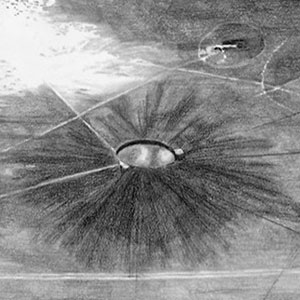
Above – Trinity nuclear test site crater 1945
It’s Been 75 Years, and America Still Won’t Admit a Nuclear Disaster. Remember when we blew radioactive ash over New Mexico? Now the Trump administration is talking about testing bombs again. https://www.nytimes.com/2020/07/15/opinion/75-anniversary-trinity-nuclear-testing.html, By Joshua Wheeler, Mr. Wheeler is the author of “Acid West.” July 15, 2020 When America detonated the world’s first atomic bomb at 0529 hours on July 16, 1945, it was an attack on American soil.
The blast melted the sand of southern New Mexico and infused it with the bomb’s plutonium core — 80 percent of which failed to fission — scattering radioactive material across the desert. The first atomic bomb was both a feat of engineering and, by today’s standards, a crude dirty bomb.
An Army doctor later wrote about Trinity: “A few people were probably overexposed, but they couldn’t prove it and we couldn’t prove it. So we just assumed we got away with it.”
Aboveground nuclear testing was halted in 1963. Underground testing, which is comparably safer but still terrifying, was stopped in 1992. But today the Trump administration is floating the idea of resuming such testing — despite the fact that America is, after more than 1,000 tests, already the most nuclear-bombed country in the world.
Any explosive nuclear test is an escalation toward global annihilation.
But the decision to resume explosive nuclear tests should never be made at all. We can and do perform successful tests in virtual-reality chambers using advanced supercomputers. Explosives tests of any kind carry magnitudes more risk, and the consequence of that risk has historically fallen on the most vulnerable Americans.
It should come as no surprise that the downwinders of Trinity were largely impoverished agricultural families, mostly Hispanic and Native. New Mexico, one of the poorest states in the nation, is the only one with a cradle-to-grave nuclear industry, where weapons are designed, uranium mined, and waste stored. After a recent study from the Nuclear Regulatory Commission raised no concerns, the federal government looks poised to finalize Holtec International’s bid to store nuclear waste between the New Mexico towns of Hobbs and Carlsbad, despite vehement objections from the governor and many residents of the area. And any resumed nuclear testing would add more radioactive waste to the controversial storage site already in existence near Carlsbad.
This is further evidence of what’s been called radioactive colonialism, where minority and impoverished communities are forced to suffer the costs of the nuclear industry.
Henry Herrera, whose family’s drying linens were stained by the fallout on that July morning in 1945, told me: “We were lab rats. That ought to make us hero patriots or something. Which we are. But nobody gives a damn.” Mr. Herrera, his brother and his two sisters all had cancer.
If Congress truly wants to awaken Americans to the dangers of nuclear testing, it should start by finally telling the truth about the disaster at Trinity. Bills to acknowledge and compensate Mr. Herrera and other Trinity downwinders have lingered in legislative purgatory for over a decade. Passing them would help establish what should be obvious: The shameful legacy of nuclear weapons testing is something we should never attempt to revive.
Joshua Wheeler is the author of the essay collection “Acid West.” He teaches in the creative writing program at Louisiana State University.
The Times is committed to publishing a diversity of letters to the editor. We’d like to hear what you think about this or any of our articles. Here are some tips. And here’s our email: letters@nytimes.com.
Follow The New York Times Opinion section on Facebook, Twitter (@NYTopinion) and Instagram.
Azerbaijani Defense Ministry spokesman suggests bombing Armenian nuclear power station
 Idle Threat? Azerbaijan’s Hint Of Missile Strike On Armenian Nuclear Plant Increases Tensions, Radio Free Europe July 17, 2020 By Andy Heil Idle Threat? Azerbaijan’s Hint Of Missile Strike On Armenian Nuclear Plant Increases Tensions, Radio Free Europe July 17, 2020 By Andy Heil
Azerbaijan dramatically escalated tensions amid its border battle with Armenia this week with an implicit threat to bomb the region’s only nuclear power plant and unleash “great catastrophe” on Armenians. The July 16 warning drew outrage from Yerevan and deepened concerns that the worst violence in four years between Azerbaijan and Armenia, who are technically still in a war begun in the late 1980s, could quickly spiral out of control. At least 16 Azerbaijanis and Armenians have died in the fighting near a northern section of their internationally recognized border that has included heavy artillery, tank, and drone attacks since it began on July 12. Yerevan and Baku routinely threaten and accuse the other of provocations that have killed dozens of people in recent years, many of them civilians, with neither side willing to back down publicly for fear of being viewed as weak in the more than 30-year-long standoff. The strategic or tactical aim of either side in contributing to this week’s violence is unclear. But the reframing of the current flareup to include a missile attack on a Soviet-built nuclear plant — a move that could massively increase the death toll and set off a Chernobyl-like fallout in the region and beyond — took many people by surprise. “The Armenian side must not forget that our army’s state-of-the-art missile systems allow us to strike the Metsamor nuclear plant with precision, which could lead to a great catastrophe for Armenia,” Vagif Dargahli, the Azerbaijani Defense Ministry spokesman, said on July 16, hours after hostilities had resumed following a one-day lull. ……. There are some 3 million people living in Armenia. The Metsamor Nuclear Power Plant lies just a few kilometers from cities with tens of thousands of people and 35 kilometers from the Armenian capital, Yerevan, and its 1 million inhabitants………… Emil Sanamyan, a blogger and fellow at the University of Southern California’s Dornsife Institute of Armenian Studies, said Baku’s threat involved its possession of a missile system it purchased from Israel. “Just to be clear: With this statement issued yesterday, [the] Azerbaijani Defense Ministry is threatening to use the LORA surface-to-surface missile it bought from Israel…to attack Armenia’s nuclear power plant to cause a leak of radiation.”………….. |
|
Japanese municipal assemblies oppose dumping radioactive water in sea

Storage tanks for radioactive water are seen at Tokyo Electric Power Co’s (TEPCO) tsunami-crippled Fukushima Daiichi nuclear power plant in Okuma town, Fukushima prefecture, Japan February 18, 2019. Picture taken February 18, 2019. REUTERS/Issei Kato
Fukushima Minpo conducted a survey of assemblies in the prefecture’s 59 cities, towns and villages from June 18 to June 24. The assembly for the town of Namie, close to where the nuclear power plant is located, adopted a resolution that opposed the release of the radioactive water into the sea, while assemblies from the town of Miharu and village of Nishigo both issued statements opposing both sea discharge and evaporation as methods for disposing of the water.
Many municipal assemblies have urged the central government to instead come up with measures involving long-term storage of the contaminated water in tanks ……….https://www.japantimes.co.jp/news/2020/07/17/national/fukushima-assemblies-radioactive-water/
Too many near misses – get UK’s nuclear submarines out of Scotland

 End the nuclear risk to Scotland Herald Scotland, Margaret Forbes, 17 Jul 20, Kilmacolm. I NOTE your article regarding the near miss between between the ferry crossing between Scotland and Northern Ireland and the nuclear submarine (“Ferry was forced to change course to avoid nuclear submarine, inquiry told”, The Herald, July 16). CND has been warning about the dangers of nuclear submarines in busy sea lanes for years – this latest incident was the third such incident in four years. If there is any accident with these nuclear vessels the whole of the Central Belt of Scotland would have to be evacuated. Where would the population be evacuated to? The nuclear convoys travelling the length of Britain from the south of England pose a similar threat.
British nuclear sub narrowly missed passenger ferry near Belfast
 British nuclear sub narrowly missed passenger ferry near Belfast, By BRIAN NIEMIETZ, NEW YORK DAILY NEWS |JUL 16, 2020 An Irish passenger ship avoided colliding with a British nuclear sub when the ferry’s crew spotted the sub’s periscope sticking out of the water and quickly changed course.
The vessels came as close as 164 feet from each other, according to a report released Thursday that all aboard both vessels were “in immediate danger.”
Great Britain’s Marine Accident Investigation Branch found that the November 2018 incident was a result of the submarine crew miscalculating the speed of the Stena Superfast VII ferry, which was carrying 215 passengers and 67 crew members, according to the Belfast Telegraph.
The investigation found the ferry ship’s captain clear-headed decision making offset a “serious risk of collision.”…. https://www.nydailynews.com/news/world/ny-british-nuclear-sub-narrowly-missed-passenger-ferry-near-belfast-20200716-mxckhhhxw5gwnm4h57qbh3ureu-story.html
1 This Month

petition to oppose the rapid increase of space-military industry threatening Jeju Island and the region.
[Petition by April 19th (KST)] Stop the joint military-Hanwha Systems-Jeju Provincial Government Sea Launch!

Chernobyl: The Lost Tapes – A good documentary on Chernobyl on SBS available On Demand for the next 3 weeks– https://www.sbs.com.au/ondemand/tv-program/chernobyl-the-lost-tapes/2352741955560

of the week–London Campaign for Nuclear Disarmament

Tell the Ukrainian Government to Drop Prosecution of Peace Activist Yurii Sheliazhenko
To see nuclear-related stories in greater depth and intensity – go to https://nuclearinformation.wordpress.com
-
Archives
- April 2026 (194)
- March 2026 (251)
- February 2026 (268)
- January 2026 (308)
- December 2025 (358)
- November 2025 (359)
- October 2025 (376)
- September 2025 (257)
- August 2025 (319)
- July 2025 (230)
- June 2025 (348)
- May 2025 (261)
-
Categories
- 1
- 1 NUCLEAR ISSUES
- business and costs
- climate change
- culture and arts
- ENERGY
- environment
- health
- history
- indigenous issues
- Legal
- marketing of nuclear
- media
- opposition to nuclear
- PERSONAL STORIES
- politics
- politics international
- Religion and ethics
- safety
- secrets,lies and civil liberties
- spinbuster
- technology
- Uranium
- wastes
- weapons and war
- Women
- 2 WORLD
- ACTION
- AFRICA
- Atrocities
- AUSTRALIA
- Christina's notes
- Christina's themes
- culture and arts
- Events
- Fuk 2022
- Fuk 2023
- Fukushima 2017
- Fukushima 2018
- fukushima 2019
- Fukushima 2020
- Fukushima 2021
- general
- global warming
- Humour (God we need it)
- Nuclear
- RARE EARTHS
- Reference
- resources – print
- Resources -audiovicual
- Weekly Newsletter
- World
- World Nuclear
- YouTube
-
RSS
Entries RSS
Comments RSS
 nuclear-news