Correcting 5 wrong opinions about the Treaty on the Prohibition of Nuclear Weapons
 FIVE COMMON MISTAKES ON THE TREATY ON THE PROHIBITION OF NUCLEARWEAPONS https://warontherocks.com/2020/11/five-common-mistakes-on-the-treaty-on-the-prohibition-of-nuclear-weapons/
The Treaty on the Prohibition of Nuclear Weapons, the first international ban on nuclear weapons, will take full legal effect on Jan. 22, 2021. It joins the Chemical Weapons Convention and the Biological Weapons Convention as a treaty prohibiting weapons of mass destruction and follows the roadmap of the Mine Ban Treaty (known as the Ottawa Treaty) and Cluster Munitions Convention to bring together a coalition of civil society and diplomats to prohibit and eliminate weapons based on their humanitarian harm. The treaty has widespread support in the international community — 122 countries voted for its adoption in 2017, and these countries have continued to express their support for the treaty in subsequent statements to the U.N. General Assembly, in spite of resistance from nuclear-armed states and some of their allies, who have not joined the treaty.
This treaty is a big deal. And yet, political scientists and nuclear policy experts, largely from nuclear-armed states, repeatedly make mistakes in their analysis and interpretation of this treaty and international law. At a gathering of roughly 800 nuclear policy experts in Washington, D.C. in 2019, experts overwhelmingly and incorrectly predicted the treaty would not enter into force by March 2021. A French academic even misread the actual treaty text — a clear error that was not flagged by any of the article’s expert reviewers, and was only corrected after publication.
I work at the International Campaign to Abolish Nuclear Weapons, which won the 2017 Nobel Peace Prize for its efforts to negotiate the ban treaty. Its work is informed by international lawyers, academics, technical experts, diplomats, survivors of nuclear weapon use and testing, and advocates with regional expertise. This diverse and rich foundation of knowledge and experience informs our work to this day. But some academics and nuclear policy experts that haven’t worked as closely on the treaty often make five key mistakes when analyzing this treaty and international law: that the treaty may be just symbolic, that NATO countries cannot join, that the treaty doesn’t address compliance, that it won’t have any impact on nuclear-armed and NATO states, and that the treaty will only affect democracies.
Mistake One: The Treaty Is Purely Symbolic
The legal impact of the Treaty on the Prohibition of Nuclear Weapons is clear: Once it enters into force, all states parties will need to comply with the treaty’s prohibitions and implement its obligations. While some treaty articles reinforce existing obligations under other treaties, states parties do actually take on new legal obligations, contrary to what some have claimed. Even without any other states joining the treaty, from a strictly legal perspective, the treaty is not merely “symbolic.”
The treaty prohibits states parties from developing, testing, producing, manufacturing, transferring, possessing, stockpiling, using (or threatening to use) nuclear weapons, or allowing nuclear weapons to be stationed on their territory. It also prohibits states parties from assisting, encouraging, or inducing states to engage in any of these prohibited activities. Some of these prohibitions are already enshrined in nuclear weapon-free zone treaties, but not all prohibition treaty states parties are members of these treaties. Given that the Comprehensive Nuclear-Test-Ban Treaty unfortunately has yet to enter into force, the Treaty on the Prohibition of Nuclear Weapons will be the only agreement in force banning nuclear testing internationally.
In addition to adhering to prohibitions, states parties must implement positive obligations, some of which echo previous agreements, but many of which are new to this treaty.
There are some technical requirements. For example, states parties must submit a declaration with the U.N. secretary-general on their nuclear weapon status. They must also bring into force a comprehensive safeguards agreement with the International Atomic Energy Agency on inspecting their peaceful nuclear program, or maintain a more intrusive inspections regime (an “additional protocol”) if they have one in force already.
But the Treaty on the Prohibition of Nuclear Weapons also includes ground-breaking provisions on providing assistance to victims of nuclear weapons use and testing and remediating contaminated environments. This is the first time that international law has mandated that countries address the humanitarian devastation caused by decades of nuclear weapons testing and the U.S. bombing of Hiroshima and Nagasaki 75 years ago. It is a critical step forward to address the racist, colonialist, and unjust legacy left by these uniquely horrible weapons of mass destruction. Analysis of this treaty would do well not to ignore these historic articles.
Specifically, Article 6 of the treaty requires states to “provide age- and gender-sensitive assistance, without discrimination, including medical care, rehabilitation and psychological support,” for victims of nuclear weapons use and testing “as well as provide for their social and economic inclusion.” States must also “take necessary and appropriate measures” towards the remediation of contaminated environments. States with affected communities and contaminated environments under their jurisdiction are primarily responsible to structure and implement these obligations in order to respect these states’ sovereignty and follow the legal precedent for victim assistance in other treaties. However, Article 7, which requires that all countries cooperate to implement the treaty’s provisions, specifically calls on all states “in a position to do so” to provide assistance to other states as they carry out these initiatives. Such assistance can take many forms, including technical, financial, and material, so every state should be in a position to contribute.
These provisions will be at the center of the first meeting of states parties to the treaty, to take place within one year of the treaty’s entry into force. Austria has already offered to host this meeting in Vienna. At this meeting, states will discuss routine logistics of international treaty meetings, such as costs and establishing the rules of procedure. Observer states, including signatory states, and some non-signatory states, including at least Sweden and Switzerland, will also attend and share the cost of the meeting. The extent of their participation will be determined by the rules of procedure. Civil society will also likely play an active role.
Mistake Two: NATO Countries Cannot Join the Treaty
One academic recently argued that membership in NATO and the Treaty on the Prohibition of Nuclear Weapons would be “mutually exclusive.” While fully compliant membership in both treaties would require a few policy adjustments, it is certainly possible. There is no prohibition in the treaty for a member to be involved in military alliances or exercises with nuclear-armed states, as long as there is not a significant nuclear dimension to those alliances. NATO itself states, “NATO is committed to arms control, disarmament and non-proliferation, but as long as nuclear weapons exist, it will remain a nuclear alliance.” However, legal experts explain that if a NATO state would like to join the treaty, they may certainly do so and remain in the alliance as long as that state renounces participation in the nuclear dimension of the alliance and indicates that it does not support activities prohibited by the treaty. There is a precedent of NATO members “footnoting” alliance documents to signal disagreement with certain policies. A NATO state could thus announce its change in policy and adjust its behavior accordingly to be in compliance with the treaty’s provisions. Exactly how the NATO state would need to adjust its behavior to be in compliance with the treaty varies by country and could be determined in consultation with states parties.
Historically, different members of NATO can take different positions on controversial weapons without obliterating the alliance. Indeed, there are already divergent policies within NATO on the extent of participation in the nuclear aspect of the alliance: Some NATO countries go so far as to host U.S. nuclear weapons on their soil while others do not allow deployment on their territory under any circumstances. Opposition within NATO to banning landmines and cluster munitions did not stop those prohibitions from moving forward, even as the United States pressured countries to not even participate in the process to negotiate a treaty banning cluster munitions, and certainly did not destroy the alliance. Dozens of former leaders from NATO states, including two former NATO secretaries-general, recently called on their countries to join the Treaty on the Prohibition of Nuclear Weapons and certainly did not suggest that such a move would involve leaving NATO or that it would fracture the alliance. NATO’s status as a nuclear alliance has evolved over time, and it could continue to adapt to shifting international norms.
Mistake Three: There Is No Mechanism to Address Compliance Concerns in the Treaty
If there are any concerns about compliance with the terms of the treaty, the treaty explains clearly what states should do in Article 11. When a state party has a concern about another state party’s implementation of the accord, the two states may resolve the dispute amongst themselves or bring the matter to a meeting of states parties to discuss.
Concerns about compliance with an international treaty would certainly not be unique to this treaty and do not indicate that it is any less legitimate or valuable than other treaties with compliance disputes. States parties to the Nuclear Non-Proliferation Treaty regularly raise concerns about nuclear weapon-state compliance with their obligation to pursue nuclear disarmament under Article VI during meetings of states parties of that treaty. Likewise, states parties to the Chemical Weapons Convention condemn Syrian and Russian violations. These examples demonstrate the value of international treaties to reinforce norms and provide a forum to discuss and condemn violations of international standards for peace and security. Of course, given that the treaty has not yet entered into force, no state can currently be judged to be in non-compliance with the accord.
Mistake Four: The Treaty Will Only Impact Countries That Have Joined It
States parties’ implementation of their obligation to assist victims of nuclear weapons use and testing will also have lasting impact beyond those countries themselves. There is currently no international standard for adequate victim assistance for those who have been impacted by nuclear weapons use and testing and no standard for how to judge that a nuclear-contaminated site has been adequately remediated. States parties’ work on these provisions in the treaty will help to provide research and experience in these fields that can be applicable and useful even beyond countries that have joined the treaty.
Countries that are not part of the treaty can still contribute to these important measures. The United States, for example, is one of the largest donors to Mine Action, which facilitates mine clearance, despite not joining the Mine Ban Treaty. Mounir Satouri, a French member of the European Parliament, has expressed interest in encouraging European Union countries, including NATO members, to contribute to victim assistance and environmental remediation measures under the treaty, even if they have not yet joined as states parties.
The treaty will continue to grow and integrate into the international system well beyond its entry into force in January and first meeting of states parties. The norm established by previous weapons prohibitions impacted banks, companies, and government policies in countries that had not joined the treaty, and the same can be expected for the nuclear prohibition norm. The treaty’s adoption has already caused a major Dutch pension fund to divest from companies involved in nuclear weapons, and more divestment can be anticipated once the treaty takes full legal effect.
Mistake Five: The Treaty Only Impacts Democracies
Countries that have not yet expressed support for the treaty are also expected to join in time. In many countries that do not officially support the treaty, polls show that domestic opinion is behind the ban and capitals in nuclear-armed and NATO states have adopted resolutions calling on their governments to join. Critics claim that domestic support may push Western democracies – in particular France, the United Kingdom, the United States, and NATO allies — to join the treaty, while more autocratic states — without a strong civil society to demand they adhere — remain unfazed by the new international law and norm.
That’s not how international law works. International law applies to all countries, regardless of their governance structure, and all countries are influenced by the new norms advanced by international treaties. Pressure to join the treaty does not just come from an active civil society, but from other states, international organizations, and the changing norm established by the treaty itself. Article 12 of the treaty legally requires that all states parties urge other countries to join. This can be done in the form of public statements in international fora, like the United Nations, or privately in bilateral meetings. Pressure to adhere can even come from international figures like the U.N. secretary-general, the Dalai Lama, and the Pope who have all welcomed the Treaty on the Prohibition of Nuclear Weapons.
So far, the record shows that Western democracies are not necessarily more susceptible to pressure to support the treaty or to join it. While the United States and some NATO allies held a press conference outside the negotiations of the treaty in protest, China merely abstained on the resolution to start negotiations. When the treaty reached 50 states parties, a U.S. official Twitter account called the treaty “counterproductive,” while the Chinese UN Mission on Twitter claimed its objectives were “in line with purposes of the TPNW.” Of the states that have already joined the treaty, many have done so not because of civil society pressure, but due to their desire to adhere to international laws and norms against nuclear weapons.
Conclusion
In January, the treaty will take its rightful place among the other international treaties regulating nuclear weapons and other weapons of mass destruction, as an implementing instrument of the Nuclear Non-Proliferation Treaty’s Article VI and complement to the Comprehensive Nuclear-Test-Ban Treaty. Most countries support the Treaty on the Prohibition of Nuclear Weapons as an important achievement for peace and security and towards a world free of nuclear weapons. As the risk of nuclear weapons use increases alarmingly, nuclear disarmament measures like this treaty are urgently needed.
The Treaty on the Prohibition of Nuclear Weapons will impact the norm against nuclear weapons and in the meantime will provide concrete assistance for victims of nuclear weapons use and testing and contribute to remediating radiologically contaminated areas. It is a powerful tool: important enough for leaders to ratify even in the midst of a global pandemic and influential enough that the United States actually called on countries to withdraw their instrument of ratification or accession. Analytical attempts to belittle or undermine the significance of this treaty may appease the minority of countries that cling to these weapons of mass destruction for now, but make no mistake — the Treaty on the Prohibition of Nuclear Weapons is a game-changer. And it is not going anywhere.
Unanswered questions cloud the future of NuScam’s Small Modular Nuclear Reactor project
Questions Remain About ID Nuclear Reactor Project https://www.upr.org/post/questions-remain-about-id-nuclear-reactor-project
NuScale‘s small, modular reactor design is the first of its kind to be approved in the United States. The new, compact concept is made up of 12 small reactors and will be located at the Idaho National Laboratory.

Sarah Fields, program director with the group Uranium Watch, said the Nuclear Regulatory Commission needs to scrutinize the project carefully. In particular, she said she’s concerned about a proposal for fewer people to oversee the project.
“They want to reduce the number of operators, and that’s just to save money,” said Fields. “And the NRC is undergoing a review of that.”.
NuScale said the project needs fewer operators because of its design is simpler and the controls involve more automation. The NRC is reviewing the proposal, which could involve policy changes since the approval process is based on conventional nuclear power plant designs.
The NRC has approved the Design Certification Application for the project in its current form. But Fields said the agency still has to authorize certain aspects of the design.
One NRC engineer has raised questions about dilution of boron water around reactor cores, which could cause a dangerous power surge even if the reactor is shut down. Fields said it could be hard to make modifications once aspects of the design are approved.
“It’s like designing a house,” said Fields. “And once you want to change one thing about the house, then you have to make all different kinds of adjustments. And then, get approvals from that.”
Book review: The Case for Degrowth
 Book review: The Case for Degrowth, Jeremy Williams, The Earthbound Report , 16 Nov 20, “…………. What are the objectives of degrowth? It’s not shrinking the economy for the sake of it. The aim is to get GDP growth out of the driving seat and then steer towards “what really matters: not GDP, but the health and wellbeing of our people and our planet.”
Or there’s the alternative, which is to stop taking growth as the primary measure of progress and get on with delivering what people need. So many political directions open up when GDP growth takes a back seat and we get on with delivering what people need more directly.
In fact, downsizing in the rich world may be a key enabler of flourishing elsewhere. “There is no technological or policy fix that can generalize to nine billion people the material standard of living currently enjoyed by a minority at high cost to others.” Instead, “high-consumption nations and people must degrow to free space for low-consumption ones.”
- A Green New Deal
- universal incomes and services
- policies to reclaim the commons
- shorter working hours
- public finance that supports the first four
Being a short book, it no doubt opens up lots of other questions that the authors don’t cover, though the frequently asked questions at the end captures many of them. Perhaps the one that still sticks out for me is the word ‘degrowth’ itself. In my opinion it doesn’t capture the positivity of a vision for qualitative progress, for improvement rather than enlargement. I know it’s an old debate. We had it when founding the Postgrowth Institute ten years ago, and it doesn’t feel resolved today.
Still, The Case for Degrowth is a brief and straightforward explainer, and a good starting point for anyone who wants to get their head around the degrowth movement and what it wants to acheive.
- You can get The Case for Degrowth from Earthbound Books UK or my US store. It’s powered by Bookshop.com and supports your local book store as well as this blog.
- More recommended degrowth books here. https://wordpress.com/read/feeds/95197302/posts/3025203412
Prison, big fines, for Catholic anti nuclear activists
|
Dorothy Day’s granddaughter sentenced to prison for nuclear base break-in https://www.americamagazine.org/politics-society/2020/11/16/dorothy-day-granddaughter-sentenced-prison-kings-bay-plowshares-7
Yonat Shimron – Religion News Service, November 16, 2020 Martha Hennessy, a granddaughter of Dorothy Day, the founder of the Catholic Worker movement, was sentenced Friday (Nov. 13) to 10 months in prison for breaking into Kings Bay Naval Base in Georgia two years ago to protest its stockpile of nuclear weapons.
Hennessy’s was the lightest sentence given for the break-in at the Navy base 40 miles south of Brunswick, Georgia, on April 4, 2018, in which Hennessy, 65, was joined by six other Catholic pacifists. Together they are known as the Kings Bay Plowshares 7, named after the Plowshares anti-war movement founded 40 years ago by Daniel and Philip Berrigan, both Jesuit priests, and six others. On Thursday, Carmen Trotta, of St. Joseph Catholic Worker in New York City, was sentenced to 14 months in prison, while Clare Grady of the Ithaca Catholic Worker was sentenced to 12 months. Both have spent their lives at Catholic Worker houses in New York state, which house and feed the needy. All were also sentenced to probation and will be required to repay the Navy base a total of $33,500 in damages. |
|
Bangladesh draws up a nuclear disaster response plan
The National Nuclear and Radioactive Emergency Preparedness and Response Plan was approved at a virtual cabinet meeting chaired by Prime Minister Sheikh Hasina on Monday.
The guideline was authorised to put safety measures in place for the Rooppur nuclear power plant, Cabinet Secretary Khandker Anwarul Islam said during a press briefing at the Secretariat.
“The International Atomic Energy Commission stipulates the availability of safety guidelines and response plans for such power plants, or else they will not allow us to run it. We have drafted it following the guideline structure from IAEA,” he said.
“The Ministry of Disaster Management and Relief plays the key role in all sorts of disaster management in the country. The National Nuclear and Radioactive Emergency Preparedness and Response Plan was created in keeping with Bangladesh’s disaster management and such other plans.
The cabinet secretary pointed out that authorities actually have little idea about dealing with nuclear power mishaps and emergency responses and the guideline would provide a way forward if such situations occur. …….
https://bdnews24.com/bangladesh/2020/11/16/bangladesh-approves-nuclear-disaster-response-plan
Ohio Attorney General Dave Yost has filed a second lawsuit to stop bailout of nuclear reactors
 Ohio Attorney General Sues To Stop New Charges For Nuclear Bailout https://radio.wosu.org/post/ohio-attorney-general-sues-stop-new-charges-nuclear-bailout#stream/0 By KAREN KASLER 16 Nov 20, •There are only a few weeks until Ohio’s controversial nuclear bailout law is set to add new charges to residents’ electric bills. With no repeal yet of HB6, Ohio Attorney General Dave Yost has filed a second lawsuit seeking to stop those rate increases. Ohio Attorney General Sues To Stop New Charges For Nuclear Bailout https://radio.wosu.org/post/ohio-attorney-general-sues-stop-new-charges-nuclear-bailout#stream/0 By KAREN KASLER 16 Nov 20, •There are only a few weeks until Ohio’s controversial nuclear bailout law is set to add new charges to residents’ electric bills. With no repeal yet of HB6, Ohio Attorney General Dave Yost has filed a second lawsuit seeking to stop those rate increases.
Yost’s suit seeks to immediately stop the collection of $2.35 in monthly charges on all Ohio electric bills. Those charges would start January 1 and total $150 million a year statewide – with the money bound for Ohio’s two nuclear power plants, as well as coal and solar subsidies. A lawsuit Yost filed in September sought to stop the money from going to Energy Harbor, the former FirstEnergy subsidiary that now owns the nuclear plants. However, even if the suit were successful, it would not prevent the charges from being collected in the first place. FirstEnergy said at the time it would “vigorously” defend itself and that the case had no merit. The cities of Columbus and Cincinnati have filed a civil lawsuit to halt the bailout fee and strike down HB6, claiming that the law is an unconstitutional lending of state credit to a private enterprise. There are currently four bills under consideration at the Ohio Statehouse that would repeal HB6. Three would seek a full repeal, while the fourth would eliminate the ratepayer subsidies but retain the law’s cuts to renewable energy standards and elimination of energy efficiency standards. Federal investigators say HB6 became law as part of a $61 million bribery scheme involving Republican former House Speaker Larry Householder, four associates, the dark money group Generation Now, and a utility believed to be FirstEnergy. Two people have so far pleaded guilty to the racketeering charges. While FirstEnergy is not charged yet in the federal case and has defended itself against any allegations of misconduct, several executives – including CEO Chuck Jones – have been fired for violating company policy. |
|
Nuclear disaster: Fukushima schools frozen in time
Nuclear disaster: Fukushima schools frozen in time https://www3.nhk.or.jp/nhkworld/en/news/backstories/1365/
|
Sakurayama Kyoko, NHK World Correspondent 16 Nov 20, At an elementary school in Futaba Town, Fukushima Prefecture, children’s bags and notebooks still lie scattered where they were left after the meltdown at the Fukushima Daiichi nuclear power plant in 2011. The evacuation order for part of the town was lifted in March this year, but no one has returned to live there.
Nishizaki Ryusuke, 21 and a former student at the Futaba Minami Elementary School, visited it last month for the first time since the accident. It is located just three kilometers from the nuclear plant. The sight of everything frozen in time brought back vivid memories. Ties severedNishizaki, then a fifth-grader, was in his homeroom when the earthquake that precipitated the crisis struck. He fled with only the clothes he was wearing. Since that day, he has been living as an evacuee, moving with his family from one place to another within Fukushima Prefecture and in neighboring Niigata. His ties with his home and neighbors have been severed. “ I had no doubt that I would spend my life in the town,” says Nishizaki. “But the earthquake and the nuclear accident changed everything all of a sudden.” Ties severedNishizaki, then a fifth-grader, was in his homeroom when the earthquake that precipitated the crisis struck. He fled with only the clothes he was wearing. Since that day, he has been living as an evacuee, moving with his family from one place to another within Fukushima Prefecture and in neighboring Niigata. His ties with his home and neighbors have been severed. “ I had no doubt that I would spend my life in the town,” says Nishizaki. “But the earthquake and the nuclear accident changed everything all of a sudden.” The town projected that renovating them would cost 900 million yen, or about 8.6 million dollars, per school. In addition, it would require an estimated 10 million yen, or about 95,000 dollars, a year in maintenance costs. Yoshida Katsunori, an official at Namie’s education board, says: “It’s extremely important to pursue the ideal of preserving school buildings. But, financially speaking, it might not be realistic.” Fukaya Naohiro, a Visiting Associate Professor at the Fukushima Future Center For Regional Revitalization, says all efforts should be made to preserve buildings that can serve as reminders of the accident and help us prepare for future disasters. “When it came to preserving the Atomic Bomb Dome in Hiroshima, it wasn’t just local residents, but people across Japan, who took part in the debate,” says Fukaya. “Each and every one of us should think about what to do with the Fukushima buildings.” Concrete remindersNishizaki says that there are some things that people can understand only when they visit the site and see it for themselves: “We want people to know that children who had been at the schools at the time of the accident couldn’t go back for nine and a half years.” At the time of writing, just one building in Fukushima Prefecture has been listed to be preserved as a memorial for future generations. |
|
USA looks to get $18billion now, maybe $40billion later, in flogging off nuclear reactors to Poland
|
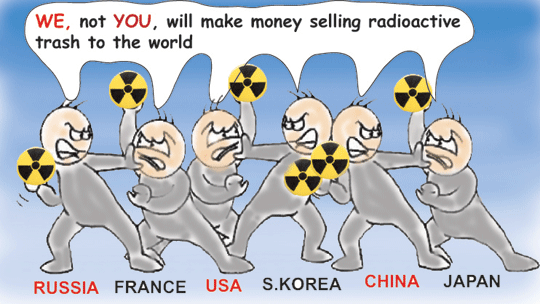
U.S. sees $18 billion from purchases in nuclear power agreement with Poland, By Timothy Gardner, WASHINGTON (Reuters) 16 Nov 20, – The United States and Poland have struck a nuclear power agreement in which Poland will likely buy $18 billion in nuclear technology from U.S. companies, the U.S. energy department said on Monday.
The United States has been competing with China and Russia and other countries to supply nuclear power technology to countries hoping to build their first reactors, or boost their programs. “We are hopeful that the ultimate decisions that are made by Poland … over a period of time will result in them choosing U.S. technology,” U.S. Energy Secretary Dan Brouillette told reporters in a teleconference. …… Over the next 18 months, the United States and Poland will work on an a report for the program that seeks to build six reactors, as well as potential financing arrangements, the department said. The first reactors are planned to be in operation by 2033 in a program that will potentially be worth $40 billion, a senior U.S. energy department official said. Poland would buy at least $18 billion from U.S. companies, the official said. Westinghouse, owned by Brookfield Asset Management BAMa.TO, Bechtel and Southern Co SO.N and the U.S. government, will participate in a first step in the agreement, an engineering study for planned plants, the official said. This month the United States and Romania came to an initial $8 billion agreement on the construction of two reactors on the river Danube. Romanian state-owned nuclear power producer Nuclearelectrica ROSNN.BX ended talks with China General Nuclear (CGN) about the construction of the reactors after they had dragged on for six years. Reporting by Timothy Gardner; Editing by Nick Zieminski and Marguerita Choy https://www.reuters.com/article/us-usa-nuclearpower-poland-idUSKBN274239 |
|
Solar energy is bullish in the market; the same can’t be said for nuclear
……..Solar rising, By Alex Kimani for Oilprice.com 16 Nov 20,
Whereas the nuclear sector comeback has its work cut out for it, solar power has clearly been on the ascendancy thanks in large part to falling costs.
Nuclear advocates have pointed to rising electricity costs in California as the reason why other states should think twice before adopting its model. Environmental Progress has reported that between 2011 and 2018, power costs in the Golden State increased by 27.9% compared to a 4% national average. This period coincided with a period when California has been aggressively ramping up its renewable generation capacity. Renewable sources currently account for ~30% of California’s electricity generation with an aim to double that by 2030 and hit 100% by 2045.
But that’s being a bit disingenuous because it fails to capture just how much solar costs have fallen over the timeframe.
According to the Solar Energy Industries Association (SEIA), solar installation costs have dropped by more than 70% over the past decade, opening up vast new markets and systems nationwide. The organization says prices as of Q2 2020 dropped to their lowest levels in history across all market segments, with utility-scale prices ranging from $16/MWh – $35/MWh, thus making it competitive with all other forms of generation. Meanwhile, costs for the average-sized residential system were cut in half from a pre-incentive price of $40,000 in 2010 to roughly $20,000 today.
And no, renewables are not to blame for California’s blackouts.
Higher Soft Costs Remain
A common complaint is that solar power is only becoming cheaper for utilities but not for residential applications.
That’s partly true but not entirely so because residential costs have actually been falling but at a slower clip than their bigger brethren.
According to SEIA, residential PV pricing fell only 20% between 2014-2020 to $2.84/Watt mainly due to soft costs, including labor, overhead costs, supply chain, customer acquisition, and permitting/inspection/interconnection costs remaining high. Further, inconsistent permitting practices and building codes and permitting practices across jurisdictions have led to some regions not being able to enjoy the full benefits of falling hardware costs.
Strongly Bullish
Despite these challenges, the solar sector remains strongly bullish.
Indeed, S&P Platts says that the shift to renewable energy is likely to continue full steam ahead regardless of fed policies noting that the energy transition has “clearly been moving forward on a regional basis,” despite lacking clear endorsement at the federal level under Trump.
It remains to be seen whether nuclear energy can command the same level of support.
With Joe Biden in Charge, No More Flashy Kim Jong Un Summits
The core problem for Mr. Biden will be moving the needle on a thorny foreign policy challenge that has stumped multiple American administrations—including President Obama for eight years and President Trump, who met North Korean leader Kim Jong Un three times.
Pyongyang… .. (subscribers only) https://www.wsj.com/articles/with-kim-jong-uns-larger-nuclear-arsenal-biden-to-take-a-traditional-approach-11605456000
The Irish sea – plagued by dumped munitions and radioactive trash
Belfast Telegraph 13th Nov 2020, A report highlighting the dangers of underwater explosions and radioactive
waste has cast doubt on the viability of any Irish Sea bridge. The UK and Ireland Nuclear Free Local Authorities (NFLA) study focused on Beaufort’s Dyke, one of the deepest sections of water in Europe and a training sitefor nuclear submarines. Munitions from both world wars and radioactive waste, when it was permitted in Europe, are known to have been dumped in the stretch of sea.
Nuclear news – week to 16 November
As in last week. the media continues to be preoccupied with the American presidential situation, and after all, that IS pretty important. The really big global stories are the global coronavirus and climate change.
Still, nuclear issues continue – simmering tensions in nuclear weapons states, and the remarkably co-ordinated promotion of Small Nuclear Reactors to governments around the world, in both rich and developing countries. The nuclear-news.net site will now have to stick to just NUCLEAR news.
Some bits of good news – Vaccine Alliance Raises $2 Billion to Buy COVID Shots for Poor Nations. Renewable Energy Defies COVID-19 Downturn To Hit Record Growth in 2020.
Hibakusha renew their push for the abolition of nuclear weapons.
Julian Assange ‘targeted as a political opponent of Trump administration and threatened with the death penalty’.
Topics in today’s “Nuclear” headlines on Google News.
JAPAN. TEPCO claims it is running out of space to store radioactive water and simply must discharge it into the Pacific. Over one million tons of radioactive water will be discharged into the sea from the Fukushima nuclear power plant. Disposal plan all at sea? apan’s nuclear regulator maintains view on Fukushima reactor 3 blasts. Radioactive Isotopes Measured at Olympic and Paralympic Venues in Fukushima Prefecture and Tokyo, Japan.
Governor of Miyagi Prefecture approves plan to restart Onagawa nuclear reactor. Japanese govt rules out new nuclear reactors for 10 years.
USA.
- Biden and Harris include fantasy of ”small nuclear reactors” in an otherwise progressive climate policy. Harris and Biden – what are their views on nuclear power? Joe Biden’s Transition Announcements largely skirt nuclear power, waste issues. Predicting Biden’s attitude and actions on the big nuclear weapons issues.
- The nuclear perils of Trump’s last days. We should require a second voice when it comes to ordering first use of nuclear arms.
- American universities in the US nuclear weapons complex. Kings Bay Plowshares peace activists get lighter sentences than expected. The human impact of ”Trinity” and a thousand other nuuclear bomb tests on American soil. Project Pluto – The USA devised an apocalyptic nuclear weapon – the Supersonic Low Altitude Missile or SLAM.
- U.S. nuclear security administrator resigns – lost the confidence of Donald Trump?
- Ohio Attorney General takes legal action to stop nuclear bailout. –Federal utility fined $900K for nuclear violations, coverup.
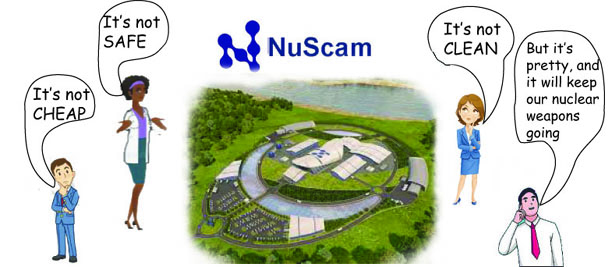
- In New Jersey, ratepayers form Association to stop the bailing out of nuclear power. Quite a lot of hurdles for NuScam’s Utah project, and only 27 of UAMPS members signed up.
- Long-delayed remediation of a nuclear waste site near Pittsburgh.
UK.
- Rolls Royce and Exelon get together to market ‘small’ nuclear reactors. Small nuclear reactor plan by Rolls Royce consortium – not likely to be economically feasible. Relentless lobbying by Small Nuclear Reactor companies still doesn’t make them economic or safe.
- Suffolk County Council raised over 50 concerns about the Sizewell nuclear project, but UK govt going ahead anyway? UK’s Royal Society for the Protection of Birds condemns the Sizewell nuclear project. Guardians of UK’s precious habitat in Suffolk are fearful of government decision on Sizewell nuclear plan.
- Consortium wants to take over Wylfa nuclear power project – includes Bechtel, Southern Comapny and Westinghouse.
- China’s ambition to build Bradwell nuclear plant in Essex will likely fail on national security grounds.
- Hunterston nuclear reactor allowed to restart, despite increasing cracks in the graphite core.
- Dismantling of Trawsfynydd nuclear power plant held back due to coronavirus outbreak.
MIDDLE EAST. Financial problems, proliferation concerns put the brakes on nuclear development in the Middle East.
EUROPE. U.S and Russia battling it out to market new nuclear reactors to Eastern Europe countries.
Source: UxC Research. New European Court of Auditors report has concerns about the EU’s nuclear fusion project.
BELARUS. Belarus shuts down its newly inaugurated nuclear power plant to replace equipment.
IRAN. Iran’s president calls on Biden to return to nuclear deal. Iran moderates hail Biden win, but any nuclear talks expected to be fraught.
SOUTH AFRICA. NuScam pushing to sell its ”small” nuclear reactors to South Africa.
INDIA. Nuclear lobby gets its tentacles into education in India
RUSSIA. Putin and officials discuss huge new underground bunker almost completed. Russia shuts down West Russian nuclear reactor.
CANADA. Canada’s Greens call on federal government to abandon nuclear and invest in renewables.
AUSTRALIA. Senate dumps on the Australian government’s radioactive waste plan.
Topics in today’s “Nuclear” headlines on Google News
There were 81 headlines about nuclear issues (plus a few about other topics, but using the word ”nuclear in the articles’ heading). 
The majority (38) of the 55 articles about “peaceful ” nuclear reactors, were supporting nuclear power. The top topics by far were favouring the development of nuclear reactors, and – (surprise surprise) of Small Nuclear Reactors. The top reason given – that nuclear power is essential to combat climate change. In not one of the articles was that assumption challenged or questioned in any way. Lesser arguments – nuclear power for space exploration, some comforting stories about solving the wastes, fusion, hydrogen, and safety.
There were 9 ‘neutral’articles , mainly on developing nuclear power, with some on Fukshima and wastes, carefully factual only.
8 articles basically opposed nuclear power, mainly against the development of Small Nuclear Reactors, a couple discussed safety and radiation hazards.
26 articles concerned nuclear weapons, mostly dealing with policies. These are generally written in an informative and neutral style. There was only one that seemed in favour of weapons, strongly opposing the UN Nuclear Ban Treaty. Despite that general neutral style, there is often a subtle undertone that the weapons of Western countries are OK, but those of Russia, China, North Korea are not acceptable.
In the 10 articles deploring nuclear weapons, there was much feeling, individual stories, and a consideration of the human consequences for weapons workers, ”downwinders”, and victims of nuclear bombing.
Relentless lobbying by Small Nuclear Reactor companies still doesn’t make them economic or safe

Telegraph 14th Nov 2020 ”………Rolls-Royce, via a relentless lobbying campaign over the past few years, seems to have convinced the  Government that its “mini-nukes” project is a runner. It claims billions are needed from taxpayers to underpin investment in a new production line that will reduce the costs and risks compared with bespoke new reactors such as the £22bn monster at Hinkley Point C.
There are plenty of reasons to be sceptical that even with its nuclear submarine experience, Rolls and its partners can pull it off. The technology is unproven anywhere and – as anti-nuclear campaigners argue – more reactors inevitably mean more potential points of failure. Nuclear power has a poor record of delivering its budgets too…….”
American universities in the US nuclear weapons complex

US universities should reject, not invest in, nuclear weapons Schools of mass destruction https://beyondnuclearinternational.org/2020/11/15/schools-of-mass-destruction/
American universities in the US nuclear weapons complex
An ICAN report
Universities across the United States are identified in this report for activities ranging from directly managing laboratories that design nuclear weapons to recruiting and training the next generation of nuclear weapons scientists. Much of universities’ nuclear weapons work is kept secret from students and faculty by classified research policies and undisclosed contracts with the Defense Department and the Energy Department. The following is the executive summary from ICAN’s report: Schools of Mass Destruction, with some changes made for timeliness. Posted on November 15, 2020 by beyondnuclearinternational
Over the next ten years, the Congressional Budget Office estimates U.S. taxpayers will pay nearly $500 billion to maintain and modernize their country’s nuclear weapons arsenal, or almost $100,000 per minute. A separate estimate brings the total over the next 30 years to an estimated $1.7 trillion. In a July 2019 report, National Nuclear Security Administrator Lisa Gordon-Haggerty wrote, “The nuclear security enterprise is at its busiest since the demands of the Cold War era.”
In addition to large amounts of funding, enacting these upgrades requires significant amounts of scientific, technical and human capital. To a large extent, the U.S. government and its contractors have turned to the nation’s universities to provide this capital.
At the same time, the United States is shirking its previous commitments to nuclear arms control and reducing nuclear risks despite its obligation under Article VI of the Nuclear Non-Proliferation Treaty to pursue good-faith measures towards nuclear disarmament.
In August 2019, the United States officially withdrew from the landmark 1987 Intermediate-Range Nuclear Forces Treaty, testing a treaty-prohibited missile shortly thereafter. The Trump Administration’s 2018 Nuclear Posture Review expanded the circumstances under which the United States would consider the first use of nuclear weapons and called for the development of two new sea-based low-yield nuclear weapon systems.
Internationally, many member states of the United Nations have recognized the devastating humanitarian and environmental impacts of nuclear weapons: debating, adopting, signing and now ratifying the 2017 Treaty on the Prohibition of Nuclear Weapons.
Despite these debates, U.S. universities have continued to build connections to the U.S. nuclear weapons complex. Although students and faculty have opposed university participation in nuclear weapons research and development at various points in the last 70 years, such participation continues.
Universities involve themselves in the nuclear weapons complex through the four channels listed below. In return for this engagement, universities receive funding, access to research facilities, and specific career opportunities for students.
1) Direct Management
A handful of universities directly manage nuclear weapons related activities on behalf of the federal government, retaining contracts worth billions of dollars per year collectively. These include the University of California, Texas A&M University, Johns Hopkins University, the Massachusetts Institute of Technology, and the University of Rochester.
2) Institutional Partnerships
Many of the National Nuclear Security Administration’s (NNSA) sites advertise collaborative agreements with local and national universities. These formal agreements allow the institutions to cooperate on research and share personnel and expertise. They can also provide university researchers access to funding and advanced facilities in the NNSA laboratories. The report highlights more than 30 such agreements with schools in 18 states.
3) Research Programs and Partnerships
In addition to formal institutional partnerships, numerous connections exist between universities and the nuclear weapons complex at the research project level. In a report delivered to Congress in July 2019, the NNSA highlights that more than $65 million in grants were delivered to academic institutions in the last year to support stockpile stewardship. When including grants and subcontracts from the NNSA labs as well, the total amount of funding to universities for research may be higher than $150 million per year.
4) Workforce Development Programs
Former Department of Energy Secretary Rick Perry has written that finding “the next generation workforce of world-class scientists, engineers and technicians is a major priority.” Through university partnerships, vocational training programs and research fellowships, the NNSA creates employment pipelines for the development of its future workforce.
A primary goal of this report is to facilitate a shared understanding of university connections to nuclear weapons research and development. A common factual basis will help communities of university faculty, students and administrations engage in robust internal debates and take action. Universities would not willingly participate today in the production of chemical and biological weapons; for the same humanitarian reasons, no university should seek an association with the other category of weapons of mass destruction: nuclear weapons.
While American universities have played a key role in the development and continuation of nuclear weapons, they can now join U.S. cities and states that have rejected U.S. nuclear weapons and called on the federal government to support nuclear reductions and the Treaty on the Prohibition of Nuclear Weapons. In light of the research presented, this report offers the following recommendations to universities:
Recommendations
• Provide greater transparency into connections with the nuclear weapons complex;
• Stop directly managing nuclear weapons production sites and dissolve research contracts solely related to nuclear weapons production;
• For contracts with dual-purpose research applications, demand greater transparency and create specific processes for ethical review of this research;
• Advocate for reinvestment of weapons activities funding to non-proliferation and environmental remediation efforts; and
• Join cities and state legislatures in urging the federal government to support the 2017 Treaty on the Prohibition of Nuclear Weapons and reverse course on nuclear arms control backsliding.
See the full list of universities.
The above is the Executive Summary of ICAN’s report on US Universities. Read the full report. Beyond Nuclear is a member of ICAN.


1 This Month
23 April – WEBINAR – Why new nuclear reactors are the wrong tools for decarbonization Thursday, April 23 • 1 AM – 2 AM AEST

Pine Ridge Uranium is the real threat, not Tehran- Tell Burgum: Stop the Extraction.
Chernobyl: The Lost Tapes – A good documentary on Chernobyl on SBS available On Demand for the next 3 weeks– https://www.sbs.com.au/ondemand/tv-program/chernobyl-the-lost-tapes/2352741955560
To see nuclear-related stories in greater depth and intensity – go to https://nuclearinformation.wordpress.com
-
Archives
- April 2026 (275)
- March 2026 (251)
- February 2026 (268)
- January 2026 (308)
- December 2025 (358)
- November 2025 (359)
- October 2025 (376)
- September 2025 (257)
- August 2025 (319)
- July 2025 (230)
- June 2025 (348)
- May 2025 (261)
-
Categories
- 1
- 1 NUCLEAR ISSUES
- business and costs
- climate change
- culture and arts
- ENERGY
- environment
- health
- history
- indigenous issues
- Legal
- marketing of nuclear
- media
- opposition to nuclear
- PERSONAL STORIES
- politics
- politics international
- Religion and ethics
- safety
- secrets,lies and civil liberties
- spinbuster
- technology
- Uranium
- wastes
- weapons and war
- Women
- 2 WORLD
- ACTION
- AFRICA
- Atrocities
- AUSTRALIA
- Christina's notes
- Christina's themes
- culture and arts
- Events
- Fuk 2022
- Fuk 2023
- Fukushima 2017
- Fukushima 2018
- fukushima 2019
- Fukushima 2020
- Fukushima 2021
- general
- global warming
- Humour (God we need it)
- Nuclear
- RARE EARTHS
- Reference
- resources – print
- Resources -audiovicual
- Weekly Newsletter
- World
- World Nuclear
- YouTube
-
RSS
Entries RSS
Comments RSS
 nuclear-news