Taiwan warns Japan over radioactive water release
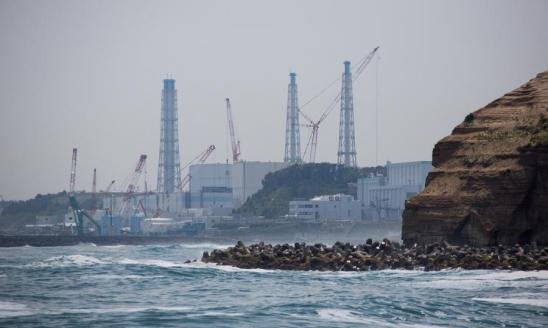
The Fukushima Daiichi nuclear power plant in 2016. Over the years since, tens of thousands of people have worked to decontaminate the plant and stop leaks. But what to do about the leftover waste water?
September 25, 2019
Some in Taiwan also fear a repeat of Japan’s disaster as a nuclear plant sits close to fault lines on the island
Taiwan has warned Japan not to dump radioactive water from the burned-out reactor cores at the Daiichi Nuclear Power Plant in Fukushima into the nearby ocean, fearing prevailing currents may eventually push the polluted water to its own shores.
In March 2011, a devastating tsunami triggered by an undersea tremor buffeted the major nuclear base supplying power to Tokyo, and the apocalyptic disaster made a large swathe of the neighboring areas uninhabitable as well as a spillover of polluted dust into the capital city.
Taiwan’s Atomic Energy Council (AEC) fears that currents could carry polluted water across the Pacific Ocean to the coastline as far as North America, which may flow back to Taiwan in three to six years.
The AEC said on Tuesday it would file a complaint with the Japanese government if it decided to discharge the radioactive water into the sea, but it also stressed that Japanese officials and scientists had not yet reached a consensus on what to do with the staggering amount of contaminated water.
Japan’s environmental protection ministry and Tokyo Electric Power Co which owns the mangled nuclear reactors in Fukushima say the one-million-tonne storage of radioactive water used to cool the reactors to prevent further meltdown would be filled to the brim within three years.
Japan is mulling a plan to release part of the less radioactive waste water – reportedly 10,000 tonnes – into the sea, an idea that instantly stoked fears in neighboring countries, including Taiwan and South Korea.
If the water from the reactors enters the Pacific Ocean, it would first be carried by currents to North America from Alaska, Canada’s British Columbia all the way down to California, before moving southward and reaching Taiwan in three to six years, according to the US National Oceanic and Atmospheric Administration and the Germany-based Helmholtz Centre for Ocean Research.
That said, it is believed that by the time the radioactive water returned to Asia and reached Taiwan, the pollutants would have been attenuated to a concentration of nearly one in 10,000, far less harmful after the dilution process in the vast Pacific Ocean.
The island’s nuclear energy watchdog says that water and fishery products in nine ports across Taiwan are regularly sampled to test for radioactivity, without having any abnormal findings so far.
No comments yet.
1 This Month

of the week – Shut Down Drone Warfare!


Tell the Ukrainian Government to Drop Prosecution of Peace Activist Yurii Sheliazhenko

Petition to revoke the licensing of the Near Surface Nuclear Disposal Facility (NSDF) at Chalk River. https://www.ourcommons.ca/petitions/en/Petition/Details?Petition=e-7247
To see nuclear-related stories in greater depth and intensity – go to https://nuclearinformation.wordpress.com
-
Archives
- March 2026 (251)
- February 2026 (268)
- January 2026 (308)
- December 2025 (358)
- November 2025 (359)
- October 2025 (376)
- September 2025 (257)
- August 2025 (319)
- July 2025 (230)
- June 2025 (348)
- May 2025 (261)
- April 2025 (305)
-
Categories
- 1
- 1 NUCLEAR ISSUES
- business and costs
- climate change
- culture and arts
- ENERGY
- environment
- health
- history
- indigenous issues
- Legal
- marketing of nuclear
- media
- opposition to nuclear
- PERSONAL STORIES
- politics
- politics international
- Religion and ethics
- safety
- secrets,lies and civil liberties
- spinbuster
- technology
- Uranium
- wastes
- weapons and war
- Women
- 2 WORLD
- ACTION
- AFRICA
- Atrocities
- AUSTRALIA
- Christina's notes
- Christina's themes
- culture and arts
- Events
- Fuk 2022
- Fuk 2023
- Fukushima 2017
- Fukushima 2018
- fukushima 2019
- Fukushima 2020
- Fukushima 2021
- general
- global warming
- Humour (God we need it)
- Nuclear
- RARE EARTHS
- Reference
- resources – print
- Resources -audiovicual
- Weekly Newsletter
- World
- World Nuclear
- YouTube
-
RSS
Entries RSS
Comments RSS
 nuclear-news
Leave a comment