Anti-Olympics groups want more attention put on event’s downfalls

The 2020 Olympics Are Likely to Be a Disaster

Beach in Fukushima Prefecture reopens for first time since 2011 disasters

TEPCO to decommission all four reactors at Fukushima Daini

Growing foreign resident population in Fukushima Prefecture now numbers more than 14,000, says new report

TEPCO to decommission Fukushima Daini nuclear plant

TEPCO begins studying dislodged reactor cover

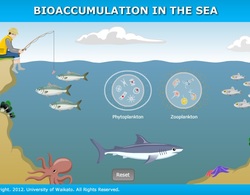
Temporal variation of radionuclides contamination of marine plants on the Fukushima coast after the East Japan nuclear disaster
UK Nuclear Finance: From No Subsidies to Nuclear Tax
|
The hope is that the “regulated asset base”, or RAB model, will make major infrastructure projects cheaper by shifting the risk of spiralling costs from the developer to the taxpayer. Under the model, the developer would receive a regulated price to give it a return on its investment expenditure, including during the construction period, and this would be levied on energy bills. In the case of an extreme overrun, the government – effectively the taxpayer – could either have to step in and pay the extra cost or scrap the project and pay compensation to investors. The Government says its assessment of the RAB model has concluded that it has the potential to reduce the cost of raising private finance for new nuclear projects, thereby reducing consumer bills and maximising value for money for consumers and taxpayers. (1) The energy industry will have until mid-October to respond to the plans before a final decision is made by ministers. (2) Dr Doug Parr, the chief scientist at Greenpeace, said: “The nuclear industry has gone in just 10 years from saying they need no subsidies to asking bill payers to fork out for expensive power plants that don’t even exist yet and may never. This ‘nuclear tax’ won’t lower energy bills – it will simply shift the liability for something going wrong from nuclear firms to consumers.” Last summer, when the plans first emerged, the economist Dieter Helm, an influential government adviser, backed the RAB model as a better deal than the contract handed to EDF Energy to build the Hinkley Point project. But he added that it is “neither necessary nor desirable to meet the twin objectives of security of supply and decarbonisation No smart contracting and regulating framework can magic away the deep challenges that nuclear faces, notably: the possibility that in the next 60 years much cheaper new low carbon technologies may become available, possibly including new nuclear ones too; the very large upfront and sunk costs; the risk and the safety regulation; and the challenges of getting rid of the waste.” (3) “Let’s face it: nuclear power is hideously dear and far from ideal”, says Nils Pratley in the Guardian. “The government should be backing renewables, not tying itself to an expensive nuclear future. That bill-payers got stuffed in the deal that brought the Hinkley Point C project into existence is beyond dispute these days. Even government ministers barely quibble with the National Audit Office’s assessment that consumers will be paying through the nose for 35 years.” He says the “regulated asset base” (RAB) approach exposes consumers to the cost of overruns, and in effect also requires them to provide financing at zero interest, a point made by the National Infrastructure Commission last year. The NIC report said: “There is limited experience of using the RAB model for anything as complex and risky as nuclear.” Second, no financing model can disguise the core truth about nuclear – the technology is hideously expensive. Even after recognising the need to have secure “baseload” supplies, it recommended commissioning only one more nuclear plant, on top of Hinkley, before 2025. That remains a common sense analysis. Renewables are winning the price race. Let us pray, then, that a love-in with RAB does not reignite ministerial fantasies about a “resurgence” in nuclear. We don’t want a resurgence. We want to build as few new reactors as possible. (4) RAB financing is more usually applied to projects where there is a natural monopoly, such as the Thames Tideway where Thames Water is a monopoly provider of water and sewage services to the ratepayers who bear the burden of the additional cost. Applying a RAB to a specific project in a competitive market raises difficulties with the need to ensure that only those ratepayers who would benefit from the additional cost of a nuclear RAB would incur the additional cost. It will be difficult, for instance, to explain to consumers on non-nuclear green tariffs why they are being compelled to pay an additional cost for generating capacity that offers them no benefit. Even if an assurance of minimal risk to investors is offered, it is not clear whether the investors targeted, for example, pension funds, sovereign wealth funds and investment funds, will be willing to invest the huge sums required. Such investors have never invested in nuclear projects so the RAB model may fail simply due to lack of investors. The new funding model won’t make any difference to the construction and operation record of nuclear reactors around the world, and the record of EPRs in particular is abysmal. Nor will it change the fact that nuclear vendors are in financial disarray. (5) Dave Toke at Aberdeen University has published a layman’s guide to the ‘Regulated Asset Base’. (6) He says the system will allow the Government, though an appointed ‘Regulator’ to launder electricity consumer’s money to pay for the inevitable cost overruns, whilst the Regulator assures the public that this all represents ‘value for money’. The RAB proposals were supposed to be included in a long-awaited energy white paper that the business department has been working on for months, but, according to Bloomberg, this was blocked by the Chancellor of the Exchequer Philip Hammond, because of the potential spending implications for a new prime minister. The plans also included funding for carbon capture and storage and a domestic energy efficiency programme. Whitehall officials across departments were concerned the document was both incomplete and too sizable a policy plan to put forward just before a new premier takes over The nuclear tax will apply to all electricity consumers even if they have chosen a 100% renewable tariff or live in Scotland where the Government is opposed to the construction of new nuclear power stations.http://www.no2nuclearpower.org.uk/wp/wp-content/uploads/2019/07/NuClearNewsNo118.pdf |
|

A damning new report on the unlikely future for Small Modular Nuclear Reactors (SMRs)
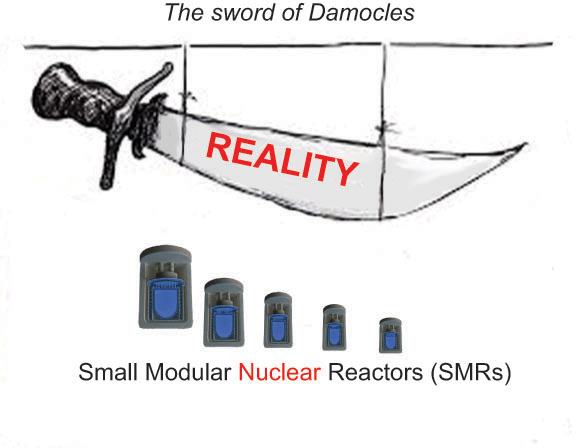 NFLA support joint report with the Nuclear Consulting Group which looks at the prospects of Small Modular Nuclear Reactors in the UK and globally and concludes they will not be built to any significant scale http://www.nuclearpolicy.info/news/nfla-joint-ncg-report-on-smrs/ 25 Jul 19
The Nuclear Free Local Authorities (NFLA) welcomes cooperating with the Nuclear Consulting Group (NCG) in its development of one of the most detailed analyses of the technologies being developed to create small modular nuclear reactors (SMRs) in the UK and around the world. This report concludes there remains fundamental barriers to any significant development of this new nuclear technology, and its prospects for creating some kind of ‘nuclear renaissance’ are unlikely to be realised.
The report has been developed by Professor Stephen Thomas of Greenwich University, Dr Paul Dorfman of University College London and NCG Founder, Professor M V Ramana of British Columbia University, and the NFLA Secretary. (1) The global nuclear industry has put forward SMRs as a panacea to the problems of high cost and the difficulty of financing large nuclear reactors; a ready-made alternative that can fill the gap.
However, as the NCG / NFLA report outlines in detail, there are huge obstacles to overcome. Some of these are technical issues, others are around building up an effective supply chain, while the financing of such schemes will only be possible with significant and large subsidy from the public purse.
The report starts with considering the failures in delivering larger nuclear reactors, and then takes in turn each type of SMR technology that has been put forward by companies involved in the nuclear industry.
The report outlines in some detail UK Government policy on SMRs. It notes that after some considerable early promotion of the technology, interest has markedly cooled, despite another fairly limited amount of money being offered to develop the technology, announced earlier this week. (2) The report notes the extraordinary set of conditions set out by Rolls Royce to be met by the UK Government if it is to invest significant amounts of money in its own SMR design, which the authors argue could and should not be committed to at a time when serious doubts remain about the economic viability of the technology.
At a global level, the report concludes that, as with the much-heralded ‘nuclear renaissance’ of recent times, SMRs will not be built in any significant scale. The authors note that the two main rationales for SMRs – promised lower overall project costs and lowering the risk of cost overruns by shifting to an assembly line approach – are more than offset by the loss of scale economies that the nuclear industry has pursued for the past five decades. Indeed, many of the features of the SMRs being developed are the same ones that underpinned the latest, failed generation of large reactors. Reactor cost estimates will remain with a large degree of uncertainty until a comprehensive review by national nuclear regulators is completed, the design features are finalised and demonstration plants are built. Whether the economies claimed from the use of production line techniques can be achieved will only be known if reactors are built in very large numbers, and at significant cost.
Spending so much time and effort pursuing such an uncertain technology, at a time when the ‘climate emergency’ has now reached the political and public lexicon in requiring urgent attention, does not appear to be an effective use of taxpayer resources. Abundant evidence shows that renewable energy supply, storage, distribution and management technologies are being developed ever cheaper and swifter at a time when real urgency is required across society and government to mitigate the worst effects of climate change. SMRs are no answer to creating low-carbon economies by 2030 or close to that date. Governments should consider this report carefully and not be diverted by an unproven technology inherent with many difficult issues still to overcome.
In the overall view of the report authors, the prospects for SMRs in the UK and Worldwide are limited and not worth the huge levels of effort or finance being proposed for them.
NFLA Steering Committee Chair Councillor David Blackburn said:
“This excellent independent analysis on the prospects for small modular nuclear reactors needs to be read by the new Business Secretary Andrea Leadsom and senior civil servants in the UK Government who have been providing support to the development of small modular nuclear reactors. It is clear from this joint report between the NCG and the NFLA that this technology is not the panacea to kick start new nuclear reactors, far from it. As Councils around the country declare ‘climate emergencies’ it is clear from this report that scarce available resource should not be spent developing this technology but rather diverted into renewable energy, smart energy, energy efficiency and energy storage projects instead. As large new nuclear like at Moorside and Wylfa has failed to be realised, it is time now to move away from small nuclear reactors as an expensive sideshow to the critical needs of mitigating carbon.”
Report co-author Professor Steve Thomas added:
“Nuclear proponents are saying that SMRs will be the next big thing – but the reality is they are as expensive as large reactors, produce the same waste, carry the same radiation risks, and are a long way from any real deployment.”
Ends – for more information please contact Sean Morris, NFLA Secretary, on 00 44 (0)161 234 3244.
Notes for editors:
(1) NCG / NFLA report – Prospects for Small Modular Reactors in the UK and Worldwide, July 2019
http://www.nuclearpolicy.info/wp/wp-content/uploads/2019/07/Prospects-for-SMRs-report-2.pdf
(2) Energy Live News, Government mulls investing £18 million to develop UK’s first mini nuclear reactor, 23rd July 2019 https://www.energylivenews.com/2019/07/23/government-mulls-investing-18m-to-develop-uks-first-mini-nuclear-reactor/
Soaring temperatures in Europe – risk of record ice melt in Greenland
 Europe hit by heatwave and hailstorms as experts warn Greenland ice could melt , 27 July 19, Soaring temperatures have broken records in Germany, France and the Netherlands, as a heatwave gripped Europe for the second time in a month, while experts warned the heat could move north towards Greenland causing record ice melts. Europe hit by heatwave and hailstorms as experts warn Greenland ice could melt , 27 July 19, Soaring temperatures have broken records in Germany, France and the Netherlands, as a heatwave gripped Europe for the second time in a month, while experts warned the heat could move north towards Greenland causing record ice melts.
Key points:
On Friday (AEST), temperatures reached as high as 43.6 degrees Celsius near Paris as fires devastated some 6,500 hectares of forests, farm fields and other land. Belgium, where temperatures topped 41C in some areas, suffered the first death recorded this year as a direct result of the record-breaking heat when a woman was found dead near her caravan close to the beach……. The UN’s weather agency is warning that record-breaking temperatures will become more frequent in the near future due to climate change. ….. Hailstorms cause flight delays, halt Tour de France But the heat was closely followed by hailstorms, forcing an extraordinary halt to the Tour de France. The riders had pushed through a sweltering 40C — riding with ice vests and drinking double the usual amount of liquids — before organisers stopped the world’s premier cycling event for the safety of riders when the sudden storm made the route through the Alps too dangerous…….. High temperatures could melt Greenland ice sheet
The UN’s weather agency voiced concern that the hot air which produced the extreme heatwave is headed towards Greenland, where it could contribute to increased melting of ice. Ice has been melting at high levels over the last few weeks in Greenland, which is home to the world’s second-largest ice sheet…… The Greenland Ice Sheet covers 80 per cent of the island and has developed over many thousands of years, with layers of snow compressed into ice. The dome of ice rises to a height of 3,000 metres and the total volume of the ice sheet is approximately 2,900,000 cubic kilometres, which would raise global sea levels by 7 metres if it melted entirely, according to the Polar Portal website. https://www.abc.net.au/news/2019-07-27/europe-hit-by-heatwave-and-hailstorms/11352766 |
|
Germany’s Grohnde nuclear plant headed for shutdown, due to high temperatures
Nuclear power plant in Germany at verge of getting switched off due to heat wave – Nuclear phase-out, 26 Jul 2019, Benjamin Wehrmann https://www.cleanenergywire.org/news/nuclear-power-plant-germany-verge-getting-switched-due-heat-wave
A nuclear power plant in northern Germany has come to the verge of being taken off the grid on Friday, a Lower Saxony state environment ministry spokesperson told Clean Energy Wire. The ministry on Thursday had said the Grohnde nuclear plant near Hannover would likely be taken offline, as high temperatures were excessively warming a river used for the plant’s cooling system, and should be started up again once the heat wave that has hit Germany and other European countries with unprecedented temperatures has abated. On Friday, the plant’s operator, Preussen Elektra had informed the ministry that water temperatures were not rising as quickly as expected. However, precautions for a possible shutdown were taken nonetheless, the operator said. The river Weser, into which the plant’s cooling water is discharged, is suffering low water levels and has warmed to above 26 degrees Celsius. Additional heat from the nuclear reactor could damage the river’s ecosystem, the ministry said.
According to preliminary figures from meteorological service DWD, 25 June set another temperature record for Germany. Lingen in Lower Saxony recorded a high of 42.6 degrees, breaking the previous day’s all-time German high of 40.5 degrees.
Fears about a Soviet-era nuclear waste site, on the planned route for a Moscow expressway.
|
Radiation fears cloud plans for Moscow expressway Protesters say construction risks disturbing dangerous particles at nuclear waste site , Ft.com,Nastassia Astrasheuskaya in Moscow 26 July 19, A plan to build a new Moscow road adjacent to a Soviet-era nuclear waste site has put city planners on a collision course with activists and residents who fear the spread of radiation in the Russian capital. Moscow officials deny there is any risk from building the so-called Southeast Chord — a 34km expressway designed to alleviate growing congestion in the city of more than 12m people. The motorway would run past the Moscow Polymetal Plant and its radioactive waste disposal site — dating back to the 1930s — where dangerous volumes of radium, thorium and uranium were stored. Opponents of the plan say they want to stop “Chernobyl repeating in Moscow” and warn that construction risks releasing buried particles into the air and waterways. They fear these will be picked up on vehicles using the road and dispersed across the city. “Of course this is not on the Chernobyl scale, but it can undoubtedly lead to additional health problems,” said Konstantin Fomin of Greenpeace Russia. Hundreds of people took to the streets this week to protest against the road plan. The public outcry comes amid a series of protests in Moscow this month against the decision not to allow opposition figures to contest upcoming local elections, and follows mass rallies that helped free a Russian journalist in June who had been detained on fabricated charges. …….People in Belarus, Ukraine and south-west Russia continue to suffer the effects of the 1986 Chernobyl nuclear plant explosion, which has contaminated large territories and resulted in significant growth in thyroid gland cancer rates. Some 30 per cent of Russians believe a catastrophe similar to Chernobyl could reoccur, according to a recent Levada poll. ……… Rosatom, Russia’s state nuclear corporation, which controls the plant, declined to comment. In a letter to Greenpeace published by the organisation, Rosatom admitted some areas of the plant contained radioactive waste and said the Moscow government had not co-ordinated the road construction areas with the plant. “We are being ignored. They are planning to build the motorway anyway. Why can they let such a catastrophe take place and no one is doing anything about it?” wrote Lucy Pickalova, a resident of the area, on her Facebook page. https://www.ft.com/content/771f7ec8-aebf-11e9-8030-530adfa879c2 |
|
Bikini Atoll, site of nuclear bomb testing, still 10 times more radioactive than Chernobyl
After 61 Years, U.S. Testing Site For Nuclear Weapons Still 10 Times More Radioactive Than Chernobyl https://www.forbes.com/sites/davidbressan/2019/07/25/after-60-years-u-s-testing-site-for-nuclear-weapons-still-10-times-more-radioactive-than-chernobyl/#396a418e26be David Bressan
Between 1946 and 1958 the atolls of the Marshall Islands in the Pacific Ocean were testing ground for the United States nuclear arsenal. The first bomb, called Able, was detonated July 25, 1946, on Bikini Atoll. The first-ever American hydrogen bomb, with the code name Ivy Mike, was tested on Enewetak in 1951. The 1954 Castle Bravo hydrogen bomb was 1,000 times more powerful than Little Boy, the uranium bomb that destroyed the Japanese city of Hiroshima. In 12 years the U.S. tested 67 nuclear weapons on the Bikini and Enewetak Atolls. The craters formed by the explosions are visible from space; however, less obvious is the radioactive contamination of the entire area.
A survey conducted in 2015 found concentrations of radioactive plutonium-239 and -240 in the soil of Bikini and Enewetak almost ten times higher than levels in the Chernobyl exclusion zone, where thirty-three years ago the reactor experienced a catastrophic core meltdown, exploded and parts of the nuclear fuel were released. Levels of gamma radiation were also higher than previously reported on Bikini and significantly elevated on sites tested on Enewetak and Rongelap Atolls.. Radioactive fallout from the Castle Bravo test on March 1, 1954, also contaminated the nearby Rongelap and Utirik Atolls, prompting the evacuation of the local population. Still today some sites surpass the maximum exposure for radiation considered safe by experts. Apart the 67 tests, also a leaking nuclear waste repository is contributing to the radioactive pollution of the area.
On Runit Island, one of forty islands forming the Enewetak Atoll, sits “The Dome” – a 100 meters wide crater filled with 85,000 cubic meters of radioactive debris and waste and covered with half a meter of concrete. The dome sits on permeable rocks and in 2013 leaks of radioactive water were noted at the base of the structure. As sea levels are rising the entire site will be flooded, potentially causing widespread radioactive contamination, including plutonium-239.
1 This Month

of the week – Shut Down Drone Warfare!


Tell the Ukrainian Government to Drop Prosecution of Peace Activist Yurii Sheliazhenko

Petition to revoke the licensing of the Near Surface Nuclear Disposal Facility (NSDF) at Chalk River. https://www.ourcommons.ca/petitions/en/Petition/Details?Petition=e-7247
To see nuclear-related stories in greater depth and intensity – go to https://nuclearinformation.wordpress.com
-
Archives
- April 2026 (19)
- March 2026 (251)
- February 2026 (268)
- January 2026 (308)
- December 2025 (358)
- November 2025 (359)
- October 2025 (376)
- September 2025 (257)
- August 2025 (319)
- July 2025 (230)
- June 2025 (348)
- May 2025 (261)
-
Categories
- 1
- 1 NUCLEAR ISSUES
- business and costs
- climate change
- culture and arts
- ENERGY
- environment
- health
- history
- indigenous issues
- Legal
- marketing of nuclear
- media
- opposition to nuclear
- PERSONAL STORIES
- politics
- politics international
- Religion and ethics
- safety
- secrets,lies and civil liberties
- spinbuster
- technology
- Uranium
- wastes
- weapons and war
- Women
- 2 WORLD
- ACTION
- AFRICA
- Atrocities
- AUSTRALIA
- Christina's notes
- Christina's themes
- culture and arts
- Events
- Fuk 2022
- Fuk 2023
- Fukushima 2017
- Fukushima 2018
- fukushima 2019
- Fukushima 2020
- Fukushima 2021
- general
- global warming
- Humour (God we need it)
- Nuclear
- RARE EARTHS
- Reference
- resources – print
- Resources -audiovicual
- Weekly Newsletter
- World
- World Nuclear
- YouTube
-
RSS
Entries RSS
Comments RSS
 nuclear-news