Niigata gov’t to handle radioactive mud stored since Fukushima crisis

January 9, 2019
NIIGATA – The Niigata prefectural government said Tuesday it will dispose of radioactive mud that has been stored since the 2011 Fukushima nuclear disaster and ask the operator of the crisis-hit plant to shoulder the costs.
The prefecture in central Japan, located about 200 kilometers from the Fukushima Daiichi power plant, has stored around 60,000 tons of mud containing radioactive cesium and requested Tokyo Electric Power Company Holdings Inc since 2012 to dispose of it.
But the operator has refused, saying it is not able to handle industrial waste. The disposal costs are estimated at 3 billion yen and TEPCO formally expressed its readiness to pay in December.
The level of radioactive cesium in the mud is below 8,000 becquerels per kilogram, which could be disposed of by regular landfill operations, and most of it is below 100 becquerels per kg, according to the prefecture.
The local government has stored the mud instead of disposing of it, arguing that TEPCO should take responsibility for the damage caused by fuel meltdowns at the plant triggered by the massive earthquake and tsunami on March 11, 2011.
The Niigata prefectural government has also stored the waste as some local residents were concerned about safety despite the low level of radioactive cesium.
Niigata Gov. Hideyo Hanazumi said at a press conference Tuesday it is “not realistic” to keep asking TEPCO to dispose of the mud and expressed “regret” that it had taken so long for the operator to decide how to handle the matter.
The contaminated mud, produced at an industrial water supply facility that takes in water from a river containing radioactive materials, is growing by 5,000 tons annually and the storage facility could become full later this year, according to the prefecture.
Municipalities other than Niigata have also been grappling with radioactive mud as a result of the crisis at the six-reactor Fukushima complex, with some shouldering the disposal costs.
No comments yet.
1 This Month
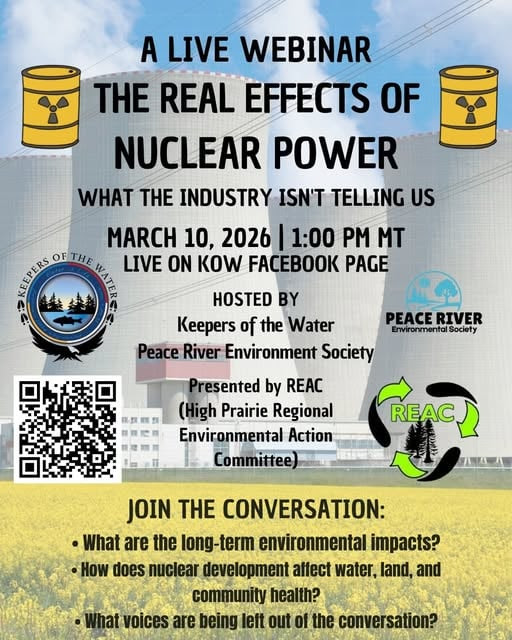
10 March A LIVE WEBINAR THE REAL EFFECTS OF NUCLEAR POWER
What the Industry Isn’t Telling Us
1:00 PM Mountain, 2 pm Central, 3 pm Eastern. Live on the Keepers of the Water Facebook page


18 March Webinar @ 1 PM EST: An Assessment of SMR Projects: The Case of Canada
register for the zoom:
https://us02web.zoom.us/webinar/register/WN_o8BIIOUvQ2ONJR1nta65DQ#/registration


of the week – STOP SMALL MODULAR REACTORS IN CANADA
To see nuclear-related stories in greater depth and intensity – go to https://nuclearinformation.wordpress.com
-
Archives
- March 2026 (119)
- February 2026 (268)
- January 2026 (308)
- December 2025 (358)
- November 2025 (359)
- October 2025 (376)
- September 2025 (258)
- August 2025 (319)
- July 2025 (230)
- June 2025 (348)
- May 2025 (261)
- April 2025 (305)
-
Categories
- 1
- 1 NUCLEAR ISSUES
- business and costs
- climate change
- culture and arts
- ENERGY
- environment
- health
- history
- indigenous issues
- Legal
- marketing of nuclear
- media
- opposition to nuclear
- PERSONAL STORIES
- politics
- politics international
- Religion and ethics
- safety
- secrets,lies and civil liberties
- spinbuster
- technology
- Uranium
- wastes
- weapons and war
- Women
- 2 WORLD
- ACTION
- AFRICA
- Atrocities
- AUSTRALIA
- Christina's notes
- Christina's themes
- culture and arts
- Events
- Fuk 2022
- Fuk 2023
- Fukushima 2017
- Fukushima 2018
- fukushima 2019
- Fukushima 2020
- Fukushima 2021
- general
- global warming
- Humour (God we need it)
- Nuclear
- RARE EARTHS
- Reference
- resources – print
- Resources -audiovicual
- Weekly Newsletter
- World
- World Nuclear
- YouTube
-
RSS
Entries RSS
Comments RSS
 nuclear-news
Leave a comment