Russia says it’s planning for the US to deploy nuclear weapons to Europe after ban treaty abandoned, Business Insider, Andrew Osborn and Tom Balmforth, Reuters, 26 Nov 18
Russia and the United States have both accused each other of violating a Cold-war era arms treaty that prohibits short- and intermediate-range nuclear weapons within Europe.
President Donald Trump has threatened to quit the treaty, pointing to Russian violations, but National Security Advisor John Bolton has said the US is a long way from discussing new nuclear weapons deployments to Europe.
Russia said on Monday that despite US promises, it is still planning for the US to deploy new nuclear missiles.
MOSCOW (Reuters) – Russia said on Monday it was planning for a U.S. deployment of new nuclear missiles in Europe following Washington’s planned withdrawal from a landmark Cold war-era arms control treaty despite the United States denying it has such plans.
Russia is keen to dissuade U.S. President Donald Trump from carrying out a threat for Washington to quit the Intermediate-Range Nuclear Forces (INF) Treaty which eliminated both countries’ land-based short- and intermediate-range nuclear missiles from Europe.
In small villages along the eastern coast of Bangladesh, researchers have noticed an unexpectedly high rate of miscarriage. As they investigated further, scientists reached the conclusion that climate change might be to blame. Journalist Susannah Savage went into these communities to find out more.
“….in a small village on the east coast of Bangladesh… While miscarriages are not out of the ordinary, scientists who follow the community have noticed an increase, particularly compared to other areas. The reason for this, they believe, is climate change….
“Nothing grows here anymore,” says Al-Munnahar. Not many years ago – up until the 1990s – these swamp lands were paddy fields. If rice production back then was not profitable, it was at least viable. Not anymore. Rising waters and increasing salinity have forced the wealthiest among the villagers to change to shrimp farming or salt harvesting. Today, few paddy fields remain.
“This is climate change in action,” says Dr Manzoor Hanifi, a scientist from the International Centre for Diarrhoeal Disease Research Bangladesh (ICDDRB), a research institute. “The effect on the land is visible, but the effect on the body: that we don’t see.”
Brine and bribery
ICDDRB have been running a health and demographic surveillance site in and around the district of Chakaria, near Cox’s Bazaar, for the last thirty years, enabling them to detect even small changes in the health of the communities they monitor.
Over the last few years, many families have left the plains and moved inland, into the forest hill area—mostly those with enough money to bribe forest wardens…….
In particular, women inland are less likely to miscarry. ……..
Moreover, when comparing the whole Chakaria region to Matlab, another area monitored by ICDDRB, in a part of Bangladesh far removed from the coast, the scientists also saw a noticeable difference.
In Chakaria, 11% of pregnancies end in miscarriage. In Matlab it is 8%.
This difference, the scientists believe, is to do with the amount of salt in the water the women drink – the increase of which is caused by climate change.
Families with no choice
Sea levels are rising, in part because of the melting of icecaps, but also because the earth’s rising temperature affects atmospheric pressure: even a small change in this causes an inverse effect on the sea level.
“With a one millibar decrease in atmosphere pressure,” says Dr Hanifi, “the sea level rises by ten millimetres: a series of depressions in atmospheric pressure can cause a considerable rise in water levels in shallow ocean basins.”
When sea levels rise, salty sea water flows into fresh water rivers and streams, and eventually into the soil. Most significantly, it also flows into underground water stores – called aquifers – where it mixes with, and contaminates, the fresh water. It is from this underground water that villages source their water, via tube wells.
The water that the village pump in Failla Para spews out is a little red in colour. It is also full of salt. This does not stop villagers drinking from the pump, though – nor from bathing in it and washing and cooking their food in it.
The World Health Organization (WHO) recommends that people consume no more than 5g of salt per day. In Chakaria, those living in the coastal zone consume up to 16g per day – over three times what those in the hilly areas do.
In countries like the UK, health campaigns have cautioned against excessive salt consumption for years. It causes hypertension, increasing the risk of strokes and heart attacks, and, among pregnant women, miscarriages and preeclampsia.
These Bangladeshi families have no idea of the health risk from the water they are drinking, and even if they did, they have little choice……….
At the moment, the chance of miscarriage for women like Sharmin and Al-Munnahar is only slightly elevated. But unless something is done, says Dr Hanifi, “this will only get worse, as Bangladesh feels the effects of climate change more and more.”
As a low-lying country, full of flood plain land, Bangladesh is particularly vulnerable to changes caused by global warming.
Measuring 5.0 on the Richter scale, the quake, which hit the Japanese city at about 11.30pm local time on Friday is not believed to have caused major damage.
One Twitter user said it could be felt as far away as the country’s capital 150 miles to the south-west: ‘It was an earthquake? I felt that too! I’m staying in Tokyo and I just felt my whole Airbnb shake!’
Another said he felt a ‘long rattling in Yokohama’ – which is even further away from the Fukushima region. Despite the earthquake, no tsunami warning had been issued last night.
More than 100,000 people were displaced from the city in 2011 after a 15-metre tsunami sparked by a major earthquake led to a massive explosion in a nuclear plant.
About 18,000 people were killed by the tsunami while the explosion was said to have been the worst nuclear disaster since Chernobyl in 1986.
Reuters 22nd Nov 2018 , Vietnam’s National Assembly voted on Tuesday to abandon plans to build
two multi-billion-dollar nuclear power plants with Russia and Japan, after
officials cited lower demand forecasts, rising costs and safety concerns.
The estimated investment needed for the projects had doubled since 2009 to
nearly 400 trillion dong ($18 billion), state media Tien Phong quoted Le
Hong Tinh, vice chairman of the National Assembly’s science, technology
and environment commission, as saying earlier this month. https://www.reuters.com/article/us-vietnam-politics-nuclearpower-idUSKBN13H0VO
Olympics chief Thomas Bach said Saturday he was impressed at the “great progress” made in the reconstruction of Fukushima, in a visit to the region devastated by the 2011 tsunami and nuclear disaster
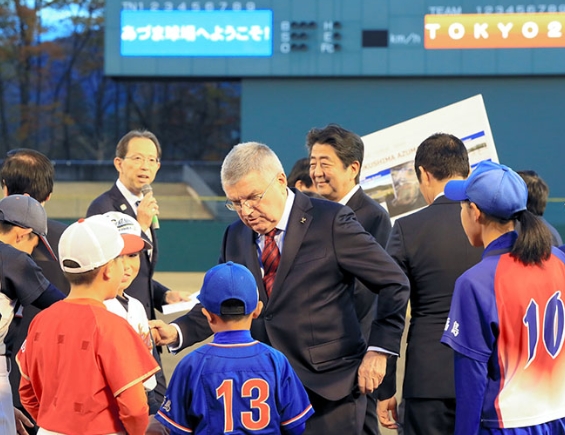
TOKYO: Olympics chief Thomas Bach said Saturday (Nov 24) he was impressed at the “great progress” made in the reconstruction of Fukushima, in a visit to the region devastated by the 2011 tsunami and nuclear disaster.
Amid hopes that hosting events will help revive the region, International Olympic Committee President Bach visited a stadium set to hold baseball and softball matches during the Tokyo 2020 Olympics.
During his visit, he told Japanese Prime Minister Shinzo Abe that he was “very much impressed” by the “great progress”.
“The Fukushima region is the suitable place to show the power of the Olympics, the power of sports,” Abe said, reiterating his hopes of showing the world the recovery of Fukushima and other disaster-hit areas during the sporting event, for which Tokyo is the designated host city.
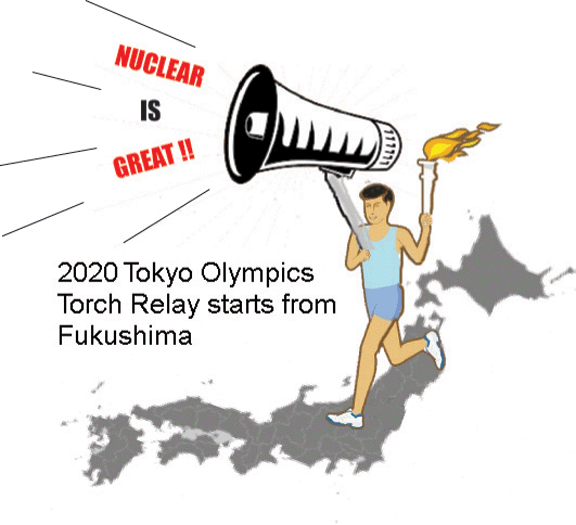
Fukushima has also been chosen as the starting point for the Olympics torch relay.
The passing of the flame is scheduled to start on March 26, 2020, and the torch will head south to the subtropical island of Okinawa – the starting point for the 1964 Tokyo Games relay – before returning north and arriving in the Japanese capital on Jul 10.
The March 2011 tsunami, triggered by a massive undersea quake, killed around 18,000 people and swamped the Fukushima nuclear plant, sending its reactors into meltdown and leading to the world’s worst nuclear disaster since Chernobyl.
Tens of thousands of people evacuated their homes. Authorities have been working to rebuild the region, about 240 kilometres north of Tokyo, although areas near the crippled plant remain uninhabitable because of radiation dangers.
Daily Mail 25th Nov 2018 Troubled utility SCANA has reached a $2 billion settlement with the South Carolina customers who sued after they were charged high rates to pay for the company’s failed nuclear construction project. SCANA announced the agreement in a news release Saturday. As part of the settlement, South
Carolina Electric & Gas Co. customers will also receive $115 million that The State newspaper reports had been set aside for soon-to-be-ousted SCANA executives.
Before the settlement can be finalized, it must receive the approval of a judge and the S.C. Public Service Commission must also approve Virginia-based Dominion Energy’s proposed buyout of SCANA, SCE&G’s parent company. Santee Cooper and South Carolina Electric & Gas Co. abandoned the V.C. Summer Nuclear Station expansion project near Columbia in 2017 following the bankruptcy of lead contractor Westinghouse. https://www.dailymail.co.uk/wires/ap/article-6425773/Utility-reaches-2B-settlement-failed-nuclear-plants.html
Anti-nuclear group undeterred by passing of pro-nuclear referendum http://m.focustaiwan.tw/news/aipl/201811250029.aspxBy Wu Hsin-yun, Ku Chuan and Evelyn Kao Taipei, Nov. 25 (CNA)Taiwanese on Saturday voted against the government’s policy of phasing-out nuclear power by 2025, prompting an environmental group opposed to nuclear power to reaffirm its support for the phasing out of all nuclear power plants.
The anti-nuclear group National Nuclear Abolition Action Platform said in a statement issued Sunday that it is wrong to return to nuclear power and promised to continue to campaign for an end to the use of nuclear power in Taiwan.
The statement came after Taiwanese voted in 10 referendums alongside Saturday’s local government elections, including one that asked: “Do you agree with abolishing the first paragraph of Article 95 of the Electricity Act, which means abolishing the provision that ‘all nuclear-energy-based power-generating facilities shall cease to operate by 2025’?”
As a result, 5,895,560 votes were cast in favor of repealing the nuclear phase-out, and 4,014,215 against the initiative, according to the Central Election Commission.
For a referendum to pass, the number of voters in favor of a proposition must exceed the number who vote against it, and reach a minimum of 4,939,267 votes, or one quarter of the 19,757,067 voters eligible to cast votes in the referendums.
Commenting on the referendum result, the anti-nuclear group said that not all those who voted in favor of stopping the nuclear phase-out are unconditional supporters of nuclear power, but rather some lack confidence in Taiwan’s energy transformation.
The result does not mean those who voted in favor of repealing the nuclear phase-out do not support the government’s nuclear-free, carbon reduction and renewable energy policy, the group said.
Currently, the decommissioning of the No. 1 and No. 2 nuclear power plants in New Taipei is underway and cannot be reversed according to the law, the group said.
The result of the referendum is most likely to impact the No. 3 nuclear plant in Pingtung and possibly postpone its decommissioning, it added.
However, as the No. 3 nuclear plant is near the active Hengchun fault line, the group said the geological environment is not suitable for extending the operational life of the nuclear plant to be or installing new units at the plant.
Taiwan can not withstand a nuclear disaster and the passage of the referendum does nothing to guarantee safety, the group noted.
The group stressed Taiwan is on the path to a nuclear-free homeland and carbon reduction and should not return to nuclear power and coal-fired plants.
Under the Referendum Act, a law repealed in a referendum has to be rescinded three days after the result is officially announced by the Central Election Commission, Cabinet spokeswoman Kolas Yotaka said Sunday.
This means the first paragraph of Article 95 of the Electricity Act will be removed.
However, “the government’s goal of making Taiwan a nuclear-free homeland by 2025 remains unchanged,” Kolas said, adding that in practice it may not be possible to postpone the phase-out of the No. 1, No. 2 and No. 3 nuclear plants.
According to the law, applications for postponement are required to be submitted 5-10 years before the scheduled retirement dates of nuclear plants, Kolas said, adding that any such applications cannot be made within the statutory time period.
As to whether the currently-mothballed No. 4 nuclear power plant will start commercial operations, Kolas said it is estimated any such reversal would take 6-7 years and cost NT$68.8 billion (US$2.22 billion).
Even if the nuclear plant is activated in 2019, it would not be ready to begin commercial operations in 2025, when the government’s goal of a nuclear-free homeland will be achieved, at which point Taiwan will have no need for nuclear power, she noted.
Climate report: Trump administration downplays warnings of looming disaster
Democrats ramp up pressure to act in wake of most sobering government analysis yet, Guardian, Oliver Milman@olliemilman Sun 25 Nov 2018
The US National Climate change assessment, the work of 300 scientists and 13 federal agencies, was released on Friday afternoon. It found that wildfires, storms and heatwaves are already taking a major toll on Americans’ wellbeing, with climate change set to “disrupt many areas of life” in the future.
The voluminous report, which warns of hundreds of billions of dollars lost, crop failures, expanding wildfires, altered coastlines and multiplying health problems, represents the most comprehensive and sobering analysis yet of the dangers posed to the US by rising temperatures……….
A White House spokeswoman, however, said the assessment was “largely based on the most extreme scenario, which contradicts long-established trends by assuming that, despite strong economic growth that would increase greenhouse gas emissions, there would be limited technology and innovation, and a rapidly expanding population”.
The spokeswoman added the next report, due in four years’ time, will “provide for a more transparent and data-driven process”.
Katharine Hayhoe, a climate scientist at Texas Tech University and a report co-author, said the White House’s statement was “demonstrably false”.
She added on Twitter: “I wrote the climate scenarios chapter myself so I can confirm it considers ALL scenarios, from those where we go carbon negative before end of century to those where carbon emissions continue to rise.”
The climate assessment galvanized Democrats, who will control the House of Representatives next year.
“The days of denial and inaction in the House are over,” said Frank Pallone, a New Jersey congressman set to chair the energy and commerce committee. “House Democrats plan to aggressively address climate change and hold the administration accountable for its backward policies that only make it worse.”
Alexandria Ocasio-Cortez, a newly elected representative from New York City who has become a standard-bearer for the left, tweeted: “People are going to die if we don’t start addressing climate change ASAP. It’s not enough to think it’s ‘important’. We must make it urgent.”
Authors of the report, which is mandated by Congress, echoed the sense of urgency and lamented the timing of its release on the day after Thanksgiving, which is usually the busiest shopping day of the year.
“This report makes it clear that climate change is not some problem in the distant future – it’s happening right now in every part of the country,” said Brenda Ekwurzel, a co-author and director of climate science at the Union of Concerned Scientists, in a statement.
“When people say the wildfires, hurricanes and heatwaves they’re experiencing are unlike anything they’ve seen before, there’s a reason for that and it’s called climate change.”……..
The president took a trip last week to see the aftermath of California’s deadliest ever wildfires, a phenomenon experts say is worsened by warming temperatures. During a visit to the town of Paradise, which was wiped out by the so-called Camp fire, Trump said he wanted “a great climate”. But he has largely blamed forest management for the blaze.
Times 25th Nov 2018, The Met Office warns tomorrow that climate change and rising sea levels will threaten more than 1.5m homes, turn farmland into marsh and wash away beaches by the end of the century. Its UK Climate Projections report
forecasts that the seas around Britain are likely to increase by 3-4ft by 2100, inundating low-lying land, putting 1.7m homes at risk and destroying many holiday beaches.
Some coastal towns may have to be abandoned because the huge cost of sea defences will make them “unviable”. Many stretches of prime, low-lying farmland could also be lost, with the lowest, such as Romney Marsh in Kent, the Somerset Levels and parts of Essex facing near-permanent inundation.
In some areas the impacts could reach far inland. Much of the farmland between King’s Lynn in Norfolk and Cambridge,
for example, would lie below the new sea level and so be at risk of turning to marsh. Across the UK, such a rise would leave 100,000 coastal properties at risk from wave erosion, with another 100,000 sited on seaside cliffs at risk from landslips. Up to 1.7m homes would face flooding, according to a recent report from the Committee on Climate Change.
The Met Officeprojections are the culmination of a three-year project commissioned by the Department for Environment, Food & Rural Affairs. The aim is to help policymakers prepare transport, power and other infrastructure for what is
likely to be the fastest change in climate humanity has experienced. Those changes are driven by greenhouse gas emissions, currently equivalent to 50bn tons of CO2 a year. About 1bn tons come from the UK, when imports and
aviation are included. https://www.thetimes.co.uk/article/f90ee99a-f025-11e8-9fcf-225198b37f0e
In this file photo dated Aug. 27, 2018, senior officials of the Kuomintang, Taiwan’s major political party, hold a press conference in Taipei to state their opposition to lifting a ban on food imports from Fukushima and four other Japanese prefectures. The banners read “oppose nuclear food.” (Mainichi/Shizuya Fukuoka)
TAIPEI (Kyodo) — A referendum on maintaining a ban on food products from five Japanese prefectures, imposed after the 2011 Fukushima nuclear disaster, saw the restrictions kept in place on Saturday, dealing a major blow to the government of President Tsai Ing-wen and the island’s relations with Japan.
For a referendum to deliver a decisive result in Taiwan, the “yes” vote must account for more than 25 percent of the electorate, or about 4.95 million voters.
The Central Election Commission website showed that more than 15 million of the 19.76 million eligible voters cast their ballots. More than 6 million voters approved the initiative, well over the 25 percent required.
The referendum is legally binding and government agencies must take necessary action.
The result dealt a significant blow to the Democratic Progressive Party government which proposed easing the ban after coming to power in May 2016, but backed away when the main opposition Nationalist Party (KMT) questioned the new government’s ability to ensure the safety of the imported products.
Government officials responsible for the policy declined to comment on Sunday, only saying it is a matter for President Tsai to decide.
Tsai announced her resignation as DPP leader on Saturday following her party’s disastrous defeat in key mayoral elections that day, races viewed as indicators of voter sentiment ahead of the next presidential and island-wide legislative elections in 2020.
Some worry that the result of the referendum on Japanese food imports will have a negative impact on the island’s relations with Japan. Taiwan’s representative to Japan, Frank Hsieh, said the initiative was a KMT scheme aimed at undermining bilateral relations between Taiwan and Japan at a time when the two are seeking closer ties as a way of protecting themselves from an increasingly belligerent China.
He also warned that if the referendum is successful, Taiwan would pay “a grave price” that will affect all its people.
China is the only other country still restricting comprehensive imports from Fukushima Prefecture and nearby Ibaraki, Gunma, Tochigi, and Chiba prefectures.
The referendum, initiated by the KMT, was one of 10 initiatives put to a vote in conjunction with Saturday’s island-wide local elections.
Voters approved two other referendums initiated by the KMT. One sought to stop the construction of new coal-fired power plants or the expansion of existing ones, and the other asked voters if they wanted to phase out thermal power plants.
Beijing will be happy about the result of a referendum on the name the island uses when competing at international sports events. It had sought to change the name used to participate in future international events, including the 2020 Tokyo Olympics, from “Chinese Taipei” to “Taiwan.”
The CEC website showed that more than 8.9 million cast their ballots. About 3 million of the eligible voters approved the initiative, less the 25 percent needed for the referendum to count.
The referendum was highly unpopular among athletes, who were worried that a successful outcome would hamper their right to compete, as the International Olympic Committee resolved in May that it would stand by a 1981 agreement that Taiwanese athletes must compete as “Chinese Taipei.”
The IOC had also warned that Taiwan would risk having its recognition suspended or cancelled if the referendum was successful.
China was annoyed by the proposal and pressured the East Asian Olympic Committee to revoke Taichung’s plan to host the 2019 East Asian Youth Games.
Beijing said that if the referendum was successful, it would not sit idly by and would “definitely respond,” without elaborating.
There were also five referendums relating to same-sex marriage — three initiated by opponents of same-sex marriage and two by supporters.
The CEC website showed that all three of the anti-same sex marriage initiatives passed, while both the pro-same sex marriage referenda failed.
The result also puts the Tsai government in an awkward position as Taiwan’s highest court, the Council of Grand Justices, ruled 18 months ago that the government must, within two years, amend the Civil Code or enact a special law legalizing gay marriage. https://mainichi.jp/english/articles/20181125/p2g/00m/0in/010000c?fbclid=IwAR0ZlvV-JO_PHes83Gn8mutF6jKkFBzyx6iAYPJPw_2FA-tSqx3W71k9y2c
Guardian 24th Nov 2018 Dozens of campaigners blocked the roads around Parliament Square to
highlight concerns about the environment on Saturday. About 50 activists
from Extinction Rebellion, a direct action group that has been coordinating
a campaign of civil disobedience which has brought areas of the capital to
a standstill in recent weeks, risked arrest by standing defiantly in roads
in front of queueing traffic. An estimated 1,000 more demonstrators, many
clad in black clothing, massed on the green in Parliament Square for what
organisers labelled a “memorial service” to mourn the loss of life on the
planet. https://www.theguardian.com/environment/2018/nov/24/environmental-protesters-block-access-to-parliament-square-extinction-rebellion
Why aren’t they doing anything?: Students strike to give climate lesson, Brisbane Times,By Peter Hannam, 24 November 2018This Friday, November 30, thousands of Australian students will go on strike, demanding their politicians start taking serious action on climate change.The movement, School Strike 4 Climate Action, has been inspired by a 15-year-old Swedish student, Greta Thunberg, who started boycotting classes before parliamentary elections in her nation on September 9, and continues to skip school every Friday. She also has a particular message for Australia.
Students in each state capital and across 20 regional Australian centres will walk out of their classrooms this week to tell politicians that more of the same climate inaction is not good enough.
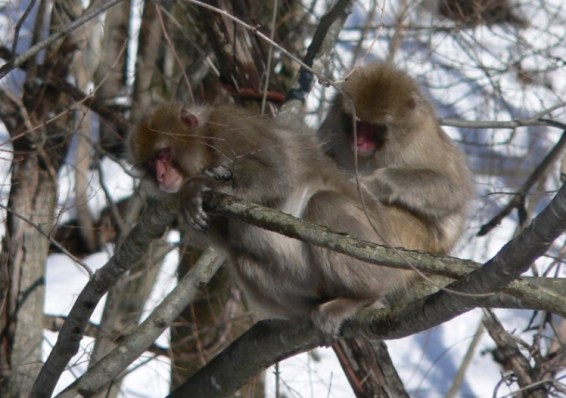
Two Japanese macaques are seen in the Fukushima Prefecture city of Fukushima in this photo provided by Fumiharu Konno from Shinichi Hayama’s research team.
TOKYO — Researchers found fewer cells that become blood in the bone marrow of wild Japanese macaques living in northeastern Japan’s Fukushima Prefecture along with the delayed growth of fetuses after the 2011 nuclear crisis, possibly due to radiation exposure.
Findings of abnormalities in these monkeys have been continuously reported in British scientific journals. Researchers assume that the monkeys ingested items like tree bark contaminated with radioactive cesium emanating from the Fukushima Daiichi Nuclear Power Station.
Tohoku University’s Department of Pathology professor emeritus Manabu Fukumoto and his research team performed hematological analysis of adult monkeys captured after the nuclear disaster. They inspected blood cell counts in the bone marrow of 18 monkeys caught in locations within 40 kilometers from the plant, including the city of Minamisoma and the town of Namie. Fukumoto’s team then compared the data to that of monkeys from other areas. The results revealed various substances destined to mature into blood, like cells that develop into platelets, had decreased in Fukushima monkeys.
Furthermore, the team observed some blood components had greatly decreased in monkeys with higher internal radiation exposure per day. They estimated the radiation dose from the concentration of radioactive cesium in the monkeys’ muscles. Fukumoto explained, “We need to conduct long-term research to see if it (the abnormalities) has an effect on the monkeys’ health.”
Meanwhile, wildlife zoology expert and Nippon Veterinary and Life Science University professor Shinichi Hayama and his research team examined fetuses in pregnant female monkeys. These monkeys were among those annually captured from 2008 to 2016 by the Fukushima Municipal Government to control their population size. Hayama’s research team compared data on 62 fetuses around the time of the meltdowns. They learned that the fetuses had smaller heads and delayed development over their entire bodies after the nuclear incident, in comparison to those before the disaster.
However, the team could not find any change in the nutritional status of the mother monkeys. They concluded that the mother monkeys’ radiation exposure may have had an effect on the fetuses.
Hayama assumed that Fukushima monkeys “must have been exposed to high doses of radiation on a whole different scale compared to humans.” This is because the monkeys “had consumed food contaminated with radiation, in addition to living near the ground where there were high radiation doses.”
Japanese macaques are not included in the wild animals and plants under investigation by the Ministry of the Environment to see the effects of radiation from the nuclear disaster. Five academic associations including the Primate Society of Japan (PSJ) have submitted a request asking that Japanese macaques be included in the research, along with other demands, to the environment ministry.
“Japanese macaques have a long life span of 20 to 30 years and are sedentary,” said PSJ Chairman Masayuki Nakamichi. He claimed that “it’s absolutely crucial, even for the world, to conduct research on the long-term effects of radiation exposure on Japanese macaques.”
(Japanese original by Momoko Suda, Science & Environment News Department) https://mainichi.jp/english/articles/20181125/p2a/00m/0na/003000c?fbclid=IwAR0t6-JVRDHjBq8Fxay4flYJRU8ALyF_9V4uqIbPAJdc-2Ro_fpZihUcPCs
IOC President Thomas Bach, center, visits a baseball stadium in Fukushima with Prime Minister Shinzo Abe on Nov. 24.
November 24, 2018
FUKUSHIMA–IOC President Thomas Bach and Prime Minister Shinzo Abe made a quick trip Saturday to the region northeast of Tokyo that was devastated by a 2011 earthquake and tsunami that destroyed three nuclear reactors.
The Fukushima region will hold baseball and softball games during the 2020 Tokyo Olympics.
The visit was intended to showcase a region that government officials say is safe, except for a no-go zone around the nuclear plant. Environmental groups have disputed some government claims and have raised safety concerns.
Neither Abe nor Bach took questions after visiting a baseball stadium and meeting with local residents and athletes.
Government officials want the Olympics to convince a world audience that the region is safe.
Bach is in Japan for a week of meetings with Tokyo Olympic organizers and national Olympic officials for about 200 countries. http://www.asahi.com/ajw/articles/AJ201811240041.html
November 23, 2018
The Japan Atomic Energy Agency said Wednesday that some of the low-level radioactive waste stored underground at a facility near Tokyo may leak from its containers due to inadequate disposal procedures.
The government-backed agency keeps 53,000 drums of low-level radioactive waste, or about 10,600 kiloliters, in a concrete pit in the basement of a building of the Nuclear Research and Science Institute in the village of Tokai, Ibaraki Prefecture.
Some of the waste did not undergo the proper water removal process when placed in the pit, and leakage and corroded containers in the pit were found during inspections between 1987 and 1991, according to the agency.
The nuclear research body planned to inspect the drums over the next 50 years to check for leakage. But the Nuclear Regulation Authority said at a meeting Wednesday that the agency needs to check them more quickly.
The agency should inspect all the drums within five years, Shinsuke Yamanaka, an NRA commissioner, said at the meeting.
The agency currently inspects the drums visually once a year but will now begin to lift and check them individually.
According to the agency and the NRA, the low-level radioactive waste is placed at the facility, built sometime from around 1964 to 1976, for disposal.
The agency said it did not properly conduct the process of removing water and other materials in some cases during the 1960s. https://www.japantimes.co.jp/news/2018/11/22/national/low-level-radioactive-waste-stored-tokai-research-facility-near-tokyo-may-leak-agency-says/#.W_mJgvZFzIV





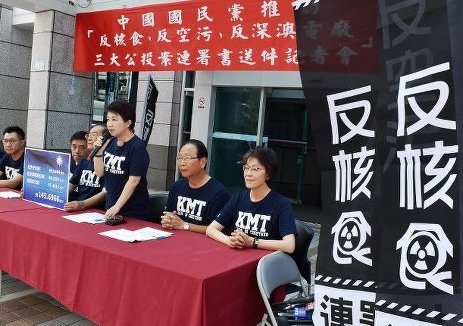 In this file photo dated Aug. 27, 2018, senior officials of the Kuomintang, Taiwan’s major political party, hold a press conference in Taipei to state their opposition to lifting a ban on food imports from Fukushima and four other Japanese prefectures. The banners read “oppose nuclear food.” (Mainichi/Shizuya Fukuoka)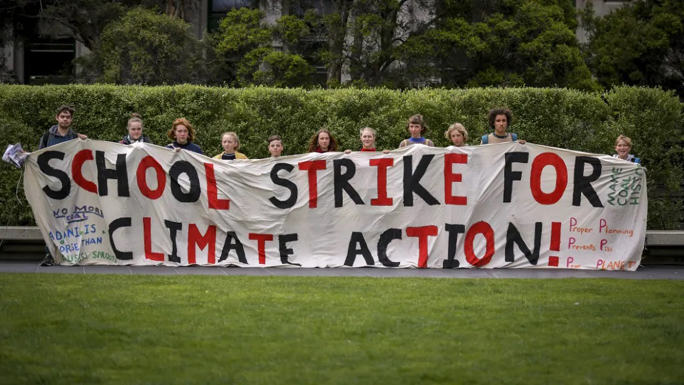

 IOC President Thomas Bach, center, visits a baseball stadium in Fukushima with Prime Minister Shinzo Abe on Nov. 24.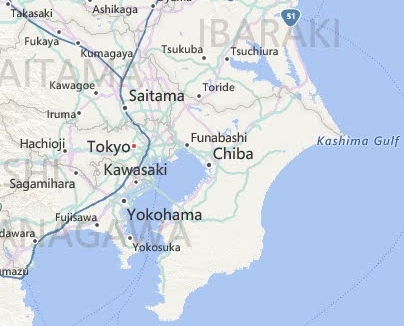


 nuclear-news