Nuclear energy on the decline, especially in developed countries
Modern Diplomacy 29th June 2018 ,For more than 40 years, nuclear energy has been an important contributor in
several countries to energy security and a key source of zero-emissions
generation.
But the future of nuclear energy is facing growing challenges,
increased competition with renewables and gas and, in some cases, public
opposition. With the aim of identifying the key issues and exploring the
future of nuclear power, the International Energy Agency (IEA) held a
high-level meeting in Paris yesterday titled “Nuclear Energy: Today and
Tomorrow.”
The sessions highlighted how, under current policy frameworks,
and with limited investment in new plants, the contribution of nuclear to
the power mix in mature markets is set to decline significantly. Most new
construction is in Asia, with China and India accounting for over half of
the new reactors under construction. In IEA’s World Energy Outlook New
Policies Scenario, nuclear power production grows with two countries, China
and India, responsible for over 90 percent of net growth to 2040.
By contrast, outside of Japan, nuclear power generation in developed economies
is set to decline 20 percent by 2040. The meeting also heard about new
initiatives to advance innovative nuclear power technologies, including
those that can address better the need for greater power systems
flexibility, spurred by the rise of generation from variable renewables.
https://moderndiplomacy.eu/2018/06/29/iea-holds-high-level-meeting-on-the-future-of-nuclear-power/
James Hansen – a prophet on climate change, but a crank on nuclear power
James Hansen and the whale, a tragi-comedy in four chapters, The Reality Based Community, By
“………..[James Hansen] he said :
Nuclear, especially next-generation nuclear, has tremendous potential to be part of the solution to climate change. The dangers of fossil fuels are staring us in the face. So for us to say we won’t use all the tools [such as nuclear energy] to solve the problem is crazy.
These crucial policy and technical developments were the fruit of a fairly small number of enterprising, determined and lucky individuals. They included:
- Researchers on solar: Becquerel, Willoughby Smith, Fritts, Einstein, Czochralski, the Bell Labs team of Chapin, Fuller, and Pearson. On wind: Poul La Cour and Johannes Juul in Denmark. On batteries: John Goodenough, who coming up to his 96th birthday still unprized in Stockholm, has just announced a research breakthrough on a high-density solid-state lithium battery.
- Politicians and bureaucrats: NASA in the 1960s, MITI in the 1970s; Hans-Josef Fell and Hermann Scheer, leaders of the Energiewende in Germany and instigators of the 2000 Renewable Energy Act (EEG); Jerry Brown of California; Barack Obama (through targeted ARRA funding and the bilateral deal with China that made Paris possible).
- Businessmen: Tokuji Hayakawa of Sharp in Japan; Elon Musk of Tesla; Wang Chuanfu of BYD.
This is an incomplete list, and no doubt unfair from my lack of knowledge. But it is near-certain that without these 18, and the then leaders of MITI and NASA, renewable energy and electric transport would not be where they are today.
The challenge also induced a lot of effort on enhanced geothermal, wave energy, OTEC, power kites, fuel cell cars, and other ideas that have not so far panned out. Nobody knows in advance which ideas will work out, and the failures also deserve their share of praise….. http://www.samefacts.com/2018/07/everything-else/james-hansen-and-the-whale-a-tragi-comedy-in-four-chapters/

1 This Month
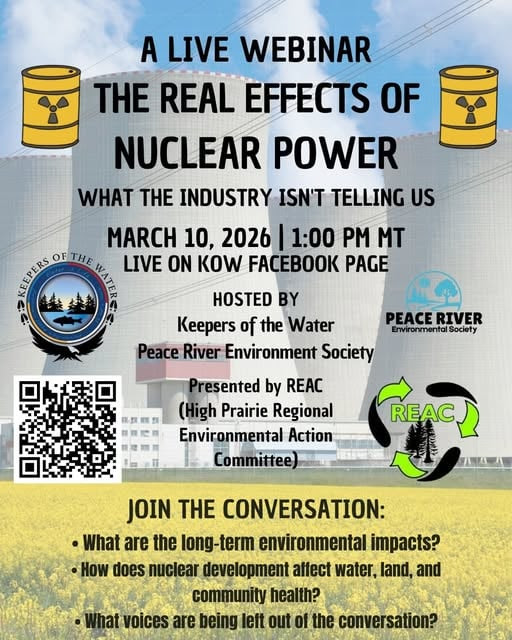
10 March A LIVE WEBINAR THE REAL EFFECTS OF NUCLEAR POWER
What the Industry Isn’t Telling Us
1:00 PM Mountain, 2 pm Central, 3 pm Eastern. Live on the Keepers of the Water Facebook page
18 March Webinar @ 1 PM EST: An Assessment of SMR Projects: The Case of Canada
register for the zoom:
https://us02web.zoom.us/webinar/register/WN_o8BIIOUvQ2ONJR1nta65DQ#/registration


of the week – STOP SMALL MODULAR REACTORS IN CANADA
To see nuclear-related stories in greater depth and intensity – go to https://nuclearinformation.wordpress.com
-
Archives
- February 2026 (256)
- January 2026 (308)
- December 2025 (358)
- November 2025 (359)
- October 2025 (376)
- September 2025 (258)
- August 2025 (319)
- July 2025 (230)
- June 2025 (348)
- May 2025 (261)
- April 2025 (305)
- March 2025 (319)
-
Categories
- 1
- 1 NUCLEAR ISSUES
- business and costs
- climate change
- culture and arts
- ENERGY
- environment
- health
- history
- indigenous issues
- Legal
- marketing of nuclear
- media
- opposition to nuclear
- PERSONAL STORIES
- politics
- politics international
- Religion and ethics
- safety
- secrets,lies and civil liberties
- spinbuster
- technology
- Uranium
- wastes
- weapons and war
- Women
- 2 WORLD
- ACTION
- AFRICA
- Atrocities
- AUSTRALIA
- Christina's notes
- Christina's themes
- culture and arts
- Events
- Fuk 2022
- Fuk 2023
- Fukushima 2017
- Fukushima 2018
- fukushima 2019
- Fukushima 2020
- Fukushima 2021
- general
- global warming
- Humour (God we need it)
- Nuclear
- RARE EARTHS
- Reference
- resources – print
- Resources -audiovicual
- Weekly Newsletter
- World
- World Nuclear
- YouTube
-
RSS
Entries RSS
Comments RSS
 nuclear-news