Taiwan closing nuclear power stations, investing heavily in wind energy
Offshore Wind Journal 10th May 2018 , Taiwan’s Government is making good on longstanding plans to close nuclear power plants and invest heavily in offshore wind energy. Late April 2018
saw the authorities in Taiwan announce the results of the first large-scale
auction for offshore wind in the country, a process that will eventually
see around 3.8 GW of capacity being built there.
This demonstrates theTaiwanese Government’s determination to follow-through and execute plans
announced earlier for the sector. Taiwanese President Tsai Ing-wen has
proposed to end the country’s dependence on nuclear power by 2025 while
sourcing 20% of Taiwan’s electricity from renewable sources – that is,
five times the level in 2015. That plan depends heavily on offshore wind,
for which the Taiwan Strait is seen as particularly well-suited.
Data provided by law firm Jones Day showed that in 2016, electricity generated
from renewable energy accounted for 4.8% of the aggregate produced
electricity and 9.4% of the aggregate installed capacity in Taiwan, so the
government’s strategy is certainly an ambitious one. In due course the
Taiwanese Government would like to have an energy mix of 50% natural gas,
30% coal and 20% renewable energy.
http://www.owjonline.com/news/view,taiwan-makes-good-on-plan-to-replace-nuclear-power-with-wind_51748.htm
UK: the environment will have less protection after Brexit
Times 11th May 2018 , The environment will have less protection after Brexit because the proposed
new green watchdog will lack the power to hold ministers to account,
conservation groups have said.
Michael Gove, the environment secretary, has
unveiled plans for a new independent statutory body to replace the role of
the European Commission in ensuring compliance with rules on reducing air
and water pollution and protecting wildlife in Britain.
An Environmental Principles and Governance Bill will be published in draft form this autumn
and will establish what the government described as a “world-leading body
to hold government to account for environmental outcomes”. However, unlike
the commission, which can take legal action against the government for
failing to observe environmental laws and impose fines, the new body may
only have the authority to issue advisory notices.
A Whitehall source said that Mr Gove wanted the body to have much stronger powers but that this had
been resisted by Philip Hammond, the chancellor, who is concerned that
tough enforcement of environmental rules could harm economic growth.
https://www.thetimes.co.uk/edition/news/gove-s-new-green-watchdog-will-leave-environment-unprotected-after-brexit-zflnfgv9h
Chernobyl: History of a Nuclear Catastrophe

Guardian 9th May 2018 , Chernobyl: History of a Tragedy by Serhii Plokhy review – Europe nearly became uninhabitable. A compelling history of the 1986 disaster and its
aftermath presents Chernobyl as a terrifying emblem of the terminal decline
of the Soviet system. The turbine test that went catastrophically wrong was
not, he argues, a freak occurrence but a disaster waiting to happen. It had
deep roots in the party’s reckless obsession with production targets and
in the pliant nuclear industry’s alarming record of cutting corners to
cut costs.
https://www.theguardian.com/books/2018/may/09/chernobyl-history-tragedy-serhii-plokhy-review-disaster-europe-soviet-system
A journey to the heart of the anti-nuclear resistance in Australia: Radioactive Exposure Tour 2018

NUCLEAR MONITOR – A PUBLICATION OF WORLD INFORMATION SERVICE ON ENERGY (WISE) AND THE NUCLEAR INFORMATION & RESOURCE SERVICE (NIRS Author: Ray Acheson ‒ Director, Reaching Critical Will, Women’s International League for Peace and Freedom) NM859.4719, May 2018
Looking at a map of South Australia’s nuclear landscape, the land is scarred. Uranium mines and weapon test sites, coupled with indications of where the government is currently proposing to site nuclear waste dumps, leave their marks across the desert. But amidst the devastation these poisonous activities have left on the land and its people, there is fierce resistance and boundless hope.
Friends of the Earth Australia has been running Radioactive Exposure Tours for the past thirty years.Designed to bring people from around Australia to meet local activists at various nuclear sites, the Rad Tour provides a unique opportunity to learn about the land, the people, and the nuclear industry in the most up-front and personal way.
This year’s tour featured visits to uranium mines, bomb test legacy sites, and proposed radioactive waste dumps on Arabunna, Adnyamathanha, and Kokatha land in South Australia, and introduced urban-based activists to those directly confronting the nuclear industry out in country. It brought together about 30 people including campaigners from the International Campaign to Abolish Nuclear Weapons and Reaching Critical Will, environmental activists with Friends of the Earth Australia and other organisations, and interested students and others looking to learn about the land, the people, and the industries operating out in the desert.
The journey of ten days takes us to many places and introduces us to many people, but can be loosely grouped into three tragic themes: bombing, mining, and dumping. Each of these aspects of the nuclear chain is stained with racism, militarism, and capitalism. Each represents a piece of a dirty, dangerous, but ultimately dying nuclear industry. And each has been and continues to be met with fierce resistance from local communities, including Traditional Owners of the land.
Testing the bomb The first two days of the trip are spent driving from Melbourne to Adelaide to Port Augusta. We pick up activists along the way, before finally heading out to the desert. Our first big stop on the Tour is a confrontation with the atomic bomb. Continue reading
UK government seeking opinions on how a new environmental watchdog will work
DEFRA 10th May 2018 ,Seeking views on how a new environmental watchdog will work, and on the
application of environmental principles, in England after EU exit. We want
to know what you think about plans to create a new independent
environmental watchdog. What functions and powers should the watchdog have
to oversee environmental law and policy? We’re also seeking views on what
environmental principles we should apply in England to guide and shape
environmental law and policy making.
https://www.gov.uk/government/consultations/environment-developing-environmental-principles-and-accountability
Costa Rica -to be world’s first fully decarbonised country
Independent 10th May 2018 , Costa Rica’s new president has announced a plan to ban fossil fuels and
become the first fully decarbonised country in the world. Carlos Alvarado,10 May 18.
a 38-year-old former journalist, made the announcement to a crowd of
thousands during his inauguration on Wednesday. “Decarbonisation is the
great task of our generation and Costa Rica must be one of the first
countries in the world to accomplish it, if not the first,” Mr Alvarado
said. “We have the titanic and beautiful task of abolishing the use of
fossil fuels in our economy to make way for the use of clean and renewable
energies.” Symbolically, the president arrived at the ceremony in San Jose
aboard a hydrogen-fuelled bus.
https://www.independent.co.uk/environment/costa-rica-fossil-fuels-ban-president-carlos-alvarado-climate-change-global-warming-a8344541.html
Remediating Fukushima—“When everything goes to hell, you go back to basics”


Scotland welcomes EDF’s offshore wind project
 The National 10th May 2018 , NICOLA Sturgeon has welcomed the decision by the French energy giant EDF to
buy a large offshore wind project off the coast of Scotland for more than
€500 million from its Irish developer.
The project, dubbed Neart naGaoithe, which means “strength of the wind” in Gaelic, was delayed by
several years because of a legal challenge concerning its impact on
seabirds, but ultimately gained approval and won a government subsidy
contract. The deal follows similar investments by EDF, which has pushed
into renewables in recent years with big deals ranging from solar in Dubai
to wind projects in Chile.
http://www.thenational.scot/business/16218325.First_Minister_welcomes_French_energy_giant__39_s_wind_farm_acquisition/
New NON_NUCLEAR technology to produce medical radioisotopes
 BWXT developed a new medical isotope technology to produce Mo-99 https://www.dotmed.com/news/story/42928
But Cirtain noted that unlike the traditional process of producing Mo-99 and Tc-99m generators from a nuclear fission process, this process doesn’t use fission. As a result, it doesn’t produce uranium or other fission products as waste, which is costly and difficult to dispose of and can be a proliferation concern.
BWXT expects this new medical isotope technology to provide a reliable domestic supply of Mo-99 and Tc-99m for North America. But the company has competition from a handful of companies with the same goal.
“We are confident because we have experience in this area developed over decades of work, and we’ve had a highly successful development program, including supplemental assistance from outside expertise when needed,” said
U.S. House votes 340 to 72 to “Screw Nevada,” again — and perhaps New Mexico and Texas, too, while they’re at it!
Trump cannot formally pull out of Paris climate deal until 2020 – he has no future plan
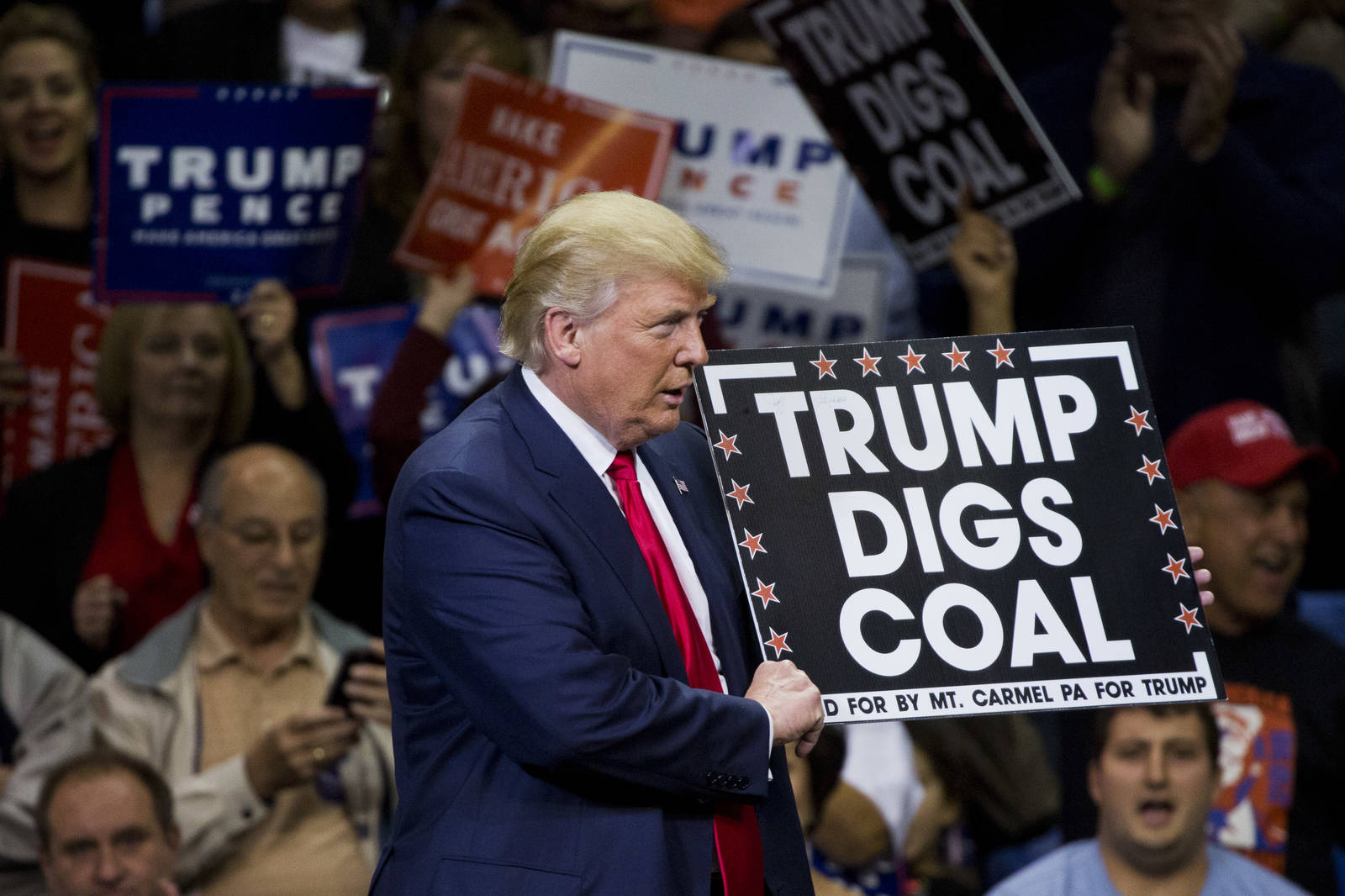 “No follow up” from Trump over staying in climate pact-UN by Reuters, 9 May 2018 The rules of the Paris Agreement mean that Trump cannot formally pull out before November 2020, around the time of the next U.S. presidential election
* UN’s Espinosa asked Washington for conditions for staying
* Says still hopes U.S. may stay in Paris pact
* Nearly 200 nations working on ‘rule book’ for 2015 pact
By Environment Correspondent Alister Doyle BONN, Germany, May 9 (Reuters) – U.S. President Donald Trump has yet to outline what changes he wants in a 2015 global climate agreement as the price for dropping his plan to quit, the United Nations’ climate chief said on Wednesday.
Patricia Espinosa said she had asked Washington for its demands after Trump announced last June that he planned to quit the landmark 2015 Paris Agreement, which aims to end the fossil fuel era this century with a shift to cleaner energies.
“There has not been a follow-up” from Washington, she told Reuters during negotiations in Bonn among almost 200 nations on a “rule book” for the 2015 agreement.
Espinosa, a former Mexican foreign minister who leads the U.N. Climate Change Secretariat, said she had stressed that the pact was flexible, allowing all countries to set their own targets for reducing greenhouse gas emissions.
“I would not like to see the U.S. leaving. I certainly hope there is a reconsideration of this decision,” she said of Trump’s plan to pull out.
Trump doubts the view of mainstream science that man-made greenhouse gases are raising global temperatures.
The rules of the Paris Agreement mean that Trump cannot formally pull out before November 2020, around the time of the next U.S. presidential election.
In announcing the U.S. withdrawal, Trump said Paris was a bad deal that would harm the U.S. economy, but added: “We will see if we can make a deal that’s fair. And if we can, that’s great. And if we can’t, that’s fine.”……..
The Bonn meeting, which ends on Thursday, is working on rules for the Paris Agreement due to be in place by the end of the year, such as how to measure and account for greenhouse gas emissions and climate finance for developing nations that is meant to reach $100 billion a year by 2020.
“A good set of rules … should be a way to give comfort and confidence to the concerns they (the United States) could have,” said Espinosa.
Asked if she would be happy for the United States to stay, while watering down deep cuts in emissions promised by former President Barack Obama, Espinosa said: “I think we should not choose between those two scenarios.” (Reporting By Alister Doyle Editing by Gareth Jones) http://news.trust.org/item/20180509154353-w3u79/
Allies Of Big Oil Move To Impeach Louisiana Governor Huey Long (1929) — Mining Awareness +

By the Long Legacy Project, http://www.HueyLong.com: “Impeachment In 1929, Standard Oil’s legislative allies led an unsuccessful attempt to remove Huey Long from the governorship on a variety of charges, ranging from serious to comical. He was impeached in the House but avoided conviction in the Senate. In order to finance his building and social programs, […]
via Allies Of Big Oil Move To Impeach Louisiana Governor Huey Long (1929) — Mining Awareness +
Zion community keen to get rid of its stranded nuclear wastes

 Zion’s effort to shed lakefront nuclear waste backed by U.S. House vote, Chicago Tribune, Frank Abderholden Contact Reporter, News-Sun , 10 May 18
A bill on nuclear waste policy that would restart the Yucca Mountain depository in Nevada was approved by the the U.S. House of Representatives Thursday, including an amendment introduced by U.S. Rep. Brad Schneider that also calls for a task force to be created to help communities like Zion that have stranded nuclear waste.
The 10th District Democrat said the amendment requires the secretary of energy to assemble a stranded nuclear waste task force that would identify existing resources and funding opportunities throughout the federal government to assist communities in the decommissioning process.
“For too long, communities like Zion have been saddled with housing our nation’s stranded nuclear waste while the federal government has failed to meet its legal obligation to find a permanent repository,” Schneider said in a statement following Thursday morning’s vote on Capitol Hill.
His amendment calls for the Department of Energy to complete the study in 180 days and report back to Congress with its findings.
“The project will be physically completed with (deactivation and decommissioning) in 2018,” Walker said last year. Although the federal government designated decades ago that the waste would go to Yucca Mountain in Nevada for permanent storage, the facility has not yet opened, and Zion is stuck with the waste until a solution can be found.
“I am very pleased this amendment passed the House, appreciate the bipartisan support from my colleagues and urge the Senate to take up this matter urgently,” Schneider said.
H.R. 3053, the Nuclear Waste Policy Amendments Act of 2018, was described by Schneider as “an important step forward,” but he added that more needs to be done for communities forced to store nuclear waste.
“I will continue to work with Mayor Al Hill, the city of Zion and my colleagues in Congress to get communities shouldering this burden the federal help they are owed,” Schneider said.
He added that the spent fuel stored in dry casks along the lakefront — an amount estimated last year at 1,025 metric tons — presents both “an extreme environmental hazard, and a severe burden on the quality of life of the residents of Zion — deterring economic investment, depressing home values and driving up property taxes to fill the local revenue void.”
……… “We just want them to get (the waste) out of here,” Hill said. “We are pleased with any program that will give us an opportunity to get the spent fuel rods out of our community.”
Adding that “we are pushing a large stone up a steep hill,” Hill said he believes “the federal government has not lived up to its contract with the utilities” on having a place to put the spent fuel rods.
“We lived up to our end of the contract,” he said.
While the power plant operated, ratepayers paid into a trust fund set up for the plant’s decommissioning. The $820 million fund was turned over to EnergySolutions when it took over the work in Zion following the plant’s 1998 deactivation. At the end of the project, any remaining funds are designed to be turned back over to Exelon.
According to the Associated Press, the House voted 340-72 Thursday morning to revive the mothballed nuclear waste dump at Nevada’s Yucca Mountain despite opposition from home-state lawmakers…… http://www.chicagotribune.com/suburbs/lake-county-news-sun/news/ct-lns-zion-nuclear-waste-yucca-mountain-st-0511-story.html
USA nuclear waste storage bill goes to the Senate

 House hands off nuclear waste storage bill to Senate, https://www.utilitydive.com/news/house-hands-off-nuclear-waste-storage-bill-to-senate/523291/, Iulia Gheorghiu, 11 May 18
Dive Brief:
- The House of Representatives on Thursday passed 340-72 H.R. 3053, sponsored by Rep. John Shimkus, R-Ill., which seeks to restart the process to build a permanent repository for commercial nuclear waste at Yucca Mountain, Nev.
- The bill would also allow the Department of Energy (DOE) to consolidate and store nuclear waste temporarily, as the agency is currently unable to consider interim storage before the development of a permanent repository.
- The legislation has been strongly opposed by the Nevada delegation — Sen. Harry Reid, D-Nev., once referred to the policy to permanently store nuclear waste at Yucca Mountain as the “Screw Nevada bill.” Sen. Dean Heller, R-Nev., called H.R. 3053 “dead on arrival in the Senate” in a statement last June.
Dive Insight:
Opposition in the House came mainly from states that would be most impacted by the transportation of nuclear waste to the permanent storage site, led by Nevada representatives. Earlier this month, Rep. Dina Titus, D-Nev., called the bill “Screw Nevada 2.0” when speaking on the House floor.
On Tuesday, the Rules Committee arranged for only one of the amendments from Nevada’s representatives to be considered on the floor, from Titus. Her substitute amendment, which was rejected 80-332, sought to establish a consent-based siting process to determine a permanent repository. Consent-based siting would have placed an almost-insurmountable barrier to selecting Yucca Mountain as a permanent storage site.
The House bill had bipartisan backing and supported the buildout of interim nuclear storage, a policy that the Obama administration had also supported. Legislative efforts to reach a conclusion on permanent storage at Yucca Mountain have been stalled time and time again. But the bill has also gained momentum as more nuclear reactors near retirement and commercial nuclear waste accumulates.
The biggest challenge for the bill will be Sen. Heller’s block, confirmed Matthew Wald, senior communications adviser for the Nuclear Energy Institute, a trade group. Heller is currently blocking consideration of two Nuclear Regulatory Commission nominees who support Yucca Mountain as a permanent waste repository, according to Roll Call.
As it stands, the DOE is on the hook for a solution to permanent nuclear waste storage. The agency was supposed to begin collecting spent nuclear fuel rods in 1998 and remains responsible for storing them. Nuclear companies had been paying the agency through the Nuclear Waste Fund for the development of a permanent storage site, but the legislative stalls regarding Yucca Mountain have immobilized the DOE.
As a result, the agency is an easy legal target for the nuclear waste storing duties it has failed to perform under contract. Taxpayers pay about $800 million in damages to nuclear companies every year the government does not act, according to an estimate of legal judgments done by NEI.
When looking for the smartest, easiest, most productive solutions, there are better answers than what DOE is currently doing with nuclear waste: “babysitting this stuff in more than 100 different locations,” as NEI’s Wald put it.
A preferable alternative, according to NEI, would be centralizing interim storage for the spent nuclear fuel, much of which is housed on-site at retired nuclear plants. Interest exists among corporate groups to reprocess the spent nuclear fuel or store it temporarily.
The NRC issued a license in 2006 to Private Fuel Storage, LLC, a nuclear power utility consortium, to build temporary above-ground storage for spent nuclear fuel rods in Utah. The consortium needed approval from additional agencies and the operation never took off, although the NRC license is valid until 2026. Utah regulations ultimately made it very difficult to get fuel to the interim storage site, Wald told Utility Dive.
NRC has received other similar licensing requests, including a 2017 proposal for temporary storage in New Mexico from Holtec International.
Holtec sees the passage of H.R. 3050 as a good step towards interim and long-term solutions for nuclear waste storage.
“We believe this is a critical step for the future of nuclear power, including for innovative new reactors such as our SMR-160,” Joy Russell, Holtec’s vice president of corporate business development, wrote Utility Dive in an email.
Julian Assange stuck in Ecuador’s embassy in London- no visitors allowed, no outside communications
 Julian Assange stuck without a phone, can’t see guests at Ecuador’s embassy in London, Washington Examinerby Anna Giaritelli | May 11, 2018
1 This Month

of the week – Shut Down Drone Warfare!


Tell the Ukrainian Government to Drop Prosecution of Peace Activist Yurii Sheliazhenko

Petition to revoke the licensing of the Near Surface Nuclear Disposal Facility (NSDF) at Chalk River. https://www.ourcommons.ca/petitions/en/Petition/Details?Petition=e-7247
To see nuclear-related stories in greater depth and intensity – go to https://nuclearinformation.wordpress.com
-
Archives
- April 2026 (103)
- March 2026 (251)
- February 2026 (268)
- January 2026 (308)
- December 2025 (358)
- November 2025 (359)
- October 2025 (376)
- September 2025 (257)
- August 2025 (319)
- July 2025 (230)
- June 2025 (348)
- May 2025 (261)
-
Categories
- 1
- 1 NUCLEAR ISSUES
- business and costs
- climate change
- culture and arts
- ENERGY
- environment
- health
- history
- indigenous issues
- Legal
- marketing of nuclear
- media
- opposition to nuclear
- PERSONAL STORIES
- politics
- politics international
- Religion and ethics
- safety
- secrets,lies and civil liberties
- spinbuster
- technology
- Uranium
- wastes
- weapons and war
- Women
- 2 WORLD
- ACTION
- AFRICA
- Atrocities
- AUSTRALIA
- Christina's notes
- Christina's themes
- culture and arts
- Events
- Fuk 2022
- Fuk 2023
- Fukushima 2017
- Fukushima 2018
- fukushima 2019
- Fukushima 2020
- Fukushima 2021
- general
- global warming
- Humour (God we need it)
- Nuclear
- RARE EARTHS
- Reference
- resources – print
- Resources -audiovicual
- Weekly Newsletter
- World
- World Nuclear
- YouTube
-
RSS
Entries RSS
Comments RSS
 nuclear-news