China expanding its nuclear marketing overseas, with the help of Bill Gates

Chinese nuclear giant continues to expand overseas cooperation, 2018-03-03 Editor: Xiang Bo BEIJING, March 3 (Xinhua) — China National Nuclear Corporation (CNNC), one of the country’s two leading nuclear power companies, is stepping up its overseas cooperation, the chairperson said Saturday.
Progress is being made in cooperation with CNNC’s local partners in countries like Pakistan, Argentina, Saudi Arabia, Ghana and the United States, CNNC chairperson Wang Shoujun said on the sidelines of the annual session of the country’s top political advisory body…….
Last year, the CNNC signed a joint venture agreement with TerraPower, LLC to form the Global Innovation Nuclear Energy Technology Co., Ltd. to work together on the Travelling Wave Reactor technology, marking a new stage in China-U.S. nuclear cooperation, Wang added. ……http://www.xinhuanet.com/english/2018-03/03/c_137013831.htm
USA still has an awful lot of nuclear weapons – Enough Firepower to Kill Billions
 The U.S. Military Has 3,822 Nuclear Weapons. (Enough Firepower to Kill Billions), http://nationalinterest.org/blog/the-buzz/the-us-military-has-3822-nuclear-weapons-enough-firepower-25142 Michael Peck, 31 Mar 18,
In a more peaceful universe, the fact that the United States possesses almost 4,000 weapons that can destroy entire cities would be horrifying.
But in our universe, it is actually an encouraging sign of how much America’s nuclear arsenal has declined since the Cold War.
The figures show just how deep America’s nuclear arsenal has been cut since the height of the Cold War. In 1962, the year of the Cuban Missile Crisis, the United States had 25,540 nuclear weapons. That number grew to a peak of 31,255 nuclear weapons in 1967.
From 1967 on, that number gradually declines. In the 1970s, the stockpile ranged from 24,000 to 28,000 weapons. In the 1980s, it hovered around 23,000.
It wasn’t until the fall of the Soviet Union that the nuclear arsenal noticeably shrank. From 19,008 weapons in 1991, the number dropped to 13,708 in 1992 and 10,685 by 1999.
The Federation of American Scientists put the total number of U.S. nuclear weapons as of January 2017 at about 6,800, of which about 4,000 are active. The active stockpile included 1,367 deployed strategic warheads, 2,471 nondeployed warheads and around 200 deployed tactical warheads.
The Department of Energy also reported dismantling 10,972 nuclear weapons from 1994 to 2017, with the largest numbers occurring in the 1990s. From 648 weapons dismantled in 2008, the number plummeted to 109 in 2015, before rising to 354 in 2017.
As a footnote, there are an estimated 14,200 nuclear weapons in the world, according to the Federation of American Scientists. Russia has the largest number at 6,600 active and retired warheads, just slightly larger than the American total. The rest of the world (France, China, Britain, Pakistan, India, Israel and North Korea) have a little over a thousand.
As Winston Churchill said, “If you go on with this nuclear arms race, all you are going to do is make the rubble bounce.
Michael Peck is a contributing writer for the National Interest. He can be found on Twitter and Facebook.
Tracking the transport of nuclear weapons through the UK

 Nuclear Weapons Transport, Nukewatch 29th March 2018
A nuclear weapons convoy left AWE Burghfield on Thursday March 22. It was
later seen on the A1 at junction 49 near Dishforth (15 miles north of
Wetherby).
The following day it was spotted crossing over to the west on
the A66 and then on the M74 just south of Lesmahagow. It then continued
around the east of Glasgow on the M73 and past Cumbernauld on the M80 to
take a break at DSG Stirling mid-afternoon.
It then took the M9, A811 andA82 to RNAD Coulport. On Monday March 26 this convoy left Coulport to
return south. Taking a route through Balloch and Stirling then onto the M9
and M8 to the Edinburgh bypass it then took a break at Glencorse Barracks
in Penicuik.
After continuing south on the A1 passing Berwick on Tweed it
passed through Newcastle and after an overnight stop it then continued down
the A1. It crossed country to the A34 travelling around Oxford and getting
back to Burghfield around 5pm. http://www.nukewatch.org.uk/?p=809
Serious flaws in “community consultation” process for selecting a nuclear waste dump site in Cumbria
 CT responds to the BEIS consultation: “Working With Communities” https://cumbriatrust.wordpress.com/2018/03/31/ct-responds-to-the-beis-consultation-working-with-communities/ March 31, 2018
Canada’s so-called “medical”nuclear research reactor finally bites the dust

A relic of Canada’s atom age, the NRU reactor is shutting down for good, CBC 31st March 2018
On March 31, a little-known part of Canada’s nuclear history will go dark for the last time.
The National Research Universal Reactor — or NRU — at Chalk River, Ontario will be turned off for good Saturday evening. It first came online in 1957…….
When ZEEP went online in September 1945, it was the first operational nuclear reactor outside of the United States.
A small, prototype reactor, it was built to demonstrate that uranium and heavy water could be used for nuclear fission and that plutonium could be produced and extracted from the process for military applications……
The NRU was once responsible for producing about 40 per cent of the world’s supply of the medical isotopes used for diagnosis and cancer therapy — starting with cobalt-60 and later extending to other isotopes, such as molybdenum-99. …..
More than 60 years of nuclear research at Chalk River have left behind a legacy of low-level radioactive waste that now has to be contained at a near-surface facility.
Atomic Energy of Canada Limited estimates the cost of dealing with waste at all of its federally regulated sites, including Chalk River, could be as high as $7.6 billion.

Collapse of USA’s nuclear industry: more shutdowns and bailouts to come
 More Nuclear Power Plant Shutdowns, Bailouts In The Works, WSKG, 1 Apr 18 STATE IMPACT
  PENNSYLVANIA – Citing market challenges,” electric utility FirstEnergy says it will close three nuclear plants in Ohio and Pennsylvania, while at the same time asking the Department of Energy for immediate help to keep its fleet of coal and nuclear plants open.
The company, which could be near bankruptcy according to a report at cleveland.com, gave regional grid operator PJM interconnection notice that it will deactivate Beaver Valley Power Station and two other plants — Davis-Besse in Oak Harber, Ohio, and Perry Nuclear Power Plant in Perry, Ohio — by 2021.
……. Natural gas and renewable energy have been making up a larger amount of the country’s electric grid, eating into coal and nuclear power on wholesale markets. With that backdrop, FirstEnergy is also asking the Department of Energy to issue an immediate emergency order to PJM Interconnection, the grid operator for mid-Atlantic states, to provide “just and reasonable” compensation to its fleet of aging coal and nuclear power plants in order to keep them open.
“Nuclear and coal-fired generators in PJM have been closing at a rapid rate — putting PJM’s system resiliency at risk — and many more closures have been announced,” the company said, in a letter to Energy Secretary Rick Perry. “PJM has demonstrated little urgency to remedy this problem any time soon — so immediate action by the Secretary is needed to alleviate the present emergency.
…..The order would be similar to one that Perry’s own Department of Energy proposed last year, which would have made ratepayers pay more for energy produced at coal and nuclear plants. In January, the Federal Energy Regulatory Commission rejected the proposal.
Environmental groups were swift to label the plan a “bailout” for the coal industry.
“If Rick Perry and Trump Administration take the bait and actually issue this ill-advised and illegal emergency order, that means they’re happy to let energy bills and pollution skyrocket, just to bail out a handful of rich coal and nuclear executives,” said Mary Anne Hitt, Director of Sierra Club’s Beyond Coal campaign, in a statement.
The oil and gas industry was no less harsh in its criticism……..
In addition to looking for federal assistance, FirstEnergy is asking states for help, too.
Don Moul, president of FirstEnergy Solutions, the company’s power generation subsidiary, called on legislators in Ohio and Pennsylvania to help keep the nuclear plants open……..https://wskg.org/news/more-nuclear-power-plant-shutdowns-bailouts-in-the-works/
URANIUM FILM FESTIVAL 2018 – THE FIRST FILMS SELECTED
 http://uraniumfilmfestival.org/en/uranium-film-festival-2018-the-first-films-selected
ATOMIC HOMEFRONT(LINK IS EXTERNAL)
USA, 2017, Director: Rebecca Cammisa, 100 min, Documentary, English, Trailer https://www.atomichomefront.film(link is external)
The City of St. Louis has a little known nuclear past as a uranium-processing center for the Atomic bomb. Government and corporate negligence led to the dumping of Manhattan Project uranium, thorium, and radium, thus contaminating North St. Louis suburbs, specifically in two communities: those nestled along Coldwater Creek – and in Bridgeton, Missouri adjacent to the West Lake-Bridgeton landfill. Another tragic and bizarre occurrence has been unfolding in Bridgeton, Missouri. In 1973, approximately 47,000 tons of the same legacy radioactive waste was moved from Latty Avenue and was illegally dumped into a neighborhood landfill named West Lake. This landfill became an EPA Superfund site in 1990. For the last seven years, an uncontrolled, subsurface fire has been moving towards an area where the radioactive waste was buried. Atomic Homefront is a case study of how citizens are confronting state and federal agencies for the truth about the extent of the contamination and are fighting to keep their families safe.
HALF LIFE: THE STORY OF AMERICA’S LAST URANIUM MILL (LINK IS EXTERNAL)
USA, 2016, Director: Justin Clifton, Documentary, 12 min, English
In southeastern Utah, not far from many of America’s famed national parks, lies America’s last remaining uranium mill. After more than 36 years in operation, the leaders of the nearby Ute Mountain Ute Tribe’s White Mesa community worry that lax regulations and aging infrastructure are putting their water supply, and their way of life, at risk. Trailer: https://vimeo.com/161080821(link is external)
NABIKEI(LINK IS EXTERNAL)
India, 2017, Director Shri Prakash, Documentary, English, 66 min
The American Southwest—especially the sovereign Indigenous nations of Acoma, Laguna, and the Diné or Navajo Nation—has a long history of uranium mining. Once home to a booming economy and proudly called the Uranium Capital of the World, these Indian reservations and poor White communities are now littered with old mines, tailings dams, and other uranium contamination, which is the legacy of this deadly industry. On the Navajo Nation alone, there are more than 500 abandoned uranium mine sites that need to be addressed. This film explores how colonialism, which came to the Southwest with Spanish conquest, has changed face in modern time, as it is played out in a new quest for mineral resources. Contaminated land, water, and air have left these poor communities helpless. Their efforts to gain justice have failed. Indigenous and poverty-stricken communities who suffered the most are trapped and exploited, as new mining companies continue to disregard the health and environment of these people with the lure of a better economy, jobs and new In Situ Leach uranium mining methods. Unfortunately, this is the same sad story repeated in other parts of the world including India, but in India it is the government itself undertaking the enterprise and repeating the same degradation in Jadugoda (Jharkhand).
SHRI PRAKASH is the first filmmaker from Jharkhand to bring a National Award in 2008 for his film ‘Buru Gara’ also his regional language fiction film ‘Baha’ received first international award for the state 2010. Using audio visual medium as a tool for social transformation and empowerment, National Award winner film maker, teaching film studies in St. Xavier’s College, Ranchi. https://www.facebook.com/Shriprakash23(link is external)
TALE OF A TOXIC NATION(LINK IS EXTERNAL)
USA, 2018, Director Louis Berry, Producer Louis Berry, Documentary, 12:30 min, English
Tale of a Toxic Nation is the story of a nation rich in resources but weak in political influence. The Navajo Reservation has been left with over 500 abandoned uranium mines, toxic surroundings and an impossible clean up. The story has never been more relevant under an administration threatening to reinstate uranium mining in the area. https://vimeo.com/258337365(link is external)
BOBBY BROWN HOMELANDS – LIVING WITH THE LEGACY OF BRITISH NUCLEAR TESTING(LINK IS EXTERNAL)
Australia, 2015, Produced and Directed by Kim Mavromatis and Quenten Agius, MAV Media
in Association with NITV (National Indigenous TV Australia). Documentary, 5 min, Australian English and Australian Aboriginal (Antikirrinya), English subtitles Trailer: https://vimeo.com/119231410(link is external)
In the 1950’s and 1960’s the Australian government authorised British Nuclear testing at Emu Field and Maralinga in Outback South Australia. We journey with Antikirrinya Elder, Ingkama Bobby Brown to his homelands in outback South Australia where he explains the legacy of living with British Nuclear testing – how he witnessed the first tests on the Australian mainland at Emu Field (1953) and experienced the devastating affects of radioactive fallout on his family, people and country. This is the first time Bobby has spoken out about what he witnessed when he was a boy – what happened to his family and country and the people who went missing – during British Nuclear testing. British Nuclear testing was a breach of the King’s Letters Patent, the founding document that established the state of South Australia (1836), which granted Aboriginal people the legal right to occupy and enjoy their land for always. How could they occupy and enjoy their land when their land was being blown up and irradiated by nuclear fallout. www.kingsseal.cosm.au (link is external)
KUANNERSUIT / KVANEFJELD(LINK IS EXTERNAL)
UK, 2017, Directors Joshua Portway and Lise Autogena, Producer Lise Autogena, Documentary, 30 min, Danish and Greenlandic with English subtitles, Trailer: https://vimeo.com/214697146(link is external)
Lise Autogena and Joshua Portway’s film Kuannersuit / Kvanefjeld is a work in-progress, forming the first part of the artists’ long-term investigation into the conflicts facing the small, mostly indigenous, community of Narsaq in southern Greenland. Narsaq is located next to the pristine Kvanefjeld mountain; site of one of the richest rare earth mineral resources deposits in the world, and one of the largest sources of uranium. Greenland is a former colony of Denmark, which is now recognised as an “autonomous administrative division” of Denmark, supported economically by the Danish state. Many people see exploitation of mineral deposits as the only viable route to full independence. For generations the farming near Kvanefjeld has been Greenland’s only agricultural industry. This way of life may soon be threatened, as Greenland considers an open pit mine proposed by Greenland Minerals and Energy, an Australian company. The mine would be the fifth-largest uranium mine and second-biggest rare earth extraction operation in the world. Autogena and Portway’s film portrays a community divided on the issue of uranium mining. It explores the difficult decisions and trade-offs faced by a culture seeking to escape a colonial past and define its own identity in a globalised world.
More films soon!
The Uranium Film Festival welcomes any support. Join us.
USA Commerce Department sanctioned seven Pakistani companies – alleges links to nuclear trade
Axios 29th March 2018, The Commerce Department this week sanctioned seven Pakistani companies for
alleged links to nuclear trade. Their place on an “Entity List”
requires them to obtain special licenses to do business with the U.S. This
move follows other U.S. penalties against Pakistan, including a successful
push to put Pakistan on a “gray list” of countries not doing enough to
stem terrorist financing and a freeze on all U.S. security assistance to
Pakistan.
But Commerce’s action should not be seen as part of the
existing campaign to pressure Pakistan to crack down harder on terrorists.
Why it matters: Commerce’s move does underscore Washington’s concerns
about Pakistan’s nuclear proliferation record — even as nuclear
watchdog groups cite improvements in Pakistan’s nuclear security.
https://www.axios.com/nuclear-security-worries-drive-latest-us-penalties-on-pakistan-1522259525-d5bea2f2-a2aa-47e6-a5e8-b376e8e3853a.html
Britain’s uncompetitive electricty marke: big electricity companies don’t want the competition from renewables
Dave Toke’s Blog 1st April 2018, The media is awash with stories of the imminent emergence of ‘subsidy free’
wind and solar power in the UK, but the reality is that the uncompetitive nature of the British electricity market mostly undermines that prospect.
In theory onshore wind power and maybe some solar power projects would be able to generate power to sell at competitive prices on the British
wholesale electricity market.
In practice most of the potential buyers of energy from new renewable energy projects will not be interested in buying
the energy even at cheap prices simply because it conflicts with their own generation portfolios. True, there is a limited possibility for some very
large corporate consumers who are interested in buying green electricity to fund new projects by issuing corporate power purchase agreements (PPAs).
But in reality this market is small, and I have heard this estimated to be no larger than 100 MW a year. That means it would take around 20 years for
not quite 1 per cent of electricity to be supplied this way. PPAs are needed for new renewable energy projects that offer the generators the
certainty that they can be paid a minimum amount for each MWh that they produce for the long term. The UK Government’s PPAs, called contracts for
differences (CfDs), last 15 years. However they are no longer available for onshore wind and solar.
The problem is that most of the market for offering PPAs that can fund new renewable energy projects comes from the big
electricity suppliers, who have been known in the past as the ‘Big Six’.
Only PPAs offered by really large companies will be usually taken seriously enough by banks and and other institutions to enable renewable energy
projects can obtain long term loans or equity. The trouble is that the Big Energy suppliers will usually have little interest in offering long term
PPAs to new renewable energy projects since. For a start they can buy in power at much the same price as the renewable energy generator can offer
without needing to commit themselves to long term agreements.
Crucially, the big electricity companies are struggling to keep their own power stations in business, and are not going to sign up competition from other people for their own business!
http://realfeed-intariffs.blogspot.co.uk/2018/04/why-britains-distorted-electricity.html
Cuba’s ghost nuclear power project
Ghost Town Remains Frozen Decades After Collapse of Soviet Nuclear Project https://sputniknews.com/videoclub/201803301063030217-cuba-npp-ghost-town/ NPP Khuragua is an unfinished nuclear power plant in the province of Cienfuegos, Cuba, located 200 km from Havana.
In 1976, an agreement between the Soviet Union and Cuba was signed on the construction of two VVER-440/318 type reactors with a capacity of 440 MW each. The power plant was slated to be located in the southern part of Cienfuegos province, near the township of Juragua.
However, the plans for the completion of construction were thwarted due to the collapse of the Soviet Union and the destruction of economic ties between Cuba and the new Russia. Cuba did not have the know-how nor the financial means to unilaterally terminate the construction of the nuclear power plant.
Vogtle nuclear reactors, years overdue, $billions overbudget – who pays?

 Savannah Now 30th March 2018, The first of two new nuclear reactors at Plant Vogtle near Waynesboro was
supposed to open two years ago today, with the second following last year.
Instead, what’s now the nation’s only new nuclear project grinds on,
five years behind schedule and billions of dollars overbudget.
Construction continues at a pace of $91 million a month, with ratepayers largely on the
hook for those costs. But the issue of who pays for Vogtle isn’t yet a
done deal, with legal challenges pending, including one challenge brought
to court by a former Georgia governor. And ethics watchdogs are examining
the regulators, finding what they say are cozy relationships with the
utility and slack record keeping.
http://www.savannahnow.com/news/20180330/as-plant-vogtle-build-continues-so-do-appeals-to-stop-it
Toshiba to own Nuclear Fuel Industries, join Hitachi Ltd. and Mitsubishi Heavy Industries ?
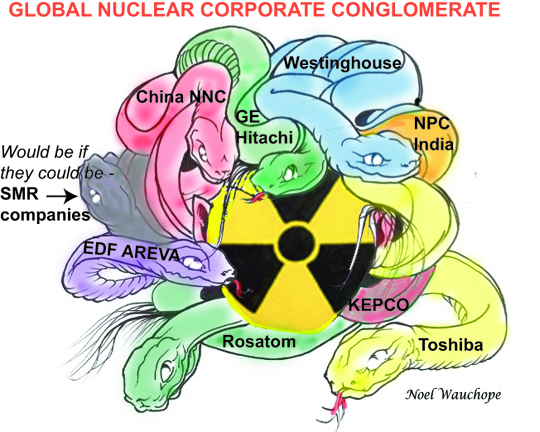 Japan News 31st March 2018, Toshiba Corp. said Friday that it will take full control of Nuclear Fuel
Industries Ltd., a Japanese nuclear fuel supplier, by the end of June.
Toshiba, which last October agreed to acquire 52 percent of Nuclear Fuel
Industries from Westinghouse Electric Co., newly signed agreements to
purchase the remaining stake from Sumitomo Electric Industries Ltd. and
Furukawa Electric Co.
Sumitomo Electric and Furukawa Electric own 24
percent each of Nuclear Fuel Industries. Toshiba’s move to fully own
Nuclear Fuel Industries is expected to help accelerate its talks with
Hitachi Ltd. and Mitsubishi Heavy Industries Ltd. on integrating their
respective nuclear fuel operations in Japan.
Nuclear fuel suppliers owned by Japanese nuclear plant makers have been struggling with sluggish demand
as many nuclear plants in the country remain suspended. Toshiba, Hitachi
and Mitsubishi Heavy previously aimed to merge their domestic nuclear fuel
operations in spring last year, but the talks have been stalled due to
Toshiba’s financial crisis. http://the-japan-news.com/news/article/0004340845
Hole found in pipe at Genkai nuclear plant
https://www3.nhk.or.jp/nhkworld/en/news/20180401_18/The operator of the Genkai nuclear plant in southwestern Japan says it has found a hole in a reactor pipe where a steam leak was detected on Friday.
Kyushu Electric Power Company began inspecting the No.3 reactor of the plant in Saga Prefecture on Sunday afternoon.
The reactor went back online on March 23rd, after a suspension of more than 7 years. It began generating and transmitting power 2 days later.
But Kyushu Electric found a small amount of steam leaking from a pipe connected to equipment that removes oxygen, carbon dioxide and other substances.
It suspended power generation early on Saturday.
The utility says the steam does not contain radioactive substances, and there has been no impact on the environment.
The company says it is trying to find out what made the hole, which is about one centimeter across.
Kyushu Electric says there is currently no need to shut down the reactor, but the results of the inspection may affect some plans.
The utility plans to resume commercial operation of the No.3 reactor on April 24th and put No.4 back online in May.
Nuclear colonialism: nuclear nations keen to sell uneconomic nuclear power – e.g South Korea to United Arab Emirates
 Arab world’s first nuclear reactor completed in UAE, in cooperation with South Korea, Arab Weekly 1 April 18 LONDON – Construction of the Arab world’s first commercial nuclear reactor has been completed in the United Arab Emirates. The plant is part of the country’s long-term strategy to decrease its reliance on fossil fuels.
The Barakah nuclear power plant, in western Abu Dhabi, is a joint project between the UAE’s Emirates Nuclear Energy Corporation (ENEC) and South Korea’s Korea Electric Power Corporation (KEPCO).
UAE Crown Prince Sheikh Mohammed bin Zayed al-Nahyan toured the $20 billion facility with South Korean President Moon Jae-in and announced on March 26 the completion of the construction“This is a historic moment in our nation’s development as we celebrate the construction completion of Unit 1 of the Barakah nuclear energy plant,” Sheikh Mohammed said……
Emirati officials said Barakah was the world’s largest single nuclear project. ……https://thearabweekly.com/arab-worlds-first-nuclear-reactor-completed-uae-cooperation-south-korea
UK Anti-Nuclear Activists Hold Protest at Aldermaston Bomb Factory Today

LONDON – In April 1958, the first march to Aldermaston, Britain’s bomb factory in Berkshire, unleashed a new movement which was to have global repercussions. It mobilised thousands against the Bomb and shaped radical protest for generations. The famous symbol produced for the march by artist Gerald Holtom became CND’s own symbol and is universally recognised as the sign of peace.
Today, 1st April 2018, anti-nuclear campaigners from across Britain will gather at the Aldermaston Atomic Weapons Establishment in Berkshire to mark the 60th anniversary of that first Aldermaston march. Groups from Bristol, Bath, Leeds, Sheffield, Chesterfield, Derby, Nottingham, Leicester, Oxford, and Manchester are among those expected at the protest event.
A giant reproduction of the iconic CND logo will be installed in front of the bomb factory. It is part of a UK wide tour visiting over 20 sites, including the Clifton Suspension Bridge in Bristol and the White Cliffs of Dover.
Kate Hudson, CND General Secretary, said:
“Protest, speeches, music and poems will recall the 60 years of campaigning against nuclear weapons since that the first path-breaking Aldermaston march, and we will look to the future. We will recall our movement’s many achievements as well as recommitting to protest and political action to eliminate all nuclear weapons.
“The world will not be safe from the horrors of nuclear warfare until we have achieved that goal. Those dangers cannot be imagined away, they remain a real and present threat unless concrete and bold actions are taken by our political leaders.”
Bruce Kent, CND vice president, said:
“It took 40 years to get votes for women. The ending of slavery took almost 50 years, so the fact that things take a long time doesn’t deter us. CND will keep campaigning and demanding change until all nuclear weapons around the world have been abolished.”
https://radiofree.org/anti-nuclear-activists-hold-protest-at-aldermaston-bomb-factory-today/
1 This Month

Chernobyl: The Lost Tapes – A good documentary on Chernobyl on SBS available On Demand for the next 3 weeks– https://www.sbs.com.au/ondemand/tv-program/chernobyl-the-lost-tapes/2352741955560

of the week–London Campaign for Nuclear Disarmament

Tell the Ukrainian Government to Drop Prosecution of Peace Activist Yurii Sheliazhenko
To see nuclear-related stories in greater depth and intensity – go to https://nuclearinformation.wordpress.com
-
Archives
- April 2026 (173)
- March 2026 (251)
- February 2026 (268)
- January 2026 (308)
- December 2025 (358)
- November 2025 (359)
- October 2025 (376)
- September 2025 (257)
- August 2025 (319)
- July 2025 (230)
- June 2025 (348)
- May 2025 (261)
-
Categories
- 1
- 1 NUCLEAR ISSUES
- business and costs
- climate change
- culture and arts
- ENERGY
- environment
- health
- history
- indigenous issues
- Legal
- marketing of nuclear
- media
- opposition to nuclear
- PERSONAL STORIES
- politics
- politics international
- Religion and ethics
- safety
- secrets,lies and civil liberties
- spinbuster
- technology
- Uranium
- wastes
- weapons and war
- Women
- 2 WORLD
- ACTION
- AFRICA
- Atrocities
- AUSTRALIA
- Christina's notes
- Christina's themes
- culture and arts
- Events
- Fuk 2022
- Fuk 2023
- Fukushima 2017
- Fukushima 2018
- fukushima 2019
- Fukushima 2020
- Fukushima 2021
- general
- global warming
- Humour (God we need it)
- Nuclear
- RARE EARTHS
- Reference
- resources – print
- Resources -audiovicual
- Weekly Newsletter
- World
- World Nuclear
- YouTube
-
RSS
Entries RSS
Comments RSS
 nuclear-news