 In South Africa, as Australia’s top pro nuclear propagandist, Ben Heard, is busy glorifying nuclear power, the nuclear free movement there is mobilising
SDCEA mobilises anti-nuclear community unity with  petition http://southlandssun.co.za/71218/sdcea-mobilises-anti-nuclear-community-unity-petition/ Local activists call for action. Erin Hanekom 22 Mar 17 COMMUNITY meetings have called for South Durbanites to take action against nuclear energy and for a referendum to decide the future of nuclear energy in the country.

The South Durban Community Environmental Alliance (SDCEA) hosted energy meetings at ML Sultan St Marys Primary School on 2 March and the Austerville community hall on 6 March to educate and mobilise community on the proposed nuclear energy build.
“Citizens need to understand they have the power to refuse or accept the nuclear energy fleet proposed to be built in South Africa. Sustainable energy should be the main focus in this country not unsustainable and dangerous energy,” said a statement from SDCEA.
Among SDCEA co-ordinator, Desmond D’Sa’s topics of discussion was the importance of community unity against what he termed as unsustainable developments.
“This community has a history of environmental activism that has previously brought successful results. The communities of South Durban need to unite against this nuclear build as the proposal is to develop a fleet of these facilities along the South African coastline which will pose an enormous danger to people and marine life,” said D’Sa.
Economist in development studies, Dr Gerard Boyce spoke about the financial and environmental aspects of the nuclear deal.
The use of a referendum was discussed, calling for government to set up a public vote on the matter, leaving the decision in the hands of the people.
“The referendum will benefit citizens by putting people back at the centre of politics, create greater openness and transparency in nuclear dealings. It will ensure increase current levels of public participation and foster a
culture of participatory democracy. To sum up, it will be a creation of an active and engaged citizenry,” said Dr Gerard Boyce.
SDCEA environmental project officer, Noluthando Mbeje galvanised people into being part of SDCEA’s nuclear energy campaign, which has been waged for years and has included protests, community meetings and discussions with experts in the field, including Russian environmentalist, Vladimir Slivyak.
Outcomes of the meeting include the decision to garner at least 15,000 signatures on an anti-nuclear petition; research to be conducted on cancer statistics in South Durban; getting the youth involved; renewable energy programmes;education and meetings with municipal and national officials.
Petitions can be collected at the SDCEA offices and on social media.
March 24, 2017
Posted by Christina Macpherson |
opposition to nuclear, South Africa |
Leave a comment
“In the last 3.5 years our funds under management have grown from $1.5 billion to almost $4 billion today, so we’ve undertaken a comprehensive review of our investment business,” BNZ wealth and private bank head Donna Nicolof said in a statement. In the past BNZ invested in commingled funds alongside other institutional investors.
“One of our key investment beliefs is that risk and return are equally important and we have made the decision to exclude companies involved in the manufacture of tobacco on the basis that there is no safe level of use and engagement with these companies is futile. The regulatory and litigation risks faced by this industry are significant,” Ms Nicolof said.
The investment policy at BNZ, a subsidiary of National Australia Bank, spans all investments it makes on behalf of customers and includes the investments of the BNZ KiwiSaver Scheme.
The move follows investor uproar last year after media investigations found New Zealanders had unknowingly invested $152 million in arms manufacturers and big tobacco companies through their KiwiSaver funds.
Earlier today the opposition Green Party said the government needs to set a clear deadline for when all KiwiSaver providers should have divested from companies involved in the manufacture of cluster bombs, landmines, and nuclear weapons. According to a report by Radio New Zealand four default providers – Australia & New Zealand Banking Group, Kiwibank, Westpac Banking Corp and Mercer – still had passive investments in such companies through global index funds.
“It’s time for the government to get tough on investment companies that are dragging their feet on ethical investment,” said Green Party co-leader James Shaw.
March 24, 2017
Posted by Christina Macpherson |
general |
Leave a comment
Japanese schoolchildren hold first nuclear war evacuation drill amid fears Kim Jong-un will unleash salvo of missiles after rocket tests. Sirens blared and loudspeakers broadcast warnings in Japan’s first civilian missile evacuation amid fears of imminent North Korean attack Sun, By Patrick Knox 20th March 2017,
JAPAN has begun staging mass evacuation drills after Kim Jong-un test fired missiles and conducted rocket engine tests on intercontinental missiles.
The first exercise of its kind saw civilians young and old scrambling for cover as air-raid sirens wailed away. The drill was carried out a week after North Korea launched four ballistic missiles into the seas 124 miles from the Japanese coast.
As previously reported Japanese civil defence officials have published pamphlets outlining emergency measures in the event of nuclear war.
Anti-missile rocket batteries have also been stationed in strategic areas including in the capital, Tokyo.
But now the first evacuation drill has been carried out to make sure the civilians protect themselves should Jong-un order an attack on Japan.
The exercise played out a scenario in which North Korea had fired a ballistic missile on the Japanese islands.
“The missile is seen to have landed within a 20-km (12-mile) boundary west of the Oga peninsula,” a speaker blared during the evacuation.
“The government is currently examining the damage.”
Residents of the largely rural peninsula jutting into the ocean about 280 miles north of the capital, Tokyo, made their way on Friday to a designated evacuation centre equipped with emergency kits and protective gear.
Schoolchildren in another part of town crouched down to the ground before hurrying inside a gymnasium……https://www.thesun.co.uk/news/3131965/japan-school-nuclear-war-drill-kim-jong-un-north-korea-rocket-tests/
March 24, 2017
Posted by Christina Macpherson |
Japan, weapons and war |
Leave a comment
 U.S. Consumers May Be $3.9 Billion ‘Losers’ From Nuclear Aid, Bloomberg by Jonathan Crawford March 23, 2017,
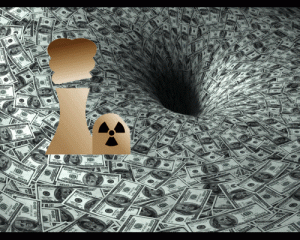
Expanding state aid to money-losing nuclear reactors across the eastern U.S. may leave consumers on the hook for as much as $3.9 billion a year in higher power bills. Nuclear plant owners are seeking subsidies in Ohio, Connecticut, Pennsylvania and New Jersey after Exelon Corp. won state aid for reactors in Illinois and New York last year. Should all 28,000 megawatts of nuclear power across northeast and mid-Atlantic states win subsidies at the same level as New York, ratepayers would face an annual $3.9 billion hike, according to a report by Bloomberg Intelligence Tuesday……
“The losers would be customers and rival plants,” Kit Konolige, a senior analyst for Bloomberg Intelligence in New York, said by phone. “I think there’s a good chance it will pass in Ohio, Pennsylvania and Connecticut.”…..
New York regulators in August approved subsidies totaling about $500 million a year for the R.E. Ginna and Nine Mile Point nuclear plants owned by Exelon, and the James A. FitzPatrick plant it is purchasing from Entergy Corp. Those payouts equal about $17 a megawatt-hour, according to Bloomberg Intelligence…..
Illinois approved annual payouts of about $235 million for 10 years to keep Exelon’s Quad Cities and Clinton reactors open. The prospect of expanding subsidies has caught the eye of federal energy regulators, who plan to explore the impact of payouts on competitive markets…..
After wins in New York and Illinois, Exelon is pushing for aid for its three Pennsylvania reactors and one New Jersey plant, according to Bloomberg Intelligence. FirstEnergy Corp. needs Ohio subsidies to keep its Davis-Besse and Perry reactors open.
“It’s fair to assume that every nuclear plant is going to explore a subsidy,” Konolige said. “They’re going to say if they got in it New York, maybe I can get it in New Jersey.”
The subsidies offered by New York and Illinois are being challenged in court by opponents. A court decision on the New York dispute could come in the second quarter, according to Bloomberg Intelligence. https://www.bloomberg.com/news/articles/2017-03-21/consumers-would-be-3-9-billion-losers-from-nuclear-subsidies
March 24, 2017
Posted by Christina Macpherson |
business and costs, politics, USA |
Leave a comment
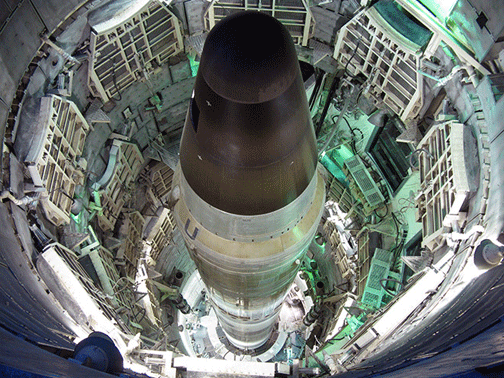
 No Need to Replace U.S. Land-Based Nuclear Missiles, National Interest, James E. Doyle, 21 Mar 17, As former Secretary of Defense William J. Perry has argued there are sound strategic reasons to phase out America’s fleet of 400 silo-based Minuteman III intercontinental ballistic missiles (ICBMs). Primary among these is the fact that these missiles are vulnerable to attack because our potential nuclear adversaries such as Russia know their precise locations.
Because of their vulnerability, ICBMs are the weapon system most likely to spark an inadvertent nuclear war. If U.S. commanders believed mistakenly (as has happened repeatedly in the past) that our ICBMs were under attack, they will face immense pressure to launch them at the perceived attacker before they are destroyed in their silos. Once they are launched if the warning of attack was false, it is too late. Our ICBMs cannot be recalled and will destroy their targets, prompting certain nuclear retaliation on U.S. cities.
Now recent revelations regarding the rapidly inflating cost of replacing the ICBMs and dramatic improvements in the capabilities of the other two legs of the U.S. nuclear triad make crystal clear that phasing out the ICBMs is the right choice for American security.
Pushing forward with deployment of the Ground-Based Strategic Deterrent (GBSD) as the Minuteman III replacement is called will deplete resources needed for other vital defense programs from cyber defenses to naval shipbuilding to conventional forces readiness and other nuclear modernization programs including new strategic submarines and aircraft. Estimated cost for the 15-20 year GBSD program have increased by more than 60% from $61 billion in 2016 to over $100 billion in early 2017. No clear plans have emerged that can support this cost without forcing dramatic cuts elsewhere within the defense budget.
Fortunately, there is no need to make the painful national security trade-offs that deploying the GBSD would require. The U.S. can safely retire the Minuteman III ICBMs as they reach the end of their service lives in the 2030s without replacing them. This is because recent modernization programs are dramatically increasing the accuracy, and thus the effectiveness of U.S. submarine and aircraft-launched nuclear weapons. …….
A decision to cancel replacement of the Minuteman III force would have other benefits as well. It is the most efficient way to reach the 1,000-1,000 deployed warhead level that the Department of Defense asserted was sufficient for deterrence in 2013 and it would achieve additional cost savings because ICBM warheads could be retired instead of modernized.
Finally, it would create opportunities for reaching new arms control agreements with Russia and China and demonstrate to the world that the United States was serious about meeting its obligations under the Nuclear Nonproliferation Treaty and taking a leadership role toward an eventual world without nuclear weapons.
James E. Doyle is an independent Nuclear Security Specialist. From 1997-2014 he was on the technical staff of the Nonproliferation Division at Los Alamos National Laboratory. http://nationalinterest.org/blog/the-buzz/no-need-replace-us-land-based-nuclear-missiles-19851
March 24, 2017
Posted by Christina Macpherson |
USA, weapons and war |
Leave a comment

 ‘Take Bradwell off the nuclear list now’ – Campaigners call for review of Government proposed sites http://www.gazette-news.co.uk/news/15168807.___Take_Bradwell_off_the_nuclear_list_now______Campaigners_call_for_review_of_Government_proposed_sites/ Rebecca Creed, Chief Reporter / , 21 Mar 17 A CAMPAIGN group fighting against a new power station at Bradwell has called for the proposed site to be removed from a Government list.
In 2011 the Government revealed a list of eight sites deemed “potentially suitable” for new nuclear stations, including Bradwell.
But Blackwater Against New Nuclear Group (BANNG), which has campaigned against a new power station, believes the list should be reviewed. It comes as the group, along with other campaigners, submitted their response to a pre-application consultation for Sizewell C in Suffolk.
Andy Blowers, chairman of BANNG, said: “The policy for new nuclear power stations is out of time and out of order and safer, less expensive and environmentally-sustainable alternatives need to be put in place.”
In January, it was announced the Government had asked nuclear regulators to begin the process of approving a Chinese-designed reactor for a new power plant.
EDF Energy signed a deal with China General Nuclear Power Corporation for Bradwell B, a greenfield site next to the former station.
The Chinese company will provide two thirds of the development costs of Bradwell B and hopes to begin construction by 2023..Up to 25,000 jobs will be created during construction, although it is unclear how many vacancies will be filled by residents.
Mr Blowers added: “In the coming months BANNG will continue its campaign to oppose the Chinese nuclear project at Bradwell, which threatens to destroy a precious environment and inflict harm on present and future generations.
“At the local level we will work with the communities around the Blackwater to thwart the project in its early stages.
“At regional level we will back Together Against Sizewell C’s legal challenge to the Government’s nuclear policy.
“And, at the national level, with other protest group leaders, we shall fight to have both Bradwell and Sizewell removed from the list of nominated sites for new nuclear power stations. The Government’s policy is misguided and in need of urgent review.”Harwich and North Essex MP Bernard Jenkin has said a new power station could threaten the eco-system of the Blackwater estuary at Mersea.
March 24, 2017
Posted by Christina Macpherson |
opposition to nuclear, UK |
Leave a comment
 Local leaders join opposition to New York nuclear plant aid http://www.recordonline.com/news/20170321/local-leaders-join-opposition-to-new-york-nuclear-plant-aid, TIMES HERALD, By Associated Press ALBANY, N.Y. (AP) — Nearly 70 locally elected officials in New York are calling on Democratic Gov. Andrew Cuomo to halt a tax subsidy program that would allow three aging nuclear power plants to remain open upstate.
Legislators, town supervisors and councilmembers from more than two dozen counties signed a letter Monday to Cuomo requesting the state pause the program set to begin April 1 and publicly reassess clean energy options. Cuomo has said keeping the plants open would provide reliable energy as New York transitions half its power to renewable sources by 2030.
Some environmental advocates who oppose the program estimate its cost at up to $7.6 billion over 12 years.
The Public Service Commission says the program will cost about $1 billion in the first two years but cannot predict additional costs.
March 24, 2017
Posted by Christina Macpherson |
business and costs, opposition to nuclear, politics, USA |
Leave a comment
Wallace said, “I sense that they have no plans today of walking away from this claim. This is still the president’s belief. Some folks still close to the president, but not on the White House staff said it’s a word I can’t say on family-friendly TV, but the initials are B and S. Another person who spent time with the president this weekend in Florida said it was signs of paranoia and delusion around this idea that he’s so right. Interestingly, he has sought to have people outside the government corroborate this wiretapping claim, which either suggests this observation of paranoia and delusion is in fact operation or extreme ignorance of all the powers at his disposal and all the investigative powers of the federal government.”
These are Republicans close to Trump who claimed that the President Of The United States is paranoid, delusional, and believes that Obama wiretapped him. Wallace’s comments on MSNBC were a statement that the President might be mentally ill.
Before anyone asks, the constitutional standard for the removal of a president contains no discussion of mental fitness. It would be difficult to nearly impossible to remove Trump from office due to mental illness. It would have to be demonstrated that Trump is physically unable to perform the job of president.
The Trump claim that Obama wiretapped him was not some brilliant diversion. Trump’s belief that Obama spied on him is the mark of a paranoid, and mentally ill president.
March 24, 2017
Posted by Christina Macpherson |
politics, psychology - mental health, USA |
Leave a comment
Two Australian states embrace grid-scale storage for power reliability, http://www.utilitydive.com/news/two-australian-states-embrace-grid-scale-storage-for-power-reliability/438073/ Peter Maloney@TopFloorPower, 15 Mar, 17 Dive Brief:
- Two Australian states are ramping up energy storage to address rising electricity costs and rolling blackouts, according to media reports.
- In South Australia, the government says it will hold a competitive solicitation for a 100 MW battery storage installation and construct a 250 MW gas plant, according to Energy Storage News reports.
- The state of Victoria is also investing $20 million in an effort to boost energy storage to 100 MW by the end of next year, ABC News reports.

Dive Insight:The government announcements come days after
Tesla told South Australia officials that it could install a 100 MW battery system in 100 days that would solve the state’s power problems.South Australia has been suffering from
rolling blackouts brought about by high heat and a lack of baseload power. The situation has attracted developers like
ZEN Energy and Tesla, who say that battery storage could go a long way toward integrating renewables into the state’s grid and solving grid instability problems.
South Australia officials also announced plans for a 250 MW gas-fired generator to act as backup for intermittent renewables.
Officials said the gas plant would be turned on only when power shortfalls are forecasted, according to ABC. A bill is reportedly in the works to give the state energy minister more control over power dispatch, after criticisms of the Australian grid operator stemming from the power outages.
Victoria, meanwhile, is looking at a range of energy storage solutions, including batteries, pumped hydro storage and solar thermal technology. The $20 million investment will come on top of a separate $5 million solicitation for a 20 MW energy storage system issued last month.
March 24, 2017
Posted by Christina Macpherson |
AUSTRALIA, energy storage |
Leave a comment
Time to reject nuclear energy , The Star, DR R.S. MCCOY Petaling Jaya, 21 Mar 17 I REFER to the report “Expert: There is rising resistance to nuke option” (The Star, March 15) where Prof Ramesh Thakur warned of “rising public opposition towards nuclear energy due to its many risks.” He emphasised that the Malaysian Government “must weigh all the potential risks, including the possibility of a nuclear accident, smuggling and theft of nuclear components.”
It was noted that the final report of the Integrated Nuclear Infrastructure Review (INIR) Mission Phase 1 would soon be tabled for discussion by Cabinet, and claimed that Malaysia is thoroughly prepared to make an informed decision about introducing nuclear power.
But there are many convincing reasons why nuclear energy is not a viable option for Malaysia. The global nuclear industry has continually failed to contain escalating costs and delays in the construction of nuclear power plants. There will always be the risk of nuclear weapons proliferation and nuclear terrorism……….
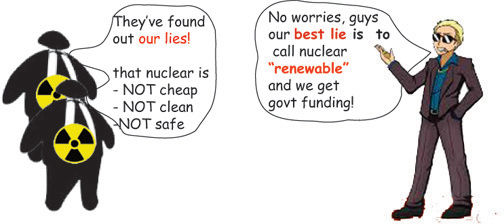
Historically, a Russian nuclear power plant was the first to be connected to an electricity grid in Obinsk in 1954. Nuclear power plants soon mushroomed across the developed world, based on the deceptive slogan that nuclear-generated electricity was “too cheap to meter”. But global nuclear power capacity has stagnated ever since the catastrophic nuclear meltdown in Chernobyl in 1986 and the realisation that nuclear power is not cheap, clean or safe.
Today, only 24 countries operate 388 nuclear power plants, compared with 438 nuclear reactors in 2002, producing less than 2% of the world’s total electricity. Only 14 countries have plans to build new reactors.
Cheap nuclear power is a myth. Forbes magazine has called it “the biggest managerial disaster in history.” As recently as May 2009, two financial reports in the business section of the New York Times highlighted the incredible economics of building a nuclear power plant. The reports revealed two fiascos involving the construction of a new reactor in Olkiluoto in Finland by the French company, Areva, and the virtual collapse of the once touted global flagship, Atomic Energy of Canada Limited. Both companies were overtaken by cost overruns amounting to billions of dollars caused by decades-long delays in completing construction schedules.
The nuclear industry’s history of financial disasters is lamentable. It includes the loss of more than US$1tril in subsidies, abandoned projects and other public misadventures. Amory Lovins, an energy expert, has called it “the greatest failure of any enterprise in the industrial history of the world.”………
On June 21, 2009, the then Deputy Prime Minister of Malaysia said the Government would not consider the production of nuclear-generated electricity before exploring alternative renewable energy resources such as biomass, solar, wind and hydro power. So what is the Government’s justification for resorting to nuclear power when national electricity reserves are still substantial?
Malaysia would do well to emulate and learn from Denmark, where new technologies have made energy efficiency and the use of renewable energy feasible. Denmark derives most of its renewable energy from biomass and a fifth of its electricity from five thousand wind turbines. Denmark has no hydroelectric or nuclear power and has secured a high level of growth without an increase in greenhouse gas
emissions. It has achieved this through a strong political focus on energy policy and a unique cooperative relationship between researchers, business people and politicians.
Denmark’s ethos of social solidarity, transparency, accountability and common purpose shines an environmental beacon of light for Malaysia……
The issue of nuclear energy is too important to be decided by partisan politics and business interests. It must not be turned into a money-spinner for some politically-connected company or a career-builder for those connected to the nuclear industry. It is not good enough to “engage” with the public by holding politically predetermined seminars and conferences where pro-nuclear groups with vested interests tout the false benefits of nuclear energy to an unsuspecting public.
The energy path to a sustainable future lies elsewhere……..
we must not be deceived by the false propaganda of the nuclear industry. We must reject nuclear energy and avoid the grievous dangers of nuclear devastation and lethal radioactivity that will last for thousands of years. It would be immoral and unethical to leave future generations with such a legacy. t http://www.thestar.com.my/opinion/letters/2017/03/21/time-to-reject-nuclear-energy/#0kCFoFPO1x65SweB.99
March 24, 2017
Posted by Christina Macpherson |
general |
Leave a comment
 As Perry Nuclear Power Plant continues its shutdown for refueling future remains up in the air , news.net 5 .com Mar 22, 2017 “.…..
 Owner FirstEnergy Nuclear Operating Company though announced in February they’re looking to get out of the competitive generating business.
“That could be selling the plant, it could be finding some type of solution that would bring it into a more regulated like environment or it could mean closing,” said FirstEnergy Spokesperson Jennifer Young…….
FirstEnergy would like to see the state adopt a Zero Emissions Nuclear Program which the state legislature is expected to consider. It’s a measure that would recognize nuclear as a clean energy source much like credits provided for wind and solar…..
March 24, 2017
Posted by Christina Macpherson |
general |
Leave a comment

A gang leader says he effectively controls several companies involved in rebuilding projects in the Tohoku region.
A company has been busy dispatching temporary workers for the Herculean task of rebuilding lives in the disaster-hit Tohoku region. But the company’s most important job for survival is to conceal any evidence of its true, sinister nature.
“This is a company I established,” said the leader of a gang affiliated with an organized crime syndicate based in western Japan. “I made sure that no signs of any possible association with yakuza organizations were left.”
Although the National Police Agency has tried to prevent gangsters from cashing in on the triple disaster that struck in March 2011, yakuza groups appear to be thriving in the Tohoku region and extending their reach.
Their companies not only dispatch workers and lease heavy machinery, but they are also involved in more traditional services, such as providing prostitutes and dealing drugs, with workers at the stricken Fukushima No. 1 nuclear power plant and other sites as potential targets.
Police say there is little they can do to shut down the yakuza activities.
The gang leader’s company, which was set up in a city in the Kanto region last December with a start-up cost of 5 million yen ($45,000), appears innocent on the surface.
The president named on company’s registry has no ties with organized crime, and the true leader and members of his family and group are not listed as directors.
The gang leader said he also has effective control over other companies that send workers to contractors involved in an array of projects, including decontaminating areas or dismantling abandoned houses.
“I make millions of yen a month, including about 100,000 yen per contractor and siphoning from workers’ daily allowances,” the gang leader proudly said.
Twenty days after the Great East Japan Earthquake and tsunami struck on March 11, 2011, triggering the nuclear disaster, the NPA directed all prefectural police departments to keep gangsters away from the reconstruction projects.
Similar requests were made to the construction industry, Tokyo Electric Power Co., operator of the nuclear plant, government ministries and agencies and local authorities.
But a number of yakuza organizations are now behind the companies involved in the rebuilding projects.
In some cases, they gain control of legitimate but cash-strapped companies by providing funds.
One crime syndicate reportedly advises umbrella groups on “how to set up a company by keeping others from becoming suspicious.”
Police officials dealing with crime syndicates acknowledge that it is “practically impossible” to thoroughly check for possible ties between subcontractors and gangster organizations.
In some cases, a single project is outsourced to more than 10 subcontractors.
“All we can do is check whether individuals connected to underground groups are listed in the registration papers,” a police official said.
Police say they can confirm a yakuza connection only after they scrutinize the company directors’ circle of friends and acquaintances and other relevant data.
Although anti-yakuza ordinances are believed to be depleting the finances of mobsters around Japan, the crime syndicates are systematically running operations in the Tohoku region as if it’s business as usual.
One leader of an underground group said he was ordered by its parent organization “not to lag behind others” in exploiting potentially lucrative projects.
After the 1995 Great Hanshin Earthquake, the parent organization began asking all groups under its umbrella to give “regular reports” about rental agents of heavy machinery, dump trucks and other equipment indispensable in rebuilding projects on their turfs.
The move was apparently designed to prepare for the day when they needed to quickly obtain as much machinery as possible.
That day arrived on March 11, 2011.
“There is a huge demand for such equipment in a disaster,” a former senior member of a gang group said. “We can lease it at our asking price.”
Crime organizations have also seen a potentially lucrative market in the predominantly male work force at the Fukushima nuclear plant and other reconstruction projects in the Tohoku region.
“I came to Fukushima to have fun as an adult,” said an entry, presumably by a female, on a dating site for men. “I am looking for somebody I can meet in Nihonmatsu,” said another, referring to a city in Fukushima Prefecture.
The website, set up by the head of a gangster organization in the Kanto region, targets workers at the stricken nuclear plant and elsewhere.
The gang leader said he takes women who have experience in the sex industry to disaster-stricken areas in his car and stays there for several days.
He sends the women to love hotels or the clients’ vehicles, depending on the customers’ requests. One encounter costs about 30,000 yen, he said, adding that 60 percent goes to the woman while he pockets the remainder.
“I am in fierce competition with other underground groups in this line of business,” he said. “But I can earn at least 3 million yen a month.”
Drug deals are also said to be at play in the disaster zone.
“I have seen and heard about the use and deals in stimulant drugs at the plant,” recalled the leader of a gang group based in eastern Japan who works at the Fukushima nuclear complex.
He was assigned to the plant just after a hydrogen explosion took place there.
TEPCO and Fukushima prefectural police said they are not aware of any drug use at the plant.
However, a plant worker in his 30s died at a hospital in August 2015 after he complained of sickness on a bus taking him from the nuclear plant.
He turned out to be a gang member, according to police. His urine sample showed possible signs of stimulant drug use, but his cause of death was not determined.
Between 2011 and 2016, police have busted underground groups involved in rebuilding projects in 101 cases.
Fraud accounted for 54 cases. They were primarily gangsters pretending to collect donations for disaster victims or mobsters involved in illicit borrowing.
Twenty-five cases concerned dispatches of workers to assignments that they were not allowed to perform.
In one case, a senior member of a group affiliated with the Sumiyoshi-kai, one of the largest crime syndicates in the nation, was arrested in May 2012 on suspicion of illegally sending workers to the Fukushima plant. Police uncovered that the mobster received about 40 million yen between 2009 and 2011 by sending workers to nuclear plants and thermal power plants across the country.
http://www.asahi.com/ajw/articles/AJ201703230055.html
March 23, 2017
Posted by dunrenard |
Fukushima 2017, Fukushima continuing | Fukushima Daiichi, Temporary Workers, Yakuza Organizations |
Leave a comment

A Kyoto University team has developed a new camera to visualize radioactive hotspots
Extraordinary decontamination efforts are underway in areas affected by the 2011 nuclear accidents in Japan. The creation of total radioactivity maps is essential for thorough cleanup, but the most common methods, according to Kyoto University’s Toru Tanimori, do not ‘see’ enough ground-level radiation.
“The best methods we have currently are labor intensive, and to measure surface radiation accurately,” he says, “complex analysis is needed.”
In their latest work published in Scientific Reports, Tanimori and his group explain how gamma-ray imaging spectroscopy is more versatile and robust, resulting in a clearer image.
“We constructed an Electron Tracking Compton Camera (ETCC) to detect nuclear gamma rays quantitatively. Typically this is used to study radiation from space, but we have shown that it can also measure contamination, such as at Fukushima.”
The imaging revealed what Tanimori calls “micro hot spots” around the Fukushima Daiichi Nuclear Power Plant, even in regions that had already been considered decontaminated. In fact, the cleaning in some regions appeared to be far less than what could be measured by other means.
Current methods for measuring gamma rays do not reliably pinpoint the source of the radiation. According to Tanimori, “radiation sources including distant galaxies can disrupt the measurements.”
The key to creating a clear image is taking a color image including the direction and energy of all gamma rays emitted in the vicinity.
“Quantitative imaging produces a surface radioactivity distribution that can be converted to show dosage on the ground,” says Tanimori. “The ETCC makes true images of the gamma rays based on proper geometrical optics.”
This distribution can then be used to relatively easily measure ground dosage levels, showing that most gamma rays scatter and spread in the air, putting decontamination efforts at risk.
“Our ETCC will make it easier to respond to nuclear emergencies,” continues Tanimori. “Using it, we can detect where and how radiation is being released. This will not only help decontamination, but also the eventual dismantling of nuclear reactors.”
https://phys.org/news/2017-03-visualizing-nuclear-team-images-gamma.html#jCp
March 23, 2017
Posted by dunrenard |
Fukushima 2017, Fukushima continuing | Camera, decontamination, Detection, Fukushima Daiichi, Gamma Rays |
Leave a comment

Extremely high radiation levels were detected using cameras and robots in tainted water inside a reactor containment vessel at the Fukushima No. 1 nuclear power plant, Japan Times reported Tuesday, citing Tokyo Electric Power Company Holdings Inc. (Tepco).
The latest readings, taken six years after the Fukushima nuclear meltdown, showed 11 sieverts per hour, according to Japan Times. It is the highest radiation level detected in water inside the containment vessel and is extremely dangerous. Sievert is a unit measurement for a dose of radiation. One sievert is enough to cause illness if absorbed all at once, and 8 sieverts will result in death despite treatment, according to PBS who relied on data from multiple sources including United States Nuclear Regulatory Commission and MIT’s Nuclear Science and Engineering department.
Following a major earthquake on March 11, 2011, a 15-metre tsunami disabled the power supply and cooling of three Fukushima reactors, causing a nuclear accident. Tepco, who operated the plant and has been tasked with cleaning up the worst nuclear incident, since the 1986 Chernobyl disaster in the former Soviet Union, has been some problems of late in its cleanup operation.
Recently, an exploratory robot malfunctioned and died after being sent inside reactor 2, in mid-February, due to exposure to “unimaginable” levels of radiation, close to 650 sieverts per hour. The previous highest recorded level was 73 sieverts per hour. Following the incident, Naohiro Masuda, president of Tepco’s Fukushima Daiichi Decommissioning project, told reporters the company had to rethink its methods in order to examine and extract the hazardous material stuck in the plant’s second reactor.
“We should think out of the box so we can examine the bottom of the core and how melted fuel debris spread out,” Masuda said, according to the Japan Times.
Tepco has been attempting to locate melted fuel which leaked from the reactor’s pressure vessel and is believed to have settled at the bottom of the containment vessel that holds the contaminated water. So far, no such debris has been found, and Tepco decided to extend the survey by one day through Wednesday.
A robot sent by the company on March 20 reached the bottom but was unable to locate the melted fuel due to some pipes that blocked its view. But it was able to take pictures of what appeared to be sand piling up near the pipes. The radiation readings near them were 6.3 sieverts per hour.
“Judging from the radiation level, there is a high possibility that what is piling up on the pipes is not nuclear fuel,” a Tepco official said, according to the Asahi Shimbun.
Cleaning up the plant may take an estimated 40 years and cost an estimated 21.5 trillion yen ($189 billion), according to the Guardian.
https://www.rawstory.com/2017/03/deadly-nuclear-radiation-levels-detected-in-fukushima/
March 23, 2017
Posted by dunrenard |
Fukushima 2017 | Fukushima Daiichi, High Radiation, reactors, Robot Probes |
Leave a comment

The Unit 2 reactor building at Tokyo Electric Power Co.’s Fukushima Daiichi nuclear power plant.
The level of radiation was measured by a special robot on Sunday at a point about 30cm (one foot) from the bottom of the containment vessel of Reactor 1, the Japan Times reported on Tuesday.
The current radiation level is 11 sieverts per hour, the highest detected in water inside the containment vessel. A person exposed to this amount of radiation would likely die in about 40 minutes, the Japan Times reports.
Sunday’s probe also revealed sandy substances building up at the bottom of the vessel. Tokyo Electric Power Company Holdings (TEPCO) officials, however, dismissed the idea that it might be melted nuclear fuel.
Experts have been looking for the melted fuel, which they believe has been accumulating in tainted water.
In March 2011, a 9.1 earthquake and the 15-meter tsunami that followed disabled the cooling system of Fukushima’s three reactors, causing the worst nuclear incident since the 1986 Chernobyl incident in Ukraine.
TEPCO, which operates the crippled power plant, has been obliged to deal with the consequences of the incident.
In February, a robot sent to explore Reactor 2 broke down because of the “unimaginable” levels of radiation, close to 650 sieverts per hour. This was the first time a robot entered this reactor since the plant’s meltdown in 2011.
Previously, the highest radiation level was recorded one year after the disaster and went up to 73 sieverts per hour.
TEPCO has promised extract the hazardous material stuck in the plant’s second reactor, its president Naohiro Masuda said, according to the Japan Times.
In December, TEPCO nearly doubled the estimated cost for the Fukushima clean-up to $188 billion.
A zone of more than 300 square miles around the plant is currently uninhabitable due to the continuing radiation.
https://www.rt.com/news/381879-fukushima-reactor-radiation-lethal/
March 23, 2017
Posted by dunrenard |
Fukushima 2017 | Fukushima Daiichi, High Radiation, Melted Fuel, reactors |
Leave a comment









 nuclear-news