Home Truths about the Climate Emergency. #auspol #science

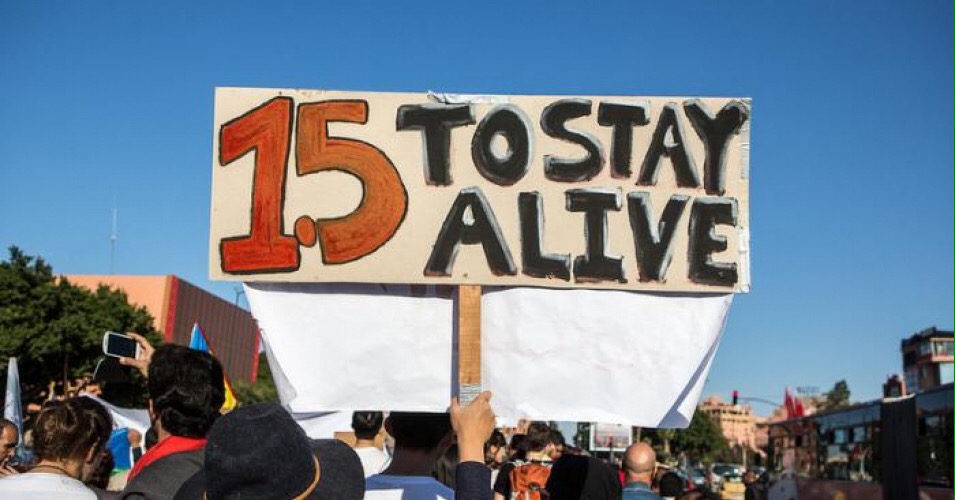
As 2016 draws to a close, we appear to be living in a world that is increasingly defined by its illusions, where the truth is a matter of subjective interpretation or argumentative debate.
Indeed, following the United States election and Brexit referendum there is much talk of a new era of post-truth politics, in which appeals to emotion count more than verifiable facts. But there are some facts that cannot be ignored for much longer, however hard we may try. And the greatest of all these facts is the escalating climate emergency that neither mainstream politicians, nor the public at large, are anywhere near to confronting on the urgent scale needed.
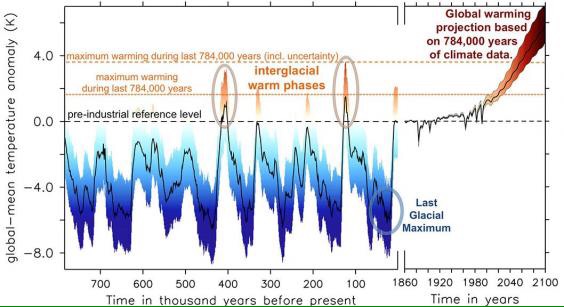
This was brought home once again at the latest Conference of the Parties held in Morocco last month, following the so-called ‘historic’ Paris Agreement of November 2015. Dubbed the ‘implementation’ or ‘action COP’, the main purpose of the summit…
View original post 1,054 more words
Will The Climate Crisis Spread Financial Crisis? #Auspol
Will The Climate Crisis Spread Financial Chaos In Oil and Gas?
By Nick Cunningham – Dec 21, 2016, 2:17 PM CST
Will climate change spark a financial crisis? It may not seem like an obvious connection but that was exactly the warning from the deputy head of the Bank of England a few months ago, a warning that is all the more stark as we are set to close the books on the world’s hottest year on record.
“It is potentially a systemic risk,” Paul Fisher, the deputy head of the Bank of England, said in October. “You don’t need to believe in climate change, you don’t need to believe that it is man-made,” he added. “You just need to believe that governments are going to do stuff and that is going to affect your business. And then it is a material risk.” That echoes the voice of Mark Carney…
View original post 1,096 more words
Fuel removal at Fukushima reactor again faces delay
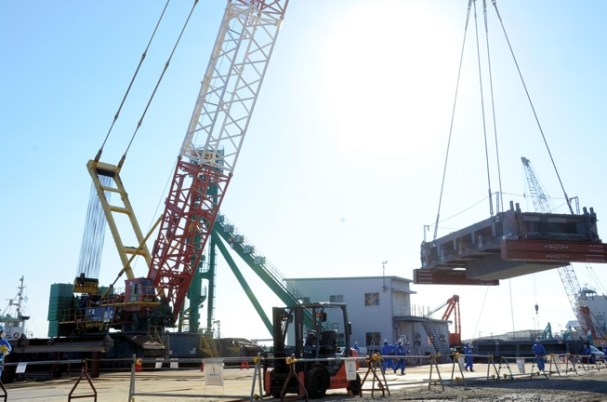
Steel frames are transported at the Fukushima No. 1 nuclear power plant on Dec. 20 to prepare for work to retrieve spent nuclear fuel from the storage pool of the damaged No. 3 reactor building.
Work to retrieve spent nuclear fuel in the No. 3 reactor building storage pool of the crippled Fukushima No. 1 nuclear power plant will again be postponed due to a delay in clearing radioactive debris at the site.
TEPCO planned to begin removing 566 spent nuclear fuel assemblies in the storage pool in January 2018. However, the government and the plant operator, Tokyo Electric Power Co., decided on the postponement, sources said on Dec. 22. They will decide on a new timetable in a few weeks.
The work was initially scheduled for fiscal 2015, but had been pushed back because of high radiation readings in and around the No. 3 reactor building. The building was heavily damaged by a hydrogen explosion in the days following the disaster, triggered by the 2011 Great East Japan Earthquake and tsunami.
TEPCO had attempted to lower radiation levels by clearing the radioactive debris remaining at the site.
But the clearing work took longer than expected due to contamination being more widespread than previously thought, forcing TEPCO and the government to again put off the retrieval.
Radiation levels have now dropped as almost all of wreckage at the site has been cleared, TEPCO said. The government and TEPCO have said fuel retrieval at the No. 1 and No. 2 reactor buildings will start in fiscal 2020 or later.
For 6,000, the daily bus ride takes them to Fukushima plant
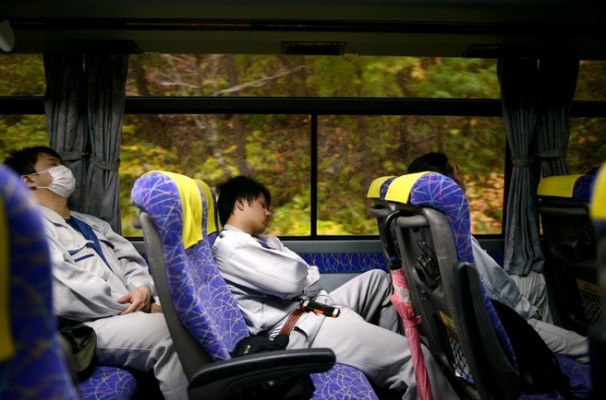
A shuttle bus takes workers in deep sleep from the Fukushima No. 1 nuclear plant to J-Village, where their temporary dormitories are located.
A shuttle bus takes workers in deep sleep from the Fukushima No. 1 nuclear plant to J-Village, where their temporary dormitories are located. (Shigeta Kodama)
NARAHA, Fukushima Prefecture–Despite the predawn hour, few people are sleeping on a bus that steadily makes its way north on National Route 6.
Some passengers are planning for the work ahead. One is looking forward to chatting with his colleagues. And a few wonder if today will be the day when their annual radiation doses reach the safety limit.
Every day, buses like this take 6,000 workers to the Fukushima No. 1 nuclear power plant. And every day, the same buses take the exhausted and mostly sleeping workers back to their base at the Japan Football Village (J-Village) in Naraha.
Although the Fukushima plant is still decades away from being decommissioned, without this daily routine of the workers who toil amid an invisible danger, the situation at the site would be much more difficult.
407 DAILY BUS RIDES
One of them, the 49-year-old leader of a group of metal workers from Iwaki, Fukushima Prefecture, has been working at nuclear plants, including the Kashiwazaki-Kariwa power station in Niigata Prefecture, for nearly 20 years.
He was at the Fukushima No. 1 nuclear plant when the Great East Japan Earthquake and tsunami triggered the triple meltdown there in March 2011.
“Nobody can get close to the area where the melted nuclear fuel remains due to high radiation doses,” the man said. “Even if we could approach the area, we would have no way out if something happens. The situation is harsh.”
Those metal workers install tanks for the contaminated water that keeps accumulating at the plant.
Although there are plenty of empty seats, the young workers sit in front and the older workers take the back seats.
Thousands of workers are staying at temporary dormitories set up in J-Village, a soccer training complex.
Tokyo Electric Power Company Holdings Inc., operator of the nuclear plant, hired a local bus company to transport the workers to the plant because securing parking areas near the site has been difficult since the 2011 disaster.
The company provides 407 services a day to and from the plant. Each trip takes about 30 minutes.
The first shuttle bus departs from J-Village at 3:30 a.m., while the last bus leaves the Fukushima plant at 9:45 p.m.
In mid-November amid torrential rain, one bus picked up a man taking shelter under the eaves of a bus stop.
He said he is in charge of managing data related to radiation doses of fittings and other equipment at the plant.
“We have many different types of work here,” the man proudly said.
Also on the way to the nuclear plant, a 53-year-old employee of a security company was thinking about personnel distribution.
Like other workers there, security guards must be replaced when their annual radiation doses reach a certain level set by the government.
He said he has difficulties making ends meet with a limited number of guards who have knowledge about radiation.
Suddenly, the man’s cellphone rings, and the caller orders the deployment of additional security guards to the plant.
A 52-year-old TEPCO employee was on the way to the nearby Fukushima No. 2 nuclear power plant to provide a safety training program for workers, many of whom are victims of the triple disaster.
“I want to convey to workers how precious their lives are and how important safety is in a way that doesn’t make me sound hypocritical,” the employee said.
The triple meltdown has been called a “man-made disaster” caused by the failure of both TEPCO’s management and the government’s regulatory authorities.
The TEPCO employee will use props, such as a ladder, and pretend to be a worker to explain dangerous cases at the No. 1 plant.
PREMIUM SEATS
On the trip back to J-Village, a different atmosphere exists on the bus.
Although dazzling sunlight shines through the windows and stunning views of the ocean are available, most of the workers are fast asleep in their wrinkled uniforms.
“Few people stay awake. I don’t even switch on the radio. They must be tired after their work,” said Nobuyuki Kimura, 52, who has driven the shuttle bus for one-and-a-half years.
In Kimura’s bus that departed the plant at 2:30 p.m., all 50 seats and some of the auxiliary seats were filled. The few passengers who stayed awake remained quiet.
By early evening, fewer workers boarded the bus at the plant.
Window seats at the back of the bus are desirable on all rides because they have an enough room for the seats to recline, allowing passengers to cross their legs.
A 21-year-old worker from Iwaki went for a window seat at the back after standing at the front of a line waiting for the bus.
“I can relax sitting here. This is the premium seat,” said the man who collects waste materials, such as boots and socks, at the site.
Although he works in protective gear in an area with high radiation levels, he said he has never thought about quitting his job.
He said he became fed up with school as a junior high school student, and did not bother going to senior high school.
At the age of 18, he joined his current company, and his first assignment was at the Fukushima No. 1 plant.
“I became acquaintances with more and more people. It’s fun to speak with people at work,” he said.
Through his work at the nuclear plant, his weight has dropped from 115 kilograms to 93 kg.
Thirty to 40 years are needed to decommission the Fukushima No. 1 plant, according to the mid- and-long-term roadmap compiled by the government and TEPCO.
To reduce the groundwater flowing into the buildings housing the No. 1 to No. 4 reactors, TEPCO installed coolant pipes this year to create an underground frozen soil wall to divert the water into the ocean.
TEPCO announced in October that the ice wall on the sea side was nearly frozen, but groundwater is believed to be seeping through it.
The utility plans to start removing spent fuel from the No. 3 reactor building in fiscal 2017. It also has plans to begin the daunting task of removing the melted fuel from the No. 1 to No. 3 reactor containment vessels in 2021.
However, extremely high radiation levels have prevented workers from approaching and understanding the condition of the melted fuel. The removal method has yet to be decided.
The estimated cost of work for decommissioning and dealing with the contaminated water has ballooned to 8 trillion yen ($68.1 billion).
State funds to be used for clean-up in Fukushima
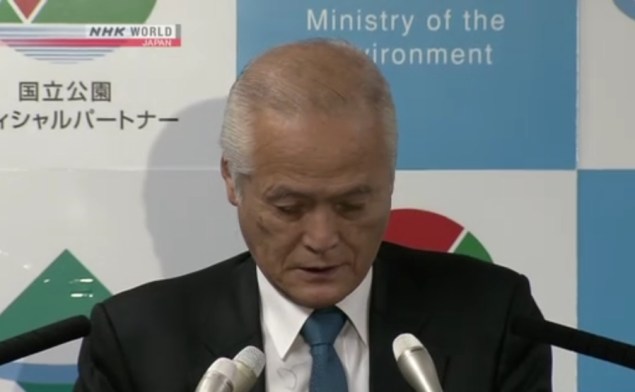
The Japanese government, for the first time, is using state funds for decontamination work in areas affected by the 2011 nuclear accident in Fukushima Prefecture.
The environment ministry earmarked roughly 30 billion yen, or about 250 million dollars, in the fiscal 2017 budget plan, which was approved by the Cabinet on Thursday.
The allocation will be for cleaning up no-entry areas where radiation levels remain prohibitively high.
The government has so far made the plant operator, Tokyo Electric Power Company, pay for the cleanup, based on the principle that the entity responsible for the contamination should bear the cost.
Some lawmakers within the governing coalition are opposed to the turnaround in policy, saying the government should continue to make TEPCO pay.
Environment minister Koichi Yamamoto told reporters on Thursday that the ministry will carefully explain the decision in an effort to seek public understanding on the use of state funds.
The Environment Ministry says it estimates the cost of decontamination work carried out by TEPCO so far at around 36 billion dollars.
But the cleanup of the heavily-contaminated areas that starts from fiscal 2017 is expected to be more time- and labor-consuming than the work in lesser tainted areas.
https://www3.nhk.or.jp/nhkworld/en/news/20161222_21/
Fukushima plaintiffs speak up on evacuee plight
A group of people who evacuated due to the 2011 accident at the Fukushima Daiichi nuclear power plant has spoken out about the many problems they face, including recent bullying of evacuee children.
The group consists of plaintiffs in lawsuits demanding compensation for damages from the central government and Tokyo Electric Power Company, which operates the plant.
Group representatives called for understanding of their suffering in a statement released at a news conference in Tokyo on Thursday.
The plaintiffs living in and outside Fukushima Prefecture, where the plant is located, took the action after a revelation last month that a student evacuee was bullied at school in Yokohama, near Tokyo.
The bullies demanded money from the boy. Similar cases have since been revealed elsewhere.
The statement says it is regrettable that evacuees, who are victims of the accident, suffer from insensitive criticism and unreasonable acts by others. It says the group seeks understanding of the seriousness of the situation.
A senior official of the group, Mitsuo Sato, said what has been reported about bullying is the tip of the iceberg. He said adults also face harassment and insensitivity. Sato said he wants people to know that bullying and discrimination affect all evacuees.
A woman who voluntarily evacuated from Fukushima Prefecture with her daughter asked people to think about why they had to leave their home. She added that the nuclear accident is far from over.
Gov’t set to continue nuclear fuel cycle project despite Monju closure. Time to scrap nuclear fuel cycle, not just Monju reactor
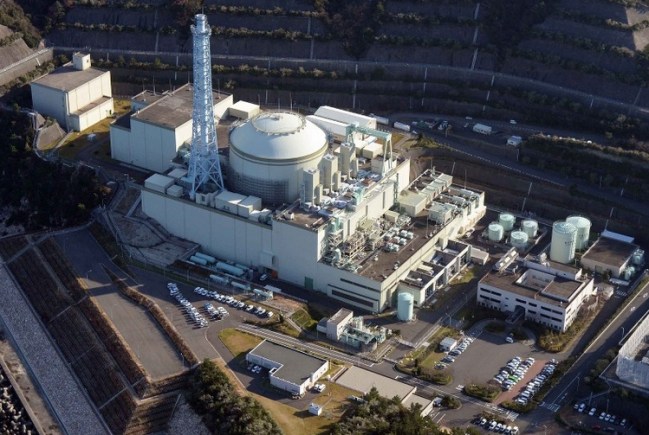
Gov’t set to continue nuclear fuel cycle project despite Monju closure
The government formally decided at a meeting of Cabinet ministers concerned with nuclear energy on Dec. 21 to decommission the trouble-plagued Monju prototype fast-breeder nuclear reactor in Tsuruga, Fukui Prefecture.
Over 1 trillion yen in taxpayers’ money has so far been invested in the reactor — the core facility in the government’s nuclear fuel cycle project in which spent nuclear fuel is reprocessed and reused in nuclear reactors.
Nevertheless, Monju, operated by the government-affiliated Japan Atomic Energy Agency (JAEA), will be shut down after being in operation for a total of only 250 days since the reactor reached criticality for the first time in 1994.
Still, the government, which is poised to continue the nuclear fuel cycle project, also agreed at the Dec. 21 meeting to draw up a road map by 2018 toward developing a fast reactor for the project.
In other words, the government is moving toward its “next dream” even without clarifying the cause of the failure of what they called “dream nuclear reactor” Monju and who is responsible for the fiasco.
“It’s extremely important to maintain the nuclear fuel cycle project and promote the development of a fast reactor,” Chief Cabinet Secretary Yoshihide Suga told a news conference following the decision.
However, continuation of the project will likely pose a challenge. The government’s nuclear fuel cycle project involves two cycles — one centered on a fast-breeder reactor and the other in which mixed-oxide (MOX) fuel, nuclear fuel made from reprocessed plutonium and uranium, is used in nuclear plants.
With the decision to decommission Monju, the cycle involving a fast-breeder reactor has failed. At the same time, the government has failed to smoothly press forward with the cycle involving the use of MOX fuel since most nuclear power plants have been idled since the outbreak of the Fukushima nuclear crisis in March 2011. The No. 3 reactor at Shikoku Electric Power Co.’s Ikata plant is the only nuclear reactor using MOX fuel, which is currently in operation.
A spent nuclear fuel reprocessing plant in Aomori Prefecture is undergoing safety screening by the Nuclear Regulation Authority (NRA), and pools holding spent nuclear fuel at atomic power stations across the country are filled to 70 percent of their capacities on average. Japan’s stockpile of plutonium, which can be converted to use in nuclear weapons, has kept growing. By the end of 2015, the plutonium Japan possessed domestically and overseas had amounted to 47.9 metric tons.
The development of a fast reactor poses technological challenges. While a breeder reactor is designed to increase the amount of plutonium, the government emphasizes that a fast reactor that it is aiming to develop will play the role of an “incinerator” for nuclear waste such as by reducing the volume of high-level radioactive waste.
However, no experiment has been conducted on a fast reactor using actual radioactive waste. Hirofumi Nakamura, head of JAEA’s planning and coordination division, acknowledged that the technology has not even reached the stage prior to putting it into practical use.
Serious questions persist about the feasibility of a fast reactor for economic reasons, and such a reactor is often dubbed as “modern alchemy.”
The basic structure of a fast reactor and that of a breeder reactor are basically the same with the only differences being fuel types and arrangements. Therefore, a fast reactor, which is supposed to play the role of an incinerator for spent nuclear fuel, could be converted into a breeder reactor that produces plutonium.
A senior official of JAEA admits that “there is room for converting a fast reactor into one that breeds (plutonium).”
A fast reactor can be put into practical use after the development and production of experimental, prototype and then demonstration reactors. The government participates in the joint development of ASTRID, a French demonstration fast reactor. However, it remains unclear whether data and knowledge gained from the project in France, which is rarely hit by earthquakes, can be utilized in quake-prone Japan.
France is aiming to begin to operate the fast reactor in the 2030s, but the necessary funds for the project have only been allocated up to 2019. Questions remain as to whether Japan, which has aborted its project involving Monju, a prototype reactor, can be involved in a project to develop an upper-tier demonstration reactor.
Even those within the governing coalition are calling for caution in Japan’s involvement in the joint development project in France. “Japan shouldn’t ride on someone’s (France’s) back,” said Hiroshi Hase, former education, culture, sports, science and technology minister.
NRA Chairman Shunichi Tanaka dismissed the feasibility of a demonstration reactor. “I understand that a demonstration reactor isn’t realistic,” Tanaka told a news conference on Dec. 21.
http://mainichi.jp/english/articles/20161222/p2a/00m/0na/014000c
Government still refuses to face up to reality, failure of Monju project
The government officially decided on Dec. 21 to decommission the troubled Monju prototype fast-breeder reactor and instead develop a new fast reactor to maintain Japan’s nuclear fuel recycling program.
The decision can be likened to a theater director determined not to declare an end to production despite dropping the spendthrift leading actor whose scandals have prevented him from performing on stage.
Fearing possible repercussions from the termination of the production, the director keeps promising to stage the play “sometime in the future.” The director refuses to say clearly when the play will be staged because there is no actor in sight who can substitute for the dismissed one.
But this policy decision cannot be simply laughed away as an absurd piece of political theatrics. An enormous amount of taxpayer money has already been poured into Monju, and the government is poised to spend a huge additional amount to deal with its demise.
There is no doubt the Monju project has been a costly failure. The government cannot be allowed to put the debacle behind it by simply scrapping the experimental reactor and having the science and technology minister offer to return part of his salary for several months.
Despite an injection of more than 1 trillion yen ($8.5 billion) of public funds into the project, the reactor has been mostly out of operation for the 20-odd years since it first reached criticality in 1994. Decommissioning the reactor will require an additional expenditure of nearly 400 billion yen, according to a government estimate.
An exhaustive postmortem for the project to identify the causes of its failure is in order.
The government should not waste any more money or make unreasonable efforts to keep its nuclear fuel recycling program alive.
The government has made the questionable claim that “a certain amount of useful knowledge” has been acquired through the Monju project that can be used to develop a new fast reactor. Instead, the government should confront the grim reality of this undertaking.
Four years ago, the science and technology ministry submitted a report on technological achievements in the Monju project to the Japan Atomic Energy Commission.
The report included estimated levels of achievements, weighted in terms of importance, in different areas.
The degree of achievement, expressed as a percentage, for equipment and system tests was, for instance, 16 percent. The figure for reactor core tests and irradiation issues was 31 percent, while that for operation and maintenance was nil. The overall achievement level was estimated at 16 percent.
Does the government believe this poor track record justifies its claim that “a certain amount of useful knowledge” has been obtained?
The clear moral of the Monju saga is that a huge price must be paid for failing to take a hard look at the reality and underestimating risks and problems.
Serious concerns about the cost-effectiveness of a nuclear fuel recycling program and the risk of nuclear proliferation from accumulating stockpiles of plutonium led many countries to give up developing fast-breeder reactors. Japan, however, bucked the trend and embarked on building Monju.
When sodium leaks occurred overseas, Japanese proponents insisted that such an accident would not happen at the Monju reactor.
When a sodium leak accident did occur at Monju in 1995, they made false announcements and covered up vital information.
Monju resumed operations in 2010 after a long hiatus, but mechanical trouble soon caused it to be shut down again.
Eventually, the ability and competence of the Monju operator, Japan Atomic Energy Agency, was called into question.
The government’s decision to decommission the reactor has long been delayed apparently because of fears that the step would raise questions about how to reprocess spent nuclear fuel in the recycling process and could have a negative impact on nuclear power generation itself.
The government should take this opportunity to confront the reality of its nuclear fuel recycling policy and try to create a new nuclear power policy that can win support of the public through open and broad debate.
Forging ahead with the plan to develop a fast reactor without following this process would be tantamount to betraying the people.
http://www.asahi.com/ajw/articles/AJ201612220041.html
Editorial: Time to scrap nuclear fuel cycle, not just Monju reactor
The government formally decided on Dec. 21 to decommission Japan’s Monju prototype fast-breeder nuclear reactor, yet will continue to pursue the nuclear fuel cycle in which plutonium is extracted from spent fuel through reprocessing to be used again. This stance by the government takes the existence of fast reactors and the nuclear fuel cycle as a foregone conclusion.
Over 1 trillion yen in public funds has been injected into the Monju project, yet due to recurring trouble and scandals, the reactor has operated for just 250 days over 22 years. The Nuclear Regulation Authority went as far as to point out that Monju’s operator, the Japan Atomic Energy Agency, was not capable of running the reactor and should be replaced.
It is only natural for the reactor to be scrapped, but there remains a problem in that the government has closed its eyes to various issues in reaching its decision. Why was it unable to act sooner to put an end to the waste of taxpayers’ money and decommission the reactor? Disregarding any probe into such issues, the government went ahead and made its decision behind closed doors. This is no way to win public approval.
An even more fundamental problem is that while the government is set to decommission the Monju reactor, it has decided to proceed with the development of a demonstration fast reactor — a step up from Monju.
Fast reactors form a cornerstone of the nuclear fuel cycle. The decommissioning of Monju should mean the cycle is broken, and if that is the case, then what needs to be reviewed above all is the fuel cycle policy itself.
The government, however, is still trying to promote fast reactor development, on the grounds that maintenance of the nuclear fuel cycle was included in the nation’s basic energy policy that the Cabinet approved in 2014.
As a step in that direction, the government has proposed taking part in France’s project to build the Astrid fast demonstration reactor, but the feasibility of this project remains unclear, and the government’s move sticks out as a seemingly stop-gap measure.
The reason the government has stuck to maintaining the nuclear fuel cycle is that as soon as it takes down its fuel cycle banner, spent fuel that was previously a “resource” becomes mere “waste.” As a result, the Aomori Prefectural Government would probably have to ask power companies to take back the “resources” that have been piling up at the nuclear fuel reprocessing facility in the prefecture. And once the storage pools for spent fuel at the nation’s nuclear power plants are full, those plants’ reactors will have to be taken offline.
Politicians should be sitting down and working out measures to solve this problem; maintenance of the nuclear fuel cycle should not be used as an expedient.
Some may see officials as wanting to maintain the reprocessing of spent nuclear fuel from the viewpoint of potential nuclear deterrence, but this position lacks persuasiveness.
Five years and nine months have now passed since the onset of the disaster at the Fukushima No. 1 Nuclear Power Plant, and as we prepare to usher in a new year, there are still people living in temporary dwellings and other places to which they evacuated. And the government is trying to widely push the swelling costs of the disaster cleanup, reactor decommissioning, and compensation payments onto the public.
Looking squarely at this reality, fast reactor development is not something the government should be placing priority on tackling. It should give up on the nuclear fuel cycle and put the money to use in measures to assist Fukushima’s recovery.
http://mainichi.jp/english/articles/20161222/p2a/00m/0na/009000c

Fukushima’s ¥8 trillion cleanup leaves foreign firms in the cold
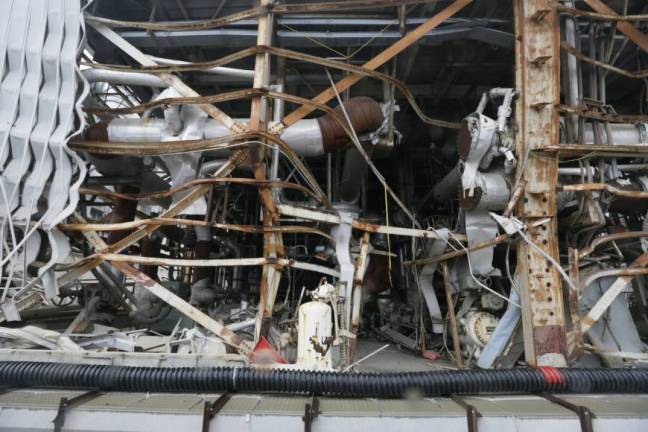
Damaged building housing the No. 4 reactor
Cleaning up the Fukushima nuclear plant — a task predicted to cost 86 times the amount earmarked for decommissioning Japan’s first commercial reactor — is the mother of all salvage jobs. Still, foreign firms with decades of experience are seeing little of the spoils.
Safely dismantling the Japanese power plant, wrecked by the 2011 earthquake and tsunami, will cost about ¥8 trillion ($70 billion), the Ministry of Economy, Trade and Industry said on Dec. 9, quadrupling the previous estimate. While a contract to help clean up the facility would be a windfall for any firm with specialized technology, the lion’s share of the work has gone to local companies that designed and built most of Japan’s atomic infrastructure.
The bidding process for Fukushima contracts should be more open to foreigners, as Japan has never finished decommissioning a commercial nuclear plant, let alone one that experienced a triple meltdown, according to Lake Barrett, an independent adviser at Japan’s International Research Institute for Nuclear Decommissioning. While the Fukushima cleanup is unlike any nuclear disaster in history, foreign firms that have experience decommissioning regular facilities could provide much-needed support, according to Barrett, and even the plant’s operator, Tokyo Electric Power Co. Holdings Inc.
‘Cultural Resistance’
“Internationally, there is a lot more decontamination and decommissioning knowledge than you have in Japan,” Barrett, a former official at the U.S. Nuclear Regulatory Commission, said in an interview in Tokyo. “I hope the Japanese contracting system improves to get this job done safely. There is this cultural resistance — it is almost like there is an isolated nuclear village still.”
An opaque bidding process plays to the heart of criticisms put forward by independent investigators, who said in a 2012 report that collusion between the government, regulators and the plant’s operator contributed to the scale of the disaster.
Of 44 subsidized projects publicly awarded by the trade and economy ministry since 2014, about 80 percent went to the International Research Institute for Nuclear Decommissioning. The group, known as IRID, was established in the wake of the Fukushima disaster and is comprised entirely of Japanese corporations, according to the ministry’s website.
Japan’s trade and industry ministry awarded funds directly to only two foreign firms during the same period. Many of the contracts had only one or two bidders.
Of about 70 contracts awarded since the March 2011 disaster, nine have gone to foreign companies, according to an official in the ministry’s Agency of Natural Resources and Energy who asked not be named, citing internal policy.
To provide opportunities for foreign companies, the ministry has created an English website for bids and also provides English information sessions to explain the contracts, the official said.
Toshiba, Hitachi
IRID’s contracts are given to its members, including Toshiba Corp., Hitachi Ltd. and Mitsubishi Heavy Industries Ltd., which have partnerships and joint ventures with foreign firms, spokesman Yoshio Haruyama said by phone. While it doesn’t directly contract work to companies overseas, IRID taps foreign experts as advisers and participates in international collaborative projects, he said.
Mitsubishi Heavy has about five or six contracts through IRID, but can’t share how many partnerships it has with foreign firms, spokesman Shimon Ikeya said by phone. Hitachi has sub-contracts with foreign suppliers related to the Fukushima cleanup, but can’t provide details about these agreements because they aren’t public, a spokesperson said by email.
As of March, IRID had about ¥30 billion worth of ongoing contracts primarily related to research and development of fuel removal and waste treatment. IRID, which aims to “gather knowledge and ideas from around the world” for the purpose of nuclear decommissioning, doesn’t disclose how much of their money ultimately goes to foreign businesses, according to its spokesman. Barrett, its adviser, said he thinks it’s “very low,” but should ideally be 5 percent to 10 percent.
‘Nuclear Village’
Japan’s biggest nuclear disaster isn’t void of foreign technology. Toshiba, which owns Pennsylvania-based Westinghouse Electric Co., and Hitachi, which has a joint venture with General Electric Co., are tapping American expertise. A giant crane and pulley system supplied by Toshiba to remove spent fuel from the wrecked reactors employs technology developed by Westinghouse.
“We bring in knowledge from foreign companies, organizations and specialists in order to safely decommission the reactors,” Tatsuhiro Yamagishi, spokesman for Tepco, said by email. While the company can’t say the exact number of foreign firms involved in the Fukushima cleanup, companies including Paris-based Areva SA, California-based Kurion Inc. and Massachusetts-based Endeavor Robotics are engaged in work at the site, according to Yamagishi.
For foreign firms, however, independently securing contracts is still a tall order.
“When it comes to Japan’s nuclear industry, the bidding system is completely unclear,” Hiroaki Koide, a former assistant professor at Kyoto University Research Reactor Institute, said in an email. “The system is designed to strengthen the profits of Japan’s nuclear village,” he added, referring to the alliance of pro-nuclear politicians, bureaucrats and power companies that promote reactors.
Tepco’s annual cost to decommission its Fukushima plant may blow out to several hundred billion yen a year, up from the current estimate of ¥80 billion, the trade and industry ministry said in October. As of June, almost ¥1 trillion has been allocated for decommissioning and treating water at Fukushima, according to Tepco’s Yamagishi.
‘Ripe for Corruption’
With that much money at stake, Japan has become ground zero for a plethora of companies looking to benefit from the cleanup work. The structure of Japan’s nuclear industry and the closed procurement preferred by the utilities that operate atomic plants means that the most lucrative opportunities for foreign companies are in the area of subcontracting, according to a report by the EU-Japan Centre for Industrial Cooperation released in March.
“Foreign firms have long argued that the Japanese bidding process is one that is ripe for corruption due to a lack of openness and transparency,” Daniel Aldrich, professor and director of the security and resilience studies program at Northeastern University in Boston, said in an email. For nuclear decommissioning “there is even less clarity and transparency due to security and proliferation concerns,” he said.
Rigging Bids
The Japan Fair Trade Commission raided the offices of five companies last year in relation to rigged bids for maintenance contracts from Tepco, according to Jiji Press. Eleven road-paving companies were fined in September on projects to repair roads following the March 2011 earthquake and tsunami, Jiji reported.
Andrew DeWit, a political economy professor at Rikkyo University in Tokyo, agrees that the contract-awarding process isn’t transparent. A lot of foreign companies seek Japanese partners to better their chances, he said.
Purolite Corp., a closely held water purifying company, spent millions of dollars developing and testing a system that could be used to treat radioactive water at Fukushima. Pennsylvania-based Purolite partnered with Hitachi to help win a contract to use its technology at the wrecked facility.
Those plans didn’t pan out. Purolite is suing Hitachi in New York and Tokyo, alleging that Hitachi is using its technology at Fukushima in breach of agreements made in 2011, shutting it out of more than $1 billion in contracts, according to court documents filed in September.
Hitachi doesn’t comment on ongoing legal matters, a spokesperson said by email.
“With a smaller pool of competitors, firms can expand their profit margins,” said Northeastern University’s Aldrich. “There are French and Russian firms that have the technical expertise to participate in nuclear decommissioning processes, but it is unclear if they will be able to compete on a level playing field with Japanese firms, which have far more experience with Japanese regulations and expectations.”
Government to help fund Fukushima decontamination, easing Tepco’s burden
Easing Tepco fuck-ups with taxpayers money!

The Cabinet decided Tuesday that the central government will help pay to decontaminate areas worst hit by the 2011 Fukushima reactor meltdowns, marking a shift from earlier rules requiring Tepco to foot the bill.
Prime Minister Shinzo Abe’s team endorsed a plan to set up a reconstruction hub in the most contaminated, off-limits areas in Fukushima Prefecture and secure about ¥30 billion for decontamination work in the fiscal 2017 budget.
The cost of the work could total around ¥300 billion in the next five years and grow further depending on how it progresses.
The plan is in line with proposals made in August by the ruling coalition, but no government panel review or Diet deliberations have been held on it, raising the prospect that it could be criticized as a bailout for Tokyo Electric Power Company Holdings Inc.
The government decided to add the decontamination work, including soil and tree removal, to infrastructure projects for making the affected land habitable again, but the special law on decontamination states that Tepco should shoulder the expenses.
The government will have to revise the special law on rebuilding Fukushima to accommodate the shift.
The move to help pay for the decontamination came after the expected price tag surged to ¥4 trillion from the previous estimate of ¥2.5 trillion, which did not include the cost of cleaning the areas with the highest levels of radiation.
If the government-funded cleaning area expands, the use of taxpayer money is likely to balloon to several trillion yen.
Meanwhile, in an effort to turn Tepco’s business fortunes around, the government proposed that the battered utility work together with other companies in operating nuclear power plants and distributing power.
A panel of the Ministry of Economy, Trade and Industry urged the company to launch talks with other power companies next year and set up a joint venture in the early 2020s to eventually consolidate their businesses.
“Tepco reform will be the basis of reconstruction in Fukushima and could lead to a new, stronger utilities industry,” said industry minister Hiroshige Seko.
“We will profoundly accept the proposal and drastically carry out reform,” said Tepco President Naomi Hirose.
Time for gov’t to come clean on Monju reactor muck-up

Good, and not so good: “With Monju’s shutdown, Japan’s taxpayers are now left with an estimated bill of at least 375 billion yen ($3.2 billion) to decommission its reactor, on top of the 1 trillion yen ($8.5 billion) spent on the project.
Japan is still committed to trying to make the technology work and will build a new experimental research reactor at Monju, the government said.
“We need to terminate the impossible dream of the nuclear fuel cycle. The fast breeder reactor is not going to be commercially viable. We know it. We all know it,” senior LDP lawmaker Taro Kono said recently at a Reuters Breakingviews event in Tokyo.” “
Japan pulls plug on Monju, ending $8.5 billion nuclear self-sufficiency push
Japan on Wednesday formally pulled the plug on an $8.5 billion nuclear power project designed to realize a long-term aim for energy self-sufficiency after decades of development that yielded little electricity but plenty of controversy.
The move to shut the Monju prototype fast breeder reactor in Fukui prefecture west of Tokyo adds to a list of failed attempts around the world to make the technology commercially viable and potentially cut stockpiles of dangerous nuclear waste.
“We do not accept this,” Fukui Governor Issei Nishikawa told ministers involved in the decision.
“This abrupt change in policy breeds deep feelings of distrust for the government,” said Nishikawa who strongly backed the project because of the jobs and revenue it brought to a prefecture that relies heavily on nuclear installations. He said decommissioning work for Monju would not start without local government approval.
Four conventional commercial nuclear stations lie in close proximity to Monju, earning Fukui the nickname “nuclear alley.”
Those like most other nuclear stations in Japan remain closed pending safety reviews or decisions on decommissioning after the Fukushima nuclear crisis of 2011 led to the eventual shutdown of all reactors in the country.
The Fukushima crisis sparked strong anti-nuclear sentiment in Japan, making it harder to pursue projects like the Monju facility which has faced accidents, cover-ups and regulatory breaches since construction began in 1985.
The plant was built to burn plutonium derived from the waste of reactors at Japan’s conventional nuclear plants and create more fuel than it used, closing the so-called nuclear fuel cycle and giving a country that relies on overseas supplies for most of its energy needs a home-grown electricity source.
With Monju’s shutdown, Japan’s taxpayers are now left with an estimated bill of at least 375 billion yen ($3.2 billion) to decommission its reactor, on top of the 1 trillion yen ($8.5 billion) spent on the project.
Japan is still committed to trying to make the technology work and will build a new experimental research reactor at Monju, the government said.
But critics within the ruling Liberal Democratic Party (LDP) think it will be another futile attempt.
“We need to terminate the impossible dream of the nuclear fuel cycle. The fast breeder reactor is not going to be commercially viable. We know it. We all know it,” senior LDP lawmaker Taro Kono said recently at a Reuters Breakingviews event in Tokyo.
http://www.reuters.com/article/us-japan-nuclear-monju-idUSKBN14A0UX
Time for gov’t to come clean on Monju reactor muck-up
On Dec. 19, the central government informed Fukui Prefecture that the Monju fast-breeder reactor would be decommissioned. In its 22-year history, Monju has cost Japanese taxpayers more than a trillion yen, and been in actual operation for a grand total of 250 days.
Nevertheless, on the same day the government broke the news about Monju’s impending end to Fukui Gov. Issei Nishikawa, it also decided internally to continue attempts to develop fast-breeder reactor technology, and all without any examination or investigation into why Monju failed in the first place.
Fast-breeder technology holds out the promise of “dream reactors” that produce more fuel than they use. However, its cost and complexity have proven too much for other would-be developers, and Britain, the United States and Germany all abandoned their own fast-breeder efforts in the 1990s. Monju reached criticality in 1994 with high hopes that it would prove the technology’s efficacy, and become the “Model T” of fast-breeder reactors.
However, the reactor suffered repeated mishaps including a 1995 sodium leak, and never surpassed 40 percent of its power output capacity. Even so, the government claims that “much technological knowledge was gained (from Monju) that can be put to use for the development of the next test reactor.” That is, the government has not admitted that Monju was a failure.
Or to put it another way, no one is willing to take responsibility for the Monju money pit, and Japan’s taxpayers have been stuck with the bill.
Meanwhile, the government’s committee on fast-breeder development decided unanimously on Dec. 19 to pursue, in cooperation with France and using domestic facilities, the construction of a new experimental reactor. It must be pointed out, however, who sits on this august body. Joining officials from the Ministry of Education, Culture, Sports, Science and Technology and the Japan Atomic Energy Agency — who run the Monju project — are those from two nuclear fuel cycle boosters, the Ministry of Economy, Trade and Industry and the Federation of Electric Power Companies of Japan. Rounding out the membership is the chief of Mitsubishi Heavy Industries, which makes nuclear reactors.
The proceedings of these committee meetings — which are, as a rule, “private” and therefore never revealed to the public — have always been based on the presumption that the problem-plagued nuclear fuel cycle policy (reprocessing spent fuel into MOX mixed-oxide fuel) will continue.
Continuing the fuel cycle and the fast-breeder project is costing Japan enormous sums, and if in the end it fails, the Japanese people may very well end up paying for it. To prevent another Monju muck-up, the government should conduct a very public examination of exactly what went wrong.
http://mainichi.jp/english/articles/20161219/p2a/00m/0na/017000c
The Japan Atomic Energy Agency’s Monju fast-breeder reactor is seen in Tsuruga, Fukui Prefecture
Both Cesium 134 and 137 in Potato Chips

The ongoing Fukushima radiation contaminating the populace in Japan and abroad is still going unabated. Cleverly, authorities have succeeded in numbing millions of people to the danger of radiation from the Fukushima crisis.
Whether you are continously inhaling it (as they are incenarating radioactive waste under everyone noses for years now) or you are being dosed off in Cs 137 with some rains or snow, the most dangerous ways remains eating contaminated food. Even potato chips!
Kampu, a citizen food testing group found both cesium 134 and 137 in a potato chips bag. The chips were harvested and manufactured in 2015 with the potatoes coming from Ibaraki and Chiba prefectures. Both prefectures not included by the government in the areas having agriculture with risk of contamination.
The potato chip brand, Calbee is being sold in Japan and also globally including to the US. Calbee has a manufacturing plant in the US, so to determine what factory made a product may be a wise precaution.
So while the media prostitute and this lying led government is trying to tell everyone all Is ok, just know contaminated produces (at safe levels they will tell you ? when being caught) is openly being fed to you in restaurants (usually big chains in Japan thx Yoshinoya), convenience stores and super markets. It is also being sold all around the world.
Please note that these potato chips were harvested in Ibaraki and Chiba. .. not Fukushima. They are trying to tell you the contamination is limited to a few km away from the destroyed Nuclear Power Plant. It’s a damn lie and you should know better.
Anyway; Bon appetit!
Donald Trump’s nuclear weapons agenda disturbs even a Fox news host

In a tweet on Thursday morning, Trump argued that the “United States must greatly strengthen and expand its nuclear capability until such time that the world comes to its senses regarding nukes.”…….http://www.rawstory.com/2016/12/trumps-nuclear-gambit-sobers-up-fox-host-so-were-all-blown-up-just-as-were-counting-our-money/
The huge danger to the world of plutonium space operations
 The problem — a huge one and not mentioned whatsoever by World Nuclear News — involves
  accidents with space nuclear power systems releasing radioactivity impacting on people and other life on Earth. That has already happened. With more space nuclear operations, more atomic mishaps would be ahead.
are subject to falling back to Earth and raining deadly radioactivity on human beings and other life on this planet.
 The Push for More Spaceborne Nuclear Russian Roulette HUFFINGTON POST, Karl Grossman, Investigative reporter 07/31/2012 World Nuclear News, the information arm of the World Nuclear Association that seeks to boost the use of atomic energy, last week heralded a NASA Mars rover slated to land on Mars on Monday, the first Mars rover fueled with plutonium.
“A new era of space exploration is dawning through the application of nuclear energy for rovers on Mars and the Moon, power generation at future bases on the surfaces of both and soon for rockets that enable interplanetary travel,” began a dispatch from World Nuclear News. It was headed: “Nuclear ‘a stepping stone’ to space exploration.”
In fact, in space as on Earth there are safe, clean alternatives to nuclear power. Indeed, right now a NASA space probe energized by solar energy is on its way to Jupiter, a mission which for years NASA claimed could not be accomplished without nuclear power providing onboard electricity. Solar propulsion of spacecraft has begun. And scientists, including those at NASA, have been working on using solar energy and other safe power sources for human colonies on Mars and the moon.
The World Nuclear Association describes itself as “representing the people and organizations of the global nuclear profession.”….. The problem — a huge one and not mentioned whatsoever by World Nuclear News — involves accidents with space nuclear power systems releasing radioactivity impacting on people and other life on Earth. That has already happened. With more space nuclear operations, more atomic mishaps would be ahead. NASA, before last November’s launch of Curiosity, acknowledged that if the rocket lofting it exploded at launch in Florida, plutonium could be released affecting an area as far as 62 miles away — which includes Orlando. Further, if the rocket didn’t break out of the Earth’s gravitational field, it and the rover would fall back into the atmosphere and break up, potentially releasing plutonium over a massive area. In its Final Environmental Impact Statement for the mission, NASA said in this situation plutonium could impact on “Earth surfaces between approximately 28-degrees north latitude and 28-degrees south latitude.” That includes Central America and much of South America, Asia, Africa and Australia.
The EIS said the costs of decontamination of plutonium in areas would be $267 million for each square mile of farmland and $1.5 billion for each square mile of “mixed-use urban areas.” The Curiosity mission itself, because of $900 million in cost overruns, now has a price of $2.5 billion.
NASA set the odds very low for a plutonium release for Curiosity. The EIS said “overall” on the mission, the likelihood of plutonium being released was 1 in 220. Bruce Gagnon, coordinator of the Global Network Against Weapons & Nuclear Power in Space , which has for more than 20 years been the leading opposition group to space nuclear missions, declared that “NASA sadly appears committed to maintaining its dangerous alliance with the nuclear industry. Both entities view space as a new market for the deadly plutonium fuel. … Have we not learned anything from Chernobyl and Fukushima?”
Plutonium has long been described as the most lethal radioactive substance. And the plutonium isotope used in the space nuclear program, and on the Curiosity rover, is significantly more radioactive than the type of plutonium used as fuel in nuclear weapons or built up as a waste product in nuclear power plants. It is Plutonium-238 as distinct from Plutonium-239. Plutonium-238 has a far shorter half-life — 87.7 years compared to Plutonium-239 with a half-life of 24,110 years. An isotope’s half-life is the period in which half of its radioactivity is expended.
Dr. Arjun Makhijani, a nuclear physicist and president of the Institute for Energy and Environmental Research, explains that Plutonium-238 “is about 270 times more radioactive than Plutonium-239 per unit of weight.”….
The worst accident of several involving a Soviet or Russian nuclear space systems was the fall from orbit in 1978 of the Cosmos 954 satellite powered by a nuclear reactor. It also broke up in the atmosphere as it fell, spreading radioactive debris over 77,000 square miles of the Northwest Territories of Canada…..
the pressure by promoters of nuclear energy on NASA and space agencies around the world to use atomic energy in space is intense — as is the drive of nuclear promoters on governments and the public for atomic energy on Earth.
Critically, nuclear power systems for space use must be fabricated on Earth — with all the dangers that involves, and launched from Earth — with all the dangers that involves (one out of 100 rockets destruct on launch), and are subject to falling back to Earth and raining deadly radioactivity on human beings and other life on this planet. http://www.huffingtonpost.com/karl-grossman/the-push-for-more-spacebo_b_1717531.html
Donald Trump wants to expand nuclear weapons arsenal
 Donald Trump: US must greatly expand nuclear weapons Donald Trump has called for the US to “greatly strengthen and expand” its nuclear arsenal. BBC News 22 Dec 16 The president-elect, who takes office next month, said the US must take such action “until such time as the world comes to its senses regarding nukes”.
He spoke hours after President Vladimir Putin said Russia needs to bolster its military nuclear potential.
The US has 7,100 nuclear weapons and Russia has 7,300, according to the US nonpartisan Arms Control Association. Mr Trump’s announcement, which came via Twitter, was published in a string of several tweets on Thursday morning.
Mr Trump also wrote to criticise a resolution being considered at the UN and to reiterate his vow to “drain the swamp” – a reference to corruption in Washington DC.
His tweet came only hours after President Putin met with his military advisers to recap Russian military activities in 2016………
This is a radical departure from President Obama’s current policy.
Mr Trump has offered no further details on his plans but he has hinted in the past that he favoured an expansion of the nuclear programme.
He was asked in interviews whether he would use weapons of mass destruction against an enemy and he said that it would be an absolute last stance, but he added that he would want to be unpredictable.
In contrast, President Obama has talked of the US commitment to seek peace and security without nuclear weapons.
He has sought to reduce the nation’s arsenal of nearly 5,000 warheads in favour of more special operations forces and precise tactical strikes……. http://www.bbc.com/news/world-us-canada-38410027
Trump presidency – particularly good for the nuclear weapons makers
Trump Goes Nuclear, But This Time Lockheed, Northrop, Raytheon Rise http://www.investors.com/news/trump-tweets-about-nukes-after-blasting-pentagon-spending/ esident-elect Donald Trump tweeted about the importance of the U.S. nuclear arsenal, which will cost hundreds of billions of dollars to recapitalize, potentially giving defense giants like Lockheed Martin (LMT), Northrop Grumman (NOC), Raytheon (RTN) and Boeing (BA) some hope that he won’t cost-shame them on that piece of the Pentagon budget America’s nuclear triad of air-, land- and sea-based delivery systems is nearing the end of its life span and needs to be replaced. But that won’t come cheaply.

Over the summer, the Air Force released its requests for proposals for intercontinental ballistic missiles to replace Boeing’s aging Minuteman system. The Ground-Based Strategic Deterrent’s estimated cost is $62 billion over 30 years, but a report from the Pentagon’s office of independent cost assessment said the Air Force’s estimate is too low by “billions of dollars,” sources told Bloomberg.
The Air Force is also seeking Long-Range Standoff nuclear cruise missiles to replace Boeing AGM-86B Air-Launched Cruise Missiles. That program’s cost has been estimated at $20 billion-$30 billion.
Last year, Northrop was awarded a contract to build the B-21 bomber that replaces the Cold War-era Boeing B-52s. The Air Force has put the development-phase cost for the B-21 at $23.5 billion, but analysts have estimated the total acquisition cost at up to $80 billion. The Navy’s program to replace its Ohio-class submarines, which can launch nuclear missiles, will cost the service $100 billion.
Shares of defense contractors reversed higher after early, narrow losses. Lockheed shares edged up 0.1% on the stock market today, Northrop added 0.3%, and Raytheon rose 0.5%. Boeing gained 0.1%. General Dynamics (GD) and Huntington Ingalls (HII), which build submarines, were up 0.3% and 2.1%, respectively.
1 This Month

of the week – Shut Down Drone Warfare!


Tell the Ukrainian Government to Drop Prosecution of Peace Activist Yurii Sheliazhenko

Petition to revoke the licensing of the Near Surface Nuclear Disposal Facility (NSDF) at Chalk River. https://www.ourcommons.ca/petitions/en/Petition/Details?Petition=e-7247
To see nuclear-related stories in greater depth and intensity – go to https://nuclearinformation.wordpress.com
-
Archives
- April 2026 (114)
- March 2026 (251)
- February 2026 (268)
- January 2026 (308)
- December 2025 (358)
- November 2025 (359)
- October 2025 (376)
- September 2025 (257)
- August 2025 (319)
- July 2025 (230)
- June 2025 (348)
- May 2025 (261)
-
Categories
- 1
- 1 NUCLEAR ISSUES
- business and costs
- climate change
- culture and arts
- ENERGY
- environment
- health
- history
- indigenous issues
- Legal
- marketing of nuclear
- media
- opposition to nuclear
- PERSONAL STORIES
- politics
- politics international
- Religion and ethics
- safety
- secrets,lies and civil liberties
- spinbuster
- technology
- Uranium
- wastes
- weapons and war
- Women
- 2 WORLD
- ACTION
- AFRICA
- Atrocities
- AUSTRALIA
- Christina's notes
- Christina's themes
- culture and arts
- Events
- Fuk 2022
- Fuk 2023
- Fukushima 2017
- Fukushima 2018
- fukushima 2019
- Fukushima 2020
- Fukushima 2021
- general
- global warming
- Humour (God we need it)
- Nuclear
- RARE EARTHS
- Reference
- resources – print
- Resources -audiovicual
- Weekly Newsletter
- World
- World Nuclear
- YouTube
-
RSS
Entries RSS
Comments RSS
 nuclear-news