Lessons for South Africa, in Vietnam pulling the plug on nuclear power plans
SA – listen to your scientists on new nuclear energy deals Biz News, David Fig, 25 Nov 16 According to David Fig, an honorary research associate at the University of Cape Town, nuclear energy is unnecessary for South Africa’s progress as a developing nation. It swallows up too many resources in return for too little electricity, the waste is a nightmare and the alternatives are cheaper, cleaner and ultimately, more cost-effective.
He draws on the recent journey of Vietnam to illustrate how that thriving nation has stepped away from the nuclear abyss in the current economic climate, improving its long-term prospects. The territory he doesn’t really explore is our domestic political culture and climate, which previous contributors to Biznews have argued is the real reason behind what amounts to a simmering long-term intention to go big on nuclear.
That is; there are potential and (perhaps even current) crooked financial incentives for our politicians to want to pull the Russian nuclear deal off ice. And these have nothing to do with ignoring the scientific advice on the matter – it doesn’t even come into play. How can we not think otherwise in the aftermath of the useless and hugely costly Arms Deal, with all its attendant dirty dealings? – Chris Bateman……..
Vietnam is only the latest in a long list of countries, including more recently Chile and Indonesia, that have postponed indefinitely or abandoned entirely their plans for nuclear new-build.
Vietnam’s decision is for outright cancellation of a contract for two reactors which were to be part of a sequence of purchases. But South Africa is not being as decisive. Yet South Africa is realising that it must at least postpone its nuclear plans. In its latest Integrated Resources Plan 2016, one option is to delay completion of the first reactor until 2037.
A postponement would mean that South Africa wouldn’t need to start building new nuclear plants until the mid-2020s. The country’s energy provider Eskom, however, is still bent on initiating the procurement process very soon………
Lessons for South Africa
Nuclear energy is unnecessary for the country’s progress as a developing nation. It swallows up too many resources for too little electricity in return. The nuclear fuel and the waste have to be safeguarded for many millennia, and the reactors have to be operated safely. Accidents contaminate huge areas and affect millions of people.
There are a number of safer and cleaner renewable alternatives, especially solar and wind. If Vietnam is brave and shrewd enough to step away from the nuclear abyss, so can South Africa. Instead of postponement of nuclear procurement, South Africa should reject this technology outright.
The country’s Integrated Resources Plan decides on the ratio of different power sources in the total energy mix. South Africa needs to listen more clearly to its scientists. And it could learn some useful lessons from Vietnam’s approach. https://www.biznews.com/energy/2016/11/25/sa-scientists-nuclear-energy/
South East Asian countries shifting focus to renewable energy and away from nuclear power
ASEAN’s Nuclear Power Race: Winding Down For Renewable Energy? – Analysis As the world’s fastest-growing economic region, Southeast Asia’s energy demand will increase to drive this growth. While Vietnam’s push towards nuclear energy may have started a regional race to develop nuclear power, this may slow down somewhat now that Hanoi has decided to freeze it. ASEAN should shift its focus to developing renewable energy.
By Cung Vu* On November 22, 2016, the National Assembly of Vietnam ratified their government’s decision to hold off the building of its nuclear reactor. Cost was cited as the main reason. Another possible factor could be the unfolding lessons from the event of Fukushima, and the safety and security of nuclear reactors in cases of intentional attacks such as cyberattacks or terrorism still need to be assessed.
This is good news for the region. A possible regional nuclear energy race would now be avoided, and Vietnam’s neighbours would not have to brace themselves for a potential nuclear fallout. The region should now focus on developing renewable energy to meet its energy demand…….
ASEAN Power Grid
To meet electricity demand to stimulate economic growth, ASEAN needs to have a reliable and cheap source of electricity. ASEAN plans to construct a bilateral cross-border power grid, then expand to a sub-regional and finally to a total integrated regional system. This would serve to meet the electricity demand as well as to provide access to some of the 50% of the population which currently has no electricity……http://www.eurasiareview.com/25112016-aseans-nuclear-power-race-winding-down-for-renewable-energy-analysis/
Fukushima Evacuees Still Unable to Go Home Over 5 Years after Earthquake, Nuclear Accident
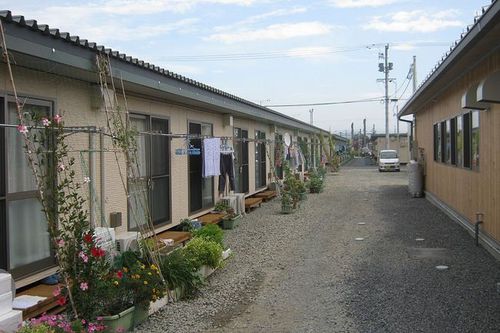
Over five-and-a-half years have passed since the Great East Japan Earthquake in March 2011 and the subsequent nuclear accident at Tokyo Electric Power Co.’s (TEPCO) Fukushima Daiichi nuclear power plant. Since then, big disasters have occurred in several other areas around the world, and in Japan the 2016 Kumamoto earthquakes also caused great damage. So, the term “disaster area” does not always evoke specific images of Tohoku or Fukushima for many of us in Japan today. However, a large number of disaster victims continues to suffer from the disaster in Tohoku, especially by the nuclear accident in Fukushima. The hard times for disaster victims haven’t ended yet. We report here on the latest situation in the Tohoku and Fukushima districts so as not to forget their ongoing suffering.
The losses from the Great East Japan Earthquake as of March 10, 2016, were officially reported as follows: 18,455 people dead or still missing (not including deaths related to injuries after the earthquake); 400,326 houses or buildings either completely destroyed or half destroyed. By prefecture in the most seriously affected areas in the Tohoku region, the death tolls are 4,673, 9,541, and 1,613, in Iwate, Miyagi, and Fukushima, respectively.
The estimated number of evacuees was approximately 470,000 at the peak, but 144,471 people were still living as refugees as of February 12, 2016.
Looking at the data of estimated populations of communities in the disaster-hit areas, comparing the population as of March 1, 2011 (before the disaster) and the most recent population, we see that the severely affected communities in Iwate and Miyagi have lost about one third of their populations. In Fukushima, several communities show “minus 100%” as the change of their population. Those ones are communities in the areas affected by the nuclear accident at TEPCO’s Fukushima Daiichi nuclear plant, where the evacuation order has not yet been lifted even today.
On a chart showing the timeline of evacuation orders issued right after the disaster, we see that areas ordered to evacuate were rapidly increasing one by one, while in the middle of all this, another explosion occurred at the reactor No.3. The timeline shows how the evacuation-ordered areas expanded.
Later, the government designated three evacuation zones based on international basic safety standards on radiation exposure. We can see on a map two significant evacuation zones: the Evacuation Order Zone (Warning Zone) — within a 20-kilometer radius from Fukushima Daiichi — and the Emergency Evacuation Preparation Zone — within a 20-30 kilometer radius. And we also see one more evacuation zone on the map, the Planned Evacuation Zone — a large zone including part of the 20-30-kilometer radius zone and extending to areas outside of a 30-kilometer radius, which is the area into which the wind was blowing when the plant exploded — meaning large amounts of radioactive materials were carried into the area by wind.
At the same time, Emergency Evacuation Preparation Zones were also designated where the cumulative dose during the year after the nuclear accident was predicted to exceed 20 millisieverts (mSv) depending on wind direction and geography. The zones were also called “hot spots,” and an evacuation advisory was issued to their residents.
Later on, the categories of evacuation zones were revised as follows:
- Zones where evacuation orders were ready to be lifted (where it was confirmed that the annual cumulative dose of radiation will definitely be 20 mSv or less). People could go home temporarily (staying overnight prohibited) to prepare to return completely, and resume some operations such as hospitals, welfare facilities, shops, and farming.
- Zones in which the residents were not permitted to live (where the annual cumulative dose of radiation was expected to be 20 mSv or more and where residents were ordered to remain evacuated in order to reduce the risk of radiation exposure). People could temporarily return home and pass through the areas along main roads to repair infrastructure.
- Zones where it was expected that the residents would have difficulties in returning for a long time (where the annual cumulative dose of radiation was expected not to be less than 20 mSv in five years and the current cumulative dose of radiation per year was 50 mSv or more). People were legally required to evacuate from the area.
As seen in the zone map showing evacuation orders, many areas are still designated today as “difficult-to-return” zones.
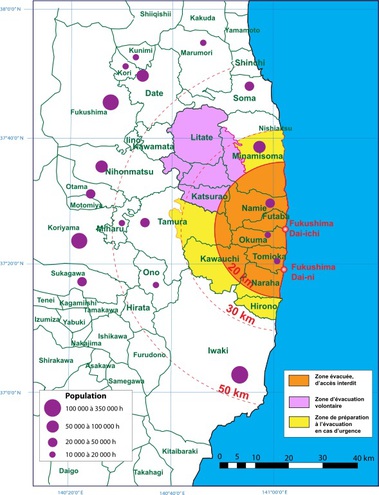
Let’s look specifically at the status of Fukushima Prefecture. Before May 2012, the total number of evacuees was 164,655. As of March 2013, the number from zones with evacuation orders and other areas was about 109,000. Looking at the updates in July 2016, 89,319 people in Fukushima are still living as evacuees . Also, Tomioka, Futaba, and some other Fukushima towns and local governments located in evacuation zones have moved their administrative functions both inside and outside of the prefecture.
Besides the number of deaths related directly to disaster-caused injuries in Fukushima Prefecture, the number of disaster-related deaths is still increasing, due to mental shock and physical conditions at shelters, such as poor hygiene and cold. Japan’s Reconstruction Agency recognized 459 people in Iwate Prefecture, 920 in Miyagi, and 2,038 in Fukushima as qualifying for payment of condolence money for disaster-related deaths. These numbers surpass the deaths directly caused by the earthquakes and tsunami.
The Tokyo Shimbun, a regional newspaper covering eastern Japan, gathered statistics on the deaths tied to the nuclear accident by asking municipalities in Fukushima to read through application forms for condolence money to find out the number of people that died from worsened physical conditions due to the stress of evacuation from the nuclear accident. The company wrote in its newspaper on March 6, 2016, “We interviewed municipal governments in Fukushima Prefecture and found that at least 1,368 people had died in connection with the nuclear accident, just from the numbers that could be confirmed.” The disaster-related death toll confirmed by each municipal government amounted to 2,028 as of March 4, 2016. It states that 67% of the disaster-related deaths are considered to be nuclear-related deaths.
According to statistics gathered by the Cabinet Office on the number of annual suicides related to the Great East Japan Earthquake and Fukushima nuclear plant accident, the number in Miyagi and Iwate prefectures is approaching zero, while it is still increasing in Fukushima.
Victims of nuclear accident face multiple difficulties, as shown below.
- Loss of daily living
- Loss of ways to earn a living
- Loss of community
- Forced to make own decisions whether to evacuate or not, and personally accept all risks that entail (people whose homes are outside of designated mandatory evacuation zones)
- Divorce, family breakdown, and separation of generations due to differences of opinion among family members
- A second mortgage to pay at the place of temporary evacuation
- Discrimination or bullying at place of temporary evacuation
- Not knowing when they can return home
- Uncertain about safety of returning home even after evacuation order is lifted
- Unable to rebuild community because many people have rebuilt their own lives (employment, human relations) at their place of temporary evacuation, and leaving mainly the elderly to return home.
Before the disaster, the nuclear power plants in Fukushima were generating power to send the electricity mainly to the Tokyo metropolitan area, not for local use. The nuclear accident forced people to leave their hometowns, and they are still not allowed to return to some areas. Even if the evacuation directive is lifted, evacuees will be unable to escape their anxieties about whether or not their homes are safe, and this situation continues to bring sorrow and hardship to the evacuees.
Even in this situation, Japan continues to approve the restart of nuclear power plants, some with operating permits for more than 40 years, despite the fact that the ruined plants have not yet been cleaned up, compensation for the accident is still not complete, and many people are still forced to live away from their hometowns. Each of us needs to think about the seriousness of nuclear accidents and the responsibilities that come with using nuclear power.
http://www.japanfs.org/sp/en/news/archives/news_id035681.html
Areva wants US Taxpayers Held Liable for Nuclear Accidents-Defective Nuclear Parts; Areva Gets Multimillion $ Contract for Equipment at Extra High Risk US Nuclear Power Station Despite Ongoing Areva Nuclear Parts Scandal

Even as French government owned Areva’s defective nuclear parts scandal was already underway, Areva sent a comment to the US government saying that holding it and other nuclear equipment suppliers liable in the event of a nuclear accident was “unnecessary economic penalties” and that the US taxpayer should pay.
And, of course, Areva would think that since Areva’s only still in existence because it is almost totally owned by the French government, i.e. French taxpayer. Even though a worldwide inspection of potentially defective Areva nuclear equipment is about to get underway, Areva was given a multimillion dollar contract for equipment at what is arguably one of the world’s most dangerous nuclear power stations – located in a desert with no direct source of water and the most powerful in America.
What is Areva complaining about like a whining gros bébé – big nuclear baby?
“Section 934 of the Energy…
View original post 717 more words
November 25 Energy News

World:
¶ Nearly 70% of the Kenyan population relies on costly and polluting energy sources. But a green transition is underway, as ever more Kenyans turn to solar power to meet their daily energy needs. A small solar system can cost about the same as a diesel generator, and it is as reliable, but there is no fuel and no pollution. [Deutsche Welle]
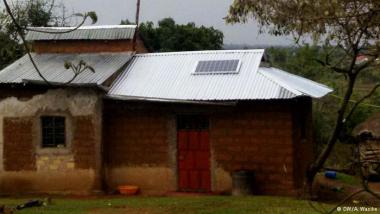 Solar panel on a roof in Kenya
¶ Canadian developer Power Renewable Energy proposes to install Senvion turbines at a 122.4-MW wind project in southeast Alberta. PRE, a subsidiary of giant diversified holding company Power Corp of Canada, plans to erect 36 3.4MW-140 machines on 110-metre towers at the Jenner wind farm, according to regulatory filings. [reNews]
¶ Finland is widely expected to become the first country in the world to actually ban the use of coal-burning power stations. Coal currently provides around…
View original post 641 more words
Nuclear and Climate News to 25 November
 Much as I would love to completely ignore the Trumpomania that now grips the media, and at the same time, seems to paralyse political action, I just can’t – because climate and nuclear policies worldwide now stagnate, like ships in the doldrums, waiting for the new wind – of Trump’s inauguration on January 20 2017.
The Marrakech climate talks, (follow-up to the 2015 Paris climate summit) produced the “Marrakech Action Proclamation”, and some ambitious national programmes, but were described as producing “defiance towards Trump, but little else”. Global green movement prepares to fight Trump on climate change. Trump’s climate denial is just one of the forces that points towards war.
Unease amongst world leaders over Donald Trump’s nuclear policies, and appointments.
On nuclear weapons, the UN General Assembly First Committee voted on Resolution A/C.1/71/L.41 (L.41) States adopted the resolution to hold negotiations on a nuclear ban treaty in 2017. Here at least, some ray of light regarding Trump’s attitude of wanting to negotiate with Russia and North Korea. –Perhaps Secretary General Ban Ki-moon can leave his office with an important victory at the end of his term by seizing this opportunity and encouraging the ‘deal maker’ in Trump to move forward with a US-Russia rapprochement, clearing a pathway for the elimination of nuclear weapons as well as putting an end to the hostilities on the Korean peninsula.
World Bank reports on How Solar is Changing the Climate Game. On four continents, solar panel roads are being developed.
The case for space – Part 3: Martian delusions.
ARCTIC.Alarm among scientists at ‘Extraordinarily hot’ Arctic temperatures.
RUSSIA.Russia tests intercontinental ballistic missiles for its “nuclear trains” program.
JAPAN. Japan Earthquake: Social Aftershocks of Fukushima Disaster are Still Being Felt. Crisis averted, but is N-plant operator Tepco prepared for a bigger quake? Temporary Radioactive Soil Storage Sites Hinder Fukushima Farmers.
USA. – Nuclear
- Obama administration set to strengthen Iran Nuclear Deal.
- New York Court of Appeals approves right of the state to review Indian Point Nuclear plant’s relicensing.
- Nuclear contractors settle with USA Justice Dept over allegations of improper billing.
- The absurdity of continuing nuclear power, with waste disposal unsolved.
- Savannah River Site could be stuck with stranded nuclear wastes from Canadian research reactor.
- Exelon pushes bills in Illinois General Assembly to subsidise and save its nuclear power stations.
- Nuclear propagandist James Conca shows the industry how to peddle its lies.
USA – Climate
- Property values getting threatened by sea level rise. Climate change IS looking serious!
- Climate action in America’s cities, despite Donald Trump.
- What Does A Trump Presidency Mean For Climate-Change Education?
- America’s energy industries – what to expect from President Trump.
- Obama government pushes a slate of clean energy initiatives.
- Florida’s Amendment 1 would have undermined rooftop solar, but voters were not fooled.
CANADA. Canadian government to review plan to dump nuclear waste close to Great Lakes.
INDIA. Costs too high: India has to delay its nuclear power programme
NORTH KOREA. Fears about North Korea’s nuclear test swish around Donald Trump’s inauguration.
CHINA. China’s ambitious plan, lifting poor communities by means of solar rooftops.
AFRICA. Stark choices face communities in drought afflicted Africa.
SOUTH AFRICA. Stalling of nuclear power plan in South Africa shows President Zuma’s waning power. South Africa’s renewable energy is making nuclear power look obsolete.
SOUTH AMERICA. Killings of climate activists. https://www.youtube.com/watch?v=HT3rMf9BbyM Climate emergency in Peru, with huge forest fires. Climate Change Has Left Bolivia Crippled by Drought.
EUROPE. Economic and Social Research Institute tots up the cost of a nuclear disaster in Europe – €160bn.
UK. UK government’s huge legal fees for Hinkley nuclear project . Seaweed Has Again Blocked Cooling and Shut down Scottish Nuclear Power Station.
VIETNAM. Vietnam’s legislature endorses scrapping of nuclear power plans
Fukushima Radiation is not safe
A repost of a December 2011 video from Goddard’s Journal
Studies cited in order presented:
National Academy of Sciences Low-Dose Radiation Report
http://www.nap.edu/openbook.php?record_id=11340&page=R1
Data tables used, 12D-1 and 12D-2:
http://www.nap.edu/openbook.php?record_id=11340&page=311
http://www.nap.edu/openbook/030909156X/gifmid/311.gif
How to scale that data to unique exposure scenarios, Annex 12D, Example 1:
http://www.nap.edu/openbook.php?record_id=11340&page=310
15-country study of nuclear-worker cancer risk
http://www.ncbi.nlm.nih.gov/pubmed/17388693
Table 5 shown is from Part II of the study
http://www.ncbi.nlm.nih.gov/pubmed/17388694
http://iangoddard.com/15countries_Part2_Table5.png
Jacob et al. (2009) meta-analysis of nuclear-worker studies
http://oem.bmj.com/content/66/12/789.full.pdf
Editorial on Jacob et al. quoted
http://oem.bmj.com/content/66/12/785.extract
Chromosomal translocations are associated with cancer
http://www.ncbi.nlm.nih.gov/pmc/articles/PMC3152359/
Boffetta et al. (2007) more chromoHarm entails more cancer
http://www.ncbi.nlm.nih.gov/pubmed/17071846
Bhatti et al. (2010) meta-analysis of chromosomal damage
http://www.ncbi.nlm.nih.gov/pmc/articles/PMC3075914/
# Addendum #
Since I posted this video, the ‘Bulletin of the Atomic Scientists’ published a special edition on low-dose radiation, the lead article of which matches and thereby corroborates the case I present in this video. It also covers additional research and nuclear-industry efforts to derail scientific investigation of radiation risks http://bos.sagepub.com/content/68/3/10.full.pdf
Some friends created PDF files of this video available here
In English
https://docs.google.com/file/d/0B5qUOl0_hAfneW9rWmJ0akNMZEk/edit
In Japanese
Russia tests intercontinental ballistic missiles for its “nuclear trains” program.
 Russia successfully tests missiles that fire from ‘nuclear trains’ Latest missile advancement comes as Kremlin deploys nuclear-capable missiles to Polish boarder , The Independent, Samuel Osborne @SamuelOsborne93 Wednesday 23 November 2016 Russia has successfully tested intercontinental ballistic missiles intended for its “nuclear trains” program.
Tests on missiles for the Barguzin “railway-based combat rocket system” were carried out at the Plesetsk cosmodrome two weeks ago, the state-owned Interfax news agency reports…
The mobile weapons platform, made up of several train carriages designed to conceal the launchers of six Yars or Yars-M thermonuclear ICBMs and their command units, are expected to enter service between 2018 and 2020…….http://www.independent.co.uk/news/world/europe/russia-putin-nuclear-train-missiles-tests-success-a7433861.html
New York Court of Appeals approves right of the state to review Indian Point Nuclear plant’s relicensing
 In major win for NY Gov. Cuomo, high court rules state can review Indian Point
  relicensing http://www.utilitydive.com/news/in-major-win-for-ny-gov-cuomo-high-court-rules-state-can-review-indian-po/431064/ Robert Walton
Dive Brief:
- The New York Court of Appeals this week determined the state has the right to review Entergy Corp.’s request for a Coastal Consistency Determination at its Indian Point nuclear plant, a major win for Gov. Andrew Cuomo (D)’s bid to shutter the plant, the Associated Press reports.
- The facility is located about 40 miles north of New York City, and Cuomo has said it is impossible to operate safely so closely to themost populous metropolitan area in the country.
- Entergy has requested a 20-year license renewal from the Nuclear Regulatory Commission, and had argued the state did not have oversight over the process. Indian Point Units 2 and 3 have been operating since the mid-1970s.
New York’s relationship with its nuclear plants is a strange thing: for three of them, it has allocated billions of dollars to keep running. The fourth, the state has tried for years to close down.
On Monday, Associated Press reports Cuomo’s quest to mothball Indian Point got a major win: The state’s highest court sided with the New York Department of State, allowing it to ensure the Indian Point continues to operate in compliance with the state’s coastal regulations.
Entergy had argued that the state’s concerns over its water permit were a cover for safety concerns, which it said fall to the U.S. Nuclear Regulatory Commission.
In February, Cuomo ordered an investigation of the plant, over concerns it was leaking contaminated water, with monitoring wells showing a spike in radiation. A statement from Cuomo noted the state had already concluded Entergy’s relicensing application is inconsistent with the state’s Coastal Management Program.
“Indian Point is antiquated and does not belong on the Hudson River in close proximity to New York City, where it poses a threat not only to the coastal resources and uses of the river, but to millions of New Yorkers living and working in the surrounding community,” Cuomo said.
Costs too high: India has to postpone its nuclear power programme
 Empty Pockets Leave Indian Nuclear Plants Incomplete https://sputniknews.com/asia/201611231047759881-india-incomplete-nuclear-plants/ ASIA & PACIFIC 23.11.2016 India’s target to rapidly step up nuclear power capacity may be stumbling because many suppliers have not been paid. The Government is now trying to borrow from state-owned companies to complete the projects.
New Delhi : India’s ambitious nuclear power plans are facing the sword of financial uncertainty. The Indian Government has acknowledged that major equipment for two nuclear power projects was delivered on time because the suppliers had not been paid. The projects are being set up by the government-owned Nuclear Power Corporation of India Limited (NPCIL).
India had changed the Atomic Energy Law this year to allow NPCIL enter into joint ventures with other government entities. “After the changes in the law, India would be able to set up a new nuclear power reactor in every four year,” says Rajiv Nayan, senior research associate, Institute of Defense and Security Analysis.
Sources say that companies like NTPC, Indian Oil Corporation and NALCO have agreed to invest $ 1,500 million each in joint ventures with NPCIL. “India will not get far even after adding this money with the amount available with NPCIL for investment. Costs and financing, therefore, complicate India’s ability to scale up nuclear power through its own means without relying on foreign imports,” writes Anirudh Mohan, Junior Fellow at Observer Research Foundation in a research paper. Currently, India is setting up 6,700-megawatt nuclear power projects across the country with an estimated cost of more than $ 18 billion. Being the sole company authorized to set up nuclear power plants, NPCIL is faced problems in generating funds for these projects.
Fears about North Korea’s nuclear test swish around Donald Trump’s inauguration
 NUCLEAR WARNING: North Korea planing another nuke test on Donald Trump’s INAUGURATION http://www.express.co.uk/news/world/735831/North-Korea-nuke-test-Donald-Trump-president-inauguration-US-Lee-Su-seok-Kim-Jong-un NORTH Korea could launch another devastating nuclear test on the same day Donald Trump is inaugurated into the White House in a chilling show of strength, security experts have warned. By WILL KIRBY Nov 24, 2016 The secretive state has launched 20 missiles this year alone as it aims to develop a long-range weapon, capable of hitting the US mainland.
“In early 2017, it is highly likely that Pyongyang will detonate another nuclear device and launch a long-range ballistic missile to reiterate its status as a nuclear power.”
With President-elect Trump set to be inaugurated on January 20 next year, these latest claims have sparked fears the ceremony could become a target.
Trump is not believed to consider the communist state a high priority at the moment, but this recent speculation about the country’s nuclear capabilities could spark increased efforts for dialogue and negotiations between the two countries.
He said: “Inter-Korean relations will remain frosty and strained until the first half of 2017 due to the North’s continued military provocations. Any dialogue with North Korea, if any, will be possible some time after Trump takes office in January.”
The director said: “The Kim Jong-un regime will continue its verbal and military threats in efforts to urge the nearly paralysed Seoul government to change the current strict policies toward Pyongyang”. South Korea’s scandal-plagued president Park Geun-hye has recently been caught up in a corruption case involving her longtime confidant, Choi Soon-sill, who has been accused of using high-ranking connections to wield inappropriate influence inside the government.
As a result, Kim Jong-un’s loyal followers are expected to exploit the unrest in South Korea and create internal conflicts within the country.
Nuclear contractors settle with USA Justice Dept over allegations of improper billing.
 United States Settles Lawsuit Against Energy Department Contractors for Knowingly Mischarging Costs on Contract at Nuclear Waste Treatment Plant https://www.justice.gov/opa/pr/united-states-settles-lawsuit-against-energy-department-contractors-knowingly-mischarging, 24 Nov 16,
The Justice Department announced today that Bechtel National Inc., Bechtel Corp., URS Corp. (predecessor in interest to AECOM Global II LLC) and URS Energy and Construction Inc. (now known as AECOM Energy and Construction Inc.) have agreed to pay $125 million to resolve allegations under the False Claims Act that they made false statements and claims to the Department of Energy (DOE) by charging DOE for deficient nuclear quality materials, services, and testing that was provided at the Waste Treatment Plant (WTP) at DOE’s Hanford Site near Richland, Washington. The settlement also resolves allegations that Bechtel National Inc. and Bechtel Corp. improperly used federal contract funds to pay for a comprehensive, multi-year lobbying campaign of Congress and other federal officials for continued funding at the WTP. Bechtel Corp. and Bechtel National Inc. are Nevada corporations. URS Corp. is headquartered in California, and URS Energy & Construction Inc. is headquartered in Colorado.
“The money allocated by Congress for the Waste Treatment Plant is intended to fund the Department of Energy’s important mission to clean up the contaminated Hanford nuclear site, and this mission is undermined if funds are wasted on goods or services that are not nuclear compliant or to further lobbying activities,” said Principal Deputy Assistant Attorney General Benjamin C. Mizer, head of the Justice Department’s Civil Division. “This settlement demonstrates that the Justice Department will work to ensure that public funds are used for the important purposes for which they are intended.”
“The DOE Office of Inspector General is committed to ensuring the integrity of Departmental contracts and financial expenditures,” said Acting Inspector General Rickey R. Hass. “We will continue to steadfastly investigate allegations of fraudulent diversion of tax dollars throughout DOE programs and appreciate the support of DOJ attorneys in these matters.”
Between 2002 and the present, DOE has paid billions of dollars to the defendants to design and build the WTP, which will be used to treat dangerous radioactive wastes that are currently stored at DOE’s Hanford Site. The contract required materials, testing and services to meet certain nuclear quality standards. The United States alleged that the defendants violated the False Claims Act by charging the government the cost of complying with these standards when they failed to do so. In particular, the United States alleged that the defendants improperly billed the government for materials and services from vendors that did not meet quality control requirements, for piping and waste vessels that did not meet quality standards and for testing from vendors who did not have compliant quality programs. The United States also alleged that Bechtel National Inc. and Bechtel Corp. improperly claimed and received government funding for lobbying activities in violation of the Byrd Amendment, and applicable contractual and regulatory requirements, all of which prohibit the use of federal funds for lobbying activities.
The allegations resolved by this settlement were initially brought in a lawsuit filed under the qui tam, or whistleblower, provisions of the False Claims Act by Gary Brunson, Donna Busche, and Walter Tamosaitis, who worked on the WTP project. The False Claims Act permits private parties to sue on behalf of the United States when they believe that a party has submitted false claims for government funds, and to receive a share of any recovery. The Act also permits the government to intervene in such a lawsuit, as it did in part in this case. The whistleblowers’ reward has not yet been determined.
This matter was handled by the Civil Division’s Commercial Litigation Branch, the U.S. Attorney’s Office for the Eastern District of Washington, the DOE Office of the Inspector General and the FBI.
The claims asserted against defendants are allegations only, and there has been no determination of liability. The case is United States ex rel. Brunson, Busche, and Tamosaitis v. Bechtel National, Inc., Bechtel Corp., URS Corp., and URS Energy & Construction, Inc., Case No. 2:13-cv-05013-EFS (E.D. Wash.).
Property values getting threatened by sea level rise. Climate change IS looking serious!
 Perils of Climate Change Could Swamp Coastal Real Estate [compelling photos] Homeowners are slowly growing wary of buying property in the areas most at risk, setting up a potential economic time bomb in an industry that is struggling to adapt.

NYT, By IAN URBINANOV. 24, 2016 MIAMI — Real estate agents looking to sell coastal properties usually focus on one thing: how close the home is to the water’s edge. But buyers are increasingly asking instead how far back it is from the waterline. How many feet above sea level? Is it fortified against storm surges? Does it have emergency power and sump pumps?
Rising sea levels are changing the way people think about waterfront real estate. Though demand remains strong and developers continue to build near the water in many coastal cities, homeowners across the nation are slowly growing wary of buying property in areas most vulnerable to the effects of climate change.
A warming planet has already forced a number of industries — coal, oil, agriculture and utilities among them — to account for potential future costs of a changed climate. The real estate industry, particularly along the vulnerable coastlines, is slowly awakening to the need to factor in the risks of catastrophic damage from climate change, including that wrought by rising seas and storm-driven flooding.
But many economists say that this reckoning needs to happen much faster and that home buyers urgently need to be better informed. Some analysts say the economic impact of a collapse in the waterfront property market could surpass that of the bursting dot-com and real estate bubbles of 2000 and 2008.
The fallout would be felt by property owners, developers, real estate lenders and the financial institutions that bundle and resell mortgages.
Over the past five years, home sales in flood-prone areas grew about 25 percent less quickly than in counties that do not typically flood, according to county-by-county data from Attom Data Solutions, the parent company of RealtyTrac. Many coastal residents are rethinking their investments and heading for safer ground.
“I don’t see how this town is going to defeat the water,” said Brent Dixon, a resident of Miami Beach who plans to move north and away from the coast in anticipation of worsening king tides, the highest predicted tide of the year. “The water always wins.”
These concerns have taken on a new urgency since the presidential election of Donald J. Trump, who has long been a skeptic of global warming, claiming in 2012 that it was a concept “created by and for the Chinese in order to make U.S. manufacturing noncompetitive.”
A real estate developer, Mr. Trump is also the owner of several South Florida properties, including Mar-a-Lago, a 20-acre site that stretches between the Atlantic Ocean and the Intracoastal Waterway in Palm Beach.
Mr. Trump’s recent selection of Myron Ebell to lead his Environmental Protection Agency transition team intensified these worries in Florida and among many climate scientists. Mr. Ebell has helped lead the charge against the scientific consensus that global warming exists and is caused by people.
State lawmakers in Massachusetts and New Jersey are pushing to impose new rules on real estate agents and others, obligating them to disclose climate-related damage like previous flooding.
Banks and insurers need to protect their collateral and investors more by improving their methods for estimating climate-change risks and creating more standardized rules for reporting them publicly, economists warn.
In April, Sean Becketti, the chief economist for Freddie Mac, the government-backed mortgage giant, issued a dire prediction. It is only a matter of time, he wrote, before sea level rise and storm surges become so unbearable along the coast that people will leave, ditching their mortgages and potentially triggering another housing meltdown — except this time, it would be unlikely that these housing prices would ever recover.
“Some residents will cash out early and suffer minimal losses,” he wrote. “Others will not be so lucky.”
Bull’s-Eye for Property Damage
Much of the uncertainty surrounding climate change focuses on the pace of the rise in sea levels. But some argue that this misses the point because property values will probably go under water long before the properties themselves do.
What is often called “nuisance” flooding — inundation caused more by tides than weather — is already affecting property values. Often just a foot or two deep, this type of flooding can stop traffic, swamp basements, damage cars and contaminate groundwater.
Florida has six of the 10 American urban centers most vulnerable to storm surge, according to a 2016 report from CoreLogic, a real estate data firm. Southeast Florida experiences about 10 tidal floods per year now. That number is likely to be around 240 floods per year by 2045, according to climate researchers……..http://www.nytimes.com/2016/11/24/science/global-warming-coastal-real-estate.html?_r=0
Puddles Found in Reactor Buildings at Fukushima Daini Plant

Fukushima Daini
Following a powerful quake that hit northeastern Japan in the early morning on Nov. 22, 2016. The utility said Nov. 24 that puddles in three of the four reactor buildings at the idled Fukushima Daini nuclear power plant may have formed from water that splashed out of spent-fuel pools during the quake.
http://english.kyodonews.jp/photos/2016/11/445699.html
Crisis averted, but is N-plant operator Tepco prepared for a bigger quake?

An aerial view of the Fukushima Daiichi nuclear power plant after a strong earthquake hit off the coast of Fukushima on Tuesday. The operator of the plant said there were no abnormalities observed at the plant.
TOKYO — There was no avoiding fearful memories of the Japanese nuclear disaster of 2011 on Tuesday morning after a powerful earthquake off the coast of Fukushima caused a cooling system in a nuclear plant to stop, leaving more than 2,500 spent uranium fuel rods at risk of overheating.
But this time, the Tokyo Electric Power Company (Tepco), the utility that operates three nuclear plants, restored the cooling pump at the Fukushima Daini plant in about 90 minutes. The Daini plant is about 11km south of Fukushima Daiichi, the ruined plant where three reactors melted down five years ago after tsunami waves inundated the power station and knocked out backup generators.
Tepco reported that it never lost power at either the Daini plant or its neighbour to the north after the Tuesday quake, which had a magnitude of 7.4, according to the Japanese weather service.
“We took the regular actions that we should take when handling troubles,” Mr Yuichi Okamura, acting general manager of the nuclear power division at Tepco, said at a news conference on Tuesday.
The company was prepared for big tsunamis, having built sea walls rising to almost 15m at the Fukushima plants and enclosing backup generators in waterproof facilities, Mr Okamura said.
Critics of Tepco, which struggled to keep on top of a crisis that followed the 2011 calamity, said they were relieved that there had been no immediate damage. However, they remained sceptical that the company had done enough to prepare for a disaster on the scale of the earthquake five years ago.
That quake, which had a magnitude of 8.9, set off tsunami waves as high as 40m in some places. In contrast, the highest waves on Tuesday reached only about 1.4m.
“It looks like the right things have been done,” said Mr Azby Brown, director of the Future Design Institute at the Kanazawa Institute of Technology and a volunteer researcher with SafeCast, an independent radiation-monitoring group.
“But you never know until something happens. As far as this morning goes, they did a decent job, but mainly because it wasn’t that big of an earthquake or that big of a tsunami.”
Building higher sea walls, for example, “is all good, but that is like fighting the last war”, Mr Brown said.
“It remains to be seen how well prepared they would be for some other unusual combination of disasters.”
Compared to five years ago, Tepco has improved its communication with the public, reporting information about the cooling pump at Daini almost as it happened on Tuesday morning.
The company also quickly said that it had suspended the treatment and transfer of contaminated water from the Daiichi plant, where an extensive clean-up and decommissioning process is underway. By the evening, those operations had been restored.
“What I can say is today’s response was decent and they seemed to be confident,” said Mr Tatsujiro Suzuki, director of the Research Center for Nuclear Weapons Abolition at Nagasaki University. However, it would be difficult to independently verify Tepco’s claims because the Japanese Nuclear Regulation Authority depends on the company to release information.
He added that he was not convinced that Tepco was being fully transparent about its decisions, particularly about the clean-up at the Daiichi plant.
“We should be informed fully whether this operation is reasonably done with cost-effectiveness and safety and making sure that the best technology is being used,” Mr Suzuki said.
Mr Daisuke Maeda, a spokesman for the Nuclear Regulation Authority, said the agency had offices on the sites of the nuclear plants and worked with Tepco and other utility companies on Tuesday to confirm that the power stations were safe after the earthquake.
Regarding the longer-term situation, nuclear experts expressed concern about the safety of the clean-up operation at the Daiichi plant. The melted cores of three reactors have yet to be removed as they are still too radioactive for workers to approach.
Since the 2011 disaster, groundwater seeps into the reactors daily. The water, contaminated by the melted fuel rods, needs to be treated and stored on site. So far, Tepco has built more than 880 tanks of about 1,000 tonnes each.
The tanks are inspected four times a day to confirm that they do not leak, said Mr Okamura of Tepco.
And in an effort to halt the flood of groundwater into the damaged buildings, the company has built an underground wall of frozen dirt nearly 1.6km long encircling the reactors. The wall is not yet fully frozen, though, and groundwater continues to flow into the reactors.
Critics worry that the sea walls or storage tanks might not withstand a more powerful earthquake or tsunami. And Tuesday’s incident at the Daini reactor showed that quakes can set off problems even at plants that are not operating.
Most of the country’s 54 plants remain closed since the 2011 disaster, but the administration of Prime Minister Shinzo Abe wants to restart most of them.
A majority of the Japanese public is opposed to such a move. Candidates for governor who ran campaigns opposed to the revival have won elections in recent months in two prefectures that host nuclear plants.
According to Japanese daily Nikkei Shimbun, Mr Fumio Sudo, the chairman of Tepco, and Mr Naomi Hirose, the company’s president, were planning to meet on Tuesday with one of those governors, Ryuichi Yoneyama of Niigata, to try to persuade him to support a restart of the Kashiwazaki-Kariwa plant there.
Mr Sudo and Mr Hirose returned to Tokyo after the earthquake.
Mr Kiyoshi Kurokawa, who oversaw an independent investigation of the Fukushima nuclear accident for the Japanese Parliament, said that building walls and storage tanks failed to solve the underlying problem of an earthquake-prone country relying on nuclear power. Instead, he said, both the government and utility companies should invest in developing alternative sources of power like solar or wind technology.
“I think we expect more of such readjusting plate movements and that has been reasonably predicted, and many volcanic activity and earthquakes have been rampant over the last five years,” said Mr Kurokawa, an adjunct professor at the National Graduate Institute for Policy Studies. “So why are we continuing to restart nuclear plants?”
http://www.todayonline.com/world/asia/crisis-averted-n-plant-operator-tepco-prepared-bigger-quake
An aerial view of the Fukushima Daiichi nuclear power plant after a strong earthquake hit off the coast of Fukushima on Tuesday. The operator of the plant said there were no abnormalities observed at the plant.
1 This Month

of the week – Shut Down Drone Warfare!


Tell the Ukrainian Government to Drop Prosecution of Peace Activist Yurii Sheliazhenko

Petition to revoke the licensing of the Near Surface Nuclear Disposal Facility (NSDF) at Chalk River. https://www.ourcommons.ca/petitions/en/Petition/Details?Petition=e-7247
To see nuclear-related stories in greater depth and intensity – go to https://nuclearinformation.wordpress.com
-
Archives
- April 2026 (103)
- March 2026 (251)
- February 2026 (268)
- January 2026 (308)
- December 2025 (358)
- November 2025 (359)
- October 2025 (376)
- September 2025 (257)
- August 2025 (319)
- July 2025 (230)
- June 2025 (348)
- May 2025 (261)
-
Categories
- 1
- 1 NUCLEAR ISSUES
- business and costs
- climate change
- culture and arts
- ENERGY
- environment
- health
- history
- indigenous issues
- Legal
- marketing of nuclear
- media
- opposition to nuclear
- PERSONAL STORIES
- politics
- politics international
- Religion and ethics
- safety
- secrets,lies and civil liberties
- spinbuster
- technology
- Uranium
- wastes
- weapons and war
- Women
- 2 WORLD
- ACTION
- AFRICA
- Atrocities
- AUSTRALIA
- Christina's notes
- Christina's themes
- culture and arts
- Events
- Fuk 2022
- Fuk 2023
- Fukushima 2017
- Fukushima 2018
- fukushima 2019
- Fukushima 2020
- Fukushima 2021
- general
- global warming
- Humour (God we need it)
- Nuclear
- RARE EARTHS
- Reference
- resources – print
- Resources -audiovicual
- Weekly Newsletter
- World
- World Nuclear
- YouTube
-
RSS
Entries RSS
Comments RSS
 nuclear-news

