Sickness at the Heart of Nuclear Policy

Letter in today’s Daily Mail
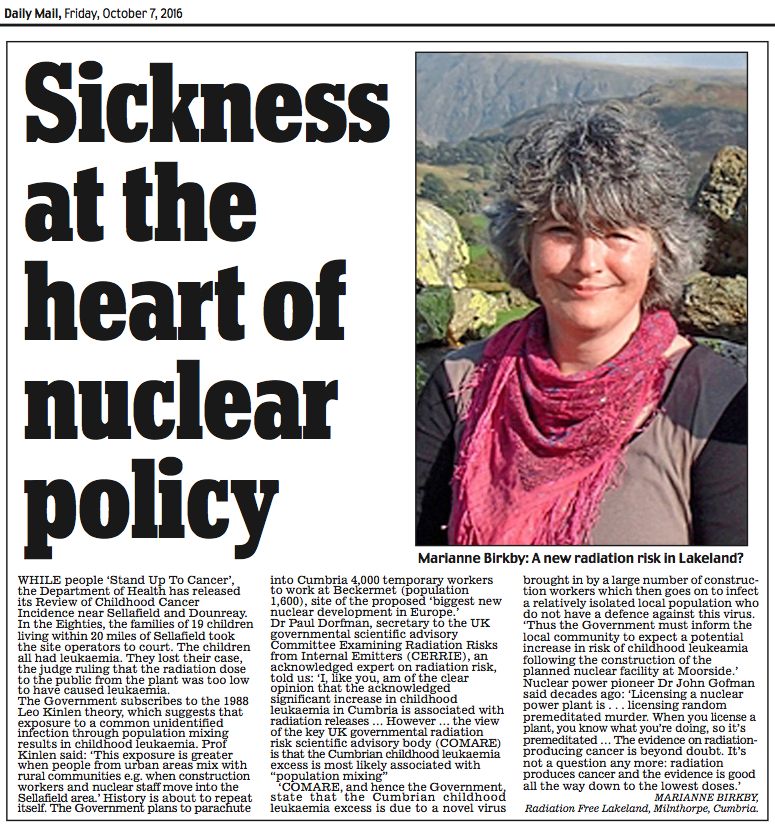
While people ‘Stand Up to Cancer’, the Department of Health has released its Review of Childhood Cancer Incidence near Sellafield and Dounreay.
In the Eighties, the families of 19 children living within 20 miles of Sellafield took the site operators to court. The children all had leukaemia. They lost their case, the judge ruling that the radiation dose to the public from the plant was too low to have caused luekaemia.
The Government subscribes to the 1988 Leo Kinlen theory, which suggests that exposure to a common unidentified infection through population mixing results in childhood leukaemia. Prof Kinlen said: “This exposure is greater when people from urban areas mix with rural communities eg when construction workers and nuclear staff move into the Sellafield area.” History is about to repeat itself. The Government plans to parachute into Cumbria 4,000 temporoary workers to work at Beckermet (population…
View original post 226 more words
October 7 Energy News

Opinion:
¶ “UK fracking decision is nothing short of hypocrisy” • Climate-polluting fracking, which is unproven in the UK, gets “all-out” government backing, with ministers steamrolling whatever local opposition might arise. Meanwhile, low-cost and low-carbon onshore windfarms get undermined, with local opposition given power to block applications. [The Guardian]
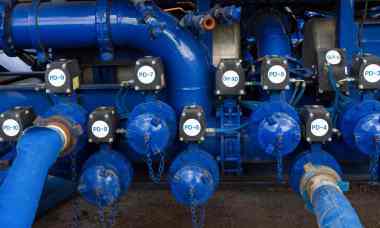 Cuadrilla Resources drilling pumping equipment. (Photo: Alamy)
Science and Technology:
¶ As renewable energy accelerates its pace in electricity markets, wind power has seemingly hit stride. It is expected to see further price drops because of economies of scale and technological improvements. The cost of producing electricity via wind power is expected to fall 24%-30% by 2030, according to researchers at US DOE laboratories. [Environmental Leader]
¶ A commercial-scale, 500-kW kite-driven power station is set to be created in Scotland. The kites fly to heights of up to 450 meters in a figure-of-eight pattern, pulling tethers as…
View original post 651 more words
St. Lucie Nuclear Power Station Built on a Barrier Island Post-Hurricane Camille: Nuclear Foolishness; Matthew Warning

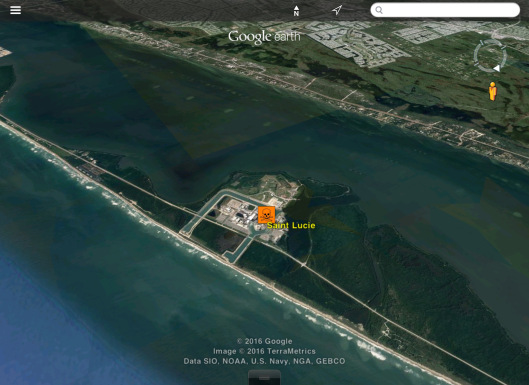
“ a foolish man, which built his house upon the sand: And the rain descended, and the floods came, and the winds blew, and beat upon that house; and it fell: and great was the fall of it” Matthew 7:26-27, KJV
Look at the location of St. Lucie Nuclear Power Station! It is on a thin barrier island off of the mainland and surrounded by water! A mentally disabled person would never be foolish enough to build a nuclear power station here on a barrier island (sandbar). Especially after Hurricane Camille, only a nuclear “genius” could come up with some far-fetched justification of why it was ok to construct a nuclear power station on a barrier island off of the coast of the Florida mainland.
Hurricane Camille split Ship Island in two forming “Camille Cut”, which is 3.5 miles wide. And, for that matter, none of the nuclear power…
View original post 2,606 more words
UPDATED: Matthew’s Nightmarish Storm Surge Takes Aim at 430-Mile Stretch of U.S. Coast

All throughout yesterday and today the story has been the same — dangerous hurricane Matthew is strengthening in a record-hot atmosphere and ocean environment as it continues to take a course that will result in severe flooding impacts for a massive swath of the southeastern U.S. seaboard.
An Extraordinarily Powerful Category 4 Hurricane
As of 5 PM EST today, the center of Hurricane Matthew was located about 25 miles to the south of Freeport, Bahamas. The storm was tracking off to the north-northwest, making steady progress toward Florida and a large section of the U.S. coastline. Since yesterday, maximum sustained winds have increased from around 120 mph to a present peak wind speed of around 140 mph. More importantly, the storm’s minimum central pressure is falling. As of the 5 PM advisory, the storm’s lowest pressure reading stood at 936 millibars — about 2 mb stronger than Hurricane Sandy’s peak…
View original post 821 more words
To October 8th – the week in Climate and Nuclear news
 Investigative journalism this week – yes, it still can happen. This time, it’s the Washington Post, revealing the scandalous origin of the rare earths that we use so prolifically in all our new gizmos – from mobile phones to wind turbines.Cobalt mining in the Congo. Graphite mining in China.
CLIMATE. Earth is locked into’ Temperatures Not Seen in 2 Million Years. Climate change could become self perpetuating- danger in Indonesia’s peatlands, and fires. Much higher methane emissions from fossil fuels – previously were underestimated. Climate change could bring megadroughts to California. Next month, Paris climate agreement will enter into force.
NUCLEAR.
UN court rejects Marshall Islands nuclear arms lawsuit.
USA.
- Hurricane Matthew could endanger Florida’s nuclear reactors.
- Fermi 1 nuclear accident remembered in protest rally- ‘We almost lost Detroit’
- Coalition of New York groups call on State to scrap upstate nuclear subsidies.
- America’s nuclear industry at stalemate, because of its stranded wastes. Federal compensation wanted by town of Rowe, for hosting stranded nuclear wastes.
- Neither Trump nor Clinton give a clear answer on pre-emptive nuclear strike policy. USA Vice Presidential candidates in debate – avoid climate change and energy. Donald Trump vacillates about nuclear waste dumping, and Yucca Mt plan.
- CLIMATE. In USA, Republicans are rejecting reality on climate change – Pew survey. US Dept of Energy spells out good news on wind and solar power’s phenomenal rise.
Diplomacy Is Over As Russia and The U.S. Face Off.
RUSSIA has suspended its nuclear and energy research agreement with the United States.
JAPAN. Nuclear cash cow Monju now a liability for residents as plant faces ax. Japan’s nuclear regulator caves to industry interests yet again–Gives nearly 40 year old reactor a green light before the aging safety review even completed.
Fukushima. Japan Grapples with Cost of Scrapping Fukushima Plant. Tepco Threatens To Declare Bankruptcy; Dismantling Unit 1. Tainted Water Grows at Fukushima N-Plant despite Ice Wall.
UK. Building to Start on New Nuclear Submarines as UK Government Announces £1.3 billion Investment. Britain sited 2 nuclear power plants on eroding shingle beach. So far, in 2016, solar energy is outstripping coal power in UK.
FRANCE. In northern France thousands protest against nuclear power. Tribulations of the nuclear industry, as serious safety flaws found in EDF’s nuclear reactors.
IRAN. U.N. atomic agency chief says Iran sticking to nuclear deal.
NIGER. Tuareg Activist Takes on AREVA: Uranium Mining in Niger.
Radiation Brain Moms and Citizen Scientists: The Gender Politics of Food Contamination after Fukushima
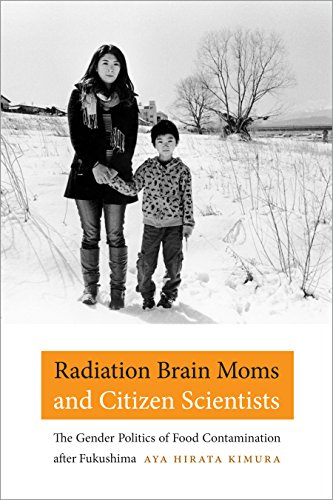
by Aya Hirata Kimura (Author)
Following the Fukushima Daiichi Nuclear Power Plant disaster in 2011 many concerned citizens—particularly mothers—were unconvinced by the Japanese government’s assurances that the country’s food supply was safe. They took matters into their own hands, collecting their own scientific data that revealed radiation-contaminated food. In Radiation Brain Moms and Citizen Scientists Aya Hirata Kimura shows how, instead of being praised for their concern about their communities’ health and safety, they faced stiff social sanctions, which dismissed their results by attributing them to the work of irrational and rumor-spreading women who lacked scientific knowledge. These citizen scientists were unsuccessful at gaining political traction, as they were constrained by neoliberal and traditional gender ideologies that dictated how private citizens—especially women—should act. By highlighting the challenges these citizen scientists faced, Kimura provides insights into the complicated relationship between science, foodways, gender, and politics in post-Fukushima Japan and beyond.
Editorial Reviews
Review
“Riveting and smart, Radiation Brain Moms and Citizen Scientists tracks the efforts made by citizens in post-Fukushima Japan to ensure the safety of their food from radioactive contamination. In the face of state neglect and criticism from fellow Japanese, these initiatives display a ‘soft’ boldness (versus activist politics). Interweaving stories of citizen scientists and ‘radiation brain moms’ with sharp theoretics that deconstruct the entanglements of science, neoliberalism, and postfeminism at work, this book is at once powerful and timely.”
(Anne Allison, author of Precarious Japan)
“Based on careful research, extensive fieldwork, and a judicious use of political and feminist theory, this book’s relevance to political and social developments extends beyond Japan’s borders. It is a reminder of the ongoing effects of the Fukushima disaster in Japan at a time when these effects are being increasingly ignored by the global media. A timely and important book, Radiation Brain Moms and Citizen Scientists will appeal to scholars of contemporary Japanese society as well as science and technology studies scholars, especially those interested in the gender dimensions of science and technology.”
(Tessa Morris-Suzuki, author of Borderline Japan: Foreigners and Frontier Controls in the Postwar Era)
About the Author
Aya Hirata Kimura is Associate Professor of Women’s Studies at the University of Hawai’i at Manoa and the author of Hidden Hunger: Gender and Politics of Smarter Foods.
Radioactive water leaks from storage tank at Fukushima plant
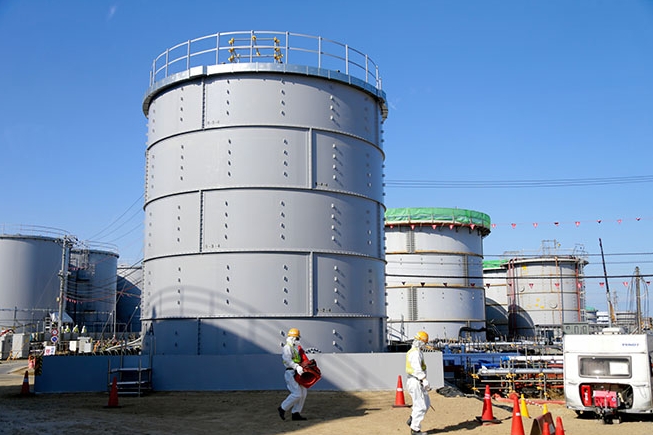
The latest contaminated water leak at the Fukushima No. 1 nuclear power plant occurred at a flange-type storage tank, whose seams are connected by bolts.
Up to 32 liters of radioactive water leaked from a storage tank at the crippled Fukushima No. 1 nuclear plant, but the contaminated liquid has been contained, Tokyo Electric Power Co. said Oct. 6.
The leaked water is currently within barriers surrounding the tank that are designed to block the flow of fluids, TEPCO, the plant’s operator, said.
The liquid contained water that had been treated to remove radioactive strontium and other substances, as well as highly contaminated water from the bottom of the tank that was stored shortly after the nuclear accident started in 2011.
A radioactivity level of 590,000 becquerels of beta ray-emitting materials was detected per liter of the leaked water.
The water seeped out of a tank with bolted seams on its sides, which are more prone to leaks than those with welded walls.
TEPCO continues to use the bolted containers despite the risk because production of welded tanks cannot keep pace with the buildup of contaminated water, mainly from groundwater entering the damaged reactor buildings, at the nuclear plant.
Japan Political Pulse: A helping hand following radiation misfortune
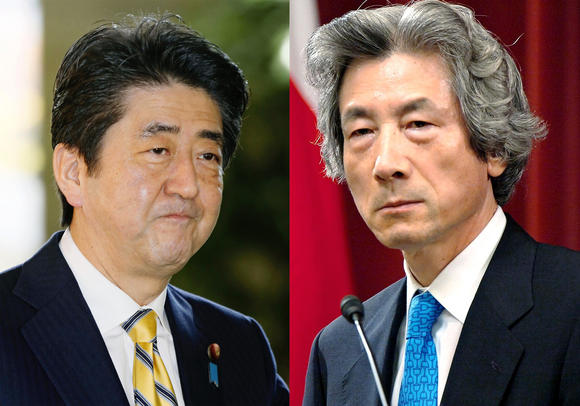
Recently former Prime Minister Junichiro Koizumi, 74, was seen talking to 62-year-old Prime Minister Shinzo Abe. Their encounter was recorded on a photo page of the Sept. 29 issue of the weekly magazine Shukan Bunshun.
The scene was Aoyama Funeral Hall in Tokyo, where they had attended the Sept. 15 funeral of former Liberal Democratic Party (LDP) Secretary-General Koichi Kato and were waiting for their cars to arrive. For about 90 seconds the “master and disciple” stood side by side. Below are the details of Koizimi’s comments and the prime minister’s reaction, which didn’t appear in Shukan Bunshun.
Koizumi: “Why don’t you totally eliminate nuclear power plants?”
Abe: (Faint smile, bow)
Koizumi: “Having zero nuclear power plants is cheaper. Why don’t you understand such a simple thing? It’s all lies, what the Ministry of Economy, Trade and Industry is saying. The things advocates of nuclear power plants are saying — they’re all lies. Don’t be fooled.”
Abe: (Wry smile, bows again, and with head kept low heads to official vehicle)
Koizumi is currently pouring his efforts into a fund to support those who say they were affected by radiation during “Operation Tomodachi,” a U.S. Armed Forces operation to support Japan in the wake of the March 2011 Great East Japan Earthquake and tsunami.
Over 400 soldiers from the USS Ronald Regan aircraft carrier and accompanying ships complained of ill-health after helping in rescue efforts following their urgent dispatch to the seas off Fukushima Prefecture in the wake of the earthquake, tsunami and ensuing meltdowns at the Fukushima No. 1 Nuclear Power Plant. Some of them are said to have died from causes including leukemia.
The aircraft carrier fleet worked intermittently in a radiation plume from the stricken power plant between March 13 and 17, 2011. After returning home from Japan, a stream of soldiers developed ailments including brain tumors and thyroid cancer. The nuclear plant’s operator, Tokyo Electric Power Co. (TEPCO), and the Japanese and U.S. governments acknowledged that they had been exposed to low-level radiation, but do not accept a causal relationship between exposure and their illnesses.
Koizumi learned that some soldiers had left the military at a young age, had no insurance and couldn’t pay their medical fees. It was in May this year that the former prime minister traveled to the United States and directly inquired about their circumstances.
Former soldiers earlier filed a lawsuit against parties including TEPCO, and oral arguments over whether jurisdiction of the case should lie in Japan or the United States were heard in an appeals court in California on Sept. 1. At the time, a Japanese government adviser is said to have supported an agent for TEPCO, stating that radiation exposure is the responsibility of the U.S. military.
Koizumi, who read a note on the hearing (carried in the Sept. 9 issue of the magazine Shukan Kinyobi), responded immediately.
“This is embarrassing. They were relief efforts for Japan, right? The American judge is said to have been appalled,” he was quoted as saying.
On July 5, Koizumi appeared in a news conference with figures including former Prime Minister Morihiro Hosokawa, 78, and Tsuyoshi Yoshiwara, 61, an adviser at The Johnan Shinkin Bank, to announce the start of fundraising activities to help the U.S. soldiers. Koizumi himself approached the Japan Business Federation (Keidanren) but was turned away on the grounds that TEPCO is a member of the federation.
Reinforcements have nevertheless appeared on the funding front. Japanese architect Tadao Ando, 75, posed the following question: “Mr. Koizumi, will you come to Osaka and give a lecture? I’ll assemble 1,000 people. With a fee of 10,000 yen per person, that’ll bring in 10 million yen.”
When Koizumi appeared at the lecture in August, 1,300 people turned up. The same style of lecture is due to be held in Tokyo on Nov. 16, organized by the head of a group of managers of small- and medium-sized enterprises. Additionally, the president of a solar power generation company provided 10 million yen.
Through these efforts, the total has climbed to 50 million yen. Koizumi apparently hopes to amass 100 million yen by next spring.
The connection between radiation exposure and the development of illness is delicate. There’s a possibility of developing cancer, but there are doubts about whether a person would suddenly die, experts say.
On Sept. 7, Koizumi spoke at the Foreign Correspondents Club of Japan in Tokyo’s Yurakucho district. He was asked if it was responsible to talk about damage from radiation exposure without presenting scientific evidence.
Below is the gist of his reply:
“I’m no longer a member of the government. I’m a civilian. There are people who are actually suffering. It’s common sense for me to support them.”
Fundraising and service instead of criticism; denial of the perception of saying, “Radiation exposure is the responsibility of the U.S. military” to protect nuclear power policies … I support this form of common sense from our former prime minister. (By Takao Yamada, Special Senior Writer)
http://mainichi.jp/english/articles/20161003/p2a/00m/0na/021000c
Hurricane Matthew could endanger Florida’s nuclear reactors
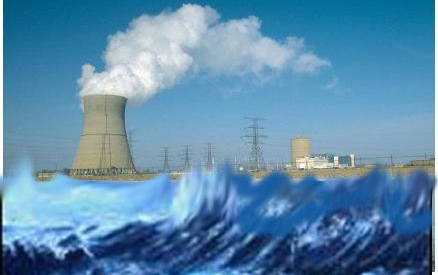 What if Hurricane Matthew Hits Florida’s Nuclear Reactors?, Clean Energy Footprints, October 5th, 2016 Hurricane Matthew has already caused devastation in Haiti and elsewhere in the Caribbean. Tracking this dangerous storm’s path, which Bloomberg reported as a “$15 billion threat,” as it moves towards Florida, Georgia, the Carolinas and potentially up the Eastern seaboard is proving difficult. But despite unclear predictions, communities are wisely mobilizing and calling for evacuations (or are already in the process of doing so) and/or declaring states of emergency.
Extreme weather events have widespread ramifications on our electricity systems. A Department of Energy review of responses to Hurricanes Irene and Sandy from nuclear reactors in the Northeast highlighted a number of strategies to protect the reactors. According to the Department of Energy, “Some reactors were shut as a precaution to protect equipment from the storm; others were forced to shut down or reduce power output due to damage to plant facilities or transmission infrastructure serving the plant; and still others were forced to reduce power output due to reduced power demand caused by widespread utility customer outages.”
Two nuclear power plants exist on Florida’s eastern coast: the St. Lucie and Turkey Point facilities. Based on the current National Hurricane Center projections, it appears that Hurricane Matthew will come closest to the St. Lucie nuclear facility early Friday morning. Storm surge near the St. Lucie nuclear reactors may reach 2-5 feet, and with hurricane force winds of 130 miles per hour. Meanwhile, a significant water quality problem in the Southeast is the ongoing pollution at Florida Power and Light’s (FPL) Turkey Point cooling canal system. It’s unclear what effects high winds and storm surge could have on Turkey Point’s open air industrial sewer.
After flooding caused a nuclear meltdown at the Fukushima Daiichi nuclear reactor in Japan, the Miami News Times published an article, “Five reasons Turkey Point could be the next nuclear disaster.” The article noted: “Just like in Japan, Turkey Point is susceptible to a meltdown caused by a natural disaster. A hurricane-spurred tidal surge from Turkey Point’s neighboring Biscayne Bay could create catastrophic conditions identical to those in Japan. With power down, the plant would be forced to rely on emergency diesel generators to pump water to cool the reactors….those generators would ‘certainly’ become inundated with water from the tidal surge, causing them to drown and fail.” (Southern Alliance for Clean Energy and Tropical Audubon with Friends of the Everglades filed a lawsuit this summer to resolve the pollution problem caused by Turkey Point.)……….http://blog.cleanenergy.org/2016/10/05/nuclearhurricanematthew/
USA Vice Presidential candidates in debate – avoid climate change and energy
 VPs raise energy, then drop it like a hot piece of coal, Evan Lehmann, E&E reporter ClimateWire: Wednesday, October 5, 2016 The candidates for vice president rushed into energy issues last night during their only debate before the election. In their opening answers, Democrat Tim Kaine, the Virginia senator, mentioned climate change, and Republican Mike Pence, Indiana’s governor, objected to a “war on coal.”
Then those issues evaporated, as the running mates defended the positions of Hillary Clinton and Donald Trump on issues like the proliferation of nuclear weapons, diplomacy with Russia and the role of government in abortion.
Instead, the arguments over climate change largely took place outside the debate hall at Longwood University in Farmville, Va.
Hours before the debate, Sen. Bernie Sanders (I-Vt.) urged undecided voters in Minneapolis to support Clinton based on her plan to address rising temperatures. That dovetails with the Clinton campaign’s efforts to attract young voters who supported Sanders in the primary race, but who have resisted committing to Clinton.
“So I say to anyone out there who is wavering as to whom they may want to support for president, think about your kids, think about your grandchildren, think about future generations and understand that we cannot elect a president of the United States who believes that climate change is a hoax,” Sanders said, referring to Trump. “We need to elect a president who is going to be aggressive in transforming our energy system, and that candidate is Hillary Clinton.”
Former Vice President and climate activist Al Gore is also planning to campaign on Clinton’s behalf to shore up her flagging support among millennials, a key demographic that is showing signs of splitting for third-party candidates. CNN and The Washington Post first reported Gore’s involvement.
The Clinton campaign has in recent weeks taken advantage of Trump’s previous comments questioning the existence of climate change. Trump has called global warming a “hoax” and said it’s “bullshit,” a position that roughly half of Republicans agree with, according to polls.
Yesterday, Clinton took aim at Pence. Hours before last night’s debate, the campaign released an online video describing Pence as “a divisive, anti-woman, anti-worker extremist.” The video also highlighted a Pence campaign web page from 2000 that described climate change as a liberal invention to advance the Kyoto Protocol.
“Global warming is a myth,” Pence said on the website, according to the Clinton campaign. “The global warming treaty is a disaster. There, I said it. Just like the ‘new ice age’ scare of the 1970’s, the environmental movement has found a new chant for their latest ‘chicken little’ attempt to raise taxes and grow centralized governmental power. The chant is ‘the sky is warming! the sky is warming!'”
Kaine, who has led the campaign’s climate attacks, has been using Trump’s views to help mobilize young Democrats to vote.
“Do you believe in climate science, or don’t you?” Kaine said recently in Houston. “If you do, you should vote for Hillary and Tim, because the other guys are against you.”
He also mentioned Pence specifically…….http://www.eenews.net/stories/1060043857
Storage tank leaks at Fukushima Daiichi plant
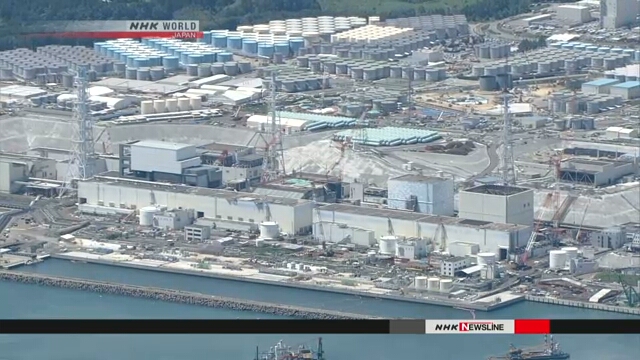
Workers at the crippled Fukushima Daiichi nuclear plant have found a leak of highly radioactive water from a waste water tank.
Its operator, Tokyo Electric Power Company, says the water likely leaked from a seam of the tank.
The leaked water was spotted on Wednesday on the side of one of an array of steel tanks holding contaminated water that is continuously generated at the site.
TEPCO’s analysis found 590,000 becquerel per liter of beta-emitting radioactive materials in the water.
Tokyo Electric estimates that 32 liters of such highly radioactive water had trickled out, mixed with rainwater, and remained within a barrier around the tank.
Workers moved water in the tank to another one to lower the water level enough to halt the leak.
The leaking cylindrical tank is made by splicing steel plates with bolts. But they have had waste water leaks in the past from seams.
The operator has been replacing these leak-prone tanks with new seamless ones. But the increasing volume of waste water makes it difficult for the utility to completely do away with the old ones.
Climate change could bring megadroughts to California
Looming megadroughts in western US would make current drought look minor. Warming temperatures and uncertain rainfall mean if more isn’t done to slow climate change, droughts lasting 35 years could blight western states, study says, Guardian, Oliver Milman, 8 Oct 16, The harsh drought currently gripping California may appear trivial in the future as new research shows that the south-west US faces the looming threat of “megadroughts” that last for decades.
California is in its sixth year of drought, which was barely dented by rains brought by the El Niño climate event and sparked a range of water restrictions in the state. But warming temperatures and uncertain rainfall mean that if more isn’t done to slow climate change, droughts lasting 35 years are likely to blight western states by the end of the century, according to the study, published in Science Advances.

Such a megadrought would impose “unprecedented stress on the limited water resources” of the parched US south-west, researchers found, bringing conditions similar to the 1930s dustbowl to California, Nevada, New Mexico, Colorado and Utah – but over a lengthier period.
Using a combination of temperature and precipitation models, the study predicts a 70% chance of a megadrought by the end of the century, should rainfall levels remain the same, with a 90% chance of an elongated drought should rainfall decrease, as most climate models forecast.
“We can’t rule out there could be a 99.9% chance of a megadrought, which makes it virtually certain,” said Toby Ault, a scientist at Cornell University and lead author of the study………
The new report does proffer a crumb of hope – if greenhouse gas emissions are radically cut then the risk of megadrought will reduce by half, giving a roughly 50:50 chance that a multi-decade stretch of below-average rainfall would occur this century.
But the research found that the emissions cuts would have to be far steeper than those agreed to by nations in Paris last year, where a 2C limit on warming was pledged……..https://www.theguardian.com/environment/2016/oct/05/climate-change-megadrought-california-global-warming
Fire destroys Fukushima nuclear disaster evacuee housing
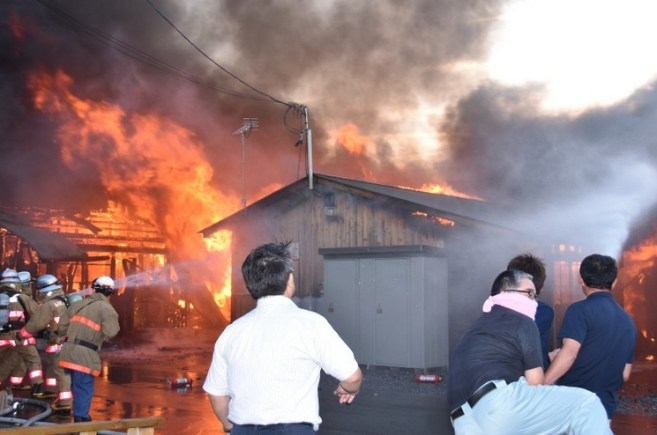
Fueled by strong winds, fire engulfs temporary housing at the Yoshima industrial park in Iwaki, Fukushima Prefecture, on Oct. 6, 2016.
IWAKI, Fukushima — A fire on Oct. 6 destroyed temporary housing for residents of Okuma, Fukushima Prefecture, who evacuated here due to the Fukushima No. 1 Nuclear Power Plant disaster, police said.
The fire broke out at around 4:25 p.m. and destroyed 19 homes in four single-story, prefabricated wooden buildings at the Yoshima industrial park in Iwaki. According to prefectural police, a 16-year-old boy was treated for smoke inhalation. The Okuma Municipal Government will supply the five households that lost their residences with housing elsewhere.
There were 72 households living in 86 of the 31-building complex’s 122 residences. Some 90 percent of Okuma residents’ original homes are within a nuclear disaster no-go zone around the Fukushima plant, and it is unknown when those living in the Yoshima industrial park might be able to return to the town.
Sho Tsukamoto, 29, an employee of a construction company who lost his residence and his possessions in the fire, said, “I even lost the picture of my dead father and other photos of my family that I brought from Okuma.”
http://mainichi.jp/english/articles/20161007/p2a/00m/0na/006000c
Nuclear authority method may underestimate quake sizes: study

This May 2016 photo shows the stone wall of Kumamoto Castle that was damaged by the April earthquake.
A technique that estimates the scale of earthquakes announced by the Earthquake Research Committee in 2006 may be underestimating the size of earthquakes — a problem for the Nuclear Regulation Authority, which bases its earthquake resistance plans on the system.
Professor Kazuki Koketsu presented the results of his evaluation of the 2006 system at a research session of The Seismological Society of Japan on Oct. 5. Koketsu is a professor at the Earthquake Research Institute at The University of Tokyo and the head of the Subcommittee for Evaluation of Strong Ground Motion, part of the Earthquake Research Committee.
Koketsu compared the estimations of the 2006 technique and a 2009 method to the actual observed data from the magnitude 7.3 Kumamoto Earthquake in April.
While the 2009 technique predicted a magnitude of 7.0 to 7.2 for the active fault, the 2006 technique underestimated the possible magnitude as between 6.6 and 6.9. Koketsu concluded that the 2009 technique is more appropriate for estimating the scale of earthquakes.
However, the Nuclear Regulation Authority (NRA) still uses the estimates of the strongest possible tremor made by the 2006 system as the basis for examining earthquake resistance design plans for nuclear reactors.
In response to Koketsu’s presentation, a representative of the NRA stated at a press conference held on Oct. 5., “We will begin discussion over whether we should adopt the 2009 system after the Subcommittee for Evaluation of Strong Ground Motion has coordinated its views on the matter.”
The 2006 technique bases its estimates on both the estimated length and breadth of active faults. In 2009, the Earthquake Research Committee released a new system based mainly on the length of faults in order to calculate the expected magnitude of quakes on as many active faults as possible in a short amount of time. In Koketsu’s study, the 2006 system miscalculated the length and width of the faults involved in the Kumamoto earthquake, leading to the underestimation of the scale.
While both techniques appear side by side in the research committee’s manual, the committee’s national earthquake scale prediction map for quakes measuring at least lower-6 on the 7-point Japanese intensity scale estimated to occur within the next 30 years along active faults are all calculated using the 2009 system.
http://mainichi.jp/english/articles/20161006/p2a/00m/0na/012000c
Ban on food from Japan’s radiation-affected areas remains: Taiwan FDA
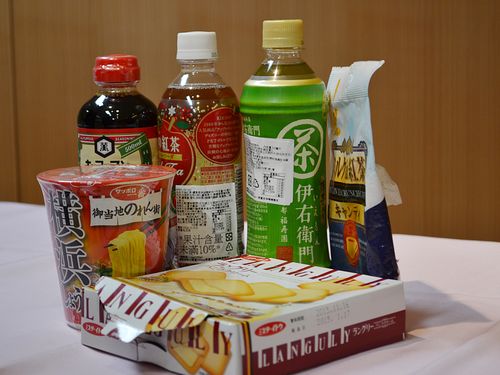
Taipei, Oct. 6 (CNA) The food and Drug Administration (FDA) reaffirmed Thursday that there is no timetable for any lifting of a ban on food imports from five Japanese prefectures that were affected by radiation fallout from a nuclear power plant meltdown following the 2011 earthquake and tsunami.
“There is no timetable for any such opening,” FDA Director-General Chiang Yu-mei (姜郁美) told CNA.
She declined to comment on reports that Taiwan and Japan have reached an initial consensus on Taiwan’s opening to food imports from the five prefectures.
Taiwan banned food imports from Fukushima, Ibaraki, Tochigi, Gunma and Chiba prefectures in the wake of the meltdown of the Fukushima Daiichi Nuclear Power Plant on March 11, 2011.
FDA Deputy Director-General Lin King-fu (林金富) said that food safety remains the primary concern, adding that the FDA will take stock of the management measures of other countries and continue to assess the situation.
Japanese media reported in May that Taiwan was planning to reopen to food imports from the five prefectures, but the reports were denied by the FDA. Reports resurfaced Thursday again about a lifting of the ban, and that formal opening could come early next year.
However, Pan Chih-kuan (潘志寬), an FDA food section chief, said that no related instructions have been received and that the assessment on Japanese food is still underway.
He stressed the three premises for opening — results of border inspection, monitoring results in Japan and the public’s attitude toward opening.
He said that since 2011, border inspections on 92,000 Japanese food items have been carried out, with 215 items found to contain a tiny amount of cesium. One item was found to contain the radioactive material in the past year.
http://focustaiwan.tw/news/asoc/201610060009.aspx#.V_b8QyR8f38.facebook
1 This Month
Chernobyl: The Lost Tapes – A good documentary on Chernobyl on SBS available On Demand for the next 3 weeks– https://www.sbs.com.au/ondemand/tv-program/chernobyl-the-lost-tapes/2352741955560

of the week–London Campaign for Nuclear Disarmament

Tell the Ukrainian Government to Drop Prosecution of Peace Activist Yurii Sheliazhenko
To see nuclear-related stories in greater depth and intensity – go to https://nuclearinformation.wordpress.com
-
Archives
- April 2026 (123)
- March 2026 (251)
- February 2026 (268)
- January 2026 (308)
- December 2025 (358)
- November 2025 (359)
- October 2025 (376)
- September 2025 (257)
- August 2025 (319)
- July 2025 (230)
- June 2025 (348)
- May 2025 (261)
-
Categories
- 1
- 1 NUCLEAR ISSUES
- business and costs
- climate change
- culture and arts
- ENERGY
- environment
- health
- history
- indigenous issues
- Legal
- marketing of nuclear
- media
- opposition to nuclear
- PERSONAL STORIES
- politics
- politics international
- Religion and ethics
- safety
- secrets,lies and civil liberties
- spinbuster
- technology
- Uranium
- wastes
- weapons and war
- Women
- 2 WORLD
- ACTION
- AFRICA
- Atrocities
- AUSTRALIA
- Christina's notes
- Christina's themes
- culture and arts
- Events
- Fuk 2022
- Fuk 2023
- Fukushima 2017
- Fukushima 2018
- fukushima 2019
- Fukushima 2020
- Fukushima 2021
- general
- global warming
- Humour (God we need it)
- Nuclear
- RARE EARTHS
- Reference
- resources – print
- Resources -audiovicual
- Weekly Newsletter
- World
- World Nuclear
- YouTube
-
RSS
Entries RSS
Comments RSS
 nuclear-news