


According to the update, the Energy Department has a town hall meeting planned for Oct. 13 in Carlsbad, New Mexico, to discuss recent ground control issues……..http://www.aikenstandard.com/article/20161008/AIK0101/161009624
And now for the next chapter! Ireland and Sellafield!
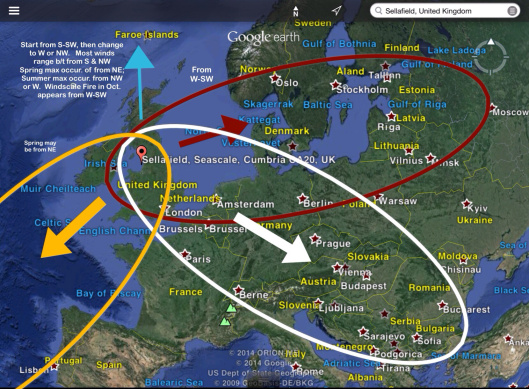
A new nuclear power station is proposed at Moorside near Sellafield, as well as at Hinkley Pt. Our map distance estimate is based on “Windscale fallout underestimated“, by Rebecca Morelle-BBC News, 6 October 2007, where one finds a rare map of the Windscale fallout plume: http://news.bbc.co.uk/2/hi/science/nature/7030536.stm and the Chernobyl fallout plume, which seems have traveled about the same distance. See: https://miningawareness.wordpress.com/2015/04/25/windscale-moorside-sellafield-accident-impact-fallout-map/
Excerpted from:
“And now for the next chapter! Ireland and Sellafield!
Posted on October 9, 2016 by arclight2011part2
[…]
There is something really fishy about the Sellafield meetings in Ireland (Due in the next week approx). The Irish Government did not join other boundary/downwind countries around the UK in a recent ESPOO (Cross boundary contamination from nuclear sites) Convention statement in connection with the Hinkley nuclear power plant plans in the UK . Has the Irish government been lobbied by proven UK nuclear lobby “liars” and “Spin merchants” (the…
View original post 584 more words
Removing CO2 From the Air Only Hope for Fixing Climate Change #auspol
Without ‘negative emissions’ to help return atmospheric CO2 to 350 ppm, future generations could face costs that ‘may become too heavy to bear,’ paper says.
The only way to keep young people from inheriting a world reeling from catastrophic climate change is to reduce carbon dioxide emissions dramatically and immediately, according to a new paper. Not only that, but it’s also necessary to aggressively remove greenhouse gas that’s already accumulated.
“If rapid emission reductions are initiated soon, it is still possible that at least a large fraction of required CO2 extraction can be achieved via relatively natural agricultural and forestry practices with other benefits,” the authors wrote.
“On the other hand, if large fossil fuel emissions are allowed to continue, the scale and cost of industrial CO2 extraction, occurring in conjunction with a deteriorating climate with growing economic effects, may become unmanageable. Simply put, the burden placed on young people…
View original post 368 more words
October 11 Energy News
Opinion:
¶ “Wind Turbines To The Rescue, Family Farm Edition” • An article from Bloomberg speaks to the impact that income from wind turbines can have on struggling family farms. The article describes how wind leases offer farmers significant new source of revenue, without the negative impacts of fossil fuel extraction. [CleanTechnica]
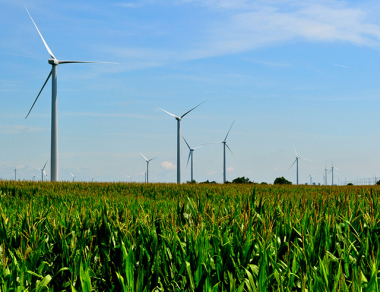 Illinois farm (Photo by Tom via
flickr.com, creative commons license.)
¶ “The Missing ‘Why’ in Vermont’s Energy Transition” • We have a responsibility and an opportunity to meet far more of our energy needs through resources carefully deployed in our own backyards. Act 174 creates a way to articulate how that happens. The oft-missing reason why is an essential part of the equation. [vtdigger.org]
Science and Technology:
¶ Celebrating the tallest wood-frame building of its kind anywhere in the world, Canada’s Minister of Natural Resources Jim Carr recently attended the “topping out” ceremony…
View original post 680 more words
About Fukushima
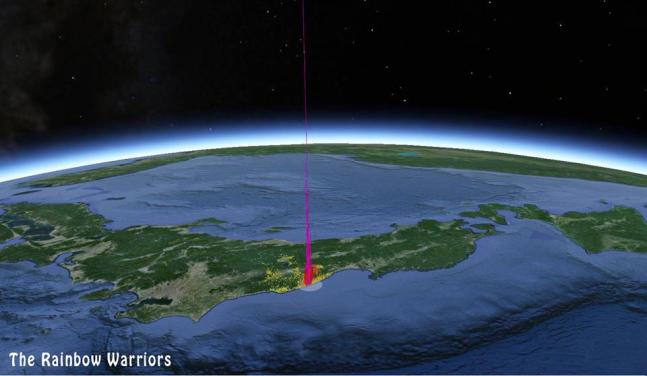
If in 2010 there was one birth and one death every 28 seconds in Japon, beginning 2014 there was one death every 25 seconds and a birth every 31 seconds: a differential of 2 seconds per year, this seems little yet it is significantly faster than in Ukraine.
Fukushima is much more severe, because there were 4 reactors instead of one, and the reactor 3 was using plutonium MOX, with at proximity a dense population. If the wind was favorable three days out of 4, it was also unfavorable 1 day out of 4.
The first 6 months of the Fukushima nuclear catastrophe in 2011, Tepco and the Japanese government were putting a lid on informations inside Japan, then gradually that omerta was broken by the people sharing informations on Twitter, Facebook, and blogs.
However, a language barrier remained. As of today there is a lot of informations in japanese circulated inside Japan, about radiation and contamination, about health issues, etc. Unfortunately those informations are not getting translated from japanese to english, due to the shortage of capable translators. As a result almost none of those important informations are getting outside of Japan reaching the outside world to teach the people everywhere the scale of the disaster and how it affects all those people lives.
The only informations coming out in english are those in the articles of the Japanese main stream media which are strongly under government influence when not just plain censorship, therefore publishing very sanitized informations, and the Western main stream media which are either under the nuclear lobby financial influence, or lacking the indepth details.
Not to mention the nonsense sensationalism of some of the American websites or Youtubers, produced only to increase visitors traffic and donations, which deals only in hyperboles, exaggerations, when not just plain lunacy.
The overall result is that we have an ongoing nuclear catastrophe now for 5 years and half, affecting millions of people on location in Japan, which outside of Japan most of the people are not aware, as it had not happened, was not happening.
The two main reasons being:
1. The sanitizing of information by the main stream media owned by the same financial interests which own the nuclear industry.
2. The language barrier which hinders the real facts, the real details to spread out of Japan.
And thanks to the continuous ignorance about the ongoing Fukushima Daiichi nuclear catastrophe, us not being capable to learn from it, its human tragedy, its harmful consequences to health and environment, it is like the whole world is ready for another new nuclear catastrophe, accepting it to come.
Why can’t we learn from our mistakes…
I wish to thank here Mochizuki Cheshire Iori of the Fukushima diary blog, Nancy Foust of Fukuleaks, and Pierre Fetet of the Fukushima blog, for their efforts year after year during the past 5 years and half to inform about Fukushima, those persons have accomplished an excellent and tremendous job, with integrity and no nonsense. My respect to you.
http://www.fukushima-blog.com/
Credit to Xavier Nast for the population statistics.
Japan Political Pulse: ‘Operation Tomodachi’ members need support amid radiation fears
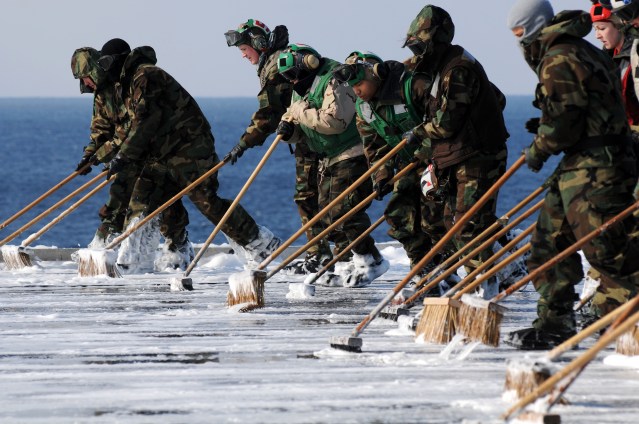
Many readers have offered support for a lawsuit filed by former U.S. servicemen and others claiming they were affected by radiation during “Operation Tomodachi,” a U.S. Armed Forces operation to assist Japan in the wake of the March 2011 Great East Japan Earthquake and tsunami. These readers reacted to last week’s installment of the Japan Political Pulse column that mentioned former Prime Minister Junichiro Koizumi’s activities to support the lawsuit.
It has not yet been proven if there is a causal relationship between so-called second-hand exposure to radiation and health problems. Critics say emotional support for those who claim their health was affected by indirect exposure to radiation without scientific proof is irresponsible. Emotional support is important but objective facts should also be clarified.
Eight former U.S. soldiers who participated in Operation Tomodachi (friend) launched the lawsuit in California in December 2012. The number of plaintiffs has since surpassed 450.
In March 2011, 16 U.S. military vessels engaged in the operation, including the aircraft carrier Ronald Reagan, were exposed to radiation off Fukushima Prefecture. These vessels and the servicemen aboard them were engaged in the operation amid a radioactive plume from the tsunami-hit Fukushima No. 1 Nuclear Power Plant.
According to the lawsuit, the plaintiffs have been suffering from such illnesses as leukemia, testis cancer, colon bleeding, ringing in their ears and a decline in eyesight since they returned home after participating in the operation.
They are suing Tokyo Electric Power Co., the operator of the nuclear plant, Toshiba Corp., Hitachi Ltd., and other Japanese and U.S. atomic power station manufacturers, demanding that a 1 billion dollar (some 100 billion yen) fund be set up to help the plaintiffs receive medical examinations and treatment.
The plaintiffs are hoping that their suit will be tried in the United States, while TEPCO is demanding that the case be heard in Japan.
In June 2015, TEPCO’s appeal over the jurisdiction over the trial was accepted, and a state appeal court is deliberating on the matter.
The aforementioned development of the case is based on interviews with former Prime Minister Koizumi, who met with some of the plaintiffs, and officials at the Foreign Ministry and the Agency for Natural Resources and Energy. TEPCO declined to comment on the matter on the grounds that the trial is ongoing.
Under the civil discovery system established by U.S. law, those involved in civil lawsuits can be forced to disclose evidence. Those who refuse to comply could be imprisoned or slapped with a huge fine for contempt of court. Critics say TEPCO demands that the suit be tried in Japan for this reason.
One cannot help but wonder what the company does not want to be exposed. There is a possibility that documents carrying information on the cause of the nuclear plant accident, TEPCO’s initial response to the disaster and observed data on aerial radiation levels — which is different from what the utility has explained — could be hidden. However, this is just a presumption without basis.
There is also an amicus curiae (court adviser) system, under which individuals or organizations appointed by courts provide information or express opinions on legal matters relating to individual court cases.
A former legislator has phoned the Mainichi Shimbun and raised questions about last week’s installment of this column, which quoted a magazine article as saying that an adviser from the Japanese government stated that U.S. forces are responsible for servicemen’s exposure to radiation while engaging in Operation Tomodachi.
Law360, a U.S.-based website specializing in information on legal affairs, lists the “Government of Japan” as the entity to which one of those who appeared in the oral proceeding on the lawsuit on Sept. 1 as court advisers belongs.
A senior official of the Agency for Natural Resources and Energy said, “The government isn’t aware of such a figure.” However, it would be no surprise if an adviser were to appear in court and develop a persuasive legal theory to pursue ways to evade legal responsibility on behalf of defendants.
Jonathan Woodson, assistant secretary of defense for health affairs who examined plaintiffs’ assertions in 2014 at the request of U.S. Congress, stated there is no objective evidence that the plaintiffs’ health hazard was caused by their exposure to radiation.
The March 13, 2016 issue of Stars and Stripes, a U.S. daily specializing in U.S. military information, covered Woodson’s report along with a comment by Shinzo Kimura, associate professor of radiation hygiene at Dokkyo Medical University, that the possibility that the plaintiffs’ symptoms were caused by their radiation exposure cannot be ruled out.
There is a long way to go before the causes of the plaintiffs’ illnesses can be clarified. However, there is no denying that many people are suffering from illnesses after participating in Operation Tomodachi.
Donations to a fundraising drive launched by former Prime Minister Koizumi are accepted at the Tokyo-based Johnan Shinkin Bank. Koizumi will deliver a speech on the matter at a lecture meeting in Tokyo on the evening of Nov. 16. Those who want to listen to his speech are required to make reservations by calling the Japan Assembly for Nuclear Free Renewable Energy at 03-6262-3623. The admission fee of 10,000 yen per person will be fully donated to former U.S. soldiers who are suffering from illnesses.
http://mainichi.jp/english/articles/20161011/p2a/00m/0na/019000c
Active Volcanoes Endanger Japan’s Operating Nuclear Power Stations: Mount Aso Awakened Explosively; Sakurajima Already Awake
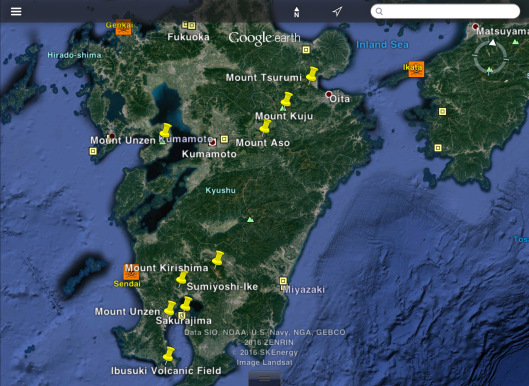
Japan’s Mount Aso volcano erupted explosively on Saturday, 8 Oct., 2016, and volcanic “ash was falling as far as 320 km (200 miles) away, … Kyushu Electric Power Co said the eruption had no impact on its Sendai nuclear plant, which is about 160 km (100 miles) south of Mount Aso“(Reuters, 8 Oct. 2016). Sendai nuclear power station has two reactors online. The other nuclear power station online is Ikata, with one reactor operating. https://en.wikipedia.org/wiki/Nuclear_power_in_Japan
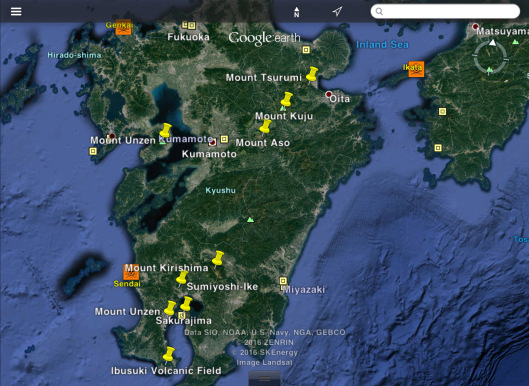
Volcano locations exported from: https://en.wikipedia.org/wiki/List_of_volcanoes_in_Japan
With a change in wind direction ashfall from Mount Aso and/or Sakurajima could endanger Japan’s operating reactors. As can be seen on the map, Ikata Nuclear Power Station is closer to Mount Aso, and Sakurajima to Sendai Nuclear Power Station. Ash plume forecasts for both appear at the bottom of this post.
Disruptions due to a major volcanic eruption, as well as ashfall could lead to nuclear meltdown: https://miningawareness.wordpress.com/2015/08/15/official-volcano-evacuation-warning-near-re-opened-nuclear-reactors-in-japan-volcanic-ashfall-could-lead-to-meltdown-spent-fuel-pool-collapse/
“Japan’s Mount Aso volcano erupts, no injuries reported
Posted:Sat, 08 Oct 2016 07:41:33 -0400
TOKYO (Reuters) – Mount Aso, a volcano on Japan’s main southern island of Kyushu, erupted early on Saturday, Japan’s Meteorological Agency said, spewing volcanic ash 11,000 meters (7 miles) into the sky. http://feeds.reuters.com/~r/reuters/environment/~3/DLFdmJfALl4/us-japan-volcano-idUSKCN12804E
“Mount Aso, a volcano on Japan’s Kyushu island, has been erupting sporadically for decades. Smithsonian’s Global Volcanism Program lists 38 separate eruptions since 1950, with the most recent beginning on December 8, 2014. All of these eruptions have occurred at Naka-dake, a cinder cone located within Aso’s massive caldera.”
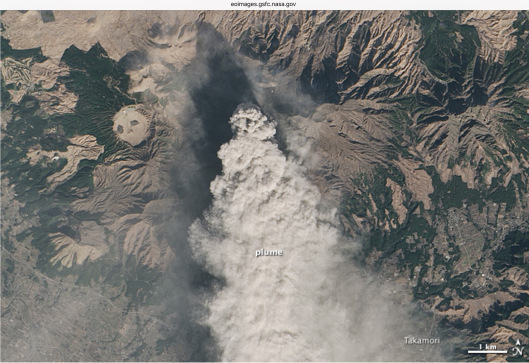
ERUPTION AT MOUNT ASO Credit: NASA Earth Observatory by Jesse Allen, using Landsat data from USGS. Caption by Adam Voiland. Date: January 13, 2015 Visualization Date: January 15, 2015
http://visibleearth.nasa.gov/view.php?id=85090
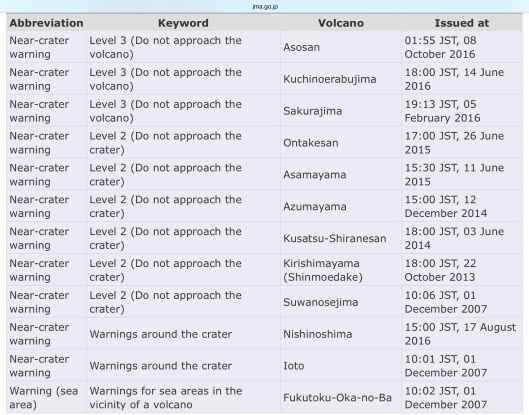
http://www.jma.go.jp/en/volcano/
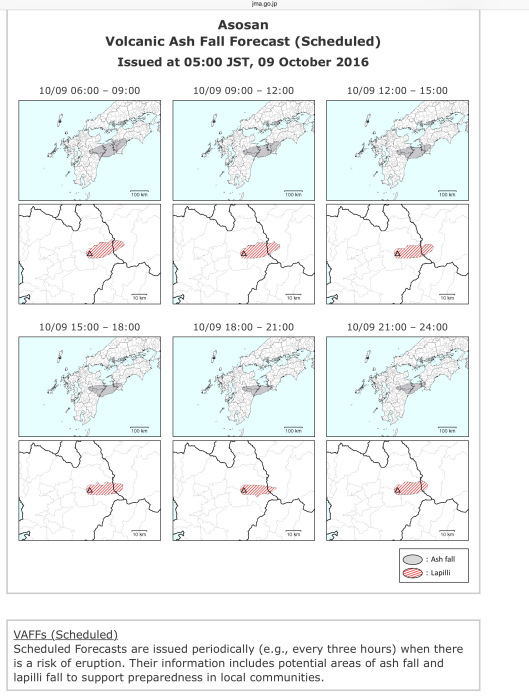
Asosan
Volcanic Ash Fall Forecast (Scheduled)
Issued at 05:00 JST, 09 October 2016 Japan Meteorological Agency: http://www.jma.go.jp/en/ashfall/scheduled_503.html
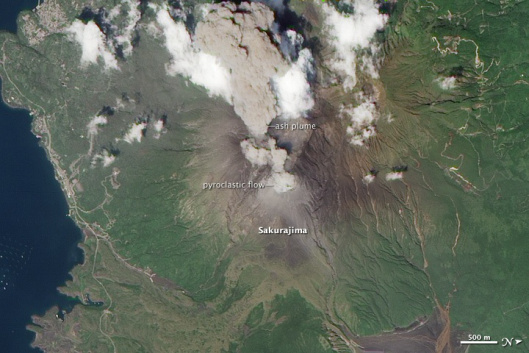
Sakurajima Aug 19 2010 NASA
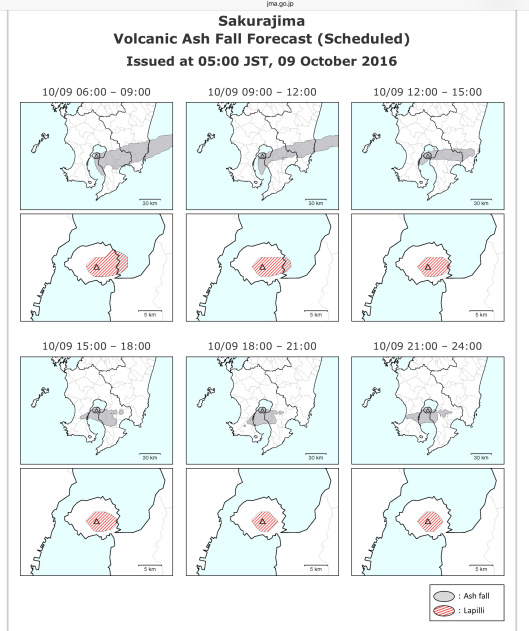
Sakurajima
Volcanic Ash Fall Forecast (Scheduled)
Issued at 05:00 JST, 09 October 2016 Japan Meteorological Agency
http://www.jma.go.jp/en/ashfall/scheduled_506.html
Source :
Videos of the 6th Citizen-Scientist International Symposium on Radiation Protection October 7 – October 10, 2016
Videos of the symposium to be watched at:
http://www.ustream.tv/channel/csrp-en
From the Reality of Chernobyl and Fukushima
Date: Friday, October 7 – Monday, October 10, 2016
Venue: Main Hall, Fukushima Gender Equality Centre 1-196-1 Kakunai, Nihonmatsu, Fukushima, 964-0904
The Citizen-Scientist International Symposium on Radiation Protection (CSRP), a politically, financially, ideologically and religiously independent non-profit organization, has been committed to keeping to minimum the damages on health and environment caused by the Tokyo Electric Fukushima Daiichi Nuclear Power Plant disaster that followed the Great East Japan Earthquake and Tsunami in March 11, 2011.
CSRP has been inviting administrative officials, researchers, NGOs, member experts of governmental inquiry commissions and international organizations working on radiation protection, etc. Since around the 3rd CSRP, this approach has started to bear fruit, because scientists and other stakeholders with different positions and paradigms began to share the same table of discussion, thus gradually making possible constructive exchange of views.
In the course of this approach, however, we began to encounter a new challenge that may concern the premise of the CSRP; the deeper we got into scientific discussion, the higher the hurdle for participation got for the general public, especially for younger generations. Also, the diversity of voices were to be alienated from pointed scientific discussions that are decisive for the decision-making of the radiation protection of the general public. This lead us to some interrogations : “Isn’t ‘science’ given too much importance in decision-making?”; “Is ‘science’ the only way for citizens to bring today’s situation under their power?”
While always continuing to examine new scientific findings with respect to health, environmental and social impacts of low-dose exposure, we added the theme of “Between Art and Science” to the 5th symposium last year, exposed various art works inspired by nuclear power and nuclear disasters, and organized a panel discussion with artists and scientists. This was the CSRP’s new attempt to question “science” and “scientificity” with a view to reexamining the relationships between science, art and philosophy before and after the modernity. The 6th CSRP of this year, held in the city of Nihonmatsu, Fukushima Pref., will collaborate with the Institute of Regional Creation by Arts, the University of Fukushima, to cosponsor the Fukushima Biennale 2016. We hope this new attempt will bring new visions to the participants.
As a place to learn and make full use of new findings exploring the effects of low-dose radiation exposure accumulating day by day, and to think together about the rights of people facing the consequences of the nuclear accident and about what epidemiology and public health should do in order to minimize the damage, we open the 6th Citizen-Scientist International Symposium on Radiation Protection.
Resuming Monju reactor operations may cost over ¥540 billion

The cost of resuming operations at Japan’s trouble-plagued Monju prototype fast-breeder nuclear reactor is estimated to top ¥540 billion ($5.2 billion), the science ministry says.
The estimate was presented Friday at a meeting of government and private-sector officials who discussed the fate of the reactor in Tsuruga, Fukui Prefecture.
More than ¥1 trillion ($9.7 billion) has been spent on Monju, but it has only operated for a total of 250 days in the past 20 years due to a series of problems, including a leak of sodium coolant.
The government is considering options, including decommissioning the reactor. It plans to make a decision by the end of this year.
The ministry said the costs may far exceed ¥540 billion if the safety screening process by regulators is lengthy. The estimate does not include expenses for decommissioning the reactor.
The science ministry wants Monju to be maintained while the industry ministry is opposed to the idea.
Opposition to keeping Monju in place is expected to grow if a massive amount of money is needed for it to go back online.
The meeting brought together science minister Hirokazu Matsuno and industry minister Hiroshige Seko as well as nuclear industry executives, including Satoru Katsuno, chairman of the Federation of Electric Power Companies of Japan.
Third ceiling collapse at Nuclear Waste Isolation Pilot Plant
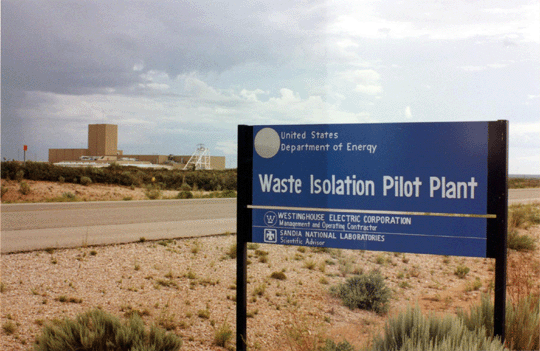 Waste Isolation Pilot Plant sees third ceiling
collapse, Aiken Standard, By Thomas Gardinert gardiner@aikenstandard.com Oct 8 2016 New Mexico’s Waste Isolation Pilot Plant has suffered its third ceiling collapse.
The first collapse was discovered Sept. 27, and the following two happened this past week. The third collapse was identified on Friday morning and was found to have followed the cave-in earlier in the week.
According to a WIPP update sent Friday evening, the area of the collapse continues to remain restricted for workers and employees. According to SRS Watch Director Tom Clements, who has been inside the facility, material regularly comes off of the walls and ceiling.
WIPP is an underground facility, cut into salt beds. Over time, groundwater and other natural forces are designed to form the salt deposits around the waste containers. He said the facility was designed to encase the nuclear waste buried there to permanently dispose of the material…
The WIPP facility was shut down in 2014 after a containment leak and an underground salt-truck fire. The facility is set to reopen in December 2016 and shipments are expected to resume in the fall of 2017.
WIPP is the intended resting place for some of the nuclear material at South Carolina’s Savannah River Site near Aiken. The Energy Department is currently disposing of plutonium through a process called dilute and dispose. That material is among those eventually intended for WIPP disposal.
According to the WIPP update, emergency evacuation routes were also out of date. The routes were still based on the facility before sections were closed, including the areas where the cave-ins occurred. The update said, “The Department of Energy identified a deficiency in the WIPP Mine Escape and Evacuation Plan, which still relied on evacuation routes established before some areas had been posted as prohibited. NWP had identified compensatory measures – immediate changes that could be made while the Evacuation Plan is formally updated.”
Long term safety of spent nuclear fuel storage canisters is far from assured
Premature failure of U.S. spent nuclear fuel storage canisters, San Onofre Safety, “……. The dry cask systems …..may fail within 30 years or possibly sooner, based on information provided by Nuclear Regulatory Commission (NRC) technical staff.
There is no technology to adequately inspect canisters.
There is no system in place to mitigate a failed canister……..
Canisters may need to be replaced within 30-42 years or sooner.…
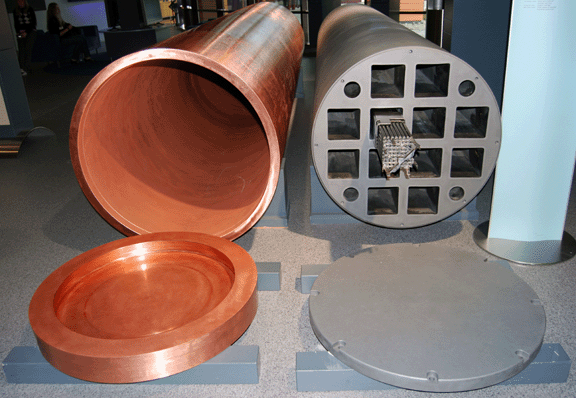
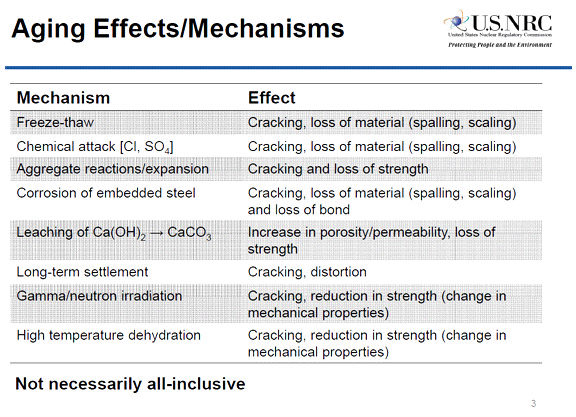
Recent information provided by the NRC technical staff indicates dry storage canisters may need to be replaced within 30-42 years or sooner, due to stress corrosion cracking of the thin (1/2 to 5/8 inch) stainless steel canisters (due to our coastal environment). Similar stainless steel materials at nuclear plants have failed within 16 to 33 years. The concrete overpacks also have aging issues that are accelerated in coastal environments…….
Recent information provided by the NRC technical staff indicates dry storage canisters may need to be replaced within 30-42 years or sooner, due to stress corrosion cracking of the thin (1/2 to 5/8 inch) stainless steel canisters (due to our coastal environment). Similar stainless steel materials at nuclear plants have failed within 16 to 33 years. The concrete overpacks also have aging issues that are accelerated in coastal environments………
No canisters approved for high burnup fuel for more than the initial 20 years.
High burnup fuel cladding damage The NRC has not extended licenses past the initial 20 years for storage of high burnup fuel (>45GWd/MTU) due to unknowns about high burnup fuel in storage and transport. This fuel is over twice as radioactive and hotter than lower burnup fuel. The NRC has allowed nuclear plants to burn fuel longer, without the research to show that it is safe in storage and transport. The protective fuel cladding can become brittle and crack; resulting is higher risk for radiation exposure, if the canisters fail……. https://sanonofresafety.org/2014/08/21/premature-failure-of-u-s-spent-nuclear-fuel-storage-canisters/

Russia moves nuclear-capable missiles to Kaliningrad , but says this is not significant
 Russia downplays moving nuclear-capable missiles to Kaliningrad Deployment of Iskander missiles to Baltic outpost alarms neighbours but Russia says move is part of regular drill, Guardian, Patrick Wintour, 9 Oct 16 Russia has played down the significance of the deployment of nuclear-capable Iskander missiles to the Russian outpost of Kaliningrad after the move led to protests from Estonia, Poland and Lithuania, underlining tensions about Russian intentions.
The deployment of the missiles was part of regular drills and was not a secret, the Russian defence ministry insisted.
“First of all, the authors behind the fuss should know that the Iskander missile system is a mobile one,” said a ministry spokesman, Gen Igor Konashenkov.
“As part of the combat training plan, units of the missile forces throughout the year improve their marching capabilities by covering great distances across the territory of the Russian Federation in various ways: by air, sea and on their own.”
Konashenkov said that Kaliningrad “is no exemption here” and that the system would be relocated to the exclave in the future “as part of the military training of the Russian armed forces.”
The Iskander-M, first introduced to the Russian military in 2013, is designed to target missile systems, rocket launchers, long-range artillery and command posts as well as aircraft and helicopters. It has a range of 500km (310 miles) and is capable of carrying nuclear warheads, and its deployment led to deep concern in Estonia.
Poland also voiced its concerns over the relocation of the weapons………https://www.theguardian.com/world/2016/oct/09/russia-downplays-moving-nuclear-capable-missiles-to-kaliningrad
Spiral of repeated failure in nuclear sanctions against North Korea
Nuclear conflict with North Korea: a spiral of repeated failure, DW, 9 Oct 16
 North Korea carries out a nuclear test; the UN imposes sanctions; North Korea repeats its actions. This cycle has been repeated for 10 years now and has so far proved impossible to break. North Korea has carried out five nuclear tests in the past 10 years. Five times, the UN Security Council has imposed or tightened sanctions. For years now the West has issued similar words of condemnation after each new test. And time and again North Korea has demonstrated that the international community still has not found any way of resolving this nuclear confrontation in the long term. Meanwhile, the cycle of action and reaction continues.
Monday, 9 October 2006
Exactly ten years ago, then dictator Kim Jong Il shocked the world with the first North Korean nuclear test. It was the middle of the night in Europe when the earth shook in the northeast of the country at 10:36 local time. The South Korean secret service estimated that the bomb had an explosive force of 0.55 kilotons. This was considerably smaller than the first atomic bomb ever used in conflict, dropped on Hiroshima in Japan by the United States: That had an explosive force of around 12.5 kilotons. But the message is clear – and the rest of the world is outraged.
US President George W. Bush on 9 October 2006:
“The United States condemns this provocative act. Once again North Korea has defied the will of the international community, and the international community will respond.”
It was the start of a spiral that has continued ever since, with no resolution in sight.
Five days later, the 15 members of the UN Security Council vote unanimously to impose sanctions against North Korea.
UN Resolution 1718, passed on 14 October 2006 The resolution forbids North Korea from carrying out any further nuclear tests or firing any ballistic missiles. It calls upon the country to suspend its nuclear program and return to the negotiation table. Among other things, Resolution 1718 freezes the assets of people involved in the North Korean nuclear program and imposes travel bans on them. It also imposes a trade embargo covering items such as tanks, combat vehicles, large war materials, fighter planes, helicopters and battleships. And, of course, anything connected to the further development of North Korea’s nuclear program………
Friday, 9 September 2016
Just nine months after the fourth nuclear test, North Korea carries out a fifth – and last, to date – on its Punggye-ri test site. It is also the strongest. Foreign experts estimate that it had an explosive force of around 10 kilotons.
US President Barack Obama, 9 September 2016:
“To be clear, the United States does not, and never will, accept North Korea as a nuclear state. […] Today’s nuclear test, a flagrant violation of multiple UN Security Council Resolutions, makes clear North Korea’s disregard for international norms and standards for behavior and demonstrates it has no interest in being a responsible member of the international community.”
The UN Security Council has announced that further sanctions will be imposed. http://www.dw.com/en/nuclear-conflict-with-north-korea-a-spiral-of-repeated-failure/a-35999751
Obama, Leo Di Caprio, and the Pope feature in documentary, Before the Flood,
 After Revenant … Leonardo DiCaprio stars as eco-warrior in climate battle
Obama and the pope feature in documentary, Before the Flood, that hopes to influence presidential election, Guardian, Edward Helmore, 2 Oct 16, New York
It’s an issue of importance to both men. Obama, who appears in the documentary,Before the Flood, is using the last days of his presidency to make environmental protection a central pillar of his legacy. Last month he created the world’s largest ecologically protected area when he expanded Papahānaumokuākea, a marine reserve in his native Hawaii, to encompass more than half a million square miles. He also gave “marine national monument” status to 4,913 sq miles off the New England coast.
Two years ago, DiCaprio – who has raised money for protecting tigers, orangutans and elephants – was designated a UN messenger of peace, with a special focus on climate change.
The White House screening of Before the Flood, which follows DiCaprio as he travels to parts of the world including Greenland, the Pacific islands, Sumatra and industrial regions of China, precedes a global release via National Geographic later this month. DiCaprio and the film’s director, Fisher Stevens, hope to use it in the run-up to next month’s US presidential and Senate elections. They plan to show the film on college campuses and across swing states, including Florida, where Senator Marco Rubio is up for re-election.
“Rubio is a climate change denier, and we want to get these deniers out of Congress, to make them understand the Paris [climate] accords are important and that we need to do more,” Stevens said. The film-makers claim 38 US senators accept money from the energy industry, in effect blocking the passage of environmental legislation.
“These people are not necessarily climate deniers. They’re just in the pockets of the energy industry, even though that’s at the expense of all of us,” said Fisher. “And [Republican presidential candidate] Donald Trump has said he’s going to try to kill the Paris accords if elected.”
Last month DiCaprio told the audience after the film’s world premiere at the Toronto international film festival: “We cannot afford, at this critical moment in time, to have leaders in office that do not believe in the modern science of climate change.”
Before the Flood’s release comes as statistics relating to the health of the planet worsen. Last week the Scripps Institution of Oceanography announced it was safe to conclude that global CO2 levels will not drop below 400 parts per million this year – “or ever again for the indefinite future”. The figure is seen as the point at which global warming becomes irreversible…….
Despite the intransigence of US legislators, Obama is using his last months in office to establish his legacy as the most environmentally effective president since Theodore Roosevelt created national parks. In Obama’s reading of the issue, climate change is as much a national security issue as an environmental one……..https://www.theguardian.com/film/2016/oct/01/leonardo-dicaprio-climate-change-film-before-the-flood-barack-obama
How three brave Chernobyl workers saved Europe from nuclear catastrophe
 Despite Three Mile Island, Daiichi Power Plant in Japan and Chernobyl, the industry still poo-poos the danger. At Chernobyl, after the initial explosion, the 185 tons of melting nuclear waste was still melting down. When it reached the water a thermonuclear explosion would have occurred. It was estimated it would have wiped out half of Europe and made Europe, Ukraine and parts of Russia uninhabitable for 500,000 years. This was prevented when three workers volunteered to dive in the radioactive water and open the valves to drain the pool and prevent a second explosion, knowing it would mean death by radioactive poisoning. They succeeded in draining the pool, but died of radiation sickness within a few weeks. Their bodies remained radioactive and were buried in lead coffins.
If a similar “incident,” as the nuclear industry insists they be called, happens in Clinton, do you think Rep. Bill Mitchell, the Clinton School Board, DeWitt County Board of any of the 700 workers or any other advocates of keeping the plant open will step forward?
Spent nuclear fuel canisters vulnerable to failure as they age
Premature failure of U.S. spent nuclear fuel storage canisters, San Onofre Safety.org, “……Stainless Steel Dry Canister Problems Darrell Dunn, an NRC materials engineer, stated stainless steel dry storage canisters are vulnerable to failure within about 25 – 42 years. If any of the fuel cladding in the canister fails, there is no protective barrier and we could have a serious radiation release.
The NRC said they have no current mitigation plan for that consequence. They suggested we MIGHT be able to put the fuel back in the spent fuel pool. However, Edison plans to destroy the spent fuel and transfer pools. And there is no technology to repair the canisters. The NRC said they HOPE there will be a solution for mitigation in the future. Even an NRC May 2nd High Burnup Fuel letter admits there are mitigation problems.
No Inspections of Stainless Steel Canisters EPRI 2012 presentation To make matters worse, these stainless steel canisters are not inspected after they are loaded into the unsealed concrete overpacks (Areva NUHOMS) or concrete casks (Holtec and NAC Magnastor). The NRC proposed having each nuclear plant inspect the outside of only ONE stainless steel canister before they receive a license renewal and then do that once every 5 years. The industry balked at having to even check one canister at every plant. The problem with the stainless steel canisters is they do not protect against gamma rays; so it’s not a simple task to remove a canister from the concrete overpack/cask to examine the exterior for corrosion or other degradation. And since welded canisters do not have monitoring for helium leaks, we may not have any warning of an impending radiation release.
Concrete Overpack Corrosion Problems Darrell Dunn discussed serious corrosion problems with the concrete overpacks/casks, especially in coastal environments…….. https://sanonofresafety.org/2014/08/21/premature-failure-of-u-s-spent-nuclear-fuel-storage-canisters/
1 This Month
Chernobyl: The Lost Tapes – A good documentary on Chernobyl on SBS available On Demand for the next 3 weeks– https://www.sbs.com.au/ondemand/tv-program/chernobyl-the-lost-tapes/2352741955560

of the week–London Campaign for Nuclear Disarmament

Tell the Ukrainian Government to Drop Prosecution of Peace Activist Yurii Sheliazhenko
To see nuclear-related stories in greater depth and intensity – go to https://nuclearinformation.wordpress.com
-
Archives
- April 2026 (114)
- March 2026 (251)
- February 2026 (268)
- January 2026 (308)
- December 2025 (358)
- November 2025 (359)
- October 2025 (376)
- September 2025 (257)
- August 2025 (319)
- July 2025 (230)
- June 2025 (348)
- May 2025 (261)
-
Categories
- 1
- 1 NUCLEAR ISSUES
- business and costs
- climate change
- culture and arts
- ENERGY
- environment
- health
- history
- indigenous issues
- Legal
- marketing of nuclear
- media
- opposition to nuclear
- PERSONAL STORIES
- politics
- politics international
- Religion and ethics
- safety
- secrets,lies and civil liberties
- spinbuster
- technology
- Uranium
- wastes
- weapons and war
- Women
- 2 WORLD
- ACTION
- AFRICA
- Atrocities
- AUSTRALIA
- Christina's notes
- Christina's themes
- culture and arts
- Events
- Fuk 2022
- Fuk 2023
- Fukushima 2017
- Fukushima 2018
- fukushima 2019
- Fukushima 2020
- Fukushima 2021
- general
- global warming
- Humour (God we need it)
- Nuclear
- RARE EARTHS
- Reference
- resources – print
- Resources -audiovicual
- Weekly Newsletter
- World
- World Nuclear
- YouTube
-
RSS
Entries RSS
Comments RSS
 nuclear-news