Canadian political parties forced to reimburse illegal SNC-Lavalin donations
Liberals, Conservatives reimburse illegal SNC-Lavalin donations, ROBERT FIFE AND DANIEL LEBLANC OTTAWA — The Globe and Mail, Sep. 08, 2016 The federal Liberal and Conservative parties were forced to reimburse the government after the commissioner of elections found they had received $117,803 in illegal donations from SNC-Lavalin’s political slush fund.
The unlawful contributions span from March, 2004, to May, 2011, and showcase how dirty money that funded Quebec political parties also found a home in the federal arena.
The Liberal Party received the bulk of the illegal donations from the Quebec engineering giant, amounting to $109,615, while the Conservatives got $8,187. As part of its reimbursement, the Liberal Party covered $12,529 in donations that SNC-Lavalin gave in 2006 to the leadership campaigns of Michael Ignatieff, Bob Rae, Stéphane Dion and Gerard Kennedy.
The Commissioner of Canada Elections, Yves Côté, announced Thursday morning that the company had signed a compliance agreement with the federal agency and committed to put in place a series of steps to ensure it does not make illegal donations in the future.
SNC-Lavalin has already admitted it made more than $1-million in illegal donations to Quebec political parties during the 2000s. Like other engineering firms in the province, managers and family members made personal donations to parties, which were then reimbursed with salary bonuses.
A commission of inquiry found that officials inside the Quebec Liberal Party and the Parti Québécois were aware of SNC-Lavalin’s political slush fund, although there is no evidence the federal political parties knew the donations were illegal.
The Liberal Party said it was informed of the illegal donations by the Commissioner of Canada Elections last month, and immediately reimbursed the Chief Electoral Officer……….
An elections commissioner investigation found that senior SNC-Lavalin executives illegally donated $83,534 to the Liberal Party of Canada; $13,552 to various Liberal riding associations; $12,529 to contestants involved in the 2006 Liberal leadership race; $3,137 to the Conservative Party; and $5,050 to Conservative riding associations………
Facing the threat of getting barred from future federal contracts, SNC-Lavalin signed an “administrative agreement” last year with the Public Services and Procurement Department under the government’s new integrity regime. The agreement allows companies that have federal charges pending against them to continue to contract with or supply the government. As part of the deal, SNC agreed to strict conditions and third-party oversight of its business practices. http://www.theglobeandmail.com/news/politics/snc-lavalin-violated-elections-act-with-contributions-to-liberals-tories/article31762290/?cmpid=rss1&click=sf_globe
Fire at E. I. Hatch Nuclear Power Station in Georgia USA?

The reactor status for Hatch Reactor 1 was reported as 50% on Sept. 11th and Sept. 12th, which seems to support the possibility of a fire on site. It was at 96% on Sept. 10th. Satellite imagery noted an apparent fire at the Hatch Nuclear Power Station, when passing over at 18.29 UTC, 14.29 (2.29 pm) EDT on Sept. 11th. While the image shows it as most likely in the transformer yard, a fire could have been elsewhere, as it is not perfectly precise.
Detection Date: 11 Sep 2016, Detection Time: 18:29 UTC, Confidence: 45 http://activefiremaps.fs.fed.us/index.php
E. I. Hatch is one of many nuclear power stations which has potentially defective Schneider Masterpact breakers: “The higher contact resistance at any one finger contact could cause an unacceptable temperature rise at that connection point. At very high temperatures, the springs that maintain the finger contact pressure could relax, which would further…
View original post 183 more words
September 12 Energy News

Opinion:
¶ “Beginning of the End for Fossil Power” • The prospectus of E.ON’s conventional generation spin-off, says, “Conventional generation of power faces the risk of losing competitiveness against renewable energy and thus market share, and, over the long term, even faces the risk of disappearing completely from the market.” [Bloomberg]
 Foreseeing its own end (Photo by Bill Allsopp / Loop Images)
Science and Technology:
¶ Sheets of carbon an atom thick could soon double the amount of electricity stored in smartphone batteries, as 2D materials present a picture of the future of energy storage. At small scales, electrons obey the exotic laws of quantum mechanics very different from those we experience in the macroscopic world. [Horizon magazine]
World:
¶ Vattenfall won the Danish nearshore wind tender and will develop two wind farms with a total capacity of 350-MW at Hvide Sande and Thyborøn on the west…
View original post 534 more words
Gov’t making final arrangements to scrap Monju reactor: sources

The Japanese government is making final arrangements to scrap the trouble-prone Monju fast-breeder reactor, given the huge cost expected for its resumption, government sources said Tuesday.
The move comes as the government judged it cannot obtain public support for the huge amount of money needed to restart the reactor in Fukui Prefecture on the Sea of Japan coast.
If realized, decommissioning of the reactor would require a drastic change in the nation’s nuclear fuel-recycle policy, in which Monju is designated to play a key part.
Fukushima plant building exposed as TEPCO opens old wounds

The outer layer of the crippled No. 1 reactor building at the Fukushima No. 1 nuclear power plant is exposed as Tokyo Electric Power Co. removes one of the panels covering the facility at 6:22 a.m. on Sept. 13.
The devastated outer layer of Fukushima No. 1 nuclear power plant’s No. 1 reactor building has been exposed for the first time in almost five years in the painstaking reactor decommissioning process.
Plant operator Tokyo Electric Power Co. began removing on Sept. 13 the exterior walls of the cover installed around the structure to prevent the dispersal of radioactive materials on Sept. 13.
Shortly past 6 a.m., a large crane began removing a massive piece of the cover installed around the reactor building. The panel dismantled that day measured 23 by 17 meters and weighed 20 tons.
The cover was installed in October 2011 as a temporary measure after a nuclear meltdown occurred following the Great East Japan Earthquake and tsunami in March that year. The meltdown caused a hydrogen explosion, blowing the walls off the building.
Once the cover is dismantled, the operator can assess the state of the building’s interiors and remove the debris fallen onto the spent fuel pool inside.
“Steady progress is necessary in reconstruction, but we hope they will carry on the procedure with safety as the No. 1 priority,” said a Fukushima prefectural government official.
TEPCO said that it plans to remove the remaining 17 panels of the covering by the end of the year. The portion covering the roof has already been removed.
Once the cover is removed, the utility will begin drawing up plans to remove the 392 fuel assemblies from the spent fuel pool and melted nuclear fuel from inside the building.
The plant operator said that it plans to be extra careful during the procedure. It will shroud the building in tarpaulins once the cover is removed as a precautionary measure against dust and other materials containing radioactive materials from being carried aloft by the wind.
The utility and central government’s joint schedule for the decommissioning process of the reactor states that the removal of the fuel rods from the pool will start in fiscal 2020.
http://www.asahi.com/ajw/articles/AJ201609130070.html
TEPCO resumes removal of Fukushima plant cover
The operator of the Fukushima Daiichi nuclear power plant has resumed work to remove a temporary cover from a damaged reactor building.
Tokyo Electric Power Company had covered the partially collapsed No. 1 reactor building to prevent radioactive materials generated by the 2011 accident from spreading.
It started the removal process in July last year, the first step in the retrieval of spent nuclear fuel from a storage pool in the building.
The operation was suspended after sheets from the roof area were removed to assess the building’s condition.
On Tuesday, cranes were used to detach the panels from the side of the building, and the debris inside was exposed for the first time in 5 years. Each panel is 23 by 17 meters and weighs 20 tons.
TEPCO officials say they will spray chemicals to ensure that radioactive substances do not disperse even in strong winds.
They say they plan to complete the operation by the end of November, so that the debris can be removed. The removal of spent fuel is due to begin in 2021.
Industry ministry official Masato Kino who monitored the progress at the scene said difficult procedures will continue, but the first step has been taken. He said he hopes to carefully and safely proceed.
http://www3.nhk.or.jp/nhkworld/en/news/20160913_28/
Removal of the top southwest panel off reactor 1 today
2016.09.13_06.00-09.00.Unit1 side
Fukushima Backlash Hits Japan Prime Minister
Nuclear power may never recover its cachet as a clean energy source, irrespective of safety concerns, because of the ongoing saga of meltdown 3/11/11 at Fukushima Daiichi Nuclear Power Plant. Over time, the story only grows more horrific, painful, deceitful. It’s a story that will continue for generations to come.
Here’s why it holds pertinence: As a result of total 100% meltdown, TEPCO (Tokyo Electric Power Company) cannot locate or remove the radioactive molten core or corium from the reactors. Nobody knows where it is. It is missing. If it is missing from within the reactor structures, has it burrowed into the ground? There are no ready answers.
And, the destroyed nuclear plants are way too radioactive for humans to get close enough for inspection. And, robotic cameras get zapped! Corium is highly radioactive material, begging the question: If it has burrowed thru the containment vessel, does it spread underground, contaminating farmland and water resources and if so, how far away? Nobody knows?
According to TEPCO, removing the melted cores from reactors 1,2 and 3 will take upwards of 20 years, or more, again who knows.
But still, Japan will hold Olympic events in Fukushima in 2020 whilst out-of-control radioactive masses of goo are nowhere to be found. TEPCO expects decades before the cleanup is complete, if ever. Fortunately, for Tokyo 2020 (the Olympic designation) radiation’s impact has a latency effect, i.e., it takes a few years to show up as cancer in the human body.
A week ago on September 7th, Former PM Junichiro Koizumi, one of Japan’s most revered former prime ministers, lambasted the current Abe administration, as well as recovery efforts by TEPCO. At a news conference he said PM Shinzō Abe lied to the Olympic committee in 2013 in order to host the 2020 Summer Olympics in Japan.
“That was a lie,” Mr Koizumi told reporters when asked about Mr Abe’s remark that Fukushima was “under control,” Abe Lied to IOC About Nuke Plant, ex-PM Says, The Straits Times, Sep 8, 2016. The former PM also went on to explain TEPCO, after 5 years of struggling, still has not been able to effectively control contaminated water at the plant.
According to The Straits Times article: “Speaking to the IOC in September 2013, before the Olympic vote, PM Abe acknowledged concerns but stressed there was no need to worry: “Let me assure you, the situation is under control.”
PM Abe’s irresponsible statement before the world community essentially puts a dagger into the heart of nuclear advocacy and former PM Koizumi deepens the insertion. After all, who can be truthfully trusted? Mr Koizumi was a supporter of nuclear power while in office from 2001-2006, but he has since turned into a vocal opponent.
Speaking at the Foreign Correspondents Club of Japan in Tokyo, Mr Koizumi said: “The nuclear power industry says safety is their top priority, but profit is in fact what comes first… Japan can grow if the country relies on more renewable energy,” (Ayako Mie, staff writer, Despite Dwindling Momentum, Koizumi Pursues Anti-Nuclear Goals, The Japan Times, Sept. 7, 2016).
Mr Koizumi makes a good point. There have been no blackouts in Japan sans nuclear power. The country functioned well without nuclear.
Further to the point of nuclear versus nonnuclear, Katsunobu Sakurai, mayor of Minamisoma, a city of 70,000 located 25 km north of Fukushima No. 1 nuclear plant, at a news conference in Tokyo, said: “As a citizen and as a resident of an area affected by the nuclear power plant disaster, I must express great anger at this act… it is necessary for all of Japan to change its way of thinking, and its way of life too – to move to become a society like Germany, which is no longer reliant on nuclear power,” (Sarai Flores, Minamisoma Mayor Sees Future for Fukushima ‘Nonnuclear’ City in Energy Independence, The Japan Times, March 9, 2016).
In March of 2015, Minamisoma declared as a Nonnuclear City, turning to solar and wind power in tandem with energy-saving measures.
Meanwhile, at the insistence of the Abe administration, seven nuclear reactors could restart by the end of FY2016 followed by a total of 19 units over the next 12 months (Source: Japanese Institute Sees 19 Reactor Restarts by March 2018, World Nuclear News, July 28, 2016).
Greenpeace/Japan Discovers Widespread Radioactivity
One of the issues surrounding the Fukushima incident and the upcoming Olympics is whom to trust. Already TEPCO has admitted to misleading the public about reports on the status of the nuclear meltdown, and PM Abe has been caught with his hand in the proverbial cookie jar, but even much worse, lying to a major international sports tribunal. His credibility is down the drain.
As such, maybe third party sources can be trusted to tell the truth. In that regard, Greenpeace/Japan, which does not have a vested interest in nuclear power, may be one of the only reliable sources, especially since it has boots on the ground, testing for radiation. Since 2011, Greenpeace has conducted over 25 extensive surveys for radiation throughout Fukushima Prefecture.
In which case, the Japanese people should take heed because PM Abe is pushing hard to reopen nuclear plants and pushing hard to repopulate Fukushima, of course, well ahead of the 2020 Tokyo Olympics since there will be events held in Fukushima Prefecture. After all, how can one expect Olympians to populate Fukushima if Japan’s own citizens do not? But, as of now to a certain extent citizens are pushing back. Maybe they instinctively do not trust their own government’s assurances.
But, more chilling yet, after extensive boots-on-the-ground analyses, Greenpeace issued the following statement in March 2016: “Unfortunately, the crux of the nuclear contamination issue – from Kyshtym to Chernobyl to Fukushima- is this: When a major radiological disaster happens and impacts vast tracts of land, it cannot be ‘cleaned up’ or ‘fixed’.” (Source: Hanis Maketab, Environmental Impacts of Fukushima Nuclear Disaster Will Last ‘decades to centuries’ – Greenpeace, Asia Correspondent, March 4, 2016).
That is a blunt way of saying sayonara to habitation on radioactive contaminated land. That’s why Chernobyl is a permanently closed restricted zone for the past 30 years.
As far as “returning home” goes, if Greenpeace/Japan ran the show rather than PM Abe, it appears they would say ‘no’. Greenpeace does not believe it is safe. Greenpeace International issued a press release a little over one month ago with the headline: Radiation Along Fukushima Rivers up to 200 Times Higher Than Pacific Ocean Seabed – Greenpeace Press Release, July 21, 2016.
Here’s what they discovered: “The extremely high levels of radioactivity we found along the river systems highlights the enormity and longevity of both the environmental contamination and the public health risks resulting from the Fukushima disaster,” says Ai Kashiwagi, Energy Campaigner at Greenpeace Japan.
“These river samples were taken in areas where the Abe government is stating it is safe for people to live. But the results show there is no return to normal after this nuclear catastrophe,” claims Kashiwagi.
“Riverbank sediment samples taken along the Niida River in Minami Soma, measured as high as 29,800 Bq/kg for radiocaesium (Cs-134 and 137). The Niida samples were taken where there are no restrictions on people living, as were other river samples. At the estuary of the Abukuma River in Miyagi prefecture, which lies more than 90km north of the Fukushima Daiichi plant, levels measured in sediment samples were as high as 6,500 Bq/kg” (Greenpeace).
The prescribed safe limit of radioactive cesium for drinking water is 200 Bq/kg. A Becquerel (“Bq”) is a gauge of strength of radioactivity in materials such as Iodine-131 and Cesium-137 (Source: Safe Limits for Consuming Radiation-Contaminated Food, Bloomberg, March 20, 2011).
“The lifting of evacuation orders in March 2017 for areas that remain highly contaminated is a looming human rights crisis and cannot be permitted to stand. The vast expanses of contaminated forests and freshwater systems will remain a perennial source of radioactivity for the foreseeable future, as these ecosystems cannot simply be decontaminated” (Greenpeace).
Still, the Abe administration is to be commended for its herculean effort to try to clean up radioactivity throughout Fukushima Prefecture, but at the end of the day, it may be for naught. A massive cleanup effort is impossible in the hills, in the mountains, in the valleys, in the vast forests, along riverbeds and lakes, across extensive meadows in the wild where radiation levels remain deadly dangerous. Over time, it leaches back into decontaminated areas.
And as significantly, if not more so, what happens to the out-of-control radioactive blobs of corium? Nobody knows where those are, or what to do about it. It’s kinda like the mystery surrounding black holes in outer space, but nobody dares go there.
Fukushima is a story for the ages because radiation doesn’t quit. Still, the Olympics must go on, but where?
http://www.counterpunch.org/2016/09/12/fukushima-backlash-hits-japan-prime-minister/
80% of disaster-hit municipalities want legal revision to meet needs: survey
A large majority of municipalities that were hit by massive earthquakes and other disasters in recent years called for expanding the coverage of a law aimed at providing financial assistance for rebuilding damaged homes, a Mainichi Shimbun survey has learned.
The survey, conducted on Sept. 11, covered 61 cities, towns and villages in six prefectures that suffered enormous damage from the March 2011 Great East Japan Earthquake and tsunami, the September 2015 Kanto-Tohoku floods and the April 2016 Kumamoto earthquakes. It found that 80 percent of those municipalities believe the Act on Support for Reconstructing Livelihoods of Disaster Victims should be revised, underscoring the fact that the law is not sufficiently catering to the needs of victims in disaster areas.
Under this law, up to 3 million yen each is provided to those whose homes were entirely destroyed in disasters, and those whose homes were partially damaged and require extensive repair work can also receive financial assistance. However, other partially damaged homes are not covered by the law. The most common answer among the disaster-hit municipalities was to update the law to provide aid to households whose homes were partially destroyed but are not covered by the law. The second most common response was to raise the amount of relief money provided to affected households. The central government, however, is reluctant to review the support law.
Specifically, the survey covered 12 municipalities in Iwate Prefecture, 15 in Miyagi Prefecture, 10 in Fukushima Prefecture, five in Ibaraki Prefecture, four in Tochigi Prefecture and 15 in Kumamoto Prefecture. Of them, 57 municipalities responded except for four municipalities that suffered extensive damage from Typhoon Lionrock.
Forty-nine municipalities responding to the latest survey said the support law needs to be improved. Asked to choose from eight options for improvement, 24 municipalities said the financial assistance should be expanded to cover those whose homes were partially damaged; 17 municipalities said the amount of financial relief should be raised; and nine municipalities called for flexibility in recognizing damage to residences.
The Tochigi Prefecture city of Nikko called for expanding the law’s coverage to partially damaged houses, with a municipal government official saying, “There are partially destroyed houses whose status is infinitely close to damage requiring major repair work, and it is difficult to win victims’ understanding just by drawing such a simple line.” An official with the Iwate Prefecture city of Rikuzentakata said, “There is an enormous gap between households whose homes were partially damaged (and are thus cast out of the law) and other households that benefited from the support law.”
In areas damaged by the 2011 disaster, the most common request for the central government was to raise the amount of financial assistance provided to affected households. Behind the results are rising costs due to the reconstruction boom in disaster areas. “Construction costs are skyrocketing,” said an official with the Iwate Prefecture town of Yamada. As some victims lost all their furniture and other assets to tsunami, the Miyagi Prefecture city of Higashimatsushima proposed raising the amount of aid for those whose homes were swept away by tsunami.
Seven municipalities raised questions about the way subsidies are provided on a household-by-household basis under the law and the definition of households — though these were not among prearranged response options. “The amount of subsidies provided to each household is the same regardless of the number of members in a household. If the law takes the number of family members into account, we can provide assistance for their livelihood reconstruction in accordance with the realities they face,” said an official with the Kumamoto Prefecture city of Yatsushiro.
In the wake of the Great East Japan Earthquake, around 400,000 homes were either completely or partially destroyed, according to the National Police Agency. Of them, only about 193,000 households were eligible to receive financial aid under the support law to rebuild or repair their homes.
Meanwhile, the Cabinet Office provided a negative view toward legal revision when it was reached by the Mainichi, saying, “Because financial resources are limited, we’d like to respond to the matter by supporting self-help efforts, such as promoting subscriptions to private insurance.”
http://mainichi.jp/english/articles/20160912/p2a/00m/0na/013000c
South Korea prepared a plan to destroy Pyongyang

 S Korea draws up plan to destroy Pyongyang https://au.news.yahoo.com/thewest/a/32588140/s-korea-draws-up-plan-to-destroy-pyongyang/#page1 AAP on September 11, 2016,
“Every Pyongyang district, particularly where the North Korean leadership is possibly hidden, will be completely destroyed by ballistic missiles and high-explosive shells as soon as the North shows any signs of using a nuclear weapon. In other words, the North’s capital city will be reduced to ashes and removed from the map,” reported South Korean news agency Yonhap, citing a military official.
The details of the operation came to light after the South Korean Defence Ministry unveiled the Korea Massive Punishment and Retaliation (KMPR) plan in front of the National Assembly in response to the latest nuclear test by North Korea.
The plan is to carry out pre-emptive strikes against North Korean leader Kim Jong-un and the country’s military leadership if any signs of an imminent use of nuclear weapons is detected or in case of a war, the official explained.
In such a scenario, South Korea will deploy its Hyunmoo 2A and Hyunmoo 2B ballistic missiles, with a range of between 300 and 500 kilometres as well as the Hyunmoo-3 cruise missiles with a range of 1000 kilometres.
In mid-August, Seoul announced its intention to significantly boost its arsenal of missiles to counter the growing military threat from North Korea.
Another source cited by Yonhap said Seoul recently set up a special unit in charge of targeting North Korea’s top military leadership and “launching retaliatory attacks on them.”
North Korea conducted its fifth and largest-ever nuclear test on Friday, claiming it had tested a nuclear warhead that can be fitted onto missiles.
Haunting new documentary “Command and Control”
 An Accidental Nuclear Detonation “Will Happen”
Atomic weapons are just machines, as this harrowing new film demonstrates, and machines inevitably fail. Mother Jones, MICHAEL MECHANIC SEP. 11, 2016 It would be impossible to fully replicate the depth of dread and disbelief tha tCommand and Control—Eric Schlosser’s 2013 book chronicling the Air Force’s history of nuclear weapons mishaps—bestows on its readers. This is not to say thatthe haunting new documentary of the same name, co-written by Schlosser and director Robert Kenner (Food, Inc.), doesn’t pack a punch. While the film’s producers were forced to simplify and trim from the book’s deeper content, any viewer who has not read the original or who, like most Americans, pays little heed to our modern nuclear arsenal, is due for a fine scare.
An Accidental Nuclear Detonation “Will Happen”
Atomic weapons are just machines, as this harrowing new film demonstrates, and machines inevitably fail. Mother Jones,
MICHAEL MECHANICSEP. 11, 2016 It would be impossible to fully replicate the depth of dread and disbelief thatCommand and Control—Eric Schlosser’s 2013 book chronicling the Air Force’s history of nuclear weapons mishaps—bestows on its readers. This is not to say thatthe haunting new documentary of the same name, co-written by Schlosser and director Robert Kenner (Food, Inc.), doesn’t pack a punch. While the film’s producers were forced to simplify and trim from the book’s deeper content, any viewer who has not read the original or who, like most Americans, pays little heed to our modern nuclear arsenal, is due for a fine scare.
The contextual backdrop of Schosser’s book incudes plenty of the kind of Cold War insanity that many Americans have relegated to the attics of our memories:………
chlosser’s coup de grâce was a list he obtained (via freedom of information requests) detailing a litany of nuclear fuckupsby the Air Force. Although the brass typically blamed human error, the record in its totality suggested that America’s systems for safeguarding its nuclear weapons were profoundly broken, were they ever working in the first place. Some incidents were fairly minor and others reflected organizational ineptitude………
A film, of course, delivers something a book cannot. We get to see real footage from nuclear detonations, from the actual Damascus Incident, and from some of the past nuclear mishaps, the worst one involved the accidental release of two H-bombs over Goldsboro, North Carolina, in 1961—such an insanely close call that I still shudder to contemplate it. ………
The military screws things up routinely, of course, even if the public seldom hears about it. “Nuclear accidents continue to the present day,” Harold Brown, who was defense secretary under Jimmy Carter at the time of the Damascus Incident, says in the film. “The degree of oversight and attention has if anything gotten worse, because people don’t worry about nuclear war as much.”…….
It’s not just the US arsenal we need to worry about, however……..Command and Control rolls out in selected theaters starting on September 14 in New York City. Click here for dates, cities, and venues. http://www.motherjones.com/media/2016/09/eric-schlosser-command-control-movie-documentary-nuclear-weapons-accidents
The contextual backdrop of Schosser’s book incudes plenty of the kind of Cold War insanity that many Americans have relegated to the attics of our memories:………
chlosser’s coup de grâce was a list he obtained (via freedom of information requests) detailing a litany of nuclear fuckupsby the Air Force. Although the brass typically blamed human error, the record in its totality suggested that America’s systems for safeguarding its nuclear weapons were profoundly broken, were they ever working in the first place. Some incidents were fairly minor and others reflected organizational ineptitude………
A film, of course, delivers something a book cannot. We get to see real footage from nuclear detonations, from the actual Damascus Incident, and from some of the past nuclear mishaps, the worst one involved the accidental release of two H-bombs over Goldsboro, North Carolina, in 1961—such an insanely close call that I still shudder to contemplate it. ………
The military screws things up routinely, of course, even if the public seldom hears about it. “Nuclear accidents continue to the present day,” Harold Brown, who was defense secretary under Jimmy Carter at the time of the Damascus Incident, says in the film. “The degree of oversight and attention has if anything gotten worse, because people don’t worry about nuclear war as much.”…….
It’s not just the US arsenal we need to worry about, however……..Command and Control rolls out in selected theaters starting on September 14 in New York City. Click here for dates, cities, and venues. http://www.motherjones.com/media/2016/09/eric-schlosser-command-control-movie-documentary-nuclear-weapons-accidents
A reminder that the World Health Organisation is subservient to International Atomic Energy Agency
Dissolving the WHO-IAEA agreement is a necessary first step to restoring the WHO’s independence to research the true health impacts of ionising radiation and publish its findings.
it is time the WHO regained the freedom to impart independent, objective advice on the health risks of radiation.
 Toxic link: the WHO and the IAEA, https://www.theguardian.com/commentisfree/2009/may/28/who-nuclear-power-chernobyl Oliver Tickell, A 50-year-old agreement with the IAEA has effectively gagged the WHO from telling the truth about the health risks of radiation. F
Fifty years ago, on 28 May 1959, the World Health Organisation‘s assembly voted into force an obscure but important agreement with theInternational Atomic Energy Agency – the United Nations “Atoms for Peace” organisation, founded just two years before in 1957. The effect of this agreement has been to give the IAEA an effective veto on any actions by the WHO that relate in any way to nuclear power – and so prevent the WHO from playing its proper role in investigating and warning of the dangers of nuclear radiation on human health.
The WHO’s objective is to promote “the attainment by all peoples of the highest possible level of health”, while the IAEA’s mission is to “accelerate and enlarge the contribution of atomic energy to peace, health and prosperity throughout the world”. Although best known for its work to restrict nuclear proliferation, the IAEA’s main role has been to promote the interests of the nuclear power industry worldwide, and it has used the agreement to suppress the growing body of scientific information on the real health risks of nuclear radiation.
Under the agreement, whenever either organisation wants to do anything in which the other may have an interest, it “shall consult the other with a view to adjusting the matter by mutual agreement”. The two agencies must “keep each other fully informed concerning all projected activities and all programs of work which may be of interest to both parties”. And in the realm of statistics – a key area in the epidemiology of nuclear risk – the two undertake “to consult with each other on the most efficient use of information, resources, and technical personnel in the field of statistics and in regard to all statistical projects dealing with matters of common interest”.
The language appears to be evenhanded, but the effect has been one-sided. For example, investigations into the health impacts of the Chernobyl nuclear accident in Ukraine on 26 April 1986 have been effectively taken over by IAEA and dissenting information has been suppressed. The health effects of the accident were the subject of two major conferences, in Geneva in 1995, and in Kiev in 2001. But the full proceedings of those conferences remain unpublished – despiteclaims to the contrary by a senior WHO spokesman reported in Le Monde Diplomatique.
Meanwhile, the 2005 report of the IAEA-dominated Chernobyl Forum, which estimates a total death toll from the accident of only several thousand, is widely regarded as a whitewash as it ignores a host of peer-reviewed epidemiological studies indicating far higher mortality and widespread genomic damage. Many of these studies were presented at the Geneva and Kiev conferences but they, and the ensuing learned discussions, have yet to see the light of day thanks to the non-publication of the proceedings.
The British radiation biologist Keith Baverstock is another casualty of the agreement, and of the mindset it has created in the WHO. He served as a radiation scientist and regional adviser at the WHO’s European Office from 1991 to 2003, when he was sacked after expressing concern to his senior managers that new epidemiological evidence from nuclear test veterans and from soldiers exposed to depleted uranium indicated that current risk models for nuclear radiation were understating the real hazards.
Now a professor at the University of Kuopio, Finland, Baverstock finally published his paper in the peer-reviewed journal Medicine, Conflict and Survival in April 2005. He concluded by calling for “reform from within the profession” and stressing “the political imperative for freely independent scientific institutions” – a clear reference to the non-independence of his former employer, the WHO, which had so long ignored his concerns.
Since the 21st anniversary of the Chernobyl disaster in April 2007, a daily “Hippocratic vigil” has taken place at the WHO’s offices in Geneva, organised byIndependent WHO to persuade the WHO to abandon its the WHO-IAEA Agreement. The protest has continued through the WHO’s 62nd World Health Assembly, which ended yesterday, and will endure through the executive board meeting that begins today. The group has struggled to win support from WHO’s member states. But the scientific case against the agreement is building up, most recently when the European Committee on Radiation Risk (ECRR) called for its abandonment at its conference earlier this month in Lesvos, Greece.
At the conference, research was presented indicating that as many as a million children across Europe and Asia may have died in the womb as a result of radiation from Chernobyl, as well as hundreds of thousands of others exposed to radiation fallout, backing up earlier findings published by the ECRR in Chernobyl 20 Years On: Health Effects of the Chernobyl Accident. Delegates heard that the standard risk models for radiation risk published by the International Committee on Radiological Protection (ICRP), and accepted by WHO, underestimate the health impacts of low levels of internal radiation by between 100 and 1,000 times – consistent with the ECRR’s own 2003 model of radiological risk (The Health Effects of Ionising Radiation Exposure at Low Doses and Low Dose Rates for Radiation Protection Purposes: Regulators’ Edition). According to Chris Busby, the ECRR’s scientific secretary and visiting professor at the University of Ulster’s school of biomedical sciences:
“The subordination of the WHO to IAEA is a key part of the systematic falsification of nuclear risk which has been under way ever since Hiroshima, the agreement creates an unacceptable conflict of interest in which the UN organisation concerned with promoting our health has been made subservient to those whose main interest is the expansion of nuclear power. Dissolving the WHO-IAEA agreement is a necessary first step to restoring the WHO’s independence to research the true health impacts of ionising radiation and publish its findings.”
Some birthdays deserve celebration – but not this one. After five decades, it is time the WHO regained the freedom to impart independent, objective advice on the health risks of radiation.
Linear No Threshold Theory (LNT) of ionising radiation is backed by new research
Gamma radiation at a human relevant low dose rate is genotoxic in mice, Anne Graupner, Dag M. Eide, Christine Instanes, Jill M. Andersen, Dag A. Brede, Stephen D. Dertinger, Ole C. Lind, Anicke Brandt-Kjelsen, Hans Bjerke, Brit Salbu, Deborah Oughton, Gunnar Brunborg & Ann K. Olsen Scientific Reports 6, Article number: 32977 September 21016
Abstract
Even today, 70 years after Hiroshima and accidents like in Chernobyl and Fukushima, we still have limited knowledge about the health effects of low dose rate (LDR) radiation. Despite their human relevance after occupational and accidental exposure, only few animal studies on the genotoxic effects of chronic LDR radiation have been performed. Selenium (Se) is involved in oxidative stress defence, protecting DNA and other biomolecules from reactive oxygen species (ROS). It is hypothesised that Se deficiency, as it occurs in several parts of the world, may aggravate harmful effects of ROS-inducing stressors such as ionising radiation.
We performed a study in the newly established LDR-facility Figaro on the combined effects of Se deprivation and LDR γ exposure in DNA repair knockout mice (Ogg1−/−) and control animals (Ogg1+/−). Genotoxic effects were seen after continuous radiation (1.4 mGy/h) for 45 days. Chromosomal damage (micronucleus), phenotypic mutations (Pig-a gene mutation of RBCCD24−) and DNA lesions (single strand breaks/alkali labile sites) were significantly increased in blood cells of irradiated animals, covering three types of genotoxic activity.
This study demonstrates that chronic LDR γ radiation is genotoxic in an exposure scenario realistic for humans, supporting the hypothesis that even LDR γ radiation may induce cancer……..

In the present study we demonstrate that exposure to a human relevant LDR γ radiation induces genotoxic effects in mouse blood cells assessed with three separate but complementary assays. These effects were expressed as increased levels of chromosomal damage (micronuclei), phenotypic mutations (RBCCD24−) and DNA lesions (ssb/als). The absolute measured changes were small, but significant. The formation of MN was observed in all irradiated groups independent of genotype or diet, and significant changes were seen in both immature and mature erythrocytes. This is an expected result given the chronic exposure and lack of splenic filtration of circulating MN-containing erythrocytes18……..In summary, exposure to chronic LDR of ionising radiation is indeed genotoxic with potential implications for cancer development, and the response is modified by the availability of Se, an element involved in the antioxidative defence report http://www.nature.com/articles/srep32977
Trans Pacific Partnerships’ major problem – Investor-State Dispute Settlements
 The Big Problem With The Trans-Pacific Partnership’s Super
  Court That We’re Not Talking About, Huffington Post, David Dayen Financiers will use it to bet on lawsuits, while taxpayers foot the bill. August 30, 2016 A secretive super-court system called ISDS is threatening to blow up President Barack Obama’s highest foreign policy priority.
Investor-state dispute settlement — an integral part of the Trans-Pacific Partnership trade deal — allows companies to sue entire countries for costing them money when laws or regulations change. Cases are decided by extrajudicial tribunals composed of three corporate lawyers. Buzzfeed, in a multi-part investigation launched Sunday, called it “the court that rules the world.”
The ISDS system ― which is now written into over 3,000 international trade treaties, including NAFTA ― was designed to solve a specific problem. When corporations invest abroad, they fear that their factories might be nationalized or their products expropriated by governments that also control the local courts. ISDS is meant to give companies confidence that if a country seizes their accounts or factories, they’ll have a fair, neutral place to appeal.
Here’s how it works: Wealthy financiers with idle cash have purchased companies that are well placed to bring an ISDS claim, seemingly for the sole purpose of using that claim to make a buck. Sometimes, they set up shell corporations to create the plaintiffs to bring ISDS cases. And some hedge funds and private equity firms bankroll ISDS cases as third parties — just like billionaire Peter Thiel bankrolled Hulk Hogan in his lawsuit against Gawker Media.
It’s the same playbook that hedge funds were following when they bought up Argentine, Puerto Rican and other U.S. housing debt for pennies on the dollar. As The Huffington Post reported in May, the financiers were betting they could use lawsuits and lobbying to influence the political system in favor of the creditors like them and reap huge rewards.
Indeed, the damage of ISDS goes far beyond the money that investors manage to extract from public coffers and extends to the corruption of a political system by investors who buy off scholars, economists and politicians in pursuit of whatever policy outcome leads to a payoff. And there’s nothing stopping plutocrats with agendas that go beyond profit-making from getting involved ― again the way Thiel did with Gawker. That alone changes the power dynamic: If you’re the government of Thailand, the billionaire you’re negotiating with has one extra threat at his disposal.
If these investors are able to cement ISDS as part of the Trans-Pacific Partnership, the opportunities for hedge funds to do what they’ve already done to Argentina will be endless ― possibly even in cities and states under financial pressure in the U.S., like Detroit and Illinois.
So-called third-party funding of “international arbitration against foreign sovereigns” has been expanding quickly, according to Selvyn Seidel, a pioneer in the litigation finance industry and now CEO of the advisory firm Fulbrook Capital Management.
“You can get an award for billions of dollars when that award would never come out in domestic law,” said Gus van Harten, a professor at Osgoode Hall Law School at York University in Toronto. “It’s just a jackpot for speculators.”……….
Third-party funding shields corporations from the upfront costs of litigation, making it easier to sue. Since companies generally don’t have to disclose that they’ve received third-party funding for an ISDS case, and since international arbitration usually proceeds in comparative secrecy, pursuing a claim through ISDS can shield companies from the public criticism that accompanies challenging a law in regular courts. “You can actually ask for enormous amounts of money without anybody criticizing you,” said Verheecke of Corporate Europe Observatory.
With ISDS permitted under some 3,000 treaties, there are a huge number of opportunities to sue. And “unlike some other legal systems, the default remedy is a cash payment,” said Todd Tucker, a fellow at the Roosevelt Institute with a decade of experience researching trade and investment policy. The awards are also uncapped, meaning they can be enormous. If a corporation sought damages on future profits in perpetuity and the arbitrators agreed, the sovereign would have no recourse. Dozens of cases have resulted in awards of over $100 million, according to a 2016 report from van Harten, the law professor.
Those possibilities have the ISDS claim-financing industry booming. Hedge funds, private equity firms and institutional investors are flocking to fund lawsuits as they would any other speculative asset, according to experts in the field. And the lack of transparency means that lawyers acting as arbitrators or advocates in one case could be unnamed investors in other cases, and nobody would ever know.
Defenders of ISDS argue that the outcome of any case is uncertain and that companies win only about one-quarter of the time. But that’s only the cases that have been publicly identified and it doesn’t include settlements, where the corporation can also extract a monetary award. If funding ISDS suits was really such a bad bet, the industry probably wouldn’t be expanding so quickly.
Fulbrook Capital Management’s primer on the litigation finance industry, updated this year, includes a section entitled “International, the name of the game.” It lists numerous big-city hubs for arbitration: London, New York, Paris, Toronto. About ISDS in particular, the primer reads, “Investment claims against Sovereigns are often subject to Treaty and, within the Treaty, subject to arbitration. This promotes investments. … While investors are known to shy away from financing claims in ‘third world’ courts, particularly claims against the host court’s sovereign, they view international arbitration in a far more favorable light.”
Between 2009 and 2015, rulings in 16 ISDS cases have noted the existence of third-party funding, according to a report from Jean-Christophe Honlet, a partner at the global law firm Dentons. But the scale of third-party funding for ISDS cases is probably significantly larger than that number suggests. The International Council for Commercial Arbitration suggests that at least 60 percent of ISDS cases “enquired about (but not necessarily sought or obtained) third-party funding before their cases were lodged.” Just this month, Canadian gold mining company Rusoro won a $1.2 billion claim against Venezuela that was “third-party funded,” according to Global Arbitration Review………..
Giving financiers the ability to extract taxpayer dollars from around the globe transfers wealth upwards. It’s another way the rich get richer by accessing tools unavailable to most citizens. That has massive follow-on effects for economic and political power worldwide, including right here in the U.S.
Now, upcoming trade agreements would dramatically expand this system. Public Citizen estimates that 9,000 new companies would gain ISDS rights to sue the United States under TPP alone. That’s 9,000 new opportunities for financiers to reach down into state and local coffers, in addition to the federal government, to grab cash. TPP would also expand the “minimum standard of treatment” clause, which sets up the most flexible type of ISDS claim, to cover financial services companies, meaning almost any change in the expected future profits of a bank could be challenged. “TPP was a win for the banks on ISDS,” said van Harten, the law professor……..
the easiest way to fix ISDS is to throw it out. Several countries, including India,Indonesia and Ecuador, have told their trade partners they’re considering terminating bilateral treaties because of ISDS. Some experts question whether the system is necessary even in the situations it was originally designed for……http://www.huffingtonpost.com.au/entry/isds-lawsuit-financing-tpp_us_57c48e40e4b09cd22d91f660
Clinton Asserts USA Will Not Allow North Korea To Have Deliverable Nuclear Weapon

 US Will Not Allow North Korea To Have Deliverable Nuclear Weapon: Clinton, News 18.com September 11, 2016 Washington: The US will not allow North Korea to have deliverable nuclear weapons, Democratic presidential nominee Hillary Clinton said on Sunday.
“I absolutely believe that it has to be made very clear we will not allow North Korea to have a deliverable nuclear weapon, and we will approach this from a number of perspectives,” Clinton said.
we have got to make it clear missile defense is going in as quickly and broadly as possible,” Clinton said.
“Our message to the North Koreans and everyone else listening, they will not be permitted to acquire a nuclear weapon that has a deliverable capacity on a ballistic missile. And we have got to start intensifying our discussions with the Chinese, because they can’t possibly want this big problem on their doorstep,” she said……..http://www.news18.com/news/world/us-will-not-allow-north-korea-to-have-deliverable-nuclear-weapon-clinton-1291551.html
North Korea’s claims as a nuclear power
North Korea demands recognition as legitimate nuclear state, Guardian, 11 Sept 16 Pyongyang spokesman says threat of further sanctions is ‘laughable’ and country will work to increase its nuclear force North Korea has demanded the US recognise it as a “legitimate nuclear weapons state” following its fifth and largest atomic test, adding that threats of further sanctions against the country were “laughable”.
The dictatorship set off its most powerful nuclear explosion to date on Friday, saying it had mastered the ability to mount a warhead on a ballistic missile and ratcheting up a challenge to rivals and the UN……….
The UN security council denounced North Korea’s decision to carry out the test and said it would begin work immediately on a resolution. The US, Britain and France pushed for the 15-member body to impose new sanctions.
Obama said after speaking by phone with the South Korean president, Park Geun-hye, and the Japanese prime minister, Shinzo Abe, on Friday that they had agreed to work with the security council and other powers to vigorously enforce existing measures and to take “additional significant steps, including new sanctions”……..https://www.theguardian.com/world/2016/sep/11/north-korea-demands-recognition-as-legitimate-nuclear-state-pyongyang
Strange ethics in USA media – about weapons sales to Saudi Arabia
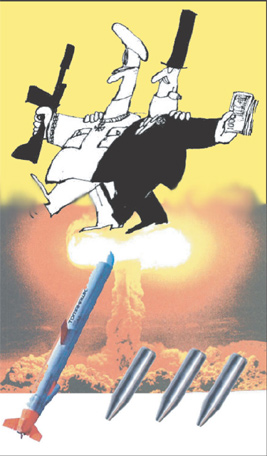 The War Economy: CNN’s Wolf Blitzer Warns About Job Loss If US Stops Arming Saudi Arabia http://www.zerohedge.com/news/2016-09-09/war-economy-cnns-wolf-blitzer-warns-about-job-loss-if-us-stops-arming-saudi-arabia by Tyler Dur Mike Krieger via Liberty Blitzkrieg,
Ladies and gentlemen, it appears the long anticipated moment of peak mainstream media stupidity may have finally arrived.
This is what passes for journalism in America today.
The Intercept reports:
Sen. Rand Paul’s expression of opposition to a $1.1 billion U.S. arms sale to Saudi Arabia — which has been brutally bombing civilian targets in Yemen using U.S.-made weapons for more than a year now — alarmed CNN’s Wolf Blitzer on Thursday afternoon.Blitzer’s concern: That stopping the sale could result in fewer jobs for arms manufacturers.
“So for you this is a moral issue,” he told Paul during the Kentucky Republican’s appearance on CNN. “Because you know, there’s a lot of jobs at stake. Certainly if a lot of these defense contractors stop selling war planes, other sophisticated equipment to Saudi Arabia, there’s gonna be a significant loss of jobs, of revenue here in the United States. That’s secondary from your standpoint?”
Paul stayed on message. “Well not only is it a moral question, its a Constitutional question,” Paul said. “Our founding fathers very directly and specifically did not give the president the power to go to war. They gave it to Congress. So Congress needs to step up and this is what I’m doing.”
Saudi Arabia began bombing Yemen in March 2015, and has since been responsible for the majority of the 10,000 deaths in the war so far. The U.S.-backed bombing coalition has been accused of intentionally targeting civilians, hospitals, factories, markets, schools, and homes. The situation is so bad that the Red Cross has started donating morgue units to Yemeni hospitals.
The Obama administration has sold more weapons to the Saudis than any other administration, pledging more than $115 billion worth of small arms, tanks, helicopters, missiles, and aircraft.
But hey, the Saudis aren’t really that bad, right. No, they’re just one of the most barbaric, inhumane terrorist supporting states on planet earth.
Need some proof?
Here you go:
U.S. Government Reaffirms Total Support for Saudi War Crimes in Yemen
Saudi Arabia Forces the United Nations to Remove it from a List of Child Killers
Record Beheadings and the Mass Arrest of Christians – Is it ISIS? No it’s Saudi Arabia
Saudi Arabia Sentences Journalist to Five Years in Prison for Insulting the Kingdom’s Rulers
German Intelligence Warns – Saudi Arabia to Play “Destabilizing Role” in the Middle East
And yes, I could go on — and on and on and on.
Finally, let’s end with the clip referenced in the article at the top. [on original]
1 This Month
Chernobyl: The Lost Tapes – A good documentary on Chernobyl on SBS available On Demand for the next 3 weeks– https://www.sbs.com.au/ondemand/tv-program/chernobyl-the-lost-tapes/2352741955560

of the week–London Campaign for Nuclear Disarmament

Tell the Ukrainian Government to Drop Prosecution of Peace Activist Yurii Sheliazhenko
To see nuclear-related stories in greater depth and intensity – go to https://nuclearinformation.wordpress.com
-
Archives
- April 2026 (139)
- March 2026 (251)
- February 2026 (268)
- January 2026 (308)
- December 2025 (358)
- November 2025 (359)
- October 2025 (376)
- September 2025 (257)
- August 2025 (319)
- July 2025 (230)
- June 2025 (348)
- May 2025 (261)
-
Categories
- 1
- 1 NUCLEAR ISSUES
- business and costs
- climate change
- culture and arts
- ENERGY
- environment
- health
- history
- indigenous issues
- Legal
- marketing of nuclear
- media
- opposition to nuclear
- PERSONAL STORIES
- politics
- politics international
- Religion and ethics
- safety
- secrets,lies and civil liberties
- spinbuster
- technology
- Uranium
- wastes
- weapons and war
- Women
- 2 WORLD
- ACTION
- AFRICA
- Atrocities
- AUSTRALIA
- Christina's notes
- Christina's themes
- culture and arts
- Events
- Fuk 2022
- Fuk 2023
- Fukushima 2017
- Fukushima 2018
- fukushima 2019
- Fukushima 2020
- Fukushima 2021
- general
- global warming
- Humour (God we need it)
- Nuclear
- RARE EARTHS
- Reference
- resources – print
- Resources -audiovicual
- Weekly Newsletter
- World
- World Nuclear
- YouTube
-
RSS
Entries RSS
Comments RSS
 nuclear-news