Study shows bulk of fuel still in crippled Fukushima No. 2 reactor

TOKYO, July 14, Kyodo
A study on the disaster-hit Fukushima Daiichi nuclear power plant has found that most of the melted fuel in the No. 2 reactor is still present in the reactor core area, sources close to the matter said recently.
According to the study that used a cosmic ray imaging system, around 200 tons of fuel and other melted substances is estimated to have accumulated at the bottom of the pressure vessel, the first time the current location of the fuel has been specified.
The finding is important for devising ways to remove the so-called fuel debris, the most challenging task in decommissioning the Nos. 1 to 3 reactors that suffered meltdowns in the nuclear crisis that began in March 2011.
https://english.kyodonews.jp/news/2016/07/421290.html
Deposition of radiocesium on the river flood plains around Fukushima

The environment in the area around Fukushima Daiichi Nuclear Power Plant has been contaminated by widely deposited significant amount of radioactive materials, which were released to the atmosphere caused by the Fukushima Daiichi Nuclear Power Plant accident due to the Great East Japan Earthquake, which occurred on March 11, 2011. The radiocesium released in the accident mainly affects radiation dose in the environment. Decontamination work in the contaminated area except a mountain forests has been conducted to decrease the radiation dose. However, there are concerns that the redistribution of this radiation due to water discharge will occur due to the resulting transport of radiocesium. In particular, the deposition of soil particles containing radiocesium on the flood plains in the downstream areas of Fukushima’s rivers can potentially increase the local radiation dose. Therefore, it is important to understand the influence of the deposition behavior of radiocesium on the radiation dose.
Investigations of rivers have been performed to enhance the understanding of the mechanisms by which radiocesium is deposited on these flood plains. It was found that the spatial distribution of the radiocesium concentration on the flood plain along the river is heterogeneous with a dependence on the depositional condition and that the number of points with high air dose rates is limited. In detail, the radiocesium concentration and air dose rates in flood channels are higher than those at the edges of the river channels. Based on these heterogeneity and hydrological events, the deposition and transport mechanisms of the radiocesium due to water discharge at rivers were also interpreted, and a conceptual model was constructed.
http://www.sciencedirect.com/science/article/pii/S0265931X16301187

Ultraconservative lobby Nippon Kaigi backs constitution revision

TOKYO — An influential political lobby in Japan will do its utmost to capitalize on Prime Minister Shinzo Abe’s election victory and push for the constitution to be revised to allow a more active military, the group’s chairman said Wednesday.
Abe’s gains in the upper house in last weekend’s election mean his party can cobble together the crucial two-thirds majority in both houses to propose a revision and put it to a referendum, if it gets support from lawmakers in other parties open to the changes.
Tadae Takubo, chairman of Nippon Kaigi, or Japan Conference, said the war-renouncing constitution that makes Japan’s defense “defective” needs to be corrected.
It’s time to grow out of Japan’s “silly” postwar goal of becoming an economic power with lightweight military, and seek to restore Japan with more self-respect, traditional family values and principles under the emperor as head of nation, said Takubo, international politics professor at Kyorin University.
“This is a golden opportunity that has never happened before. If I were in the prime minister’s position, I will go all out to accomplish a revision during the current term,” Takubo said. His organization will provide full support to push forward the drive, he said.
For Abe and his ultra-conservative supporters, like Nippon Kaigi, the 1947 constitution is the legacy of Japan’s defeat in World War II and an imposition of the victor’s world order and values. The charter renounces the use of force in international conflicts and limits Japan’s military to self-defense only, although Japan has a well-equipped modern army, navy and air force that work closely with the United States, its top ally.
Abe’s ruling party proposed revisions to the constitution in 2012 that intended to restore traditions similar to prewar-era family values centered on the emperor, and to put national interest before individuals’ basic human rights in some cases. It was never formally submitted to parliament.
Abe did not make the constitution a focus of the election, but said on Monday he takes Sunday’s victory as a public endorsement for a revision, pledging to launch a parliamentary committee to discuss which articles to change and how.
Founded in 1997, Nippon Kaigi has strived to revise the constitution to restore traditional gender roles, increase imperial worshipping and put public interest before individuals. The group is believed to be behind Abe’s comeback in 2012 and has become increasingly influential.
Their grass-roots movement backed by Shinto shrines and other new religious groups has a growing membership that reportedly includes many of Abe’s Cabinet ministers and hundreds of national and local lawmakers.
The organization holds lectures and other events to spread its views and defends Japan’s wartime atrocities while accusing China and South Korea of lying or exaggerating their suffering. It also believes the U.S. postwar occupation brainwashed Japanese with guilt and that education since the war was self-degrading.
‘Stone coffin’ eyed for decommissioning Fukushima plant: report
The government-funded Nuclear Damage Compensation and Decommissioning Facilitation Corp. (NDF) eyes an option of covering the disaster stricken Fukushima No. 1 Nuclear Power Plant with concrete in the future as in the Chernobyl disaster, it has been learned.
In its first planning report drawn up on July 13, the NDF leaves room for adopting the “sarcophagus (stone coffin) method,” in which nuclear fuel debris that melted in the Fukushima crisis will be confined inside reactor buildings using concrete and other materials.
The NDF points out in the report that it will be difficult to manage such a sarcophagus safely over a long period of time, and emphasizes that it is planning to remove fuel debris from the Fukushima nuclear plant for now. However, the report also says, “It is appropriate to flexibly review the plan in accordance with the conditions inside (nuclear reactors and other parts) that will be revealed later.”
The report also states, “It is necessary to fully consider the uncertainties over passing down responsibilities for a long period of time and concerns over easy postponement from one generation to another.”
The sarcophagus method was adopted at the Chernobyl nuclear complex in the former Soviet Union in the wake of the core meltdowns there in 1986.
http://mainichi.jp/english/articles/20160714/p2a/00m/0na/009000c
Makers of Fukushima reactor not liable: court
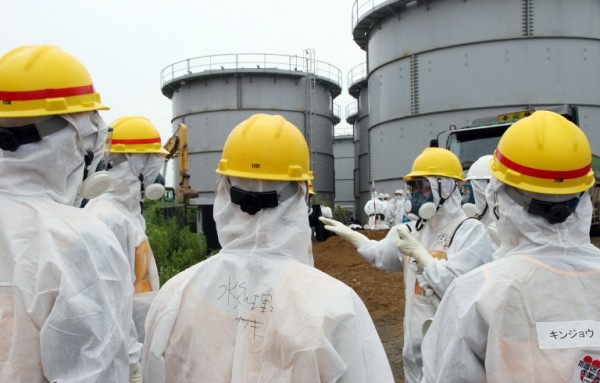
TOKYO – A Japanese court on Wednesday turned down a class-action lawsuit seeking damages from nuclear plant makers Toshiba, Hitachi and GE over the Fukushima meltdown disaster, the plaintiffs, one of the companies and a report said.
About 3,800 claimants in the suit, hailing from Japan and 32 other countries including the United States, Germany and South Korea, had sought largely symbolic compensation from the nuclear power plant manufacturers.
Under Japanese liability law, nuclear plant providers are usually exempt from damage claims in the event of an accident, leaving operators to face legal action.
The plaintiffs’ lawyers, however, had argued that that violated constitutional protections on the pursuit of happy, wholesome and cultured livelihoods.
But the Tokyo District Court ruled that the law “is not unconstitutional”, according to lawyers for the plaintiffs.
“We knew it was difficult to win under the current legal system in Japan, but it’s clearly wrong that nuclear (plant) manufacturers don’t have to bear any responsibility for an accident,” Masao Imaizumi, 73, one of the plaintiffs, told AFP.
“If they are spared responsibility, it could lead to disregard for product quality,” he said, adding that the plaintiffs will appeal.
Toshiba welcomed the decision.
“The company recognises the verdict as an appropriate ruling handed out by the court,” it said in a statement.
Hitachi and GE’s Japan office could not be reached for comment.
Japan’s Jiji Press also reported that the suit was rejected.
The suit — which sought just 100 yen (96 US cents) per claimant — was the first to be brought against nuclear power-plant suppliers over the accident, Akihiro Shima, lead lawyer for the plaintiffs, said previously.
The suit was first filed in January 2014 with just over 1,000 claimants, but more joined and the number nearly quadrupled.
The plaintiffs had alleged that the companies failed to make necessary safety updates to the Fukushima reactors, swamped on 11 March 2011 by a magnitude 9.0 earthquake-sparked tsunami that lead to the worst nuclear accident since Chernobyl in 1986.
Embattled plant operator Tokyo Electric Power is already facing massive lawsuits and compensation costs.
https://www.enca.com/world/makers-of-fukushima-reactor-not-liable-court
Reactor decommissioning plan cites ‘sarcophagus’
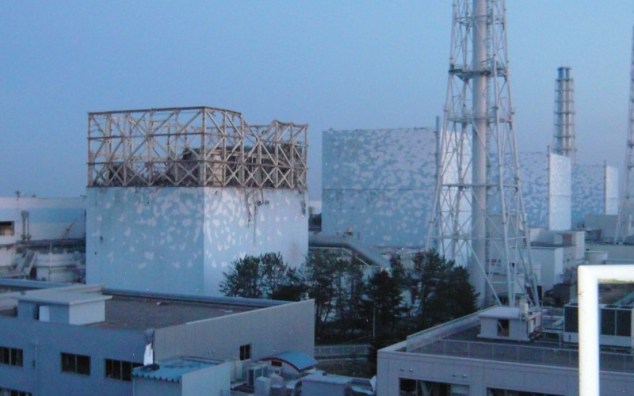
Reactor decommissioning plan cites ‘sarcophagus’
The government body charged with decommissioning the reactors at the Fukushima Daiichi nuclear plant says it remains committed to removing the fuel but sealing off the buildings that house them could be an option.
The Nuclear Damage Compensation and Decommissioning Facilitation Corporation issued its latest report Wednesday on its plan.
It says 2 methods will be used to remove molten fuel depending on the condition of the reactors.
One entails filling the containment vessels with water to shield workers from radiation. The second does not use water.
The new plan also introduces the option of creating a “sarcophagus” to seal off the buildings with the nuclear fuel inside.
This method was used at the Chernobyl nuclear plant in Ukraine.
The plan favors removing the nuclear fuel because of the long-term safety issues involved with a sarcophagus. It urges a flexible review of all available options.
It also notes the importance of addressing long-term public concerns about the plan.
The government and the plant operator, Tokyo Electric Power Company, plan to decide by the middle of next year how to remove the fuel from the reactors. They hope to begin work at one of them by 2021.
http://www3.nhk.or.jp/nhkworld/en/news/20160713_25/
Fukushima mayors react to decommission plan
Reacting to the new plan, the heads of municipalities around the Fukushima Daiichi nuclear plant have urged the government to stick to its promise regarding nuclear waste disposal.
The mayor of the city of Minamisoma, Katsunobu Sakurai, said the government and TEPCO must be made to abide by their initial pledge to remove the fuel from Fukushima Prefecture. Until this is done, he said, the evacuees won’t feel that it’s safe to return home.
He warned against using the word “sarcophagus” lightly. He said its mention only points out the inadequacy of decommissioning technology.
The mayor of the town of Namie, Tamotsu Baba, said a sarcophagus should not be considered because engineers are hard at work figuring out ways to remove the fuel.
He said all they can do is to have faith that the initial pledge will be kept, even if it takes 30 or 40 years to remove the fuel.
The mayor of the town of Okuma, Toshitsuna Watanabe, also urged the government and the utility to stick to their disposal promise.
This week’s nuclear and climate news

Christina Macpherson’s websites & blogs
CLIMATE Record 9 hottest years in a row. Warning to Teresa May on climate threats to Brexit Britain. Democratic Senators naming and blaming the funders of climate science denial. USA media keeps the issue of climate change off the political agenda. Frivolous lawsuits aimed to attack climate scientists. Donald Trump’s real estate empire already suffering from climate change.
NUCLEAR. Things are crook, very crook, for the uranium industry.
UK. Chilcot says Britain shirking its responsibilty to help clean up radioactive destruction in Iraq. British Parliament to vote on renewing Trident nuclear missile system, as Brexit problems loom. Brexit uncertainty adding to anxiety of former supporters of UK’s Hinkley nuclear project. Renewal of Trident nuclear weapons system opposed by British Labour and Scottish National Party. Drigg Nuclear Waste Dump Menaced By Coastal Erosion: Foreign Companies Profit; UK Taxpayer Holds Liability. Britain’s nuclear submarines’ radioactive wastes will NOT be going to Scotland.
USA. Renewables beat nuclear on economics, as Wall Street now finds. “Indian Point” New Documentary Investigates Nuclear Power from New York to Fukushima. President Obama ready to make policy changes to reduce role of nuclear weapons. Republicans trying to roll back the Iran nuclear agreement. Workers on strike at Hanford Nuclear Reservation due to health concerns. Department of Energy not able to meet deadline on demolishing Hanford’s Plutonium Finishing Plant. Connecticut lawmaker seeks justice over “stranded nuclear waste“. Old nuclear waste from Manhattan Project contaminating Niagara County. “Outrageous and Reckless Endangerment of Public Health” Proposed by US EPA: Increased Radiation in Drinking Water after Nuclear Accident. Sodium cooled nuclear reactors are not necessarily safer. Ratepayer ripoff: $19 billion nuclear plant for Virginia. Generous subsidies proposed for Upstate New York nuclear plants.
JAPAN. Again, a Japanese court blocks restart of 2 nuclear reactors. Japan could change pacifist constitution after Shinzo Abe victory. Nuclear power opponent wins governor’s race in South West Japan.
POLAND halts nuclear power plans, looks to renewable energy.
IRAN. Forces in Iran trying to torpedo nuclear deal.
AUSTRALIA. South Australia’s financially risky nuclear waste import scheme.
Again, a Japanese court blocks restart of 2 nuclear reactors

 Japan court again blocks restart of 2 nuclear reactors, Nikkei Asian Review, 13 July 16 OSAKA — Handed another defeat by a Japanese court on Tuesday, Kansai Electric Power likely will not be able to run any of its nuclear power plants for at least six months, a major setback for a utility facing intense competition from industry newcomers.
The Otsu District Court in Shiga Prefecture rejected the company’s objection to an injunction issued in March that suspended operation of the Nos. 3 and 4 reactors at the Takahama nuclear plant in neighboring Fukui Prefecture. The presiding judge was the same as when the injunction was issued.
The Osaka-based company had been banking on the restart of nuclear power stations for an earnings recovery. Its medium-term business plan released in April set a pretax profit target of 300 billion yen ($2.87 billion) on the assumption that most of its nuclear reactors will be back online by fiscal 2025.
Assuming that its earnings would improve by about 10 billion yen a month if the two Takahama reactors went back onstream, Kansai Electric had intended to lower its power rates to compete on a better footing with newcomers expected to enter the market following deregulation in April. But it was forced to scrap its plan to cut rates after the court ordered the two reactors — reactivated in January and February — shut down in March.
Since April, Kansai Electric has lost more than 200,000 customers to Osaka Gasand other power providers. ……..http://asia.nikkei.com/Business/Companies/Japan-court-again-blocks-restart-of-2-nuclear-reactors
Chilcot says Britain shirking its responsibilty to help clean up radioactive destruction in Iraq
 Chilcot: UK refusing to help clean up Iraq after raining down radioactive shells https://www.rt.com/uk/350804-iraq-chilcot-depleted-uranium/#.V4VPdDurb8w.facebook 12 Jul, 2016 Britain has no intention of cleaning up its deadly radioactive legacy in Iraq or even monitoring the terrifying impact depleted uranium (DU) shells will have on the population in the future, it has been claimed.
Writing in the Ecologist on Tuesday, Doug Weir, who is coordinator of the International Coalition to Ban Uranium Weapons (ICBUW), says that hidden within the Chilcot report is a previously classified military document setting out the UK’s rejection of any duty to cleanse Iraq of DU of unexploded ordnance (UXO).
In it, the clearance of unexploded ordnance and DU is considered and the Ministry of Defence [MoD] argues that it has: “… no long-term legal responsibility to clean up DU from Iraq” Weir writes.
“Instead it proposes that surface lying fragments of DU only be removed on ‘an opportunity basis’ – i.e. if they come across them in the course of other operations.”
This indicates, according to Weir, that the UK has effectively swerved any obligation to clear up after itself in Iraq.
“In other words, the UK’s stance is that chemically toxic and radioactive DU ‘ash’ from spent munitions is strictly the problem of the country in which the munitions were used – in this case Iraq – and that the UK, which fired the DU shells, has no formal responsibility of cleaning up the mess.”
DU ammunition is used in only two UK weapons systems – the Royal Navy’s PHALANX Close-In Weapon System and in the Charm 3 ammunition fired by the Challenger 2 main battle tank.
However, the route to shirking responsibility may not be as easy as the UK government seems to hope. In October, the UN will meet to debate a sixth resolution on DU weapons. It’s a move which will give succor to the government of Iraq, which in 2014 called for the international community to help clean up DU.
Weir remains hopeful that the UN meeting may be able to encourage governments to take responsibility for the use and fallout of the weapons.
“When the United Nations last discussed DU two years ago, 150 governments recognised the need for states to provide assistance to countries like Iraq,” he wrote.
“This October, our Coalition will add our voice to those of the states affected by DU weapons in calling for an end to the use of DU weapons and for the users to finally accept responsibility for their legacy,” he added.
President Obama ready to make policy changes to reduce role of nuclear weapons
 Obama plans major nuclear policy changes in his final months, WP By Josh Rogin July 10 The Obama administration is determined to use its final six months in office to take a series of executive actions to advance the nuclear [disarmament] agenda the president has advocated since his college days. It’s part of Obama’s late push to polish a foreign policy legacy that is plagued by challenges on several other fronts.
President Obama announced his drive to reduce the role of nuclear weapons and eventually rid the world of them in his first major foreign policy speech, in Prague in 2009. In his first years, he achieved some successes, such as the New START treaty with Russia, the Nuclear Security Summits and the controversial Iran deal. But progress waned in the past year as more pressing crises commanded the White House’s attention. Now, the president is considering using the freedom afforded a departing administration to cross off several remaining items on his nuclear wish list.
In recent weeks, the national security Cabinet members known as the Principals Committee held two meetings to review options for executive actions on nuclear policy. Many of the options on the table are controversial, but by design none of them require formal congressional approval. No final decisions have been made, but Obama is expected to weigh in personally soon.
“As we enter the homestretch of the Obama presidency, it’s worth remembering that he came into office with a personal commitment to pursuing diplomacy and arms control,” deputy national security adviserBen Rhodes told the Arms Control Association on June 6. “I can promise you today that President Obama is continuing to review a number of ways he can advance the Prague agenda over the course of the next seven months. Put simply, our work is not finished on these issues.”
Several U.S. officials briefed on the options told me they include declaring a “no first use” policy for the United States’ nuclear arsenal, which would be a landmark change in the country’s nuclear posture. Another option under consideration is seeking a U.N. Security Council resolution affirming a ban on the testing of nuclear weapons. This would be a way to enshrine the United States’ pledge not to test without having to seek unlikely Senate ratification of the Comprehensive Test Ban Treaty.
The administration is also considering offering Russia a five-year extension of the New START treaty’s limits on deployed nuclear weapons, even though those limits don’t expire until 2021. This way, Obama could ensure that the next administration doesn’t let the treaty lapse. Some administration officials want to cancel or delay development of a new nuclear cruise missile, called the Long-Range Stand-Off weapon, because it is designed for a limited nuclear strike, a capability Obama doesn’t believe the United States needs. Some officials want to take most deployed nukes off of “hair trigger” alert.
The administration also wants to cut back long-term plans for modernizing the nation’s nuclear arsenal, which the Congressional Budget Office reports will cost about $350 billion over the next decade. Obama may establish a blue-ribbon panel of experts to examine the long-term budget for these efforts and find ways to scale it back…….. https://www.washingtonpost.com/opinions/global-opinions/obama-plans-major-nuclear-policy-changes-in-his-final-months/2016/07/10/fef3d5ca-4521-11e6-88d0-6adee48be8bc_story.html
Poland halts nuclear power plans, looks to renewable energy
 Polish nuclear capacity will not be built before 2030: PGE -Adam Easton, newsdesk@platts.com
–Edited by Jonathan Loades-Carter, jonathan.carter@spglobal.com Warsaw (Platts)–12 Jul 2016
* PGE may modify nuclear investment
Poland’s largest utility Polska Grupa Energetyczna (PGE) is not giving up its plans to build the country’s first nuclear reactors but the investment may be modified and will not be realized until after 2030, PGE’s chief executive Henryk Baranowski said Tuesday……..
the company was looking at other means of financing the nuclear project after the PiS government, which took office last November, rejected contracts for difference.
“What is certain is that nuclear power cannot be carried out today under a purely market formula. Developing the optimal financing method will require in-depth dialogue. The result will have to be a compromise between the demands of the investors and the needs of the consumers,” he said……
In terms of renewable energy Baranowski said PGE was interested in developing offshore wind in the Baltic Sea.
“An interesting and least talked about technology today is offshore wind. We will continue to prepare to build such capacity in the Baltic despite the high costs. Now we’re calculating the profitability of such investments and we’re analyzing possible financing models,” he said…….http://www.platts.com/latest-news/electric-power/warsaw/polish-nuclear-capacity-will-not-be-built-before-26489875
Workers on strike at Hanford Nuclear Reservation due to health concerns
 Work stoppage continues at Hanford Nuclear Reservation http://q13fox.com/2016/07/12/work-stoppage-continues-at-hanford-nuclear-reservation/ JULY 12, 2016, BY ASSOCIATED PRESS SPOKANE, Wash. (AP) — A rare work stoppage continues by some Hanford Nuclear Reservation workers who contend that radioactive wastes left from the production of nuclear weapons are making them sick.
Union president Dave Molnaa, who ordered the work stoppage, said it will continue until all employees are provided with bottled air when working around all of the underground nuclear waste storage tanks on the Hanford site.
Workers have contended for years that chemical vapors escaping from the tanks are making them sick.
The steel tanks, some dating back to World War II, contain wastes created by the production of plutonium for nuclear weapons.
The Hanford Atomic Metal Trades Council, a coalition of 15 unions that represent workers on the site near Richland, issued the “stop work” order on Monday morning.
Connecticut lawmaker seeks justice over “stranded nuclear waste”

 Connecticut lawmaker pushes nuclear waste bill http://wtnh.com/2016/07/12/connecticut-lawmaker-pushes-nuclear-waste-bill/ By Keith Kountz July 12, 2016 New Haven, Conn. (WTNH)– Connecticut congressman Joe Courtney is part of a bi-partisan group of house lawmakers to introduce a bill to help communities that are struggling with the cost of storing what’s known as ‘stranded nuclear waste’.
The legislation is important to people in Courtney’s district, which includes the former home of the Connecticut Yankee nuclear power plant.
The Stranded Nuclear Waste Accountability act of 2016 would help communities cover any losses they’ve racked up associated with the storage of nuclear waste.
In a statement, Courtney says in part that ‘we cannot allow small communities and municipalities across this country to fall into financial distress because of the congressional gridlock which is holding up the establishment of a federal nuclear waste storage facility’.
Democratic Senators naming and blaming the funders of climate science denial
 US Senators detail a climate science “web of denial” but the impacts go well beyond their borders
Australians have been both helpers and victims of the fossil fuelled web of climate science denial being detailed in the U.S Senate, Guardian, Graham Readfearn, 12 July 16, By the middle of this week, about 20 Democratic Senators in the US will have stood up before their congress to talk about the fossil fuelled machinery of climate science denial.
The Senators are naming the fossil fuel funders, describing the machinery and calling out the characters that make up a “web of denial”.
“The web is so big, because it has so much to protect,” said the Rhode Island Senator Sheldon Whitehouse, who bookended the first evening of speeches.
The senate heard how fossil fuel companies such as ExxonMobil, Peabody Energy and the billionaire oil brothers Charles and David Koch had funnelled millions into groups that had spread doubt about the causes of climate change.
In a resolution also being tabled, the upper house will be asked to acknowledge that the fossil fuel industry had done just what the tobacco industry had done – “developed a sophisticated and deceitful campaign that funded think tanks and front groups, and paid public relations firms to deny, counter, and obfuscate peer-reviewed research” and “used that misinformation campaign to mislead the public and cast doubt in order to protect their financial interest.”
Groups like the Competitive Enterprise Institute (CEI), the Heartland Institute, the Committee for a Constructive Tomorrow and many, many others are under scrutiny for the way they have attacked the science linking fossil fuel burning to climate change while accepting cash from fossil fuel interests.
Whitehouse also took time to describe the large body of work in peer-reviewed journals that have examined the funding, the networks and the tactics of organised climate science denial. Climate science denial is itself a live area of academic research.
But the impact of climate science denial – the decades of policy delays, the confusion among the general public and the deliberate politicization of the science – does not stop at the US border. Continue reading
Record 9 hottest years in a row
 We just broke the record for hottest year, nine straight times http://www.skepticalscience.com/broke-hottest-year-record-9-straight-times.html 11 July 2016 by dana1981
2014 and 2015 each set the record for hottest calendar year since we began measuringsurface temperatures over 150 years ago, and 2016 is almost certain to break the record once again. It will be without precedent: the first time that we’ve seen three consecutive record-breaking hot years.
But it’s just happenstance that the calendar year begins in January, and so it’s also informative to compare all yearlong periods. In doing so, it becomes clear that we’re living in astonishingly hot times.
June 2015 through May 2016 was the hottest 12-month period on record. That was also true of May 2015 through April 2016, and the 12 months ending in March 2016. In fact, it’s true for every 12 months going all the way back to the period ending in September 2015, according to global surface temperature data compiled by Kevin Cowtan and Robert Way. We just set the record for hottest year in each of the past 9 months.
These record temperatures have been assisted by a very strong El Niño event, which brought warm water to the ocean surface, temporarily warming global surface temperatures. But today’s temperatures are only record-setting because the El Niño was superimposed on top of human-caused global warming.
For comparison, 1997–1998 saw a very similar monster El Niño event. And similarly, the 12-month hottest temperature record was set in each month from October 1997 through August 1998. That was likewise a case of El Niño and global warming teaming up to shatter previous temperature records.
The difference is that while September 1997–August 1998 was the hottest 12-month period on record at the time; it’s now in 60th place. It’s been surpassed by yearlong periods in 2005, 2006, 2007, 2009, 2010, 2014, 2015, and 2016. Many of those years weren’t even aided by El Niño events; unassisted global warming made them hotter than 1998.
Global surface temperatures are now more than 0.3°C hotter than they were in 1997–1998. That’s a remarkable rise over just 18 years, in comparison to the 1°C the Earth’s average surface temperatures have risen since the Industrial Revolution began.
This has all happened during a time when ‘no significant warming in 18 years’ has been one of the rallying cries of climate denial. In reality, when we compare apples to apples – El Niño years to El Niño years – we’ve seen more than 0.3°C global surface warming over the past 18 years, which is in line with climate model predictions. ‘Climate models are wrong’ has been another now-debunked climate denial rallying cry.
Now that the past year’s El Niño event is over, the streak of record-breaking yearlong periods appears to have ended. Nevertheless, 2016 remains on track to break that record for the hottest calendar year, for an unprecedented third consecutive year, following record years in 2010 and 2005 as well.
With the Earth warming dangerously rapidly, at a rate 20–50 times faster than the fastest rate of natural global warming, one can’t help but wonder when the influence of the small minority of disproportionately powerful climate denial groups will wane.
195 countries pledged to curb their carbon pollution in the tremendously successful Parisclimate negotiations, but climate denial is still predominant in one of America’s two political parties, and may be gaining foothold in other regions of the Anglosphere like the UK and Australia. Fortunately, many other countries like China, India, and Canada seem to be moving in the right direction with their climate and energy policies.
1 This Month

of the week–London Campaign for Nuclear Disarmament

Tell the Ukrainian Government to Drop Prosecution of Peace Activist Yurii Sheliazhenko
To see nuclear-related stories in greater depth and intensity – go to https://nuclearinformation.wordpress.com
-
Archives
- April 2026 (114)
- March 2026 (251)
- February 2026 (268)
- January 2026 (308)
- December 2025 (358)
- November 2025 (359)
- October 2025 (376)
- September 2025 (257)
- August 2025 (319)
- July 2025 (230)
- June 2025 (348)
- May 2025 (261)
-
Categories
- 1
- 1 NUCLEAR ISSUES
- business and costs
- climate change
- culture and arts
- ENERGY
- environment
- health
- history
- indigenous issues
- Legal
- marketing of nuclear
- media
- opposition to nuclear
- PERSONAL STORIES
- politics
- politics international
- Religion and ethics
- safety
- secrets,lies and civil liberties
- spinbuster
- technology
- Uranium
- wastes
- weapons and war
- Women
- 2 WORLD
- ACTION
- AFRICA
- Atrocities
- AUSTRALIA
- Christina's notes
- Christina's themes
- culture and arts
- Events
- Fuk 2022
- Fuk 2023
- Fukushima 2017
- Fukushima 2018
- fukushima 2019
- Fukushima 2020
- Fukushima 2021
- general
- global warming
- Humour (God we need it)
- Nuclear
- RARE EARTHS
- Reference
- resources – print
- Resources -audiovicual
- Weekly Newsletter
- World
- World Nuclear
- YouTube
-
RSS
Entries RSS
Comments RSS
 nuclear-news