Assessment of residual doses to population after decontamination in Fukushima Prefecture
“….Fukushima Prefecture. Our probabilistic model considers the variabilities in behavioral patterns and Cs-137 surface-activity levels.
Five years after the initial contamination, the 95th percentiles of indoor workers and pensioners in 53 of the 59 municipalities were found to receive annual effective doses of below 1 mSv/y (0.026–0.73 mSv/y).
However, for outdoor workers in 25 municipalities, the annual doses were over 1 mSv/y (1.0–35 mSv/y).
Therefore, the guidance value is effective for indoor workers and pensioners; to determine whether additional countermeasures for outdoor workers should be implemented, a detailed assessment that uses more realistic assumptions is required……”
http://www.sciencedirect.com/science/article/pii/S0265931X16302247
5.0-magnitude quake hits eastern Japan; Tokyo checks nuclear power station
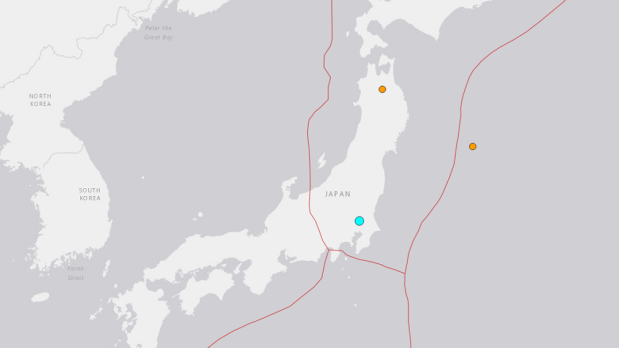
An earthquake with a magnitude of 5.0 struck eastern Japan on Sunday(Jul 17)
TOKYO: An earthquake with a magnitude of 5.0 struck eastern Japan on Sunday(Jul 17), Japan’s Meteorological Agency and the US Geological Survey (USGS) said, rattling buildings in Tokyo.
The USGS put the epicentre of the quake 44km northwest of Tokyo at a depth of about 44km. There were no were immediate reports of damage.
Broadcaster NHK reported that the Tokai No. 2 nuclear power station, which has been shut since 2011, was checked for damage after the quake but none was found.
http://www.channelnewsasia.com/news/asiapacific/tokyo-halts-nuclear-power/2963558.html
July 17 Enegy News

World:
¶ In 2011, South Korea’s Gapa Island was selected for an energy self-sufficiency trial project. A total of 14.3 billion won ($12.49 million) was invested in the project. Two 250-kW wind turbines were installed, along with 174 kW of solar panels, and storage. The project saves a lot of money, but there is need for more storage. [The Hankyoreh]
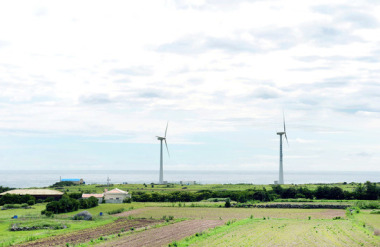 Wind turbines on Gapa Island.
¶ Japanese utility TEPCO, whose nuclear plant in Fukushima suffered a meltdown after the 2011 earthquake and tsunami, has proposed the installation of a 1-MW power plant using a solar-diesel mix in Virac, the capital of the Philippine province of Catanduanes. Funding is sourced through a grant-in-aid program. [Catanduanes Tribune]
¶ By 2050, China hopes to lead efforts to build a $50 trillion global wind and solar power grid that would completely change how the world is powered. China hopes to…
View original post 509 more words
Deceiving a jury about nuclear radiation – Greg Ward, Chad Jacobi, Nigel McBride, Jason Kuchel, Michael Penniment

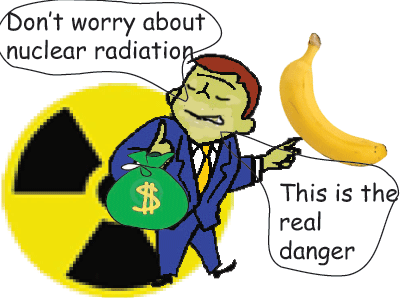 Bananas, brazil nuts and some other foods contain radioactive potassium-40 — but in extremely low doses. Potassium-40 in bananas has a specific activity of 71 ten millionths of a curie per gram. Compare that to the 88 curies per gram for Cesium-137. This is like comparing a stick of dynamite to an atomic bomb. Our bodies manage the ingested Potassium 40, so that after eating bananas, the excess is quickly excreted and the body’s Potassium-40 level remains unchanged.
The radioactive isotopes that come from nuclear fission (such as strontium -90, cesium -137 and iodine 131) were unknown in nature before atomic fission: our bodies are not adapted to them. And as well as being far more radioactive that Potassium -40, they can accumulate in the body.
I had hoped for something sensible to come out of these Citizens’ Juries. That doesn’t look like happening if the juries continue to be fed this kind of nonsense.
Chocolates, bananas, ionising radiation…
View original post 1,548 more words
Old Underground Oil Tank Leaking Under Fermi Nuclear Reactor Switchyard

Shouldn’t they have looked before they built this? Does it date from the earlier Fermi reactor?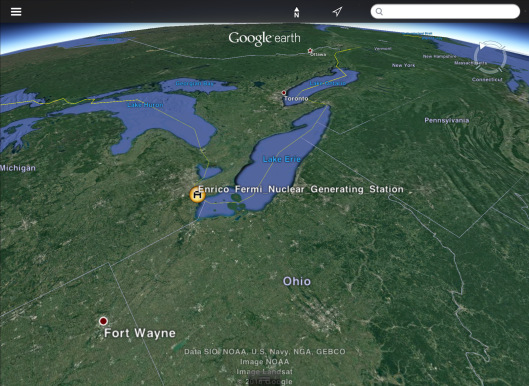
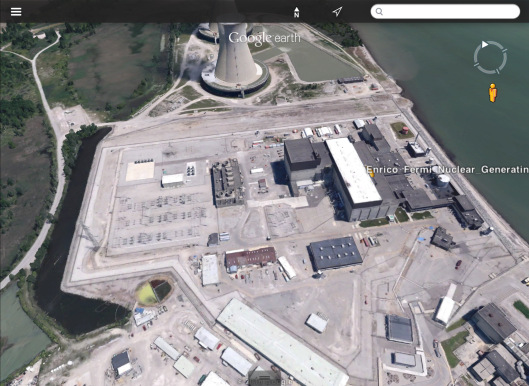
Location exported from: https://en.wikipedia.org/wiki/Enrico_Fermi_Nuclear_Generating_Station
“Power Reactor
Event Number: 52085
Facility: FERMI
Region: 3 State: MI
Unit: [2] [ ] [ ]
RX Type: [2] GE-4
NRC Notified By: BRETT JEBBIA
HQ OPS Officer: DONG HWA PARK
Notification Date: 07/14/2016
Notification Time: 13:01 [ET]
Event Date: 07/14/2016
Event Time: 09:15 [EDT]
Last Update Date: 07/14/2016
Emergency Class: NON EMERGENCY
10 CFR Section:
50.72(b)(2)(xi) – OFFSITE NOTIFICATION
Person (Organization):
MICHAEL KUNOWSKI (R3DO)
OFFSITE NOTIFICATION OF GOVERNMENT AGENCIES OF AN OIL SPILL TO THE ENVIRONMENT
“At 0915 EDT on July 14, 2016, Fermi 2 Environmental Engineering determined that a notification to the State of Michigan Department of Licensing and Regulatory Affairs, Bureau of Fire Services, Storage Tank Division is required regarding discovery of a leaking underground fuel oil storage tank. The underground fuel oil storage tank was unearthed while…
View original post 157 more words
Fukushima System Failure Case Study ( NASA )
“the NAIIC concluded that “the disaster was man-made and the result of collusion between government, the regulators and TEPCO, and a lack of governance by said parties,” citing that the organizational and regulatory systems supported faulty rationales for decisions and actions. Regulators served TEPCO’s business interests through tailored regulation and weak enforcement.“(NASA)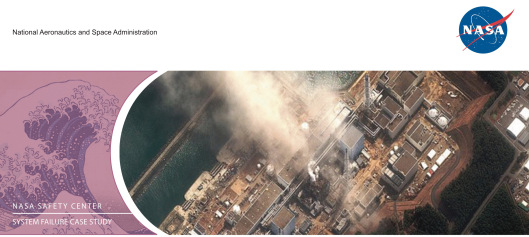
NASA Failure Studies [Comments added in brackets]:
“October 2015 Volume 8 Issue 7
PROXIMATE CAUSE
• Loss of electricity and backup power left the Fukushima complex crippled and unable to adequately cool the reactors
UNDERLYING ISSUES
• Disregard of Regulations
• Poor Safety History
• Lack of Response to Natural Disaster Concerns
AFTERMATH
• Recommendation pertaining to the creation of a permanent committee to deal with issues regarding nuclear power in order to supervise regulators and provide security to the public.
The Great Wave of Reform The Prophetic Fallacy of the Fukushima Daiichi Meltdown
View original post 3,229 more words
Some restricted zones to be lifted near Fukushima nuclear plant
Soft propaganda from the Asahi Shimbun, supporting the Government lifting of the evacuation order in some of the restricted zones, encouraging people to return into the evacuated zones.
Saying “In some of the areas, however, radioactive contaminants have been washed away by rain or blown away by wind. Radiation from those substances has also dissipated naturally.”
Conveniently omitting to mention, that in many decontaminated places, radiation soon returns to pre-decontamination level, thanks to the accumulated radionuclides of the mountain forests (80% of Fukushima prefecture) always ruisseling down with the rain or carried everywhere by the wind, not mentioning also that something in Fukushima Daiichi still fissioning, releasing radionuclides loaded gassings into the environment.
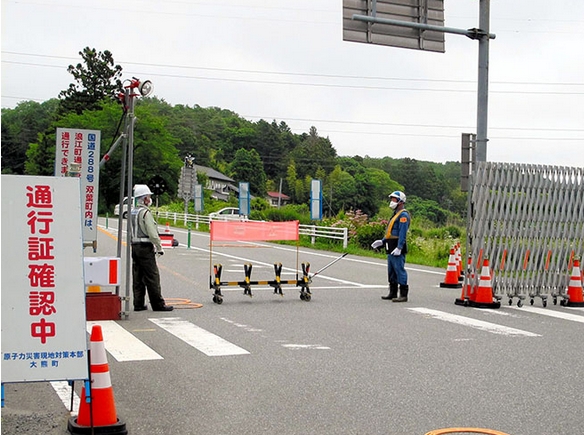
A gate is set up on a national road in Okuma, Fukushima Prefecture, restricting entrance to “difficult-to-return zones.” Permits from the central government are required to enter the areas.
For the first time since the 2011 nuclear disaster in Fukushima Prefecture, the government will lift the designation of some “difficult-to-return zones” around the crippled nuclear plant.
The rescinding is expected to be done gradually from around 2021. By that time, the government plans to undertake intensive decontamination work in central districts of municipalities, where residents will likely return, and districts along main roads.
The “difficult-to-return zones,” which cover a total of 337 square kilometers, are areas where the radiation level exceeded 50 millisieverts per year after the accident at the Fukushima No. 1 nuclear plant. Those areas are off-limits, in principle.
In some of the areas, however, radioactive contaminants have been washed away by rain or blown away by wind. Radiation from those substances has also dissipated naturally.
In front of the Environmental Radioactivity Monitoring Center of Fukushima in the central district of Okuma town, the radiation level is now about 9 millisieverts per year, about one-fifth the level of five years ago.
According to the policies of the government and the ruling parties, if radiation levels are reduced to 20 millisieverts or lower in some areas due to decontamination work, people are allowed to live there.
Of the areas, those where residents or workers for decommissioning of crippled nuclear reactors are expected to live will be subject to intensive decontamination work along with areas on both sides of main roads.
The government and the ruling parties will discuss the lifting of “difficult-to-return zones” with seven municipalities, including Okuma, and will make the official decision in August.
However, even if the designation is lifted, it is uncertain if residents will return to their homes.
According to the annual survey conducted by the Reconstruction Agency on evacuees, only about 10 percent of households evacuating from four municipalities around the nuclear plant are hoping to return home.
Before the nuclear crisis occurred, about 24,000 people of 9,000 households were living in areas that are currently designated as “difficult-to-return zones.”
Japan Reverts to Fascism
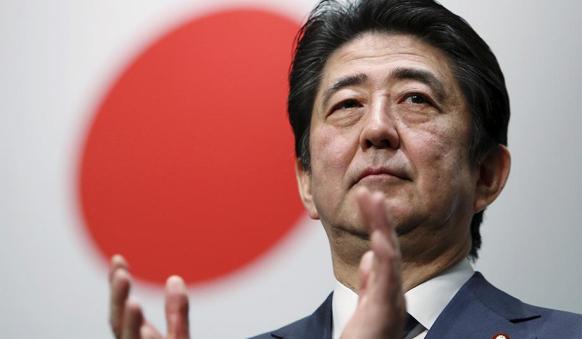
http://www.nationalreview.com/article/437950/japans-new-fascism
State minister rules out sarcophagus option
Japan’s state minister for industry has ruled out the option of sealing off disabled reactors at the Fukushima Daiichi nuclear plant with a Chernobyl-style sarcophagus.
Yosuke Takagi met Fukushima Governor Masao Uchibori in Tokyo on Friday.
Uchibori said he was shocked to hear the word “sarcophagus” and called the option unacceptable.
Two days earlier, a government body charged with decommissioning the plant operated by Tokyo Electric Power Company mentioned the sarcophagus method for the first time.
The body said it remained committed to removing fuel debris from the reactors that suffered meltdowns in the March 2011 accident. But it presented a technical report that left room for entombing the reactors in a massive metal and concrete structure.
Responding to Uchibori, Takagi said the government has no intention of using such an option, and that completing the decommissioning process is the top priority.
Takagi said the government’s policy is to stand by the people of Fukushima, and that his ministry has told the decommissioning body to rewrite its technical report.
http://www3.nhk.or.jp/nhkworld/en/news/20160715_27/
Radioactive Forest
July 9, 2016
The Fukushima nuclear accident in 2011 turned the surrounding towns into a desolate land, making the area into a “radioactive forest”. Without human presence, the land is roamed by wildlife like civets, macaques and wild boars. A project is underway to study the deserted areas by attaching a camera to wild boars to record the conditions of the former farmlands. 5 years after the disaster, we take a close look at how radiation has affected the wildlife, and what it entails for us humans.
Preventing Recriticality in Fuel Debris at Fukushima Daiichi Nuclear Power Station
This video released on July 16, 2016 by Tepco intends to explain the conditions of the fuel retained in the reactors of Units 1-3 at Fukushima Daiichi Nuclear Power Station, and TEPCO’s measures to prevent recriticality- return to a point at which a nuclear reaction becomes self-sustaining- in the fuel debris there.
Kagoshima’s new governor vows to halt Sendai nuclear plant for safety checks
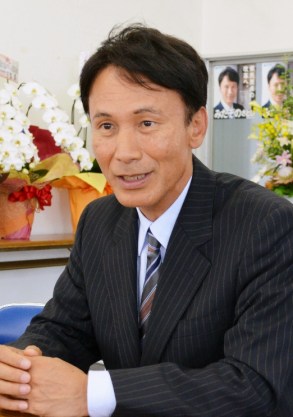
KAGOSHIMA – Incoming Kagoshima Gov. Satoshi Mitazono says he plans to ask Kyushu Electric Power Co. to suspend operation of the Sendai nuclear power plant for safety checks.
In an interview on Wednesday, Mitazono said he will make the request to the utility at a yet to be decided date to examine the effects of powerful earthquakes that hit nearby Kumamoto and Oita prefectures in April.
The former TV commentator was elected Sunday as governor of the only prefecture in Japan with an operating nuclear power plant.
During campaigning, Mitazono pledged to halt its operation.
“I will require Kyushu Electric to temporarily suspend the operation” for a survey of nearby faults and a review of evacuation plans to ensure safety, he said.
“There are many citizens in this prefecture concerned about the nuclear power plant operating after the quakes in Kumamoto,” he said.
Prefectural governors are not authorized to stop the operation of a nuclear reactor, but utilities require local consent to restart them.
Backed by an anti-nuclear camp, Mitazono defeated incumbent Yuichiro Ito, who allowed two reactors at the Sendai complex to be reactivated last year.
Iodine jelly to be handed out to infants living within 30 km of nuclear plants
As a reminder:
A fallout, is the residual radioactive material propelled into the upper atmosphere following a nuclear reaction conducted in an unshielded facility, so called because it “falls out” of the sky after the explosion and the shock wave have passed. It commonly refers to the radioactive dust which can also originate from a damaged nuclear plant. Fallout may take the form of black rain (rain darkened by particulates).
This radioactive dust, consisting of material either directly vaporized by a nuclear blast or charged by exposure, is a highly dangerous kind of radioactive contamination.
Some radiation taints large amounts of land and drinking water causing formal mutations throughout animal and human life.
Iodine tablets only protect the thyroid gland from the Iodine 131, it does not protect anyone from the other occuring fallout radionuclides: 91Sr, 92Sr, 95Zr, 99Mo, 106Ru, 131Sb, 32Te, 134Te, 137Cs, 140Ba, 141La, 144C etc. Iodine 131 has also a very short half-life, 8 days, meaning a full life of 80 to 140 days, whereas most of the other fallout radionuclides have a much longer life span. By example Cesium 134 has a half life of 2 years, a full life of 20 to 30 years, Strontium 90 a half life of 28,8 years, a full life of 288 to 432 years, Cesium 137 a half life of 30 years, a full life of 300 to 450 years.
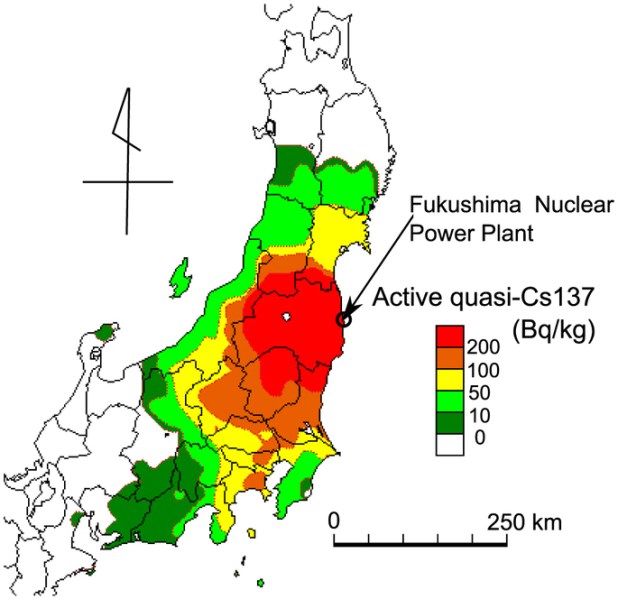
Another thing, even if the population with the Fukushima catastrophe was only evacuated within a 30km radius, the Fukushima March plume has spread heavily within a 90km radius and less heavily up to a 250km radius.
Iodine jelly to be handed out to infants living within 30 km of nuclear plants
The Cabinet Office said it will soon start distributing iodine jelly to infants living within 30 km of nuclear power plants in a bid to protect their thyroids from possible radiation exposure in the event of a nuclear disaster.
According to the office, about 110,000 infants qualify for the iodine jellies.
There are 21 prefectures where the 30-km radius applies. In addition, infants living within three other prefectures — Kanagawa, Osaka and Okayama — which have nuclear fuel processing facilities are also part of the initiative.
Some local governments have been distributing iodine tablets to all residents for over three years, including in a tablet form for infants that would have to be crushed and mixed with syrup in the event of an accident. But to date this had not been in an iodine jelly form.
The local governments will receive about 300,000 packages, starting as early as this fall, which have a shelf life of three years, the Cabinet Office said.
There are two types of iodine jelly: one for babies under 1 month old and another for those over 1 month and up to 3 years.
Taking the jelly or tablets is supposed to stop the thyroid glands from absorbing iodine contained in radiation in the event of a nuclear disaster, as iodine tends to accumulate in the thyroid.
18 July British Parliament to vote on renewal of Trident nuclear missile system
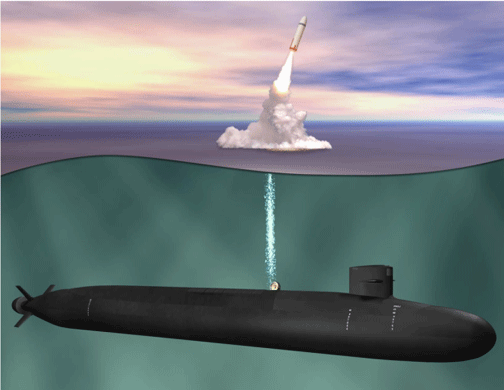
 British MPs to vote on renewing nuclear deterrent on July 18 MENAFN – Muscat Daily – 13/07/2016 Warsaw– Britain’s parliament will vote this month on renewing the Trident nuclear weapons programme, Prime Minister David Cameron said Saturday as he sought to reassure NATO allies alarmed by Brexit.Cameron’s announcement at a NATO summit in Warsaw comes as the alliance grapples with the implications for its unity after key member Britain shocked the world by voting to leave the European Union.Conservative leader Cameron is pushing through the vote on the A20 billion (23 billion euro, 25 billion) plan to maintain the submarine-based system before he steps down in September in the wake of the EU result.”Today I can announce that we will hold a parliamentary vote on the 18th of July to confirm (lawmakers’) support for the renewal of a full fleet of four nuclear submarines capable of providing around-the-clock cover,” Cameron told a press conference at what will be his final NATO summit after six years in power……
Illegal to use Trident nuclear missile, so it should be phased out
 Using Trident would be illegal, so let’s phase it out https://www.theguardian.com/commentisfree/2016/jul/15/trident-illegal-nuclear-britain-arsenal Geoffrey Robertson, 15 July 16
Nuclear doom is nearer than most of us believe, experts warn. Britain must set a moral lead by becoming the first of the ‘big five’ powers to reduce its arsenal The most portentous decision for every new prime minister is what to write in the secret “letter of last resort” to Trident submarine commanders telling them what to do with their nuclear missiles if the British government is wiped out. In Monday’s debate on the renewal of Trident, Theresa May should tell parliament what life-or-death decision she has made in her letters of last resort.
It is said that Margaret Thatcher ordered our nukes, trained on Moscow, to be fired so as to cause maximum destruction to the enemy – ie to its civilians. That order, even for a nuclear “second strike”, would today be illegal.
It is ironic that although Chilcot produced so much condemnation of Blair for joining an unlawful war, MPs are now being asked to vote for a weapons system that cannot be used without committing a crime against humanity. This was defined in 1998 by the Rome Statute, which set up the international criminal court, as “a systematic attack directed against a civilian population, resulting in extermination or torture, or an inhumane act intentionally causing great suffering”.
The same statute additionally makes it a war crime to intentionally launch an attack in the knowledge that it would cause incidental loss of civilian life or severe damage to the natural environment, out of proportion to military advantage.
Trident’s 200 thermonuclear bombs, each 10 times more powerful than those that struck Hiroshima and Nagasaki, are illegal because they cannot discriminate between military targets and hospitals, churches and schools; because of their capacity to cause untold human suffering for generations to come; and because their consequences (eg ionising radiation, which tortures victims and lingers for half a century) are beyond the control or knowledge of the attacker, who cannot judge the proportionality of their use.
As the international court of justice put it, back in 1996: “The destructive power of nuclear weapons cannot be contained in space or time. They have the potential to destroy all civilisation and the entire ecosystem of the planet.”
So why is our law-abiding government spending tens of billions on a weapons system that cannot lawfully be used?
First, because its advisers wrongly think that nuclear weapons are legal in certain circumstances. Back in that 1996 case, the UK argued that it could lawfully drop “a low-yield nuclear weapon against warships on the high seas or troops in sparsely populated areas”.
This scenario has now been shown up as fantastical: “first use” in these circumstances by the UK would trigger a nuclear reprisal with inevitable damage to the atmosphere, the oceans and the “sparsely populated” area (which would henceforth be entirely unpopulated). In any event, Trident’s weapon-bays will not carry “low-yield” bombs, and if they did the result would be better achieved by conventional weapons, making nuclear deployment unnecessary and disproportionate.
The world court ruled that the threat or use of nuclear weapons would “generally” be contrary to war law but might be lawful “in extreme circumstances of self-defence, in which the very survival of a state would be at stake”. This was a time-warped view of war law in 1996 that is not tenable today. The court, to be fair, predicted as much, saying that it expected international law to “develop” towards a total ban on the use of the bomb. It soon did, with the Rome Statute and subsequent development of the principle that a state has no right to preserve itself at the expense of damage to other states and to the rights to life of millions of citizens.
It is absurd to suggest that it would have been lawful for Hitler, his back to the bunker wall, to start a nuclear Götterdämmerung to save the Nazi state (Nuremberg decided it was not lawful for him even to fire doodlebugs). Given what we now know about the uncontrollable and devastating propensities of modern nuclear weapons, it is unlawful to fire them at all.
There is a further legal reason for allowing Trident to wear out. It is Article VI of the nuclear proliferation treaty (NPT), by which parties undertake to proceed in good faith to “general and complete” nuclear disarmament.
The world court’s 1996 ruling decided that this imposed not a “mere” obligation but a binding legal obligation on existing nuclear states to reduce the number of their bombs gradually, to zero. It is contrary to the spirit of article VI to upgrade rather than downgrade the fleet.
A decision to phase out Trident would help Britain recover some of the clout it has lost through Brexit. It would show moral leadership, and shame other nuclear powers that have failed to live up to their NPT obligations (especially the US; President Obama’s Nobel prize was prematurely awarded in part for envisaging “a world without nuclear weapons”).
Moral leadership from a nuclear-weapons state is urgently needed. The latest US defence budget allocates $1tn for future modernisation of its nukes and it has acquired new sites for them, in Poland and Romania. President Putin has promised in return a new generation of nuclear-tipped intercontinental ballistic missiles. The American most knowledgeable on the subject – Bill Clinton’s defence secretary William J Perry – has just published a book warning that “nuclear doom” is closer today than it ever was during the cold war.
Although possession of nuclear weapons is not per se unlawful, the UK is under a duty to reduce its arsenal: the vice of refurbishing Trident is that it encourages other states to do the same, and remains a constant stimulus for countries – particularly in the Middle East and Asia – to acquire arsenals of their own.
When negotiating to buy Polaris (Trident’s predecessor), back in 1962, Harold Macmillan confided in his diary that “the whole thing is ridiculous”, but consoled himself with the thought that “countries which have played a great role in history must retain their dignity”.
A half-century later, the best way for Britain to regain its dignity post-Brexit is not to throw vast sums of money away on a weapon that cannot lawfully be used, but rather to appear as the first of the “big five” powers to shoulder its legal obligation to disarm under article VI of the NPT. It will be many years before the mushroom cloud becomes a hallucination, but at least Britain would be able to boast that it had led the way.
1 This Month

of the week – Shut Down Drone Warfare!


Tell the Ukrainian Government to Drop Prosecution of Peace Activist Yurii Sheliazhenko

Petition to revoke the licensing of the Near Surface Nuclear Disposal Facility (NSDF) at Chalk River. https://www.ourcommons.ca/petitions/en/Petition/Details?Petition=e-7247
To see nuclear-related stories in greater depth and intensity – go to https://nuclearinformation.wordpress.com
-
Archives
- April 2026 (114)
- March 2026 (251)
- February 2026 (268)
- January 2026 (308)
- December 2025 (358)
- November 2025 (359)
- October 2025 (376)
- September 2025 (257)
- August 2025 (319)
- July 2025 (230)
- June 2025 (348)
- May 2025 (261)
-
Categories
- 1
- 1 NUCLEAR ISSUES
- business and costs
- climate change
- culture and arts
- ENERGY
- environment
- health
- history
- indigenous issues
- Legal
- marketing of nuclear
- media
- opposition to nuclear
- PERSONAL STORIES
- politics
- politics international
- Religion and ethics
- safety
- secrets,lies and civil liberties
- spinbuster
- technology
- Uranium
- wastes
- weapons and war
- Women
- 2 WORLD
- ACTION
- AFRICA
- Atrocities
- AUSTRALIA
- Christina's notes
- Christina's themes
- culture and arts
- Events
- Fuk 2022
- Fuk 2023
- Fukushima 2017
- Fukushima 2018
- fukushima 2019
- Fukushima 2020
- Fukushima 2021
- general
- global warming
- Humour (God we need it)
- Nuclear
- RARE EARTHS
- Reference
- resources – print
- Resources -audiovicual
- Weekly Newsletter
- World
- World Nuclear
- YouTube
-
RSS
Entries RSS
Comments RSS
 nuclear-news