US Congress only just failed to pass law to defund a new nuclear cruise missile program
Nuclear Cruise Missile Survives Challenge in House Aaron Mehta, Defense News June 16, 2016 WASHINGTON — The House today defeated an amendment to defund a new nuclear cruise missile program for the Air Force, despite a slowly rising chorus of influential voices arguing against the weapon…….
At UK’s Burghfield nuclear weapons factory – a rolling anti-nuclear blockade
Rolling blockade at Burghfield nuclear weapons factory, Red Pepper, Theo Simon writes from one of the longest continuous blockades of a nuclear weapons base 16 June 2016 When I joined the anti-nuclear blockaders lying with arms in lock-on tubes across a Berkshire lane, none of us imagined how the day would play out. After a leisurely start that caught the waiting cops off guard, we’d arrived at the Burghfield nuclear weapons factory near Reading to kick-off a rolling month of blockades the Trident Ploughshares campaign had planned for June.
After a few hours successfully blocking access to the MOD site, rather than doing what the cops expected and leaving, we consolidated our forces and stayed through the night with our lock-ons extended across the gate. Reinforced with new arrivals, we slept through to a second day, and began the longest continuous blockade of a nuclear weapons base ever, with construction traffic turned back and building-work for the warhead factory set back by a week as a result! And there were only 20 of us.
Back in the day when nuclear warheads were the only form of mass destruction on the horizon, terror of nuclear war with Russia mobilized thousands, and protests at nuclear bases could draw upon hundreds of people. Today a new generation of humanity faces many apparently more imminent threats – so many, played out in so many variations on our screens, we’re understandably confused and numb to the very real peril we are in. The most powerful popular argument against Trident seems to be how much it will cost – not the unspeakable obscenity of preparing for mass murder, or the urgent need for disarmament if we are to avoid extinction this century.
Japanese demographic statistics largely differ from census result

The population statistics of Ministry of Internal Affairs and Communications show Japanese census result is largely different from demographic and migration data.
It is the statistics titled “Time series of population estimates”.
From 2005 to 2010, Japanese population increased by 176,826 based on the population census.
On the other hand, natural change (Live birth – deaths) is summed up to -232,995 in the same period based on the vital statistics by the Ministry of Health, Labour and Welfare.
Also net migration and net increase by change of nationality was -243,538 according to the Ministry of justice.
In total, -476,533 people supposedly decreased from 2005 to 2010.
As a result, 176,826 Japanese increased when it theoretically should decrease by -476,533 for some reason.
The following demographic statistics show -1,176,356 Japanese “increased” from 2011 to 2015, which doesn’t seem to have a significant turning point in deaths since 2011.
Older files than 12. 2011 cannot be accessed by Mac used by Fukushima Diary so it cannot be checked if the past demographic statistics were not modified at some point after 2011.
Japanese demographic statistics largely differ from census result
Utility Head Blamed for Late Mention of Fukushima ‘Meltdown’
An outside investigation team appointed by the operator of Japan’s damaged Fukushima nuclear plant said Thursday that an instruction from the company’s then-president to avoid using the term “meltdown” delayed the full disclosure of the status of three reactors.
Tokyo Electric Power Co. described the condition of the three reactors as less serious “core damage” for two months after a March 2011 earthquake and tsunami destroyed the plant.
The panel of three TEPCO-commissioned lawyers said the company used the milder term despite knowing that the damage far exceeded its meaning, because of the instructions by then-President Masataka Shimizu. The report said he was apparently under pressure from the Prime Minister’s Office, but that the panel did not find direct evidence of that.
TEPCO reported to the authorities on March 14, 2011, that the damage, based on a computer simulation, involved 25 to 55 percent of the fuel but did not say it constituted a “meltdown,” the report said. The company’s internal manual defined a “meltdown” as a core condition with damage exceeding 5 percent of the fuel.
In May 2011, TEPCO finally used the description after another computer simulation showed fuel in one reactor had almost entirely melted and fallen to the bottom of the primary containment chamber, and that the two other reactor cores had melted significantly.
TEPCO has been accused of softening its language to cover up the seriousness of the disaster. But the investigation found TEPCO’s delayed acknowledgement did not break any law.
In the 70-page report, the lawyers said Shimizu instructed his deputy not to use the word “meltdown” during news conferences immediately after the crisis when officials were peppered with questions about the reactor conditions. TEPCO’s vice president at the time, Sakae Muto, had used the phrase “possibility of meltdown” until March 14, 2011.
Video of a news conference that day shows a company official rushing over to Muto when he was about to respond to a question about the conditions of the reactors, showing him a memo and hissing into his ear, “The Prime Minister’s Office says never to use this word.”
Yasuhisa Tanaka, the lawyer who headed the investigation, said interviews of 70 former and current TEPCO officials, including Muto and Shimizu, showed that Muto had planned to use the word “meltdown” until he saw the memo, which has since not been found.
“Mr. Shimizu’s understanding was the term ‘meltdown’ could not be used without permission from the Prime Minister’s Office,” Tanaka told a news conference at TEPCO headquarters. “The notion that the word should be avoided was shared company-wide. But we don’t believe it was a cover-up.”
The Nuclear and Industrial Safety Agency, Japan’s nuclear regulatory unit at the time of the accident, was also reluctant to use the word. Two spokesmen were replaced between March 12 and 13, 2011, after suggesting meltdowns had occurred.
Government and parliamentary investigations have suggested officials, seeking to play down the severity of the Fukushima Dai-ichi crisis, resisted using the term. Tanaka said his investigation, which did not interview government officials, could not track down what exactly happened between Shimizu and the Prime Minister’s Office.
The Prime Minister’s Office has denied putting any pressure on TEPCO and the safety agency over language. But previous investigations of the accident show it demanded they coordinate with the office and unify approaches before making any announcement.
TEPCO has said the delay in confirming the meltdown didn’t affect the company’s emergency response at the plant. Although the reactors have been stabilized significantly, the company is still struggling with the plant’s decades-long decommissioning.
Delays in the announcement of meltdowns surfaced earlier this year in a separate investigation in which TEPCO acknowledged that a company manual had been overlooked, reversing its earlier position that it had no internal criteria for a meltdown. TEPCO has eliminated the definition of a meltdown from the manual that was revised after the Fukushima accident.
Tepco chief likely banned use of ‘meltdown’ under government pressure: report
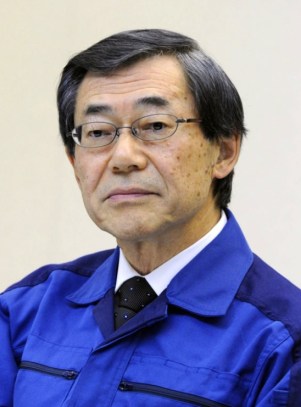
The president of Tokyo Electric Power Co. during the Fukushima nuclear crisis told employees not to publicly use the term “meltdown,” apparently in response to government pressure, a third party report released Thursday said.
The report, compiled by three lawyers, said it is highly likely the government at the time pressured Masataka Shimizu, then Tepco’s president when the monstrous earthquake and tsunami disabled the Fukushima No. 1 nuclear power plant on March 11, 2011, about the utility’s disclosures in the early stages of the crisis.
The report said someone in the government, then headed by Prime Minister Naoto Kan of the Democratic Party of Japan, was unhappy Tepco had revealed a photo of the blown-up building for reactor No. 1 on March 12 without telling the government in advance.
The Prime Minister’s Office then called Shimizu the same day. After Shimizu returned to Tepco’s Tokyo headquarters, he told his fellow executives that they needed to check with the Prime Minister’s Office whenever disclosing information to the public, according to the report.
The report also said Shimizu sent a note on March 14 to Vice President Sakae Muto, who was overseeing the plant and holding a news conference, to warn him not to say meltdown.
“Considering this fact, it is presumable that the Prime Minister’s Office requested Shimizu to be careful about admitting to a meltdown in public,” the report said.
The panel thought this was a critical point that required further investigation but was unable to track down a specific bureaucrat who made such a request. Yasuhisa Tanaka, who headed the panel, said it conducted hearings with 60 Tepco employees but did not talk to anyone from the government side.
Tepco did not acknowledge that a reactor meltdown had occurred until May 15, 2011 — two months after the fact.
Asked whether Tepco was intentionally covering up the meltdowns, Tanaka said that was probably not the utility’s intention at the time.
“Looking at the situation back then, we think it was difficult for Tepco to use the term meltdown because even the Nuclear and Industrial Safety Agency couldn’t use it” due to apparent government pressure, Tanaka said.
The Nuclear and Industrial Safety Agency was Japan’s nuclear watchdog at that time.
The panel spent about three months investigating why Tepco could not publicly reveal the meltdowns occurred earlier than it did.
In February, nearly five years after the crisis, Tepco announced it should have declared the meltdowns earlier, citing the existence of a company manual that listed what constitutes a meltdown. The manual says that meltdown is a state in which 5 percent or more of the fuel rods is damaged.
As of March 14, 2011, Tepco estimated that 55 percent of the fuel rod assemblies in reactor No. 1 and 25 percent of those in reactor No. 3 were damaged but did not declare that they had melted until May that year.
Niigata Prefecture has been pressuring Tepco to look into why it took about two months for the utility to admit to a meltdown.
Niigata hosts Tepco’s Kashiwazaki-Kariwa nuclear plant, which the firm desperately wants to restart, but Niigata Gov. Hirohiko Izumida has stressed that he won’t give the green light until the Fukushima crisis has been thoroughly investigated.
Tepco had explained to Niigata that it did not use the term meltdown because there was no clear definition of it. But it found the manual in February, which contradicted the explanation and led to the third-party investigation.
The report said that workers at the Fukushima plant were apparently following the manual but seemed to avoid using the term meltdown, presumably because there was a common understanding within the company not to use it.
Tokyo Electric changed its name in April to Tokyo Electric Power Company Holdings Inc.
Panel: Use of words ‘core meltdown’ banned
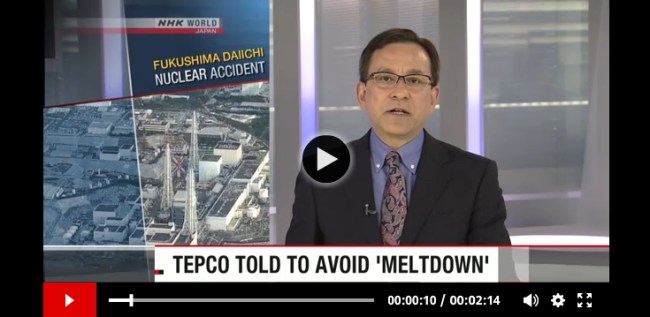
A panel report says a former president of Tokyo Electric Power Company had instructed its officials not to use the words “core meltdown” in explaining the accident at the Fukushima Daiichi nuclear plant. The panel says the president banned use of the words following what he said was an instruction from the prime minister’s office.
TEPCO admitted meltdowns at 3 of its reactors at the Fukushima plant 2 months after the March 2011 accident. It had instead explained that the reactors’ cores had been damaged.
A third-party panel was set up by the utility in March to investigate responses to the accident. It submitted the probe results on Thursday.
The panel report says then-TEPCO president Masataka Shimizu instructed a vice president, who was attending a news conference 3 days after the accident, not to use the words “core meltdown.”
The report says the ban was conveyed to the vice president through a public relations officer and that it was explained as an instruction from the prime minister’s office.
But the panel says it did not carry out investigations of the prime minister’s office and that it could not gain details of the instruction through interviews with Shimizu and other officials. Such details include which member of the prime minister’s office gave it and how.
Another panel set up by the Niigata prefectural government has also been investigating TEPCO’s handling of the accident.
TEPCO earlier told the Niigata panel that it did not use the words “core meltdown” because there is no concise definition of them and that using the words may have given misleading information.
The third-party panel referred to the fact that it took more than 2 months for TEPCO to admit core meltdowns.
The panel report says it cannot say this was improper because TEPCO officials could not determine whether core meltdowns had taken place by inspecting the reactors at that time.
But the report also says core meltdowns were being mentioned within the company at that time and that it could have admitted the phenomena externally.
A panel jointly set up by Niigata Prefecture and TEPCO is expected to carry out further investigations of the matter.
http://www3.nhk.or.jp/nhkworld/en/news/20160616_32/


Kuwaitis (KIA) Want Out of French State Owned Nuclear Group Areva


Flamanville, France, Nuclear Reactor Construction site. See Areva name in upper right hand corner. EDF is also there; it operates the Flamanville nuclear site.
“The Kuwait Investment Authority (KIA) is Kuwait’s sovereign wealth fund, managing body, specializing in local and foreign investment. It is the 5th largest sovereign wealth fund in the world with assets exceeding $592 billion… KIA was founded on 23 February 1953 to manage the funds of the Kuwaiti Government in light of financial surpluses after the discovery of oil. KIA is the world’s first and oldest sovereign wealth fund.” https://en.wikipedia.org/wiki/Kuwait_Investment_Authority French State owned nuclear group, Areva, has proved a really bad investment for them.
Reuters (13 June 2016) citing “La Lettre de l’Expansion” reported that the Kuwait Investment Authority (KIA) wants to sell its stake in French State owned nuclear group Areva. Reportedly, KIA said that they invested in Areva “based…
View original post 674 more words
June 16 Energy Week

World:
¶ The global wind power industry now employs 1.1 million people, representing growth of 5%, according to International Renewable Energy Agency data. The increase in jobs is mainly due to strong installation rates in China, the US, and Germany, and it is being driven by declining costs. [reNews]
 Onshore wind farm turbines pic credit MorgueFile.
¶ Australia is expected to be producing 25,000 GWh of annual power from rooftop PV systems by 2035-36, as compared to 5,600 GWh today, the Australian Energy Market Operator said. This would be equivalent to 11% of current electricity consumption from the grid. [SeeNews Renewables]
¶ An energy park in Scotland will be used for the construction of a £2.8 billion wind farm. Siemens will use Nigg Energy Park’s facilities in Moray Firth to build the Beatrice Offshore Wind Farm. The engineering giant has signed a contract to use the…
View original post 454 more words
Russia: Government Against Rights Groups (Includes Environmental Groups)
From Human Rights Watch:
“JUNE 10, 2016
Russia: Government against Rights Groups
Battle Chronicle
Since June 5, 2014, the Ministry of Justice has designated 131 groups as “foreign agents”. By June 10, 2016, at least 18 groups have shut down. Also, the Ministry has removed its “foreign agent” tag from 11 groups, acknowledging that they had stopped accepting foreign funding. Accordingly, on June 10, 2016, the official list of active “foreign agents” comprised 102 groups.
(Moscow) – In 2012 Russia’s parliament adopted a law that required nongovernmental organizations (NGO)s to register as “foreign agents” with the Ministry of Justice if they engage in “political activity” and receive foreign funding. The definition of “political activity” under the law is so broad and vague that it can extend to all aspects of advocacy and human rights work.
Initially, the law required all respective NGOs to request the Ministry to have them registered and implied legal consequences for…
View original post 2,929 more words
June 15 Energy News
Science and Technology:
¶ A new study by Harvard University shows why criticisms of high costs to lower carbon emissions are nothing more than 100% baloney. It not only gives the lie to such absurd notions, it demonstrates in stark terms just how much economic value lowering emissions can create. [CleanTechnica]
 Smokestacks.
World:
¶ As grids get smarter and consumers get savvier about energy consumption, letting customers have more control over their own energy needs is one way to get to a more efficient, less costly, and lower carbon system. The EDF Group is transforming its residential PV solutions accordingly. [CleanTechnica]
¶ Scotrenewables Tidal Power has launched its SR2000 turbine at the marine engineering company Harland and Wolff Heavy Industries in Belfast, Northern Ireland. The 2-MW machine is the company’s first commercial-scale turbine and also the largest in the world. [Power Technology]
 SR2000 tidal…
View original post 536 more words
May Marks 8th Consecutive Record Hot Month in NASA’s Global Temperature Measure | robertscribbler

 According to NASA, the world has just experienced another record hot month.
May of 2016 was the warmest May since record keeping began for NASA 136 years ago. It is now the 8th record hot month in a period that has now vastly exceeded all previous measures for global temperature tracking.
The month itself was 0.93 C above NASA’s 1951-1980 baseline measure. It’s the first month since October that readings fell below the 1 C anomaly mark. A range that before 2015 had never before been breached in the 136 year climate record and likely during all of the approximate 12,000 year period that marks the Holocene geological epoch.
It’s a reading that is fully 1.15 C above 1880s averages. A very warm measure in its own right but one that is thankfully somewhat removed from the 1.55 C monthly peak back during February of 2016. To this point, it’s…
View original post 86 more words
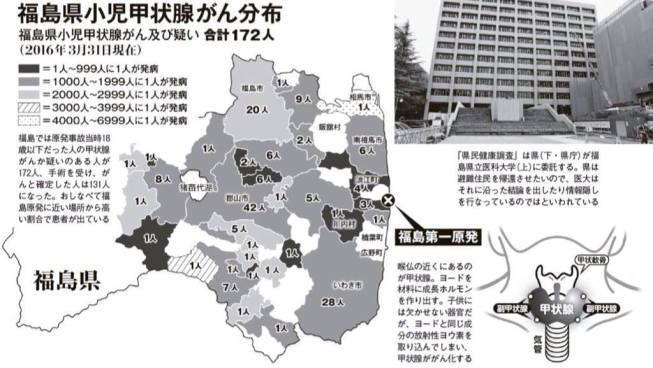
Fukushima 172 Children Thyroid Cancers Distribution
Distribution of 172 children who were 18 years old or younger at the time of the Fukushima nuclear accident and who were diagnosed with thyroid cancer or suspected of thyroid cancer as of March 31, 2016. 131 children out of 172 were confirmed to have thyroid cancer.
Radioactive soil turns up at Fukushima high school
FUKUSHIMA–Highly radioactive soil that should by law be removed by the central government has been left dumped in the corner of a schoolyard here because the construction of a local storage site for waste has been stalled.
Students at the school were not given an official warning that the radioactive soil was potentially hazardous to their health.
When a teacher scooped up soil samples at the site and had their radiation levels measured by two nonprofit monitoring entities–one in Fukushima and another in Tokyo–the results showed 27,000-33,000 becquerels of radioactive cesium per kilogram.
The law stipulates that the central government is responsible for disposing of waste measuring more than 8,000 becquerels per kilogram.
But as a central government project to build an interim storage site for highly radioactive waste near the nuclear power plant has been stalled, the school appears to have no alternative to indefinitely keeping it in the schoolyard.
Principal Seiichi Takano at Fukushima North High School said the school does not plan to take extra safety measures with regard to the storage of the polluted dirt, saying the waste is not believed to be outright dangerous.
“The prefectural board of education has not set any criteria for us to conclude at what levels of radiation are hazardous to people,” he said.
The fallout is a result of the nuclear disaster at the Fukushima No. 1 power plant, which unfolded following the Great East Japan Earthquake and ensuing tsunami on March 11, 2011.
Before the cleanup operation at the school in the city’s Iizaka district on May 24-25, the teacher who took the samples called on school officials to take precautionary measures and issue an alert for students.
“Since it is highly radioactive, we should remind students and staff of the potential danger while taking a step to prevent the spread of polluted dust during cleanup,” said the teacher.
Highly radioactive dirt, which was mixed with tree branches and plants amounted to 20 cubic meters, according to cleanup workers. It was packed in bags and dumped in an area near the parking lot for bicycles used by students.
School officials say they plan to bury the bags by digging deep holes on the school premises to temporarily store them, but they have no idea when they will finally be removed.
The polluted dirt in the latest cleanup first came to the attention of school officials in March when a preliminary survey detected 1.6 microsieverts per hour of radiation at a point 1 meter from the surface of the ground near the bicycle parking lot. The survey is routine before any cleanup gets under way in earnest.
A cleanup operation is conducted with the aim of lowering radiation exposure to below 0.23 microsieverts per hour, a long-term goal the central government has set to limit residents’ annual additional exposure to a maximum of 1 millisievert.
In the previous decontamination operation, the school’s playground was cleaned in August 2011 before classes were resumed for that academic year after a break after the nuclear accident.
A large amount of contaminated soil–far more radioactive than in the current incident–is still buried in the schoolyard for temporary storage.
Cleanup resumed only this spring for the rest of the school premises and its neighborhood in line with a general cleanup plan in Fukushima.
An official with the prefectural board of education said it is not considering additional safety measures concerning the storage of polluted soil kept at the school.
“We are going to ensure safety by taking an approach similar to the existing one before the polluted soil is transported to the interim storage facility,” said a board official.
Fairewinds in the News: Gendai Business Online Feature Article
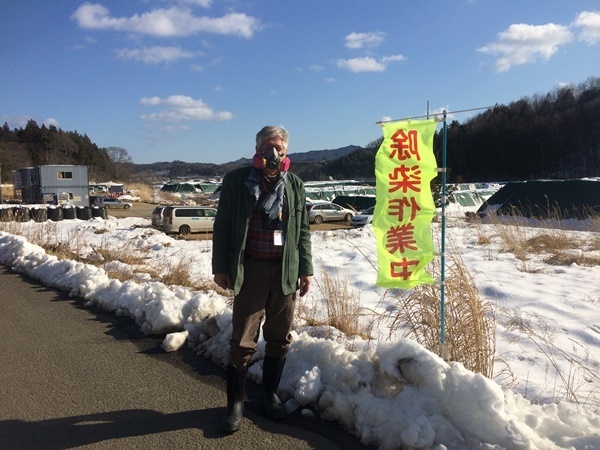
Gendai Business Online’s top ranked article is an exclusive interview with Fairewinds Chief Engineer Arnie Gundersen titled, American nuclear expert warns: “There is a possibility that now in Fukushima recontamination is occurring.” With more than 10,000 likes on Facebook, this Japanese article delves into the truth about nuclear contamination from Fukushima Daiichi as uncovered by Arnie Gundersen during his most recent trip to Japan. Fairewinds, with the help of Japanese translators, provides you with an English translation:
On a mid-February morning, just before the 5th anniversary of the triple meltdown at Fukushima Daiichi, a group of young girls in the city of Minami-Soma rode their bikes to school past a shocked and saddened pedestrian. That upset observer was Arnie Gundersen, nuclear reactor expert and Chief Engineer with Fairewinds Associates. Mr. Gundersen has 45 years of experience as a design, operations, and decommissioning nuclear engineer. He has engaged in research of the effects of the meltdown at Three Mile Island (TMI) and conducts independent research of the triple meltdown at Fukushima Daiichi. Mr. Gundersen is in ongoing conversations with both the US and Japanese media concerning the dangers of nuclear reactors and nuclear power operation. Invited by “Peace News Japan” and several other civil groups, Mr. Gundersen visited the Fukushima prefecture five years after the catastrophe at Fukushima Daiichi.
“What surprised me at this visit to Japan [his third since the meltdowns] is that the decontaminated area is contaminated again,” Mr. Gundersen said while explaining why it was such as sad shock to witness the girls on their bicycles. “This was not what I had expected. I had thought that we would not find such high doses of radiation in the decontaminated area. But, sadly, our results prove otherwise.”
During his Japan visit, Mr. Gundersen collected samples of dust from the rooftop of Minami-Soma city town hall, the floor mat of a 7-Eleven convenience store, and the roadsides of Minami-Soma city. Although the official data cannot be released before the publication of formal scientific papers, it is evident that high doses of radiation, usually found in nuclear waste, was detected from these samples.
“This means that highly radioactive dust is flying around the city. In other words, the decontaminated land is contaminated again. Little girls are affected by the radiation 20 times as much as adult men. The Japanese government’s standard of 20 mSv is based on exposure assessments for adult men. The girls on their bicycles are actually being affected by a radiation dose equivalent to as much as 400 mSv.”
Mr. Gundersen also pointed out that human lungs are heavily affected by internal exposures to radiation.
“At this visit, I wore a radiation proof mask that can filter out 99.98% of radiation for six hours. I sent my filter to the lab, and they found a high dose of Cesium. But, unfortunately, the Japanese government only cares about the number on a Geiger counter and does not consider the internal exposure. This has resulted in a hazardous downplay of this kind of data and human lungs are affected by the serious internal exposure.”
Why is the recontamination happening? One of the reasons is that the government did not decontaminate thoroughly. Mr. Gundersen witnessed first-hand the poor decontamination of the prefecture.
“In the house I visited, only half of the garden area was decontaminated because only that half fell into the category of a contaminated area. It should not be like that. The other half would be contaminated too. Furthermore, one person discovered highly radioactive dust in their driveway where decontamination had occurred. So, of course, this person notified the related offices but the related offices told them that it was not necessary to decontaminate the driveway again because it had already been done once. It’s unbelievable. This person’s house is located near a ravine and the opposite side of the ravine is designated a non-habitable zone.”
Another reason for recontamination is that the radiation from the mountains are coming back to the city by way of wind and rain. Mr. Gundersen noted the extreme radioactive contamination of the mountains.
“We tracked wild monkeys in the mountains and found a high dose of radiation in their feces. I received the meat of a wild pig as a gift and since I could not bring it back to the US [it is illegal to bring meat back to the United States from Japan], tested the meat on a Geiger counter. The meat showed 120 counts/min. I think that the Japanese government should spend more money to decontaminate the mountains but they don’t appear to have that kind of political will. I also worry that contamination in the rivers is not monitored as rain from the mountains flow down into the rivers.”
Due to the heavy radiation contamination of the mountains, vegetables grown in that area exceed the government’s standard by 1500 Bq. These vegetables were sold at the MichinoEki in Tochigi prefecture, and the bamboo shoot grown in this contaminated region was used for elementary school lunches in Utsunomiya. These school lunches contained more than twice as much radiation as the government’s standard.
Recontamination is happening due to poor decontamination and residents of Kawauchi village in Fukushima prefecture claim that the decontamination in the forests is not enough. However, the government continues to push for the end of people’s relocation and force the return to recontaminated areas.
“If I had a little child, I would never let them live there,” Mr. Gundersen pointedly states.
Mr. Gundersen also found that Tokyo remains contaminated. He measured dust collected from the sidewalk in front of MITI (Ministry of International Trade and Industry) and found a high dose of radiation. That dust is in the air that will be inhaled by the visitors and athletes of the 2020 Olympic Games. Needless to say, the current residents are inhaling it every day. “Mr. Abe should not take the advice from IAEA, MITI and TEPCO seriously,” Mr. Gundersen insists. “Instead, he should have an independent organization conduct research and listen to the advice from them.”
Over double density of Cesium-134/137 as safety limit detected from served school lunch in Utsunomiya city

According to Utsunomiya city government, they detected over double density of Cs-134/137 as safety level from school lunch after serving it to the students this May.
It was bamboo shoot contained in the school lunch of 5/10/2016 as an ingredient.
It was already served and consumed by 560 students and teachers at an elementary school when they obtained the analysis result.
It was 234 Bq/Kg in total of Cs-134/137 (food safety limit is 100 Bq/Kg). The city government comments no health problem was reported related to the contaminated bamboo shoot.
http://www.city.utsunomiya.tochigi.jp/oshiraselist/19078/035312.html
http://www.city.utsunomiya.tochigi.jp/dbps_data/_material_/localhost/gakkoukenkou/20160614.pdf
1 This Month
Chernobyl: The Lost Tapes – A good documentary on Chernobyl on SBS available On Demand for the next 3 weeks– https://www.sbs.com.au/ondemand/tv-program/chernobyl-the-lost-tapes/2352741955560

of the week–London Campaign for Nuclear Disarmament

Tell the Ukrainian Government to Drop Prosecution of Peace Activist Yurii Sheliazhenko
To see nuclear-related stories in greater depth and intensity – go to https://nuclearinformation.wordpress.com
-
Archives
- April 2026 (139)
- March 2026 (251)
- February 2026 (268)
- January 2026 (308)
- December 2025 (358)
- November 2025 (359)
- October 2025 (376)
- September 2025 (257)
- August 2025 (319)
- July 2025 (230)
- June 2025 (348)
- May 2025 (261)
-
Categories
- 1
- 1 NUCLEAR ISSUES
- business and costs
- climate change
- culture and arts
- ENERGY
- environment
- health
- history
- indigenous issues
- Legal
- marketing of nuclear
- media
- opposition to nuclear
- PERSONAL STORIES
- politics
- politics international
- Religion and ethics
- safety
- secrets,lies and civil liberties
- spinbuster
- technology
- Uranium
- wastes
- weapons and war
- Women
- 2 WORLD
- ACTION
- AFRICA
- Atrocities
- AUSTRALIA
- Christina's notes
- Christina's themes
- culture and arts
- Events
- Fuk 2022
- Fuk 2023
- Fukushima 2017
- Fukushima 2018
- fukushima 2019
- Fukushima 2020
- Fukushima 2021
- general
- global warming
- Humour (God we need it)
- Nuclear
- RARE EARTHS
- Reference
- resources – print
- Resources -audiovicual
- Weekly Newsletter
- World
- World Nuclear
- YouTube
-
RSS
Entries RSS
Comments RSS
 nuclear-news