South Korean Gov’t opts not to disclose radiation test result of Japanese fishery goods
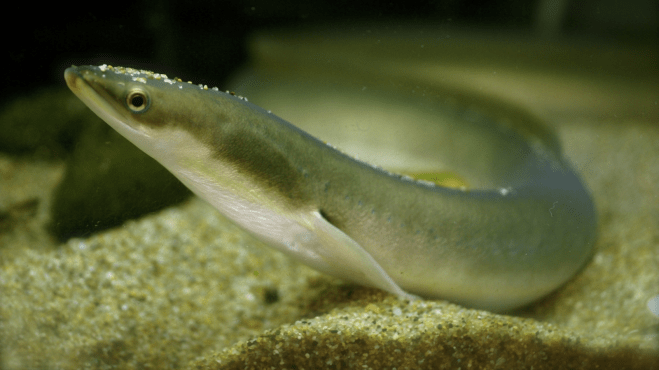
Japanese eel
Gov’t opts not to disclose radiation test result of Japanese fishery goods
The government has rejected calls to disclose the results of radiation level checks conducted on fishery goods caught near Japan, a civic group said Wednesday.
The Ministry of Food and Drug Safety on Tuesday dismissed the information disclosure request filed by the Lawyers for a Democratic Society, the group said.
“As the information is related to a case pending at the World Trade Organization, (the disclosure) could lead to a leakage of our strategy to Japan,” the ministry was quoted by the group as saying.
The lawyers association, however, countered that the reason provided by the authorities was groundless since the government has to submit its findings to the WTO and Japan anyways.
Tokyo filed a formal complaint with the World Trade Organization against Seoul’s import ban of its fishery goods.
South Korea has banned imports of all fishery products from eight Japanese prefectures, including Fukushima, where the 2011 earthquake and tsunami caused the meltdown of a nuclear reactor, marking the worst nuclear accident since the Chernobyl disaster.
The import ban was imposed in September 2013 after reports that massive amounts of radioactive materials and contaminated water from the Fukushima reactor were being dumped in waters surrounding Japan. This caused serious safety concerns here, that not only affected Japanese imports but the local fishery sector as a whole. (Yonhap)
http://www.koreaherald.com/view.php?ud=20160406000394
S. Korea Will Not Share Fukushima Fish Tests
South Korea’s Ministry of Food and Drug Safety has rejected a petition from a civil society group to release the results of radiation testing on fish caught near Japan following the Fukushima Daiichi reactor meltdown.
In 2013, South Korea imposed a ban on the importation of fisheries products from eight Japanese prefectures near Fukushima. Tokyo objected, and petitioned the World Trade Organization for relief, claiming that the ban was unfair to Japanese exporters. The Ministry of Food and Drug Safety has already submitted the results of its testing to the WTO and to Japan as part of the dispute, and advocates claimed that it should be made public as well.
The ministry disagreed. “As the information is related to a case pending at the World Trade Organization (WTO), [it] could lead to a leakage of our strategy to Japan,” it said in a statement on Tuesday.
A study of radioactive cesium levels in fish off of Fukushima in 2011 by Pavel Povinec and Katsumi Hirose found that consuming 100 kg of the affected seafood per year (four times the Japanese annual average) would result in approximately the same radiation dose as the world average for background exposure – and roughly the same as the level of exposure from consuming the naturally occuring radioactive polonium in 100 kg of any other seafood.
“Radiation doses from ingestion of marine food are under control, and they will be negligible,” the authors concluded.
However, a study published in February by Hiroshi Okamuraa and Shiro Ikedab found that while radioactive cesium levels were overall quite low among most species in Japan, they were unequally distrubuted, with some much more likely to be contaminated than others, especially larger predators towards the top of the food chain. Additionally, effects are regional and vary between freshwater and marine species, the authors said: areas nearer and to the south of the reactor are more affected, and freshwater fish – notably whitespotted char and Japanese eel – are more likely to show higher levels of contamination.
http://maritime-executive.com/article/s-korea-will-not-share-fukushima-fish-tests
No comments yet.
1 This Month

of the week – Shut Down Drone Warfare!


Tell the Ukrainian Government to Drop Prosecution of Peace Activist Yurii Sheliazhenko

Petition to revoke the licensing of the Near Surface Nuclear Disposal Facility (NSDF) at Chalk River. https://www.ourcommons.ca/petitions/en/Petition/Details?Petition=e-7247
To see nuclear-related stories in greater depth and intensity – go to https://nuclearinformation.wordpress.com
-
Archives
- March 2026 (244)
- February 2026 (268)
- January 2026 (308)
- December 2025 (358)
- November 2025 (359)
- October 2025 (376)
- September 2025 (257)
- August 2025 (319)
- July 2025 (230)
- June 2025 (348)
- May 2025 (261)
- April 2025 (305)
-
Categories
- 1
- 1 NUCLEAR ISSUES
- business and costs
- climate change
- culture and arts
- ENERGY
- environment
- health
- history
- indigenous issues
- Legal
- marketing of nuclear
- media
- opposition to nuclear
- PERSONAL STORIES
- politics
- politics international
- Religion and ethics
- safety
- secrets,lies and civil liberties
- spinbuster
- technology
- Uranium
- wastes
- weapons and war
- Women
- 2 WORLD
- ACTION
- AFRICA
- Atrocities
- AUSTRALIA
- Christina's notes
- Christina's themes
- culture and arts
- Events
- Fuk 2022
- Fuk 2023
- Fukushima 2017
- Fukushima 2018
- fukushima 2019
- Fukushima 2020
- Fukushima 2021
- general
- global warming
- Humour (God we need it)
- Nuclear
- RARE EARTHS
- Reference
- resources – print
- Resources -audiovicual
- Weekly Newsletter
- World
- World Nuclear
- YouTube
-
RSS
Entries RSS
Comments RSS
 nuclear-news
Leave a comment