March 29 Energy News

Science and Technology:
¶ When a large generating plant shuts down, the grid’s frequency drops due to an imbalance between generation and load. DOE researchers are evaluating wind farms for providing frequency-responsive back-up currently supplied to the grid by conventional power plants. [Windpower Engineering]
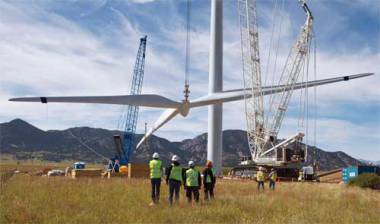 NREL’s National Wind Technology Center is the nation’s
premier wind energy technology research facility.
World:
¶ Five years after the Fukushima Disaster in Japan resulted in three reactor meltdowns, the global nuclear industry is spending $47 billion on safety enhancements mandated after the accident revealed weaknesses in plant protection from earthquakes and flooding, according to a Platts review. [Platts]
¶ The top official in China’s northern province of Hebei, one of the country’s most polluted, has vowed to use the staging of the 2022 Winter Olympics to drive efforts to cut smog and promote clean energy. Skiing and snowboarding events will be…
View original post 463 more words
Wishful thinking: the basis of new nuclear economics

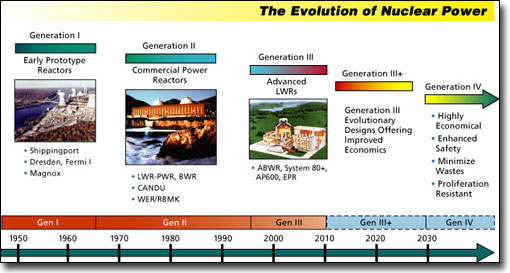 Generation IV reactors are not going to save the nuclear power industry.
That nuclear power’s miserable economics are pretty much killing the industry, especially in the western world, is a reality acknowledged by virtually everyone at this point. After the first burst of reactor construction from the late 1960s until the early 1980s collapsed under the weight of multi-billion dollar cost overruns and lengthy schedule delays, a decade ago the industry argued it had learned and incorporated its lessons and the result would be a nuclear renaissance.
But before even a single reactor launched by this renaissance has begun operating (for a “renaissance that began more than a decade ago, this in itself is a telling point), bloated, untenable costs and delays from Georgia to Finland have again put the kibosh on the notion of any meaningful nuclear expansion in the west. And even in China, where transparency in economic…
View original post 1,024 more words
March 28 Energy News
Science and Technology:
¶ A Sandia-led team, with support of the US DOE, has developed a way to make a magnetic material that could lead to lighter and smaller, cheaper and better-performing high-frequency transformers, helping adoption of more flexible energy storage systems and renewable energy. [Nanowerk]
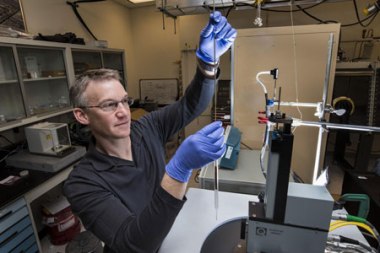 Sandia National Laboratories researcher Todd Monson.
¶ Researchers from two Scottish universities are taking part in a project to boost the development of “meshed” offshore grids to link windfarms with the mainland. Aberdeen and Strathclyde are part of a four-year European initiative investigating high-voltage direct current technology. [The National]
¶ A research team from the Shenzhen Institutes of Advanced Technology of the Chinese Academy of Sciences has developed a novel, environmentally friendly low-cost battery that overcomes many of the problems of lithium-ion batteries. It has both lower weight and lower fabrication costs. [AZoCleantech]
 Schematic structure of the AGDIB
View original post 502 more words
Under Pressure: On the Dangers of PWR Nuclear Reactors, Such as Three Mile Island and Sizewell B

Hilda Murrell was abducted on the 21st of March 1984, as she prepared to testify at the Sizewell B Nuclear Reactor Inquiry. She was found dead on the 24th of March. https://miningawareness.wordpress.com/2016/03/23/the-murder-of-hilda-murrell-an-abiding-mystery/
According to her nephew, Robert Green, “Hilda had conferred with Don Arnott who, uniquely among anti-nuclear scientists, had discovered a serious flaw in the control rods of the US nuclear power plant design which had failed at Three Mile Island, but which Thatcher was determined to build. His concerns were later endorsed by Dr Edward Radford, chair of the TMI Scientific Advisory Board. At the time key leaders of the nuclear industry supporting Thatcher’s plans took a close interest in what Don knew; he was tipped off that he was under surveillance, and some documents went missing. Before he could testify at the Sizewell Inquiry, he nearly died of a suspicious heart attack. In June 1985 he…
View original post 3,087 more words
Self-censorship sensed as Japan’s TV stations replace outspoken anchors
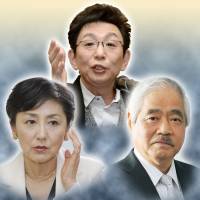
The faces of Japan’s TV news are changing.
Broadcasters are under increasing political pressure from the government and a succession of outspoken anchors and newscasters have resigned.
Experts worry the situation marks a crisis in TV journalism, for it is believed broadcasters are now exercising self-censorship as they seek to toe the administration’s line.
Hosts Ichiro Furutachi of TV Asahi’s influential “Hodo Station” and Shigetada Kishii of the TBS evening news program “News 23″ will both be replaced in April. NHK, too, is considering pulling longtime anchorwoman Hiroko Kuniya from its “Close-up Gendai” news and features program.
Furutachi has often been criticized by the government and its supporters for his commentaries.
He is unrepentant. During a news conference announcing his departure, Furutachi reiterated his motto: “Newscasters at times represent the voices against the powers that be.”
Kuniya’s departure has long been whispered about as she is known for asking big-name politicians tough questions. However, she has survived until now.
Similarly, Kishii expressed opposition to contentious security bills before they cleared the Diet last September and called on fellow opponents to speak up.
“Voices should continuously be raised (for the bills) to be scrapped,” he declared.
Criticism was heaped upon him, particularly from the right. One conservative political group said his statement violated the Broadcast Law, which states broadcasters must be politically impartial.
On Tuesday, TBS named Hiroshi Hoshi, 60, a senior writer with the left-leaning Asahi Shimbun daily newspaper, as Kishii’s replacement.
Some analysts see cause for alarm in the slew of anchor replacements.
“There must be different reasons behind each station’s move, but if three journalists quit in succession, the audience would get the impression that it was the results of their criticism of the administration,” said Hiroyoshi Sunakawa, a professor of media studies at Rikkyo University.
It was around the Lower House election of 2014 that the ruling Liberal Democratic Party began to exert stronger demands on TV stations.
In one example, the government issued a document to Tokyo-based stations demanding that they “ensure fairness, neutrality and correctness” in their election coverage. In 2015, the LDP summoned TV executives for questioning over the content of the “Hodo Station” and “Close-up Gendai” programs.
Having experienced that pressure, the stations now are believed to refrain from running content that criticizes the administration.
“I don’t want to take risks,” said one young employee at a commercial TV station.
A source close to NHK sighed and said there is a growing atmosphere among NHK staff that they should be second-guessing the administration’s expectations.
30,000 Japanese March In Protest of Restarting Nuclear Power Plants
An estimated 30,000 anti-nuclear activists attended a rally in Tokyo’s Yoyogi Park, Friday, to protest against Prime Minister Shinzo Abe’s plan to reopen a number of Japan’s nuclear reactors.
Environment Ministry presents contaminated waste disposal plan for Fukushima

Environment Minister Tamayo Marukawa speaks at the beginning of a meeting on interim storage facilities in the city of Fukushima, on March 27, 2016.
FUKUSHIMA — The Ministry of the Environment announced on March 27 that the government expects to acquire up to 70 percent of land for interim storage facilities for waste contaminated with radioactive materials emanating from the Fukushima nuclear crisis and bring up to 40 percent of contaminated soil into such facilities by the end of fiscal 2020.
The ministry has a rough road ahead, however, since as of March 25 it had only acquired about 1.3 percent of the land needed to build storage facilities straddling the Fukushima Prefecture towns of Okuma and Futaba, and it also faces serious challenges in negotiations with landowners.
On a total of 1,600 hectares of land, the interim storage facilities will be equipped with disposal sites for contaminated soil and other materials, as well as incinerators to reduce the volume of contaminated waste derived from decontamination work around the Fukushima No. 1 Nuclear Power Plant. Delivering of the waste began in March 2015 as a pilot project and it will be stored at the site up to 30 years.
The Environment Ministry presented the projection at a meeting held in the city of Fukushima on March 27. It announced the plan to secure 640-1,150 hectares, or 40-70 percent of the areas for the interim storage sites, by the end of fiscal 2020. A ministry official explained how it calculated the figures, saying that the ministry has already contacted 1,240 landowners by visiting their homes and “there is a feeling” that they will cooperate with the ministry’s plan.
Up to 28 million cubic meters of waste contaminated with radiation that is currently stored across Fukushima Prefecture is planned to be brought to the storage sites, and the ministry expects to deliver 5 million to 12.5 million cubic meters of that to the facilities by the end of fiscal 2020. Environment Minister Tamayo Marukawa told a March 27 news conference in the city of Fukushima that the ministry plans to remove contaminated soil stored at schools and residential areas first, adding, “We’ve allowed a wide range in the projected figures (as negotiations with landowners are underway).”
Meanwhile, Toshitsuna Watanabe, mayor of the town of Okuma where an interim storage facility is planned to be built, expressed appreciation for the figures presented by the ministry to some extent, saying, “Though it appears to be a rough projection, I recognize that they at least presented the target figures.” He added, “With no goals presented before this, local residents were beginning to suspect the central government’s willingness (to put efforts in the storage project). We hope the ministry undertakes the task to reach those targets.”
A 61-year-old landowner who has evacuated from Okuma to the Fukushima Prefecture city of Iwaki questioned the ministry’s plan, saying that 40-70 percent of land acquisition in five years is “too slow.”
“I have decided to sell the land, but the government hasn’t yet shown me the amount of compensation payment,” the man said.
The village of Iitate, currently under radiation evacuation orders, is working toward the lifting of the evacuation orders by the end of March 2017, excluding areas that are designated as “difficult-to-return” zones with high levels of radiation. Iitate Mayor Norio Kanno says, “According to the ministry’s plan, contaminated waste might not be removed (from the village) for five more years. There are piles of bags filled with contaminated soil and they are preventing disaster recovery efforts,” adding, “I want the ministry to speed up the land acquisition process.”
http://mainichi.jp/english/articles/20160328/p2a/00m/0na/011000c
Fukushima evacuee Hiroshi Ueno does not want to return to his old house
FUKUSHIMA, JAPAN – Having settled into a new life with his family outside Fukushima prefecture, Mr Hiroshi Ueno has no intention of returning home.
The 51-year-old, who was a florist in Minamisoma city – around 30km north of the Fukushima No. 1 nuclear plant – now handles data management at a support centre for other evacuees.
His son was 18 and about to start his first job when disaster struck on March 11, 2011. The extended family of 10, including Mr Ueno’s elderly parents and his sister’s family, decided to evacuate the very next day.
At that time, there was no official word from the Japanese government for mass evacuation but many residents feared the worst – a meltdown from the nuclear plant.
“Most of us left our houses without even tidying up our homes which were damaged by the earthquake,” Mr Ueno told The Straits Times.
“No one knew what would happen next.”
They packed only the bare essentials into their car and began their journey as evacuees. Over the next five days, they drove from one place to another before finally arriving at Yonezawa city where they now live. Their former home in Minamisoma had become a no-go zone.
It was only a year later that Mr Ueno and his wife were allowed a brief visit back to retrieve their important documents and other belongings.
“Wearing protective suits, we got on a bus with others who were from the same area,” he said. They were allowed to stay for only two hours and had to wear dosimeters to keep track of radiation levels.
Five years on, he would rather not return home.
“There are many issues like housing, compensation and security that have yet to be fully resolved.”
Damaged and worn out, the house will soon be demolished for redevelopment. But Mr Ueno will not be returning.
“Even looking at it is painful,” he added. “But for my parents, the house is full of memories… it is something that they couldn’t bear to let go of.”
Fukushima evacuee Miyuki Satou returns to ground zero – only to serve up piping hot bowls of ramen
FUKUSHIMA, JAPAN – It was about 2pm on a chilly Tuesday but there were no customers in Ms Miyuki Satou’s makeshift shop next to the Naraha town hall office, where she serves up piping hot bowls of ramen and udon.
The town was evacuated in the aftermath of the triple Tohoku disaster in 2011.
Although Naraha was the first town located entirely within a 20km radius of the crippled Fukushima No. 1 power plant to have its evacuation order lifted in September last year, people have been slow to return. Only 976 of its population of 7,700 have come home – mostly the elderly.
One key reason for this is that families have already rebuilt their lives and bought new homes elsewhere, including Ms Satou’s.
The 51-year-old was a former resident of the coastal town bordering the Pacific Ocean, but now lives with her two daughters who have full-time jobs in the neighbouring Iwaki city.
But her ties with Naraha have led her back to run a food business – one of only two eateries there. Both close at 3pm.
Every day she has about 70 customers – mostly workers tasked with rebuilding the town where black bags of contaminated soil still remain a common sight, or former residents who have come back to visit.
She estimates only 10 per cent of her customers are residents who have moved back home.
“There is really no demand and so there is no point opening late,” she said. “Naraha used to be a much livelier town before the disaster, but now it just feels very lonely.”
It makes no sense for young families to return, when it is more convenient to live near their new workplaces or schools, she added.
But despite the nuclear disaster having changed her life, she offered a moderate take on the use of nuclear power.
Prime Minister Shinzo Abe’s administration has said that Japan “cannot do without nuclear power” and has set a target to have nuclear power make up as much as 22 per cent of the country’s energy needs. Recent attempts to restart reactors elsewhere in the country – halted over public safety concerns following the 2011 disaster – have become entangled in a web of lawsuits.
The use of nuclear energy has split popular opinion in Japan. Ms Satou acknowledged it was a difficult question.
“It is an industry that can create a lot of jobs,” she said. “It will of course be better to use other forms of energy but I don’t think we have found one yet.”
High radiation keeps Fukushima evacuee Mitsue Masukura away from home
FUKUSHIMA, JAPAN – Retiree Mitsue Masukura, 63, who used to live in the coastal town of Namie, knows she will not be returning home anytime soon.
The Japanese government’s target is to declare all areas around the crippled Fukushima No. 1 power plant livable by March next year (2017), except for three towns. Namie is one of the three. Certain parts of the town remain off limits because decontamination works have been suspended given the high radiation dosages.
Residents like Ms Masukura, a former fishmonger, are already allowed to return for only short periods during the day. They are not allowed to stay overnight.
Not that she has any plans to return.
She said: “Even if we move home, there will hardly be any amenities because many of the former merchants have moved out and started new businesses elsewhere.
“Besides, people still do not really feel safe about returning to a town so badly affected by the nuclear fallout.”
Despite official assurances of the contrary, her unwillingness to trust the authorities stems from a case of ‘once bitten, twice shy’.
In the immediate aftermath of the March 11, 2011, disaster, there was poor communication of the situation, and conflicting instructions, which led to a lot of speculation, she said.
“We didn’t know who said what or where we should go,” she said.
As a result, her family of five moved five times from town to town, ryokan (a traditional Japanese inn) to ryokan, before settling in their current temporary living quarters in Fukushima city. Each unit is smaller than the size of a one-room flat in Singapore. Her family used to live together under one roof, but now stay next door to one another across three units.
She looks forward to the family buying a house and moving to Minamisoma next year, after her grand-daughter graduates from senior high school.
When asked how she felt about not being able to return home to Namie, she said: “It’s been already five years since we left. There are all these memories of the past, which will continue to live on in the mind.”
Fukushima Special Report: When is it safe to go home?
FUKUSHIMA, JAPAN – For 72-year-old Mr Nobuyoshi Ito, home is an isolated village with only 40 other residents. Once considered among the most beautiful villages in Japan, Iitate is today a shell of its former self before a nuclear disaster five years ago.
Most of the homes, left behind by around 6,000 residents, are empty. Farmers have been replaced with masked workers tasked with filling up black bags of contaminated soil. Only parts of the village, about an hour’s drive inland from the crippled Fukushima No 1 power plant, have been deemed safe for visitors, and they cannot stay overnight.
But that has not stopped Mr Ito, a former IT engineer-turned-farmer, from returning and staying in open defiance to study the effects of the radioactive plume that hit after the nuclear plant on the east coast of the main island Honshu was destroyed by a tsunami.
“When the government asked us to evacuate … I asked if there would be criminal charges if I continued to live here,” he said. “They said no.”
“I am a test subject, making use of the environment,” added Mr Ito, now a lobbyist opposing nuclear energy. He carries a hand-held meter to record the radiation he is exposed to daily, at his own expense.
Readings in Iitate now can range between 1.1 and 1.9 microsieverts per hour, according to government monitoring posts, which is more than 10 times those in places such as Tokyo, 250km south, where readings are around the globally accepted norm of 0.1 microsieverts per hour. This translates to a benchmark for safe radiation absorption of 1 millisievert (1,000 microsieverts) per year, although the International Atomic Energy Agency and others say anything up to 20 millisieverts per year poses no immediate danger to human health.
Mr Ito spends most of his time in the village but once a month drives three hours to Niigata prefecture on the west coast where some of his grandchildren live.
But many others from Iitate have had to evacuate to cramped temporary housing – smaller than a one-room flat in Singapore.
It is a bitter pill to swallow, said Mr Ito. “For older people like me, a slight exposure to radiation is all right, compared to the stress of living in temporary housing,” he said.
On the wall in his office is a 2011 calendar, which he has not taken down because “the female model is cute”. But it is a sombre reminder of the lives that were lost or upended at 2.46pm local time on March 11 when a 9.0-magnitude earthquake triggered a 10m wall of water that ravaged the northeastern coast of Japan and caused meltdowns in three reactors at the Fukushima plant. It was the world’s worst nuclear accident since the Chernobyl disaster in 1986.
Some 16,000 people died, most by drowning, 2,500 are still missing, and another 100,000 evacuees have not returned home. About 60 per cent of them still live within Fukushima prefecture. After the disaster, residents within a 20km radius of the No. 1 nuclear plant were evacuated, and some areas 30km away such as Iitate were cleared because of high radiation levels.
The health consequences of the leaking radiation are still unclear but more than 300,000 people aged below 18 have been screened for thyroid cancer. About 150 have tested positive, although some attribute this to more rigorous testing rather than the direct impact of radiation.
Last October, Japan confirmed the first case of radiation-linked cancer for a former Fukushima nuclear plant worker. Among evacuees, factors like stress, poor diet and a lack of exercise have also taken a toll.
Japan is halfway through a 10-year reconstruction master plan. Some 26.3 trillion yen (S$319 billion) has been budgeted since 2011 and another 6.5 trillion yen was approved this month to speed up the construction of public housing for evacuees, and for other projects such as medical care and infrastructure.
Decontamination process
Japan Ministry of Environment official Hitoshi Aoki said the government expects to lift evacuation orders by March next year in all but three areas – Namie, Futaba and Ookuma – where decontamination efforts have been suspended because of high air dose radiation. It has not yet been decided when these areas, which are closer to the plant, will be cleaned up.
The cleanup process involves removing topsoil, since cesium – a radioactive byproduct of the Fukushima meltdown – falls to the ground when it rains or snows, said Mr Aoki.
The disaster forced all of Japan’s dozens of reactors offline in the face of public worries over safety but Prime Minister Shinzo Abe said this month that Japan “cannot do without nuclear power”.
This has split public opinion and most of the country’s reactors remain shut down.
Population drain
Iitate village is expected to be one of the areas to reopen next March.
But contamination, and a general mistrust of the Government for not being upfront or transparent about the extent of the nuclear disaster in the immediate aftermath, are among reasons former Iitate residents like Mr Hideji Suzuki, 78, are reluctant to return home.
Once a farmer, he now lives with his wife in temporary housing quarters an hour by car from their old house.
“We can’t go back to Iitate anymore, even if we want to,” he said.
Residents like him will not be able to return to their former lifestyles and jobs in the mountains – which cannot be decontaminated easily – even if they moved back.
The disaster has accelerated a demographic shift away from affected cities within Fukushima prefecture.
Minamisoma city, 30km north of the plant where lower radiation levels have allowed evacuated residents to return, has seen “rapid aging”, said city official Mr Tokio Hayama. Offices have reopened but the working population – over the age of 15 and below 65 – has yet to recover.
“We need to dispel the fear of radiation, which has become a major factor that prevents their return,” said Mr Hayama.
The disaster has also split families, like Mr Yasuhiro Abe’s. The 52-year-old moved his wife and 14-year-old daughter to Kyoto, concerned about their health in the wake of the nuclear fallout.
But he stayed behind in Fukushima City – 90km from the power plant and unaffected by the exclusion order – to continue running a movie theatre he has worked at for almost 30 years.
“As far as possible, we want to raise our child in a place with lower radiation levels,” he said. “When she comes of age, she can choose whether to come back.”
Former residents have been slow to return to the seaside town of Naraha also, which was the first within the exclusion zone to have the evacuation order lifted in September last year. Many families have already rebuilt their lives elsewhere and in the six months since, only 976 of the town’s 7,700 original inhabitants have come home – mostly the elderly.
Former residents like Ms Shinoda Tomoko, 78, have chosen to move out – and move on with their lives. She now lives 60km south of the Fukushima plant in Iwaki city with her children and grandchildren who have new jobs and are attending new schools.
But retiree Tomiko Igari, 69, intends to buck the trend. On one of her regular trips back to Naraha, she said she will return in October this year, after the lease on the flat where she now lives runs out.
Her home is just across the road from a vast field that is still full of black bags with contaminated soil.
“My only hope is that when I come home, all of that will be gone,” she said. “It’s really an ugly reminder of the accident.”
http://www.straitstimes.com/asia/east-asia/fukushima-special-report-when-is-it-safe-to-go-home
Fukushima evacuee Yasuhiro Abe hopes to share same roof as wife and daughter
FUKUSHIMA, JAPAN – For Mr Yasuhiro Abe, 52, seeing his wife and daughter means an eight- to nine-hour drive south from Fukushima to Kyoto.
The mother and daughter have been living as evacuees for the past five years, since a massive earthquake and tsunami triggered a nuclear disaster in their hometown in Fukushima prefecture.
But unlike many others who were issued evacuation orders, they decided to uproot voluntarily because they are worried that harmful radioactive material could spread west with rain or snow.
His daughter was nine when the meltdowns at the Fukushima No. 1 nuclear plant happened, Mr Abe
The family first moved to the neighbouring prefecture of Yamagata before heading further away and finally settling down in the ancient city of Kyoto.
His wife and daughter now rent a home in Kyoto while Mr Abe has returned to his job as the general manager of a theatre where he has worked for almost 30 years. Now, he visits them twice every three months.
“Fukushima city and Koriyama city – inland areas within the prefecture – were never made evacuation zones despite heightened radiation levels right after the disaster,” said Mr Abe, who thinks that a factor could have been the higher population density in cities, compared to coastal towns.
He is skeptical that the heightened levels were still deemed safe.
“As far as possible, we want to raise our child in a place with lower radiation levels,” he said. “When she comes of age, she can choose whether or not to come back.” “As for myself, I’ll always be here.”
Five years on, he finds himself at a crossroads.
“In March next year (2017), the Government will be stopping housing assistance for voluntary evacuees and if we want to continue living elsewhere, it will cost more money,” he said.
While the cost of living will become an issue, he is more concerned about ensuring that his daughter completes high school without disruption. She will begin high school, likely in Kyoto, next year.
“Parents like ourselves have to consider the impact on our children’s lives before deciding if we should relocate,” said Mr Abe.
“Of course, a part of me wants them to come back – for us to live together again.”
Land acquisition for Fukushima dump site may reach 70% by 2020: ministry
FUKUSHIMA – The Environment Ministry will likely be able to acquire about 40 to 70 percent of the site it plans to use as an interim storage facility for radioactive soil and other waste from the Fukushima nuclear disaster by fiscal 2020.
The estimate is part of a five-year road map for building the facility that was presented Sunday to a council in the city of Fukushima representing the prefecture and local municipalities.
The 1,600-hectare (3,953-acre) site straddles the towns of Okuma and Futaba, home to Tokyo Electric Power Co.’s heavily damaged Fukushima No. 1 nuclear plant, where a triple meltdown was triggered by tsunami spawned by the March 2011 Great East Japan Earthquake.
If 640 to 1,150 hectares are acquired, 5 million to 12.5 million cu. meters of radiation-tainted waste can be stored there. By fiscal 2020, the ministry aims to finish transporting radioactive soil now being stored at schools or residential areas.
Environment Minister Tamayo Marukawa told reporters after the meeting that the ministry’s calculations are based on a realistic approach, adding it will continue lobbying local landowners to support the project.
To complete the project, the ministry will have to negotiate with 2,365 landowners whose property is on the targeted 1,600-hectare site. As of Friday, the ministry had visited about 1,240 of them and acquired a mere 22 hectares from 82 of them.
The negotiations are taking longer than expected due to the need to calculate official compensation. The planned facility is slated to store up to 22 million cu. meters of radioactive waste for decades.
By the end of the month, about 50,000 cu. meters of waste are expected to be transported to a provisional storage facility set up at the site.
In fiscal 2016 starting April 1, the ministry plans to transfer about 150,000 cu. meters to the site and increase the amount in stages, depending on progress with the land acquisition process.
How long shall we accept Japan to pollute our skies with incineration of radioactive materials?
I regret that so much energy, so much money was wasted into the making of this « beautiful » documentary, produced by NHK for the 5th year Anniversary, to spin and to twist the truth so as to make it more acceptable to the eyes of the victims themselves and to the eyes of the world, to brainwash world opinion about the present ongoing situation at Fukushima Daiichi and in Fukushima prefecture.
Of course it is fully expected as it is coming from NHK, which is to Japan what the Pravda newspapers was to the Soviet era, the Japanese central government nationwide propaganda organ.
Using foreigners to give more credibility to their delivered spiel is quite slick, those foreigners shills remind me a lot of some of the French collaborators working for the German Gestapo during the the German Occupation of France in exchange of material benefits, those will not be the first nor the last.
Beside the whole positive reconstruction spin, there is only one point that will should remember and take seriously : the whole reconstruction-decontamination program of the Japanese government is entirely based on incineration.
They tell us that their incineration technology will keep contained 99,9% of the radionuclides , that none will end up into our skies.
Why should we trust them, during the last 5 years they haven’t be very trustworthy nor straightforward to say the least.
How long are we gonna accept, tolerate Japan, to pollute our skies, our commonly owned and shared living environment, with their radioactive mess ?
Fukushima Prefecture has become a familiar name worldwide as a result of the nuclear accidents in 2011. Ever since then, the world has been concerned about what’s happening regarding radioactive contamination in the prefecture. To answer that question, the program will squarely face what’s been going on in Fukushima since the accidents.
French documentary filmmaker Keiko Courdy, who has been covering Fukushima since the nuclear accidents, will appear as a guest, along with experts on radiation, and the situation in Fukushima today will be explained in an easy-to-understand manner.
Various people who have appeared on TOMORROW will also take part. The program considers the future of Fukushima by featuring those who continue striving to overcome many hardships. They include villagers who have been carrying out decontamination work in the evacuation zones, hoping to return to their homes, and young people who are showing remarkable progress in re-energizing Fukushima’s farming with their new ideas.
Available until April 11, 2016
http://www3.nhk.or.jp/nhkworld/en/vod/tomorrow/20160326.html
Renewable energy investment hits new world record
 Renewable energy investments: Major milestones reached, new world record set For first
time, developing world investments in renewables (up 19 percent in 2015) topped developed nations’ (down 8%); World record total of $286 billion invested in renewables last year, makes $2.3 trillion over 12 years, Science Daily March 24, 2016
- Source:
- United Nations Environment Programme
- Summary:
- Coal and gas-fired generation attracted less than half as much capacity investment as renewables last year; Renewables added more to global energy generation capacity than all other technologies combined; For first time, developing world investments in renewables (up 19 percent in 2015) topped developed nations’ (down 8 percent); and world record total of $286 billion invested in renewables last year; makes $2.3 trillion over 12 years.
- Coal and gas-fired electricity generation last year drew less than half the record investment made in solar, wind and other renewables capacity — one of several important firsts for green energy announced today in a UN-backed report.
Global Trends in Renewable Energy Investment 2016, the 10th edition of UNEP’s annual report, launched today by the Frankfurt School-UNEP Collaborating Centre for Climate & Sustainable Energy Finance and Bloomberg New Energy Finance (BNEF), says the annual global investment in new renewables capacity, at $266 billion, was more than double the estimated $130 billion invested in coal and gas power stations in 2015.
All investments in renewables, including early-stage technology and R&D as well as spending on new capacity, totalled $286 billion in 2015, some 3% higher than the previous record in 2011. Since 2004, the world has invested $2.3 trillion in renewable energy (unadjusted for inflation).
Just as significantly, developing world investments in renewables topped those of developed nations for the first time in 2015.
Helped by further falls in generating costs per megawatt-hour, particularly in solar photovoltaics, renewables excluding large hydro made up 54% of added gigawatt capacity of all technologies last year. It marks the first time new installed renewables have topped the capacity added from all conventional technologies.
The 134 gigawatts (GW) of renewable power added worldwide in 2015 compares to 106GW in 2014 and 87GW in 2013.
Were it not for renewables excluding large hydro, annual global CO2emissions would have been an estimated 1.5 gigatonnes higher in 2015
- UNEP Executive Director Achim Steiner said, “Renewables are becoming ever more central to our low-carbon lifestyles, and the record-setting investments in 2015 are further proof of this trend. Importantly, for the first time in 2015, renewables in investments were higher in developing countries than developed.”“Access to clean, modern energy is of enormous value for all societies, but especially so in regions where reliable energy can offer profound improvements in quality of life, economic development and environmental sustainability. Continued and increased investment in renewables is not only good for people and planet, but will be a key element in achieving international targets on climate change and sustainable development. ”
“By adopting the Sustainable Development Goals last year, the world pledged to end poverty, promote sustainable development, and to ensure healthier lives and access to affordable, sustainable, clean energy for all. Continued and increased investment in renewables will be a significant part of delivering on that promise.”
Said Michael Liebreich, Chairman of the Advisory Board at BNEF: “Global investment in renewables capacity hit a new record in 2015, far outpacing that in fossil fuel generating capacity despite falling oil, gas and coal prices. It has broadened out to a wider and wider array of developing countries, helped by sharply reduced costs and by the benefits of local power production over reliance on imported commodities.”………..
- As in previous years, the report shows the 2015 renewable energy market was dominated by solar photovoltaics and wind, which together added 118GW in generating capacity, far above the previous record of 94GW set in 2014……
- Developing countries on the rise led by China and India
- In 2015, for the first time, investments in renewable energy in developing and emerging economy nations ($156 billion, up 19% compared to 2014) surpassed those in developed countries ($130 billion, down 8% from 2014).Much of these record-breaking developing world investments took place in China (up 17% to $102.9 billion, or 36% of the world total).
Other developing countries showing increased investment included India (up 22% to $10.2 billion), South Africa (up 329% to $4.5 billion), Mexico (up 105% to $4 billion) and Chile (up 151% to $3.4 billion).
Morocco, Turkey and Uruguay all joined the list of countries investing more than $1 billion……..https://www.sciencedaily.com/releases/2016/03/160324104513.htm
1 This Month
Chernobyl: The Lost Tapes – A good documentary on Chernobyl on SBS available On Demand for the next 3 weeks– https://www.sbs.com.au/ondemand/tv-program/chernobyl-the-lost-tapes/2352741955560

of the week–London Campaign for Nuclear Disarmament

Tell the Ukrainian Government to Drop Prosecution of Peace Activist Yurii Sheliazhenko
To see nuclear-related stories in greater depth and intensity – go to https://nuclearinformation.wordpress.com
-
Archives
- April 2026 (126)
- March 2026 (251)
- February 2026 (268)
- January 2026 (308)
- December 2025 (358)
- November 2025 (359)
- October 2025 (376)
- September 2025 (257)
- August 2025 (319)
- July 2025 (230)
- June 2025 (348)
- May 2025 (261)
-
Categories
- 1
- 1 NUCLEAR ISSUES
- business and costs
- climate change
- culture and arts
- ENERGY
- environment
- health
- history
- indigenous issues
- Legal
- marketing of nuclear
- media
- opposition to nuclear
- PERSONAL STORIES
- politics
- politics international
- Religion and ethics
- safety
- secrets,lies and civil liberties
- spinbuster
- technology
- Uranium
- wastes
- weapons and war
- Women
- 2 WORLD
- ACTION
- AFRICA
- Atrocities
- AUSTRALIA
- Christina's notes
- Christina's themes
- culture and arts
- Events
- Fuk 2022
- Fuk 2023
- Fukushima 2017
- Fukushima 2018
- fukushima 2019
- Fukushima 2020
- Fukushima 2021
- general
- global warming
- Humour (God we need it)
- Nuclear
- RARE EARTHS
- Reference
- resources – print
- Resources -audiovicual
- Weekly Newsletter
- World
- World Nuclear
- YouTube
-
RSS
Entries RSS
Comments RSS
 nuclear-news