Big, fat waste of lawmakers’ time: US Congress trying to block Iran nuclear accord
What makes such votes all the more myopic is that while some in Congress perform as if they are starring in a re-make of “Groundhog Day” set on Capitol Hill, the world has witnessed transformativebreakthroughs in U.S.-Iran relations over the past month.
The Iran accord is now fully implemented, with Iran dramatically shrinking its nuclear program. Iran defied all expectations on how quickly it would shrink-wrap its program. Tehran has already dismantled centrifuges, shipped out its stockpile of enriched uranium overseas and poured concrete in its Arak reactor, cutting off its ability to make plutonium for a bomb. For the first time in a decade, Iran doesn’t have enough fuel for a nuclear weapon. 53 national security leaders praised the agreement for subjecting Iran to “some of the most sweeping inspections and transparency obligations in history, many of which will remain in place for decades.”
And if that wasn’t enough good news to celebrate, five U.S. citizens who were jailed in Iranian prisons are now free, in a stunning display of what diplomacy can accomplish.
Yet despite these breakthroughs, Congress went ahead with an attempt to vote down the Iran accord. With the bill lacking enough votes to override the president’s promised veto or even guarantee Senate support, this is clearly nothing more than a poorly-executed partisan gimmick…….http://www.usnews.com/opinion/blogs/world-report/articles/2016-02-03/congress-vote-to-block-the-iran-nuclear-deal-hurts-real-progress
Georgia State panel to do detailed probe of costs of Nuclear Plant Vogtle
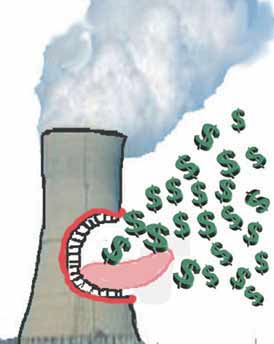 State panel to review Plant Vogtle costs http://chronicle.augusta.com/news/business/2016-02-02/state-panel-review-plant-vogtle-costs By Walter Jones ATLANTA, 4 Feb 16 — Electricity customers and the public will get a detailed look at what’s to blame for cost overruns in the construction of two nuclear reactors slated for power generation after a divided Public Service Commission voted Tuesday to begin its examination.The detailed probe of what Georgia Power has spent is expected to take 14 months to examine the delays that have added nearly $1 billion to the Plant Vogtle expansion.
South Korea’s President Park under pressure from nuclear weapons lobby
Pressure For South Korea To ‘Go Nuclear’ For Defense Against North’s Arsenal, Forbes, Donald Kirk , CONTRIBUTOR , 4 Feb 16
North Korea’s success in conducting a fourth nuclear test has ignited calls for South Korea also to produce nuclear warheads as a “defensive” measure that could heighten the balance of terror that already threatens the Korean peninsula.
South Korean nuclear physicists and engineers have been tinkering with developing nuclear warheads since 1970 but have been frustrated by U.S. insistence that the South abide by the nuclear non-proliferation treaty, which the South signed under U.S. pressure in 1975. The most they can do, under a deal reached with the U.S. last year, is to enrich uranium up to 20% — way above the 4% level for nuclear energy but far below the level for nuclear warheads……..
Calls for South Korea to develop a nuclear arsenal are heard in public, in the media and in political gatherings. The conservative Chosun Ilbo, South Korea’s biggest-selling newspaper, articulated the argument in an editorial reflecting the widespread view that China will do nothing to stop North Korea from exploding more warheads and firing more missiles – and that sanctions against the North will be weak and ineffective……..
At the same time, South Korea would have to abrogate the agreement signed by both Koreas in 1991 for denuclearizing the Korean peninsula – a deal that the North violated from the outset.
‘The U.S. has passed the buck for taming North Korea to China,’ said Chosun Ilbo. “China is doing nothing. Seoul now faces a real need for public discussion of the development of its own nuclear weapons.”
GlobalSecurity.org, a website that specializes in such issues, traced South Korea’s recurring interest in developing its own nukes back to the presidency of Park Chung-hee, father of the current president, Park Geun-hye……..
The current President Park has said her government will abide by the 1991 denuclearization agreement, but she faces rising demands at least for a review of longstanding policy……http://www.forbes.com/sites/donaldkirk/2016/02/04/pressure-mounts-in-south-korea-for-its-own-nukes-to-combat-north-koreas-nuclear-arsenal/#3e42677c345f
USA’s deadlocked policy on North Korea’s Nuclear Test
Deadlock: North Korea’s Nuclear Test and US Policy, CounterPunch by MEL GURTOV , FEBRUARY 4, 2016 North Korea continues to rattle the cages of both friend and foe. Despite near-universal condemnation of its fourth nuclear test and a deplorable human rights record, Kim Jong-un defiantly disregards the major powers and the United Nations. And now, adding insult to injury, the UN Secretary-General reports that North Korea has notified various UN agencies of its intention to launch a satellite, apparently to test its ballistic missile technology.
Continued nuclear testing by North Korea is its way of demonstrating independence of action. Nuclear weapons are the DPRK’s “insurance policy,” David Sanger writes – its last best hope for regime survival and legitimacy, and the most dramatic way to insist that the North’s interests should not be neglected. All one has to do is, through North Korean blinkers, see what has happened in Iraq, Iran, and Libya, where dictators did not have a nuclear deterrent. Two of them were invaded, and all had to surrender their nuclear-weapon capability.
The longstanding US approach to North Korea’s nuclear weapons is way off the mark. The Obama administration’s strategy of “strategic patience” shows little attention to North Korean motivations. The US insistence that no change in policy is conceivable unless and until North Korea agrees to denuclearize ensures continuing tension, the danger of a disastrous miscalculation, and more and better North Korean nuclear weapons. The immediate focus of US policy should be on trust building.
Increasing the severity of punishment, with threats of more to come, is representative of a failed policy. ……..
Serious engagement with North Korea remains the only realistic policy option for the United States and its allies. To be effective, however (i.e., meaningful to the other side), engagement must be undertaken strategically—as a calculated use of incentives with expectation of mutual rewards, namely in security and peace. And it should be undertaken in a spirit of mutual respect and with due regard for sensitivity in language and action.
Here are three elements of an engagement package:
First is revival of the Six-Party Talks without preconditions and with faithfulness to previous six-party and North-South Korea joint declaration…….
Second is creation of a Northeast Asia Security Dialogue Mechanism. ……
…..Third is significant new humanitarian assistance to North Korea. …The same kind of steady, patient, and creative diplomacy that led to the nuclear deal with Iran is still possible in the North Korea case. As the Under Secretary-General of the UN, Jeffrey Feltman, said, Iran shows that “diplomacy can work to address non-proliferation challenges. There is strong international consensus on the need to work for peace, stability and denuclearization on the Korean Peninsula. To achieve this goal, dialogue is the way forward.”
Mel Gurtov is Professor Emeritus of Political Science at Portland State University, Editor-in-Chief of Asian Perspective, an international affairs quarterly and blogs at In the Human Interest. http://www.counterpunch.org/2016/02/04/deadlock-north-koreas-nuclear-test-and-us-policy/
France’s EDF begging for government support before committing to UK Hinkley nuclear project
France can’t build its own new nuclear power stations, let alone ours He’s the only one of a Dad’s Army of pundits no longer on hand to commentate on the looming financial crisis, Spectator, 4 Feb 16 Martin Vander Weyer “…….signals from EDF of France — which has a two-thirds interest in this £18 billion project, alongside Chinese investors — are very worrying.
Having already spent £2 billion, the French state utility has deferred until at least the middle of this month a final commitment that was expected last week. Under pressure from unions and minority shareholders, and battered by falling wholesale electricity prices as well as endless delays and problems on its own nuclear new-build at Flamanville near Cherbourg, EDF is evidently begging for more support from its own government before committing such massive resources to solve a problem for ours.
…….the travails of Hinkley are reported to have ‘spooked’ Hitachi of Japan, which is in negotiations for another nuclear station at Wylfa Newydd in Anglesey……http://www.spectator.co.uk/2016/02/france-cant-build-its-own-new-nuclear-power-stations-let-alone-ours/
A botched email attack on nuclear scientists
The Former Federal Employee Who Tried to Launch a Cyberattack on Nuclear Scientists, The Atlantic He sent emails he thought were infected with viruses to Department of Energy employees involved in developing nuclear weapons. KAVEH WADDELL , 3 Feb 16 A nuclear scientist formerly employed by the federal government admitted Tuesday that he tried to infect the computers of about 80 government employees whom he believed had access to nuclear materials and weapons.
According to court documents released by the Department of Justice, the scientist, Charles Eccleston, pleaded guilty to one count of attempted unauthorized access to a protected computer.
Until he was fired in 2011, Eccleston worked for the Nuclear Regulatory Commission…….
He sent an email containing what he thought was a malicious link to about 80 Department of Energy employees, advertising an upcoming nuclear conference in Washington, D.C. The link, which was received by employees in nuclear labs in Tennessee, New Mexico, California, and in the DOE headquarters in D.C., was harmless.
He was told he would be paid about $80,000 for his efforts. Instead, he was arrested by Philippine police and deported to the U.S. He signed a plea deal on Tuesday, affirming that the evidence the FBI gathered on him is accurate, and faces up to 30 months of prison time and up to $95,000 in fines. (He wasoriginally charged with four felonies.)
And those “top secret” NRC email addresses Eccleston sold for thousands of dollars? The FBI later realized they were all publicly available. http://www.theatlantic.com/technology/archive/2016/02/fired-federal-employee-tried-to-launch-cyberattack-on-nuclear-scientists-computers/459894/
US State Dept Unclassified Email Warned Radioactive Steam from Fukushima Blowing Toward Tokyo; FOIA Page Appears Missing

A US State Dept document recently released on the US FOIA (Freedom of Information Act) site warns that radioactive steam was blowing toward Tokyo, not to go outdoors, etc. The author of the warning seems to be consultant Mitch Murata and sent from a law firm (Paul Hastings): “From a guy we know here in japan who does background searches for us etc…”
Case No. F-2014-20439 Doc No. C05780602, p. 2
But, the first 2 pages of the release are clearly not sequential
Case No. F-2014-20439 Doc No. C05780602, pp. 1 -2
3 pages in order as presented:
Case No. F-2014-20439 Doc No. C05780602, p. 1
Case No. F-2014-20439 Doc No. C05780602, p. 2
Case No. F-2014-20439 Doc No. C05780602, p. 3
Found here: https://cryptome.org/2016/02/hrc-fukushima.pdf
Emphasis our own. For updates see: https://cryptome.org
The official original is found under Case No. F-2014-20439 Doc No. C05780602 on the US gov…
View original post 103 more words
Radioactive Material (Tritium) in Urine of People Living Near Nuclear Reactors in China: Importance of Wind Direction, Mountains
Wind direction and topography, such as mountains, play an important role in dispersal of radioactive materials. Nuclear reactors legally leak lethal radionuclides all of the time – it doesn’t take an accident. The authors of the recent study below suggest that higher levels of tritium at 22 km distance from a nuclear power station, in contrast to 10 km distance, is due to either dominant wind direction, or a protective effect of a mountain between the reactors and the 10 km location, or a combination of the two.


[Note tritium 200 km distance from nuclear facility in Canadian study.]


Emphasis and note added. Original found here: http://www.mdpi.com/1660-4601/12/1/888
Shanghai is located to the northeast of these nuclear reactors.
When measuring radiation, the ability of radioactive materials to travel long distances and the importance of wind direction and topography are important things to consider. If measurements are consistently higher when the wind…
View original post 21 more words
Fanaticism and fantasy drive purported TPP ‘benefits’

So-called “free trade” agreements are continually advertised as creators of jobs, yet jobs are lost and wages decline once they go into effect. As representatives of the 12 countries participating in the Trans-Pacific Partnership gather this week in New Zealand to begin their final push for it, the usual unsubstantiated claims are being put forth.
Why is this so? I mean beyond the obvious answer that such claims are propaganda in the service of corporate elites and financiers. Corporate-funded “think tanks” that pump out a steady barrage of papers making grandiose claims for “free trade” deals that are relied on by the political leaders who push these deals require some data, no matter how massaged. One organization prominent in this process is the Peterson Institute for International Economics, which has issued rosy reports in expectation of deals like the North America Free Trade Agreement — for example, it predicted 170,000…
View original post 1,389 more words
February 4 Energy News

World:
¶ According to a statement released by the government-run Costa Rican Institute of Electricity, the country used renewable sources for 99% of its energy in 2015. The small Central American nation used a mix of geothermal, hydroelectric, wind, solar, and biomass energy. That’s fantastic news! [Unicorn Booty]
 Image via Armando Maynez / Flickr
¶ The global wind energy industry had a record year in 2015, with 62 GW installed. According to new figures released by Bloomberg, global wind energy installs for 2015 reached 62 GW, led by China, which surpassed its own previous onshore wind record by close to 40%, installing just under 29 GW. [CleanTechnica]
¶ British Energy company SSE has said it expects to close three out of four units at a power plant in Cheshire by 1 April. The 45-year old plant has been loss-making for two years and was forecast to…
View original post 731 more words
Challenging the ICRP dose model with Chris Busby – Nuclear Test Veterans Court Information
h/t missmilkytheclown on Youtube for added info
Excellent video post! A Must See & great links provided from detail box: Prof Chris Busby has had concerning British nuclear test veterans in the UK & their battle with the UK Ministry of Defence & the Home Office. New parameters have been set allowing Prof Busby to challenge the MOD on the false science that they are trying to use to support their case against the nuclear test veterans. This is a first in the UK. This case now has the possibilities of opening up the questions concerning Depleted Uranium and other isotopes that have been deemed to be “low dose”. https://nuclear-news.net/
Challenging the ICRP dose model with Chris Busby – Court Update: https://soundcloud.com/sean-arclight/challenging-the-icrp-dose-model-with-chris-busby-court-update Visuals from Chris Busby: Nuclear Test Veterans Betrayal https://youtu.be/UB-c3Axp3xk Prof Busby talks about the Test veterans radiation Pensions Appeals Tribunals cases. Reports will be placed on the internet on the sites THE LOW LEVEL RADIATION CAMPAIGN http://www.llrc.org/ andhttp://www.greenaudit.org on http://www.greenaudit.org/papers/ Meteorogical records, airflow and other factors affecting local fallout from british nuclear tests at christmas island in 1957-58. Occasional paper 2010/12 01/12/2010 http://www.scribd.com/doc/111934965/6 Enhancement of absorbed dose from natural background gamma radiation due to photoelectron induction in uranium particles… http://www.scribd.com/doc/111934926/3 Science on trial: on the biological effects and health risks following exposure to aerosols produced by the use of depleted uranium weapons Invited presentation to the royal society london,
(…)http://www.scribd.com/doc/111935043/16 Pandora’s canister: a preliminary examination of the safety assessment sr-site for the skb proposed kbs-3 nuclear waste repository at forsmark sweden and associated activities relating to the disposal of spent nuclear fuel submission to: the swedish land and environmental court,(…)http://www.scribd.com/doc/111935075/21 The health effects of exposures to radioactivity from the us pacific nuclear tests in the marshall is. Criticisms of the analysis of simon et al 2010 radiation doses and cancer risks in the marshall islands associated with exposure to radioactive fallout from bikini and enewetak nuclear weapons tests (…)http://www.scribd.com/doc/111935078/22 The health outcome of the fukushima catastrophe ;initial analysis from risk model of the european committee on radiation risk ecrr occasional paper 2011/7 30th March 2011 http://www.scribd.com/doc/111935113/24 Predicting the global health consequences of the chernobyl accident; methodology of the european committee on radiation risk April 24th 2011 http://www.scribd.com/doc/111935124/26
Radioactivity in vehicle air filters from fukushima part i gamma emitting radionuclides. July 2011 http://www.scribd.com/doc/111935140/27 Real data from the hiroshima bomb shows that the japanese a bomb study conclusions are false Jan 2010 http://www.scribd.com/doc/111935207/29 Ionizing radiation and children’s health: conclusions 2006 http://www.scribd.com/doc/111935211/30
Did chemical exposures of servicemen at porton down result in subsequent effects on their health? The 2005 porton down veterans support group case control study. First report. 27/07/2006 http://www.scribd.com/doc/111935224/32 Advanced biochemical and biophysicalaspects of uranium contamination 2009 http://www.scribd.com/doc/111935236/35 Fallujah uranium hair study 2011 http://www.scribd.com/doc/111935322/39
Did he use of Uranium weapons in Gulf War 2 result in contamination of Europe? Evidence from the measurements of the Atomic eapons Establishment, Aldermaston, Berkshire, UK. Occasional Paper 2006/1 http://www.scribd.com/doc/113416311/47 Yury Bandashevsky’s first book printed and sent to Chris Busby in 2000; the cause of Bandashevsky’s imprisonment; scanned 2000 http://www.scribd.com/doc/113416703/52 Very low dose foetal exposure to Chernobyl contamination in Europe resulted in increases in infant leukemia 2009 http://www.scribd.com/doc/113416718/54
Cancer, Infant Mortality and Birth Sex-Ratio in Fallujah, Iraq 2005–2009 http://www.scribd.com/doc/113416726/55 Not to mention all the information available HERE: http://www.llrc.org/ THE LOW LEVEL RADIATION CAMPAIGN http://www.llrc.org/
you can donate here to support costs of the case : http://tinyurl.com/z2esn3t
Nuclear waste repositary still needed: reprocessing is no answer to radioactive trash problem
EU paints challenging picture of Europe’s nuclear future, Energy Post. February 2, 2016 by Sonja van Renssen “……….Limited prospects for recycling nuclear fuel
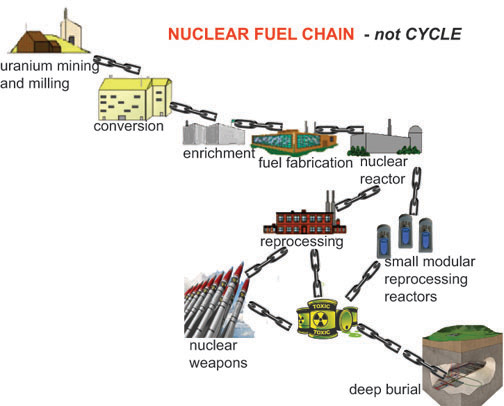
France is the only country in Europe that is still working towards a fully closed fuel cycle with fast neutron reactors and advanced reprocessing technology. Other countries use open cycles.
France will be the only country to operate reprocessing facilities after 2018 (when those in the UK are shut down). The partially closed cycle that technology currently permits “is not expected to give a major reduction of the final disposal solution footprint in comparison to an open cycle”.
The future of recycled nuclear fuel is limited by the lack of fast-breeder reactors, more safety requirements, a higher risk of proliferation, lower competitiveness, and the fact that it still requires a final waste depository……. http://www.energypost.eu/exclusive-eu-paints-challenging-picture-europes-nuclear-future/
European Commission faces the astronomic future costs of nuclear power
Without lifetime extensions, around 90% of the EU’s existing nuclear reactors would be shut down by 2030. But even with lifetime extensions, 90% of existing nuclear electricity production capacity will need to be replaced before 2050. This will cost €350-500 billion, estimates the Commission.
The Commission admits that the costs of new-build projects “are in the high range” of what analysts expected. Hinkley Point C tops the charts with €6.755 per KWe (vs. a €5.290 per KWe average for a “first of a kind” twin unit). There is a “historical trend of cost escalation”, the Commission concludes.

 EU paints challenging picture of Europe’s nuclear future, Energy Post. February 2, 2016 by Sonja van Renssen In a leaked draft document obtained by Energy Post, the European Commission outlines the investments in the EU nuclear industry that it believes are needed out to 2050. The document, originally announced for last year, but off the table again for February, paints a challenging picture for the European nuclear industry. €450-550 billion will have to be spent on new plants and lifetime extensions, costs of decommissioning and waste management are high, competitiveness is a challenge and nuclear’s share in the energy mix will decline from 27% today to 17-21%. Sonja van Renssen investigates.
The “Communication for a Nuclear Illustrative Programme” or PINC is a non-legislative document “periodically” produced by the European Commission, as required by the Euratom Treaty (article 40) that “provides an overview of investments in the EU for all the steps of the nuclear lifecycle”. The last PINC dates back to 2008 so the one currently under preparation will be the first since the Fukushima disaster in March 2011. It “provides a basis to discuss the role of nuclear energy in achieving the EU energy objectives”………
Globally, nuclear-related investment needs are estimated at around €3 trillion out to 2050, with most of that money due to be spent in Asia. ……
Total investments in EU nuclear energy approaching three-quarters of a trillion Euros are needed from now to 2050, the Commission calculates….
Escalating costs of new-build
Without lifetime extensions, around 90% of the EU’s existing nuclear reactors would be shut down by 2030. But even with lifetime extensions, 90% of existing nuclear electricity production capacity will need to be replaced before 2050. This will cost €350-500 billion, estimates the Commission.
“Different financing models are being examined or used in several EU Member States,” the Commission notes, citing the UK’s Contract for Difference for Hinkley Point C and the Mankala model in Finland. It does not give an opinion on state aid for nuclear, however, although this is fully within its remit. Then the understatement of the year: “Some new first of a kind projects in the EU, have experienced delays and cost overruns.” The Finnish Olkiluoto and French Flamanville projects are both at over three times their original budgets and years behind schedule.
The Commission admits that the costs of new-build projects “are in the high range” of what analysts expected. Hinkley Point C tops the charts with €6.755 per KWe (vs. a €5.290 per KWe average for a “first of a kind” twin unit). There is a “historical trend of cost escalation”, the Commission concludes. ……
Squeezing out lifetime extensions
The average age of the nuclear fleet in Europe is 29 years. By 2030, most of the EU’s nuclear fleet would be operating beyond its original design life. The Commission expects lifetime extensions of 10-20 years to require investments of €45-50 billion by 2050. Note that more than 80% of this would be spent from now to 2030. The post-Fukushima safety upgrades increase the cost of these lifetime extensions by some 5-25%, the Commission estimates……http://www.energypost.eu/exclusive-eu-paints-challenging-picture-europes-nuclear-future/
South Africa: CORRUPTION GOES NUCLEAR – Jacob Zuma, the Guptas and the Russians


Zuma’s 9 600MW nuclear procurement programme and its accompanying contracts are tainted with alleged vested interests of the most deplorable kind.
If the country has any hope of having a rational, legal, and transparent evaluation of the need for nuclear energy, the procurement process has to start afresh.
This however can only occur under new leadership, which places the country’s interests ahead of its own.
If this does not occur, the future of South Africa will consist of a dark and discontented nuclear winter.
Zuma, the Guptas and the Russians — the inside story
Part 1: In pursuit of satisfying his insatiable greed — Jacob Zuma will liberate us from our constitutional democracy, and destroy the chance of a ‘better life for all’ Zuma, the Guptas and the Russians — the inside story RAND DAILY MAIL LILY GOSAM 02 FEBRUARY 2016
I wish to make it clear from the outset that this piece is not about arguing the merits or demerits of nuclear energy. It is whether Zuma’s decision for nuclear energy is based on sound economic principles for the good of the country, or for some other purpose.
Zuma’s (rabid) pet project
On 9 of December 2015 (and hours before Nene was fired), Zuma’s cabinet approved the 9 600 MW nuclear procurement programme (nuclear programme). This paves the way for nuclear vendors to present proposals in March 2016 to build 6 to 8 nuclear reactors, at an estimated cost of between R800-billion and R1.6-trillion ($50-billion to $100 billion)[5] [6] [7.
The nuclear programme, however, glows with controversy. According to Peter Attard Montalto (an emerging market economist at Nomura), the nuclear programme is Zuma’s “pet project”, and is highly interwoven with politics and the succession issue[8]. His analysis is supported by a Mail and Guardian [M&G] source who said that the programme was regarded as one of Zuma’s “presidential legacy projects” [9]. Professor William Gumede, of Democracy Works, added that the programme is being implemented essentially from a purely patronage point of view[10]. While Andrew Feinstein, executive director of Corruption Watch UK (and former ANC MP), said simply, “I fear that the corruption in this deal might dwarf the arms deal” (News24)[11].
A nuclear procurement process in a constitutional democracy should be transparent, logical, considered, legal, participatory, and unbiased.
Yet Zuma has assumed personal control of the nuclear programme, and it has been characterised by: secret meetings; undisclosed documents and classified financial reports; deceit; aggressive campaigning; damage control exercises; illegality; use of apartheid (‘national key-point’) legislation[12]; sidestepping of Eskom’s technical and financial oversight; destruction of oversight organs of state; disregarding of industry experts; refusal of public consultation; ignoring of the ANC’s national executive committee (NEC) and ANC resolutions; and the removal of any government opponents, the most notable of whom was Nene…………
Below exposes the reasons why Zuma is so hell bent on forcing the Russian 9 600 MW programme through, irrespective of: the evidence against it (from independent and government sources); the laws that stand in his way; the people that advise against it; and the grave concerns of his own party.
Radioactive plant-feed
Nuclear reactors require uranium to function, in particular low-enriched uranium (LEU). But first one must mine the uranium, and for South Africa’s 9 600MW nuclear programme, plus the existing Koeberg Nuclear Plant, the demand for uranium would steadily increase as the nuclear power plants come online. Luckily South Africa is said to have 6% of global identified resources of uranium (or 970 000 tons), the seventh highest share in the world [OECD-NEA, 2013][62].
With a 9 600MW nuclear deal, local uranium reactor demand would grow from the current 290 tons of Uranium (Ut) per year, to eventually 3300 Ut per year, once all the reactors are operational [OECD- Nuclear Energy Agency, 2014][63]. That’s a dramatic 11 times increase in local demand for uranium.
And as it just so happens, in 2010 the Guptas (a family well-known for their backing of Zuma), along with Zuma’s son, Duduzane, emerged as buyers of a South African uranium mine — the Dominion Rietkuil Uranium Project — amid claims that Zuma intervened to ease state funding for the project (according to amaBhungane – M&G’s investigative arm)[64].
[For summaries of the Guptas’ influence with Zuma and his family, read Verashni Pillay’s 2013 M&G article, or Franz Wild’s 2015 Bloomberg article. There are also excellent standalone articles on the Guptas dealings with the state, such as the Sunday Times piece by Sabelo Skiti on how Eskom allegedly went to extraordinary lengths to make sure the Gupta family landed a R4-billion coal deal, or M&G’s amaBhungane articles on a former Gupta associate allegedly involved in R835-million Transnet kickbacks]
All mine
Uranium One Incorporated (Uranium One) — a public company in Canada — owned a number of uranium mines around the world, including a uranium and gold mine in the North West province, South Africa[65] [66]. The local mine was called the Dominion Rietkuil Uranium project, which proved to be a disappointment to the company and so it was mothballed in late 2008.
Uranium One’s global uranium holdings attracted the attention of Rosatom, which from 2009 onwards began buying up the company’s shares through one of its many wholly-owned subsidiaries. (Rosatom would eventually indirectly secure 51% ownership of Uranium One in 2010, and 100% in 2013, after which it was delisted[67])[68].
As Rosatom (through its subsidiary) was buying into Uranium One, the company sold the South African Dominion Rietkuil Uranium project. Reporters picked up on Uranium One’s “low-key announcement” in April 2010 of the sale of the mine to an undisclosed party[69] [70]. The mine was sold for $37.3-million, at a loss to the company of $242-million (based on the company’s interim financial statements)[71]. Thus the mine was sold for about 14% of its reported value.
One month later, in May 2010, the media got wind that the mine — which would come to be known as Shiva Uranium — was bought by Oakbay Resources and Energy Limited (a Gupta-controlled company) together with minority shareholders, which consist of companies within companies (like a Russian nesting doll), including indirectly the ANC’s MK war veterans and its women’s group[72], and the black economic empowerment group Mabengela Investments (Mabengela).
Mabengela is headed by Zuma’s son Duduzane and Rajesh “Tony” Gupta (the youngest of three Gupta brothers). 45% of Mabengela is owned by Duduzane Zuma; 25% by Rajesh “Tony” Gupta (the youngest of the three Gupta brothers); 20% by an array of Gupta employees, former business partners and friends; and the last 10% is owned by an obscure offshore company, with its sole owner a Dubai resident with discernible traces in South Africa[73] [M&G]. The M&G wrote that Mabengela appears to be the vehicle for the Zuma family’s empowerment by the Gupta family[74].
(The North West province — where the mine is situated — is governed by Supra Mahumapelo, the province’s premier, and he is said to be a member of the so-called “premier league”, which consists of premiers loyal to Zuma. The other premier-league provinces are the Free State and Mpumalanga[75]. For the 2014/15 period, the auditor-general found the number of “clean audits” — that is, financial statements that present a fair and accurate picture and comply with accepted accounting principles — for the departments and public entities in Mpumalanga and the North West came to 24% and 4% respectively, while 32% of the Free State’s audits were deemed clean[76] [77]. This excludes financial statements by departments not submitted on time, or at all[78].
amaBhungane and the Sunday Times uncovered that the Guptas had expected the Public Investment Corporation (PIC) to facilitate funding for the Uranium mine purchase. (The state-owned PIC is the country’s largest institutional investor, with more than R750-billion — as at 2010 – in civil servants’ pensions under its management[79]).
……….At the time of the purchase of the Dominion Rietkuil Uranium mine, journalist Brendan Ryan [Fin24] pondered, “Who in their right mind would buy one of the most notorious dogs in the entire South African mining sector — the failed Dominion Uranium mine — and do it at a time when uranium prices are still depressed? That’s the $64 000 question following news that the Gupta family — the ultimate controlling shareholder in Shiva Uranium — has bought Dominion for $37.3-million. It’s either the steal of the century — given that developers Uranium One wrote off an investment of $1.8-billion when they shut Dominion down in October 2008 — or it’s a classic case of throwing good money after bad.”[93]
Unbeknownst to Ryan, at the time, was that Zuma and his benefactors had set the course for a large-scale nuclear programme.
Atomic timeline: 2000 to 2010
In the early 2000’s, Zuma — then South African deputy president — met the Guptas for the first time, as a guest at a business function held by a Gupta company, Sahara Computers[94].
In 2005, during the power struggle between Zuma and Thabo Mbeki for the presidency, the Guptas were said to have sided with Zuma, even after he had been fired as deputy president. The Guptas had tried to court Mbeki, but did not get far. (The Guptas claim that they were friends with Mbeki as much as they are friends with Zuma). The Guptas don’t mind telling whoever cares to listen that they were there for Zuma when his days were dark [Business Day][95].
Early in 2007, Eskom approved a plan to expand South Africa’s overall electricity capacity by the year 2025. The plan included the construction of 20 000 MW of new nuclear capacity, consisting of up to 12 nuclear reactors. France’s Areva and the United States’ Westinghouse were contenders[96].
In December 2007, Zuma was elected as ANC president[97].
Six month’s later, in June 2008, Duduzile and Duduzane, Zuma’s daughter and son joined the board of the Gupta-controlled company, Sahara Computers[98] [99]. (Duduzile resigned from the position in 2010[100]. Duduzane and Gupta family members are directors of at least 11 of the same companies, as at December 2015 [Timeslive][101].)
In September 2008, Mbeki resigned as South African president.
In December 2008, Eskom abandoned the 20 000MW nuclear plan for being unaffordable in the wake of the 2008 global financial crisis and the renewed appreciation for coal production[102] [103] [104][Professor J. van Wyk of Political Sciences]
Zuma was inaugurated as South African president in May 2009. In November 2009, the Guptas’ formed a new company, which would come to be known as Oakbay Resources and Energy Limited[105](Oakbay).
One month later, in December 2009, Zuma declared at the United Nations Climate Change Conference in Copenhagen that South Africa was going to reduce its carbon emissions by 34% by 2020[106]. His announcement took both local and international commentators by surprise, but it revealed Zuma’s nuclear ambitions.
Four months after that, in April 2010, the Guptas, Duduzane Zuma, and other investors bought the mine — soon to be called Shiva Uranium — with Zuma allegedly ensuring state assistance. The Guptas and Duduzane then jumped into action, refurbishing the uranium and gold plant “very aggressively”[107] to make the plant operational for production. They also possessed due diligence studies and a comprehensive bankable feasibility study (a document required to raise capital)[108] [109]……..
In August 2010, Zuma met with his Russian counterpart, Dmitry Medvedev, during his first official visit to Russia. Zuma was accompanied by 11 cabinet ministers and more than 100 South African business people[112].
During the trip, Zuma concluded a deal with Medvedev for Rosatom to supply 40% of Koeberg’s enriched uranium needs until 2017 to 2018[113] [114]. The Head of Rosatom told reporters that the company hoped to eventually control 45% of the low-enriched uranium (LEU) market in South Africa[115].”Our share of the market in South Africa will rise,” he said…………….
Gupta and Gupta-linked companies involved in mining – including Shiva Uranium – have several times run into trouble with regulatory requirements, as well as those on environmental compliance[226] [227][TimesLive]. Due to changes in environmental and mining legislation, Zwane is in charge of enforcing those regulations[228] [229]………..
South Africa has become one of the leading destinations for renewable energy investment, so said a 2015 research report by the Energy Research Centre UCT. The Renewable Energy Independent Power Producers Project (REIPPP) is a joint private-public initiative for renewable energy generation, mainly from wind, solar PV and concentrated solar power. Since its inception, the REIPPP has been hailed an unprecedented success. The programme is unique in that for projects to qualify, developers must contribute to the reduction of socio-economic inequity, through community ownership and economic development benefits[237].
As of October 2015, 92 projects had been selected as part of the REIPPP, mobilising private investment of R193-billion, and with a combined capacity of 6 327MW. In addition, 37 out of the 92 projects had been completed by then and they contributed 1 827MW of power to the national electricity grid (this is equivalent to one Koeberg nuclear power station), while also providing social upliftment[238] [239] [240][241]. In June 2015, the energy department issued a determination to procure a further 6 300 MW for the project[242]. The national treasury expected the REIPPP to eventually contribute 17 000 MW of electricity capacity to the grid by 2022[243].
Yet, in October 2015, just when bidding by renewable power producers was set to start for the additional capacity[244], Brian Molefe — now CEO of Eskom — halted the process, with the non-issuance of budget quotes for the programme. He said it was a temporary measure taken to protect the financial sustainability of Eskom. Effectively, he was saying Eskom could not afford to support new REIPPP connections as well as energy purchases. He added that, “very soon a lasting solution will be found to address this matter” [Fin24][245] [246] [247]. (As of writing, no reports on Eskom’s future commitment to the REIPPP could be located.)
On Wednesday, 9 of December 2015, Zuma held a cabinet meeting to discuss key government programmes and decisions. Amongst them was the nuclear procurement programme for 9 600 MW, which was then approved by cabinet (but excluded the then Cooperative Governance and Traditional Affairs minister Gordhan, who was off sick) [Carol Paton of Business Day uncovered cabinet’s decision][248].
Just hours after the meeting, and to the cabinet’s great consternation and surprise (according to Jeff Radebe, who is a cabinet member, an ANC NEC member, and minister of the presidency)[249], they heard along with the rest of the public that Zuma had fired Nene, and replaced him with a parliamentary backbencher, David van Rooyen. The move was met with shock and disbelief in all sectors at home and abroad[250].
Two days later, on Friday, 11 of December 2015, the post-cabinet media briefing by Radebe and accompanying press statement made no mention of the fact that the 9 600MW nuclear deal had been approved[251] [252] [253]. It was only on Monday, 14 December 2015, after Gordhan had taken the helm of treasury that cabinet’s decision was publically confirmed by him.
Uranium enrichment
“Global uranium demand is predominantly driven by its use in nuclear power generation plants,”[254]declared Oakbay, the majority shareholder in Shiva Uranium. But uranium cannot be used as fuel to run nuclear reactors until it has been converted into low enriched uranium (LEU)[255] [256].
The World Nuclear Organisation states that Eskom procures its conversion, enrichment and fuel fabrication services from world markets, and that nearly half of its enrichment is from Russia. However, historically, South Africa has sought self-sufficiency in its fuel cycle[257].
In the 1970s the Apartheid government established a uranium enrichment company, which later, in 1999, was restructured to become Necsa (currently under the management of Zuma’s “lynchpins” Seekoe and CEO Tshelane). But actual enrichment operations ceased in 1995, and the only two conversion plants were both demolished. Much of the high-enriched uranium (HEU) is still stored away. (Some say there’s a 250kg cache[258]).
With the prospect of 9 600MW of nuclear power, local enrichment operations are again a priority. ………
Uranium is not the only commodity with dubious links to the nuclear programme.
In July 2013, John Helmer (a provocative American journalist who focuses on the Russian business sector) flagged a strange deal with a company Nemascore which had links to Zuma’s associates ……….
Stacked deck
Overall, the tendering process for the 9 600MW nuclear build programme will include 80% South African sourced construction companies, engineers, waste management system suppliers, security systems providers, cabling, cement, steel, finance, transport, IT firms, mining, and more[286] [287].
Which on the face of it sounds wonderful, but not when one considers it is for a nuclear programme that has already been declared by government and independent studies to be unnecessary and unaffordable, will ultimately result in 10 to 50 times higher electricity costs than we are paying now, and already exhibits alarming signs of fixed tendering through devious means[288]……..
Zuma is the bomb
Besides LEU, enrichment plants can also produce high enriched uranium (HEU), which is used in nuclear weaponry.
In March 2012, at a Nuclear Security Summit in Seoul, Zuma stated on the subject of HEU, “…South Africa has adopted a policy on the benefication of our mineral resources, including uranium.”[293] What Zuma meant by “benefication” was that SA has a policy of enriching Uranium and does not want to limit its options by foreswearing the production or use of HEU [IOL]. Officials further explained that Zuma was not only keeping SA’s options open for producing HEU in the future, but also defended its decision to hold on to its existing stock of HEU from the nuclear weapons programme of the Apartheid government [IOL]………..
Conclusion
Zuma’s 9 600MW nuclear procurement programme and its accompanying contracts are tainted with alleged vested interests of the most deplorable kind.
If the country has any hope of having a rational, legal, and transparent evaluation of the need for nuclear energy, the procurement process has to start afresh.
This however can only occur under new leadership, which places the country’s interests ahead of its own.
If this does not occur, the future of South Africa will consist of a dark and discontented nuclear winter. http://www.rdm.co.za/politics/2016/02/02/zuma-the-guptas-and-the-russians–the-inside-story
UK Hinkley Point nuclear plant project director quits
 EDF project director for UK Hinkley Point nuclear plant quits, 7 News, Reuters February 3, 2016 LONDON – An executive of French utility EDF in charge of Britain’s first new nuclear power station project for 20 years is leaving to join U.S. energy company Entergy Corp , the U.S. firm said on Tuesday.
As an executive director at EDF’s British unit, EDF Energy, Christopher Bakken had been project director since 2011 for the Hinkley Point C nuclear project in southwestern England.
He was responsible for the design, procurement, construction and commissioning of the planned new nuclear plant………
Intractable problems at two similar nuclear plants under construction in France and Finland threaten more delays to EDF’s British plans. https://au.news.yahoo.com/world/a/30718466/edf-project-director-for-uk-hinkley-point-nuclear-plant-quits/
1 This Month
Chernobyl: The Lost Tapes – A good documentary on Chernobyl on SBS available On Demand for the next 3 weeks– https://www.sbs.com.au/ondemand/tv-program/chernobyl-the-lost-tapes/2352741955560

of the week–London Campaign for Nuclear Disarmament

Tell the Ukrainian Government to Drop Prosecution of Peace Activist Yurii Sheliazhenko
To see nuclear-related stories in greater depth and intensity – go to https://nuclearinformation.wordpress.com
-
Archives
- April 2026 (189)
- March 2026 (251)
- February 2026 (268)
- January 2026 (308)
- December 2025 (358)
- November 2025 (359)
- October 2025 (376)
- September 2025 (257)
- August 2025 (319)
- July 2025 (230)
- June 2025 (348)
- May 2025 (261)
-
Categories
- 1
- 1 NUCLEAR ISSUES
- business and costs
- climate change
- culture and arts
- ENERGY
- environment
- health
- history
- indigenous issues
- Legal
- marketing of nuclear
- media
- opposition to nuclear
- PERSONAL STORIES
- politics
- politics international
- Religion and ethics
- safety
- secrets,lies and civil liberties
- spinbuster
- technology
- Uranium
- wastes
- weapons and war
- Women
- 2 WORLD
- ACTION
- AFRICA
- Atrocities
- AUSTRALIA
- Christina's notes
- Christina's themes
- culture and arts
- Events
- Fuk 2022
- Fuk 2023
- Fukushima 2017
- Fukushima 2018
- fukushima 2019
- Fukushima 2020
- Fukushima 2021
- general
- global warming
- Humour (God we need it)
- Nuclear
- RARE EARTHS
- Reference
- resources – print
- Resources -audiovicual
- Weekly Newsletter
- World
- World Nuclear
- YouTube
-
RSS
Entries RSS
Comments RSS
 nuclear-news