January 11 Energy News

Opinion:
¶ Nuclear power might be safe or cheap, but never safe and cheap • In spite of the problems of corrosive, hot, cancer-causing, deadly waste, the Wisconsin Legislature has been captured by industry lobbyists who love a good yarn like the one about clean, safe, cheap nuclear power. [Madison.com]
 Point Beach nuclear power plant on Lake Michigan.
¶ 8 reasons why building new nuclear power plants is a bad idea • The South African government seems intent on pushing through its plans to build a fleet of new nuclear power stations regardless of mounting public criticism and opposition. Alas, atomic energy remains a poor option. [News24]
World:
¶ Egypt’s feed-in tariff renewable energy program is seen to provide a debt and equity investment opportunity of between $6 billion (€5.5 billion) and $7 billion through 2018, according to investment bank EFG Hermes. The country has a…
View original post 471 more words
Radioactive Releases from the Nuclear Reactors of the Mississippi River Watershed: What are the Dangers? It Doesn’t Take an Accident – They Legally Leak All the Time


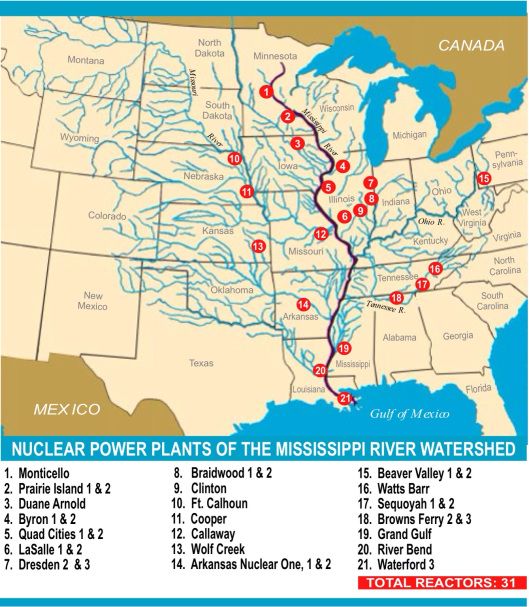


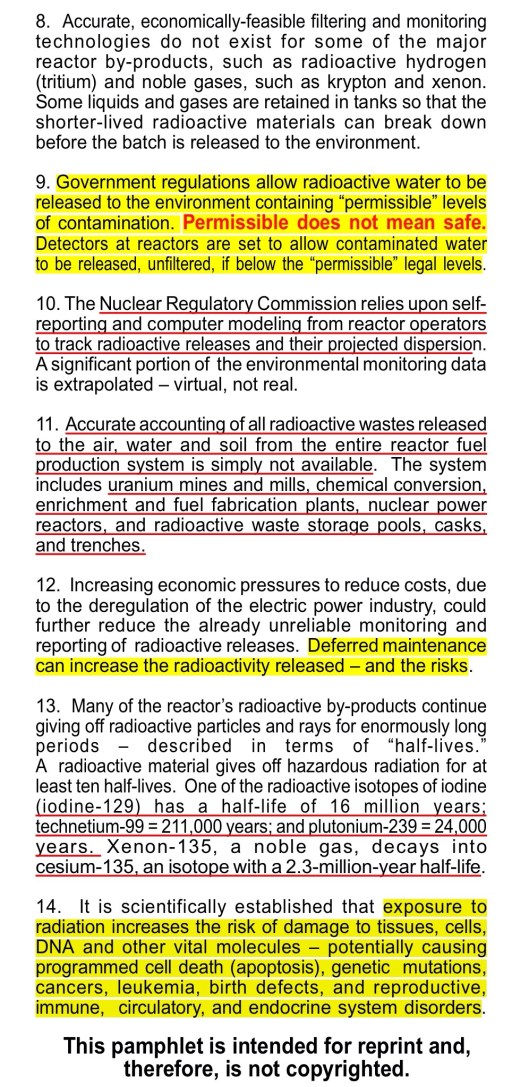
RADIOACTIVE RELEASES FROM THE NUCLEAR POWER PLANTS OF THE MISSISSIPPI RIVER WATERSHED by Nuclear Information and Resource Service World Information Service on Energy, 2001, Emphasis our own. Original here: https://www.nirs.org/factsheets/mississippiriverpam.pdf
NB: 1 Curie is 37 Billion Becquerels. A Becquerel is one radioactive disintegration (shot) per second!
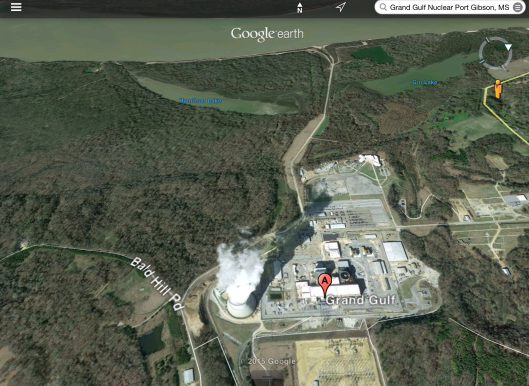
Grand Gulf Nuclear Reactor on the Mississippi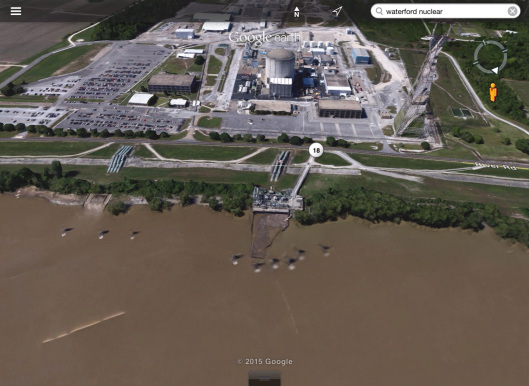
Waterford Nuclear Reactor on the Mississippi
Impact of Radiation on Wildlife of Fukushima
Biologist Timothy Mousseau’s Lecture at Fukushima on Jan 11, 2016
” Impact of Radiation on Wildlife of Fukushima”
中継の視聴をのがしてしまったので、のちほど視聴してみます。
生物学の視点から。
St Louis residents have no faith in Planned Barrier Between Fire, Nuclear Waste Dump
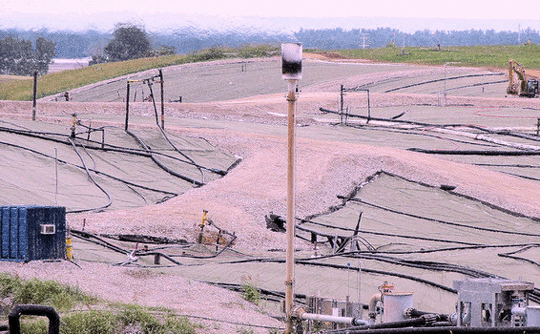 Residents Frustrated With Planned Barrier Between Fire, Nuclear Waste Dump In St. Louis http://www.ibtimes.com/residents-frustrated-planned-barrier-between-fire-nuclear-waste-dump-st-louis-2258034 BY ADAM LIDGETT @ADAMLIDGETT ON 01/09/16 While the U.S. Environmental Protection Agency plans to go ahead with the building of a firebreak between an underground fire and a nuclear-waste site in suburban St. Louis, area residents indicated they are frustrated by the situation, Al Jazeera reported Saturday. A number of them said the plan to construct the wall is not enough and that there should be a more-permanent solution to the problem.
“It’s looking more and more like removal is the only way to guarantee [a safe solution],” Dawn Chapman, who lives close to the waste site, told Al Jazeera. “Life’s over for [people] in this community. They can’t live where they are. They can’t enjoy it.’”
In 2010, an underground fire was detected in a landfill near St. Louis. It posed a pretty big problem in and of itself, but it was compounded by its proximity to another landfill containing Cold War-era nuclear material. The fire at the Bridgeton Landfill is smoldering only about 1,000 feet from tons of radioactive material in the West Lake Landfill, St. Louis Public Radio reported. A firebreak was proposed in 2013, but the EPA wanted then to conduct more tests to determine the amount of radioactive material at the site.
“The only way to guarantee the radioactive content will never come in contact with the subsurface fire in the future is to remove the radioactive material,” Ed Smith, a representative of the Missouri Coalition for the Environment, told Al Jazeera. “We’ve watched the EPA work on the barrier plan now for almost two years whereas they could have been planning for the removal of the radioactive waste.”
It’s unknown how much radioactive waste — dumped there in 1973 as residue of the Manhattan Project — is at the site. Some experts said the contamination could be unprecedented. “We are now working through the highly complex details of implementing our decision and the associated legal steps,” EPA Acting Regional Administrator Mark Hague said in a statement cited by St. Louis Public Radio. “Once the plan is finalized, we are committed to providing this information to the public. EPA will use all available enforcement authorities to ensure implementation of this work.”
Experts warn of terrorist drone attacks on nuclear facilities
Terrorists could use drone bombs to attack nuclear power stations, experts warn http://www.independent.co.uk/news/uk/home-news/terrorists-could-use-drone-bombs-to-attack-nuclear-power-stations-experts-warn-a6805316.html, Ian Johnston 11 Jan 16

The Oxford Research Group looked at more than 200 drones and concluded they “will be used as simple, affordable and effective airborne improvised explosive devices”, the Guardian reported.
“The UK government, police, military and security services will need to introduce countermeasures to reduce or mitigate the risk of commercially available drones being used for attack,” the security think tank warned. “Islamic State [Isis] is reportedly obsessed with launching a synchronised multi-drone attack on large numbers of people in order to recreate the horrors of 9/11.”
The report recommends a licensing system for drones, using lasers and radio jammers to defend potential targets and issuing guidelines to the security forces on when to shoot down drones.
It pointed to a number of incidents where drones were used by protesters, including when a football match between Albania and Serbia was interrupted by a drone flying an Albanian flag.
Highest alert level for US military in South Korea
 North Korea: US forces in South put on highest level of alert; allies discuss ‘strategic assets’ , ABC News, 11 Jan 16
Key points:
- Media reports say a US aircraft carrier, B-2 bombers, submarines and F-22 fighters being considered for deployment to South
- Inter-Korean Kaesong industrial park restrictions to increase on Tuesday
- South Korea and Japan used a military hotline for the first time after North’s test
- North’s state media says Kim Jong-un congratulated nuclear scientists
The US and its ally South Korea are in talks to send further strategic assets to the Korean peninsula, a day after a US B-52 bomber flew over the South in response to the test…..
Under the US-South Korea military alliance, there are nearly 30,000 US troops permanently stationed in South Korea, which is also protected by the US “nuclear umbrella”. http://www.abc.net.au/news/2016-01-11/us-troops-in-south-korea-on-high-alert-after-north-nuclear-test/7081296
China nuclear reactors – possible partnership with bankrupt AREVA
Radiation fears in Hong Kong from China’s unproven and possibly faulty nuclear reactors nearby, Post Magazine, Stuart Heaver, 10 Jan 16 “……. the only customer for the American Westinghouse AP1000 reactor is China, which is currently constructing four, in Zhejiang and Shandong provinces. The third-generation AP1000 is also untested in the real world, and the reactors being built in China are years behind schedule, too.
When, in November, Areva announced a possible minority stake sale to another major player, China National Nuclear Corp, and a partnership covering all aspects of the nuclear fuel cycle, some commentators saw it as a bailout by the Chinese. Schneider finds it astounding that anyone would seek a partnership with what he calls a “bankrupt company”.
“Everybody is scared to death about losing billions of euros if these plants don’t open,” says Schneider, adding that all eyes will be on tests in France scheduled for this year and the ASN will be under enormous pressure.
“You don’t need to be an expert to imagine the huge commercial pressure in play,” says Schneider. “But what does it mean when an almost bankrupt company is operating a nuclear facility?”…..http://www.scmp.com/magazines/post-magazine/article/1898583/hong-kong-fallout-chinas-reckless-nuclear-ambitions-feared
Call to stop dangerous trucking of radioactive trash from Canada to South Carolina.

 Stop Canada from trucking nuclear waste through area http://www.buffalonews.com/opinion/letters-to-the-editor/letter-stop-canada-from-trucking-nuclear-waste-through-area-20160111 Susan Kims, 10 Jan 16
We’ve recently seen News articles highlighting the need for tighter regulations on shipping thousands of gallons of highly enriched liquid uranium from Canada to South Carolina.

The approved travel route uses the Peace Bridge, south on Niagara Thruway, then west on the mainline Thruway for shipments that started Jan. 1 and run through May 31, 2018. These materials will pass dangerously close, within hundreds of yards, to densely populated residential neighborhoods, with the only barrier being a guardrail or chain-link fence.
Congressman Brian Higgins has recently expressed concern, because terrorist and militant groups are interested in using highly dangerous weapons, especially those utilizing chemical, biological, radiological and nuclear materials. I have an additional concern – the amount of contamination and carnage that could occur if a vehicular accident resulted in a spill. Such a spill in close proximity to dense populations would be devastating.
As a nation, we are concerned that a pipeline transporting oil from Canada to the Gulf of Mexico might produce a spill. Yet we show little concern regarding the possibility of spills of highly hazardous liquid nuclear materials along roadways that abut our neighborhoods. Do we not foresee the possibility of the same impending dangers from transport of nuclear waste on our roads?
Canadian authorities approve nuclear facilities to operate within their borders and should take responsibility for the hazardous waste produced within their borders. Our citizens should not be exposed to possible harm as a result of their decisions.
This should be stopped before tragedy occurs!
In 2016 we hope for the defeat of the worst trade agreement – Trans Pacific Partnership
In 2016, let’s hope for better trade agreements – and the death of TPP, Guardian, Joseph Stiglitz, 11 Jan 16 The Trans-Pacific Partnership may turn out to be the worst trade agreement in decades “………The most controversial geo-economic decisions last year concerned trade. Almost unnoticed after years of desultory talks, the World Trade Organization’s Doha Development Round – initiated to redress imbalances in previous trade agreements that favored developed countries – was given a quiet burial. America’s hypocrisy – advocating free trade but refusing to abandon subsidies on cotton and other agricultural commodities – had posed an insurmountable obstacle to the Doha negotiations. In place of global trade talks, the US and Europe have mounted a divide-and-conquer strategy, based on overlapping trade blocs and agreements.
As a result, what was intended to be a global free trade regime has given way to a discordant managed trade regime. Trade for much of the Pacific and Atlantic regions will be governed by agreements, thousands of pages in length and replete with complex rules of origin that contradict basic principles of efficiency and the free flow of goods.

The US concluded secret negotiations on what may turn out to be the worst trade agreement in decades, the so-called Trans-Pacific Partnership (TPP), and now faces an uphill battle for ratification, as all the leading Democratic presidential candidates and many of the Republicans have weighed in against it. The problem is not so much with the agreement’s trade provisions, but with the “investment” chapter, which severely constrains environmental, health, and safety regulation, and even financial regulations with significant macroeconomic impacts.
In particular, the chapter gives foreign investors the right to sue governments in private international tribunals when they believe government regulations contravene the TPP’s terms (inscribed on more than 6,000 pages). In the past, such tribunals have interpreted the requirement that foreign investors receive “fair and equitable treatment” as grounds for striking down new government regulations – even if they are non-discriminatory and are adopted simply to protect citizens from newly discovered egregious harms.
While the language is complex – inviting costly lawsuits pitting powerful corporations against poorly financed governments – even regulations protecting the planet from greenhouse gas emissions are vulnerable. The only regulations that appear safe are those involving cigarettes (lawsuits filed against Uruguay and Australia for requiring modest labeling about health hazards had drawn too much negative attention). But there remain a host of questions about the possibility of lawsuits in myriad other areas.
Furthermore, a “most favoured nation” provision ensures that corporations can claim the best treatment offered in any of a host country’s treaties. That sets up a race to the bottom – exactly the opposite of what US President Barack Obama promised.
Even the way Obama argued for the new trade agreement showed how out of touch with the emerging global economy his administration is. He repeatedly said that the TPP would determine who – America or China – would write the twenty-first century’s trade rules. The correct approach is to arrive at such rulescollectively, with all voices heard, and in a transparent way. Obama has sought to perpetuate business as usual, whereby the rules governing global trade and investment are written by US corporations for US corporations. This should be unacceptable to anyone committed to democratic principles.
Those seeking closer economic integration have a special responsibility to be strong advocates of global governance reforms: if authority over domestic policies is ceded to supranational bodies, then the drafting, implementation, and enforcement of the rules and regulations has to be particularly sensitive to democratic concerns. Unfortunately, that was not always the case in 2015.
In 2016, we should hope for the TPP’s defeat and the beginning of a new era of trade agreements that don’t reward the powerful and punish the weak. The Paris climate agreement may be a harbinger of the spirit and mindset needed to sustain genuine global cooperation. http://www.theguardian.com/business/2016/jan/10/in-2016-better-trade-agreements-trans-pacific-partnership
Nuclear reactors are most dangerous when very new or very old: a concern regarding China

 Radiation fears in Hong Kong from China’s unproven and possibly faulty nuclear reactors nearby, Post Magazine, Stuart Heaver, 10 Jan 16 “……Age is a concern in China because nuclear plants are most dangerous at the beginning as well as at the end of their life cycles. The 1979 Three Mile Island accident in the US occurred in a reactor that had started operation only three months earlier, and the accident at Chernobyl occurred after only two years of operation. A serious loss of coolant occurred at the French Civaux-1 reactor in 1998, less than five months after start-up.
With regard to external threats, one of the Guangdong plants on the drawing board is proposed for Huizhou, which, it is envisioned, will have two AP1000 reactors up and running by 2025. Earthquaketrack.com reports that no less than 16 earthquakes have shaken Huizhou in the past 30 years, the most recent, on August 31, 2012, having a magnitude of 4.4.
Nature explains that the “culture of safety” is an intangible value but extends beyond legislation and regulation to an innate appreciation of risk. Recent industrial accidents, such as the explosion at the port of Tianjin last August and the mudslide at a construction-waste site in Shenzhen last month, suggest such a culture isn’t particularly strong in China.
“We are very worried about Taishan and the design flaws in the reactor vessel and we would like to know what CGN are doing,” says Frances Yeung Hoi-shan, energy group leader for Greenpeace Asia. “We simply don’t know. Investors were informed that the plant would not open until 2017 but there was little detail.”
It comes as no surprise that Greenpeace Asia has consistently rejected nuclear power as part of Hong Kong’s energy mix – the parent group was initially set up to protest nuclear weapons testing, after all – but it has a separate concern about the proliferation of nuclear plants in Guangdong and how transparent the safety processes will be. In April, the environmental group wrote to the Hong Kong government requesting information about Taishan 1&2 and Yeeng was not impressed with the reply, which only reaffirmed that any major incidents would be reported as an extension of the protocol set up for Daya Bay and that “tests” were being carried out…….http://www.scmp.com/magazines/post-magazine/article/1898583/hong-kong-fallout-chinas-reckless-nuclear-ambitions-feared
Nuclear corporations in America not only sell bombs, they influence government policy
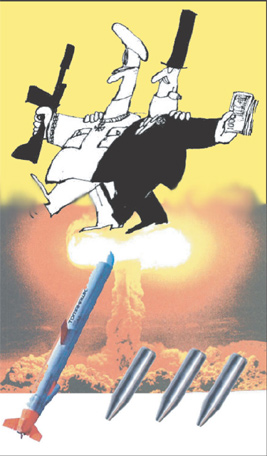
the “privatization of nuclear war”. Corporations not only reap multibillion-dollar profits from the production of nuclear bombs, they also have a direct voice in setting the agenda regarding the use and deployment of nuclear weapons.
No Danger of Nuclear War? The Pentagon’s Plan to Blow up the Planet By Prof Michel Chossudovsky Global Research, January 11, 2016
“………….Nuclear war –which threatens life on planet earth– is not front page news in comparison to the most insignificant issues of public concern, including the local level crime scene or the tabloid gossip reports on Hollywood celebrities.
What we are dealing with is the criminalization of the State, whereby officials in high office are complicit in fostering the pre-emptive use of nuclear weapons. The media has camouflaged the implications of America’s post Cold war nuclear doctrine, which was formulated in a secret meeting at US Strategic Command Headquarters on Hiroshima Day, August 6, 2003.
On August 6, 2003, on Hiroshima Day, commemorating when the first atomic bomb was dropped on Hiroshima (August 6 1945), a secret meeting was held behind closed doors at Strategic Command Headquarters at the Offutt Air Force Base in Nebraska.
Senior executives from the nuclear industry and the military industrial complex were in attendance. This mingling of defense contractors, scientists and policy-makers was not intended to commemorate Hiroshima. The meeting was intended to set the stage for the development of a new generation of “smaller”, “safer” and “more usable” nuclear weapons, to be used in the “in-theater nuclear wars” of the 21st Century.
In a cruel irony, the participants to this secret meeting, which excluded members of Congress, arrived on the anniversary of the Hiroshima bombing (August 6) and departed on the anniversary of the attack on Nagasaki (August 9). (Michel Chossudovsky, Towards a World War III Scenario, The Dangers of Nuclear War, Global Research, Montreal, 2012)
The Hiroshima Day 2003 meetings had set the stage for the “privatization of nuclear war”. Corporations not only reap multibillion-dollar profits from the production of nuclear bombs, they also have a direct voice in setting the agenda regarding the use and deployment of nuclear weapons.
All the safeguards of the Cold War era, which categorized the nuclear bomb as “a weapon of last resort”, have been scrapped. “Offensive” military actions using nuclear warheads are now described as acts of “self-defense”. During the Cold War, the doctrine of Mutually Assured Destruction (MAD) prevailed, namely that the use of nuclear weapons against the Soviet Union would result in “the destruction of both the attacker and the defender”.
In the post Cold war era, US nuclear doctrine was redefined. There is no sanity in what is euphemistically called US foreign policy. At no point since the first atomic bomb was dropped on Hiroshima on August 6th, 1945, has humanity been closer to the unthinkable…
Stay informed, spread the word far and wide. To reverse the tide of war, the broader public must be informed. Post on Facebook/Twitter.
Confront the war criminals in high office.
What we really need is real “Regime Change in America”. http://www.globalresearch.ca/there-is-no-danger-of-nuclear-war-or-is-there/5500276
Massive gas blowout in Los Angeles now releasing radioactive material
 TV: Radioactive material reportedly now being released from massive gas blowout in LA — Byproduct of Uranium — Expert: “A lot” has been detected in area… Very dangerous… May be coming up from ground into people’s homes — Official: Levels can cause “significant long-term health effects” (VIDEO) http://enenews.com/tv-reports-radioactive-material-being-released-massive-gas-blowout-la-byproduct-uranium-expert-lot-being-measured-area-very-dangerous-be-coming-ground-peoples-living-rooms-bedrooms-nurseries?utm_source=feedburner&utm_medium=email&utm_campaign=Feed%3A+ENENews+%28Energy+News%29
Robert F. Kennedy Jr., Jan 8, 2016: Their animals are dying… their fish are dying in their fish bowls, their dogs are dying, their cats are getting sick. And their children are getting sick — they’re suffering nose bleeds, they’re suffering terrible debilitating migraine headaches, asthma attacks, respiratory infections, eye infections, ear infections, stomach ailments… The health impact — it’s not just methane coming out of that hole… This is global crisis, more importantly this is a local crisis. Because not only do you have methane — you have benzene, toluene, xylene, which are carcinogenic. You have hydrogen sulfide, sulfur dioxide — which are neurotoxic, which can injure your brain, affect memory, injure your kidneys, your liver, your other bodily organs. There’s also a lot of radon gas being measured in the area. People believe — we don’t know if this is true — the gas that is leaking at 2 miles deep is now coming out and pushing that radon up into people’s living rooms, their bedrooms, their nurseries.
Lawyers and Settlements, Jan 7, 2016: The leak has caused a continuous flow of gases and fluids. Methane alone is leaking 100,000 pounds per hour, according to Los Angeles city attorney Mike Feuer. Along with that greenhouse gas is methyl mercaptans (odorants added to gas to aid in leak detection) and aromatic hydrocarbons. More concernedly, health officials have identified benzene and radon, both known carcinogens.
CBS LA, Dec 11, 2015: Dr. Cyrus Rangan, the Director of Toxicology and Assessment for the county, came to CBS2/KCAL9 to answer questions…. It’s been reported that radon is being released… “This is a theoretical possibility,” Dr. Rangan said, “and when you’re addressing a problem that might be several hundred or even several thousand feet deep, you might generate what are called preferential pathways for something like radon, beneath the Earth’s surface, to make its way up to the surface. So primarily our concern about radon is from the worker’s exposure, for the people actually doing the repair job. If we find radon there, we can address the situation. And if radon does exist in the work site then we may need to have to look at the residential community and monitor for it.”
Lawyers and Settlements, Dec 12, 2015: There is the issue of radon, a naturally occurringbyproduct of uranium… as SoCalGas and its partners bore into the ground in an attempt to stem a leak that is unleashing a constant cloud of gas into the atmosphere, radon has crept into the conversation.
Robert Kennedy Jr, Dec 17, 2015: Public officials and the gas industry have a tricky and deceptive way of saying things. Methane itself is not dangerous… methane is an indicator that other gases are involved, including radon and benzene, both carcinogenic and very dangerous… gas can escape through any perforation in the earth and on the way up to the surface, it can encounter the aquifers underground, where it will leave behind chemicals, including benzene and radon.
Erin Brockovich, Dec 22, 2015: [B]enzene and radon [are] the carcinogens that are commonly found in natural gas.
Los Angeles Daily News, Dec 2, 2015: [R]adon gas, which may potentially be released during repair operations, is also a concern [L.A. County Department of Public Health Interim Director Cynthia Harding] said.
Los Angeles Times, Dec 2, 2015: Los Angeles County Supervisor Michael D. Antonovich said a new report by county public health officials had concluded that since the gas leak has continued for so long, emissions levels could produce “significant long-term health effects, including cancer.” Antonovich said the report had identified benzene as the “chemical of greatest concern,” because it is known to cause cancer. It also cited concerns about radon, another known carcinogen.
KPCC, Dec 9, 2015: Public Health Director Cynthia Harding told members of the Board of Supervisors in a Dec. 1 letter [that radon] could also be released as the leak is repaired.
Los Angeles Times, Dec 20, 2015: Health officials are also concerned that the company’s attempt to fix the leak by drilling into the ground to construct a relief well could release radon, a radioactive, naturally occurring and odorless gas that is found in geologic formations and causes lung cancer.
Japanese Govt. To Reuse Fukushima Contaminated Soil
Japanese Govt. To Reuse Fukushima Contaminated Soil, Simply Info, December 22nd, 2015 |
The Environment Ministry has announced they plan to “reuse” contaminated soil in public construction projects. Last week they announced that some contaminated materials and soil below 8000 bq/kg of contamination would be released from government oversight.……..http://www.fukuleaks.org/web/?p=15244
Virtual reality to be used to help decommission Fukushima
Virtual reality to be used to help decommission Fukushima plant http://ajw.asahi.com/article/0311disaster/fukushima/AJ201601080058 By TAKUYA ISAYAMA/ Staff Writer, 8 Jan 16 NARAHA, Fukushima Prefecture–A virtual reality system here that will assist in the decommissioning of the crippled Fukushima No. 1 nuclear power plant is preparing for full-scale operations this spring.
Located at the Naraha Remote Technology Development Center, the system features a 3.6-meter-high display that simulates 3-D images of the interiors of the reactor buildings at the Fukushima plant.
The research and training center was developed by the Japan Atomic Energy Agency as part of efforts for the lengthy decommissioning process, which is expected to take 30 to 40 years.
By using dedicated virtual reality goggles, researchers can view simulated 3-D images of the interiors of reactor buildings that are currently inaccessible to humans because of dangerous levels of radiation. The display shows estimated dose of radiation levels in millisieverts during planned work at the site in the upper part of the image.
The center also features a model of a reactor containment vessel to be used for training in decommissioning methods.
Birth defects in families of Britain’s nuclear test veterans: the fight for justice
Their wives have been found to have three times the usual number of miscarriagesand even their grandchildren have eight times the normal amount of birth defects.
Nuclear test veterans bid for £1million to prove blasts caused cancer and birth defects http://www.mirror.co.uk/news/uk-news/nuclear-test-veterans-bid-1million-7147105 9 JAN 2016 BY SUSIE BONIFACE Britain’s nuclear heroes are bidding for a £1million research fund to finally prove the awful genetic legacy of the UK bomb tests.
Veterans are hoping the government cash will help them win a 60-year fight for justice after they were left with a crippling legacy of cancers , rare disease and 10 times the normal rate of birth defects in their children.
Nige Heaps of the British Nuclear Test Veterans’ Association said: “We hope that with this money we’ll be able to do the scientific work necessary to help prove the case, as well as improving the lives of survivors and their children.”
In his March budget Chancellor George Osborne praised the veterans’ campaign for recognition, backed by this newspaper, and announced a £25m fund to help all veterans over 60.
- The BNTVA has spent the past nine months preparing a detailed bid which has already had draft approval and will be formally submitted on Monday.The £1m they are asking for includes:
- £500,000 over two years for a genetic study by Brunel University
- £250,000 for research by charity Combat Stress into the mental health effects
- £150,000 for a two-year study at the University of Southampton on the sociological impact
- £6,000 to begin a remembrance project and future archive
- £94,000 to provide items like electric wheelchairs, home adaptations, transport or other help for those who need it
There is no guarantee BNTVA will get a penny. The Aged Veterans Fund they are applying to has £5million next year to split between eight veterans’ groups expected to bid.
- But Mr Heaps says he is confident of a breakthrough.He added: “There is no way scientifically to say any genetic damage was caused by radiation from the tests.
“The best we can hope for is to prove the veterans have a higher rate of genetic damage than the rest of the population. We have to fight the battles we can win.”
Around 22,000 men, many on National Service, were ordered to Australia and Christmas Island in the South Pacific from 1952 to witness the explosion of dozens of atomic and hydrogen bombs.
They were forced to live amid the toxic fallout for up to a year afterwards.Read more: Nuclear test veterans fighting for £72k payout after being irradiated by the Government
On their return, they began to report increased cases of blood, thyroid and tongue cancers and rare blood and bone disorders.
Their wives have been found to have three times the usual number of miscarriagesand even their grandchildren have eight times the normal amount of birth defects.
- The Ministry of Defence has always denied being to blame, and has spent millions fighting legal cases. Today fewer than 3,000 veterans survive, along with an estimated 150,000 descendants carrying the curse of their fathers’ service.But in 2007 genetic research in New Zealand – similar to that now proposed here – showed veterans had DNA damage three times worse than that suffered by survivors of Chernobyl.
Read more: Nuclear test veteran says his photos prove men were exposed to deadly radiation
Derek Fiddaman has had 200 cancers removed from his face and head – and expects to develop 100 more.
Derek was a 21-year-old naval rating on HMS Cossack when it was ordered to Christmas Island in 1957 as guardship for several hydrogen bomb tests codenamed Operation Grapple.
- The crew was ordered on deck to watch the explosions.In 1975 he developed lumps on his face and began 40 years and 1,000 hospital visits to have basal cell carcinomas – cancers rooted in the deepest layer of skin – cut out.
Derek, now 78, of Horsham, West Sussex, said: “I have about five cut out every year, so if I live another 20 years there’ll be 100 more.
“Each time they cut one out and I go back and there’s another one growing in the scar.”
- He’s one of those demanding the MoD admit irradiating them.He said: “I’m one of the lucky ones – it’s not going to kill me and they can at least cut my cancers out.
“You get used to it. All I want is to hear the word ‘sorry’. They never will, but that’s all I want.”
The proposed UK research will involve analysis of the DNA in blood and saliva of around 50 surviving veterans, wives and children, to assess genetic damage and see if it was passed on.
It will also look for a “radiation signature” in the DNA, if one is present.
If approved, the money will be released in the spring.http://www.mirror.co.uk/news/uk-news/nuclear-test-veterans-bid-1million-7147105
1 This Month
Chernobyl: The Lost Tapes – A good documentary on Chernobyl on SBS available On Demand for the next 3 weeks– https://www.sbs.com.au/ondemand/tv-program/chernobyl-the-lost-tapes/2352741955560

of the week–London Campaign for Nuclear Disarmament

Tell the Ukrainian Government to Drop Prosecution of Peace Activist Yurii Sheliazhenko
To see nuclear-related stories in greater depth and intensity – go to https://nuclearinformation.wordpress.com
-
Archives
- April 2026 (152)
- March 2026 (251)
- February 2026 (268)
- January 2026 (308)
- December 2025 (358)
- November 2025 (359)
- October 2025 (376)
- September 2025 (257)
- August 2025 (319)
- July 2025 (230)
- June 2025 (348)
- May 2025 (261)
-
Categories
- 1
- 1 NUCLEAR ISSUES
- business and costs
- climate change
- culture and arts
- ENERGY
- environment
- health
- history
- indigenous issues
- Legal
- marketing of nuclear
- media
- opposition to nuclear
- PERSONAL STORIES
- politics
- politics international
- Religion and ethics
- safety
- secrets,lies and civil liberties
- spinbuster
- technology
- Uranium
- wastes
- weapons and war
- Women
- 2 WORLD
- ACTION
- AFRICA
- Atrocities
- AUSTRALIA
- Christina's notes
- Christina's themes
- culture and arts
- Events
- Fuk 2022
- Fuk 2023
- Fukushima 2017
- Fukushima 2018
- fukushima 2019
- Fukushima 2020
- Fukushima 2021
- general
- global warming
- Humour (God we need it)
- Nuclear
- RARE EARTHS
- Reference
- resources – print
- Resources -audiovicual
- Weekly Newsletter
- World
- World Nuclear
- YouTube
-
RSS
Entries RSS
Comments RSS
 nuclear-news