Born In The USA: How America Created Iran’s Nuclear Program, npr, STEVE INSKEEP, 18 Sept 15 “……..”The Iranian nuclear program has deep roots. In fact, it is four years older than President Obama,” says Ali Vaez, the International Crisis Group’s senior analyst for Iran. Vaez grew up in Iran, which means the nuclear program is a personal story for him.
“It started in 1957,” he says, “and ironically, it is a creation of the United States. The U.S. provided Iran with its first research reactor — a nuclear reactor, a 5-megawatt nuclear reactor that is still functioning and still operational in Tehran.”
The U.S. built that nuclear reactor on the campus ofTehran University. It also provided Iran with fuel for that reactor — weapons-grade enriched uranium.
It seemed like a good idea at the time.
It was part of President Eisenhower’s Atoms for Peaceprogram, an initiative to provide countries with peaceful, civilian nuclear technologies in the hope that they wouldn’t pursue military nuclear programs.
The beneficiaries included Israel, India, Pakistan — and Iran, then ruled by a U.S.-backed monarch, Shah Reza Pahlavi.
Under the program, many countries received what Iran did: their own small reactors, their own dollops of fuel. But, says Vaez, “as a result of the oil boom of the 1970s, that [Iranian] nuclear program morphed into a full-fledged civilian nuclear program.”
The Iranians had money to exploit the knowledge they were given, and to develop scientific minds. Iran provided the Massachusetts Institute of Technology with a $20 million endowment in the 1970s to train Iranian nuclear scientists, Vaez says.
“The majority of people who returned to the country and started running the nuclear program were trained at MIT,” he notes.
The trainees have been central to Iran’s nuclear program ever since.
There was a moment in the 1970s when American officials thought they might be making a mistake. They feared Iran would become one of the nations seeking nuclear weapons.
U.S. diplomats began negotiating to limit Iran’s nuclear program. They ran into a problem familiar to diplomats today: Iran under the shah insisted it had the same right to nuclear power as any nation.
“The shah famously said that unless it was clear Iran was not being treated as a second-class country, he would look for alternative vendors and he would not work with U.S. companies to acquire nuclear technology for Iran.”
Iran bought nuclear plants from West Germany and France. The research reactor at Tehran University kept working. And then the campus became famous for something else.
After the shah was overthrown in 1979, under the new Islamist government led byAyatollah Ruhollah Khomeini, thousands of people gathered at the university every Friday and angled their prayer mats toward Mecca.
“Tehran University is at the epicenter of Friday prayer ceremonies,” Vaez says. “And [it] is also infamously known to be [the] epicenter of ‘Death to America’ chants that are heard every Friday during the prayer ceremonies.”
The clerics in power did not initially embrace the country’s existing nuclear infrastructure, Vaez says.
“In many ways, Iran’s nuclear program encapsulates Iran’s struggle with modernity,” he says. “During the shah’s time, it was the symbol of the country’s march towards modernity. After the revolution, it came to symbolize the kind of rapid modernization that was riddled with corruption and ‘West-toxification.'”
“West-toxification” was a term Iran created and used to denote pernicious Western influence that was to be rejected.
“Ayatollah Khomeni famously said the unfinished nuclear power plants in Bushehrshould be used as silos to store wheat,” says Vaez. Ultimately, “they were abandoned as a costly Western imposition on an oil-rich nation.”
This attitude lasted into the 1980’s. But by then, Iran was fighting a brutal war against neighboring Iraq, led by Saddam Hussein. As part of that war, Saddam repeatedly bombed the Bushehr nuclear facility, which was not operational at the time.
The war, which lasted from 1980 to 1988, also created severe power shortages in Iran.
Eventually, Iran’s leaders decided to revive the nuclear program, though the precise reason was not clear…….
Iran has consistently denied that it wants a weapon, though the U.S. and many others argue otherwise. In the early 2000s, Iran offered to discuss the future of its nuclear program. It even reached a deal with European powers. But the U.S. under Bush did not sign on. The efforts to reach a deal fell apart, and Iran began building thousands of centrifuges that are used to enrich uranium.
Ali Vaez says at this point, the meaning of Iran’s nuclear program was “mutating.” Iran under Khomeini had rejected the program as a symbol of the corrupt West — but now, more than a decade after his death, it was becoming a symbol of Iran’s defiance of the West……http://www.npr.org/sections/parallels/2015/09/18/440567960/born-in-the-u-s-a-how-america-created-irans-nuclear-program
September 18, 2015
Posted by Christina Macpherson |
history, Iran |
Leave a comment
 How Charles Koch Prevents Clean Energy Businesses From Succeeding TruthOut 02 September 2015 By Matthew Kasper, Republic Report | News Analysis Last week, President Obama correctly singled out the Koch brothers – Charles and David – and the Koch-funded network for standing in the way of America’s clean energy future. Charles Koch responded saying he was “flabbergasted” after hearing Obama’s remark. He continued, “We are not trying to prevent new clean energy businesses from succeeding.” This statement is, at best, highly misleading.
Charles Koch states that he believes government should be smaller and it should not subsidize businesses, including any form of energy business. But while he acknowledges that the fossil fuel businesses he owns benefit tremendously from government subsidies, he doesn’t refuse those benefits or do anything to stop those policy choices. Meanwhile, the Kochs use their political influence and funding for efforts to repeal laws designed to support the deployment of more renewable electricity. Specifically, their political network’s agenda includes weakening renewable energy standards, preventing customers from installing solar panels (by charging fees on people that go solar), and protecting the government monopolized electric utilities.
The facts are indisputable.
Note: For more background, read this full briefing on the Koch’s web of influence across American society.
Here are the facts:
- Arizona Public Service Company (APS), the largest electric utility company in Arizona, admitted that it worked with the 60 Plus Association, a Virginia-based nonprofit seniors advocacy group receiving Koch money, to support the utility company’s proposal to add fees on homeowners with solar panels. Here is anadvertisement paid for by 60 Plus Association attacking solar energy in Arizona.
- Americans For Prosperity has also worked in Kansas and North Carolina to repeal, weaken, or freeze those states renewable energy standards. In 2013, AFP flew Willie Soon to Kansas where he testified in front of state legislators that global warming isn’t a problem as part of AFP’s attempt to completely repeal the renewable energy standard. James Taylor, from the ExxonMobil and Koch-funded Heartland Institute, attended an AFP event the same year to increase support for repealing the state’s standard, and he also testified against the law. Furthermore, Koch Industries’ lobbyist Jonathan Small worked behind the scenes in the repeal efforts. Small held private talks with Representative Dennis Hedke (R-Wichita) about legislation to eliminate the law. In 2015, the standard waschanged to a voluntary one after legislators threatened to impose an excise tax on wind energy. Mike Morgan, a lobbyist for Koch Industries, joined Rep. Hedke and Jeff Glendenning of AFP at the announcement.
- Additionally, Koch-controlled foundations approved grants for Art Hall, director of the University of Kansas’ Center for Applied Economics, to research the state’s renewable energy standard. Lee Fang at The Intercept writes, “The Koch money was part of an ongoing project Hall described as an effort to develop “intellectual products” to be used “as a tool in economic policy debates… Following his grant request, Hall testified before the Kansas legislature in 2014 in favor of repealing the state renewable energy portfolio.”
September 18, 2015
Posted by Christina Macpherson |
Reference, secrets,lies and civil liberties, USA |
Leave a comment
Japan set to pass security bills despite widespread protests, Japan Times , 18 Sept 15
Critics say the bills could herald the biggest shift in Japan’s defence policy in half a century, and tens of thousands have taken to the streets in anger Japan is expected to pass controversial security bills on Friday that critics say could herald the biggest shift in its defence policy for half a century, despite public anger that has seen tens of thousands protest.
The bills are expected to be passed in the upper house controlled by prime minister Shinzo Abe’s ruling coalition after days of fraught debates that at times descended into scuffles, tears and tantrums.
Opposition lawmakers tried every delaying tactic at their disposal, even resorting to physically blocking a vote in a special committee, but it now looks like all of their options have been exhausted.
The controversial laws have seen tens of thousands take to the streets in almost daily rallies for the past few weeks, in a show of public anger on a scale rarely seen in Japan.
Opponents argue the new laws – which would allow the tightly restricted military to intervene overseas to defend its allies – violate Japan’s pacifist constitution and could see the country dragged into American wars in far-flung parts of the globe…….
there are growing signs the campaign has taken a political toll – opinion polls show the vast majority of the public is against the bills, and Abe’s once sky-high approval rating is dropping.
Protesters, including a Nobel-Prize winner, popular musicians and other prominent figures, fear the changes could fundamentally alter Japan’s character as a pacifist nation.
“Japanese are often seen as modest and humble, but it’s not the case this time,” said Ryoko Ikeda, a 36-year-old mother at one of the daily rallies against the bills held near parliament for the past weeks.
“It is our children and future generations who pay the price.”
Keiko Nagao, in her 40s, added: “A pacifist image is Japan’s treasure and if we lose it, it will be a big loss for our country.”
Security experts said the bills would also force a reevaluation of Japan’s place on the world stage.
“The bills are a psychological message to the world that an era in which Japan should not be involved in conflicts because of its exclusively defence-oriented policy is over,” said Hideshi Takesada, a professor at Takushoku University in Tokyo. http://www.theguardian.com/world/2015/sep/17/japan-to-pass-security-bills-despite-protests?CMP=twt_gu
September 18, 2015
Posted by Christina Macpherson |
Japan, politics, weapons and war |
Leave a comment
Social sciences and humanities faculties to close in Japan after ministerial decree https://www.timeshighereducation.co.uk/news/social-sciences-and-humanities-faculties-close-japan-after-ministerial-decree Seventeen universities are to close liberal arts and social science courses September 14 2015 BY JACK GROVE
Many social sciences and humanities faculties in Japan are to close after universities were ordered to “serve areas that better meet society’s needs”.
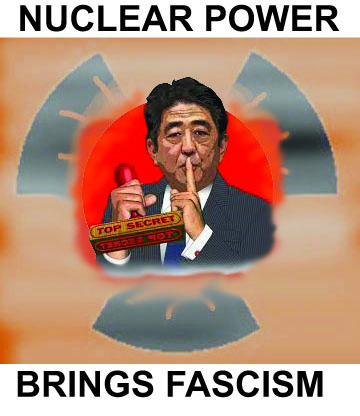
Of the 60 national universities that offer courses in these disciplines, 26 have confirmed that they will either close or scale back their relevant faculties at the behest of Japan’s government.
It follows a letter from education minister Hakuban Shimomura sent to all of Japan’s 86 national universities, which called on them to take “active steps to abolish [social science and humanities] organisations or to convert them to serve areas that better meet society’s needs”.
The ministerial decree has been denounced by one university president as “anti-intellectual”, while the universities of Tokyo and Kyoto, regarded as the country’s most prestigious, have said that they will not comply with the request.
However, 17 national universities will stop recruiting students to humanities and social science courses – including law and economics, according to a survey of university presidents by The Yomiuri Shimbun newspaper, which was reported by the blog Social Science Space.
It reports that the Science Council of Japan put out a statement late last month that expressed its “profound concern over the potentially grave impact that such an administrative directive implies for the future of the HSS [humanities and social sciences] in Japan”.
The call to close the liberal arts and social science faculties are believed to be part of wider efforts by prime minister Shinzo Abe to promote what he has called “more practical vocational education that better anticipates the needs of society”.
However, it is likely to be connected with ongoing financial pressures on Japanese universities, linked to a low birth rate and falling numbers of students, which have led to many institutions running at less than 50 per cent of capacity.
September 18, 2015
Posted by Christina Macpherson |
civil liberties, politics |
Leave a comment
The Saturday Night Live Approach to Nuclear Safety: More Cowbell! Dave Lochbaum, director, Nuclear Safety Project, 15 Sep 15 The April 8, 2000, Saturday Night Live broadcast featured a skit with cast members pretending to be the rock group Blue Oyster Cult in the recording studio with a famous music producer, played by actor Christopher Walken. The skit is remembered for Walken’s character stating “I gotta have more cowbell.”
The NRC’s Reactor Oversight Process (ROP) needs more cowbell, too.
The Fort Calhoun nuclear plant shut down in April 2011 for a refueling outage. The outage was planned to last a handful of weeks while workers replaced spent fuel assemblies with new assemblies and performed routine maintenance and testing activities. The plan went awry when the ROP identified safety problems that needed to be corrected before the reactor could be restarted.
The operators restarted Fort Calhoun in December 2013 after a short refueling outage morphed into a 32-month safety restoration outage. On March 30, 2015, the NRCannounced that it was returning Fort Calhoun to normal handling under the ROP. The NRC also reported expending over 60,000 hours since December 2011 on inspection, assessment and licensing tasks at Fort Calhoun.
60,000 hours is a number without context. To help put this value in context, the NRCreported having expended 6,652 hours, 6,612 hours, and 6,782 hours of total oversight effort at the average nuclear plant in 2011, 2012, and 2013, respectively. So the average nuclear plant received an average of 6,682 hours of oversight from the NRC annually.
Between 2012 and 2014, Fort Calhoun received an average of 18,462 hours of oversight effort each year from the NRC.
Thus, Fort Calhoun received the equivalent of 2.76 nuclear plants’ worth of regulatory oversight attention from the NRC between 2012 and 2014……
The problems that kept Fort Calhoun shut down for 32 months were not introduced in 2009 and 2010 after the NRC returned Fort Calhoun to Column 1—they existed all along. Yet the NRC’s ROP missed them all. The ROP missed every single one of them, until after the first quarter of 2011. After that time, finding safety problems was like shooting fish in a barrel—NRC inspectors could hardly turn around without finding yet another safety problem that had to be fixed prior to restart.
So how could more cowbell improve nuclear plant safety?
Rather than expending so much time and effort ensuring that the barn door has been closed, safety would be better served by noticing that it’s open sooner. Cowbells should have sounded long before the first quarter of 2011.
UCS’s fact sheet documented many safety problems that existed at Fort Calhoun for years before the ROP’s inception in 2000. Two of the safety problems involved the emergency diesel generators (EDGs).
EDGs are among the most safety significant components at the plant. Consequently, they receive considerable oversight attention by the NRC. Yet that attention failed to identify either of these two problems that had existed since at least 1990.
And it was not just one miss or even two misses by one NRC inspector—it was a lot of misses by a lot of NRC inspectors over a lot of years. A search of ADAMS, the NRC’s online digital library, identified 39 inspections conducted at Fort Calhoun by the NRC between 2000 and 2010 inclusive that included some oversight of the EDGs.
Something is fundamentally wrong with safety inspections of highly safety significant components that fail to notice safety problems. Finding safety problems isn’t one of the reasons for conducting the safety inspections—it’s the only reason for doing them.
And yet many safety problems remained undetected until 2011 when it took an army of workers more than two years to correct them all.
Our Takeaway
Fort Calhoun is not an isolated case. It marked the 52nd time that a U.S. reactor had to remain shut down longer than a year while safety problems were corrected. The majority of these year-plus outages involved a myriad of safety problems that had existed for months and sometimes years before being noticed.
And yet many safety problems remained undetected until 2011 when it took an army of workers more than two years to correct them all…….http://allthingsnuclear.org/the-saturday-night-live-approach-to-nuclear-safety-more-cowbell/
September 18, 2015
Posted by Christina Macpherson |
safety, USA |
Leave a comment
Ending subsidies, that amount to almost a quarter of the sale price in some cases, would hugely reduce carbon emissions, new research reveals
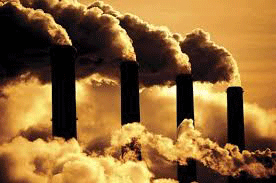
Coal subsidies are costing US and Australian taxpayers billions of dollars a year, according to a new report.
The research examined the subsidies given to coal production in the US’s largest coal field, the Powder River Basin, and found they totalled $2.9bn (£1.9bn) a year. This equates to $8 per tonne, almost 25% of the sale price.
Ending the subsidies would lead to cuts in coal use equivalent to shutting up to 32 coal-fired power stations, the researchers found, leading to a large reduction in carbon emissions.
The report also analysed Australia’s exporting of coal for power stations in Asia and found these came to $1.3bn a year, or $4 a tonne. Ending these subsidies would cut demand by up to 7%, a smaller impact than in the US because coal users could buy supplies from other countries.
“The fossil fuel industry has gamed energy market consumers, with numerous subsidies evident over the long term,” said Tim Buckley, at the Institute forEnergy Economics and Financial Analysis, who worked on the report. “Any discussion of cost competitiveness of renewable energy and energy efficiency needs to take into account the decades of extensive subsidies evident for the coal industry and that, in many cases, remain in place today.”
Luke Sussams, senior researcher at Carbon Tracker Initiative, also part of the research team, said: “Policy makers concerned about climate change and a level playing field in energy markets should look to take coordinated action to remove the distortions to production these subsidies create.”
The subsidies given to coal companies included tax breaks, cheap leases, government-funded infrastructure including railways and ports and allowing inadequate funding of clean-up operation after mining ends.
The G20 nations pledged to end fossil fuel subsidies in 2009, but little action has been taken. However, falling oil and coal prices in the last year have seen some countries starting to reduce subsidies.
A recent study by the International Monetary Fund (IMF) took into account not just direct subsidies but also the cost to nations of the damage caused by air pollution and global warming. It estimated coal, oil and gas were being subsidised by $5.3trn a year, more than the total health spending of all the world’s governments. Much of the cost is due to the illness and death caused by air pollution.
“Eliminating coal subsidies in the Powder River Basin and throughout the world, is an obvious, no-regrets climate strategy,” said Doug Koplow, of Earth Track and another member of the research team.
The new report, called Assessing Thermal Coal Production Subsidies, was produced by the Carbon Tracker Initiative, Energy Transition Advisors, the Institute for Energy Economics and Financial Analysis and Earth Track.
September 18, 2015
Posted by Christina Macpherson |
AUSTRALIA, business and costs, climate change, politics, USA |
Leave a comment
Britain’s nuclear plans: the Corbyn factor https://www.opendemocracy.net/paul-rogers/britains-nuclear-plans-corbyn-factor
In the debate about replacing the Trident nuclear system, there is space for options that link British to international experience. Jeremy Corbyn, the new leader of Britain’s Labour Party, has long been opposed to the country’s possession of nuclear weapons. But he has also made it clear that this personal commitment does not extend to forcing this policy on the party he now heads. What he does want is an open debate and to convince others of the value of his views.
The replacement of the country’s Trident nuclear system is now being discussed (see “Britain’s defence policy: the path to change“, 7 May 2015). If this were to go ahead and a similar system put in place, the development and lifetime costs will approach £100 billion. Almost everyone in the Conservative government and parliamentary party, and many Labour MPs themselves, believe that a replacement should be built and that Britain should remain a nuclear-weapons power. Yet there is a substantial minority across the electorate that agrees with Corbyn. This view has gained far more traction since it was adopted by the Scottish National Party, a shift prompted not least by the persistent campaigning of nuclear disarmers north of the border, including the Faslane 365 initative. Yet political polarisation means it will be difficult to realise Corbyn’s aims.
The pro-Trident position has an uncompromising military rationale. It entails keeping a ballistic-missile submarine on station and ready to launch at all times – what is called “continuous at-sea deterrence” (CASD). In turn this requires maintaining four submarines, in order to allow one available for round-the-clock patrol, as well as substantial naval back-up. The latter includes what is euphemistically called “deterrence support”, an element that isn’t much talked about in polite circles.
The reason why is that deterrence support is onerous. There is a certain assumption that a Vanguard-class Trident-armed missile-submarine can disappear from its base at Faslane in western Scotland and go on secret patrol almost independently of the rest of the system. The reality is different: there is a continual need to protect Faslane, the Clyde estuary and the seas close to Scotland. Moreover, it is usual practice to have on patrol an attack-submarine, such as one of the new Astute-class boats (nuclear-powered but not nuclear-armed) between the general region of the Trident submarine’s area of operation and the perceived direction of threat. That, of course, means having several such attack-submarines available, which demands a substantial commitment.
The anti-Trident argument tends to the view that Britain’s nuclear weapons are little more than an historical anachronism (see “Britain’s nuclear endgame“, 28 September 2012). The ability to kill 5 million or more people in forty minutes may represent an inkling of great-power status, or a delusion of post-imperialgrandeur (of a kind shared with France). In practice, though, sufficient numbers of people still stick to the old thinking that the choice can be other than “all or nothing”. Corbyn’s supporters may need to recognise this.
A two-stage strategy
An earlier column in this series pointed to one way forward (see “Two steps to zero“, 17 July 2008). This was to scale down Britain’s nuclear forces to a background capability, involving the following steps:
* Cancel the plans to replace the current Vanguard-class boats and a new generation of nuclear warheads
* Reduce warhead numbers from around the current 160 to 30 (an 80% reduction); then have modified warheads available to deploy, if this were ever thought necessary, with cruise-missiles on attack-submarines, such as the new Astute-class (which can already deploy such missiles with conventional warheads)
* Phase out the entire Trident system as soon as this much-reduced force is available
* Adopt an openly stated policy of “no first use” of nuclear weapons and aspire to the elimination of nuclear weapons in Britain when international progress allows.
This would essentially be a residual force. If embraced, it could be less than a decade or so before the very idea of maintaining nuclear forces might be dropped, with Britain then joining the ranks of the 186 member-states of theUnited Nations out of 195 which do not possess nuclear weapons.
What is often forgotten here, including by anti-nuclear activists, is that several countries have given up nuclear weapons on their territory. South Africa actually developed its own small arsenal and then dismantled it. Furthermore, a number of states have in the past decided against developing their own nuclear arsenals after active consideration; they include Argentina, Brazil, Sweden and Switzerland, and probably also South Korea and Taiwan.
At the level of elite power, British nuclear weapons are a symbolic indication of standing in the world. The habit is so strong that it would be easier to give them up in two stages: a radically scaled down and far cheaper force that could then be allowed to wither away.
Whether that becomes an option depends very much on domestic party politics. But the point about revisiting Britain’s nuclear-weapons policy is that the starting-point does not have to be a rigid “for” or “against”. The option just outlined is just one among several. Their very existence means that the debatenow getting underway can be much better informed and less hidebound by increasingly meaningless issues of imaginary great-power status
September 18, 2015
Posted by Christina Macpherson |
politics, UK, weapons and war |
Leave a comment
Norway, Russia sign deal on nuclear accidents Norwegian Radiation Protection Authority and Rosatom have signed a set of joint notification procedures in case of nuclear incidents, Barents Observer, Trude Pettersen, 16 Sept 15 ……..The notification procedures were signed by Harbitz and Director of Rosatom Sergey Kiriyenko during a meeting at a General Conference of the International Atomic Energy Agency (IAEA) in Vienna on Tuesday, NRPA’s website reads.
In recent years the two countries have worked to strengthen the joint notification agreement on nuclear accidents of 1993 through concrete procedures for notification. The procedures that are now ready, have involved several authorities on the Russian side. They should ensure early notification in the event of a nuclear incident, which is crucial for Norway’s emergency preparedness.
Nuclear incidents include both accidents and incidents in peacetime or security crisis and war.
The agreement includes Kola Nuclear Power Plant, Leningrad Nuclear Power Plant, ship reactors, storages of fresh and spent fuel, research reactors and other nuclear facilities in the whole of Norway, as well as in the 300-kilometer border area in Russia, websiteadvis.ru writes……..
There have been several blazes at Russian shipyards in recent years whilst nuclear-powered submarines have been under repair.
2011 saw a serious fire occur aboard the Delta-class nuclear submarine the Yekaterinburg while she was dry docked at a shipyard in the northwestern Russia Murmansk Region. NRPA was informed about the fire through media, and better information exchange has since then been on the agenda http://barentsobserver.com/en/energy/2015/09/norway-russia-sign-deal-nuclear-accidents-16-09
September 18, 2015
Posted by Christina Macpherson |
EUROPE, safety |
Leave a comment
‘I was only 50/50’: Russian who saved world from nuclear war, New York Post, 17 Sept 15 FRYAZINO, Russia — The elderly former Soviet military officer who answers the door is known in the West as “the man who saved the world.”
A movie with that title, which hits theaters in the United States on Friday, tells the harrowing story of Sept. 26, 1983, when Stanislav Petrov made a decision credited by many with averting a nuclear war.
An alarm had gone off that night, signaling the launch of US intercontinental ballistic missiles, and it was up to the 44-year-old lieutenant colonel to determine, quickly, whether the attack on the Soviet Union was real.
“I realized that I had to make some kind of decision, and I was only 50/50,” Petrov told the Associated Press. Despite the data coming in from the Soviet Union’s early-warning satellites over the United States, Petrov decided to consider it a false alarm. Had he done otherwise, the Soviet leadership could have responded by ordering a retaliatory nuclear strike on the United States.
What made this even more dangerous was that the Soviet Union appears genuinely to have feared a surprise US nuclear attack during what was an exceptionally tense period of the Cold War. That month, the Soviets had shot down a passenger plane flying to South Korea from the US, suspecting it of spying. The United States, after a series of provocative military maneuvers, was preparing for a major NATO exercise, called Able Archer, which simulated preparations for a nuclear attack……….
Petrov reported to his commander that the system was giving false information. He was not at all certain, but his decision was informed by the fact that Soviet ground radar could not confirm a launch. The radar system picked up incoming missiles only well after any launch, but he knew it to be more reliable than the satellites.
The false alarm was later found to have been caused by a malfunction of the satellite, which mistook the reflection of the sun off high clouds for a missile launch.
Petrov was not rewarded for his actions, most likely because doing so would have brought to light the failure of the Soviets’ early-warning satellites………….. http://nypost.com/2015/09/17/i-was-only-5050-russian-who-saved-world-from-nuclear-war/
September 18, 2015
Posted by Christina Macpherson |
history, weapons and war |
Leave a comment
Arab Bid to Monitor Israel’s Nuclear Sites Rejected at UN Atomic Agency
In big win for Israel, 61 countries vote against resolution led by Egypt, which also called on Israel to sign Non-Proliferation Treaty.Haaretz, Barak Ravid Sep 17, 2015
The International Atomic Energy Agency’s General Conference on Thursday voted down a resolution proposed by the Arab nations, headed by Egypt, which called for international supervision over Israel’s nuclear facilities.
61 member countries opposed the proposed resolution, 43 voted for it and 33 abstained.
……….Among those voting against the resolution were the United States, Canada, Australia, New Zealand, Japan, South Korea, all European Union members, Ukraine, Moldova, Albania, as well as south American countries such as Uruguay and Panama. Kenya and other countries in Africa and the Pacific also opposed the resolution. Many others abstained, including Brazil and India.
Russia, China, Turkey and South Africa joined the Arab countries in backing the resolution.
Prime Minister Benjamin Netanyahu said that in recent weeks there has been a joint effort led by the National Security Council at the Prime Minister’s Office, the Foreign Ministry and the Atomic Energy Commission to thwart the resolution.
September 18, 2015
Posted by Christina Macpherson |
Israel, MIDDLE EAST, politics international |
Leave a comment
GOP debate: Donald Trump responds to question about nuclear codes with unprovoked attack on Rand Paul and “his looks”, Salon http://www.salon.com/2015/09/17/gop_debate_donald_trump_responds_to_question_about_nuclear_codes_with_unprovoked_attack_on_rand_paul_and_his_looks/
“I’ve never attacked him on his looks, and believe me, there’s plenty of subject matter there,” Trump said
SCOTT ERIC KAUFMAN …..
September 18, 2015
Posted by Christina Macpherson |
general |
Leave a comment
 WORLD. Learn about these terrific films showing at Uranium Film Festival in Berlin. Russian who saved world from nuclear war.
IndependentWHO: Our demands to World Health Organisation.
Arab Bid to Monitor Israel’s Nuclear Sites Rejected at UN Atomic Agency.
MEDIA. Fukushima Sensationalism and Hoaxes
CLIMATE Climate change at a ‘turning point’ – could now move faster. Climate Risks from Nuclear Power. Radioactive Krypton 85: Atmospheric-Electrical and Air-Chemical Effects of Ionizing Radiation in the Atmosphere.
RENEWABLE ENERGY Renewable energy race – 5 developing countries fast ditching fossil fuels. 100% renewable energy achieved in city of Columbia, Maryland. Colorado city Aspen achieves 100% renewable energy. 500 MW Renewable Energy Plan for Alabama.
JAPAN ignores post Fukushima nuclear safety guidelines JAPAN lifts evacuation orders on irradiated towns in preparation for 2020 Summer Olympics. Call by former Prime Minister Koizumi for a national anti nuclear movement. Unspoken Death Toll of Fukushima: Nuclear Disaster Killing Japanese Slowly.
Fukushima Typhoon Etau flooded Fukushima Daiichi. Strontium-90 density rose up 155 percent of the previous highest reading in the seaside of Reactor 2. 395 bags of tainted material washed away in floods. Tepco started discharging contaminated groundwater beside crippled reactor buildings. 850 tons of ‘decontaminated’ Fukushima water dumped into ocean. Another Fukushima worker died / No media coverage. Solar farms in Fukushima.
FRANCE.French govt uses amendment to impose nuclear waste dump without parliament vote
UK. Bloomberg Finance gives 5 good reasons not to build Hinkley nuclear station. Lib Dem Leader Tim Farron Calls for Independent Investigation into Environmental Damage from Nuclear Industries. Britain’s nuclear plans: the Corbyn factor. U.S. Nuclear Missile Submarine Surfaces in Scotland. Is UK’s ‘white elephant’ nuclear power programme linked to nuclear weapons programme?
USA. Nuclear Regulatory Commission might back quack pro nuclear ‘science’ on ionising radiation! Entergy’s FitzPatrick Nuclear Reactor next to bite the dust? Resentencing of USA’s nun who broke into nuclear weapons complex. Robert F. Kennedy, Jr.’s scathing attack on the Koch brothers and corporate greed How Charles Koch Prevents Clean Energy Businesses From Succeeding. Last bid to kill Iran nuclear deal blocked in Senate. Former Republican presidential candidate Michele Bachmann wants USA to bomb Iran.
NORWAY Norway, Russia sign deal on nuclear accidents.
SOUTH AFRICA fires key nuclear negotiator
NORTH KOREA Experts guessing about meaning of North Korea’s renewed nuclear threat.
INDIA. India: Dumping of Radioactive Water Imperils Mumbai; 9 Nuclear Scientists “Commit Suicide”
IRAN. How world health will benefit from Iran nuclear deal.
AUSTRALIA. Gets rid of worst ever Prime Minister, Tony Abbott, but govt nuclear and climate policies unchanged
September 18, 2015
Posted by Christina Macpherson |
Christina's notes |
Leave a comment

As I stood against sensationalists and repeated hoaxers, mostly Youtubers, who are only harming the antinuclear cause and the Fukushima victims cause, lately those people have sent me insults and threats of violence, calling me a pro-nuke shill hiding behind my D’un Renard alias,, and not showing my face etc. I presently became the focus of those people hate and slurs for calling their repeated hoaxes what it is: B.S., mental pollution, sensationalism and disinformation. I did it not to look for trouble, but because I believe truth is important, primordial, crucial.
Only by sharing the true facts, we will win, as true facts stand, stay.
B.S. flies high first but stinks later when it is quickly debunked
Consequently, for the first time, i will share publicly my personal story, why and how I awoke and became antinuclear.
A little about myself, I am Hervé Courtois, 60 years old, Picardie, France.
For 4 years and half I used a nom de plume “D’un Renard”, which in french means “from a fox”, because around my place there are many forests and many foxes which I could hear at night while blogging. I did not want to used my true identity because I wanted to protect the identity of my daughter in Japan when I started to blog on internet about the Fukushima catastrophe by fear of getting her in troubles with the Japanese government, and also by fear that Japanese government could bar me to enter Japan to visit my daughter. Few months ago I decided finally to use my real name.
I lived very long time in Asia, 37 years, in Japan, Korea, Hong-Kong and the Philippines, I came back home to France 6 years ago.
My 33 years old daughter, French-Japanese, lives in Iwaki city, Fukushima prefecture, 50 kms South from the nuclear plant of Fukushima Daiichi. She was born in Paris in 1982, but grown up in Fukushima, she is 33 years old, unmarried, no children, does not want to give birth anymore by fear of possible tetragenic birth due to radioactive contamination thru her living environment and the contaminated food.
Three months after the start of the Fukushima catastrophe, I went to visit her there in Iwaki city, Fukushima for the full month of June 2011, to check how she was and how was the real situation there.
On location I was surprised how to find that the people on location who should be the most at risk were kept uninformed of the real situation and of the dangers for their health, for their life, by the Japanese government.
I became aware that there was then an imposed omerta on the media by the Japanese government. All media repeating the same tune, don’t worry be happy, there is no danger, the situation is under control. The reactors are now in cold shutdown.
I keep wondering how reactors having exploded could be in cold shutdown. Smelling a rat.
Most people I met were kept in dark of the real situation, informations were totally controlled, filtered, censored, twisted, the people lied to. Just as the french people in 1986 were lied to by their own government telling them that the Chernobyl plume was not coming towards France, that it would not reach France, that they were safe, most of the people not taking protection measures to regret it later with rampant thyroid cancer allover Eastern France.
When I came back from Japan to France, the most nuclearized nation in the world per square kilometer and per inhabitant, the nuclear industry Areva being owned by the State, the French government, of course the french media were also censored about Fukushima by the French government, telling to French people that the Fukushima disaster was over, that it had ended in March 2011, that it was nowall under control. I found at home the same omerta, that I had met in Japan.
I decided to search for informations on internet, search for knowledge, to learn about nuclear, so that I could better understand what was truly happening, what was hidden, unsaid, covered up, so that I could then inform my daughter and help her to know the facts, the dangers and how to protect herself.
My life changed and was never the same again, it became almost a full time occupation, many hours days and nights on internet to find informations and to share them to other people, discovering gradually the lies, what had been hidden about Fukushima, Chernobyl, Three Mile islands and other hidden nuclear catastrophes, so many. I lost my innocence about nuclear.
I became angry and quite involved as an activist both on the net but also in real life. I became a a member of Sortir du Nucléaire France and of Greenpeace France,
On March 2012 I was the one to organize in Paris the 1rst year Fukushima Anniversary, a rally in front of the Paris main cityhall, with french antinuclear activists combined to some Japanese members of the Paris Japanese community, a Japanese TV crew coming to film our event.
Since the end of June 2011 up to now I continue to blog on the net on various blogs and on some Facebook antinuclear groups and pages that I founded.
I have therefore been following the Fukushima catastrophe day and night from the right beginning, and I am very well aware of the real dangers of Fukushima and of nuclear, my own blood and flesh French-Japanese daughter being one of the victims of nuclear in Fukushima, l will therefore continue to fight nuclear until it ends or until my last breath.
I am opposed to all pro-nuclear and their paid shills, but I am also oppose to those irresponsable people who produce hoax after hoax about Fukushima to satisfy their attention-glory-narcissist craving and their donations milking. All those people in different ways are harming the truth, harming our antinuclear cause.
I never asked donations not wishing to become an activist for sale, I do it for the love of my daughter, and because it is right to do it, not for money nor glory.
Nuclear is more than bad, we will only win by exposing its its ugly real nature, the true real solid facts. We won’t win by spinning sensationalism or hoaxes, which only become ammunitions for the pro-nuke shills to discredit us and the true dangers of nuclear in the mind of the general public.
We need everybody to wake up and to get their hands on deck, to ban all kinds of nuclear, civil and military, allover the world, to free our planet from this evil criminal industry.
Say no to nuclear, say yes to renewable, clean, safe and getting cheaper everyday.
Best wishes to everyone.
Hervé Courtois, “D’un Renard”, from France
Source: Nuclear News
Why we must expose the true ugly nature of the nuclear industry
 In front of the gates of Fessenheim Nuclear plant at the end of the day, Naoto is standing at the center, all the others are solid Fukushima Watchers and Antinuclear activists, friends.
European No to Nuclear Rally at Fessenheim Nuclear plant on March 9, 2014
At Fessenheim, Alsace, France
First 9 bridges upon the Rhine River, between France and Germany, were occupied, then all the people from the bridges regrouped to the Fessenheim Nuclear Plant, 9500 people participating.
The largest groundwater in Europe is located right under the Fessenheim Nuclear plant: the Rhine aquifer, nearly 80 billion cubic meter of water between Basel and Mainz, which provides 80% of the drinking water and more than half of the industry in that area. What would happen in the event of a serious accident?
The Honored guest of that day was Naoto Matsumura, for his heart and spirit in caring for the abandoned animals within the 20kms radius No Man’s Zone of Fukushima. The next day Naoto was delivering his Fukushima testimony at the Europen Parliament in Strasbourg city in front of all the European MPs.
It was a terrific feeling, meet again some old friends and making some new friends.
 With Christian Roy, an antinuclear activist and my closest friend
that day occupying one of those night bridges on the Rhine river.

September 18, 2015
Posted by dunrenard |
France, Japan | antinuclear, Fukushima continuing, nuclear issues, Testimony |
4 Comments

Although the first reactor in Japan to be fired up in two years went online last month, former Prime Minister Naoto Kan said Wednesday that Japan needs to seek a nuclear-free path.
This is a lesson the country has learned from the Fukushima nuclear disaster, said Kan, who was prime minister when the Fukushima No. 1 plant was hit by a huge quake and tsunami on March 11, 2011.
“I’m absolutely sure that there will no longer be nuclear power by the end of this century. This is because it doesn’t make sense economically, and enough energy can be provided without it,” Kan said in a lecture to foreign residents in Tokyo.
While reactor 1 at the Sendai plant in Kagoshima Prefecture was restarted in August, Japan has survived the past few summers without nuclear power, Kan said.
He added that although the current government is still promoting nuclear power, Japan has seen an increase of renewable energy since the Fukushima accident, especially from solar panels.
He said nuclear power was believed to be a cheap source of energy, but it is actually expensive, considering the cost of decommissioning and managing nuclear waste.
Kan also shared his experience of visiting Olkiluoto Nuclear Power Plant in Finland, where a final nuclear waste repository is being constructed. There, he was told it would take 100,000 years for the radiation of nuclear waste to descend to the same level of the uranium that exists in the natural environment.
Using nuclear power, Kan said, means increasing the amount of dangerous waste that will trouble future generations, adding that this is why other former prime ministers such as Junichiro Koizumi and Morihiro Hosokawa are also voicing their wish to end Japan’s dependence on it.
Source: Japan Times
http://www.japantimes.co.jp/news/2015/09/16/national/former-pm-naoto-kan-says-nuclear-power-makes-little-economic-sense-must-end/#.VfnAxZeFSM8
September 18, 2015
Posted by dunrenard |
Japan | Fukushima Daiichi, Nuclear Disaster, nuclear power |
Leave a comment

The Japanese government recently announced they are lifting a four-year evacuation order on a town located 10 miles from the Fukushima disaster site, allowing residents to return full-time if they so desire, according to reports.
The evacuation order was issued in 2011 for the town of Naraha, which was among seven municipalities that were forced to vacate following a 15-meter tsunami triggered by an earthquake, subsequently resulting in the meltdown of three of Fukushima’s Daiichi reactors.
The Daily News reports:
Officials have said radiation levels in Naraha have fallen to levels deemed safe following decontamination efforts.
But according to a government survey, 53% of evacuees from Naraha, which is 12 miles south of the plant, say they’re either not ready to return home or are undecided. Some say they have found jobs elsewhere over the past few years, while others cite radiation concerns. Some houses are falling down, and wild boars roam at night.
About 100,000 people from about 10 municipalities around the wrecked plant still cannot go home. The government hopes to lift all evacuation orders except for the most contaminated areas closest to the plant by March 2017 — a plan many evacuees criticize as an attempt to showcase recovery ahead of the 2020 Tokyo Summer Olympics.
Other reports have raised concerns over dangerous radiation levels recorded in the area, as well as the town’s lack of infrastructure.
U.S. News and World Report states:
In the once-abandoned town, a segment of a national railway is still out of service, with the tracks covered with grass. Some houses are falling down and wild boars roam around at night.
Only about 100 of the nearly 2,600 households have returned since a trial period began in April. Last year, the government lifted evacuation orders for parts of two nearby towns, but only about half of their former residents have returned.
Source: Fukushimaz Watch
http://www.fukushimawatch.com/2015-09-15-japan-lifts-evacuation-orders-on-irradiated-towns-in-preparation-for-2020-summer-olympics.html
September 18, 2015
Posted by dunrenard |
Japan | Evacuation Order Lifted, Fukushima continuing, Fukushima Daiichi, Olympics |
Leave a comment
 US and Australian taxpayers pay billions a year to fund coal – report, http://www.theguardian.com/environment/2015/sep/16/us-australian-taxpayers-pay-billions-fund-coal




 nuclear-news