Kyushu delays increasing output at Sendai nuclear plant after cooling system problems detected
KAGOSHIMA – Kyushu Electric Power Co. said Friday it will delay planned increases in electrical output from the No. 1 reactor at its Sendai nuclear power plant in Kagoshima Prefecture as seawater is believed to have entered into a reactor cooling system.
The company planned to bring the recently reactivated reactor up to full capacity on Tuesday. But this will now be delayed as it will take about a week to fix the problem, officials from the utility said.
A small amount of seawater is believed to have flowed into one of the three condensers in the reactor’s secondary cooling system, the officials said. Condensers turn steam into water by cooling it, after the steam runs power generation turbines.
But there should be no problem in continuing the reactor’s operations as the salt can be removed with the aid of desalination equipment, the officials added.
The level of electric conductivity, which is monitored to check water conditions, rose Thursday afternoon at an outlet of a condensate pump used to circulate secondary coolant water.
Kyushu Electric checked the water quality and confirmed an increase in salt content.
Each condenser has some 26,000 tubes inside that are used to pipe seawater around for cooling. Kyushu Electric suspects that holes have opened on such tubes, causing seawater to enter into the condenser.
The company will seal any tubes found to have holes, the officials said.
In Japan, similar problems have occurred about 50 times in the past, but the latest case was the first at the Sendai power plant. In the past, Kyushu Electric experienced two cases at the No. 1 reactor at its Genkai plant in Saga Prefecture in 1997 and 1999.
The output at the Sendai plant’s No. 1 reactor, restarted on Aug. 11, reached 50 percent of capacity last Sunday and 75 percent on Wednesday. The company had planned to raise output to 95 percent Friday.
The reactor is the first in Japan to run under strict new safety standards introduced in July 2013 following the meltdown accident at Tokyo Electric Power Co.’s Fukushima No. 1 plant, which was wrecked in the March 2011 earthquake and tsunami.
The reactor’s restart also brought to an end the total absence of active reactors in Japan that had become a feature since September 2013, when Kansai Electric Power Co.’s Oi plant in Fukui Prefecture suspended operations for routine safety checks.
Some nuclear experts have said reactors could face severe safety problems because they have been mothballed for such a long period of time.
Source: Japan Times
3 Comments »
Leave a reply to stock Cancel reply
1 This Month
26 April – Chernobyl: Inside the Meltdown airs on National Geographic on Sunday 26th April from 4pm

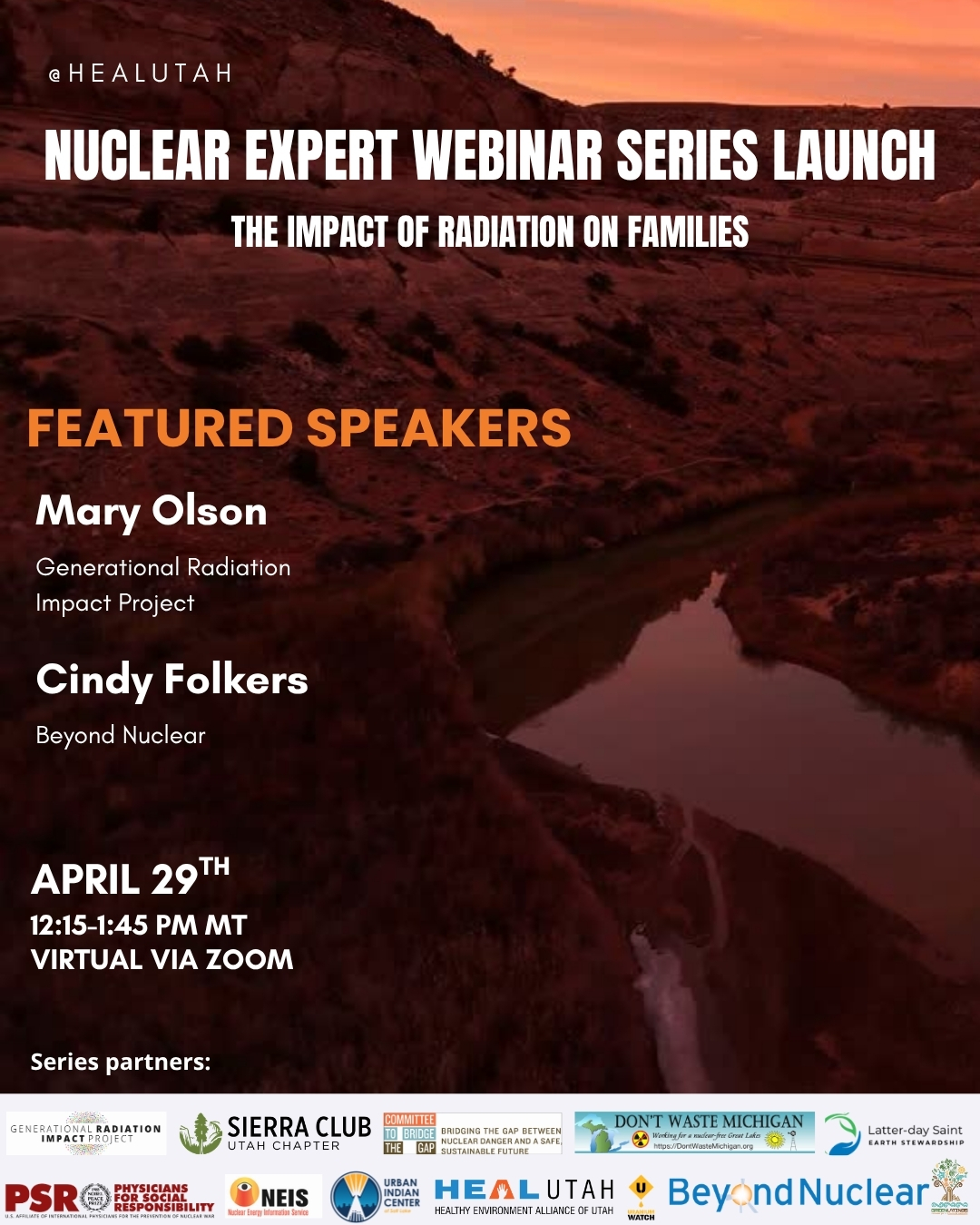
29 April – Nuclear Expert Webinar #1 – Radiation Impacts on Families with Mary Olson and Cindy Folkers
- 12:15 PM MT – 1:45 PM MT
- Location: Virtual – REGISTER TODAY

4 May -West Suburban Peace Coalition to discuss Iran war at May Educational Forum
Monday, May 4, 7:00 – 8:00 PM Central Standard Time
Title: : How Trump’s Narrative Tries to Shape the Reality of the War on Iran.
Contact Walt Zlotow, zlotow@hotmail.com 630 442 3045 for further information
14 May – online event From Bombs to Data Centres: the Face of Nuclear Colonialism

Pine Ridge Uranium is the real threat, not Tehran- Tell Burgum: Stop the Extraction.
Chernobyl: The Lost Tapes – A good documentary on Chernobyl on SBS available On Demand for the next 3 weeks– https://www.sbs.com.au/ondemand/tv-program/chernobyl-the-lost-tapes/2352741955560
To see nuclear-related stories in greater depth and intensity – go to https://nuclearinformation.wordpress.com
-
Archives
- April 2026 (288)
- March 2026 (251)
- February 2026 (268)
- January 2026 (308)
- December 2025 (358)
- November 2025 (359)
- October 2025 (376)
- September 2025 (257)
- August 2025 (319)
- July 2025 (230)
- June 2025 (348)
- May 2025 (261)
-
Categories
- 1
- 1 NUCLEAR ISSUES
- business and costs
- climate change
- culture and arts
- ENERGY
- environment
- health
- history
- indigenous issues
- Legal
- marketing of nuclear
- media
- opposition to nuclear
- PERSONAL STORIES
- politics
- politics international
- Religion and ethics
- safety
- secrets,lies and civil liberties
- spinbuster
- technology
- Uranium
- wastes
- weapons and war
- Women
- 2 WORLD
- ACTION
- AFRICA
- Atrocities
- AUSTRALIA
- Christina's notes
- Christina's themes
- culture and arts
- Events
- Fuk 2022
- Fuk 2023
- Fukushima 2017
- Fukushima 2018
- fukushima 2019
- Fukushima 2020
- Fukushima 2021
- general
- global warming
- Humour (God we need it)
- Nuclear
- RARE EARTHS
- Reference
- resources – print
- Resources -audiovicual
- Weekly Newsletter
- World
- World Nuclear
- YouTube
-
RSS
Entries RSS
Comments RSS
 nuclear-news
good article here, I made a sketch to define the situation, and commentary below and more
http://nukeprofessional.blogspot.com/2015/08/japan-sendai-nuclear-restart-hubris.html?showComment=1440185210724#c7323011781148838576
stock here—You know when you have a heat exchanger, and some of the tubes are already leaking….well 20,000 other tubes are also real close to leaking. Think San Onofre. But they say they can “fix it” within a week without shutting down. Sounds odd to me. Seems like the real story is the powers that be have decided that hell or high water (Volcanos, Tsunamis, and Salt Leak damned) they are going to not let that plant shut down or they will lose face.
And this is very dangerous way to think. Perhaps they have 2 sets of heat exchangers, so they can run at 50% whilst one set is completely shut down and worked on. Regardless, this is a stop gap measure, just like at San Onofre if some tubes are already going, there are many more right behind it. So these stories will slip out at the weeks go on.
Heat exchangers that can handle salt water are going to be stainless steel at least and ideally titanium. Industry has gotten a lot better at working with titanium in the last few decades. So those 40 year old heat exchangers at Sendai are probably stainless steel, not at good as titanium.
But in Typical japan Times Fashion, they try to downplay the incident by stating
Thanks for your input and excellent diagram
De nada!