Report highlights rapid increase in solar energy systems
 Solar System Installations Increasing Fast Clean Technica August 4th, 2014 by Worldwatch Institute Originally published on Worldwatch Institute.
New analysis by the Worldwatch Institute examines global trends in the solar power sector
Washington, D.C.—The year 2013 saw record-breaking growth for solar electricity generation as the photovoltaic (PV) and concentrated solar thermal power (CSP) markets continued to grow. With over 39 gigawatts installed worldwide, the PV solar market represented one-third of all newly-added renewable energy capacity, write Worldwatch’s Max Lander and Climate and Energy Intern Xiangyu Wu in the Worldwatch Institute’s latest Vital Signs Online trend (www.worldwatch.org).
Solar PV installations nearly matched those of hydropower and, for the first time, outpaced wind additions. Even though photovoltaic systems continue to dwarf CSP capacity, the CSP market also had another year of impressive growth. By the end of 2013, a total of 19 countries had CSP plants installed or under construction.
Consumption of power from PV and CSP plants increased by 30 percent globally in 2013 to reach 124.8 terawatt-hours. Europe accounted for the majority of global solar power consumption (67 percent), followed by Asia (23.9 percent) and North America (8.1 percent). Worldwide, solar consumption equalled 0.5 percent of electricity generation from all sources……….
Country Highlights from the Report:
- China installed 12.9 gigawatts of PV, the most ever installed in one year by any country. The country’s momentous expansion was fueled largely by its feed-in tariff (FIT) program, which supports large, grid-connected utility-scale projects as well as distributed generation projects. However, grid connections are struggling to keep up with the rapid pace of China’s PV deployment.
- Europe installed close to 11 GW of PV. This represented the second annual decline in installations after peaking at 22.3 GW in 2011. In Germany, a reduction of FIT rates and an increase in regulations for utility-scale projects contributed to the fall in installations.
- North America added 5.2 GW of PV. The United States installed the third most PV worldwide, with 4.8 GW.
- In Central and South America, solar development has been sluggish. Despite power consumption more than doubling in 2013, the region still accounts for a small fraction of the world’s solar power.
- The Middle East and Africa had little PV activity, with the exception of Israel and South Africa, which added 420 MW and 75 MW, respectively. http://cleantechnica.com/2014/08/04/solar-system-installations-increase-significantly/
Uranium exposure and skin cancer
 Study may help explain link between uranium exposure and skin cancer http://medicalxpress.com/news/2014-08-link-uranium-exposure-skin-cancer.html After years of delving deep into DNA and researching ways in which metal damage may lead to cancer, a team of researchers is taking a step back to look at the surface where one answer may have been all along. The varying health risks from exposure to natural uranium are well established, but Diane Stearns, professor of biochemistry at Northern Arizona University, and her team have been trying to determine if there is a link between uranium exposure and skin cancer, stating that skin may have been overlooked in the past.
In a recent article published in the Journal of Applied Toxicology, the NAU team shared results from a study that explored photoactivation of uranium as a means to increase its toxicity and ability to damage DNA.
“Our hypothesis is that if uranium is photoactivated by UV radiation it could be more harmful to skin than either exposure alone,” Stearns said.
Through the study, the team found that once uranium was present in the skin, exposure to UV radiation or sunlight could be chemically toxic and lead to cancerous lesions. The team members recommend that future risk assessments regarding cancer caused by uranium exposure include the possibility of photoactivation in skin.
They also propose that photoactivated uranium exposure could be even more harmful in cells that can’t repair the damage on their own. Stearns explained such cases are found in individuals with Xeroderma Pigmentosum or XP, a disease that causes extreme sensitivity to sunlight.
Through research into the XP cell lines, the team discovered regional relevance for the study. The disease is prevalent on the Navajo Nation, a site of historically high levels ofuranium mining and processing in the Southwest. The 2012 documentary Sun Kissed further piqued the researchers’ curiosity. The film cites the incidence of XP in the general population as one in 1 million, yet cases increase significantly to one in 30,000 in the Navajo population.
Stearns believes there may be implications that should be taken into consideration for a population like the Navajo community with carriers of XP mutations and relatively high exposure to uranium and the sun.
“We just want to make people aware that uranium exposure could contribute to skin cancer and could also be exacerbating XP,” Stearns said.
Stearns said as she looks to the future, she hopes to fine-tune her understanding of the photoactivation mechanism and how it is damaging DNA. “We have predicted the link but now we would like to study it step by step to establish an even stronger connection.”
Together with her Navajo students at NAU, she also hopes to determine whether the old uranium mines might explain the increase in cancer and what is being called a sudden emergence of XP on the Navajo Nation.
“I’ve had several Navajo students come to me because they found out I was doing uranium research and they had a relative who died of cancer and always wondered if it was uranium,” Stearns said. “It’s been a really personal way for them to see the value in scientific research because it can directly relate to their community.”
Independent Scotland would scrap Trident nuclear deterrent, save tax-payers £billions
 Trident nuclear deterrent would be scrapped by an independent Scotland Rt August 07, 2014 Scottish voters face the choice between a multibillion-pound tax bill to fund a new generation of nuclear weapons, or the chance to completely disarm in an independent Scotland.
Veterans Minister Keith Brown warned Scottish taxpayers could face an almighty burden if the UK Government decides to renew the program in 2016. In a move that could garner greater support for Scottish independence, the Scottish government set out plans to remove Trident from Scotland if September’s referendum secures a ‘Yes’ vote.
Speaking during a debate at Holyrood, Brown said the decision on renewal “appears to have already been made,” with the Conservatives, Liberal Democrats and Labour backing the retention of Trident. He also said the cost of renewal will also have implications for the UK’s conventional defense forces.
“The Scottish Government position is that Trident should be removed from an independent Scotland by 2020 – before we are hit with a share of the further £100 billion in lifetime costs, at 2012 prices, which are estimated for its replacement,” he said.
“We will also propose a constitutional prohibition on nuclear weapons being based in Scotland, ensuring they would never return.”
The Trident Commission reports that taxpayers will be spending nearly £4 billion a year on nuclear weapons at 2012 prices, when spending reaches its peak in the next decade. This is the equivalent of almost one third of the entire current defense budget. The costs would impact on other defense spending, such as helicopter support and equipment for troops.
“That is money which could and will be far better spent on other priorities – something underlined by statistics showing one million people in Scotland are living in relative poverty,” added Brown……..http://rt.com/uk/178692-trident-scrapped-independent-scotland/
Secret Ontario meetings on nuclear waste plan broke the law
 Closed-door nuclear meetings broke the law in Bruce County The Star.com 7 Aug 14 Closed-door meetings to talk about a proposed nuclear waste site near Kincardine broke the Municipal Act, says an official investigator By: John Spears Business reporter,
Bruce County council violated the Municipal Act by holding a string of closed-door meetings to talk about a proposed nuclear waste site near Kincardine, an official investigator says……… it’s not certain what was said in the sessions held from 2009 to 2012, because no official minutes were taken.
Unofficial notes were taken at eight sessions, but there appears to be no record for as many as nine others.
Nor was public notice given that the meetings were being held.
The investigator’s report was commissioned by the county after a complaint by citizens’ groups.
The complaint arose over meetings of a body called the Community Consultation Advisory Group. It was made up of all the mayors in Bruce County, including the county warden.
The group was formed by Ontario Power Generation to talk about OPG’s plans for a low- and intermediate-level nuclear waste site near Kincardine.
The Nuclear Waste Management Organization — which is seeking a place to bury high-level nuclear waste — was also part of the sessions. Some were attended by members of the Canadian Nuclear Safety Commission.
Because the group included every mayor in Bruce County, Amberley Gavel said there was in effect a quorum of county council members at every meeting of the advisory group.
And since the nuclear waste issue had been a subject discussed at county council, the advisory group sessions were in effect council meetings, the report concludes.
The Municipal Act generally requires council meetings to be public. None of the permitted exceptions applied in this case. “Since there was no notice of these Council meetings given to the public in accordance with the County’s Procedure By-Law; no Clerk or designate was present to take minutes, nor were any taken; and the public was unaware of and in no case attended any of these meetings; nor was there any resolution to close them, they were clearly in contravention of the open meetings requirements of the Act,” the report concludes………
Former Brockton mayor Charlie Bagnato said he didn’t fully realize the meetings were closed to the public when he attended the sessions.
“When you get elected, you get a list of all the different committees there and you appoint people to different committees,” he said. “The thing was driven by OPG. I guess we just kind of kowtowed to whatever they had done in the past.”
But some residents of the area have said the closed meetings show the current process of choosing a nuclear waste is fatally flawed.
The task of evaluating the location of the proposed low- and intermediate-level waste site is in now in the hands of a federal panel.
Rod McLeod, a lawyer and former president of the Southampton Residents Association, argued in a submission to the panel when the secret meetings first came to light that the panel should ultimately abort its current process.
Both the nuclear regulators and the municipalities showed that they aren’t willing to participate fairly and transparently, he argued. http://www.thestar.com/business/2014/08/07/closeddoor_nuclear_meetings_broke_the_law_in_bruce_county.html
China’s fast development of big and small solar energy systems
China adds Australian-levels of solar capacity in clean energy push, http://www.smh.com.au/business/carbon-economy/china-adds-australianlevels-of-solar-capacity-in-clean-energy-push-20140808-101qe4.html#ixzz39rGnpkOv August 8, 2014 – Bloomberg NewsChina, the world’s biggest carbon emitter, accelerated solar power installations in the first half, adding enough capacity in the period to equal Australia’s entire supply of power from sunlight at the end of last year.
China added 3.3 gigawatts of solar capacity in the six months ended June 30, double last year’s additions, the National Energy Administration said today in a statement.
China now has 23 gigawatts of solar power supply, almost seven times as much as Australia, which is described by its own government as the world’s highest recipient of radiation per square meter.
China’s race to add renewable energy comes as policymakers push for ways to combat the nation’s growing problem of air pollution. Just this week, Beijing ordered official vehicles off the road and urged the use of public transport to ensure smog- free skies for a preparatory meeting ahead of an Asia-Pacific Economic Cooperation summit in November.
Utility-scale photovoltaic power plants accounted for 2.3 gigawatts of the new capacity in the first half, with distributed projects comprising the remainder, the NEA said.
The northwestern region of Xinjiang led the way, with 900 megawatts of photovoltaic power plants in the first six months. Xinjiang was followed by Inner Mongolia, Qinghai and Shanxi. The eastern province of Jiangsu added 270 megawatts of distributed solar capacity, according to the NEA.
Distributed solar
Distributed generation refers to electricity produced at or near where it’s used. In the case of solar, distributed projects typically include rooftops or ground-mounted panels near facilities such as sporting arenas or municipal buildings.
The agency vows to install 13 gigawatts of solar power capacity this year by supporting the development of distributed solar power generation, Xinhua News Agency reported August 5, citing Wu Xinxiong, the NEA’s head.
China may announce policies as soon as this month to encourage such installations, people familiar with the matter, who asked not to be identified because they aren’t authorized to speak publicly, said earlier this week.
“Demand will be quite positive” from August in China, Xie Jian, president of JA Solar Holdings Co., said in an interview last month.
Who questions our Nuclear Experts’ beliefs when it come to risk taking?
CaptD 2014/08/07
 At some point, perhaps gross denial is best left for mental professionals with other types of training.
Case in Point, Japan is now suffering with a Trillion Dollar Nuclear Eco-Disaster, yet most nuclear experts and elected Officials consider that it, in effect, is “no big deal”:
Polluted Ocean, N☢ Problem, it will get better after a while….
Polluted Fields, N☢ Problem, they can remove the upper layer
Polluted Air, N☢ Problem, they can wear paper masks for a while
Polluted Food, N☢ Problem, they can mix the good to dilute the bad
Polluted Homes, N☢ Problem, they can power wash them clean
Polluted Schools. N☢ Problem, they can clean them
Polluted Cities, N☢ Problem, they can return soon…
The Fukushima disaster is an example of a case where something like a meltdown with a once per 100,000 years probably not only occurred, but occurred 3 times in less than a week!
Since many elected Leaders & Nuclear Professionals were “surprised” by Fukushima, perhaps SFGate would consider a followup Blog article, asking this question:
Are our Nuclear Power Plants really safe from whatever Nature can throw at them, because if they are not, then global Nuclear Regulators need to begin both internal and external studies ASAP to reevaluate Nuclear Safety before something occurs that we thought never would happen, AGAIN…
The USA is no different than Japan, where the Japanese nuclear Utility “Gangs” are telling the Government what to do, instead of the Government doing what the people want. President Obama has caved into supporting the nuclear industry instead of fast tracking Solar like Germany is doing and the result will be the USA falling further behind the rest of the World in GREEN (N☢N-Nuclear Energy generation and development!
Then there is always the real possibility of a US Fukushima, since Nature can destroy any land based nuclear reactor, any place anytime 24/7 then what?
Massive, decaying, dangerous, weapons empire at Oak Ridge
Y-12: Poster child for a dysfunctional nuclear weapons complex Robert Alvarez, Bulletin of the Atomic Scientists 6 Aug 14 “……The United States halted production of new nuclear weapons in 1989, with the end of the Cold War. But the US nuclear weapons complex—composed of eight key facilities that have an annual budget exceeding $8 billion—has stumbled on, in the form of a massive, decaying empire that in many cases does its work poorly or dangerously, or both. The Y-12 National Security Complex is the poster child for much of what ails the weapons complex. Although Y-12 has not produced weapons for some 25 years, its annual budgets have increased by nearly 50 percent since 1997, to more than $1 billion a year.

For decades, the Energy Department—which manages the weapons complex through the National Nuclear Security Agency (NNSA)—has not been able to reconcile competing objectives at the 811-acre Y-12 site, whether they involve storage areas for HEU and other fissile materials, the restarting of old weapons facilities, environmental cleanup, the building of new weapons facilities, or the downsizing of the site. As a result, costs have significantly increased, and long-standing problems have continued, unresolved, for years that have run into decades. For every dollar spent to maintain and modernize the US nuclear weapons stockpile, nearly three dollars is spent “to provide the underlying infrastructure” for maintenance and modernization at Y-12.
Long-term secrecy and isolation have created a dangerous form of hoarding at Y-12; a panoply of severe hazards continues to build up, constantly awaiting ever more costly mitigation in the future. But the stark reality is that there are no more cans to kick down the road. Y-12 has inexorably caught up with its future. Its environmental and security problems are too threatening to leave unaddressed, and questions about its mission will have to be answered definitively in an age of budgetary austerity and relatively little need for new nuclear weapons…….
During its heyday, Y-12 produced some 1,000 CSAs per year. Now, its annual production capacity has dwindled to less than 100. Though the NNSA declares that Y-12 has multiple missions, including non-proliferation efforts that involve the downblending of HEU and the provision of fuel for the Navy’s nuclear-powered submarines, nearly 99 percent of its budget comes from funds dedicated to maintain the US nuclear weapons stockpile. More than anything, Y-12 serves to stockpile thousands of CSAs from discarded nuclear weapons, as well as depleted uranium, lithium, and other hazardous chemicals…….. the Government Accountability Office finds that “NNSA’s decision to retain many CSAs … poses significant challenges to Y-12’s ability to plan its disassembly workload.” Although exact numbers have been classified since the 1990s, there are likely several thousand excess CSAs, containing hundreds of tons of HEU, awaiting dismantlement at Y-12. ……
Around New Year’s Eve of 1996, a long-awaited vulnerability assessment of HEU storage at Energy Department sites was released. Y-12 had the most significant problems. Even though fires posed the greatest danger of radiation and chemical exposure to workers and the public, buildings, mostly constructed in the 1940’s, had deteriorated and had insufficient or non-existent fire-protection systems, despite the very real possibility of a truly catastrophic fire and resulting release of radiation. It wasn’t until 14 years later that a replacement facility for the aged wooden structure serving as the main HEU storage warehouse was opened; it cost five times the original construction estimate. That facility gained notoriety in August 2012, after nonviolent peace protestors, including an 84-year-old nun, penetrated its security barriers……..
From 1997 to 2006, there were 21 fires and explosions at Y-12 involving electrical equipment, glove boxes, pumps, waste containers, and nuclear and hazardous chemicals. Several resulted in worker injuries and destruction of property. ……….. In March 2014, a large portion of a concrete ceiling collapsedin a building that was once part of the weapons operation. It was a near miss: Foot-long concrete pieces bounced onto walkways and an area where welders had been working just a day before. …..
In April 2014, the NNSA released a “red team” report, led by the director of Oak Ridge National Laboratory, on the troubled UPF. The team’s most significant recommendation was to rethink a basic, “big-box” approach that would create a UPF to serve multiple functions in one structure. Instead, to hold the line at an estimated $6.5 billion for design and construction costs, the team recommended going back to the drawing board to effectively reduce the size and scope of the project. Meanwhile, in recognition of the growing hazards associated with a deteriorating infrastructure for storing “materials at risk,” the team recommended that greater emphasis should be given to safe consolidated storage of materials, deferred maintenance, and safety upgrading……….
Regardless of the wisdom of or need for an asteroid-protection program, the future of Y-12 should be focused on earthly realities: cleaning up the environment, decontamination and decommissioning of facilities, stabilizing nuclear and other hazardous materials, and the dismantlement of a large excess stockpile of weapons components. There is a very real need to replace the collapsing infrastructure at Y-12 with facilities that can accomplish these goals.
Protecting the planet from asteroids is a poor rationale for failing to deal with the environmental, safety, financial, and health challenges the Y-12 site poses to the people who live in the area, and to the country as a whole. http://thebulletin.org/y-12-poster-child-dysfunctional-nuclear-weapons-complex7361
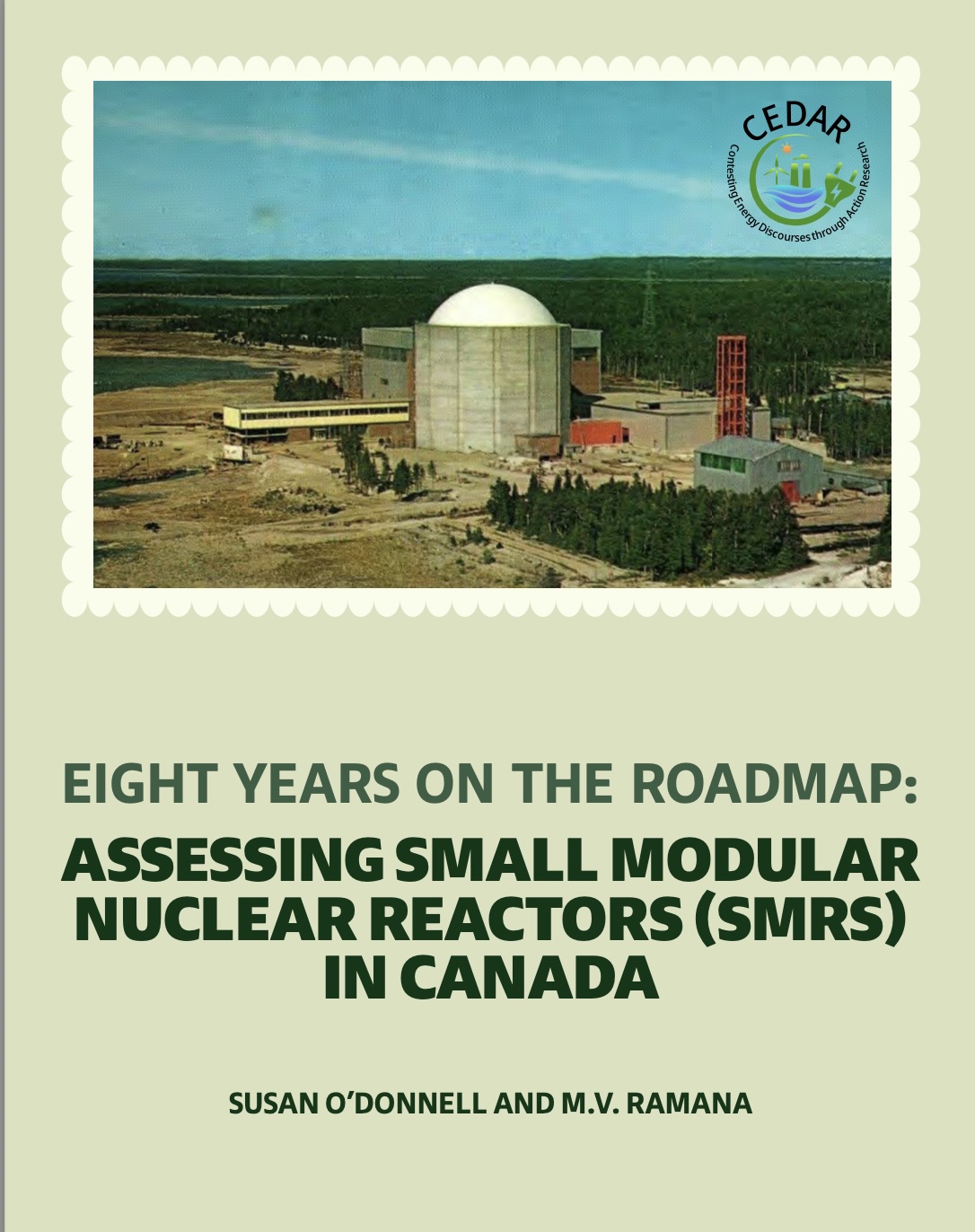
The Future for Small Modular Nuclear Reactors s does not look promising
 NuClear News August 14 “………The Future for SMRs does not look promising
Los Alamos officials have not silenced Jim Doyle’s thoughtful plea for debate about nuclear weapons
Los Alamos, Freedom of Speech, and Nuclear Disaster Lisbeth Gronlund, physicist & co-director, Global Security Union of Concerned Scientists August 4, 2014
As every high school student learns, the first amendment to the U.S. constitution guarantees the right to freedom of speech. That’s why government employees have the right to express their opinions as long as they make clear that their opinions do not represent those of their employer.
Apparently some folks at Los Alamos National Laboratory—one of the two labs that design and help maintain U.S. nuclear weapons—missed that day in class. Last year, Jim Doyle, then a nuclear security and non-proliferation specialist who had been at the Lab for 17 years, published an article in the journal Survival titled Why Eliminate Nuclear Weapons? Doyle included the requisite disclaimer: “The views presented in this article are the author’s own and do not represent those of the Los Alamos National Laboratory or the US government.” So far, so good.
But soon Los Alamos officials claimed the article contained classified information. Then they docked Doyle’s pay, took away his security clearance, and ultimately fired him. Not subtle.

The shameful tale of Los Alamos and Jim Doyle is thoroughly detailed in an article by Douglas Birch, an investigative journalist who works at the Center for Public Integrity. Among other things, Birch interviews several experts with security clearances who say that Doyle’s article contains nothing classified……..
An informed public debate about U.S. nuclear weapons policies is essential. That Los Alamos Lab officials went out of their way to stifle such debate is especially disturbing. Ironically, their actions have now brought Doyle’s article to the attention of a much larger group of people. http://blog.ucsusa.org/los-alamos-freedom-of-speech-nuclear-disaster-612
Threat of global terrorism means that USA and Russia must work together
 From Russia-US relations to global terrorism, nuclear insecurity is as big a threat as ever PRI’s The WorldProducer Nina Porzucki August 05, 2014 ·
This is what the US Department of Energy said last week in a report they released: “Effective nuclear security for all stockpiles worldwide will be almost impossible to achieve without Russia and the United States working together.”
President Barack Obama said as much himself at the Nuclear Security Summit held in Holland this past March.
“It is important for us not to relax, but rather accelerate our efforts over the next two years, sustain momentum, so that we finish strong in 2016,” he said.
But accelerating they are not. In the wake of the annexation of Crimea and turmoil in eastern Ukraine, relations have actually taken a step backward.
This is not the direction that relations should be going warns Matthew Bunn, who directs the “Managing the Atom Project” at the Belfer Center for Science and International Affairs at Harvard. Halting cooperation doesn’t just punish the Russians.
“We are investing in nuclear in Russia not as a favor to the Russians but as an investment to our own security. It’s important to us that this material — and the Russians have the largest stockpile in the world — be secure and it does not fall into terrorist hands,” Bunn said……..http://www.pri.org/stories/2014-08-05/russia-us-relations-global-terrorism-nuclear-insecurity-big-threat-ever
Renewable enegy already viable – and the myth of storage necessity
We Don’t Need a Huge Breakthrough to Make Renewable Energy Viable—It Already Is The idea that renewable energy can’t handle the load is a myth, says Amory Lovins http://www.smithsonianmag.com/smart-news/we-dont-need-huge-breakthrough-make-renewable-energy-viable-it-already-180952254/?no-ist By Colin Schultz August 5, 2014 From the windy plains to the sunny southwest, energy companies around the U.S. are investing heavily in renewable energy production. More than half of the energy production equipment being planned for installation in the next few years is renewable. Yet despite the environmental and economic sense of renewable energy, the public conception still lingers that wind and solar and other renewable tech will never be able to quite handle the job. After all, do we expect factories and homes to go dark when the sun sets or the wind falters?
The storage necessity myth: how to choreograph high-renewables electricity systems
In the video above, physicist and environmentalist Amory Lovins explains how renewable energy should be able to keep the electricity flowing just fine. We won’t need any big technological breakthroughs in batteries or storage technology, he says, or any other huge breakthroughs. All we’ll really need is good management and a diverse array of renewable energy production equipment.
Amory Lovins is the co-founder of the Rocky Mountain Institute, a think tank working on energy and resource use issues. This video was based on a presentation Lovins gave at the 2014 TED conference.
To help the nuclear industry, USA’s EPA to weaken radiation standards
 Green groups say EPA rules would weaken radiation standards The Hill, By Tim Devaney – 08/04/14 Green groups say the Environmental Protection Agency’s plan to weaken radiation standards at nuclear power plants would triple the likelihood of people in surrounding communities developing cancer.
The EPA said earlier this year it is considering new rules that green groups claim would actually weaken radiation standards, increasing public exposure by at least three times from the current level. The agency has not updated the standards since 1977. “The EPA admits that radiation is much more likely to cause cancer than was believed when the rule was originally written,” said Dan Hirsch, president of nuclear watchdog group Committee to Bridge the Gap. “So it’s perplexing that rather than tightening the rule, they’re proposing to weaken it further.”
The Committee to Bridge the Gap is one of about 70 environmental groups that sent EPA Administrator Gina McCarthy a letter over the weekend, asking her to reconsider the new rules as the public comment period closes and the agency enters the final stages of rule-making.
In addition to the environmental groups, more than 6,000 people have written to the EPA opposing the changes to the radiation standard, Hirsch said.
Under the EPA’s current standards, about one in every 500 people who are exposed to radiation develop cancer, but the new rules would increase the risk even more, Hirsch said.
“They’ve given a free pass to radiation,” Hirsch said……….
environmental groups speculate the Obama administration could be trying to replace coal production with nuclear energy, which they say is why the EPA is loosening radiation standards.
Environmental groups, however, express deep concerns about this plan.
“I would not say that nuclear is safer than coal, not at all,” Hirsch said.
“Choosing between coal and nuclear is a form of picking one’s poison, either carbon or plutonium,” he added. “But we believe that shouldn’t be the choice. The choice should be between dangerous pollutants and renewables, which are far safer.”
Renewable energies such as solar, wind and hydropower are all better replacements for coal than nuclear energy, Hirsch said. : http://thehill.com/regulation/214232-green-groups-say-epa-rules-would-weaken-radiation-standards#ixzz39gQFKYxi
Follow us: @thehill on Twitter | TheHill on Facebook
On costs and safety, solar energy far better than nuclear, for South Africa
 Nuclear plan incomprehensible http://www.bdlive.co.za/opinion/letters/2014/08/05/letter-nuclear-plan-incomprehensible Liz McDaid AUGUST 05 2014 THE Southern African Faith Communities’ Environment Institute (Safcei) shares the government and Eskom’s commitment to service the energy needs of the country and the poor in particular. We therefore find the growing emphasis on and commitment to nuclear energy incomprehensible on economic and moral grounds.
Following Eskom’s revelations to Parliament at the end of last month, Safcei believes that, financially, we cannot afford nuclear energy and calls on the Cabinet to abolish the nuclear focus and expand its renewable energy programme.
According to Eskom, 60% of our power stations are older than the recommended design age of 30 years, resulting in increased breakdowns and need for maintenance.
Life extensions and environmental retrofits will require between R50bn and R260bn. Eskom is looking to claw back additional revenue through more electricity tariff increases. Yet poor communities struggle to afford electricity right now.
According to Deputy President Cyril Ramaphosa, we will find additional finances to build new nuclear energy plants. Given that the cost of nuclear has been put at R1-trillion, who will provide the money?
By contrast, globally, a record of 39GW of new solar photovoltaic capacity was installed last year, which required less financing than in 2012, when only 31GW was deployed. In South Africa, renewable energy plants have added 1,300MW to the grid in just less than two years (with a further 1,200MW expected by end of next year.).
As people of faith, we express our deep concern that our public policies are not in line with the best options for preserving our natural environment, saving energy and alleviating poverty. Safcei believes therefore that there is an ethical imperative to expand renewable energy, which is cheaper to build, has zero fuel costs and can provide sustainable, affordable energy for the people of South Africa.
Public Enterprises Minister Lynne Brown says she is hoping to appoint a CEO for Eskom in the next few weeks. If the government is serious about addressing the Eskom crisis, it needs to direct the utility to abandon 19th-century thinking and catch up with the 21st century.
We therefore call on Ms Brown to appoint someone who can consider the long-term energy needs of the country. Appointing a renewable energy expert as a CEO would be a good first step.
Small Modular Nuclear Reactors in reality are far from safe
nuClear News August 14, “…..Safety of SMRsdepend on convincing the US Nuclear Regulatory Commission to relax existing safetyIndustry and Energy Business taking note of World Nuclear Status Report
Nuclear is generating less of world’s power; renewables are accelerating, MINN Post By Ron Meador 6 Aug 14, At best, nuclear power accounted for only 10.8 percent of the world’s electricity last year — down from a peak of 17.6 percent in 1996 — and faces a difficult future in at least the short term because the world’s reactor fleet is aging, while new projects are burdened by high costs and construction delays.
So says last week’s World Nuclear Industry Status Report 2014, which so far is getting more attention in business and power-industry publications than in general media…….. The report’s chief author is Mycle Schneider…his consulting clients have included the International Atomic Energy Agency, the French and German environment ministries, the Belgian energy ministry and members of the European Parliament.
The IAEA has distributed his reports in the past; some have been reprinted in the Bulletin of the Atomic Scientists. This year’s report has gained attention from U.S. News & World Report, hardly a journal for lefty, anti-nuke bunny-huggers, as well as Power, concerned with “business and technology for the global generation industry.”
And Power’s take on the Schneider analysis, by the way, is that the true decline is even steeper than stated above. It leads with statistics putting nuclear’s share of “global commercial primary energy production” — which does sound like the thing you’d really want to measure — at 4.4 percent last year, “a level not seen since 1984.”………..
-
The average age of the world’s operating nuclear fleet has increased to 28.5 years with over 10% of the total having operated for over 40 years.
-
While 67 reactors are under construction in 14 different countries, at least 49 of them have encountered construction delays, with eight being “under construction” for more than 20 years.
-
“Newcomer countries” have seen delays in development, with Belarus the only nation to have “an actual construction project” while Bangladesh, Jordan, Lithuania, Poland, Saudi Arabia, Turkey, and Vietnam aren’t that far along as yet.
-
Capital costs for construction have escalated from roughly $1,000 per installed kilowatt a decade ago to what is expected to be around $8,000 per installed kilowatt for two new units at the Hinkley Point facility in the UK……..
In 2013 alone, 37 gigawatts of solar and 32 GW of wind capacity were added throughout the world. In contrast, nuclear capacity has declined by 19 GW since 2000. Again, much of that decrease is due to Japanese reactors being placed in LTO, but even with those reactors considered operational, nuclear capacity would only have increased 17.5 GW during the 14-year period………
Schneider’s own view:
It is time to match the international nuclear statistics to the industrial reality. The introduction of the new category Long-Term Outage more appropriately represents the operational status of nuclear power plants and provides industry analysts, political decision-makers and investors with a tool that mirrors empirical facts rather than wishful thinking……..
Industry prefers other stats
Neither U.S. News nor Power sought industry comment on the Schneider analysis but — interestingly — Climate Central’s blogger Bobby McGill did, and neither spokesman he interviewed actually took issue with Schneider’s methods or measures, including LTO. They just prefer different, more nuke-favorable ones:……… http://www.minnpost.com/earth-journal/2014/08/nuclear-generating-less-worlds-power-renewables-are-accelerating

1 This Month
26 April – Chernobyl: Inside the Meltdown airs on National Geographic on Sunday 26th April from 4pm

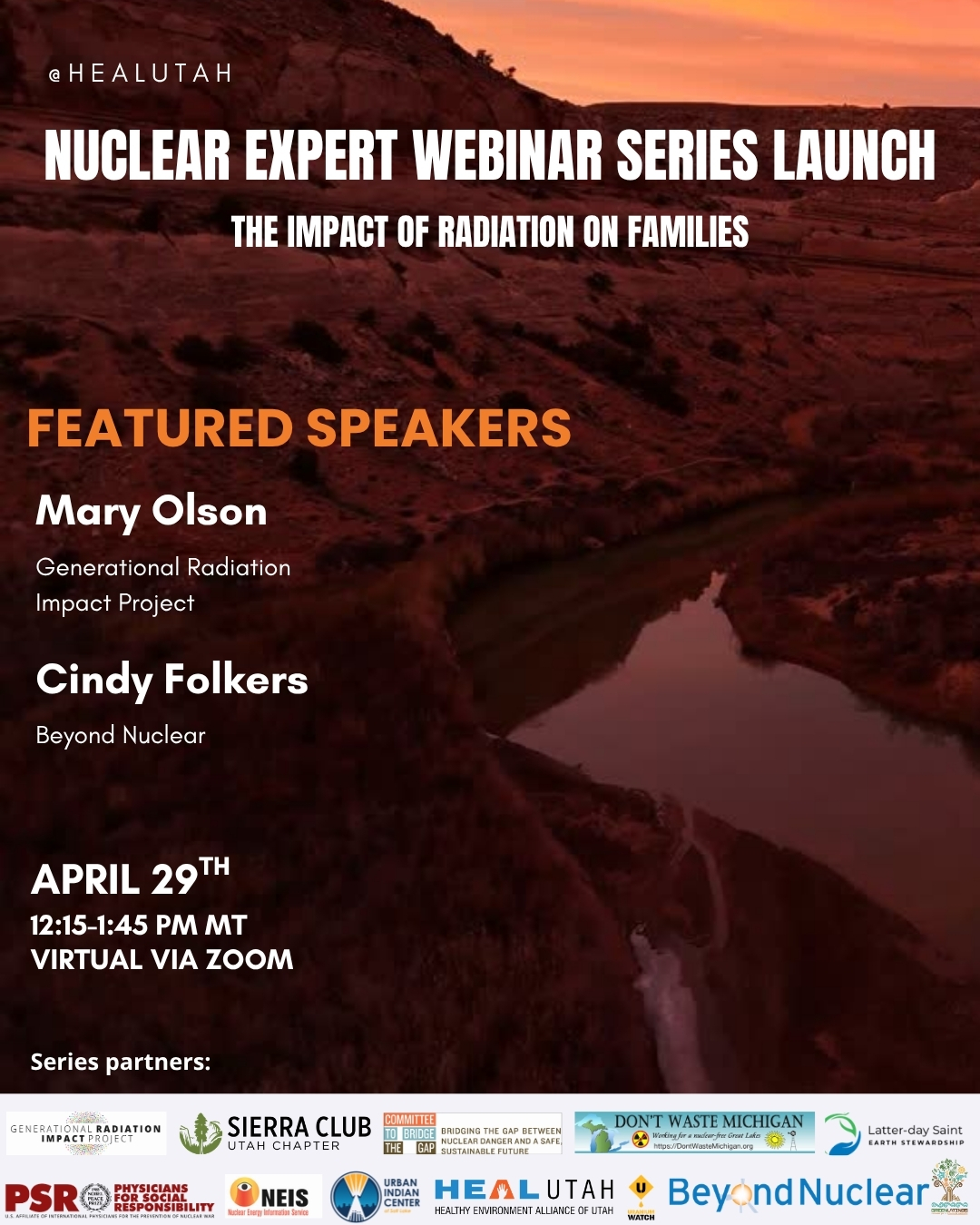
29 April – Nuclear Expert Webinar #1 – Radiation Impacts on Families with Mary Olson and Cindy Folkers
- 12:15 PM MT – 1:45 PM MT
- Location: Virtual – REGISTER TODAY

4 May -West Suburban Peace Coalition to discuss Iran war at May Educational Forum
Monday, May 4, 7:00 – 8:00 PM Central Standard Time
Title: : How Trump’s Narrative Tries to Shape the Reality of the War on Iran.
Contact Walt Zlotow, zlotow@hotmail.com 630 442 3045 for further information
14 May – online event From Bombs to Data Centres: the Face of Nuclear Colonialism

Pine Ridge Uranium is the real threat, not Tehran- Tell Burgum: Stop the Extraction.
Chernobyl: The Lost Tapes – A good documentary on Chernobyl on SBS available On Demand for the next 3 weeks– https://www.sbs.com.au/ondemand/tv-program/chernobyl-the-lost-tapes/2352741955560
To see nuclear-related stories in greater depth and intensity – go to https://nuclearinformation.wordpress.com
-
Archives
- April 2026 (288)
- March 2026 (251)
- February 2026 (268)
- January 2026 (308)
- December 2025 (358)
- November 2025 (359)
- October 2025 (376)
- September 2025 (257)
- August 2025 (319)
- July 2025 (230)
- June 2025 (348)
- May 2025 (261)
-
Categories
- 1
- 1 NUCLEAR ISSUES
- business and costs
- climate change
- culture and arts
- ENERGY
- environment
- health
- history
- indigenous issues
- Legal
- marketing of nuclear
- media
- opposition to nuclear
- PERSONAL STORIES
- politics
- politics international
- Religion and ethics
- safety
- secrets,lies and civil liberties
- spinbuster
- technology
- Uranium
- wastes
- weapons and war
- Women
- 2 WORLD
- ACTION
- AFRICA
- Atrocities
- AUSTRALIA
- Christina's notes
- Christina's themes
- culture and arts
- Events
- Fuk 2022
- Fuk 2023
- Fukushima 2017
- Fukushima 2018
- fukushima 2019
- Fukushima 2020
- Fukushima 2021
- general
- global warming
- Humour (God we need it)
- Nuclear
- RARE EARTHS
- Reference
- resources – print
- Resources -audiovicual
- Weekly Newsletter
- World
- World Nuclear
- YouTube
-
RSS
Entries RSS
Comments RSS
 nuclear-news