The Hidden Truth about Fukushima- Children, families and nuclear workers suffer in silence!
This might have been an guarantor with an imaginary address. This is the dark side of the construction and nuclear industries, not just post-nuclear accident, that those without families, especially elderlies, are given harsh work.
[…]
Their concern is not so much if it’s safe or not, but it should not be a scientific issue but an ethical issue to use children as a way of appealing for safety. However, currently, about 70% of the municipalities within Fukushima Prefecture use Fukushima produce to children in school lunches as a way of appealing for safety
[..]
It says 27.6 μSv/h. He asked me then if all the students had evacuated. I said they were in class as we spoke. He said the radiation level qualified for immediate mandatory evacuation in Belarus. He told me that he thought Japan was a wealthy country but that he was apparently wrong
[…]
- Needless to say, he insisted on evacuating children immediately after the Fukushima accident. However, evacuation never happened. So he started this project with the Fukushima residents who evacuated to Matsumoto City.
[…]
So, some children want to study in uncontaminated areas although their parents are against it. One junior high school girl said she would want to bear children when grown up, so she felt that she should leave Fukushima as soon as possible.
[…]
Also, the plan is underway to return evacuees to contaminated areas as the government and researchers say it’s safe. This is the reality of a “wealthy” country, Japan, which is considered a free, democratic and wonderful country. But it’s really our own responsibilities that we are in this situation. I am always thinking about how things can be changed.

http://fukushimavoice-eng2.blogspot.co.uk/2014/05/mako-oshidori-in-dusseldorf-hidden.html
Full article on link
posted on 28 May 2014
Video in Japanese only, full transcript in English follows;
Moderator: Good evening everyone. My name is Mariko. Welcome to a lecture by Mako Oshidori. As we all know, the Japanese people experienced the Great East Japan earthquake and tsunami on March 11, 2011. A huge earthquake, followed by tsunami and the nuclear accident, has become an unprecedented disaster for the Japanese as well as the rest of the world. Moreover, this accident is not only out of control but continues to be in critical state.
As you may be aware, the issue of anti-nuclear power plant ranks third in the interest of Metropolitan Tokyo residents. This was revealed in the degree of interest survey of various public opinion polls during the recent Tokyo gubernatorial election. The number one issue was declining birthrate. It could be said that the interest in this type of issue is suppressed due to the media control. This is a situation where the voices from disaster-stricken Fukushima do not reach Tokyo residents.
However, today, we have invited Mako Oshidori to come and share with us her direct knowledge of what is happening in Fukushima. It is a rare opportunity that this type of information is directly disseminated in foreign countries, so this is going to be a valuable lecture. Mako Oshidori is a representative of Free Press Corporation in Japan. Is that right?
Mako: I am the director, not a representative.
This organization was originally created after the earthquake. The media is controlled as I just mentioned. This alliance was created for the purpose of conveying accurate, fresh information without media control.
Mako: Actually, it was created shortly before the earthquake. It was sort of coincidental.
Before the Fukushima accident, Mako Oshidori was performing Manzai, a two-person comedy act, as part of the pair, Oshidori Mako and Ken, for belonging to Yoshimoto Kogyo. However, after the nuclear accident, she began to voice her opinions about anti-nuclear power plant issues, which kept her from getting work. Instead, she became more known as a journalist, especially for her sharp questions which would drive TEPCO officials into a corner. Mako is of course a journalist, but she also visits Fukushima Prefecture to gather voices of local people and interview TEPCO workers to gather information. Now I will give the microphone to Mako Oshidori. I hope this evening will bring an informative and contemplative time together.
My name is Mako Oshidori. I am sorry I speak in Japanese
I am very thankful I can meet you today and have an opportunity to talk here. I am glad to be here. I am very grateful to the Protestant church and the IPPNW or International Physicians for the Prevention of Nuclear War for inviting me to Germany. I would like to make a minor correction in the introduction given a moment ago. I was invited to talk to you, but I am actually not active in the anti-nuclear power plant movement. What I do is conduct investigations. There are numerous issues in Japan that I investigate, from the nuclear accident to other medical issues such as Minamata disease and Asbestosis.
However, doctors and scientists attending the IPPNW conference, which ended yesterday, shared how they end up being labeled as anti-nuclear activists even though they don’t consider themselves to be as such, when they research and publicize facts inconvenient for promotion of nuclear power. There is a tremendous amount of pressure exerted when researching and writing up facts the nuclear lobby doesn’t like. If you continue without giving in, despite such pressure, people eventually think you are an anti-nuclear power plant activist. Of course, it is my belief that we don’t need nuclear power plants on Planet Earth.
There is one thing that really surprised me here in Europe. It’s the fact that people here think Japan is a very democratic and free country. I am actually a journalist with the highest attendance rate at the TEPCO press conference. It seems inconvenient to them when I write various facts in articles, and a variety of pressure has been placed on me. There was a magazine I used to contribute an article to. An electric power company group would pressure the editor to place three pro-nuclear articles each time one of my articles was posted. As a result, my article ended up not being posted in the magazine. Also, there was a television show being planned where I would talk about the TEPCO accident, but sponsors gave an instruction not to have me use any words such as nuclear power and nuclear power plants. I ended up not going on the show.
In 2011 and 2012, pressure was placed on me by TEPCO. However, in 2013 when the Japanese central government decided to begin to restart nuclear power plants, the government placed a watch on me. In July 2013, a new House of Councilors was elected and both Upper and Lower House ended up with the Liberal Democratic Party as the ruling party. This administration then held a secret meeting by secretly gathering specialists and researchers in the field of nuclear power. The meeting was convened in order to collect ideas about how to decommission Fukushima Daiichi nuclear power plant, and a piece of paper was distributed with a list of names. The current Japanese government told the researchers not to approach anybody on the list. The list included people with power in the opposition parties, such as the former prime minister Naoto Kan and the politician Ishiro Ozawa, and I was told that my name, Mako Oshidori, was listed alongside these names. A researcher who was given the list and told not to approach anybody on it was friendly with me and told me the list included my name.
Soon after that a mysterious man began to follow me. This man appeared to be a member of Public Security Intelligence Agency in the Cabinet Office, which investigates various things. One of my hobbies is taking a candid shot, and I will show you the successful candid shot of this man.

Just as you see here, there was a time period when someone would always be near me, trying to eavesdrop on my conversation with people. As I am a professional entertainer, whoever I am talking to would ask me if the person was my manager. I would say that the person must be one of my groupies, as I have never met the person. Sometimes I would go to Fukushima Prefecture to interview different mothers. We would have meals together and talk somewhere, and when the mothers are leaving the premise to go home, an agent from the Public Security Intelligence Agency would take a photo of each mother and make a note of the license plate number of each car. Afraid of having their photos taken or the license plate numbers recorded, some Fukushima mothers would refused to be interviewed, or they would even refuse to have their stories published. An ex-agent who is knowledgeable about the work of the Public Security Intelligence Agency said that when you are visibly followed, that was meant to intimidate you. If there was one person visible, then there would be ten more. I think that is analogous to cockroaches. So, when you do a little serious investigation about the nuclear accident, you are under various pressure and it makes it more difficult to interview people. There are actually other journalists from major newspapers and television stations, other than me, who have done a lot of investigation about the nuclear accident, but the information doesn’t readily come out. That’s because the pressure is placed on them not to release the information. What I am going to tell you now might surprise you, but the Japanese people are just as surprised when I tell them the same information as it’s something they have never heard of, read in the newspaper, or seen on TV.
Next, I would like to talk about the nuclear power plant workers. This man used to work for TEPCO as a nurse at a medical clinic inside FDNPP. I interviewed him when he quit his job at TEPCO in 2013.
CSRP Symposium 2013 on Fukushima related health effects and legal responses
What We Do
Since March 2011, we have been committed to minimizing damage and radiation exposure resulting from Tepco’s Fukushima Daiichi Nuclear Power Plant disaster in our individual positions. Victims, children and citizens, who are concerned about radioactive contamination, demand the establishment of better radiation protection measures and radioactivity control measures. To satisfy these demands, we need to scientifically examine the health effects of radiation, a major part of which is unknown. The purpose of the Citizen–Scientist International Symposium on Radiation Protection, is to provide citizen scientists from within and outside of Japan with an opportunity of discussing health effects from radiation and prevention measures, thus contributing to the establishment of an extensive international network for radiation protection. We would appreciate your cooperation.
CSRPの活動紹介
私たちは2011年3月以降、東京電力福島第一原発事故による被害と被ばくの最小化に取り組んできました。放射線防護、放射能対策の確立を求めるた めには、とらえどころのない放射線による健康影響を科学的に究明していかなければなりません。市民と科学者が、専門的知見を社会のなかで最善の形で生かし ていけるよう、国際的にも連帯しながらネットワークを維持発展させていくことは今後ますます重要になってきます。私たちの活動は、東京電力福島原発事故の 対処において様々な取り組みをしている市民・団体・科学者が一同に会して情報シェアとフィードバック・意見交換をし、その可能性を長期にわたって最大限に 探っていくものです。
CSRP Symposium 2013
2013年 市民科学者国際会議
Oct 13th, 10:10 ~ 12:25
Session 1: Biological effect and its mechanism
セッション1 生物影響とそのメカニズム
-

Radiation induced genomic instability as cause of health effects and damage to wildlife
健康と野生生物への危害の原因としての、放射線に起因するゲノム不安定性 -

Radiation and Aging
放射線被ばくと老化 -

Non-Human Animal Models for Effects of Radiation Exposure in Nature
放射線被ばくの影響を知るための自然界におけるヒト以外の動物モデル -

The biological impacts of the Fukushima nuclear accident on the pale grass blue butterfly
福島原発事故のヤマトシジミへの生物学的影響
Oct 13th, 13:40 ~ 15:15
Session 2: Epidemiology and dose evaluation
セッション2 疫学と線量評価
-

Do Nuclear Power Plants in normal operation cause Childhood Leukemia? Evidence vs. Politics
原発の平常稼働は小児白血病の原因となるのか 科学的証拠と政治の対立 -

Thyroid cancer under 19 in Fukushika
福島県における甲状腺がん発生の現状 -

Radiation Contamination in Iitate Village and an Attempt to Evaluate Early-stage Radiation Exposure
飯舘村の放射能汚染と初期被曝評価の試み
Oct 13th, 15:30 ~ 16:55
Session 3: Law and Rights for Public health
セッション3 健康に関する法と権利
-

The Japanese Government Must Act Now, Making a Fundamental Policy Change regarding the Protection of Residents Following the Nuclear Accident, based on the UN “Right to Health” Special Rapporteur (Grover Advisory)
国連「健康に対する権利」特別報告者の勧告(グローバー勧告)に基づき、日本政府は今こそ、原発事故後の住民保護について、抜本的な政策転換を図るべき -

Law on Support for Children and other Victims of Nuclear Accidents
原発事故子ども・被災者支援法の現状と課題 -

For the Protection of Children from Radiation
The Power of the People and Support by Local Governments
被ばくから子どもを守るために
〜民間の力と自治体の支援と〜
Oct 14th, 14:00 ~ 18:40
Round-table 円卓会議
-

Standard and criteria for Radiation Protection
防護基準について -

Research agendas for future
今後の調査・研究課題 -

Medical care and medical checkup structure
今後の医療と健診体制
Japans Homeless exploited by Yakusa and dodgy contractors – International companies ignore this – Petition
“….An increasing proportion of the 3,000 contract laborers at Fukushima are poorly trained, with little technical expertise or knowledge of radiation. They earn about $150 a day, less than what a regular construction job pays. Few are given insurance coverage. Many are destitute, recruited by ruthless labor brokers, some with ties to the mob. And the laborers are tossed out once they are exposed to the legal radiation limit. Critics point to the poor quality of the laborers for the series of large leaks of contaminated water.
Tokyo Electric Power Company, known as Tepco, responsible for decommissioning the plant, hires contractors, which, in turn, hire subcontractors. The contract laborers stand at the bottom of this multilayered pyramid of subcontracting, and they are exposed, on average, to twice the amount of radiation compared with Tepco employees, as reported recently in The Times. Tepco says it is not in a position to comment on the employment practices of the contractors, and the company seems unaware of what is happening on the ground. There are more than 1,000 firms at work at Fukushima…..” http://www.nytimes.com/2014/03/22/opinion/fukushimas-shameful-cleanup.html?_r=0

Private labor contractors in Japan are “recruiting” homeless men and men to work in the disaster area of the destroyed Fukushima nuclear power plant, taking advantage of their desperation to pay them less than minimum wage and with no proof that their health is being protected.
In a devil’s bargain between organized crime bosses and the nation’s top construction firms, laborers are exploited by these contractors as they take in state funds for the cleanup, giving them miniscule cuts for the dangerous untrained work and then subtracting more for food and lodging.
We call on the government of Japan to investigate this shady practice, ensuring these workers are properly protected from the radiation and being well-compensated for the dangerous work. Don’t let these companies keep preying on the homeless to expose them to radiation — write the Japanese government now!
PETITION TO JAPANESE GOVERNMENT: Protect your country’s homeless from being exploited and exposed to dangerous radiation levels. Investigate construction companies to make sure they’re paying a fair wage and training and protecting their workers.
Click here to sign — it just takes a second.
Thanks,
— The folks at Watchdog.net
P.S. If the other links aren’t working for you, please go here to sign: http://act.watchdog.net/petitions/4158?n=72339185.GVL80d
Corporate greed turns a blind eye to the crimes!
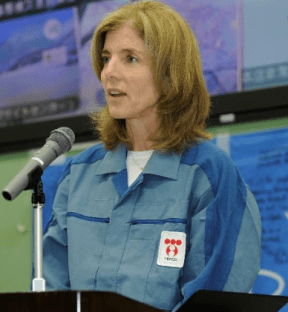
“…..Immediately following the Fukushima Dai-ichi accident, the United States—through the Department of Energy, the Nuclear Regulatory Commission, and other agencies—began supporting the Government of Japan and TEPCO in response efforts, decommissioning, and cleanup activities. We are committed to providing support as long as it is necessary. At Fukushima Dai-ichi, I saw examples of the assistance we provided, as well as the continuing partnerships between TEPCO, U.S. Government agencies, U.S. national laboratories, and U.S. companies…..” https://nuclear-news.net/2014/05/14/ambassador-caroline-kennedy-statement-on-visit-to-the-fukushima-daiichi-nuclear-power-plant/
“..British engineers Amec, Babcock International, and Atkins are believed to be circling nuclear
decommissioning work estimated to be worth at least $5bn (£3.2bn) in Japan as a result of the Fukushima disaster….” […] “…US-owned Energy Solutions will also be interested.
“This is a huge opportunity,” claimed the source. “Japan should start
making some real progress on decommissioning now.”….” http://www.independent.co.uk/news/business/news/uk-firms-to-bid-for-japans-nuclear-cleanup-8458524.html“….Veolia Environnement SA (VIE), which treated radioactive water from Japan’s nuclear meltdown at Fukushima, plans to use the experience to move into decontamination and power plant dismantling.
The water utility and the nuclear research group known as CEA plan to earn as much as 400 million euros ($534 million) in revenue within about four years by cleaning radioactive sites and taking apart installations, they said today….” http://www.bloomberg.com/news/2013-01-15/veolia-draws-upon-fukushima-to-move-into-nuclear-dismantling-1-.html
“…On June 7, 2013, Japanese Prime Minister Shinzo Abe and French President François Hollande agreed on and released a joint statement to promote comprehensive cooperation in the field of nuclear power. In step with this, Japan Nuclear Fuel Limited (JNFL) and Areva released a Joint Statement on the Future of Nuclear Fuel Recycling….” http://www.cnic.jp/english/newsletter/nit155/nit155articles/08_nw155.html
Germany’s spy agency ‘in bed’ with US – Snowden on Berlin’s inhospitality
http://rt.com/news/161824-germany-spy-us-snowden/
May 27, 2014

NSA whistleblower Edward Snowden says he has more revelations about Washington’s spying on German citizens, but Berlin is reluctant to invite him to testify because Germany has used the exact same surveillance methods as the US, Stern magazine reported.
The former NSA contractor – wanted by the US for disclosing its surveillance program – told the German magazine that he had been “personally involved with information stemming from Germany” and that the “constitutional rights of every citizen in Germany were infringed” during the process.
Snowden said he had used systems able to intercept large amounts of data, adding: “I’d be surprised if German lawmakers learnt nothing new if I laid out all the information.”
The rights activist suggested that the only reason Merkel’s government does not want him to testify is because Germany’s foreign intelligence agency, the BND, used the same methods of mass surveillance.
“The BND is with the Americans in bed,” he told Stern.
So far it is unclear whether Snowden will be invited to Germany to provide new details for the investigation. Merkel’s government has rejected quizzing him in person, citing diplomatic reasons. The chancellor’s Christian Democratic Union party believes a personal invitation would put a strain on US-German relations. But despite the pressure from the government, the majority of German lawmakers on a committee investigating the spying decided earlier this month that they wanted to hear the leaker in person.
In response to the interview published in the German magazine on Tuesday, the chairman of the parliamentary committee, conservative lawmaker Patrick Sensburg, questioned Snowden’s competence in the matter.
“According to the information we have Edward Snowden was never especially involved with the mass spying of German citizens in Germany,” he said, as quoted by Reuters. “If he doesn’t deliver proof in terms of original documents soon, he could lose all credibility with the committee.”
Germany’s center-left Social Democrats (SPD), the second major political party after CDU, took a neutral stance, saying that it is open to questioning Snowden in Germany or Russia, while German opposition members involved in the investigation believe that Snowden is a key witness and should testify in person.
Since Snowden leaked sensitive US information last year, he has been charged with theft of government property, unauthorized communication of national defense information, and willful communication of classified intelligence to an unauthorized person.
Nuclear Hotseat #153: Special Encore: WHO/IAEA Unholy Alliance
http://www.nuclearhotseat.com/Blog/


THIS IS A SPECIAL ENCORE PRESENTATION of Nuclear Hotseat, the first of two on the unholy alliance between the World Health Organization and the pro-nuclear International Atomic Energy Agency.
Alison Katz, today’s interviewee, is a sociologist and psychologist who worked inside the WHO for 18 years. Now a leader within Independent WHO, which she will explain, Alison dissects the history, politics and manipulations of the United Nations agency we’re supposed to trust to safeguard the world’s health – especially in nuclear matters. This is a Nuclear Hotseat exclusive.
DOWNLOAD HERE:
http://lhalevy.audioacrobat.com/download/4fe934f5-3bd4-0155-d229-6b32ad5e462e.mp3
NEXT WEEK: Joseph Mangano, Director of Radiation and Public Health Project (radiation.org), will go over the flawed epidemiology used by the WHO in its analysis of Chernobyl’s impact, based on the work of the late Dr. Rosalie Bertel.
more here;
EDF Nuclear Costs Seen Jumping With Investments in Safety
Spending on measures ordered by France’s atomic regulator following the Fukushima meltdown in Japan three years ago will cost about 11 billion euros between this year and 2025, the auditor said. Efforts to align safety at existing reactors with new generation models will cost another 1.6 billion euros a year over the same period.
May 27, 2014
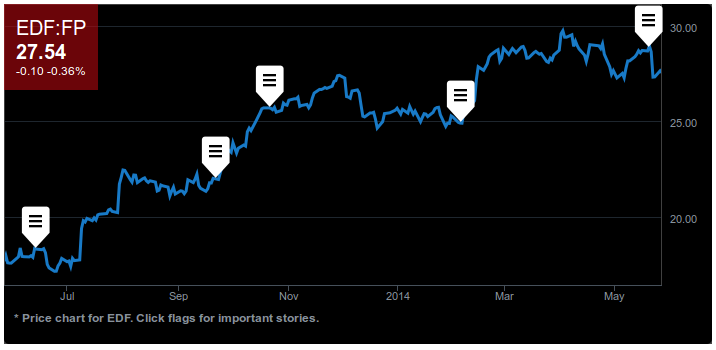
Electricite de France SA’s costs to produce atomic power are spiraling upward as investment needed to keep aging reactors safe over the next two decades could reach 90 billion euros ($123 billion), the state auditor said.
“Production costs from the existing fleet are heading higher over the medium-term,” France’s Cour des Comptes said in a report to parliament published today. They already increased 21 percent over the past three years.
The authority called for a “rapid” decision on how long EDF reactors should operate to allow the Paris-based utility to plan future spending, which it said is expected to rise “significantly” through 2017 and cost more than anticipated.
The report marks an era when the state-controlled operator of 58 nuclear reactors has reached a crossroads. The government is preparing to unveil an energy law in the coming weeks that could lower France’s future reliance on atomic power. President Francois Hollande has pledged to reduce nuclear output to 50 percent of the country’s total power by 2025 from around three-quarters, the highest proportion in the world.
Lawmakers asked the auditor to make EDF’s power production costs public so they may be compared with other energies like renewables, which France wants to increase.
The costs to produce electricity rose to 59.8 euros a megawatt-hour in 2013 from 49.6 euros a megawatt hour in 2010, a period when spending on the utility’s 58 atomic generators rose 118 percent, according to the report.
Dismantling Costs
The higher power production costs were driven by increased operating costs at EDF as well as provisions for future dismantling of atomic installations and waste treatment, the auditor said.
Modi govt may go slow on nuclear energy expansion, focus on wind, solar
An industry expert from KPMG, who did not want to be identified, said that before the new government takes any decision on nuclear power, it will first have to tackle issues of supply chain, safety and acceptance from locals.
“Wind, solar and hydro, on the other hand, are safe and tried models of clean energy. Though countries like Russia, Canada, the US, France and Japan are keen on investing in the country’s nuclear energy growth story, the government, which is looking at FDI in power sector, will not take hasty decisions.
Mumbai: The new government may put on the back-burner a plan to install 20 gigawatts of nuclear power capacity in the country by 2020 and instead focus on wind and solar to achieve energy security, says PwC.
“Nuclear projects are not likely to be on the radar of the Modi government, at least for the next two years. It will first focus on increasing coal production, allocation and pricing, apart from clearing the balance sheets of distribution companies,” PwC executive director energy utilities Sambitosh Mohapatra said.
Rather than nuclear, the Modi government may focus on increasing wind and solar power capacity, especially when these models worked successfully in Gujarat, Mohapatra said.
The power, coal, and new and renewable energy portfolios in the Modi Cabinet are held by Piyush Goyal, who is from Maharashtra, where BJP ally Shiv Sena was opposing the 9,900 MW Jaitapur nuclear project.
Former Prime Minister Manmohan Singh had set a target of installing 20 GW of nuclear power capacity by 2020 and 63 GW by 2032.
In its election manifesto, the BJP promised to take steps to maximise the potential of oil, gas, hydel power, ocean, wind, coal and nuclear sources. The party said it considers energy efficiency and conservation crucial to energy security.
Rolls Royce Rolls the dice on dodgy Turkish nuclear reactors!
Patrick Regis, Rolls-Royce Regional Director, Turkey and Central Asia said: “We are delighted to enter into this important agreement. Working closely with Istanbul Technical University, Rolls-Royce can support the Ministry for Energy and Natural Resources in its plans for a programme of civil nuclear power.
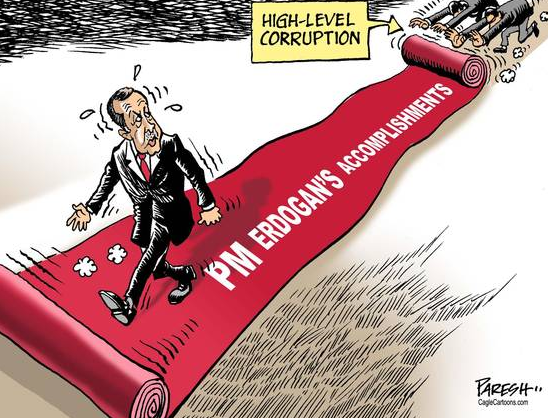
Image source ; http://www.allvoices.com/cartoons/c/102545558-corruption-in-turkey
By K. Steiner-Dicks on May 8, 2014
Rolls Royce will focus on growing its civil nuclear power activities and dispose of other assets after agreeing to sell the majority of its energy unit to Siemens, it has been reported.
According to a report by the Wall Street Journal, Rolls Royce may also sell residual activities in fuel cells and smaller power stations that Siemens does not want, Rolls-Royce’s Chief Financial Officer Mark Morris said.
The company has signed an agreement to sell its Energy gas turbine and compressor business to Siemens for a £785m cash consideration.
The business being sold supplies aero-derivative gas turbines, compressor systems and related services to customers in the Oil and Gas and Power Generation sectors.
On completion of the transaction, Rolls-Royce will receive a further £200m for a 25 year licensing agreement, granting Siemens access to relevant Rolls-Royce aero-derivative technology for use in the 4 to 85 megawatt power output gas turbine range.
Siemens’ Energy sector has around 83,500 employees and in 2013 contributed revenue of €26.6bn and underlying profit of €1.9bn.
John Rishton, Rolls-Royce, CEO, said: “This agreement will give the Energy business greater opportunities as part of a much larger energy company and allows Rolls-Royce to concentrate on the areas of business where we can add most value.”
Canada – Where have all the medical isotopes gone?
There is a sadness among scientists and doctors as they watch this era of once ground-breaking science quietly come to an end.
“Getting out of it I think is a mistake,” says Dr. Laurin. “It will mean a loss of Canadian know-how and expertise. Very good science will be lost, business and jobs are going to go elsewhere or be lost altogether, so I personally think it’s a mistake.
“I may be biased because I’m a physician and I need what’s being made at Chalk River for patient care. But if you look at it from a Canadian point of view, I think it’s a loss for the entire community, not just Ontario, but all of Canada.”
http://www.cbc.ca/news/health/the-made-in-canada-isotope-shortage-facing-medical-scans-1.2652667
Kelly Crowe
May 26, 2014
Albert Mann winced as he sat upright on the scanner bed to talk to me. A large camera had just processed an image of his body, reading the gamma rays radiating from his bones.
I asked him what he had to do to prepare for this test. “What did I have to do? Get cancer,” he said.
Down the hall, seven other camera rooms were buzzing with patients having similar scans. At this hospital in Brampton, Ont., the machines run six days a week.
Across Canada, about 20,000 patients undergo nuclear imaging procedures every week and the field of nuclear medicine is growing around the world.
But almost all of it rests on an increasingly fragile supply of radioactive isotopes, a short-lived medical product made mostly by small research reactors, and a looming shortage has specialists worried.
“I don’t want to sound alarmist,” said Dr. Norman Laurin, president of the Canadian Association of Nuclear Medicine. “But it’s going to have medical consequences. There are people who are going to be denied care, or have a different kind of care that might not be the best for them.”
These patients probably won’t know there’s a problem until their test is cancelled, or they have to wait months for a diagnosis. But if they ask enough questions they’ll find out the shortage of medical isotopes is largely a made-in-Canada problem.
Going out of business
Most Canadians don’t realize it, but this country has been an international leader, the world’s largest single supplier of medical isotopes used in nuclear imaging, for more than 50 years.
But all of that is about to end. Buried deep in the federal budget bill, now winding its way toward approval, is something called the Nordion and Theratronics Divestiture Authorization Act.
Nuclear regulator the ONR accused of ‘indefensible’ conflict of interest
Britain’s nuclear watchdog faces what shocked industry insiders are calling “unbelievable” conflicts of interest, The Independent can reveal.
Tuesday 27 May 2014
The Office for Nuclear Regulation (ONR) is receiving technical advice from several of the very companies that it is supposed to be monitoring, including the US engineering conglomerate Jacobs and the Ftse 100 stalwart Amec. This has led to accusations that the advice cannot be viewed as independent.
ONR inspects nuclear sites across the country, including the Atomic Weapons Establishment (AWE) in Berkshire and Hinkley Point civil energy reactors in Somerset. It recently issued formal cautions to two workers on Cumbria’s Sellafield, one of the world’s most complicated decommissioning sites, for an incident that could have exposed themselves or their colleagues to heightened levels of radiation.
But there are fears that ONR’s efforts to oversee these hazardous sites could be compromised by contracts it has dished out for technical support in its assessment work.
In early April ONR handed Jacobs a five-year deal to help the watchdog in areas like assessing external hazards and decontamination in relation to its work on existing nuclear sites and future reactor designs. Amec gives advice on complicated issues such as reactor chemistry and radiation protection, while the consultancy Arup and building firm Sir Robert McAlpine help on civil engineering issues.
All have extensive nuclear interests in the UK. Jacobs is part of the consortium that owns AWE, which builds and maintains the UK’s nuclear defence deterrent, Trident. Amec is in the consortium looking after the clean-up of Sellafield. Both of these huge firms are supporting Horizon Nuclear Power with engineering expertise on proposed plants at Wylfa on the Isle of Anglesey and Oldbury in south Gloucestershire. Arup worked for the operator RWE Npower on assessing potential sites for new nuclear power stations in Cumbria. Sir Robert McAlpine built 13 of Britain’s nuclear plants, such as Sizewell B in Suffolk.
USA’s “temporary” radioactive waste containers are becoming permanent

it’s time to stop making this toxic radioactive trash
US Nuclear Power Plants Prepare Long-Term Radioactive Waste Storage http://www.theepochtimes.com/n3/697217-us-nuclear-power-plants-prepare-long-term-radioactive-waste-storage/ By Associated Press | May 26, 2014 WATERFORD, Conn.—Nuclear power plants across the United States are building or expanding storage facilities to hold their spent fuel — radioactive waste that by now was supposed to be on its way to a national dump.
The steel and concrete containers used to store the waste on-site were envisioned as only a short-term solution when introduced in the 1980s. Now they are the subject of reviews by industry and government to determine how they might hold up — if needed — for decades or longer.

With nowhere else to put its nuclear waste, the Millstone Power Station overlooking Long Island Sound is sealing it up in massive steel canisters on what used to be a parking lot. The storage pad, first built in 2005, was recently expanded to make room for seven times as many canisters filled with spent fuel.
Dan Steward, the first selectman in Waterford, which hosts Millstone, said he raises the issue every chance he can with Connecticut’s congressional members.
“We do not want to become a nuclear waste site as a community,” Steward said.
The government is pursuing a new plan for nuclear waste storage, hoping to break an impasse left by the collapse of a proposal for Nevada’s Yucca Mountain. The Energy Department says it expects other states will compete for a repository, and the accompanying economic benefits, and it’s already heard from potential hosts in New Mexico, Texas and Mississippi. But the plan faces hurdles including a need for new legislation that has stalled in Congress.
So plants are preparing to keep the high-level nuclear waste in their backyards indefinitely. Most of it remains in pools, which cool the spent fuel for several years once it comes out of the reactors. But with the pools at or nearing capacity, the majority is expected within a decade to be held in dry casks, or canisters, which are used in 34 states. Only three of the 62 commercial nuclear sites in the U.S. have yet to announce plans to build their own.
In the past few years since the Yucca Mountain plan was abandoned, the government and industry have opened studies to address unanswered questions about the long-term performance of dry cask storage. The Nuclear Regulatory Commission in 2011 began offering 40-year license renewals for casks, up from 20-year intervals. The tests are focusing on how to monitor degradation inside the canisters, environmental requirements for storage sites, and how well the canisters hold up with “high burnup,” or longer-burning fuels that are now widely used by American plants.
“Now that we’ve shown that the national policy is shifting, we’re having to relook at these systems to make sure they still meet the regulations for longer and longer periods of time,” said Eric Benner, an NRC official who has served as the inspections branch chief with its spent fuel storage division.
At Millstone, 19 canisters loaded with spent fuel are arrayed on a concrete pad, which was expanded in October to make room for as many as 135 canisters by 2045. The canisters, which are cooled by air circulation, seal the waste with inert gas inside an inner chamber and are themselves loaded into concrete modules. Workers regularly inspect temperature gauges and, during the winter, shovel snow off the vents.
Millstone’s low-level nuclear waste is shipped to a disposal facility in Barnwell, South Carolina.
The spent fuel is piling up at a rate of about 2,200 tons a year at U.S. power-plant sites. The industry and government decline to say how much waste is currently stored at individual plants. The U.S. nuclear industry had 69,720 tons of uranium waste as of May 2013, with 49,620 tons in pools and 20,100 in dry storage, according to the Nuclear Energy Institute industry group.
Spent nuclear fuel is about 95 percent uranium. About 1 percent is other heavy elements such as curium, americium and plutonium-239. Each has an extremely long half-life — some take hundreds of thousands of years to lose all of their radioactive potency.
Watchdog groups say the dry storage poses fewer safety concerns than the reactors themselves, and many have pushed for spent fuel to be transferred more quickly from the pools. Heavy security is in place to deter sabotage by terrorists.
The administration’s strategy calls for an interim storage facility by 2025 and a geologic repository by 2048.
Peter Lyons, an assistant secretary for nuclear energy at the U.S. Energy Department, said it cannot make plans for individual sites until the passage of legislation creating a new framework for waste policy. But he said the groups in southeastern New Mexico, western Texas and Mississippi are only the most public of potential hosts to express interest in taking in high-level waste.
The idea for the interim facility is to take spent fuel left behind from reactors that have already shut down, as is the case at sites in California, Maine, Massachusetts, Michigan, Wisconsin, Connecticut, Colorado and Oregon.
Radiation levels close popular tourist park in Ibaraki Prefecture
 HITACHI SEASIDE PARK CLOSED DUE TO RADIATION, FUKUSHIMA UPDATE MAY 26, 2014
 via JapanCrush / May 25, 2014 / Netizens have been alarmed by the news from national broadcaster, NHK, that part of the beautiful Hitachi Seaside Park have been closed off due to a peak in radiation levels.
Ibaraki Prefecture, which is home to the park, neighbours Fukushima Prefecture, and therefore concerns over radiation levels have been ongoing since the 2011 nuclear disaster.
From NHK.com – “…….Hitachi Seaside Park is one of Ibaraki prefecture’s leading tourist spots and had over 350000 visitors during Golden Week this year and from now on MLIT will be carrying out decontamination of the area.” http://fukushimaupdate.com/hitachi-seaside-park-closed-due-to-radiation-fears/
Obama talked the talk on nuclear disarmament, but not walking the walk
 Nuclear Weapons: Toward Abolition or Armageddon? By Yuki Tanaka
Global Research, May 26, 2014 People still clearly remember that on April 5, 2009 the U.S. President Barack Obama excited an audience in Prague by declaring that his government “will take concrete steps towards a world without nuclear weapons.” As the only nuclear power to have ever used a nuclear weapon, he said, the United States has a moral responsibility to act. Indeed, the U.S. has not only moral responsibility but also legal responsibility for the victims as the nation that committed a crime against humanity by indiscriminately killing tens of thousands of people and causing lifelong radiation sickness to many survivors.
In his speech, Obama also added ‘this goal will not be reached quickly –- perhaps not in my lifetime.’ Clearly, this goal will never be reached if the U.S. continues to spend ever larger sums on nuclear weapons, overshadowing all other nuclear powers, as the Obama Administration has been doing since the speech in Prague.
On April 29 this year, at the Third Meeting of the Preparatory Committee for the 2015 Nuclear Non-Proliferation Treaty Review Conference in New York, Under Secretary Rose Gottemoeller stated in her speech: ‘Indeed, it is the United States’ deep understanding of the consequences of nuclear weapons’ use – including the devastating health effects – that has guided and motivated our efforts to reduce and ultimately eliminate these most hazardous weapons.’
However, despite her claim of “deep understanding [of] the consequences of nuclear weapons’ use,” in the detailed budget for fiscal 2015 released in mid March this year Obama yet again asked for a substantial increase in funding to support nuclear weapons research and production programs under the Department of Energy’s semi-autonomous National Nuclear Security Administration. The proposal includes a seven percent increase in the nuclear warhead budget from $7.7 billion in FY 2014 to $8.3 billion in FY 2015. This budget request sets a new record for DOE nuclear weapons spending, exceeding even the Cold War high point in 1985 under President Reagan’s military buildup. The plan, moreover, is to increase the military budget to an astounding $9.7 billion by FY 2019, 24 percent above FY 2014.
A large proportion of this budget is for “modernizing” nuclear weapons — both warheads and delivery systems. Among the priorities is the B61 Life Extension Program, designed to extend the life of B61 nuclear bombs by an additional 20 to 30 years. The Obama Administration is requesting $634 million, up 20 percent from FY2014, for this program, which has already catapulted from an original estimate of $4 billion to more than $10 billion. Currently 200 of the B61 bombs are located in Europe.
While rebuilding nuclear weapons at exorbitant expense, Obama proposes to slash the budget for dismantling these weapons by 45 percent, from an already paltry $54.2 million to $30 million. No additional funding has been allocated for a nuclear waste clean-up program, and the National Nuclear Security Administration’s $790 million in spending on nuclear nonproliferation programs is to be cut by 21 percent, or $152 million. Amongst these programs is the Global Threat Reduction Initiative, a program that plays a key part in the effort of preventing terrorists from acquiring nuclear and radiological materials that could be used as weapons of mass destruction.
According to the study entitled Projected Costs of Nuclear Forces 2014 -2023 issued in December 2013 by the nonpartisan Congressional Budget Office, it would cost the U.S. government a total of $355 billion over the next decade to maintain and “modernize” the nuclear weapons stockpile, delivery systems and research and production complex. This would be almost 70 percent more than senior officials have predicted over the next decade. According to the report, The Trillion Dollar Nuclear Triad: U.S. Strategic Modernization Over the Next Thirty Years, published in January 2014 by the James Martin Center for Nonproliferation Studies, ‘Over the next thirty years, the United States plans to spend approximately $1 trillion maintaining the current arsenal, buying replacement systems, and upgrading existing nuclear bombs and warheads.’
It is clear from this official data that the U.S. government has no intention at all to “take concrete steps towards a world without nuclear weapons” despite repeated rhetoric on the reduction of nuclear weapons by Obama himself and his senior staff. Indeed this is the ultimate irony that cannot be ignored: the U.S., under the president who won the Nobel Peace Prize is holding piles of nuclear weapons, while demanding that North Korea and Iran give up their nuclear programs, threatening them with military might. It is not surprising, therefore, that other nuclear power nations such as Russia, China, England and France are also adopting similar policies to “modernize” their own nuclear weapons. In 2012 China officially replaced its “non preemptive nuclear strike” policy by one that permits “the use of nuclear weapons for the purpose of defense,” clearly indicating the possibility of conducting a preemptive nuclear strike………..
Niger still short-changed in new uranium deal with AREVA
 Niger, Areva in hard-won uranium deal, Yahoo 7 Finance, 26 May 14—The government of Niger and French nuclear energy group Areva announced on Monday that they had signed a deal to renew a decades-old agreement for the operation of two uranium mines.
Under the deal, negotiated for 18 months, Areva agreed that a 2006 mining law sharply increasing taxes on mineral extracted would apply to the Somair and Cominak operations in the north of the country which it partially controls.
“We have heard the government’s legitimate call for higher receipts coming from uranium,” said Luc Oursel, Areva CEO, on a visit to Niamey to sign the deal.
However, a joint statement said that the operations would be exempt from sales tax over the course of the five-year deal.
The revenue issue had been the main sticking point in the talks since the government considered that the previous contracts, which expired at the end of last year, were unfavourable to the country, the fourth-biggest producer of uranium in the world.
The French arm of charity Oxfam, which has been a sharp critic of state-controlled Areva’s uranium dealings with Niger, said the new deal continued to shortchange Nigeriens, who stood to lose “10 to 15 million euros a year.” ($13.6 to $20.5 million)……. https://au.finance.yahoo.com/news/niger-areva-hard-won-uranium-085912953.html
AREVA’ s giant new Imouraren uranium mine stalled due to poor market
 Areva signs uranium deal with Niger, delays new mine May 27, 2014 By Abdoulaye Massalaki NIAMEY (Reuters) – French nuclear group Areva agreed to a reduction in tax breaks and a rise in royalty rates at its uranium mines in Niger on Monday but said the start of production at its giant new Imouraren mine would be delayed until prices improve……https://au.news.yahoo.com/world/a/23870138/areva-signs-uranium-deal-with-niger-delays-new-mine/
-
Archives
- February 2026 (228)
- January 2026 (308)
- December 2025 (358)
- November 2025 (359)
- October 2025 (376)
- September 2025 (258)
- August 2025 (319)
- July 2025 (230)
- June 2025 (348)
- May 2025 (261)
- April 2025 (305)
- March 2025 (319)
-
Categories
- 1
- 1 NUCLEAR ISSUES
- business and costs
- climate change
- culture and arts
- ENERGY
- environment
- health
- history
- indigenous issues
- Legal
- marketing of nuclear
- media
- opposition to nuclear
- PERSONAL STORIES
- politics
- politics international
- Religion and ethics
- safety
- secrets,lies and civil liberties
- spinbuster
- technology
- Uranium
- wastes
- weapons and war
- Women
- 2 WORLD
- ACTION
- AFRICA
- Atrocities
- AUSTRALIA
- Christina's notes
- Christina's themes
- culture and arts
- Events
- Fuk 2022
- Fuk 2023
- Fukushima 2017
- Fukushima 2018
- fukushima 2019
- Fukushima 2020
- Fukushima 2021
- general
- global warming
- Humour (God we need it)
- Nuclear
- RARE EARTHS
- Reference
- resources – print
- Resources -audiovicual
- Weekly Newsletter
- World
- World Nuclear
- YouTube
-
RSS
Entries RSS
Comments RSS
 nuclear-news