Safety of USA’s The Waste Isolation Pilot Plant in question

 Radiation leak at nuclear waste dump raises questions New York Post, May 16, 2014 ALBUQUERQUE, N.M. — A radiation leak at the government’s troubled nuclear waste dump has been linked to a waste container shipped from Los Alamos National Laboratory, officials said Friday, raising questions about the safety of other barrels being stored on the lab’s northern New Mexico campus and at a temporary site in West Texas…….. watchdog Don Hancock of the Southwest Research and Information Center in Albuquerque said that until more is known about the breach, “we can’t have assurances.”
In a statement, the U.S. Department of Energy said pictures from the latest entry into the half-mile deep Waste Isolation Pilot Plant (WIPP) near Carlsbad in southeastern New Mexico confirm that a container from Los Alamos has a cracked lid and evidence of heat damage.
Officials last week zeroed in on the containers from Los Alamos, prompting officials to suspend shipments of waste from Los Alamos to the temporary site in West Texas. In a statement, the U.S. Department of Energy said pictures from the latest entry into the half-mile deep Waste Isolation Pilot Plant (WIPP) near Carlsbad in southeastern New Mexico confirm that a container from Los Alamos has a cracked lid and evidence of heat damage.
Officials last week zeroed in on the containers from Los Alamos, prompting officials to suspend shipments of waste from Los Alamos to the temporary site in West Texas.
Los Alamos is under orders to remove thousands of such barrels of toxic waste from outdoor storage on a mesa. The presence of the waste, and its potential dangers, came to light three summers ago as a massive wildfire lapped at the edge of lab property. The lab had been on target to have the last of the containers shipped to the Waste Isolation Pilot Plant by June 30 when the repository was shuttered by the leak Feb. 14 that contaminated 22 workers with low levels of radiation……..
The Waste Isolation Pilot Plant is the federal government’s only permanent repository for low-level nuclear waste from Los Alamos National Laboratories and other federal facilities…….http://nypost.com/2014/05/16/radiation-leak-at-nuclear-waste-dump-raises-questions/
UK’s Ministry of Defence short of nuclear safety officers
 Nuclear safety on Clyde at risk SNP. 18/05/2014 It has been revealed that the Ministry of Defence (MoD) is suffering a severe and worsening shortage of skilled nuclear engineers that could threaten the safety of nuclear weapons and submarines on the Clyde.
SNP Westminster defence spokesperson Angus Robertson MP was told by the UK Defence Equipment and personnel Minister, Philip Dunne, that the MoD was short of 165 suitably qualified and experienced nuclear personnel on March 31, 2014. Some 60 of those vacancies relate to nuclear submarine activities, and 26 vacancies are at the Faslane and Coulport nuclear bases in Argyll.
Commenting, Angus Robertson MP said:
“The revelations are shocking and completely unacceptable.
“This is extremely dangerous and unsustainable, and lays bare the reality of the risks of the shambolic MoD cuts agenda. The MoD must immediately explain what it is doing to rectify this and when.
“Although the MoD insists that none of vacancies defined as “safety critical” is in nuclear operations, it has repeatedly been warned by its own advisers that nuclear safety is at risk. The Defence Nuclear Safety Regulator, the MoD’s internal watchdog, has described shortages of skilled nuclear staff as “the principal threat to safety in the defence nuclear programme in the medium term.”
“The majority of Scots do not want weapons of mass destruction in Scotland but to find out there is a significant safety risk will add salt to the wound. Only a Yes vote will ensure Scotland is rid of weapons of mass destruction.”……http://www.snp.org/media-centre/news/2014/may/nuclear-safety-clyde-risk
Unacceptable delay in Nuclear Regulatory Commission’s action on safety regulations
Are nuclear regulators dragging feet on safety? Orange County Register, BY TERI SFORZA / STAFF COLUMNIST, 18 May 14, ‘Lessons learned’ from the 2011 Fukushima disaster prompted calls for changes that would limit dangers. The pace of improvements is at issue. Germany decided to shut down all of its nuclear power plants by 2022. Switzerland will follow suit by 2034. Jordan is rethinking plans for nuclear power. The U.S. and France remain committed, and new builds surge ahead by the dozens in China and Russia.
Much has changed worldwide in the wake of the Fukushima disaster, according to a recent analysis by the U.S. Government Accountability Office. But have things changed enough?
Japan was the only nation to fundamentally restructure its nuclear regulatory framework after Fukushima – modeling it largely on the U.S. Nuclear Regulatory Agency, the GAO found.
And critics here say that model bureaucracy, the NRC, has been dragging its feet on critical reforms, endangering the public. That’s a charge the NRC vehemently denies.
‘UNACCEPTABLE DELAY’……..“More than two years ago, the NRC charged its most senior nuclear safety officials with making recommendations to help prevent a similar disaster at facilities in the United States,” said Sen. Barbara Boxer at a hearing on post-Fukushima “lessons learned” earlier this year. “Some of the 12 recommendations that NRC’s Task Force proposed have been acted on. The NRC has issued orders to enhance safety when plants lose electrical power and to increase the reliability of venting systems to prevent explosions.
“Other measures to enhance nuclear safety have not moved forward as quickly as they should have,” Boxer continued. “For example, the NRC has allowed three full years for seismic evaluations of nuclear reactors in the Western United States to be completed. If a seismic evaluation finds that there is a seismic risk, the NRC provides an additional three years for yet more analysis.
“This is an unacceptable delay – earthquakes will not wait until after the paperwork has been completed. When the NRC is made aware of new seismic risks, as it was for the Diablo Canyon nuclear facility near San Luis Obispo, it should require immediate steps to be taken to protect the people who live and work near these facilities.”
The Union of Concerned Scientists – a nonprofit watchdog that keeps an eye on the NRC – takes the criticism a bit further……..Another critic is Gregory Jaczko, former chairman of the NRC, who was at the helm when Fukushima melted down in 2011 and resigned in 2012 after controversy over how he treated workers – and after expressing the desire for swifter adoption of Fukushima’s lessons learned.
In an interview last fall with the industry magazine IEEE Spectrum, Jaczko said that more Fukushima-type accidents are inevitable. “For nuclear power plants to be considered safe, they should not produce accidents like this. By ‘should not,’ I don’t mean that they have a low probability, but simply that they should not be able to produce accidents like this (at all). …..http://www.ocregister.com/articles/nrc-614679-nuclear-plants.html
No go for Cameco’s Saskatchewan uranium mine plan, as prices plummet
Poor markets put Saskatchewan uranium mine plan on hold Global News, By Staff The Canadian Press SASKATOON 18 May 14 – Cameco Corporation (TSX:CCO) has withdrawn its application to build and operate a new underground uranium mine in northern Saskatchewan.
The mining company says in a statement on its website that it has also asked the Canadian Nuclear Safety Commission to postpone a hearing scheduled next month into a licence application for the Millennium Mine project.
Cameco cites poor economic conditions in world uranium markets…..http://globalnews.ca/news/1338415/poor-markets-put-saskatchewan-uranium-mine-plan-on-hold/
Journalist Makes Documentary Film After Spending 2 Years In Fukushima
“I didn’t know what I should do,” he says, to help the residents there who have been forced to live their lives together with the threat of radiation.
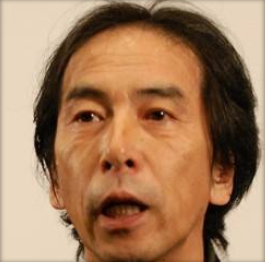
After over two years in Iitate, Fukushima Prefecture, and recording some 250 hours’ worth of footage, a journalist is putting his work out in the form of a 3 hour and 45 minute documentary film.
A producer and editor for “The Will: If Only There Were no Nuclear Plant” praised the film as a “treasure-trove of imagery,” so well does it capture the emotions of Fukushima residents and tense situations. In one such scene, the film’s protagonist rushes to the home of a fellow dairy farmer who has committed suicide, a scene filmed after that farmer’s obituary just happened to come to bear while the journalist who made the film was on-site.
That journalist was Naomi Toyoda, 57, who got his start as a freelance reporter back in 1982. A cram school teacher until then, he was spurred to act after seeing reports of Israel’s invasion of Lebanon on television. He would spend 20 years reporting on Palestine, and 10 years covering Iraq’s depleted uranium rounds.
“It’s deep reporting, different than constantly dealing with the latest stories like in the mass media,” says Toyoda. He runs his camera only after building a relationship of trust with his subjects, after they begin to show their natural selves.
Despite his time reporting from battlefields, Toyoda was still struck with doubt while working in Fukushima Prefecture. “I didn’t know what I should do,” he says, to help the residents there who have been forced to live their lives together with the threat of radiation.
The documentary film ends with the protagonist walking with a dosimeter around a temporary storage site for radioactive waste that resulted from decontamination work. Toyoda, in an expression of determination, says, “Three years after the nuclear disaster, nothing is solved. I’m going to keep on reporting.
Source: http://mainichi.jp/english/english/newsselect/news/20140518p2a00m0na005000c.html
Another documentary here;
Published on 3 Feb 2013
SYNOPSIS: Many children in Fukushima were never evacuated after the nuclear meltdown on March 11, 2011. Now the number of Fukushima children found to have thyroid cysts and nodules is increasing. What will this mean for their future?
シノプシス: 福島の子供達の多くは、メルトダウン後も避難させてもらえなかった。嚢胞としこりを持つ福島の子供達の数が増加してきている。このことが彼らの未来に対して意味するものは?
*** version Françaises: http://www.youtube.com/watch?v=GFV-By… ***
Questions to NHK hiding thyroid kids in Japan! 安倍首相と甲状腺がん情報隠すNHKへの質問
Also, it seems that NHK isn’t supposed to make any investment on private corporations given that there is no stipulation regarding purchase of corporate bonds in the Broadcast Law Chapter 3 Clause 2 Article 19, and there is a stipulation on the investment to the Japan Aerospace Exploration Agency.

2013年4月26日金曜日
http://koukaishitsumon.blogspot.ie/2013/04/7-questions-to-nhk.html?spref=tw
Questions to NHK hiding thyroid kids in Japan! 安倍首相と甲状腺がん情報隠すNHKへの質問
2014年5月18日、福島で89人の甲状腺がんが確認されました!同日、安倍首相は福島医大を訪問したが、NHKニュースはまったくやらなかった!NHK従軍慰安婦の番組で安倍氏が加害者証言を削除改竄した時のように、一番ヤバい情報を隠しているのです!
(50人確定で39人疑いだが、疑いでも手術はやり、ほとんどの場合、確定される。よって89人とした。山下俊一も以前10人の時に学会発表でこれをやった。)
On May 18, 2014, 89 thyroid cancer kids were found among Fukushima kids! On the same day, Prime Minister Abe was reported to have visited Fukushima Medical University on NHK, which had never touched upon this number! (50 confirmed and 39 suspected who should go through operation anyway and most of them would get confirmed.)
As in the case of Comfort Women’s Program in 2001 where Mr. Abe put some pressure to eliminate the testimonies by the persecutors, Prime Minister Abe and NHK are hiding the most inconvinient truth from the public!
NHK役員→http://www.nhk.or.jp/pr/keiei/yakuin/
NHK経営委員→http://www.nhk.or.jp/keiei-iinkai/member/index.html
忘れてはならない。東電社外取締役を兼任が発覚しNHK辞任した数土委員長。質問8番を参照
Mr. Sudo pressured to step down from NHK Management Commission Chief by taking the position of outside director of Tokyo Electric Power Company. (He is still the director of TEPCO)
そしてなんと、数土氏は、2014年4月から東電会長に就任予定!元NHK経営委員会委員長ですよ!!もともとNHKに多くの部下がいた人物が!こんなことが許されるのですか??
And now, Mr. Sudo is going to be the chairman of TEPCO from April, 2014. Is this allowed for a man who used to have lots of surbordinates in NHK!?
Japanese public TV station is committing a crime against humanity. Please read my 10 questions and then you will know!!!
私はころころ変わる政治家を追及するよりも、国民から毎月、お金を徴収し、老若男女、みんなに知られているNHKを攻めることこそ、効果的だと考えています。
皆様もぜひ、やりましょう!!
そうでないと、食べて応援やがれき拡散、福島帰還奨励によって被曝を推進し、脱原発も緊急にやってくれないNHKに、日本の子供たちが殺されます!!!
私の質問を引用してくれて構いません!
まず確実に届けられ、しかも効果ありとされるのは、こちらの宛先に内容証明郵便で、
〒150-8001 NHK放送センター
経営委員会御中
としてください!コピーをもう一部と印鑑が必要。面倒な人は、
電子内容証明ですと、郵便局に行かなくともOK!登録簡単→
http://enaiyo.post.japanpost.jp/mpt/
ちなみにあまり反映されない、NHKへのご意見の電話0570-066-066又は050-3786-5000、FAX03-5453-4000
メールご意見はこちらから
http://www.nhk.or.jp/css/goiken/mail.html
以下は私の質問。ご参考にどうぞ!
1.2011年3月15日に10時から11時などは1100Bq、放射性ヨウ素合計はセシウム137の9倍以上、14核種の合計は、セシウム137の18倍以上ありますが、なぜリアルタイムで計測していたこの重大データをNHKは報道しなかったのですか?
http://www.metro.tokyo.jp/INET/CHOUSA/2011/12/DATA/60lcq104.pdf
また、2013年1月12日に放送されたNHKスペシャル「空白の初期被ばく~消えたヨウ素131を追う」でもなぜか、この具体的なBq数値を発表しませんでした。おかしくないですか?
On March 15, from 10 to 11 am, 1100Bq of 14 radionuclides were detected real time. The total amount of radioactive iodine was more than 9 times than Cesium 137, the total of 14 radionuclides were more than 18 times than Cesium 137. Why hasn’t NHK broadcasted this important data?http://www.metro.tokyo.jp/INET/CHOUSA/2011/12/DATA/60lcq104.pdf
Even in the program”Initial Radiation Exposure Not Recorded~Seeking the vanished Iodine 131 ” NHK did not report on this very concrete figure in Bq. Why?
2.福島県郡山市の住民が子供たちの集団疎開を求めている裁判http://fukusima-sokai.blogspot.jp/で、4月25日、仙台高裁が、危険性を認めながら棄却をしました。このふくしま集団疎開裁判について、AP通信、ニューヨークタイムズ、ワシントンポスト、ABCニュース (米国三大テレビ局の1つ)、FOXニュースが一斉に報道しているのに、なぜこのトップニュースをNHKは報道しないのですか?
On April 25, Sendai High Court, though they acknowledged the danger from radiation exposure, dismissed the case of Fukushima Collective Evacuation Trial http://fukusima-sokai.blogspot.jp/
in which plaintiffs in Kooriyama City demanded the collective relocation of children by the government. As for this dismissal, AP, New York Times, Washington Post, ABC News, FOX news immediately reported. Why doesn’t NHK broadcast this top news?
3.2012年初頭に福島で甲状腺 のう胞および結節を合わせ36%であったこと、そして9月に小児甲状腺がん第1号が見つかり、そして2013年初頭に小児甲状腺がん3人、疑い7人という (検査対象3万8千人のうちであり、事故前の発生率に比べ、既に13倍から44倍の率)悲しく衝撃的なニュースが伝えられました。本来であれば、トップ ニュースになるものを、一部福島のみで放送し、全国ニュースで放送しない理由はなんですか?一方有名な文化人やスポーツ選手の成功物語はトップニュースで やっています。無名の子供たちが放射能の原因が強く疑われる甲状腺がんになっても、御社は構わないのですか?逆に権力側に加担し、このまずいニュースを故 意に隠しているのではないですか?
NHK did not give any report (aside from Fukushima local NHK branch) on 36% thyroid abnormalities in the beginning of 2012, the first thyroid cancer kid case in September 2012 and 3 cancers and 7 suspected case (out of 38000, which is 13 times to 44 times higher compared to before the accident) in February 2013. Why is this? Meanwhile, you are broadcasting a lot of success stories of celebrities. You don’t care about non-famous children’s sickness? Or are you intentionally hiding this most inconvenient news for pro-nuke government?
Canada – Federal Court denies approval of new nuclear reactors due to safety and environmental factors


Toronto, May 15 2014 – Environmentalists are applauding a landmark Federal Court ruling that puts the brakes on building expensive and risky new nuclear reactors in Ontario.
“The Federal Court has thrown out the approvals for building new reactors at Darlington. This is a win for Canadians’ right to meaningfully participate in environmental reviews and understand the risks of nuclear power,” said Theresa McClenaghan, Executive Director of the Canadian Environmental Law Association (CELA).
In his ruling, released on May 14, Justice Russell agreed with environmental groups that a federal environmental review panel wrongly recommended approval of Ontario Power Generation’s (OPG) proposal to build up to four new reactors at the Darlington without first examining the environmental effects of radioactive fuel waste, a Fukushima-type accident, and hazardous emissions.
Lawyers from Ecojustice and CELA represented Lake Ontario Waterkeeper, Northwatch, CELA and Greenpeace, all of whom participated in the federal environmental review process since 2006.
“This is a common sense ruling. It boggles the mind that the federal authorities approved new reactors without first considering the environmental effects of radioactive waste and reactor accidents,” said Shawn-Patrick Stensil with Greenpeace.
In October 2013, the Ontario government announced that it was suspending plans to build the new reactors. But without this ruling, the deficient assessment and licence issued to OPG could have been used to revive the project at any time over the next decade.
“The Federal Court has confirmed that federal authorities must do more than simply kick the tires before approving new nuclear reactors,” said staff lawyer Justin Duncan. “Fully assessing radioactive waste, major accidents, and hazardous emissions is essential to protecting the health of Ontarians.”
If OPG wishes to proceed with new reactors, Justice Russell’s ruling requires that the review panel reconvene or a new review panel will need to be formed and properly consider the environmental effects of radioactive waste, accidents and emissions.
“I think most Canadians would agree with Justice Russell that we have a responsibility to fully consider the risks of managing radioactive waste for hundreds of thousands of years before we produce more. This is a sensible and prudent judgment,” said Brennain Lloyd with Northwatch.
“The Court’s decision shows just how badly federal authorities failed the public. If our case motivates regulators to pay more attention to the impacts of big projects on our waterways, then we could not have asked for a better outcome,” says Mark Mattson, environmental lawyer and president of Lake Ontario Waterkeeper.
– 30 –
Information:
Rick Lindgren, Counsel, CELA, 613-385-1686
Justin Duncan, staff lawyer, Ecojustice647-865-9364 (cell)
Shawn-Patrick Stensil, nuclear analyst, Greenpeace, 416-884-7053 (English/French)
Mark Mattson, President, Lake Ontario Waterkeeper, 416-861-1237
Brennain Lloyd, coordinator, Northwatch, 705-497-0373
Ukraine Crisis Goes Nuclear-Gunmen Attempt Takeover of Nuclear Power Plant
Published on 17 May 2014
Neo-Nazi “Right Sector” attempts to seize largest Nuclear Power Plant in Ukraine
Policemen of the city of Energodar have detained 20 activists of the Right Sector, who tried to seize the Zaporozhye NPP. According to the leader of the Zaporozhye branch of the organization, the militants were afraid that the city would fall in the hands of supporters of federalization.
http://www.globalresearch.ca/right-se…
Former US Official: War in Ukraine could cause disaster worse than Chernobyl and Fukushima — Situation “calls for far greater global concern” — Multiple scenarios result in meltdown — Foreign Minister: “Potential threat to many nuclear facilities”
Apr. 14, 2014: […] Ukraine confronts a nuclear specter of a different kind [than Chernobyl,] the possibility that the country’s reactors could become military targets in the event of a Russian invasion. […] Ukraine’s parliament [called] for international monitors to help protect the plants […] the angst is real. […] With the exception of the 1990’s Balkan conflict, wars have not been fought against or within countries with nuclear reactors […] military jets overflew Slovenia’s Krško nuclear power plant in a threatening gesture […] Serbian nationalists called for attacks to release the radioactive contents. […] the sheer scale of Ukraine’s nuclear enterprise calls for far greater global concern […] aging plants provide 40% of Ukraine’s electricity. […] In Ukraine, nuclear emissions could exceed both Chernobyl and Fukushima. Wartime conditions would prevent emergency crews from getting to an affected plant […] In the event of fighting near reactors, the West should prepare to ferry forces to secure the plants […] in the event of a meltdown, the West should rally both governments to initiate a cease-fire […] failure to prepare for the worst is not an option.
Ramberg’s analysis suggests several scenarios:
Warfare is rife with accidents and human error, and […] could cause a meltdown
Fighting could disrupt off-site power
Operators could abandon their posts
Combatants could invade nuclear plants
Others might take refuge there, creating a dangerous standoff
Failure of military command and control
Fog of war could bring plants under bombardment
Andrii Deshchytsia, Ukraine acting foreign minister at the Nuclear Security Summit in The Hague: “Potential threat to many nuclear facilities [should events deteriorate into open warfare].”
Ihor Prokopchuk, IAEA ambassador from Ukraine wrote to the agency’s board of governors: “[An invasion could bring a] threat of radiation contamination on the territory of Ukraine and the territory of neighboring states.”
From Jan. 30, 2014: BBC: Ukraine “on brink of civil war” — Gov’t: Threats to blow up nuclear plants; Facilities on high alert after seizure of energy ministry (VIDEO)
http://enenews.com/former-us-official…
Shale Gas and Politics: Are Western Energy Giants’ Interests Behind Ukraine Violence?
https://www.youtube.com/watch?v=b-sAk…
Monsanto invests in Ukraine
Rowlands continued: “The bulk of Monsanto’s investment in Europe is destined for the Ukraine, where Monsanto expects to have its largest seed production plant in Europe within five years after earmarking an initial $150 million investment, which could rise to $300 million within several years. Does Ukrainian agriculture want to totally rely on the success or failure of one US based company?”
Prime Minister Dmitry Medvedev recently announced that Russia will no longer import GMO products, stating that the nation has enough space, and enough resources to produce organic food.
If the Americans like to eat GMO products, let them eat it then. We don’t need to do that; we have enough space and opportunities to produce organic food.” – Medvedev
Russia has been considering joining the long list (and continually growing) of anti-GMO countries for quite some time now. It does so after a group of Russian scientists urged the government to consider at least a 10-year moratorium on GMOs to thoroughly study their influence on human health.
http://www.collective-evolution.com/2014/04/15/its-official-russia-completely-bans-gmos/
‘Oishinbo’ manga to be suspended – Japan censorship on the rise!
http://the-japan-news.com/news/article/0001288519
1:21 am, May 18, 2014
Jiji Press Shogakukan Inc. will suspend publication of the gourmet manga series “Oishinbo” after recent episodes provoked controversy over the health effects of radiation from the March 2011 nuclear accident, it was learned Saturday.
Oishinbo will not appear in the publisher’s weekly Big Comic Spirits magazine for some time from the issue to be released on May 26, informed sources said. Shogakukan will announce the decision in the issue to be published Monday.
In the next issue, the weekly’s chief editor Hiroshi Murayama will say he is keenly aware of his responsibility for causing discomfort to many people, adding that he and the associate editors will take seriously criticism and rebuke and review the way events were depicted in the manga series.
Futaba is one of the two municipalities that host Tokyo Electric Power Co.’s Fukushima No. 1 nuclear power plant, the site of the nuclear accident, while the city of Osaka accepted debris from the March 2011 earthquake and tsunami to help with their disposal.
The upcoming issue of the magazine is set to run the final episode of Oishinbo’s serial titled “The Truth of Fukushima.” In the episode, characters visit a livestock farmer family who moved from the Fukushima village of Iitate to Hokkaido and conclude that it is their responsibility to call for state compensation for anyone who wants to move out of Fukushima.
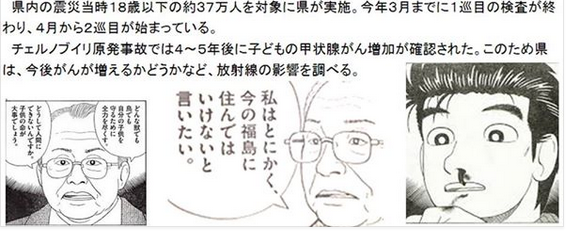
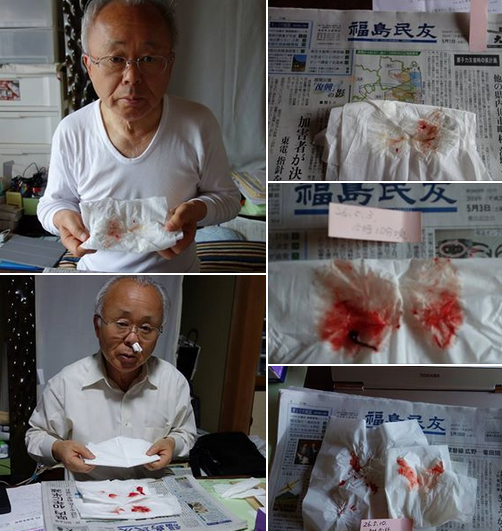
The manga series caused controversy due to a recent episode in which the lead character suffers nosebleeds after visiting the Fukushima nuclear plant—suggesting the nosebleed was an effect of exposure to radiation—and by another in which a character modeled after a real-life former Futaba mayor warns, “People currently must not live in Fukushima.”
In addition, a separate character calls attention to the health effects of radiation-contaminated debris on residents in Osaka.
More here
One of the characters in the cartoon is based on the ex mayor of Futaba ( Katsutaka Idogawa on Facebook) who agrees with the representations of him in the Manga cartoon story. His likeness in the cartoon is obvious.
Thorium nuclear lobby pretends thorium is not part of the toxic nuclear fuel chain
 I am not impressed by the claims of the thorium nuclear lobby. Their sales pitch would have us believe that thorium nuclear reactors are some kind of clean safe alternative to the current dangerous nuclear technology, based on uranium or plutonium as fuel.
Not true. Thorium reactors have safety and environmental hazards, as does every part of the toxic nuclear fuel chain. The thorium lobby believes in this fantasy of the “nuclear fuel cycle” – meaning that by some magic they provide a way in which some toxic products of nuclear reactors, – plutonium and enriched uranium, now play their part in kicking off the thorium fission. And it’s supposed to be all clean and lovely.
The mainstream, established nuclear lobby allows the thorium dream to persist only because the thorium dream offers some hope for the economically failing nuclear industry to hang on.
The thorium lobby on Twitter, regularly attacks me as being “in the pay” of the coal lobby, among other imagined offenses. Their ludicrous pretense is that if one is against nuclear power, one must be for coal power.- Christina Macpherson
Israel, Vanunu and the Bomb (2007 BBC FULL 1 HOUR DOCUMENTARY)
Published on 16 Mar 2012
I apologize that this is not available on mobile devices or TV but this is due to Youtube policy as (apart from being BBC) it has 15 secs of a song by “DJ Shadow” in there somewhere….this is also the reason the video is completely unavailable in Germany, out of my hands sorry again. :O(
That all said…Enjoy.
Vanunu and the Bomb synopsis below:
“This is the first man to tell the world nuclear weapons have arrived in the most troubled region on the Earth, the Middle East. In doing so he’s exposed the West’s opposition to nuclear proliferation as little more than a sham. Vanunu is banned from talking to foreign media, based on eyewitness testimony, this film is his story.”
—Sean Pertwee’s opening narration
February 1977 Nuclear Technician Mordechai Vanunu is assigned to work at the top secret Dimona facility. In 1986 he reveals to journalists Oscar Guerrero and Peter Hounam the presence of an underground plutonium plant there. Former Israeli Prime Minister Ben Gurion had commissioned construction of the plant in 1958. Vanunu had made the discovery after 7-years at the plant and had photos to prove his story. Hounam takes Vanunu to The Sunday Times in London, where Nuclear Physicist Frank Barnaby confirms the data, but Mossad is tailing them.
Guerrero arrives in London and tries to sell the story to rival paper The Sunday Mirror. France, Britain and the U.S. had been complicit in the construction under a secret agreement between U.S. President Richard Nixon and Israeli Prime Minister Golda Meir. The lonely Vanunu befriends intern Wendy Robbins but she insists that they remain just friends. The discredited story in the Mirror causes the Times to delay their publication. Israeli Prime Minister Shimon Perez forbids Mossad from kidnapping Vanunu on British soil so they spring a honey trap to lure him to Rome.
In Italy Vanunu is abducted and shipped back to Israel but the Times decides to publish in the hopes of protecting his life. The Western powers that had professed a stance of non-nuclear proliferation while collaborating in the construction of Dimona were exposed as hypocrites and yet the press in those countries remained curiously silent on the subject. The Israelis confirm that they have Vanunu in detention but refuses to explain how. Convicted of treason Vanunu was sentenced to 18-years in prison.

Tepco to start dumping Fukushima water into the ocean next week
Japan’s TEPCO to Start Dumping Fukushima Water into Ocean Next Week MOSCOW, May 16 (RIA Novosti) – Tokyo Electric Power (TEPCO), the operator of the crippled Fukushima nuclear power plant, plans to begin releasing underground water near the facility into the Pacific Ocean as early as next Wednesday, The Asahi Shimbun reported Friday.
The first water to be released will total around 560 tons, the agency said citing an official from the Ministry of Economy, Trade and Industry. TEPCO will begin releasing the water as soon as it presents results of radiation tests to local government and the fishing industry.
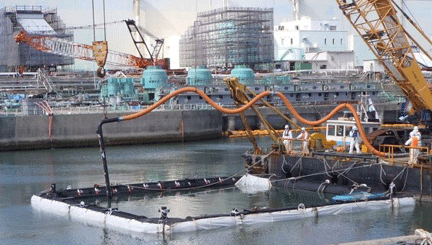
Initial talks between the government and TEPCO agreed that only water with 1,500 becquerels of radiation or less per liter could be released. Tests conducted by TEPCO and two outside agencies have revealed that the Fukushima underground water met the standards, averaging 220 to 240 becquerels of tritium per liter.
TEPCO began pumping out groundwater from the Fukushima nuclear plant in April in an effort to prevent further radioactive leaks.
The company continues to grapple with the problem of contaminated water storage, with about 450,000 tons of highly-radioactive water currently being stored in Fukushima’s underground facilities and tanks. Experts say some 15,000 tons is also being held in a service tunnel. According to recent estimates, up to 400 tons of contaminated water from the damaged plant is seeping into the Pacific Ocean every day.
In an effort to prevent further irradiation, TEPCO has adopted a plan to draw off groundwater from the plant. The fallout from Fukushima is later to be sent for analysis that will determine whether it is safe to be disposed of by dumping into the ocean.
The practice will allow the operator to reduce the accumulation of radioactive water at the plant by 100 tons a day……..https://news.google.com/news?ncl=d_uao6qIU8QsFkM74lsq0LkpKVl4M&q=radiation&lr=English&hl=en&sa=X&ei=l7N2U52sB8mtlQXZ_4HYBw&sqi=2&pjf=1&ved=0CDsQqgIwAw
Unfounded and irresponsible claims in favour of Small Modular Nuclear Reactors (SMRs)
 WHY SMALL MODULAR REACTORS ARE PART OF THE PROBLEM, NOT THE SOLUTION Mark Cooper, Ph.D. Senior Fellow for Economic Analysis Institute for Energy and the Environment Vermont Law School May 2014
“………..Unachievable assumptions about cost: Even industry executives and regulators believe the SMR technology will have costs that are substantially higher than the failed “nuclear renaissance” technology on a per unit of output. The higher costs result from
• lost economies of scale in containment structures, dedicated systems for control,
management and emergency response, and the cost of licensing and security,
• operating costs between one-fifth and one-quarter higher, and
• decommissioning costs between two and three times as high.
Irresponsible assumptions about a rush to market: To reduce the cost disadvantage and meet the urgent need for climate policy, advocates of SMR technology propose to deploy large numbers of reactors (50 or more), close to population centers, over a short period of time. This compressed RD&D schedule embodies a rush to market that does not make proper provision for early analysis, testing, and demonstration to provide an opportunity for experience-based design modifications. This is exactly the problem that arose in the 1970s, when utilities ordered 250 reactors and ended up cancelling more than half of them when the technology proved to be expensive and flawed.
Unrealistic assumptions about the scale of the sector: While each individual reactor would be smaller, the idea of creating an assembly line for SMR technology would require a massive financial commitment. If two designs and assembly lines are funded to ensure competition, by 2020 an optimistic cost scenario suggests a cost of more than $72 billion; a more realistic level would be over $90 billion. This massive commitment reinforces the traditional concern that nuclear power will crowd out the alternatives. Compared to U.S. Energy Information Administration (EIA) estimatesof U.S. spending on generation over the same period, these huge sums are equal to
• three-quarters of the total projected investment in electricity generation and
• substantially more than the total projected investment in renewables.
Radical changes in licensing and safety regulation: SMR technologies raise unique safety challenges including inspection of manufacturing and foreign plants, access to below ground facilities, integrated systems, waste management, retrieval of materials with potentially higher levels of radiation, flooding for below-ground facilities, and common designs that create potential “epidemic” failure. Yet ,SMR advocates want pre-approval and limited review of widely dispersed reactors located in close proximity to population centers and reductions in safety margins, including shrinking containment structures, limitations of staff for safety and security, consolidation of control to reduce redundancy, and much smaller evacuation zones. In the wake of global post-Fukushima
Calls for more rigorous safety regulation, policymakers and safety regulators are likely to look askance at proposals to dramatically relax safety oversight.
Unfounded claims of unique supply and demand advantages: Despite their high costs, advocates argue that smaller reactors are more attractive than large reactors because they are moreflexible, requiring smaller capital commitments and shorter construction times.
• By these same criteria, non-nuclear alternatives are far more attractive – smaller, less
costly, quicker to market, and already scalable.
• The alternatives also do not possess the security and proliferation risks and environmental problems that attach to nuclear power. …….. http://216.30.191.148/Cooper%20SMRs%20are%20Part%20of%20the%20Problem,%20Not%20the%20Solution%20FINAL2.pdf
Japan soon to start making ice wall around groundwater at Fukushima nuclear plant
Japan Tries Ice Wall to Stem Radiation Planned Frozen Barrier to Hold Back Water Contaminated by the Stricken Fukushima Daiichi Nuclear Plant WSJ, By MARI IWATA NARAHA, Japan—The idea of freezing ground to block the flow of water has been around for more than a century, but never has it been tried on the scale Japan plans at its stricken nuclear plant to hold back water contaminated by radiation.
As early as next month, workers are set to start installing pipes for a 1.5-kilometer-long and 30-meter-deep subterranean ice wall around four reactors of the Fukushima Daiichi nuclear plant here…….

The Fukushima effort is unprecedented because of the size of the apparatus—its electricity alone is projected to cost $1 million a month—and the period it is expected to operate. The Fukushima decommissioning is expected to take 40 years or longer.
The ice-wall plan has already met a hurdle. Continue reading
Low levels of radioactive cesium produced insect deformities at Fukushima
New study reveals deaths and mutations ”increased sharply’ from exposure to Fukushima contamination, “especially at low doses” — ‘Small’ levels of cesium may be ‘significantly toxic’ — Smithsonian: “In other words, things don’t look good for the animals living around Fukushima” http://enenews.com/just-in-new-study-reveals-sharp-increase-in-deaths-and-mutations-from-exposure-to-fukushima-contamination-especially-at-low-doses-small-levels-of-cesium-may-be-significantly-toxic?utm_source=feedburner&utm_medium=email&utm_campaign=Feed%3A+ENENews+%28Energy+News%29
 Smithsonian Magazine, May 14, 2014: Even Tiny Amounts of Radioactive Food Made Caterpillars Become Abnormal Butterflies […] Researchers in Japan […] discovered, even a small amount of radiation is too much. […] The scientists collected plant material from around Fukushima and fed it to pale grass blue butterfly caterpillars. When the caterpillars turned into butterflies, they suffered from mutations and were more likely to die early [… even if they] had only eaten a small amount of artificial caesium […] In other words, things don’t look good for the animals living around Fukushima.
Nature — Scientific Reports (pdf), Published May 15, 2014: [We] examined possible relationships between the dose of ingested cesium per larva and the mortality and abnormality rates. Both the mortality and abnormality rates increased sharply, especially at low doses […] the mortality and abnormality rates increased sharply, especially at low doses. Additionally, there seemed to be no threshold level below which no biological response could be detected. […] the dose-response data suggests that the relatively small level of artificial cesium from the Fukushima Dai-ichi NPP may be significantly toxic to some individuals in butterfly populations […] the half lethal [i.e. LD50, amount that will kill 50% of a test subjects] dose [is 1.9 Bq per larva] and the half abnormal dose [is 0.76 Bq per larva] […] relatively small [levels] of artificial cesium from the Fukushima Dai-ichi NPP may be significantly toxic to some individuals in butterfly populations […] we assert that the half lethal and abnormal doses we obtained were quite high. […] it should be noted that we sampled contaminated leaves from Fukushima City, which many people inhabit as though nothing had happened […] Implications of the half lethal and abnormal doses we obtained in the present study will impact future discussions on the effects of radioactive exposure on other organisms, including humans. […] In conclusion, it is important to recognize the risk of internal radiation exposure due to ingested radioactive cesium, at least for the pale grass blue butterfly, and likely for certain other organisms living in the polluted area, possibly including humans. […]
1 This Month
26 April – Chernobyl: Inside the Meltdown airs on National Geographic on Sunday 26th April from 4pm

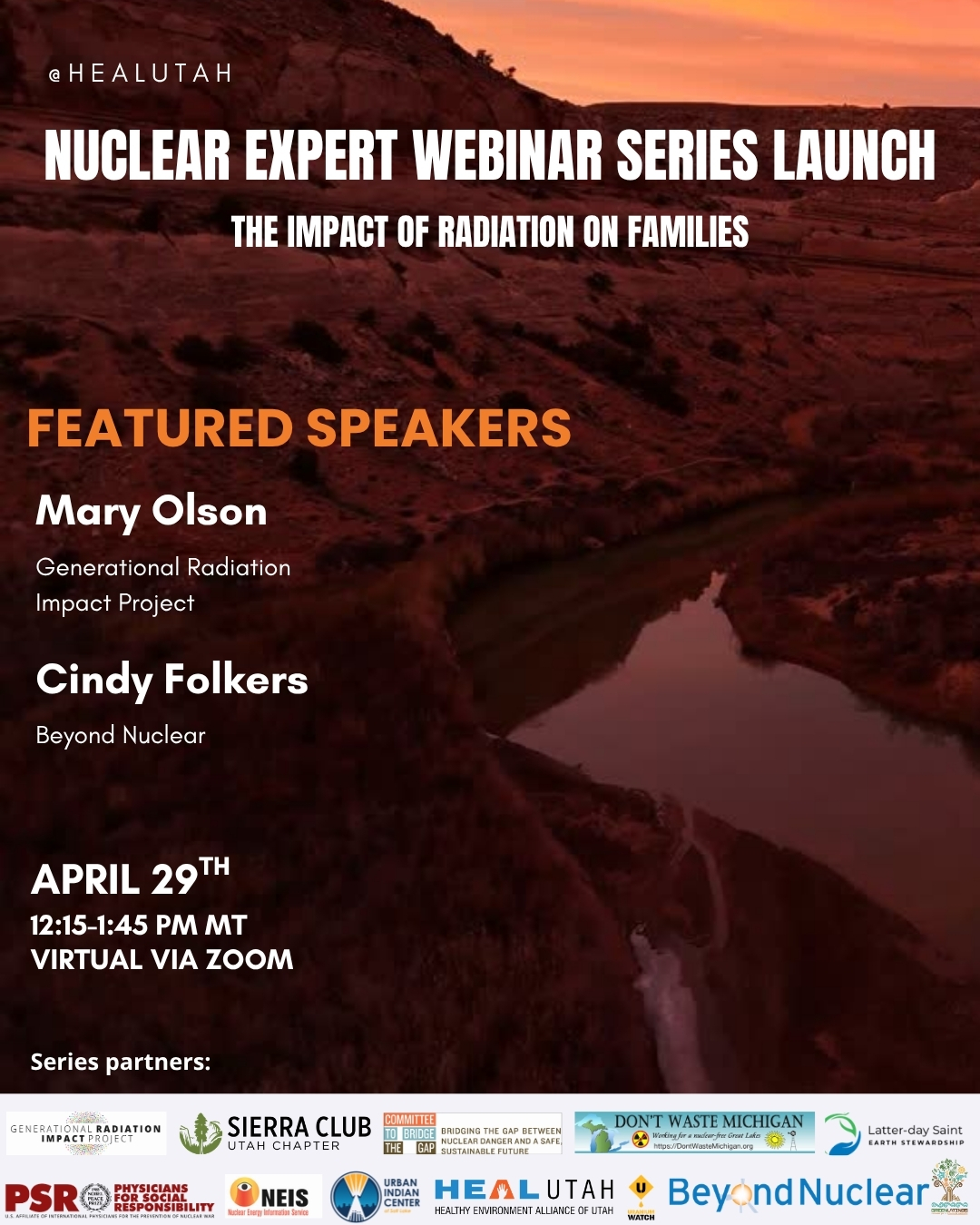
29 April – Nuclear Expert Webinar #1 – Radiation Impacts on Families with Mary Olson and Cindy Folkers
- 12:15 PM MT – 1:45 PM MT
- Location: Virtual – REGISTER TODAY

4 May -West Suburban Peace Coalition to discuss Iran war at May Educational Forum
Monday, May 4, 7:00 – 8:00 PM Central Standard Time
Title: : How Trump’s Narrative Tries to Shape the Reality of the War on Iran.
Contact Walt Zlotow, zlotow@hotmail.com 630 442 3045 for further information
14 May – online event From Bombs to Data Centres: the Face of Nuclear Colonialism

Pine Ridge Uranium is the real threat, not Tehran- Tell Burgum: Stop the Extraction.
Chernobyl: The Lost Tapes – A good documentary on Chernobyl on SBS available On Demand for the next 3 weeks– https://www.sbs.com.au/ondemand/tv-program/chernobyl-the-lost-tapes/2352741955560
To see nuclear-related stories in greater depth and intensity – go to https://nuclearinformation.wordpress.com
-
Archives
- April 2026 (288)
- March 2026 (251)
- February 2026 (268)
- January 2026 (308)
- December 2025 (358)
- November 2025 (359)
- October 2025 (376)
- September 2025 (257)
- August 2025 (319)
- July 2025 (230)
- June 2025 (348)
- May 2025 (261)
-
Categories
- 1
- 1 NUCLEAR ISSUES
- business and costs
- climate change
- culture and arts
- ENERGY
- environment
- health
- history
- indigenous issues
- Legal
- marketing of nuclear
- media
- opposition to nuclear
- PERSONAL STORIES
- politics
- politics international
- Religion and ethics
- safety
- secrets,lies and civil liberties
- spinbuster
- technology
- Uranium
- wastes
- weapons and war
- Women
- 2 WORLD
- ACTION
- AFRICA
- Atrocities
- AUSTRALIA
- Christina's notes
- Christina's themes
- culture and arts
- Events
- Fuk 2022
- Fuk 2023
- Fukushima 2017
- Fukushima 2018
- fukushima 2019
- Fukushima 2020
- Fukushima 2021
- general
- global warming
- Humour (God we need it)
- Nuclear
- RARE EARTHS
- Reference
- resources – print
- Resources -audiovicual
- Weekly Newsletter
- World
- World Nuclear
- YouTube
-
RSS
Entries RSS
Comments RSS
 nuclear-news