Iran reduces capacity at Arak nuclear recator
 Arak nuclear reactor resolved says Iran http://www.skynews.com.au/world/article.aspx?id=969168 April 20, 2014 Iran and six world powers have resolved their differences over the country’s plutonium-producing Arak reactor, Iranian nuclear chief Ali Akbar Salehi says.
The reactor, which has yet to be completed, has been a main point of contention at the ongoing talks aimed at ending the stand-off over Tehran’s nuclear program.
The governments of Britain, China, France, Russia, the United States and Germany – the so-called P5+1 – have expressed concern that Iran could use the plutonium produced at the facility in the western city of Arak to build nuclear weapons.
‘We have suggested that we will produce only one-fifth of the originally planned plutonium, and this was welcomed by the P5+1,’ said Salehi.
The world powers have called for Arak’s closure or for technical changes so that it no longer turns out plutonium.
Salehi said Arak would not be shuttered because Iran needs it to produce medical isotopes for civilian use, but that reducing its plutonium production capacity alleviates negotiators’ concerns.
The heavy water reactor uses natural uranium as its fuel and will generate plutonium as a by-product.
Iran and the sextet agreed in an interim deal in November on a limited suspension of sanctions in return for some nuclear concessions from Tehran, including suspending construction of the Arak reactor and scaling back uranium enrichment.
Under the broader agreement that both sides are aiming to conclude by July, Iran is expected to accept additional nuclear curbs while the world powers have promised to permanently lift all sanctions and to help Iran build new reactors.
Tehran insists that it has no plans to build nuclear weapons.
Iran and the P5+1 will hold expert-level nuclear talks May 5-9 in New York, said Iran’s Deputy Foreign Minister Abbas Araqchi, according to Press TV.
Greater earthquake risks recognised now for New England nuclear reactors
 Quake risks at New England nuclear plants cited http://www.bostonglobe.com/metro/2014/04/18/markey-and-warren-urge-improved-earthquake-safety-measures-pilgrim-seabrook-nuclear-plants/1EgTQZCDmgeT2wRmxwDnkJ/story.html Warren, Markey urge upgrades at Pilgrim, Seabrook By Jennifer Smith GLOBE CORRESPONDENT APRIL 18, 2014 US Senators Edward J. Markey and Elizabeth Warren are calling for increased safety measures at two area nuclear power plants after a Nuclear Regulatory Commission report found potential vulnerabilities to earthquakes.
In a letter to NRC chairwoman Allison Macfarlane on Friday, Markey and Warren asked the commission to require that Pilgrim Power Station in Plymouth and Seabrook Station in Seabrook, N.H., “implement mitigation measures against seismic risks that were previously unknown.”
Markey and Warren were “alarmed” by the newly evaluated seismic risks at the two area facilities, which are greater than they were originally licensed to withstand, the senators said in the letter.
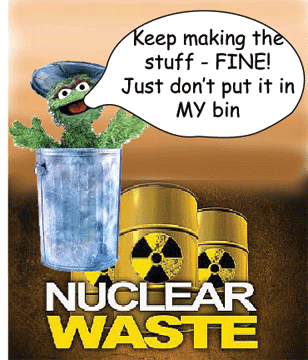
North Wales doesn’t mind nuclear power – just don’t want the wastes
 North Wales nuclear waste burial plan North Wales News
Anglesey Apr 16, 2014 By Gareth Wyn-Williams Nuclear waste from across the British Isles could potentially be shipped and stored on Anglesey as part of new plans unveiled by the Government.
But the resulting fallout from the proposals has already generated a storm of objections on the island, with one politician saying that residents should make every effort to stop it turning into a “nuclear waste depository”.
The UK Government’s Energy and Climate Change department is looking for communities to come forward and “volunteer themselves” in order to establish a new site from scratch, that would store nuclear waste from all over Britain.
And it is understood that Anglesey is one of the sites under consideration by the UK Government, with a public meeting set to take place to discuss the matter later this year.
Any communities that agree to the deal, have been promised “substantial” economical benefits.
But Anglesey’s Assembly Member, Rhun ap Iorwerth, says that residents across the island, must strongly reject any proposals to establish any such sites here.
He said: “This is quite separate from arguments for and against nuclear power generation at Wylfa newydd.
“This is about the threat of using Anglesey as a nuclear waste depository……http://www.dailypost.co.uk/news/north-wales-news/north-wales-nuclear-waste-burial-6995133
An economic hazard to United Arab Emirates – nuclear power?
Nuclear Power: Boon Or Bane For The GCC?, Gulf Business,
As the UAE and Saudi race to build nuclear reactors to meet mounting energy needs, the inevitable question arises – is nuclear a viable option?, Gulf business By Aarti Nagra 18 April 14
Fuelled by rising energy demand and depleting oil and gas resources, nuclear energy has gained strong momentum in the GCC, particularly in countries like the UAE. The country has lofty ambitions to generate up to 25 per cent of its electricity needs – or 5.6GW – through nuclear means by 2020.
Abu Dhabi began construction of its first nuclear reactor, Barakah 1, in July 2012, and it is in the process of building three more plants.
Emirates Nuclear Energy Corporation, the body responsible for the project, announced in February that the first two plants are on schedule and are up to 35 per cent complete……..However, nuclear energy may not necessarily be the best option for the GCC region, states Mohammed Atif, area manager, Energy Advisory, Middle East at DNV GL – Energy.
“A reasonable diversification of fuels is always beneficial for a region in order to reduce risks and price volatility,” he says.
“The right composition of a generation portfolio is always a difficult question and has to take political, economic, technical and environmental aspects into consideration.
“We would suggest entering into a roadmap to achieve security of supply at a good price level even without nuclear energy.”……….An Oxford report on nuclear power production in the GCC published in December 2012 also pointed out that nuclear power generation could prove an expensive option for GCC states.
“The substantial initial investment costs, coupled with the high expected level of long run variable costs, is unlikely to render nuclear power cost effective vis-à-vis conventional oil and gas fired power plants in the region,” it says.
“The existing absence of cost-recovering power tariffs throughout the GCC already renders effective cost recovery for nuclear power unlikely, implying a substantial bill in the form of nuclear power subsidies to be picked up by GCC governments.”
There are also other hidden costs, such as national and regional security concerns and the future disposal of nuclear waste.
“And the acquisition of nuclear technology by GCC states, albeit for civilian purposes, provides fuel to those critics of nuclear power in the region who fear a nuclear arms race in the Gulf should Iran pursue a nuclear weapons programme in the future.
“All these concerns make nuclear power a potentially costly option for the GCC,” the report cautions………….http://gulfbusiness.com/2014/04/nuclear-power-boon-bane-gcc/#.U1WPalVdWik
Koch brothers and fossil fuel lobbies out to kill renewable energy
 Koch Brothers, Conservatives & Oil Companies Lobby States Using Renewable Energy Sources: Alternative, Solar Power And Environmentalism Gaining Popularity Latin Post, By Shawn Raymundo (staff@latinpost.com) 20 April 14, As more and more states are beginning to utilize solar energy and adapt other clean green energy solutions
 , conservative lobby groups and oil tycoons have aggressively started pushing back against alternative energy.
The Koch brothers, anti-tax activist Grover Norquist and a number of powerful companies in the nation have started running campaign ads in Arizona, Kansas and North Carolina that paint renewable energy as a greedy bad guy, according to the Los Angeles Times.
With the help of solar power companies, environmentalists are battling back against big oil companies and their lobbyists over states that have implemented two types of energy policies: net metering and renewable energy requirements.
Net metering allows homeowners or businesses that have solar panels installed on roofs to sell back extra electricity to the power grid at attractive rates. The other policy requires utility companies to generate at least 10 percent of renewable energy, the Times reported. The majority of states in the U.S. have begun operating under at least one of the two policies if not both. The only states to not use net metering or generate power from renewable energy are Alabama, Idaho, Mississippi and Tennessee.
South Dakota and Texas are the only two states without metering programs but generate a percentage of their power from renewable energy, according to the Times………
The power industry fears that as more people install solar panels, less money is being paid to maintain transmission lines, substations and computer systems that many people rely on……
Edison Electric Institute, an advocacy group for the power industry, warned power companies that renewable energy policies could irrevocably damage the industry. The institute issued a report that stated, “it may be too late to repair the utility business model” if electric companies do not take action.
Christine Harbin Hanson, a spokeswoman for Americans for Prosperity, the advocacy group funded by billionaire industrialists Charles and David Koch, told the Times in an email that “state governments are starting to wake up” and challenge renewable energy polices.
“These green energy mandates are bad policy,” Hanson said. http://www.latinpost.com/articles/10814/20140420/koch-brothers-conservatives-oil-companies-lobby-states-using-renewable-energy-sources-alternative-solar-power-and-environmentalism-gaining-popularity.htm
UK`s MoD report reveals over 260 safety incidents at Clyde nuclear bases

from Sunday Herald, 20 April 2014
Over 260 nuclear safety incidents have been reported at the Clyde naval bases in less than five years, according to an internal Ministry of Defence (MoD) report seen by the Sunday Herald.
Three quarters of the incidents are blamed on human error, and are likely to include fires, leaks and procedural blunders. There have been “issues” with a system meant to protect an explosives store from lightning strikes as well as problems caused by staff and resource shortages.
The MoD has also revealed that it is planning a new conventional explosives handling facility at Coulport to deal with the growing number of nuclear submarines due to be based on the Clyde over the next few years.
The revelations on safety have been described as “chilling”, “shocking” and “simply unacceptable” by the Scottish National Party (SNP), which opposes nuclear weapons. But the MoD said it was “entirely misleading” to focus on the number of reported incidents.
An MoD report on its annual review of safety at the Faslane nuclear submarine base and the Coulport nuclear bomb store in Argyll has been released under freedom of information law. Dated September 2012, it discloses how many “nuclear safety events” have occurred in recent years.
Between April 2008 and August 2012 there were 262 such events, most of which were attributed to “human factors”. More than 50 incidents have been logged every year (see table below).
The report does not describe any of the events, but MoD safety reports released for earlier years have revealed that they can include radioactive contamination, small fires and failing to follow safety rules.
The figures do not include incidents involving nuclear weapons, for which no numbers are given. The report does say, however, that there have been “false alarms and system failures” with an “environmental hazard detection system” for the warheads.
Tokyo Shimbun and the flycatcher contaminated with hot particles
20 April 2014
Today’s Tokyo Shimbun evening paper has picked up on this bird from a barn in Iitate which is in Fukushima Prefecture, This local bird, the flycatcher is from the ficedula family and seems to be systemically exposed with hot particles.
The black spots are radioactive substances, we can guess where the radiation in the body is from. It is from eating insects and plants containing radioactive material and also you can see part of the abdomen is uniformly black.


Pakistan may ban Japan edible items, Senate told – 3 years too late!
…The scientists had advised the government after they detected high levels of Iodine from the consignments imported from Japan…. (in 2011)
[Arclight2011part2 note: I have made some small changes to the grammar of this article and will contact Kawar Klasra, the journalist, (to confirm I have not manipulated the meaning of the article) whose original article can be found on the link below ]
http://www.nation.com.pk/islamabad/18-Apr-2014/pakistan-may-ban-japan-edible-items-senate-told
ISLAMABAD – Pakistan has cautioned it may impose a ban on the import of edible items from Japan if traces of radioactive material are found in them,
Federal Minister of Commerce Khurum Dastgeer Khan told the Senate on Thursday, who is currently the Minister of National Food Security and Research. He is tasked to conduct thorough research to determine if the edible items from Japan were/are affected by radioactive contamination or not.
“Concerned officials have been advised to investigate the matter relating to the import of edible items from Japan following the release of radioactivity in Japan. It is up to Ministry of Food Security and Research to advise Ministry of Commerce whether to continue the import of edible items from Japan or impose a ban on it,” Dastgeer told Senate in a written statement.
He was responding to question asked by Senator Suriya Amiruddin who was interested to know whether there is any proposal under consideration of the Government to impose a ban on the import of edible items from Japan so as to avoid the negative effect of radiation in those items.
Almost three years back in April 2011, the Pakistan Nuclear Regulatory Authority, had directed authorities dealing with Cargo arriving directly or indirectly from Japan to screen all types of consignments including edible/non-edible items, for radiation.
The directives were issued from the country’s well-reputed institution, the Pakistan Nuclear Regulatory Authority (PNRA) following serious crisis of Fukushima Nuclear Power Plant. The PNRA made clearance mandatory for every consignment being imported from Japan.
It is worthy of mentioning here that country’s nuclear scientists had advised the federal government three years back to halt all types of goods from Japan to minimize the threat of radiation following the Fukushima Nuclear Crisis in Japan. The scientists had advised the government after they detected high levels of Iodine from the consignments imported from Japan.
Although India, Pakistan’s immediate neighbour, had banned imports from Japan following the Fukushima Nuclear Plant tragedy, the view that the move to ban imports from Japan could hurt bilateral relationship between the two friendly countries meant that the Pakistani government never imposed a ban on the import of goods from Japan.
OpEd by David Polden – CND UK
OP Ed by David Polden of CND UK
20 April 2014
A series of comments and information from D Polden on the state of the nuclear industry
JAPANESE GOVERNMENT CALLS FOR NUCLEAR RE-START
On April 11th,
Japan
http://topics.nytimes.com/top/news/international/countriesandterritories/japan/index.html?inline=nyt-geo
Cabinet approved a new national energy strategy calling for the restarting of
nuclear power stations that meet new safety standards. This restart was first
proposed by the government of Prime Minister Shinzo Abe http://topics.nytimes.com/top/reference/timestopics/people/a/shinzo_abe/index.html?inline=nyt-per
Two months ago, and scraps a promise made by a previous government after the 2011 Fukushima nuclear disaster to phase out atomic energy. Under the new plan, Japan could start as early as August to restart at least some of its 48 operable commercial reactors which were all progressively shut down
after the Fukushima accident spread nuclear radiation across northern Japan. Two reactors at the Oi nuclear power station had in fact been re-started in July 2012, but were both shut-down again in September 2013 for “routine inspections”, but have not re-opened since, so there are currently none operating..
However hostility continues to this policy among the majority of Japanese.
According to an opinion poll conducted on 15th and 16th of March by the newspaper Asahi Shimbun, 59% of the Japanese population now oppose the restart of any or all 48 nuclear reactors as against 28% who would support it. This is an increase on a parallel poll in January when 56% were opposed. Opposition is much stronger among women (66% to 18%) against than among men (51% to 39%). Also, 77% of the population would like all nuclear power plants to be shut down either immediately or gradually;
only 14% would not.
HINKLEY REACTOR SHUT DOWN OVER FEARS OF FUKUSHIMA-STYLE SHUTDOWN
The Daily Mail reported on March 19th that, unreported at the time, one of the two reactors at Dungeness nuclear power station were shut down for five months by its owners EDF last year over fears that it could be flooded – the event that caused the melt-down of three reactors at Fukushima.
This was after the flood defences at Hinkley were reviewed in an official government report in reaction to the Fukushima disaster. The report found that its shingle bank flood defences were “not as robust as previously thought” and could be breached during a catastrophic weather event. Indeed the Daily Mail reported that EDF told the Office for Nuclear Regulation in December 2012 that it “no longer has confidence” in its sea defences being able to defend against rare weather events such as the Japanese tsunami, but the reactor was not shut down till May 22nd 2013.
It re-opened again in October after a new barrier wall was built. A new permanent wall around the site was expected to be completed by the end of March 2014, which it was claimed would upgrade the defences from protecting against a one-in-a-thousand year weather event to a one-in-a-ten-thousand year event. But, as we all know, climate change is increasing the frequency of extreme weather events.
Dungeness is not the only nuclear power station threatened by the sea. In 2010 a
survey of UK nuclear stations by the Department of Energy, Food and Rural Affairs found that the flood risk was “high” at existing Sizewell and Hartlepool nuclear stations as well as Dungeness, and “medium” at Oldbury and Sellafield. It was predicted that by 2080 it would also be “high” at Bradwell and Hinkley. Earlier plans to build new nuclear reactors at Dungeness have been shelved; not so at these other sites.
CZECH POWER PLANT PLANS SCUPPERED BY “PRICE GUARANTEE” DEMANDS
Let us re-cap: last October, the UK government agreed a deal with EDF to guarantee EDF a price of £92.5/Megawatt-hour for the electricity it produces from its planned Hinkley C nuclear power station for a period of 35 years from the time it starts delivering electricity to the grid, this price to be index-linked against inflation.
This year bidders for the contract to build the two reactors at the Temelin nuclear
plant got a very different reaction when they demanded a much smaller price
guarantee from the Czech government in order for it to be prepared to go ahead and build the reactors.
CEZ, the Czech utility 70% owned by the Czech government, put out the contract to build the two reactors to tender as long ago as 2009 and received bids from Areva, Westinghouse and a Russian-Skoda consortium.
Just like the UK government in the Hinkley case, the previous Czech government was planning to offer a cost-difference guarantee for electricity from the two new
reactors “to ensure that investment was viable”. This would cover the difference
between wholesale electricity prices and price levels claimed to be needed to cover construction costs. The Ministry of Industry and Trade wanted this guarantee written into a new long-term Czech energy framework, but this was opposed by the Ministry of Finance. Estimates of its impact varied up to 10% extra on retail power bills. The Industry Ministry was working on €60/MWh; others suggested that €90 would be needed, indexed. CEZ claimed it required €70/MWh for the new units to be profitable, compared with mid-2013 forward prices of under €40.
Faced with this demand the Prime Minister of the new coalition government said it was not open to providing price guarantees that would “dramatically burden” consumers, such as the one being demanded.
Following government confirmation at the beginning of April that it would not
provide any future price guarantees, CEZ informed the bidders that it had cancelled the procurement process.
However the Czech government continues to support in principle in its draft energy policy the development of nuclear power and a new plan for this is to be prepared for this by the Minister of Finance and the Minister of Trade by the end of the year. Info from World Nuclear News, 10/4/14.
HINKLEY PLANS UNDER TRIPLE THREAT
1) In March, Vesna Kolar Planinsic, Chair of the UN’s Implementation
Committee on the Convention on Environmental Impact Assessment in a Transboundary Context wrote to the UK’s Department of Communities and Local Government to say that there was “profound suspicion” that the UK failed to properly consult neighbouring countries, including Norway and Spain, over the possible environmental impact that Hinkley Point C could have on them and told the Department to send a delegation to be questioned by the Committee in December.
2) On 19th March, Joan Halley, Chair of the Parliamentary Environmental
Audit Committee, wrote to the European Competition Commissioner, Joaquin Almunia, to dispute government claims that the price guarentee offered to EDF over Hinkley was the same as that offered for electricity generated from renewables and also further government claims that caps on contractors’ liability for decommissioning, waste management and nuclear incidents did not constitute subsidies.
3) On 27th March, An Taisce – the National Trust for Ireland obtained leave
to take its Hinkley Point legal challenge to the Court of Appeal in London. An
Taisce argues that the UK government’s decision to approve Hinkley Point C nuclear plant (on England’s west coast) without first consulting the public in Ireland is contrary to international, EU and English law.
The High Court in London found against An Taisce’s arguments in December 2013, ruling that there was no need to consult the public in Ireland in the circumstances.
However, the letter relaying the views of the UN Implementation Committee referred to in 1) above seems to support An Taisce’s case.
NTAG SUPPLEMENT 2: NUCLEAR POWER STATIONS IN SOUTHERN EUROPE
In the February edition of Nuclear Trains & Nuclear Power I set out the current
situation with nuclear power stations in Britain, Japan, France, the US, China and Germany. In the March edition I included Supplement 1, covering the nuclear power station situation in the rest of Western Europe. The details relating to countries already covered available at request.
PORTUGAL
Portugal has one research reactor located in the National Nuclear Research Centre. Further nuclear energy activities are not planned in the near future. In 1971, Portugal planned to build an 8,000 MW nuclear power plant to be completed by 2000. Plans were delayed until 1995 when it was decided to not proceed with the project. Since the military coup in April 1974, projects for the construction of nuclear power plants have been postponed or dismissed by the government.
SPAIN
Spain has seven nuclear reactors producing 21% of the country’s electricity, or 7,416 net megawatts. A nuclear power moratorium was enacted by the Socialist government in 1983. For a time the country had a policy of phasing out nuclear power in favour of renewables. The oldest unit (at José Cabrera nuclear power
plant
http://en.wikipedia.org/wiki/Jos%C3%A9_Cabrera_nuclear_power_plant )
was shut down at the end of 2006, 40 years after construction. In December 2012, the Garoña plant
http://en.wikipedia.org/wiki/Santa_Mar%C3%ADa_de_Garo%C3%B1a_Nuclear_Power_Plant
was also shut down. In 2011, the government lifted the 40-year limit on all
reactors, allowing owners to apply for license extensions in 10-year increments.
However, there are no plans for new nuclear plants.
ITALY
Italy started to produce nuclear energy in the early 1960s, but all plants were closed by 1990 following a nuclear power referendum http://en.wikipedia.org/wiki/Italian_nuclear_power_referendum,_1987.
An attempt to change the decision was made in 2008 by the government, which called the nuclear power phase-out a “terrible mistake”. The Minister of Economic Development
http://en.wikipedia.org/wiki/Ministry_of_Economic_Development_(Italy),
Claudio Scajola, proposed to build as many as 10 new reactors, with the goal of increasing the nuclear share of Italy’s electricity supply to about 25% by 2030. However, following the 2011 Japanese nuclear accident , the Italian government put a one-year moratorium on plans to revive nuclear power and then in June 2011, in a referendum, 94% of the electorate voted to cancel plans for new reactors. As 55% of eligible voters participated this made the ban binding on
the government.
SWITZERLAND
Switzerland has five operating nuclear reactors at four stations. Nuclear power accounts for about 40% of the total production of electricity in the country.
There have been many Swiss referenda on the question of nuclear power which have all supported nuclear power except one in 1990 which supported a 10-year moratorium on new nuclear power plant construction. However a 2003 referendum voted against extending this moratorium. Nevertheless in May 2011, as a consequence of Fukushima, the Swiss government abandoned plans to build new nuclear reactors. The country’s five existing reactors will be allowed to continue operating, but will not be replaced at the end of their life spans. The last will go offline in 2034.
AUSTRIA
Started building a nuclear power plant in 1972. This was never opened, as large
demonstrations against the plant were followed by a vote in the Austrian Parliament in 1978 in favour of a 10-year ban on nuclear fission being used to produce energy as well as bans on the storage and transport of nuclear materials in and through the country. In 1997, the Parliament voted to continue the ban indefinitely and remain a non-nuclear country.
GREECE
Has one operational nuclear research reactor but has never shown an
interest in building a commercial one. In 2007 its Finance Minister announced that nuclear was not part of Greece’s plans for future electricity generation.
TURKEY
Though it has had plans for nuclear power stations since 1970, none have as yet
started construction. Nevertheless Turkey has ambitious plans to open 20 nuclear reactors by 2030, the first five of which are planned to start construction by 2018, and be opened by 2023.
MALTA & CYPRUS
No nuclear power stations
Column: How my trip to a children’s mental asylum in Belarus made me proud to be Irish
I left thinking that what I had witnessed was a drop in the ocean. There are 300 orphanages in Belarus and this is the best one.
I thought about the mundane lives of these children and how the only bit of hope they have is the groups of volunteers that travel over, and the lucky ones who get to come to Ireland during the summer or over Christmas.
Mar 18 2014
Clíodhna Russel
A trip volunteering at a children’s asylum in Belarus showed me the harsh reality for many children affected by the Chernobyl disaster but it also let me see the hope that Irish people have brought to their lives, writes Cliódhna Russel
CHILDREN ROCKING BACK and forth for hours on end, hitting their heads against walls, grinding their teeth, scraping their faces and putting their hands down their throats.
Some of the children’s teeth were in very bad condition and they were offered very little love, affection – or indeed care – by many of the nurses minding them.
This is what I witnessed when I volunteered at Vesnova Children’s Mental Asylum in Belarus last month.
I was expecting children with physical and learning disabilities. I was expecting to see the physical effects that the Chernobyl disaster has caused.
I wasn’t expecting to see children treated as if they weren’t human or didn’t count.
I wasn’t expecting to hear about the adult institutions where people are beaten and abused.

Disaster
The Chernobyl disaster happened in 1986 when an explosion and fire at a nuclear plant released large amounts of radioactive particles.
A new UN Report now states that Chernobyl released over 400 times (and not 100 times as originally quoted) the amount of radiation that was released in the Hiroshima bombing.
Children born in Belarus since 1986 are affected by a 200 per cent increase in birth defects and a 250 per cent increase in congenital birth deformities.
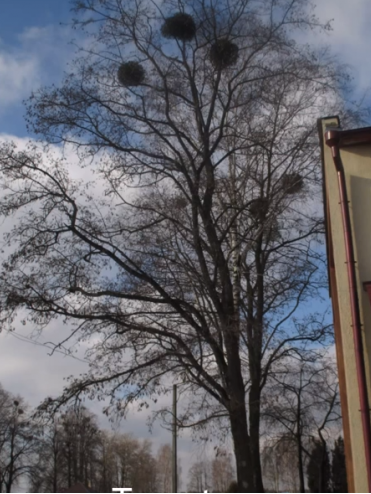
Walking around the asylum, it was pointed out to me that the trees have also been contaminated. What I thought were nests, were actually radioactive growths.
Founder of the Chernobyl children international charity, Adi Roche said,
Radiation knows no territorial boundaries, it doesn’t apply for an entry or an exit visa, it travels wherever the winds take it. At 1.23 am on 26 April 1986 a silent war was declared against the innocent peoples of Belarus, Western Russia and Northern Ukraine. A war in which they could not see the enemy, a war in which they could send no standing army, a war in which there was no weapon, no antidote, no safe haven, no emergency exit. Why? Because the enemy was invisible, the enemy was radiation.
Reality of life
There were about 160 children aged between four and 20 years old at the orphanage that I was in.
The children have beds, they are fed and are changed but that’s where their care ends.
I saw a child being fed a full bowl of what I can only describe as slop in 46 seconds.
It took myself and those who travelled with me at least 10 minutes to feed a child. In one case, I saw the child lie down and the food was literally poured into his mouth.
That was the case for the children who couldn’t feed themselves due to physical disability.
The children who could were brought into a large cafeteria – where the sight of them gulping down food as quickly as they could was actually horrifying.
Adi Roche was with us on the trip and she lined up our group so we could witness the speed at which these children ate.
It was clear by looking at them that food wasn’t something they enjoyed, it was just another part of their day were they had to fight to survive.
At one stage, I saw an older girl move towards an extra piece of fish that was on a plate a few tables away. She got up from her seat and made a run for it with a spoon in her hand. A nurse ran after her and the girl began shaking badly, she dropped the plate in the panic and the food fell to the floor.
She then got on her hands and knees and began eating from the ground.
Attitude
The orphanage itself is in good condition and is kept extremely clean. There’s even a sensory room where lighting and music and exercise toys can be used to relax the children.
This was one of the most rewarding parts of the trip; I would walk into a unit (there were eight units in the asylum) and pick a child, feeling awful that I couldn’t attend to every one and I’d bring that child into the sensory room and spend as long as I could giving them my full attention.
One little boy, Zgorik, who spent his days with his fingers in his ears and rocking his body at speed relaxed so much he started singing.
To see a child enjoy himself like this, even for just a few minutes, means so much when you consider that he never gets hugged or held or any affection until the next group of volunteers come in.
CHILDREN ROCKING BACK and forth for hours on end, hitting their heads against walls, grinding their teeth, scraping their faces and putting their hands down their throats.Some of the children’s teeth were in very bad condition and they were offered very little love, affection – or indeed care – by many of the nurses minding them.
This is what I witnessed when I volunteered at Vesnova Children’s Mental Asylum in Belarus last month.
I was expecting children with physical and learning disabilities. I was expecting to see the physical effects that the Chernobyl disaster has caused.
I wasn’t expecting to see children treated as if they weren’t human or didn’t count.
I wasn’t expecting to hear about the adult institutions where people are beaten and abused.
Disaster
The Chernobyl disaster happened in 1986 when an explosion and fire at a nuclear plant released large amounts of radioactive particles.
A new UN Report now states that Chernobyl released over 400 times (and not 100 times as originally quoted) the amount of radiation that was released in the Hiroshima bombing.
Children born in Belarus since 1986 are affected by a 200 per cent increase in birth defects and a 250 per cent increase in congenital birth deformities.
Walking around the asylum, it was pointed out to me that the trees have also been contaminated. What I thought were nests, were actually radioactive growths.
Jonathan Steele – Ukraine Whats Behind the Crisis? Belarus next?
Fourman Films Published on 18 Apr 2014
A core part of the Bank’s mandate in Belarus is to increase competition and promote the growth of the private sector.
Therefore, it is fitting that the Bank’s first investment in the fuel sector in Belarus was a long-term loan of US$ 10 million to A-100 Group, a medium-sized, privately-owned chain of Belarus petrol stations. The project will help A-100 to increase its share of the country’s fuel distribution market and challenge the state-owned and Russian energy majors that dominate the sector. http://www.ebrd.com/downloads/research/factsheets/belarus.pdf The EBRD and Belarus The current political, economic and structural reform environment in Belarus warrants the continued application of a calibrated strategic approach, incorporating both political and economic benchmarks to gauge the country’s progress or regress against its key Article 1 commitments and adjusting the Bank’s operational response accordingly. In keeping with the calibrated strategic approach, the Bank’s overall engagement in Belarus will continue to be modulated to reflect the country’s progress against annually updated political and economic benchmarks. In light of recent political and economic developments, while continuing its policy of constructive engagement to promote reform, the Bank will further calibrate its engagement in Belarus to limit its involvement with state-owned enterprises in the areas of trade finance, energy efficiency credit lines and private equity funds.
Last updated 13 March 2013
http://www.ebrd.com/pages/country/belarus/strategy.shtml 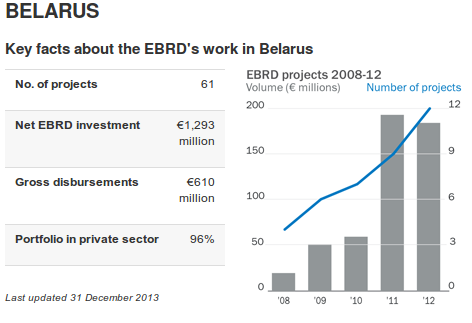 http://www.ebrd.com/pages/country/belarus.shtml
UKRAINE
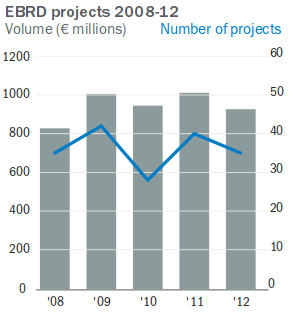
The Bank continued supporting the Ukrainian banking sector. Under the conditions of limited access to international financial markets, EBRD client-banks made active use of the Trade Facilitation Programme, which recorded exceptionally high volumes. A large energy efficiency lending facility of US$ 50 million was signed with UkrEximBank. The EBRD also participated in the capital increase of Ukrsibbank (BNP Paribas Group).
Finally, a major step towards overcoming the legacy of the Chernobyl accident and ensuring long-term safety at the Chernobyl Nuclear Power Plant was achieved in 2012 with the successful completion of the first lifting stage of
the New Safe Confinement. This project is implemented under the financial supervision and the support of the EBRD
http://www.ebrd.com/downloads/research/factsheets/ukraine.pdf
Address of EBRD
Contacts
EBRD Ukraine office
16, Nemirovicha-Danchenko Street
01133 Kiev
Ukraine
Fax: +380 44 277 11 60
Email: kiev@kev.ebrd.com
Director, Ukraine: André Küüsvek
Turkey, Eastern Europe, Caucasus and Central Asia
Managing Director: Olivier Descamps
(based in London)
EBRD Headquarters
One Exchange Square
London EC2A 2JN
United Kingdom
EBRD Belarus office
34A Engelsa Street, building 2
220030 Minsk
Belarus
Head of Office: Francis Delaey
The Caucasus, Moldova and Belarus
Director: Bruno Balvanera, as of 1 June 2013
(Tbilisi office)
A-100 enters into the 100 most expensive Byelorussian brands
MPP Consulting Agency (Ukraine) conducted an assessment of the Belarusian brands. The main aim of that research was the identification of one hundred most famous and valuable brands in our country. It is rating of brands created exclusively in the territory of Belarus, only Belarusian goods and services. MPP Consulting examined all industries.
During the research, evaluation of national brands «TOP National Brands» and rating “BelBrend 2011 — TOP 100 Belarusian brands,” Company A-100 took 90th in the overall ranking and first in its industry. Brand value has been estimated at 1.75 million dollars.
And the first line this year is a brand of “Santa Bremor”, valued at $ 72.5 million
The main objective of “BelBrend 2011” was to determine the 100 most valuable brands in Belarus, as well as their current market value, based on the performance of companies that use these brands, the positions of each company in the market and perspectives for their development.
The main feature of the methodology for assessing agency MPP Consulting is that the brand value includes only the cost of the brand-name, without regard to production capacity, infrastructure, patents, inventions and other tangible or intellectual property.
More information about the ranking Belarusian brands is here — http://mppconsulting.com.ua/ukrbrand/belbrand2011.html
Nukes, coups and referenda: myth and reality in the Ukraine crisis
The western powers are in no position to lecture Putin, whose actions in Crimea look like a Gandhian direct action when compared to the normal US-UK mode of operation. From 28 February to 18 March, Russian forces captured over a dozen Ukrainian bases or military posts without the loss of a single life.
[…]
NATO is a machine for facilitating or imposing western domination on the rest of the world. Dismantling it would be a valuable step towards a more peaceful world, and a valuable de-escalatory move in the current crisis.In this wide-ranging essay (a greatly extended version of the editorial in the current print edition), PN co-editor Milan Rai analyses Ukraine, western hypocrisy, the role (not) played by nuclear weapons in the ongoing crisis, claims that the US organised a “fascist coup” in Ukraine, the “referendum” in Crimea, and the path away from war.
Comment by Milan Rai
http://peacenews.info/node/7651
Nuclear promises
It is difficult to see the Crimea crisis clearly through the choking fog of western hypocrisy that surrounds it. Before trying to do so, there is one factor that we should deal with straightforwardly. When Ukraine became independent (after the collapse of the Soviet Union in 1991), it inherited 1,900 strategic nuclear warheads, more nuclear weapons than China, France and Britain held – combined.
If, instead of repatriating these weapons to Russia in the mid-1990s, Ukraine held those weapons today, it is extremely unlikely that Russia would have invaded the Crimea. This may be an uncomfortable truth, but we think it must be faced by those who want to advance nonviolence.
If we want to persuade smaller nations to remain free of nuclear weapons, as we should, as they should, we have to have answers to the questions that arise.

Ukraine gave up its weapons in return for a promise that its territorial integrity would be protected by the USA, Russia and the UK, under the 1994 Budapest Memorandum on Security Assurances. This agreement has manifestly not been honoured by ANY of the parties.
Strictly speaking, as Steven Pifer, former US ambassador to Ukraine, points out, the Budapest Memorandum ‘bundled together a set of assurances that Ukraine already held from the Conference on Security and Cooperation in Europe (CSCE) Final Act, United Nations Charter and Non-Proliferation Treaty’. Pifer observes: ‘The Ukrainian government nevertheless found it politically valuable to have these assurances in a Ukraine-specific document.’
The specific ‘security assurance’ given in the memorandum (not a treaty) was that ‘if Ukraine should become a victim of an act of aggression or an object of a threat of aggression in which nuclear weapons are used’ (emphasis added), Russia, the UK and/or the US would take steps.
Well, actually, just one step. The one action specified, in the case of a nuclear weapons-related security issue, was that they would ‘seek immediate United Nations Security Council action to provide assistance to Ukraine, as a non-nuclear-weapon State party to the Treaty on the Non-Proliferation of Nuclear Weapons’.
In any non-nuclear-weapon-related situation, Russia, Britain and the US promised only to ‘consult in the event a situation arises that raises a question concerning these commitments’.
The US and Britain have lived up to the words of the Budapest Memorandum (calling a ‘consultation’ meeting on 5 March which Russia refused to attend), while violating its spirit.
Former foreign minister of Australia Gareth Evans has argued that nuclear weapons would not have prevented the Russian invasion of Crimea: ‘weapons that would be manifestly suicidal to use are not ultimately a very credible deterrent’. In his view, Russian president Vladimir Putin would have known that Ukraine would not ‘nuke Moscow for sending tanks into Crimea, or even Dnipropetrovsk’. Yet at the same time, Evans himself points out that Ukraine’s possession of nuclear weapons would have added ‘another huge layer of potential hazard, owing to the risk of stumbling into a catastrophe through accident, miscalculation, system error, or sabotage.’
Evans is absolutely right to stress the terrifying risks and instability of ‘nuclear deterrence’, but it does no good for us advocates of disarmament to deny that invading a country that possesses nuclear weapons is a frightening prospect that no rational leadership would undertake.
This simple truth does not justify the possession of nuclear weapons, which remain immoral and illegal and dangerous to the survival of civilisation, if not humanity as a species.
An equally simple truth is that if Ukraine had retained its nuclear weapons in 1991, it might not have been invaded by Russia in 2014, because there is a good chance that in the intervening years an accidental or mistaken nuclear launch would have led to the devastation of both nations, along with neighbouring countries.
Setting Crimea in context

On 2 March, US secretary of state John Kerry reacted to the Russian invasion of Crimea by saying: ‘You just don’t in the 21st century behave in 19th century fashion by invading another country on completely trumped up pretext.’
Since Vladimir Putin’s first ascendancy to the Russian presidency in 2000, the Russian state has used its armed forces against other countries twice: against Georgia, in 2008; and now against Ukraine.
In the same time period, Britain has used its military forces without UN authorisation against four countries: Sierra Leone (2000), Afghanistan (2001-present); Iraq (2003-2008, officially); and Libya (2011). (In Libya, there was a UN-approved ‘no-fly zone’, but NATO forces exceeded this mandate). During these same years, France has attacked several African countries, some repeatedly, including: Côte d’Ivoire (2002, 2004, 2011); Zaire (now the Democratic Republic of Congo) (2003); Chad (2006, 2008); Libya (2011); Mali (2013); Somalia (2013); Central African Republic (2006, 2013-present).
The US has used its armed forces in a criminal fashion against a number of countries, including: Afghanistan (2001-present); Yemen (drone attacks, 2002-present); Iraq (2003-present); Pakistan (drone attacks, 2004-present); Libya (2011); Somalia (2011-present).
Some of these attacks may be classed as state terrorism, many amount to the crime of aggression.
The modern classic example of a ‘trumped-up pretext’ is, of course, the weapons of mass destruction alleged to exist in Iraq in 2003.
The 19th century is not over for these leaders of the free world.
Help heat the planet with floating nuclear reactors

Christina Macpherson’s websites & blogs
I was very taken by the latest spiel fro MIT – they’re getting desperate about being unable to market Small Modular Nuclear Reactors to any body (except perhaps ignorant Australians.) So – they’ve come up with a newie. – Floating Nuclear Reactors.
Never mind the issues of safety, economics, radioactive pollution – their big selling point is that the reactors will be kept cool by discharging heat into the oceans. They proudly boast – the ocean is a“heat sink”. But wait a minute – aren’t we supposed to be preventing global warming? Isn’t the heating of the oceans a major factor in heating the planet?

Let’s hope that the floating nuclear reactor is better than that other ‘safest design’ – the Titanic
MIT wants nuclear reactors on the ocean? http://www.fudzilla.com/home/item/34522-mit-wants-nuclear-reactors-on-the-ocean by Nick Farrell 18 April 14, Sometimes it is best not to leave things to engineers
It used to be that silly thinks were designed by arts school graduates, but now it appears that engineers are having a crack at it. MIT have come up with what they think is a brilliant idea to stick a nuclear power plant on the ocean.
The cunning plan is to build a plant on a floating platform, moored in deep water several miles off the coast. They claim that it will be virtually immune to earthquakes, tsunamis and meltdowns. In deep water, tsunami waves aren’t large enough to cause significant damage, and earthquakes are not felt at all. MIT’s Jacopo Buongiorno said that floating the reactor on the ocean also gives the plant access to easy, passive cooling and an “infinite heat sink.”
Clearly, Buongiorno has not seen many disaster films, but we would have thought that the concept of humanity building an unsinkable anything went down with the Titanic. While deep water might be tsunami proof, it would not be immune to storms. While the in an emergency situation that sees the plant venting radioactive gasses into the ocean, rather than into the air one of the problems with the Fukushima leak was that radioactive sea water polluted huge chunks of the ocean.
Latest Nuclear PR Gimmick – reactors floating on the ocean
Christina Macpherson’s websites & blogs
What really fascinates me about this proposal is this bit -“the ocean serves as an “infinite heat sink,” which allows for the core to be cooled passively.”Now one current big argument FOR nuclear power, is that it would fight global warming. . Yet anyone who knows anything about global warming would know that heating up of the ocean is one of the major factors in global warming. This floating nuclear proposal is the clearest example yet, of how the nuclear industry CONTRIBUTES to global warming.
MIT Wants to Mass Produce These Floating Nuclear Reactors JORDAN PEARSON 18 April 14, MIT RESEARCHERS WANT TO GO SURFING WITH NUCLEAR POWER. THEY’VE DESIGNED A FLOATING REACTOR THAT PROMISES INCREASED SAFETY—AND THE COST-EFFECTIVENESS AND MASS REPRODUCIBILITY OF FORD’S MODEL-T.
The reactor is essentially built like a floating oil rig, and its designers, MIT professors Jacopo Buongiorno, Michael Golay, and Neil Todreas, promise that it will be able ride out tsunamis, earthquakes, and that meltdowns will be essentially impossible. According to Buongiorno, the ocean serves as an “infinite heat sink,” which allows for the core to be cooled passively……….
If this scheme catches hold, in the future we could see mass-produced nuclear power plants, ranging in size, powering many of America’s coastal cities. For now, however, the design team has their eyes set on Asia, specifically Japan, as an area which has a growing need for power sources that can withstand tsunamis.
Yet floating reactors have an unmistakably ominous quality to them, not unlike the Titanic. Although meltdowns may be “virtually impossible,” they are certainly not impossible, and the big question is what happens if one of these cores goes, well, nuclear.,….The 1970s plan for nuclear energy at sea got about this far, as well, before it was shot down by a slew of environmental, economic, and social concerns. At the time, there was an outcry over the potential environmental impact of a core meltdown at sea. John O’Leary, a Department of Energy secretary, delivered what a staffer called a “grim—even alarming report.” After the Three Mile Island disaster, the curtains had closed on the plan to build reactors at sea. Until now, that is……http://motherboard.vice.com/read/mit-wants-to-mass-produce-these-floating-nuclear-reactors
What really fascinates me about this proposal is this bit -“the ocean serves as an “infinite heat sink,” which allows for the core to be cooled passively.”Now one current big argument FOR nuclear power, is that it would fight global warming. . Yet anyone who knows anything about global warming would know that heating up of the ocean is one of the major factors in global warming. This floating nuclear proposal is the clearest example yet, of how the nuclear industry CONTRIBUTES to global warming.
1 This Month
26 April – Chernobyl: Inside the Meltdown airs on National Geographic on Sunday 26th April from 4pm

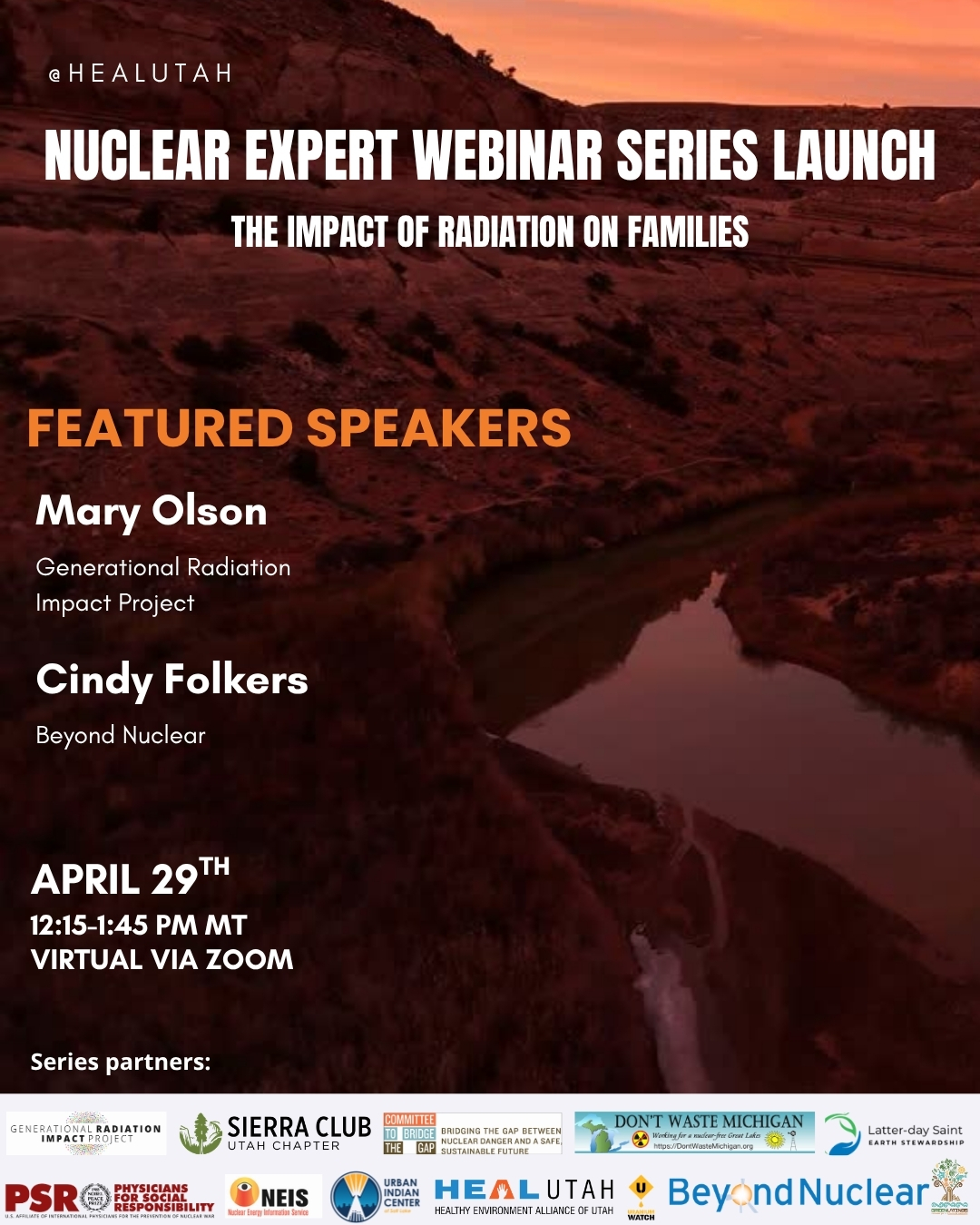
29 April – Nuclear Expert Webinar #1 – Radiation Impacts on Families with Mary Olson and Cindy Folkers
- 12:15 PM MT – 1:45 PM MT
- Location: Virtual – REGISTER TODAY

4 May -West Suburban Peace Coalition to discuss Iran war at May Educational Forum
Monday, May 4, 7:00 – 8:00 PM Central Standard Time
Title: : How Trump’s Narrative Tries to Shape the Reality of the War on Iran.
Contact Walt Zlotow, zlotow@hotmail.com 630 442 3045 for further information
14 May – online event From Bombs to Data Centres: the Face of Nuclear Colonialism

Pine Ridge Uranium is the real threat, not Tehran- Tell Burgum: Stop the Extraction.
Chernobyl: The Lost Tapes – A good documentary on Chernobyl on SBS available On Demand for the next 3 weeks– https://www.sbs.com.au/ondemand/tv-program/chernobyl-the-lost-tapes/2352741955560
To see nuclear-related stories in greater depth and intensity – go to https://nuclearinformation.wordpress.com
-
Archives
- April 2026 (288)
- March 2026 (251)
- February 2026 (268)
- January 2026 (308)
- December 2025 (358)
- November 2025 (359)
- October 2025 (376)
- September 2025 (257)
- August 2025 (319)
- July 2025 (230)
- June 2025 (348)
- May 2025 (261)
-
Categories
- 1
- 1 NUCLEAR ISSUES
- business and costs
- climate change
- culture and arts
- ENERGY
- environment
- health
- history
- indigenous issues
- Legal
- marketing of nuclear
- media
- opposition to nuclear
- PERSONAL STORIES
- politics
- politics international
- Religion and ethics
- safety
- secrets,lies and civil liberties
- spinbuster
- technology
- Uranium
- wastes
- weapons and war
- Women
- 2 WORLD
- ACTION
- AFRICA
- Atrocities
- AUSTRALIA
- Christina's notes
- Christina's themes
- culture and arts
- Events
- Fuk 2022
- Fuk 2023
- Fukushima 2017
- Fukushima 2018
- fukushima 2019
- Fukushima 2020
- Fukushima 2021
- general
- global warming
- Humour (God we need it)
- Nuclear
- RARE EARTHS
- Reference
- resources – print
- Resources -audiovicual
- Weekly Newsletter
- World
- World Nuclear
- YouTube
-
RSS
Entries RSS
Comments RSS
 nuclear-news