TED’s Pro-Nuclear Bias – Dennis Riches
Thirty-six talks are tagged “energy” and among these only a few are primarily about nuclear energy while a few others cover it as a sub-topic. This is a reflection of the TED’s bias, but also of those searching for the best way to respond to global warming. Some of them are pro-nuclear, while others believe either that nuclear is so irrelevant that it’s not worth discussing, or they just want to make it a one-front war against the fossil fuel industry. The bias in the TED talks is also a reflection of society’s lack of concern about nuclear energy. Nuclear energy and nuclear weapons are no longer novelties that strike fear in our hearts, even though the risks haven’t changed at all.
http://nf2045.blogspot.jp/2014/03/teds-pro-nuclear-bias.html
TED talks gone nuclear: how neoliberal proselytizing goes hand in hand with the promotion of nuclear energy
The TED talks became popular about ten years ago once broadband video had become widely available. At first, the videos seemed like a valuable educational resource and a compelling alternative in a post-literate world to reading magazine articles. Few people would read, or even find, a report about the eradication of smallpox, but many more would find and listen to a twenty-minute personal narrative by the man who led the UN program which successfully eradicated smallpox. What’s not to like here? But over time I noticed that more and more of the talks ended with the speaker saying something to the live audience like “go out and change the world,” and it was clear that the message was directed at the wealthy, important people in attendance, not at the masses watching the recordings. It had become clear that TED reflected a particular belief system about how to improve the world, and that the conference had a missionary purpose which left people watching at home as mere spectators. Critical voices started to grumble about a vaguely sensed banality that arises from the missionary aura of the event. For a while, no one was quite able to define the problem, and it was difficult to find fault with a forum that presented so many interesting speakers and was apparently devoted to changing the world for the better. It wasn’t until 2012 that critical reviews seemed to be getting close to articulating what is wrong with TED. Martin Robbins wrote in “The Trouble with TED Talks” in New Statesman in September, 2012. He noted that the TED slogan “ideas worth spreading” indicates that TED is essentially concerned with proselytizing. A significant flaw in the structure of TED is that participation in the conference is accessible only to people who can pay thousands of dollars to attend for a few days. Robbins asks, “What better crowd could there be than social elites who’ve invested thousands of dollars for the opportunity to bask in the warm glow of someone else’s intellectual aura?” For Robbins, the major flaw is that ideas worth spreading are never challenged or peer reviewed. There is no question period after the talks, no debate, no transparency about the way speakers are selected. He concludes:
TED Talks are designed to make people feel good about themselves; to flatter them and make them feel clever and knowledgeable; to give them the impression that they’re part of an elite group making the world a better place. People join for much the same reason they join societies like Mensa: it gives them a chance to label themselves part of an intellectual elite. That intelligence is optional, and you need to be rich and well-connected to get into the conferences and the exclusive fringe parties and events that accompany them, simply adds to the irresistible allure. TED’s slogan shouldn’t be ‘Ideas worth spreading’, it should be: ‘Ego worth paying for’.
In December 2013, Benjamin Bratton wrote “We Need to Talk about TED” for The Guardian. He stated his opinion that “TED actually stands for: middlebrow megachurch infotainment.” He noted an implicit requirement that talks be based on “epiphany and personal testimony” in order to be considered worthy. He asked, “What is it that the TED audience hopes to get from this? A vicarious insight, a fleeting moment of wonder, an inkling that maybe it’s all going to work out after all? A spiritual buzz?” Bratton noted that TED management demanded that its various satellite conference organizers (TEDx events) refrain from featuring speakers whose topics include the paranormal, the conspiratorial and new agey. The goal was to have TEDx present talks that are imaginative yet grounded in reality. Bratton gives TED some credit for trying to maintain its reliability, but he noted:
“the corollaries of placebo science and placebo medicine are placebo politics and placebo innovation. On this point, TED has a long way to go… If we really want transformation, we have to slog through the hard stuff (history, economics, philosophy, art, ambiguities, contradictions). Bracketing it off to the side to focus just on technology, or just on innovation, actually prevents transformation… Keep calm and carry on “innovating” … is that the real message of TED? To me that’s not inspirational, it’s cynical. In the US the rightwing has certain media channels that allow it to bracket reality… other constituencies have TED.
In spite of what TED claims in its response to such criticisms, I think there is nonetheless an ideological bias in the TED conference, and this is incompatible with the objective of conducting an open search for innovative solutions to global problems. The problem can be understood by asking what is absent as opposed to what is present. Because it was established by and for technology millionaires, content has been consciously or unconsciously selected to reflect their world view. Prominent intellectuals, such as Noam Chomsky and Ralph Nader, for example, have never appeared on the TED stage. In TEDworld, solutions come in the form of small-scale initiatives by selected innovators that can be scaled up, if they receive support from wealthy donors during networking sessions at the conference. Someone who has developed an inexpensive water filter might get private funding to launch a large-scale deployment in an African country, but this is as far as problem-solving goes. The TED stage does not welcome discussion of the big questions about resource exploitation and the geopolitical goals of Western powers that perpetuate numerous African conflicts. No one on the TED stage talks about solving complex social problems through government policy, taxes on the wealthy, or electoral reform. Many TED speakers beseech the TED audience to take action because they see government and private enterprise as incapable of doing the right thing. Bill Gates said in his talk about his charitable foundation, “Governments don’t naturally pick these things [philanthropic initiatives] in the right way. The private sector doesn’t naturally put its resources into these things. So it’s going to take brilliant people like you… [special people in the TED audience]” Somehow, this depressing lack of faith in democratic institutions and traditions isn’t seen as detracting from the optimism and inspiration of the event. An excellent example of ideological filtering can be seen in the way TED has set the parameters of its discussion of nuclear energy. In the list below, I briefly comment on the few talks that have mentioned nuclear energy, and what emerges from this review is a bias that promotes nuclear energy as a solution to global warming yet avoids all mention of its historical failures, the health and environmental hazards, and the intractable problem of waste disposal. There is a long list of qualified and respectable nuclear scientists who lost their funding when they began to report findings unfavorable to national energy policy goals, but they have continued to do good research with funds they raise privately. These people have never been invited to the TED stage because it seems they have been categorized among those who do “placebo science,” science which is “not grounded in reality.” Other people who will never be invited are representatives of ethnic groups such as the Navajo, Dene and Marshallese who have been victimized by nuclear weapons testing and uranium mining. What follows is a brief summary and critique of the short list of TED talks that are concerned with nuclear energy.
1. Debate: Does the world need nuclear energy? (2010) This is perhaps the only instance of a TED talk presented as a multi-faceted discussion in which ideas are challenged by the debaters, the moderator and members of the audience. However, the debate parameters are stacked in favor of nuclear energy. The “No” answer is framed as needing to prove that renewable energy could provide enough baseload energy to replace both carbon and nuclear sources. The speaker, Mark Jacobson, is a specialist in atmospheric research and renewable energy, so he isn’t the best person to speak of the negative aspects of nuclear energy. The “anti-nuclear” argument is allotted little opportunity to discuss environmental impacts, health impacts, proliferation risks, the risk of catastrophic failures (this was one year before Fuskushima) and the questionable values of a society that leaves the nuclear waste legacy to future generations. Nonetheless, Jacobson manages to cover some of these topics while spending most of his time explaining the potential of renewables. The pro-nuclear argument is presented by the famous apostate of traditional environmentalism, Stewart Brand.
2. Yup, I built a nuclear fusion reactor (2012) This is a talk given by the teenage physics prodigy Taylor Wilson. He speaks of the promise of fusion energy, and the talk is a notable example of how nuclear proponents acknowledge the unacceptable risks of present nuclear technology only when they are promoting the relative safety of the next technology. Taylor Wilson is obviously a very smart guy, but he seems to have a dangerously narrow focus on nuclear physics that hasn’t been balanced with an education in the biological, political and social aspects of nuclear technology.
3. My radical plan for small nuclear fission reactors(2013) One year later, Taylor Wilson is back on the TED stage promoting the development of small modular reactors (SMR). Throughout the talk Wilson clearly implies something which is utterly false: that this technology is his own breakthrough innovation, and that he has even gathered a brilliant team to work with him. He speaks as if he were, at the age of 19, a tech billionaire with a long resume of successful ventures behind him. He might have contributed some new ideas to the concept, but it seems more likely that he is being cynically used as a front to give this venture a sheen of novelty. The truth is that the potential of this design has been known for a long time. Reactors cooled by molten salt have a long history of development followed by failure and rejection. There are reasons why this hasn’t been done before. The US, the UK, Germany, and France all tried then abandoned fast breeder reactors cooled by molten salt. The USSR is the only country that has one functioning, and Japan has all but conceded failure on its Monju reactor, which has never worked since it was supposed to go online twenty years ago. Although Wilson is proposing smaller reactors, the careful use of the term “molten salt” is just a rebranding of what was known before as liquid sodium–a term which is associated with nuclear projects that failed after massive expenditures on them. The downside of the technology is that molten salt is very difficult to manage. It explodes on contact with air and it becomes irradiated in the reactor, which means it becomes a form of nuclear waste that has no long-term storage solution. The French have been slowly and very carefully draining the radioactive sodium out of their failed Superphenix reactor for the last fifteen years. Implementing this technology would presume that future generations would consent to and be able to continually decommission old reactors, build new ones and handle the waste produced. In addition, there would still be a carbon footprint in this technology, and there would still be serious environmental impacts in mining thorium, just as there are in mining uranium. None of this is mentioned in this peppy little infomercial. With my limited IQ, I hesitate to give the young genius advice, but I think he could benefit from taking a year off to travel and round out his character before he lets himself be used this way by venture capitalists. He is blessed with a high IQ, but wisdom might be something he has to acquire the hard way like everyone else. This talk is a clear example of Robbins’ critique that TED has come to favor showbiz appeal over content and rigorous challenge of ideas. It’s better to put the whiz kid on the stage than to have some boring billionaire come out and tell us how his reactor design is going to change the world…
4. Innovating to zero (2010) … Unless, of course, it’s Bill Gates. This talk given three years before Taylor Wilson’s talk is basically promoting the same dream. In this case, it is called the Travelling Wave reactor. Once again, this talk is an advertisement rather than a thorough discussion of the advantages and disadvantages of a design. He makes no mention of waste management and the problem of broken intergenerational loyalty implied by such technology. The infrastructure of the reactors and the waste management system would have to be maintained for numerous generations into the future.
5. Thorium as an alternative to nuclear fuel (2012) One could classify this presentation as virulently anti-nuclear, inasmuch as the speaker wants the audience to believe that nuclear technology of the present is unacceptably dangerous relative to the promise of thorium reactors. The argument is much the same as the ones made by Bill Gates and Taylor Wilson. I’d give this speaker credit for just being an ordinary guy standing up for an idea he believes in, without relying on a billionaire or a cute prodigy to do the sales job for him. He does make a favorable comparison with existing reactors on many points (which critics concede), but he fails to share with his audience the well-known downsides which explain why thorium reactors have never been built. If TED talks were really about science and facts, such one-sided promotions would not be tolerated. An example of what a balanced debate might look like can be read in the transcript of an NPR interview with Richard Martin and Arjun Makhijani on the topic of thorium reactors. Here one can find a respectful debate, and the counter-argument pointing out that thorium reactors would still pose significant proliferation risks and serious problems in managing the waste and the irradiated molten salt coolant.
6. Why stay in Chernobyl? Because it’s home(2013) This talk is a touching discussion of the elderly people who have stayed illegally in the Chernobyl Exclusion Zone. It is a worthwhile topic in itself, but the speaker leaves the audience with a stunning lack of context. The result is that she implies by omission that it was a mistake to establish the exclusion zone because these holdouts are obviously happier and healthier than they would have been if they had followed the evacuation order. Perhaps she assumed the disaster is so famous that there was no need to mention the health damages and deaths, but the effect of the talk is the creation of a soothing gloss over a complex catastrophe that upended millions of lives. By not describing the wider phenomenon, and especially by not acknowledging the proper decision to get children and women of child-bearing age away from Chernobyl, this talk plays right into the hands of the nuclear industry that has always downplayed Chernobyl’s consequences. The speaker concludes by saying, “the spirit and existence of the babushkas… will leave us with powerful new templates to think about and grapple with, about the relative nature of risk, about transformative connections to home, and about the magnificent tonic of personal agency and self-determination.” This uplifting conclusion fails to remind the audience that this “magnificent tonic” had to be used as a reaction to an industrial crime. It should be stressed that these babushkas had no agency in the decision to build the technology which destroyed their lives.
7. Stewart Brand proclaims four environmental heresies (2009) With regard to nuclear energy, what Stewart Brand says here is essentially the same as what he covers in the 2010 debate on the TED stage (see above). In addition, here he promotes geo-engineering, gene modification and the notion that the urban poor of the world are not trapped in poverty but just transitioning out of it while (bonus!) the rural environments they left are recovering from the damage caused by their subsistence farming. It’s all good, you see.
8. Project Orion (2002) This brief talk describes the long-classified American project to build nuclear-powered rockets for deep space travel. For some reason, the speaker was given only eight minutes to inform an audience about a remarkable but unknown chapter of history that lasted a decade. The topic required much more time, but still, in those eight minutes he might have mentioned something about the stunning disregard in Project Orion for protecting the population from nuclear fallout. The book Area 51 described the experiment called Kiwi done for Project Orion which involved the deliberate destruction of a nuclear rocket, just to learn what the radiation levels would be. Its aim was to measure the fallout from the explosion and from the melted 100-pound nuclear core as it fell over the launch area. A still classified amount of radionuclides were carried away in the wind toward Los Angeles. The omission of such stories is an example once again of how all mention of nuclear energy in TED talks somehow fails to touch on the subject of the health and environmental consequences of nuclear energy.
9. A reality check on renewables(2012) From the title, one could guess that this talk claims renewables can’t supply enough electricity to meet demand and can’t supply baseload electricity. These claims might be true, but there is a large contingent of scientists and engineers who disagree, and yet these contrary views are hard to find on the TED stage.
10. A forty year plan for energy (2012) The exception is Amory Lovins’ talk on the potential of renewable energy. It is the only TED talk I’ve found in which a speaker explicitly says nuclear energy is too expensive, too dangerous, and unnecessary for moving away from carbon-based energy. As such, it’s notable that he says this at a minor TED event (TED Salon) and not at the main conference. In his talk, he provides the data, the details and the convincing argument that we are capable of shifting to an energy paradigm based on energy produced in real time and above ground, as opposed to sources that have accumulated underground over millions of years.
11: The earth is full(2012) This is a rare example of a contrarian getting onto the stage before the TED audience of techno-optimists and managing to shake them out of their comfortable presumption that forums like TED have the capacity to change the world. I wouldn’t be surprised if his inclusion in the event was viewed later as an embarrassing oversight. In the talk, Paul Gilding argues for a massive shift in society’s priorities and calls for a centrally directed “war effort” of the kind that America put up to redefine its economy and win World War II. He wrote on his blog afterwards that his talk ignited some heated debates in the hallways during the conference, but all in all, he found the crowd had too much of an optimism bias that held fast to the wishful belief that technology would save the world.
12. Juan Enriquez wants to grow energy(2007) The speaker argues that our use of fossil fuels can be made much more efficient while we transition to other energy sources. This talk is mostly about how microbes and biological processes can be used in carbon fuel extraction processes to make them cleaner, cheaper and more efficient. Enriquez says this is essential to do during the time that we improve renewables and nuclear. He seems to be one of the conditional pro-nuclear people who think it can be done right but that it has been done wrong in many instances. At one point he suggests, “This has to be a bridge to the point where you can get to wind, to the point where you can get to solar, to the point where you can get to nuclear–and hopefully you won’t build the next nuclear plant on a beautiful seashore next to an earthquake fault. Just a thought.” This seems like an oblique reference to Fukushima (incidentally, a search on the TED website for “Fukushima” produces only two brief mentions of the disaster, and they are only passing references to the nuclear meltdowns), but this presentation was recorded in 2007. While he was apparently conceding a point to nuclear critics in California who have opposed nuclear power plants built on the coast there, he left a remark on record that would turn out to be prophetic.
13. The missing link to renewable energy(2012) This talk makes no mention of nuclear energy, but it knocks a leg out of the standard argument that nuclear proponents make about renewable energy. The speaker describes his work on developing large-scale electricity storage solutions, and he is confident that a breakthrough is imminent. If renewable energy can be stored, then critics will no longer be able to say that it can’t provide baseload electricity.
In conclusion, this review leaves three things to say about TED. First, the techno-optimism and neoliberal bias of the organization make it a natural partner for the promotion of next generation nuclear energy, though this policy is undeclared and the financial influences behind it are suspect. Second, dissenting views make occasional appearances, but the anti-nuclear argument has never been fully covered. Finally, considering the thousands of talks that exist on the TED website, it’s remarkable that nuclear energy is discussed in only these few. Thirty-six talks are tagged “energy” and among these only a few are primarily about nuclear energy while a few others cover it as a sub-topic. This is a reflection of the TED’s bias, but also of those searching for the best way to respond to global warming. Some of them are pro-nuclear, while others believe either that nuclear is so irrelevant that it’s not worth discussing, or they just want to make it a one-front war against the fossil fuel industry. The bias in the TED talks is also a reflection of society’s lack of concern about nuclear energy. Nuclear energy and nuclear weapons are no longer novelties that strike fear in our hearts, even though the risks haven’t changed at all. Nuclear fears have been pushed out of our civilization’s consciousness while other preoccupations have been foregrounded. But nuclear technology is like an old water heater in your basement: Out of sight, out of mind. Though you know it’s going to blow someday, you prefer to imagine it won’t. No money has been put aside for the replacement, and you hate going down to the basement, so you refuse to think about it. Obviously, there will be a price to pay for willful ignorance. I think I’ll never be one of the special people invited to TED, but if a regular guy like me can figure this out, then so can all those people onstage and backstage at TED.
3 Comments »
Leave a reply to jfon Cancel reply
1 This Month
26 April – Chernobyl: Inside the Meltdown airs on National Geographic on Sunday 26th April from 4pm
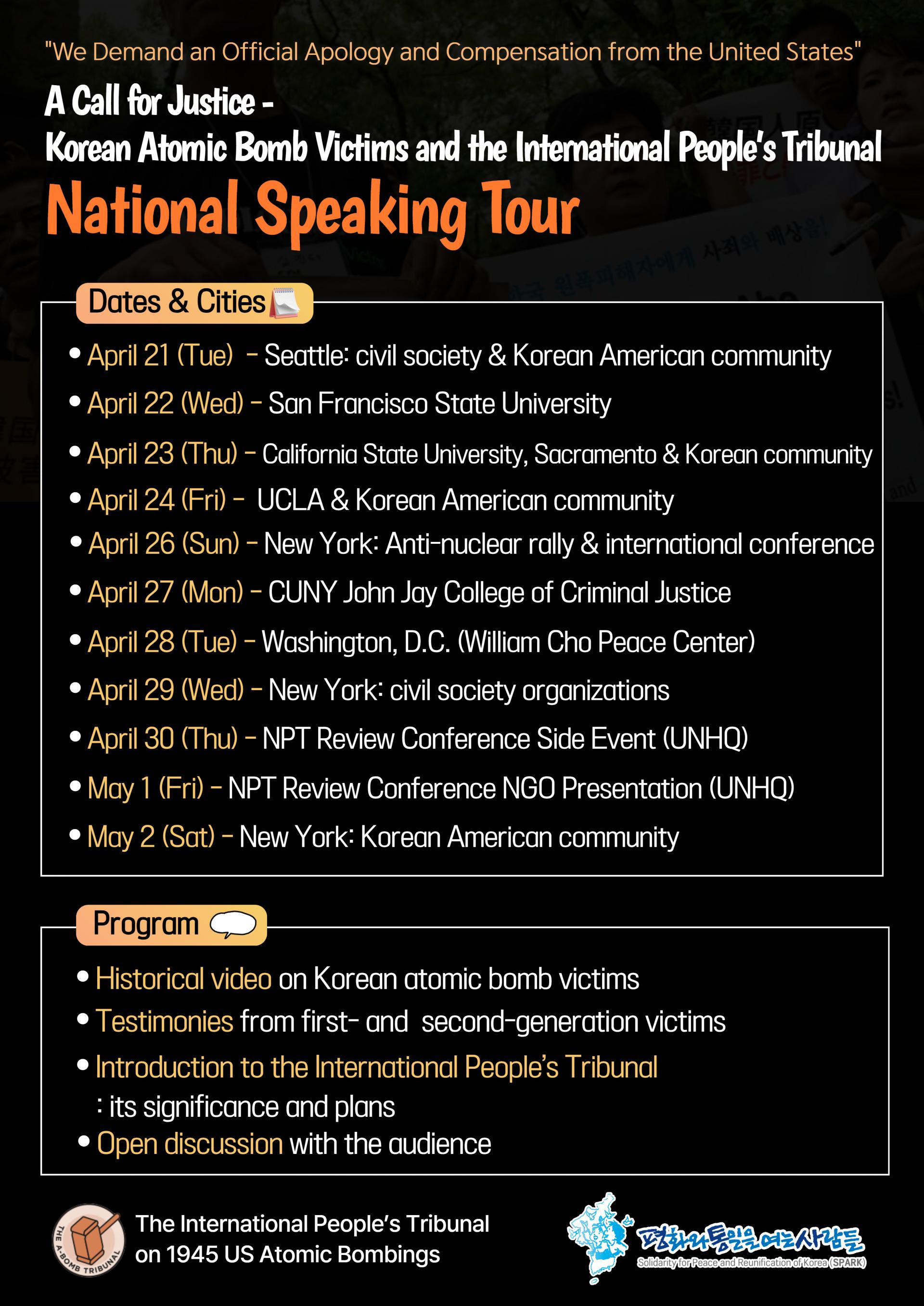
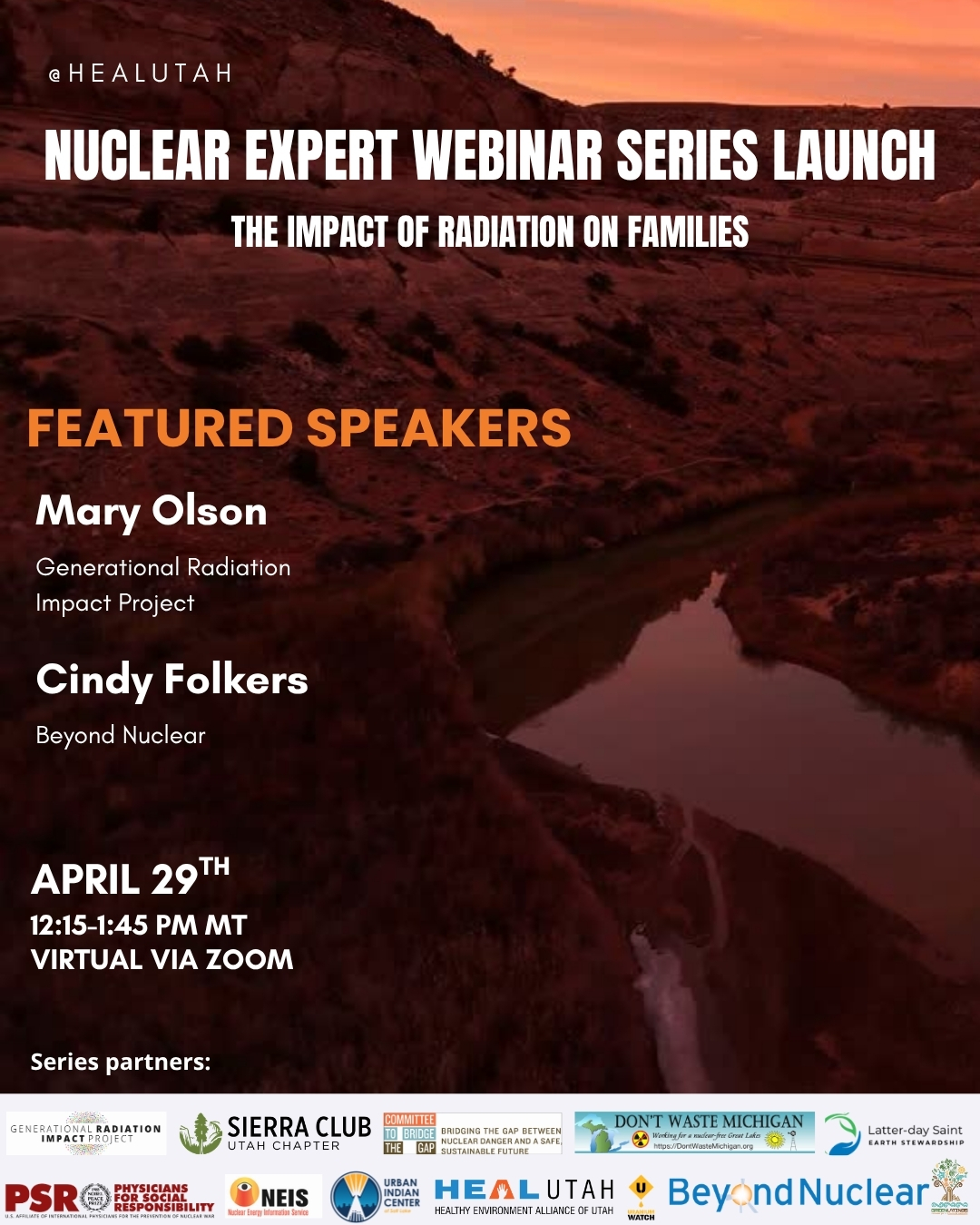
29 April – Nuclear Expert Webinar #1 – Radiation Impacts on Families with Mary Olson and Cindy Folkers
- 12:15 PM MT – 1:45 PM MT
- Location: Virtual – REGISTER TODAY

4 May -West Suburban Peace Coalition to discuss Iran war at May Educational Forum
Monday, May 4, 7:00 – 8:00 PM Central Standard Time
Title: : How Trump’s Narrative Tries to Shape the Reality of the War on Iran.
Contact Walt Zlotow, zlotow@hotmail.com 630 442 3045 for further information
14 May – online event From Bombs to Data Centres: the Face of Nuclear Colonialism

Pine Ridge Uranium is the real threat, not Tehran- Tell Burgum: Stop the Extraction.
Chernobyl: The Lost Tapes – A good documentary on Chernobyl on SBS available On Demand for the next 3 weeks– https://www.sbs.com.au/ondemand/tv-program/chernobyl-the-lost-tapes/2352741955560
To see nuclear-related stories in greater depth and intensity – go to https://nuclearinformation.wordpress.com
-
Archives
- April 2026 (327)
- March 2026 (251)
- February 2026 (268)
- January 2026 (308)
- December 2025 (358)
- November 2025 (359)
- October 2025 (376)
- September 2025 (257)
- August 2025 (319)
- July 2025 (230)
- June 2025 (348)
- May 2025 (261)
-
Categories
- 1
- 1 NUCLEAR ISSUES
- business and costs
- climate change
- culture and arts
- ENERGY
- environment
- health
- history
- indigenous issues
- Legal
- marketing of nuclear
- media
- opposition to nuclear
- PERSONAL STORIES
- politics
- politics international
- Religion and ethics
- safety
- secrets,lies and civil liberties
- spinbuster
- technology
- Uranium
- wastes
- weapons and war
- Women
- 2 WORLD
- ACTION
- AFRICA
- Atrocities
- AUSTRALIA
- Christina's notes
- Christina's themes
- culture and arts
- Events
- Fuk 2022
- Fuk 2023
- Fukushima 2017
- Fukushima 2018
- fukushima 2019
- Fukushima 2020
- Fukushima 2021
- general
- global warming
- Humour (God we need it)
- Nuclear
- RARE EARTHS
- Reference
- resources – print
- Resources -audiovicual
- Weekly Newsletter
- World
- World Nuclear
- YouTube
-
RSS
Entries RSS
Comments RSS
 nuclear-news
TEDxPasadena – Libbe HaLevy – Creating a 21st Century Manhattan Project
‘ “molten salt” is just a rebranding of what was known before as liquid sodium–a term which is associated with nuclear projects that failed after massive expenditures on them. The downside of the technology is that molten salt is very difficult to manage. It explodes on contact with air and it becomes irradiated in the reactor, which means it becomes a form of nuclear waste that has no long-term storage solution.’
Molten salt does not explode on contact with air- it freezes. In most formulations it does not include sodium ( or chlorine ) ions, but if it did, they would be no more dangerous than table salt after a week – sodium 24 only has a fifteen hour half life.
Thanks for this helpful and informative comment!