Japan must learn from workers of Chernobyl nuclear cleanup
Japan Gov’t Adviser on Fukushima: We have “much to learn from what’s happening at Chernobyl” — Engineer: All my co-workers at Chernobyl are now dead, and I had thyroid removed due to cancer (VIDEO) http://enenews.com/official-japan-adviser-learn-whats-happening-chernobyl-fukushima-workers-govt-health-checkups-engineer-all-scientists-worked-chernobyl
NHK Nuclear Watch, Jan. 22, 2014:
Fukushima Daiichi:Learning from Chernobyl (01/22/2014)
NHK: Decommissioning [Chernobyl] could take a century […] This edition of ‘Nuclear Watch’ is looking at how people tied to the cleanup of the Fukushima accident here in Japan are trying to learn lessons from Chernobyl […]
Professor Ryuji Okazaki, adviser to Japanese government on how to protect workers from radiation: “We really want to learn from what you’re doing here in the Ukraine.”
NHK: A government official told Okazaki, “Our practices are based on lessons from the past.” […] They periodically check for more than 200 types of illnesses including heart disease. Doctors also focus on the eyes […] they monitor balance, too. […] The situation is quite different at Fukushima Daiichi. Screening of workers is left up to the contractors […] they are not obliged to submit data to the plant’s operator or any national institution. Professor Okazaki says Japan has much to learn from what’s happening at Chernobyl.
Professor Okazaki: […] Ukraine provides an example we should follow.
NHK: Okazaki says Japanese leaders should introduce a centralized system to collect health data right away.
Watch the NHK broadcast here
UK’s Ministry of Defence just waiting for radiation afflicted nuclear veterans to die
Other children of nuclear veterans have suffered chronic musculoskeletal disorders; deformity of the hands, feet, bladder and genitals; heart malformation; hearing defects; spina bifida, and a host of other illnesses. Many have decided not to have children, for fear of perpetuating genetic abnormalities.
Forgotten victims of Britain’s nuclear tests on Christmas Island
No compensation for British servicemen exposed to nuclear explosions around Australia and the Pacific in the 1950s and ’60sTelegraph UK By Jake Wallis Simons 02 Feb 2014When the bomb went off, Private John Hall had been given no protective clothing. Instead, he and his fellow RAF servicemen had been ordered to turn away from the mushroom cloud and put their hands in front of their faces.
He later said that as he did so, his hands “lit up like an X-ray”, and he saw his bones outlined through the flesh. Continue reading
AREVA uranium miner under pressure to stop ripping off Niger
 Niger, Areva tussle over future of uranium mining YahooNews,2 Feb 14 By Joris Fioriti, Boureima HamaNiamey (AFP) – Niger’s government and French nuclear giant Areva are engaged in tough talks on the future of uranium mining in the west African country, whose leaders want more money from the resource to help pay for development……
The government wanted to apply a 2006 mining law that ends tax breaks for foreign companies to Areva, which has thus far been exempt. If the 2006 law were applied, its tax rate would rise to 12 percent……
Niger is seeking greater control of its natural resources and uranium accounts for more than 70 percent of exports, according to Oxfam France. The charity is lobbying for a fairer distribution of the mining wealth….
The situation is worsened by plummeting uranium prices, which fell from 290 euros per kilo in 2008 to about 61 euros per kilo in 2013,…..
“Areva’s people take advantage of negligence by successive regimes in Niger to practise their greed,” Sanoussi Jackou, an advisor to President Mahamadou Issoufou, recently said in a televised debate.
No previous regime has sought to change the cooperation accords signed with France in the 1960s. Jackou said they gave the ex-colonial power 75 years of “advantages” when it came to uranium mining….
Ali Idrissa of Rotab, a Nigerien association, demanded the application of the 2006 tax law to Areva.
“Neither Areva’s blackmail of its personnel, nor a ban on demonstrations by Nigerien authorities, will dampen our determination to fight for a win-win contract,” he said.http://news.yahoo.com/niger-areva-tussle-over-future-uranium-mining-070522028.html
Florida’s sorry story of ratepayers stung by upfront nuclear construction costs
 Nuclear power project financing option sticks ratepayers with tab, Indy Star By John Russell, john.russell@indystar.com February 1, 2014 “……..the Florida legislature passed a CWIP bill, allowing utilities to charge ratepayers up front for construction costs of nuclear power plants. Supporters said it was a way to get nuclear plants built faster and cheaper. Opponents called the bill “crony capitalism,” saying it would shift the risk of start-up costs onto ratepayers in the form of higher utility bills, while utility investors would reap the profits.
Two years later, the new Florida law got a taker. Progress Energy filed an application to build a nuclear plant in central Florida, estimating it would cost $5 billion. But over the next few years, the price tag climbed to more than $20 billion, due to delays and larger-than-expected costs.Then things got complicated. In 2010, Florida utility regulators rejected Progress’s request for $368 million in rate increases around the state. In response, Progress said it would stop spending on nuclear power plants, delaying the new plant. In response, lawmakers revised the law that guaranteed Progress could shift all construction costs onto ratepayers.
In 2012, Progress was bought by Duke Energy. A year later, Duke said it was shelving the new Florida nuclear plant, citing delays and “regulatory uncertainties.”
But Florida ratepayers are still on the hook. Over the years, Progress and Duke have collected about $1.5 billion from ratepayers — and do not have to pay it back.
“Thank, you, Tallahassee, for making us pay so much for nothing,” read a headline in the Tampa Bay Times last summer, in a sentiment aimed at state lawmakers.
Critics says CWIP is hard to stop once it gets started, regardless of the cost.
“Once you pass these things, and once these guys start spending billions of dollars, they become freight trains you just can’t stop,” said Mark Cooper, a longtime critic of nuclear power and senior fellow at the University of Vermont.
Florida isn’t alone. Around the county, other major nuclear or coal plants are being built under CWIP laws.
In Georgia, a project to build two additional reactors at Southern Co.’s Plant Vogtle was originally estimated to cost $14 billion. It is now almost two years behind schedule and nearly $1 billion over budget……….
Analyzing the track record
Some critics point to the track record and say CWIP is an open checkbook for big energy companies who can’t get funding for expensive new plants from banks or Wall Street.
“It’s simply an ATM card for utilities,” said Grant Smith, a longtime utility-consumer advocate and senior energy policy adviser at the Civil Society Institute. “It is a power plant tax.”……
“The test that nuclear can’t pass isn’t how big it is, but whether energy can be generated at much lower cost in other ways,” said Peter Bradford, a former member of the U.S. Nuclear Regulatory Commission and former chair of the New York and Maine utility regulatory commissions. “The answer is clearly yes.”
A looming issue is how much a new nuclear project will cost — even at the small modular reactors, which are still years away from going from the drawing board to production. It’s difficult to give a price for one, since a utility has yet to buy or build one…….http://www.indystar.com/story/news/2014/02/01/nuclear-power-project-financing-option-sticks-ratepayers-with-tab-/5092887/
A legal precedent – UK court verdict on nuclear radiation caused fatal condition of UK nuclear veteran
 Forgotten victims of Britain’s nuclear tests on Christmas Island No compensation for British servicemen exposed to nuclear explosions around Australia and the Pacific in the 1950s and ’60s Telegraph UK By Jake Wallis Simons 02 Feb 2014 “……..In 2012, the clearest such verdict was passed by the Derby and South Derbyshire coroner, who was ruling on the death of Derek Heaps, a former Royal Engineer.
“At post mortem, it was established that Derek Frank Heaps’s underlying fatal conditions were of a type which can be caused by exposure to high levels of ionising radiation,” the verdict said.
Derek Frank Heaps both visited Malden Island [another testing site in the Pacific] the day after an atom bomb had been exploded over it, and witnessed a further testing of an atom bomb from an airborne aircraft.”
Nigel Heaps is his son and the chairman of the BNTVA. “My dad was very proud that we developed a nuclear deterrent that ensured peace,” he says. “He felt severely let down when the nation wouldn’t actually step up.
“As the son of a nuclear veteran, there’s always that pressure hanging there. Am I gradually falling apart from the inside? And what will happen to my kids?”
According to some estimates, genetic mutation can persist for as many as 20 generations. As the number of nuclear veterans decreases, their children and grandchildren bear the greater burden of the sacrifice that they made for their country.
This is a problem that is not going away. And many feel that it is high time that the Government addressed it…….http://www.telegraph.co.uk/finance/newsbysector/industry/defence/10611985/Forgotten-victims-of-Britains-nuclear-tests-on-Christmas-Island.html
The genuine and major environmental groups oppose nuclear power
Greens Still See Red on Nuclear Power, National Journal, Ben Geman, 2 Feb Major environmental groups are ignoring pleas from climate scientists to embrace reactors. “…….while Hansen is a hero to many within the green movement, environmental groups are nonetheless hostile to another Hansen view: that nuclear power is essential to attacking climate change as global energy demand rises.
Along with three other prominent climate scientists, Hansen penned an open letter to environmental groups in November about nuclear power, warning that “continued opposition … threatens humanity’s ability to avoid dangerous climate change” and urging them to push for “development and deployment of safer nuclear energy systems.”
No sale. Major groups such as the Sierra Club, Greenpeace, and the Natural Resources Defense Council haven’t budged in their opposition to a nuclear build-out.
“The [Sierra] Club recently reviewed our entire energy policy, including nuclear, and concluded that it is not only a bad deal for public safety and the environment, but it also doesn’t work economically,” said Maggie Kao, a spokeswoman for the Sierra Club, one of the country’s biggest and most politically influential green groups..
…… there’s a long list of financial and political barriers to building new reactors in the United States.
Steve Kerekes, a spokesman for the Nuclear Energy Institute, the industry’s main trade group, said environmental opposition isn’t anywhere near the biggest hurdle to building the first new U.S. reactors in decades.
Even a major antinuclear group isn’t claiming that activists are what’s hindering the industry’s long-hoped-for but slow-to-materialize “renaissance” of new U.S. construction. “Wall Street and Main Street have both rightly abandoned nuclear power,” said Jim Riccio, a nuclear-power analyst with Greenpeace.
Low uranium price and lawsuit shut down uranium mill
Group says Utah uranium mill is violating emission limits Nuclear power » Group tells White Mesa it may sue uranium producer to enforce Clean Air Act. By Brian Maffly The Salt Lake Tribune Feb 01 2014 Just as the nation’s last remaining uranium mill is about to win permission to process waste from a Washington state Superfund site, government documents suggest the Utah operation has been emitting radon gas in excess of federal standards and “fugitive” dust has blown off site.
Grand Canyon Trust is citing these documents, filed in recent months with Utah regulators, in a lawsuit it is preparing against Energy Fuels Resources, the Colorado-based uranium producer that operates the White Mesa Mill six miles south of Blanding…….
Citing declining uranium prices in the wake of the Fukushima reactor meltdown, Moore said Energy Fuels will suspend mineral processing in mid-2014 and resume operations next year……http://www.sltrib.com/sltrib/news/57477930-78/mill-uranium-energy-utah.html.csp
Legal action against nuclear waste fill in South Carolina
 Leaks at Barnwell nuclear dump focus of court hearing, The State, S. Carolina Feb 2 2014
BY SAMMY FRETWELL BARNWELL COUNTY, SC — In the decade since environmentalists took legal action against a nuclear-waste landfill in South Carolina, garbage trucks have rumbled onto the site every month, carrying a continuous flow of radioactive trash.
And as heavy machinery has dumped hazardous refuse into burial pits, radioactive tritium has continued to pollute a tributary of the Savannah River just downhill from the state-owned site in rural Barnwell County.
This week, the Sierra Club goes back to court in the group’s fight for tighter controls on the dump.The S.C. Court of Appeals will hear arguments Wednesday that could force landfill operator Energy Solutions to change its burial practices, which the Sierra Club calls outdated and dangerous for the environment.
It’s a fight that has cost thousands of dollars in legal fees and many late nights of research, but environmental lawyer Amy Armstrong said the case is worth pursuing, even after all these years.
At issue is the long-standing practice of dumping nuclear waste in unlined, earthen trenches that are exposed to rainfall as they’re being filled up. Concrete vaults that contain waste are designed with holes to let water drain into the bottom of the dirt trenches, just a few feet above the shallow water table.“There is no liner, it’s just dirt, so water can flow into the ground and it is carrying radioactive materials,” Armstrong said. “Tritium shows up faster in the groundwater. We don’t know what else will be showing up in the future.”…..
Low-level waste still is hazardous, and some of it can take tens of thousands of years to break down. The landfill accepts contaminated parts of reactors and other material from nuclear power plants.
Tritium extends into groundwater from the landfill onto adjacent property and into a small creek just uphill from a neighborhood that depends on wells. The creek also is pahttp://www.thestate.com/2014/02/02/3241773/leaks-at-barnwell-nuclear-dump.htmlrt of the drainage basin of the Savannah River, a drinking water supply for the Hilton Head Island area……landfill critics point out that tritium – one of the least dangerous radioactive materials – often is a precursor to deadly radioactive contamination that moves more slowly in groundwater. Some well samples at the landfill have in the past identified Carbon-14, Uranium-238 and Polonium-210 in groundwater……
Nuclear threat letter to mayor of New York
Letter to Mayor de Blasio threatened ‘nuclear attack’ on city The letter, which was mailed to de Blasio’s home but opened at City Hall, came while mailings to former mayor, Rudy Giuliani, and hotels near MetLife Stadium were found to contain harmless powder. De Blasio’s note — which called the Super Bowl the ‘treason bowl’ — did not contain any powder, but he said he had ‘absolute faith’ in the NYPD’s ability to protect the city. BY CAITLIN NOLAN AND TINA MOORE / NEW YORK DAILY NEWS SUNDAY, FEBRUARY 2, 2014, An angry letter delivered to Mayor de Blasio two days ago threatened that there would be a “nuclear attack” on the city, cops said Sunday.The missive received by the mayor Friday also called the Super Bowl the “treason bowl,” cops said. The statement wasn’t explained in the note……
Read more: http://www.nydailynews.com/new-york/letter-mayor-de-blasio-threatened-nuclear-attack-city-article-1.1599480#ixzz2sHwELt4M
Opposition in Hungary to Govt’s plan to have Russia expand nuclear plant
Hungary’s Opposition Protests Nuclear Plan The Left-Leaning Coalition Rallied Against the Government’s Surprise Decision to Have Russia Expand a Nuclear Plant in Hungary By
The nuclear deal signed in January by Russia’s President Vladimir Putin and Mr. Orban is set to add two 1,000-megawatt reactors to the country’s existing 2,000-MW state-owned nuclear power plant MVM Paksi Atomeromu, with Russia providing a loan for Hungary to cover the construction costs. French, Korean and Japanese companies had been interested in the project before Hungary awarded the deal to Russia’s Rosatom.
Running counter the wider trend in Central Europe where most countries seek greater energy independence from Russia, Hungary said after signing the deal that it is enjoying an improving business relationship with its former communist-era overlord.
The deal, which parliamentary committees are set to discuss on Monday, has faced criticism from nongovernmental organizations, opposition groups and environmental activists who said the cabinet had failed to consult them before accepting the Russian offer…….The left-leaning coalition that protested the deal is the strongest challenger of the ruling Fidesz party. Fidesz enjoyed the support of 29% of voters, while the left-leaning coalition has 21%, according to an end-January poll by Tarki. The far-right Jobbik party had 8% of support. http://online.wsj.com/news/articles/SB10001424052702304851104579358992639240898
Forgotten victims of Britain’s nuclear tests on Christmas Island
No compensation for British servicemen exposed to nuclear explosions around Australia and the Pacific in the 1950s and ’60s
When the bomb went off, Private John Hall had been given no protective clothing. Instead, he and his fellow RAF servicemen had been ordered to turn away from the mushroom cloud and put their hands in front of their faces.
He later said that as he did so, his hands “lit up like an X-ray”, and he saw his bones outlined through the flesh.
The year was 1958, and the Cold War was at its height. Mr Hall, a 19-year-old RAF groundcrewsman, was stationed on Christmas Island, off the north-eastern coast of Australia, to assist with British nuclear tests. His job was to decontaminate the bombers after they flew through the mushroom clouds to collect samples for analysis.
Between 1952 and 1962, Britain and the United States caused more than 40 nuclear explosions in the atmosphere around Australia and in the Pacific. Around 21,000 British servicemen were exposed to these explosions, many of whom were dressed in no more than khaki desert fatigues. Approximately 3,000 are thought to be alive today.
Mr Hall’s part was small, but he knew that it was vital work. If open warfare with the USSR was to be avoided, it was imperative that Britain should develop a nuclear deterrent.
But as he helped to end the Cold War in the dust and blistering heat, Mr Hall had no idea that he and many of his fellow servicemen would later suffer ill health and premature death. His own would come at the age of 53, after a long struggle against hairy cell leukaemia, a rare form of cancer that affects just 200 people per year in Britain.

More on link …
Westinghouse backs off small nuclear plants
Mr. Roderick said it would be difficult to justify the economics of small modular reactors at this point, especially without government subsidies.
February 1, 2014 8:39 PM
By Anya Litvak / Pittsburgh Post-Gazette
After millions of dollars and more than a decade spent developing a small modular nuclear reactor, Westinghouse Electric Co. is pulling back.
Danny Roderick, president and CEO of the Cranberry-based nuclear firm, said Westinghouse recently “reprioritized” staff devoted to small modular reactor, or SMR, development and funneled their efforts to the AP1000, the company’s full-scale new generation pressurized water reactor currently under construction in China and the U.S.
“The problem I have with SMRs is not the technology, it’s not the deployment — it’s that there’s no customers,” Mr. Roderick said. “The worst thing to do is get ahead of the market.”
The move comes after Westinghouse was twice snubbed by the U.S. Department of Energy’s SMR commercialization program, which awarded cost-sharing arrangements to two other companies.
In November 2012, North Carolina-based Babcock & Wilcox won the first round of funding for its proposed 180-megawatt reactor, mPower. The company had submitted a joint application with the Tennessee Valley Authority, which said it would pilot these plants, and has received $101 million from the energy department so far.
In December 2013, NuScale Power, an Oregon-based company, with the backing of its primary investor Fluor Corp. and Rolls-Royce, won the second round, securing a cost-sharing agreement for up to $226 million over five years. NuScale is developing a 45-megawatt reactor.
Anti-nuclear exhibition comes to Hastings Library – NZ
http://nz.sports.yahoo.com/news/anti-nuclear-exhibition-comes-hastings-001408915–spt.html
3 February 2014
The anti-nuclear exhibition “Everything You Treasure: a World Free from Nuclear Weapons” will open on Tuesday February 18, 5.30pm at the Hastings War Memorial Library.
The exhibition was jointly created by Soka Gakkai International and the International Campaign to Abolish Nuclear Weapons (ICAN).
Local organiser Jane Featherstone says the exhibition was created to show how nuclear weapons pose a threat to the things we value and treasure as individuals.
“The exhibition includes 40 illustrated and informative panels which challenge viewers to consider the risks posed by nuclear weapons to the things communities hold dear.”
“The exhibition was officially launched at the 20th IPPNW World Congress in Hiroshima and has been making its way around the globe including displays in Oslo, Norway and the United Nations in Geneva, Switzerland.”
Paula Murdoch, district libraries manager says that with 2014 being the 100th anniversary of the beginning of World War 1, this exhibition is a great lead in to the remembrance events.
“The Hastings War Memorial Library will be acknowledging many important dates over the next four years.”
“While WW1 did not involve nuclear technology, this exhibition is a stark reminder both of the unbelievably rapid rate of technological change and also of the unimaginable consequences of conflict and war. Lest we forget.”
Everyone is welcome to attend the official opening of ‘Everything you Treasure’ at the Hastings War Memorial Library on Tuesday February 18 at 5.50pm.The exhibition is on until Tuesday March 11.
UK nuclear experts to help with Fukushima decommissioning – Lady Barbara Judge
Feb 03, 2014
A team of nuclear experts from the United Kingdom will serve as consultants in the ongoing decommissioning process at the Fukushima Daiichi nuclear plant. Lady Barbara Judge, the former chair of the UK Atomic Energy Authority (UKAEA) and now the deputy chairman of Tokyo Electric Power Co (TEPCO)’s Nuclear Reform Monitoring Committee, is the one organizing the information exchange that is seen as a step that can help move forward the process that is expected to take decades to finish.
The engineers from Sellafield, the site of Britain’s worst nuclear accident, will be traveling to Japan to advise on how to effectively decommission the plant. The Fukushima plant experienced a catastrophic meltdown in 2011, in the midst of the Great East Japan earthquake and tsunami. Judge believes that Japan will greatly benefit from the knowledge and experience of the engineers, and Britain in return, will also gain from learning about Japan’s nuclear industry. Japanese companies like Toshiba and Hitachi are actually helping plan the building of new nuclear power stations in the UK, the first to be built in decades. Toshiba in fact is buying a 60% stake in NuGeneration, a UK firm that will be building three plants in West Cumbria.
TEPCO is hoping that bringing in the decommissioning experts and Judge’s direction will help rebuild the trust of the Japanese people in them, after many perceive that they are making a mess out of dealing with the clean-up at the plant. They plan to launch a new subsidiary by April 1 that will be in charge of the decommissioning and decontamination of the crippled plant. This will be headed by a Japanese nuclear expert and the British engineers will serve as advisers.
Indiana Gov’t. – “Nuclear power project financing option sticks ratepayers with tab”
February 2 2014
John Russell of the Indianapolis Star reported again yesterday on SB 302, a bill that was withdrawn Jan. 21st and about nuclear power in Indiana. In a Jan. 16th story, Russell wrote at length about the financing option of construction work in progress (CWIP):
The only power plant in Indiana to be built under this financing plan, known as Construction Work in Progress (or CWIP) is Duke Energy’s coal-gasification plant in Edwardsport. The plant, originally approved at $1.9 billion, has soared to more than $3.3 billion, with ratepayers picking up much of the increase. * * *
The Citizens Action Coalition of Indiana said CWIP financing has stung Indiana ratepayers in the Edwardsport case and should be avoided for nuclear plants.
“The only reason utility companies need CWIP is because those investments are too risky, too expensive, and Wall Street won’t support them, similar to the Edwardsport (plant),” said Kerwin Olson, the group’s executive director. “If an investment is sound, then CWIP isn’t needed. If it’s not a good investment for shareholders, why is it a good investment for consumers?” * * *
Two efforts to build nuclear power plants in Indiana in the 1980s were scrapped in the face of rising opposition and high costs…..[…]
But critics say the reason Wall Street won’t finance nuclear power is not because it is too expensive, but because it’s a losing economic proposition. Other forms of energy, including natural gas, are much cheaper today.
Wall Street, after all, invests heavily in other billion-dollar industries, from computer-chip factories to energy pipelines.
“The test that nuclear can’t pass isn’t how big it is, but whether energy can be generated at much lower cost in other ways,” said Peter Bradford, a former member of the U.S. Nuclear Regulatory Commission and former chair of the New York and Maine utility regulatory commissions. “The answer is clearly yes.”
A looming issue is how much a new nuclear project will cost — even at the small modular reactors, which are still years away from going from the drawing board to production. It’s difficult to give a price for one, since a utility has yet to buy or build one….[…]
More here
http://wabashcoffeeparty.blogspot.co.uk/2014/02/ind-gov-power-project-financing-option.html
1 This Month
26 April – Chernobyl: Inside the Meltdown airs on National Geographic on Sunday 26th April from 4pm

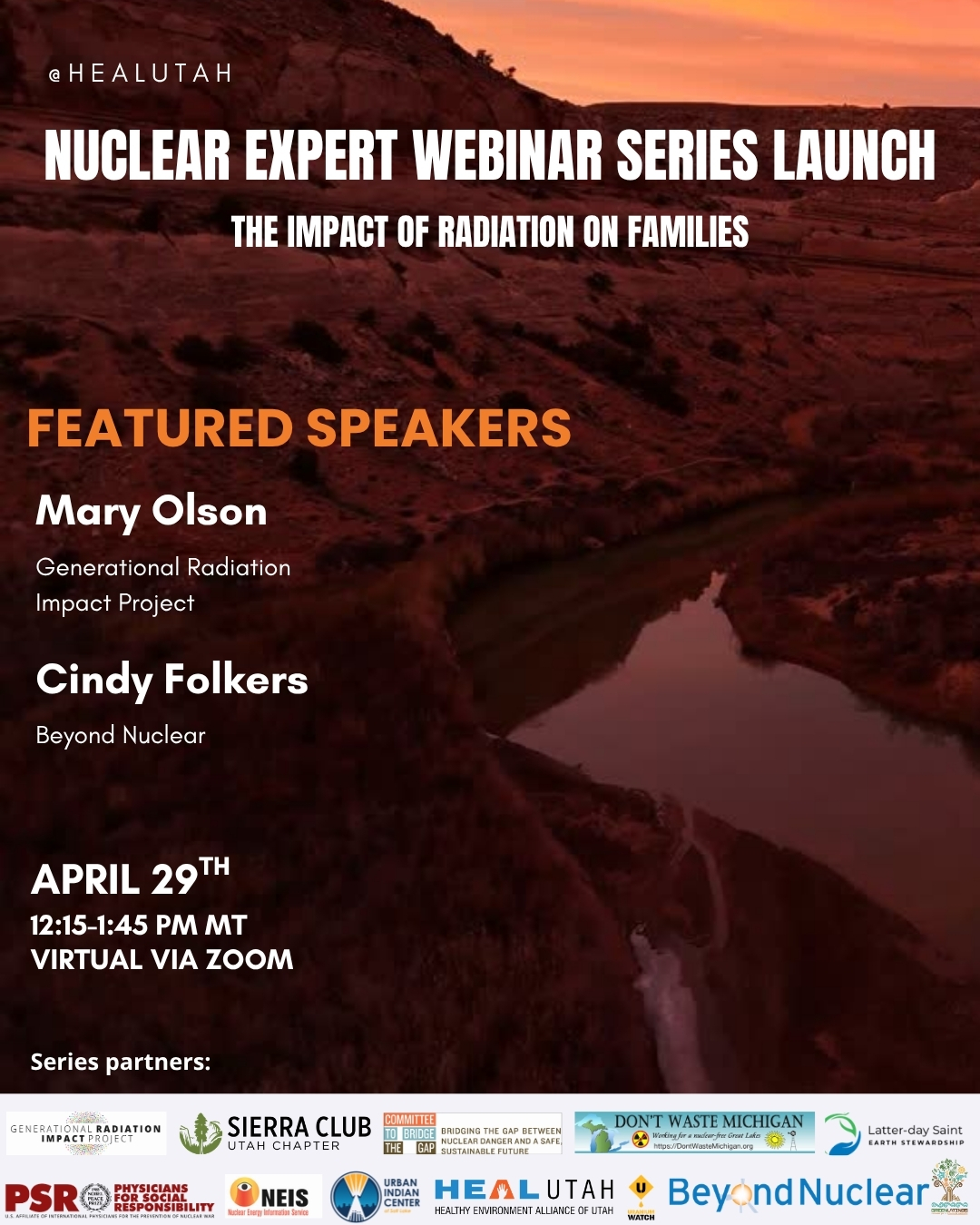
29 April – Nuclear Expert Webinar #1 – Radiation Impacts on Families with Mary Olson and Cindy Folkers
- 12:15 PM MT – 1:45 PM MT
- Location: Virtual – REGISTER TODAY

4 May -West Suburban Peace Coalition to discuss Iran war at May Educational Forum
Monday, May 4, 7:00 – 8:00 PM Central Standard Time
Title: : How Trump’s Narrative Tries to Shape the Reality of the War on Iran.
Contact Walt Zlotow, zlotow@hotmail.com 630 442 3045 for further information
14 May – online event From Bombs to Data Centres: the Face of Nuclear Colonialism
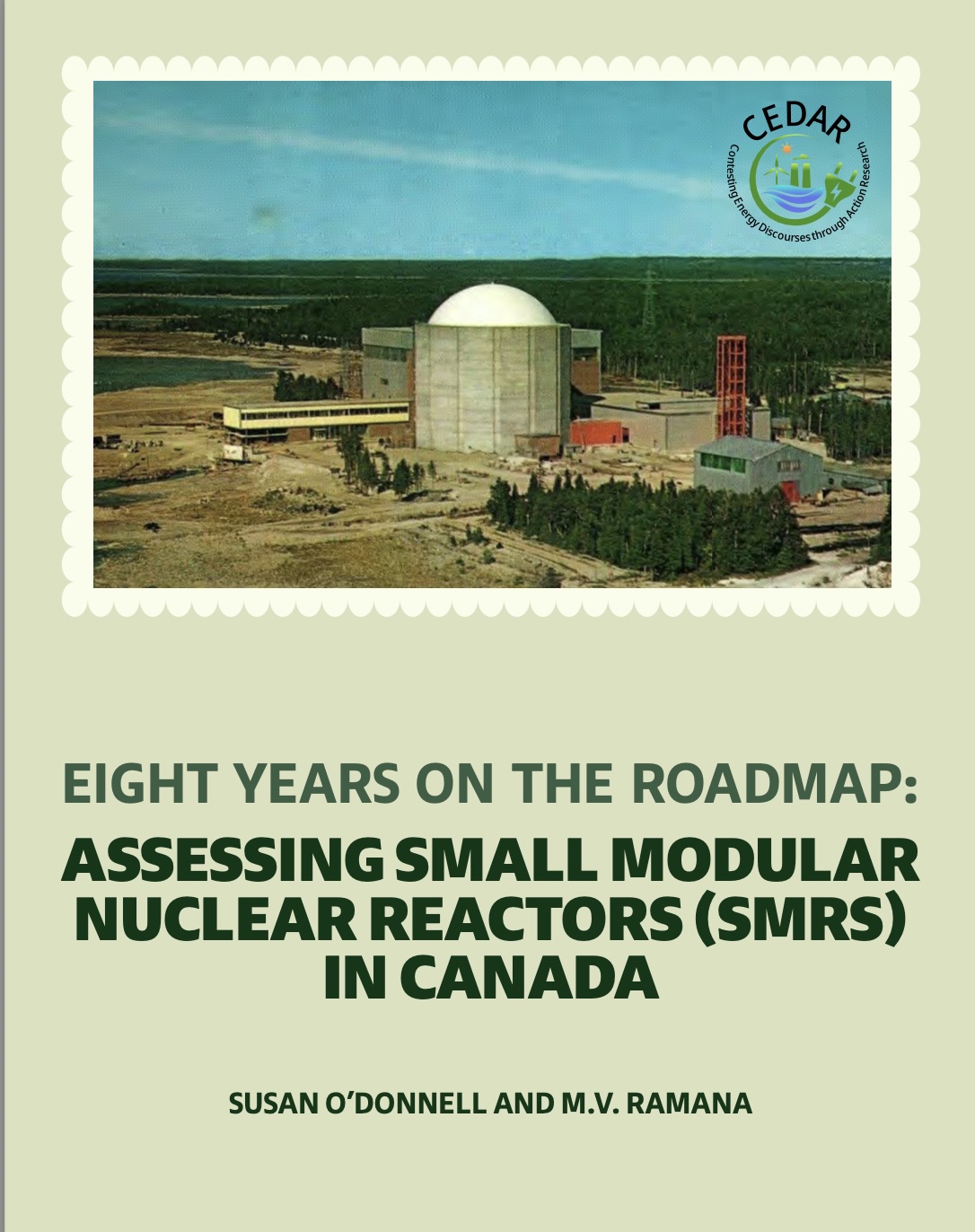

Pine Ridge Uranium is the real threat, not Tehran- Tell Burgum: Stop the Extraction.
Chernobyl: The Lost Tapes – A good documentary on Chernobyl on SBS available On Demand for the next 3 weeks– https://www.sbs.com.au/ondemand/tv-program/chernobyl-the-lost-tapes/2352741955560
To see nuclear-related stories in greater depth and intensity – go to https://nuclearinformation.wordpress.com
-
Archives
- April 2026 (346)
- March 2026 (251)
- February 2026 (268)
- January 2026 (308)
- December 2025 (358)
- November 2025 (359)
- October 2025 (376)
- September 2025 (257)
- August 2025 (319)
- July 2025 (230)
- June 2025 (348)
- May 2025 (261)
-
Categories
- 1
- 1 NUCLEAR ISSUES
- business and costs
- climate change
- culture and arts
- ENERGY
- environment
- health
- history
- indigenous issues
- Legal
- marketing of nuclear
- media
- opposition to nuclear
- PERSONAL STORIES
- politics
- politics international
- Religion and ethics
- safety
- secrets,lies and civil liberties
- spinbuster
- technology
- Uranium
- wastes
- weapons and war
- Women
- 2 WORLD
- ACTION
- AFRICA
- Atrocities
- AUSTRALIA
- Christina's notes
- Christina's themes
- culture and arts
- Events
- Fuk 2022
- Fuk 2023
- Fukushima 2017
- Fukushima 2018
- fukushima 2019
- Fukushima 2020
- Fukushima 2021
- general
- global warming
- Humour (God we need it)
- Nuclear
- RARE EARTHS
- Reference
- resources – print
- Resources -audiovicual
- Weekly Newsletter
- World
- World Nuclear
- YouTube
-
RSS
Entries RSS
Comments RSS
 nuclear-news