Independent news website advises Japan to embrace citizen-based news
Jan 23, 2014

The head of an independent news website who went on a reporting tour of Japan has advised the local media to embrace citizen-based reporting as a way of helping improve society. Amy Goodman is the executive director of Democracy Now!, a Web-based site that advocates citizen journalism and airs in over 1,000 countries worldwide.
Goodman went around the country and interviewed evacuees from the Fukushima region, who were forced to leave their homes after the nuclear meltdown at the Fukushima Daiichi plant in 2011. She also met with residents of Okinawa who have been protesting the huge U.S. military presence, the largest in the region, in their prefecture. She said there is a different kind of power that comes from reading about the personal experiences of those who are in the thick of the situation.
She shared her thoughts and experiences with the Foreign Correspondents’ Club of Japan in Tokyo on Monday. She talked to them about the philosophy of Democracy Now! which is to bring a different perspective on news events that are independent from news outlets that may be profit or politics driven. They focus on such topics like climate change, national security, secrecy, racial discrimination and other similar issues. They believe that because the “common people” are given a voice through citizen journalism, there is a greater possibility to get actual action and results.
She used the example of how the public outcry over safety issues in nuclear plants has kept all of the plants closed and reactors offline, despite the current administration’s plans to still push nuclear power. “Imagine the possibilities for the rest of the world if more voices were heard,” she said.
[ via Wall Street Journal ]
U.S. Nuclear Waste Disposal — Only One Company Cashing In
….However Tom Smith, an environment specialist who leads Public Citizen Texas, noted his concern about the location of a local aquifer that had once been mapped to run under the site. A more recent map showed that the aquifer ended before the site began, but Smith called into the credentials of this map, based on the fact that the chancellor for the Texas Tech University System was once a lobbyist for WCS….
by
Jan 22nd 2014 1:09PM
Updated Jan 22nd 2014 1:10PM
http://www.dailyfinance.com/2014/01/22/us-nuclear-waste-disposal-only-one-company-cashing/
This article was written by Oilprice.com — the leading provider of energy news in the world
Each year the U.S. spends an estimated $30 billion on nuclear waste disposal, yet due to the incredibly high barriers to entry into the market there are almost no companies that offer disposal services. Many organizations over the years have tried to establish low-level waste disposal sites, but only one site has actually opened, giving the controlling company, Waste Control Specialists (WCS) a monopoly of the market and allowing it to earn a substantial portion of the $30 billion.
Rodney Baltzer, president of WCS, explained to The New York Times that the company has dug a huge pit in Andrews Country, Texas, with others planned to be dug over the next few years, into which a base layer of nearly waterproof clay has been set. Then a layer of concrete was poured on top, reinforced with steel, and then three layers of plastic. The low-level nuclear waste is loaded into large concrete containers and then placed in the pit, which once full will be covered by a 40-foot thick cap of concrete, clay, and finally a special cap to prevent prairie dogs from burrowing into the area.
All this allows the waste to be buried for thousands of years in a safe manner, and WCS benefits by being able to sell the space inside from anywhere from $1,000 up to $10,000 per cubic foot.

The pit where the waste is stored.
Low-level nuclear waste is a term that includes contaminated tools, protective clothing, used-up filters for radioactive water, hospital and laboratory wastes, and also all debris (radioactive steel and concrete) from demolished nuclear power plants. Demand is expected to start to grow as more nuclear reactors around the country approach the end of their lives and demolition crews move in.
Japan’s Hosokawa, With Fukushima in Mind, Wants To Close All Nuclear Sites in Japan — Sure To Clash With PM Shinzo Abe
By Isabel Reynolds and Takashi Hirokawa
Bloomberg
23 January 2014
Extract..
“The myth that nuclear power is clean and safe has collapsed,” Hosokawa told reporters in Tokyo today. “We don’t even have a place to store nuclear waste. Without that, restarting the plants would be a crime against future generations.”
The mothballing of the nation’s 48 reactors after the Fukushima accident in March 2011 forced Japan to step up fuel imports, widening the current account deficit and hampering efforts to contain the world’s biggest debt. A victory in Tokyo, which produces about a fifth of Japan’s economic output, would hand Hosokawa a platform to oppose Abe’s efforts to restart the plants.
Abe’s Support
“With Hosokawa running, it puts nuclear power back on the agenda in a way they can’t take off,” said Steven Reed, professor of political science at Chuo University in Tokyo. Abe’s coalition will suffer if the nuclear topic becomes a singular issue in the Tokyo race, he said. “They can’t win that one.”
Abe visit: Indo-Japan nuclear pact unlikely
Extract
Given this sticky issue between negotiators from both sides, no nuclear agreement is expected to be signed during Abe’s visit from January 25 to 27, sources said. Singh met Abe in Tokyo in May last year, and again in Brunei in October on the sidelines of East Asia summit.
However, sources said there will be a reference to the “progress” made during negotiations on the proposed nuclear deal. On civil nuclear cooperation, the two PMs had confirmed in May that the two countries would accelerate negotiations for the early conclusion of a bilateral agreement.
Dame Barbara Judge – Japan has no choice! Nuclear or nothing!
“It will be very difficult to convince the public that nuclear is the solution.” http://theunhivedmind.com/wordpress3/2013/07/06/lady-barbara-judge-hired-to-help-tepco-rebuild-its-reputation-after-fukushima/
…She added: “I was amazed at how much work had been done to clear up the site and the high aspiration to make the site the safest in the world.””’ http://enenews.com/cnn-american-fukushima-daiichi-fantastic-amazed
….”Yes.” The Japanese have no choice, really, because the alternative—importing liquefied natural gas (LNG)—is far too expensive….
HOT: Uranium
http://www.equities.com/editors-desk/stocks/energy/energy-outlook-what-s-hot-in-2014
During a recent trip to London, I spoke with Lady Barbara Judge, chairman emeritus of the UK Atomic Agency and an advisor to TEPCO on the Fukushima nuclear disaster in Japan. I asked her point-blank whether Japan was willing to bring any nuclear reactors back online in 2014.
Her answer was an unequivocal “Yes.” The Japanese have no choice, really, because the alternative—importing liquefied natural gas (LNG)—is far too expensive.
Japan is the world’s largest importer of LNG and has had to double its imports since the Fukushima incident. For that privilege, the country pays some of the highest rates on the planet—almost four times more than what we pay for natural gas in North America.
South Korea also shut down its nuclear plants post-Fukushima to do inspections and maintenance upgrades, and it, too, has had to import a lot of LNG. Both countries are looking to restart their nuclear reactors so they can stop paying a fortune to foreign energy suppliers. When these countries restart their reactors, they’ll also restart the uranium market, so we expect uranium prices to begin to shake loose of the doldrums this year.
Another driver will be throwing the switch at ConverDyn, the US uranium facility that is slated to start converting natural U3O8 to reactor-ready fuel in late 2014 or early 2015.
We currently hold two solid uranium companies in the portfolio—one is a US-based small-cap producer (one of the very few in America), the other is the lowest-risk way to play the uranium market that I know of. Both, we believe, will take off in 2014 on the renewed interest in uranium and the associated stocks.
By Marin Katusa, Chief Energy Investment Strategist
– See more at: http://www.equities.com/editors-desk/stocks/energy/energy-outlook-what-s-hot-in-2014#sthash.s4u3WDuO.dpuf
Nuclear waste may be transferred to Hinkley Point A
01/22/2014

http://www.power-eng.com/articles/2014/01/nuclear-waste-may-be-transferred-to-hinkley-point-a.html
Under the Nuclear Decommissioning Authority (NDA), 144 tons of nuclear waste may be moved for process and storage from the Oldbury power station to Hinkley Point A between 2020 to 2022.
According to the NDA, using fewer locations would reduce costs and impacts of the environment.
Somerset councilors have been asked to deny the plans to move the nuclear waste. A report from Bridgwater Mercury stated that opponents do not believe that additional nuclear waste should be transferred to the area.
The NDA published the proposal in November. Comments on the proposal can be made until Jan. 31.
Hinkley Point A plans to build additional storage for new intermediate level waste, the report said.
Japanese Cooperatives Help Identify Radiation in Soil and Food Post-Fukushima
These cooperatives help the farmers by absorbing some of the safety test costs and also help market and store their produce that they are unable to sell immediately.
By Nicola Wong
Cooperatives are the backbone for Japan’s rural economy through their presence in agriculture, fisheries and even forestry. From rural to urban, farmer to consumer, and junior to elderly, cooperatives play a critical role throughout the Japanese economy. Since 1900, the Japan Agriculture Cooperative Group has been present in every village and nearly 100 percent of farm households join the cooperatives; every rural village has a co-op store and access to co-op financing and co-op insurance.

Japanese Farmer Photo credit: gullevek/Flickr
http://ecowatch.com/2014/01/22/japanese-cooperatives-radiation-soil-food-fukushima/
22 January 2014
In the aftermath of the Fukushima nuclear disaster, government officials have plans to remove radioactive materials from farmlands and forests until no radioactive cesium is detected in agricultural, livestock and forestry products. As mentioned in an article by Hrabrin Bachev and Fusao Ito from the Institute of Agricultural Economics, “throughout Japan, there are fears of radioactive contamination leaking into the food system, which has caused consumers to reject products.”
The Japan agriculture cooperative group has had a critical role in combating the challenges with the present system of safety inspection and has teamed up with Fukushima University to rebuild consumer confidence in local produce. Together, they have collaborated to launch a Soil Screening Project, which tests the levels of contamination in several different agriculture areas. This has helped farmers keep an eye on the levels of radioactive contamination on their land and produce.
A tomb for Fukushima nuclear power plant?
Scientific American: Fukushima will have to be entombed in sarcophagus if melted fuel in ‘bad enough’ situation — Radiation Expert: I think they’re going to put a fence around reactors and just watch site forever (VIDEO) http://enenews.com/scientific-american-fukushima-will-be-entombed-sarcophagus-melted-fuel-bad-situation-radiation-expert-theyre-going-put-fence-ar

Scientific American, Jan. 2014: If the melted nuclear fuel [at Fukushima Daiichi] proves bad enough […] it will have to be entombed for a number of years rather than removed, because of radiation risk from what is essentially a cooled shell of ceramic armor surrounding a highly radioactive core that remains hot and is still undergoing radioactive decay. Bottom line: until Fukushima has a sarcophagus entombing it or all the nuclear fuel has been carted away expect periodic reports of steam for years to come.
Professor Chris Busby, Scientific Secretary of the European Committee on Radiation Risk and member of UK Department of Health Committee Examining Radiation Risk for Internal Emitters, Jan. 6, 2014 (at 19:45 in): “I think they’re going to have to throw a fence around there and watch it forever. I don’t see what else they can do […] frankly I think there’s nothing much they can do now — the genies out of the bottle.”
See also: Nuclear Engineer: It’s a little alerting to see this many articles downplaying Fukushima health effects — You have to think, why is this happening? — Are they going to walk away from reactors and say sorry, there’s nothing we can do? (VIDEO)
Plight of Japanese nuclear workers
TV: Nuclear workers “stripped naked, soaked in sweat… gasping for air” — “My teeth started breaking off” — “It’s as if they are the living dead” — “Democracy destroyed in areas where nuclear power exists” (VIDEO)
Documentary “Nuclear Ginza” – Part 2
Subject: TV: Nuclear workers “stripped naked, soaked in sweat… gasping for air” — “My teeth started breaking off” — “It’s as if they are the living dead” — “Democracy destroyed in areas where nuclear power exists” (VIDEO)
Highly radioactive water inside and outside Fukushima nuclear reactor No 3
 Bloomberg: ‘Highly radioactive’ leak at Fukushima Unit 3 — NHK: Melted fuel coolant thought to be flowing from containment vessel for ‘unknown reason’ — 24 Million Bq/liter of strontium, other beta emitters (VIDEO) http://enenews.com/bloomberg-water-flowing-at-fukushima-unit-3-is-highly-radioactive-nhk-coolant-for-melted-fuel-leaking-for-unknown-reason-24000000-bqliter-of-strontium-other-beta-emitters-video
Bloomberg, Jan. 20, 2014: Highly radioactive water was detected inside the No. 3 reactor building at the Fukushima Dai-Ichi nuclear was detected inside the No. 3 reactor building at the Fukushima Dai-Ichi nuclear plant, Tepco said in yesterday’s statement. […] The latest leak threatens to undermine efforts by the company to distance itself from the March 2011 disaster […] Beta radiation levels of 24 million becquerels per liter were detected in the water from the first floor of the reactor building, the company said. The utility in December detected beta radiation levels of 57 million becquerels per liter in water beneath the same unit, [a Tepco spokesman] said. […] Ending radioactive water leaks along with groundwater and ocean contamination at the Fukushima plant may take more than five years, according to a report released by a government advisory body in December.
Asahi Shimbun,, Jan. 20, 2014: Radiation levels indicate the leak discovered within the stricken Fukushima No. 1 nuclear plant involves water used to cool melted nuclear fuel, [TEPCO] said Jan. 19. “The leaked water is highly likely to have come from the water that was already used to cool fuel rods, and not from leaked rainwater or cooling water (on its way to the reactor),” a TEPCO official said. […] The water sample contained 2.4 million becquerels per liter of radioactive cesium, while the reading for substances emitting beta rays, including strontium, reached 24 million becquerels per liter. […]
NHK,, Jan. 19, 2014: [TEPCO] says water leaking in the number 3 reactor building is most likely to have come from the containment vessel […] temperature is approximately 20 degrees Celsius [like] the water at the bottom of the reactor. TEPCO officials suspect the water for cooling melted fuel in the containment vessel is leaking for some unknown reason. They say they will continue their investigation to understand the condition of the melted fuel, as well as that of the containment vessel in their effort to find out how and where the water is leaking.
Watch NHK’s broadcast here
Nuclear power no good for climate change action: James Hansen wrong
 Nuclear power is set to disappoint, again: Kemp By John Kemp Jan 21 (Reuters)….“The authors of this letter (and other nuclear energy proponents) are on the wrong track,” the NRDC wrote in a withering response.
“Given its massive capital costs, technical complexity, and international security concerns, nuclear power is clearly not a practical alternative,” they added (“Response to an Open Letter on the Future of Nuclear Power”, Nov. 5, 2013).
The NRDC wants policymakers to focus on energy efficiency and renewables such as wind and solar, and not become distracted by dreams of cheap, plentiful and clean nuclear energy.
“The open letter suggests that it is the environmental community that is somehow holding back a nuclear power surge. Nothing could be further from the truth,” the NRDC complained.
“No one can or should close the door to the prospect of improved nuclear power technology. But in a world with constrained capital resources and an urgent need to find the lowest-cost ways to cut carbon pollution, nuclear power ranks far down the list of promising or likely solutions,” according to the council.
“A U.S. nuclear renaissance has failed to materialize, despite targeted federal subsidies, because of nuclear power’s high capital cost, long construction times, the lower demand for electricity due largely to improvements in energy efficiency, and competition from renewables,” the NRDC said…….http://in.reuters.com/article/2014/01/21/nuclear-power-climate-change-idINL5N0KV1V620140121
Iran nuclear accord a good step ahead for developing human rights


Achieving respect for human rights and transition to democracy is possible only in a peaceful framework, not through constantly threatening the regime for its survival
The Iran Nuclear Accord Is Good for Human Rights, The World Post Akbar Ganji, 21Jan 14 Iranian journalist and human rights activist Akbar Ganji is an Iranian journalist often referred to as Iran’s “pre-eminent political dissident” after spending 6 years in jail for his human rights activities.
The nuclear agreement between Iran and the P5+1 has provoked considerable debate. The proponents of diplomatic resolution of the standoff with Iran have praised the accord. Its opponents, such as Israel and Saudi Arabia, have harshly criticized it. As a former Iranian political prisoner who spent six years in the Islamic Republic’s jails and whose writings have been banned in Iran, I support the Geneva agreement. The question is, what is the goal of continuing the standoff with Iran, if not reaching an agreement with it?
If the goal is regime change in Iran, we must recall that 13 years of backbreaking sanctions did not topple Saddam Hussein’s regime in Iraq; the military invasion of 2003 did. The sanctions did kill at least half a million Iraqi children, and prompted the infamous statement by Madeleine Albright, President Bill Clinton’s secretary of state, that getting rid of Saddam Hussein was worth the huge cost in terms of human suffering in Iraq.
If the Iranian regime’s respect for human rights is made the necessary condition for a nuclear accord, there will be no agreement at all, because it will prove the claim by Supreme Leader Ayatollah Ali Khamenei that the real goal of the United State is regime change, and that the nuclear program and claims about Iran wanting to “wipe Israel off the map” are only excuses. So long as there is an external threat that endangers its survival, no regime will agree to reform itself and become democratic…….
Step-by-step nuclear accords, the lifting of economic sanctions and the improvement of the relations between Iran and Western powers will gradually remove the warlike and securitized environment from Iran, Continue reading
USA and EU join nations in Majuro Declaration to combat climate change and save Pacific islands
 Marshall Islands’ President Christopher Loeak says it’s not too late for climate action to save the Pacific http://www.abc.net.au/news/2014-01-21/an-climate-change/5210462 Is it too late to save low-lying Pacific nations from being lost forever because of rising sea levels?
The President of Marshall Islands, Christopher Loeak, doesn’t think so and he’s been on a relentless campaign to get the world to listen to his message.
He does concede time is running out, but has been encouraged by news that a number of nations recently announced they’d signed up to the Majuro Declarationto cut emissions. ”We were really happy that the United States agreed to join and also European Union and in the United States, Hawaii also has agreed to join,” he told Radio Australia.
Mexico is the latest country to sign on. Continue reading
New law to prevent nuclear utilities to charge customers in advance of nuclear build
Under proposed law, utilities could not charge for nuclear plants before they’re built The News Service of Florida, January 21, 2014 A House Democrat on Tuesday filed a proposed constitutional amendment that would prevent utilities from charging customers for new power plants until the facilities start operating.
The proposal (HJR 693) by Rep. Dwight Dudley, D-St. Petersburg, comes after Florida Power & Light and Duke Energy Florida have used a controversial 2006 law to collect hundreds of millions of dollars from customers for nuclear projects.
 The law has been controversial, at least in part, because there is no guarantee when – if ever – the new plants will start operating. Duke, for example, shelved plans to build two nuclear reactors in Levy County after collecting money for the project……http://www.ocala.com/article/20140121/WIRE/140129933?Title=Under-proposed-law-utilities-could-not-charge-for-nuclear-plants-before-they-re-built#gsc.tab=0
Arctic temperatures warmest in 44,000 years
Arctic warmth unprecedented in 44,000 years, reveals ancient moss
Using radiocarbon dating, new research in Geophysical Research Letters has calculated the age of relic moss samples that have been exposed by modern Arctic warming. Results show that temperatures in the Arctic are warmer than during any sustained period since the mosses were originally buried.
http://www.wiley.com/WileyCDA/PressRelease/pressReleaseId-110147.html
Radioactive water leak at Perry nuclear power plant
Perry nuclear power plant is leaking radioactive water, danger minimal Cleveland.com, 22 Jan 14 By John Funk, The Plain Dealer The Perry nuclear power plant is leaking tritium, a radioactive form of water with a half-life of more than 12 years.
The radioactive water has been found in groundwater at concentrations more than twice the federal drinking water limit outside of a building where the leak was discovered Monday…….http://www.cleveland.com/open/index.ssf/2014/01/perry_nuclear_power_plant_is_l.html
1 This Month
26 April – Chernobyl: Inside the Meltdown airs on National Geographic on Sunday 26th April from 4pm

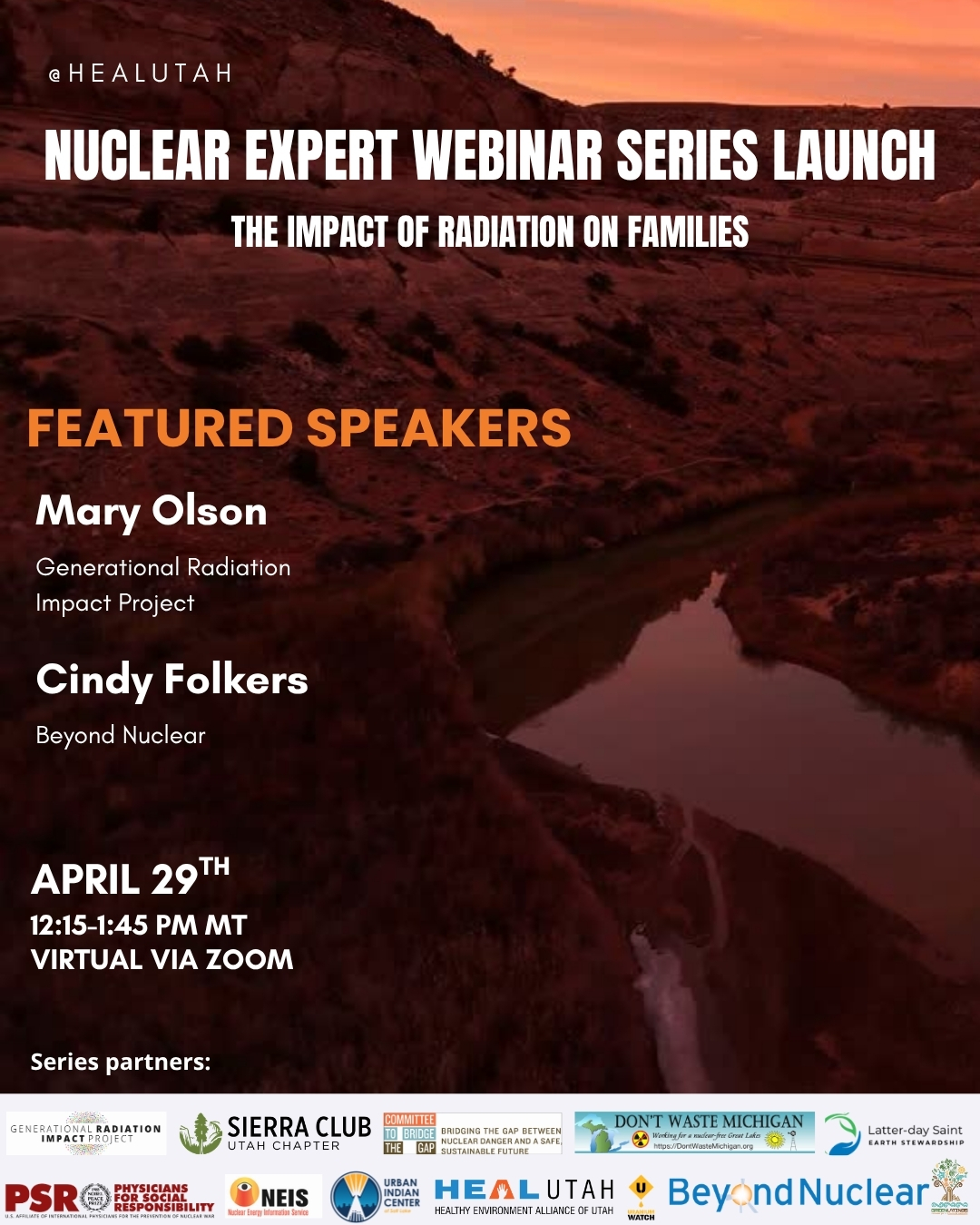
29 April – Nuclear Expert Webinar #1 – Radiation Impacts on Families with Mary Olson and Cindy Folkers
- 12:15 PM MT – 1:45 PM MT
- Location: Virtual – REGISTER TODAY

4 May -West Suburban Peace Coalition to discuss Iran war at May Educational Forum
Monday, May 4, 7:00 – 8:00 PM Central Standard Time
Title: : How Trump’s Narrative Tries to Shape the Reality of the War on Iran.
Contact Walt Zlotow, zlotow@hotmail.com 630 442 3045 for further information
14 May – online event From Bombs to Data Centres: the Face of Nuclear Colonialism
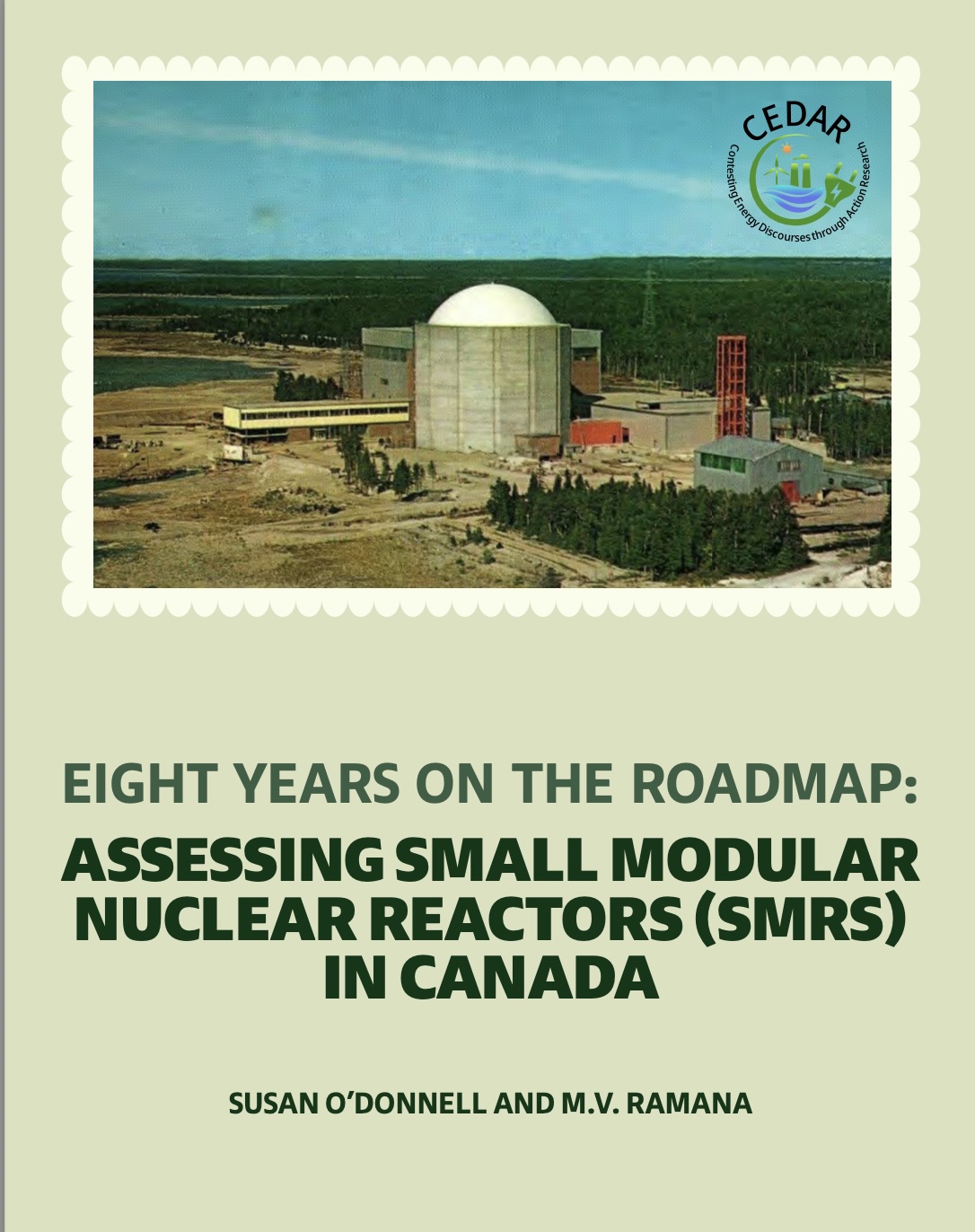

Pine Ridge Uranium is the real threat, not Tehran- Tell Burgum: Stop the Extraction.
Chernobyl: The Lost Tapes – A good documentary on Chernobyl on SBS available On Demand for the next 3 weeks– https://www.sbs.com.au/ondemand/tv-program/chernobyl-the-lost-tapes/2352741955560
To see nuclear-related stories in greater depth and intensity – go to https://nuclearinformation.wordpress.com
-
Archives
- April 2026 (288)
- March 2026 (251)
- February 2026 (268)
- January 2026 (308)
- December 2025 (358)
- November 2025 (359)
- October 2025 (376)
- September 2025 (257)
- August 2025 (319)
- July 2025 (230)
- June 2025 (348)
- May 2025 (261)
-
Categories
- 1
- 1 NUCLEAR ISSUES
- business and costs
- climate change
- culture and arts
- ENERGY
- environment
- health
- history
- indigenous issues
- Legal
- marketing of nuclear
- media
- opposition to nuclear
- PERSONAL STORIES
- politics
- politics international
- Religion and ethics
- safety
- secrets,lies and civil liberties
- spinbuster
- technology
- Uranium
- wastes
- weapons and war
- Women
- 2 WORLD
- ACTION
- AFRICA
- Atrocities
- AUSTRALIA
- Christina's notes
- Christina's themes
- culture and arts
- Events
- Fuk 2022
- Fuk 2023
- Fukushima 2017
- Fukushima 2018
- fukushima 2019
- Fukushima 2020
- Fukushima 2021
- general
- global warming
- Humour (God we need it)
- Nuclear
- RARE EARTHS
- Reference
- resources – print
- Resources -audiovicual
- Weekly Newsletter
- World
- World Nuclear
- YouTube
-
RSS
Entries RSS
Comments RSS
 nuclear-news