Insurance investment in the UK nuclear to corrupt science
The UK will use this corrupted science to answer the legal challenges from nuclear test veterans, effected Irish ciizens after Windscale disaster and Irish Sea pollution, The victims of the Japanese nuclear disaster and the forgotten victims of Chernobyl and Semi in Kazahkstan as well as others.

OpEd
Arclight2011
11 January 2014
Blimey! This has been one hell of a year on the blog here at nuclear-news.net .. Our subscribers have grown and the links and info is getting out.. And this can be seen all over the web.
Activists with different views are getting their voices and opinions heard. It wasnt always like this.
In the early stages of the Fukushima nuclear disaster, as the news organisations began shying away from the topic for a variety of reasons. The main driving force for this was the beleaguered nuclear and energy corporations and more importantly the insurance and investment sectors who had invested a staggering amount on the “new green hope” since the 2008 crash in the banking sector.
Using the PR companies like Ogilvy and Maher who also “smoothed” the Gulf Oil spill in the USA, the UK government used the very Biased science from their “nuclear professionals” from the Science Media Stable. I called many independent nuclear scientists and professionals in the UK and Europe and discovered that the Science Media Centre had blocked all of them for a number of years. The Science media centre has been recorded as taking its orders from the Department of Environment and climate change DECC (65 percent of whose budget goes on nuclear decommissioning).
To my astonishment as the years began to role by, I realised that UK science had been bought of by the corporations. This point on corrupted science and academia in the UK was mentioned by Noam Chomsky in his recent speech in the UK as well as a critique of the same by Chris Busby. I independently discovered this with the help of many astute blog researchers at enenews, exskf and fukushima diary to name but a few.
So, I decided that someone had to look at the science behind radiation myself. After seeing Yablakovs book on Chernobyl being attacked and false rumours of the book not being peer reviewed, so was not valued, I decided to research further. The Independent WHO (Allison Katz) did research on the Chernobyl Forums report (ICRP and IAEA) version of events and found many more peer reviewed articles in Yablakovs book than the international Chernobyl Forum.
After that I decided to find as much info on the nuclear effects and share far and wide.
And that brings me to nuclear-news.net . The news balance is still not even but people are starting to wake up it would seem. The nuclear industry workers have to come to blogs like this one to find out information about their own industry. More censorship is on the way too! In the UK under corporate law. In japan with the corporate secrecy law.
Tepco’s new name, its failure. its demands for workers to return compensation!
 Official: Tepco has failed at Fukushima, no progress made — Tepco to change name, start new business — Tepco demands nuclear workers return payments, anger passed tipping point http://enenews.com/tepco-to-change-name-and-start-new-business-official-tepco-has-failed-no-progress-made-with-leaks-or-reactors-tepco-demands-fukushima-workers-return-money-anger-has-breached-tipping-point
Mainichi,, Jan. 9, 2014: [TEPCO] plans to create a new brand name under which the utility will sell electricity in regions outside its own service area across the country as part of efforts to boost its earnings, it has been learned. […] TEPCO made the decision apparently because the beleaguered utility thought that clients could accept the service more easily if it were provided under a brand name other than TEPCO […] One of the main reasons why TEPCO is rushing to enter into the business of selling electricity throughout the country is that unless it boosts its earnings by increasing the number of its clients, it will not be able to secure enough funds to cover the costs of dealing with the Fukushima nuclear accident […]
Asahi Shimbun,, Jan. 10, 2014: Previously, these issues [i.e. Decommissioning, controlling radioactive water, land contaminated by radioactive fallout] were left entirely in the hands of [TEPCO] […] “The coming several years are crucial,” [Hajimu Yamana, the expected leader of government’s new decommissioning division] said. “If we crawl along as we have done, radioactive contamination will spread to groundwater and the sea. We have to pick up our pace.” […] TEPCO has failed to make progress in decommissioning the reactors and dealing with leaks of radioactive water at the plant. […]
Mainichi,, Jan. 10, 2014: The employee was among those who worked on the front lines immediately after the onset of the nuclear disaster in March 2011, Amid high levels of radiation, the employee and his colleagues trembled with fear as they worked to contain the unprecedented nuclear plant disaster […] he received a letter from TEPCO last spring asking him to return part of the compensation he received from the utility […] “That can’t be possible,” he thought, and read the letter over and over again. […] He shed tears of frustration and suffered sleepless nights. His coworkers had also received similar documents. A gloomy, depressing atmosphere prevailed, significantly undermining workers’ morale. […] suspension of compensation payouts to employees [started] in 2012 and the demand to return compensation in spring 2013 […]
Mainichi,i, Jan. 6, 2014: [TEPCO] is demanding that the families of employees return compensation […] In one case, a household is under pressure to return more than 30 million yen in damages from the company, raising concerns about future livelihoods. […] According to the sources, one TEPCO employee under pressure to return compensation was living with his wife and two children in a rented house in an area near the Fukushima No. 1 Nuclear Power Plant — where it has been deemed that evacuees are unable to return home in the foreseeable future with an annual radiation dosage of over 50 millisieverts. […]
Mainichi,, Jan. 4, 2014: [TEPCO employees] have been asked to return compensation payments, with the total amount exceeding 100 million yen. One employee said, “Around 100 employees have had their compensation payments stopped, and many of them have been asked to return money.” In October, TEPCO held a meeting in Fukushima Prefecture between company executives and employees. In an audio recording of the meeting obtained by the Mainichi Shimbun, an employee says, “Asking us to return the money sent to us has made everyone’s anger breach the tipping point.”
Nuclear weapons threatened by squirrels – worse than Sr Megan Rice!
How One Nuclear Missile Base Is Battling Ground Squirrels In Montana, squirrels have been tunneling under a base’s fences and setting off intruder alarms, prompting researchers to strengthen its defenses By Joseph Strombergsmithsonianmag.com August 30, 2013 Malmstrom Air Force Base, in Western Montana, is home to 150 Minuteman III intercontinental ballistic missiles, each tipped with a nuclear warhead. Each of these missiles is housed in an underground silo, staffed by two military personnel around the clock, and can be fired on a moment’s notice.
But in recent years, the base has been dealing with an enemy so relentless that they’ve been forced to call in outside help to defend against it. That fearsome enemy is a species of rodent known as Richardson’s ground squirrel.
Ground Squirrel Damage to Missile Silos
The squirrels, each about a foot long and 1-2 pounds, dig extensive underground tunnel networks (they’ve been known to excavate tunnel systems more than 30 feet in length). At Malmstrom, they’ve developed an annoying habit of tunneling underneath the fences that protect each nuclear missile’s silo……..The silos are scattered over some 23,000 square miles, so in some cases, simply traveling out to check out a false intruder alarm requires a substantial investment in time and resources.
Additionally, over time, the rodents have started damaging the base’s physical infrastructure. “They’re burrowing under foundations, undermining road beds and gnawing on cables,” Witmer says.
…… an underground barrier, they initially tested steel fabric (similar to steel wool) and a metal chain-link mesh, but they were no match for the squirrels. “They just tore through steel fabric, with their claws and ever-growing incisors, and squeezed right through the chain-link mesh,” Witmer says. http://www.smithsonianmag.com/science-nature/how-one-nuclear-missile-base-is-battling-ground-squirrels-3031350/#ixzz2qK5IQlFS
Japan’s ex-Prime Minister Koizumi denounces the lies of the nuclear industry
 “When experts say nuclear power generation is safe and doesn’t cost much and this is the only way to go if we want to stop relying on coal, well, we believe them. But they’ve been lying to us for years.
 ‘We’ve been lied to,’ said ex-Prime Minister Koizumi January 12, 2014 THE ASAHI SHIMBUN Maki Okubo senior staff writer .Koizumi has not granted a single request for an interview or TV appearance since he stepped down as prime minister. But there was a question I just had to ask him, face to face. The question was, “Why have you become such a vocal opponent of nuclear power generation now?”
He was a staunch proponent of nuclear power generation while he was prime minister. His argument was that if our country is to curb carbon dioxide emissions, we cannot do away with nuclear power generation……..
I felt convinced that Koizumi’s “defection” from the pro-nuke camp to the anti-nuke camp must also have been caused by some deeply emotional experience. So, I asked him, “What was the biggest reason for your change of heart?”
Looking me squarely in the eye, Koizumi launched into a voluble spiel.
“Denjiren (the Federation of Electric Power Companies of Japan) has been telling a pack of lies,” Continue reading
Tax-payer faced with the costs of UK government’s big nuclear blunder
The government certainly seems to have gone out of its way to make itself an easy prey for EDF. It produced a White Paper with unreasonably low cost estimates and a commitment to no subsidy. This reassured many of the critics and made it easy to get parliamentary approval…..
The government has been dragging its feet on energy conservation and renewables, thus making it easier to argue for  nuclear and further weakening its position in bargaining with EDF. Yet we can manage without it in the medium and long term [10] (Green Energies – 100% Renewable by 2050) and in the short term it has nothing to contribute because the earliest the new reactors at Hinkley Point can be producing their 3.2 GW of electricity is 2023.
UK Government’s Great Nuclear Blunder Permaculture Research Institute, January 9, 2014The UK Government weakened its bargaining position by dragging its feet on renewables, and is promising to pay for nuclear at exorbitant prices in projects that will not deliver.by Prof Peter Saunders
Nuclear at all cost to taxpayer When the UK government published the 2008 White Paper [1] announcing its intention to commission a new fleet of nuclear reactors, it portrayed nuclear power as an economical way of providing low-carbon electricity. We were highly sceptical of the figures on which this claim was based ([2] Nuclear Subsidies Largesse by other Names, SiS59) and the terms of the contract that has been agreed with Electricité de France (EDF) [3] confirm that the project will cost far more than was envisaged in the White Paper. Many of those who supported the decision on the basis of what they read in the White Paper are now having second thoughts. Continue reading
Nuclear agreement with Iran finalised: uranium stockpile to be dismantled
Iran to begin dismantling nuclear stockpile ‘next week’ Iran to start dismantling its disputed stockpile of enriched uranium next Monday after details of nuclear deal finalised. By Colin Freeman, Telegraph UK 12 Jan 2014Iran will start dismantling parts of its uranium stockpile next week after details of an interim agreement over its nuclear programme were finalised over the weekend.
In a move described as “concrete progress” by Washington, the small print of the deal has now been nailed down between Tehran and negotiators representing Russia, China and the Western powers.
Iran first announced that all outstanding disagreements had been resolved last Friday, but Washington’s confirmation came only on Sunday night. William Hague, Britain’s Foreign Secretary, hailed it as an important “first step”.
The process of dismantling Tehran’s stocks of enriched uranium, which the West suspects was intended for weapons use, will begin a week on Monday. There will also be more frequent inspections by international monitors.
“Beginning January 20th, Iran will for the first time start eliminating its stockpile of higher levels of enriched uranium and dismantling some of the infrastructure that makes such enrichment possible,” the White House said.
Under the agreement, which follows a landmark deal reached in November, Iran will halt parts of its enrichment program for six months in exchange for modest relief from the international sanctions that has crippled its economy.
On Sunday, President Obama also said he would veto plans to pile on yet more sanctions, which have been proposed by hawkish factions in Washington’s House of Representatives. They claim the existing deal takes too much pressure off the Iranians, and will reduce their incentives to abide by the deal.
A bipartisan sanctions bill tabled before Christmas has so far attracted 59 out of 100 senators as co-sponsors. A total of 67 would be needed to over-ride the presidential veto.
The six month moratorium agreed to by Iran is designed to give further negotiating time for a longer-lasting settlement……Baroness Ashton, the European Union’s foreign policy chief, said the different parties to the agreement would ask the United Nations’ nuclear watchdog to verify the deal finalised over the weekend.http://www.telegraph.co.uk/news/worldnews/middleeast/iran/10567105/Iran-to-begin-dismantling-nuclear-stockpile-next-week.html
South Korea’s nuclear scandals an obstacle to selling nukes to India
 The KEPCO chief Kim Joong-kyum had to resign in the wake of the scam. The probe into the scam was subsequently widened and 100 people, including top executives of its energy companies, were indicted for corruption.
 New Delhi wary of nuclear cooperation with Seoul Deccan Herald, Anirban Bhaumik, January 12, 2014, DHNS: A cagey New Delhi is unlikely to accede to Seoul’s request for a site to build atomic power plants during the forthcoming visit of the South Korean President Park Geun-hye to India.This is ostensibly because the East Asian country’s nuclear industry was recently hit by a scam, raising doubts about safety standards of its reactors. Park is set to arrive in New Delhi on Wednesday. This is going to be her maiden visit to India after taking over as the president of South Korea in February 2013.
New Delhi hopes that the South Korean president’s visit would “expand and strengthen” the bilateral strategic partnership. But no significant headway in the proposed civil nuclear cooperation is expected during the visit, as New Delhi is wary about allocating a site for South Korean reactors in India, particularly in the wake of the revelation last year that safety certificates for a large number of components procured by the state-owned Korean Electric Power Corporation (KEPCO) for its reactors over the previous nine years had been forged.
The KEPCO has since long been keen to export its APR-1400 reactors to India. The KEPCO and Nuclear Power Corporation of India Limited (NPCIL) have been engaged in a joint study of “licensibility and constructability” of APR-1400s in India since 2009……….
Rogue software update cause Malware attack on Japanese Nuclear Power Plant
by Wang Weion Thursday, January 09, 2014
http://thehackernews.com/2014/01/rogue-software-update-cause-malware_9.html
The most critical and worst target of a State-sponsored cyber-attacks could be Hospitals, Dams, Dykes and Nuclear power stations and this may cause military conflicts between countries.
According to Japan Today, The Monju nuclear power plant in Tsuruga, Japan was accidentally targeted by a malware on 2nd January, when a worker updated the system to the latest version of the video playback program. Monju Nuclear Plant is a sodium-cooled fast reactor, was launched in April 1994. It has not been operational for most of the past 20 years, after an accident in which a sodium leak caused a major fire. Employees over there are only left with a regular job of company’s paperwork and maintenance. So the malware could have stolen only some sensitive documents, emails, training records and employees’ data sheets. The Malware command-and-control server suspected to be from South Korea. The malware itself is not much sophisticated like Stuxnet or Duqu, but the unmanaged software update and patch management system can seriously lead to a critical cyber attack. Even being isolated from the Internet does not prevent you from being infected. One of the best examples of flawed Internal policies is Stuxnet, one of the most infamous pieces of malware ever created to destroy Iranian Nuclear plants and infected the systems through a USB stick only. Also in November, The Kaspersky revealed that Russian astronauts carried a removable device into space which infected systems on the space station.
http://thehackernews.com/2014/01/rogue-software-update-cause-malware_9.html
Fukushima I NPP: Data on Strontium in Water Hasn’t Been Published for 6 Months, and Will Not Be Published Until TEPCO Figures Out What’s Wrong
No other entity is allowed to take measurements of radioactive materials inside the plant. It has been TEPCO’s monopoly. It was less than two months ago that IAEA visited the plant and endorsed TEPCO’s method of measurement.
http://ex-skf.blogspot.co.uk/2014/01/fukushima-i-npp-data-on-strontium-in.html
9 January 2014
What’s worse is (as usual) TEPCO didn’t say anything until now.
What’s even worse is that TEPCO is not going to release the data until it fully investigates why the new results differ from the old results.
Nuclear Regulation Authority was openly expressing doubt about the data that came from TEPCO on radioactive materials measurement, and that was about 6 months ago.
From Yomiuri Shinbun (1/9/2014):
東電、ストロンチウム濃度公表せず…測定誤り?
TEPCO will not publish data on strontium density, measurement error?
東京電力は8日、福島第一原子力発電所の港湾や井戸で海水や地下水を採取して調べている放射性ストロンチウムの濃度について、「測定結果に誤りがある可能性があり、公表できない」と発表した。
TEPCO announced on January 8 that regarding the density of radioactive strontium in the sea water and groundwater whose samples are taken from the plant harbor and wells at Fukushima I Nuclear Power Plant, there is a possibility of errors in the measurement results and the results cannot be published.
海水などは定期的に採取して汚染状況を監視することになっており、放射性セシウムなどは毎週、濃度を分析して公表している。しかし、汚染水に含まれる主要 な放射性物質の一つであるストロンチウムは、毎月分析することになっているが、昨年6月に採取した海水などの分析結果を最後に、半年近くも公表していな かった。
Water samples are regularly collected to monitor contamination, and the density of radioactive cesium are measured and published every week. Strontium is supposed to be measured every month, but the result of measurement hasn’t been published for nearly a half year since the last one for the seawater samples taken in June last year.
東電によると、昨年夏まで使っていた装置の分析結果にばらつきがあり、信頼性に乏しかった。同9月に新たな装置を導入し、信頼性が向上したが、「旧装置と異なる分析結果になった原因を詳しく解明してから、新たな装置による結果を公表したい」と説明している。
According to TEPCO, the measurement results from an equipment used until the summer of 2013 were not consistent and not reliable. TEPCO switched to a new equipment in September and the reliability was enhanced. But TEPCO says, “We would like to investigate first why the new results differ from the old results, before we announce the new results from the new equipment.”
Curious to know what kind of “inconsistencies”?
According to TEPCO’s own words during the regular press conference on January 8 (well captured by this tweet from @jaikoman), the density of strontium – a beta nuclide – exceeded the density of all-beta, which is impossible.
No other entity is allowed to take measurements of radioactive materials inside the plant. It has been TEPCO’s monopoly. It was less than two months ago that IAEA visited the plant and endorsed TEPCO’s method of measurement.
Bohol earthquake victims’ lament: We’ve been forgotten
The quake released energy equivalent to 32 Hiroshima bombs.
http://manilatimes.net/bohol-earthquake-victims-lament-weve-been-forgotten/67046/
January 11, 2014 10:13 pm by Robertzon F. Ramirez Reporter
Victims of last year’s 7.2-magnitude earthquake in Bohol province bewailed what they felt was government neglect after public attention shifted to the relief operations following Super Typhoon Yolanda’s onslaught in Eastern Visayas.
“We feel forgotten here in Bohol,” Tagbilaran Bishop Leonardo Medroso said in an article posted on the Catholic Bishops’ Conference of the Philippines (CBCP) website.
The bishop likewise appealed to the laity to support the rebuilding of churches, whose proceeds will be given to earthquake victims who are still recuperating from the tragedy.
“We are [not only] rebuilding the churches, but [also] the spirit of our people,” he added.
Medroso thanked Manila Archbishop Luis Antonio Cardinal Tagle, who urged millions of Black Nazarene devotees to pray for the victims of calamities.
In October last year, at least 15 churches in Bohol province were destroyed or heavily damaged by the 7.2-magnitude earthquake that killed more than 200 people and injured close to 1,000.
The quake released energy equivalent to 32 Hiroshima bombs.
Several thousand Boholanos were still living in temporary shelters when Typhoon Yolanda tore across Central Visayas on November 7.
Since then the government’s relief and rebuilding efforts has shifted to the Yolanda-ravaged areas.
Highly irradiated fish caught near crippled Japan nuclear plant
January 11, 2014 8:16pm
Tokyo, Jan 11 (EFE).- Japanese authorities have detected radiation levels 124 times higher than the accepted limit in a fish caught in waters near the crippled Fukushima nuclear plant, the Asahi daily reported Saturday.
The government-affiliated Fisheries Research Agency said Friday that the black sea bream had 12,400 becquerels of radioactive cesium per kilogram, far above the maximum limit of 100 becquerels per kilogram allowed for foodstuffs.
The fish was caught on Nov. 17 at the mouth of the Niidagawa River in Iwaki, Fukushima prefecture, 37 kilometers (23 miles) from the Fukushima plant, which was battered by a powerful March 2011 earthquake and subsequent tsunami.
It was one of 37 black sea bream caught in and off Iwaki to study their radiation levels.
The agency said it would conduct further studies to determine when the fish was contaminated with such high levels of radioactive cesium.
Two other fish also had radiation levels that exceeded Japan’s food-safety standards, containing 426 becquerels per kilogram and 197 becquerels per kilo, respectively.
The readings of the other 34 black sea bream, a species that is no longer sold at fish markets in the affected region, showed levels of contamination below the accepted limit, the agency said.
Black sea bream fishing is currently restricted off the coasts of Fukushima, Miyagi and Ibaraki prefectures.
After the nuclear disaster, Japan lowered its ceiling for allowable cesium in foodstuffs from 500 becquerels per kilogram to 100 becquerels per kilo, or six times stricter than European Union standards.
In March of last year, a fish caught near the Fukushima plant had 740,000 becquerels of radioactive cesium per kilogram, the highest reading recorded since the nuclear disaster.
Defying Japan, Rancher Saves Fukushima’s Radioactive Cows
“I needed to find a new philosophy to keep on living,” said Mr. Yoshizawa, who is unmarried and lives alone on the ranch. “Then I realized, why is Japan being so meek in accepting what authorities are telling them? I decided to become the resistance.”
“Not all Japanese are passive,” Mr. Yoshizawa said. “My cows and I will show that there is still a chance for change.”

NAMIE, Japan — His may be one of the world’s more quixotic protests.
Angered by what he considers the Japanese government’s attempts to sweep away the inconvenient truths of the Fukushima nuclear disaster, Masami Yoshizawa has moved back to his ranch in the radioactive no-man’s land surrounding the devastated plant. He has no neighbors, but plenty of company: hundreds of abandoned cows he has vowed to protect from the government’s kill order.
A large bulldozer — meant to keep out agricultural officials — stands at the entrance to the newly renamed Ranch of Hope like a silent sentinel, guarding a driveway lined with bleached cattle bones and handwritten protest signs.
“Let the Cows of Hope Live!” says one. Another, written on a yellow-painted cow skull, declares: “Nuclear Rebellion!” Inside the now overcrowded ranch, bellowing cows spill from the overflowing cattle sheds into the well-worn pasture, and even trample the yard of the warmly lit farmhouse.
“These cows are living testimony to the human folly here in Fukushima,” said Mr. Yoshizawa, 59, a gruff but eloquent man with a history of protest against his government. “The government wants to kill them because it wants to erase what happened here, and lure Japan back to its pre-accident nuclear status quo. I am not going to let them.”
“I needed to find a new philosophy to keep on living,” said Mr. Yoshizawa, who is unmarried and lives alone on the ranch. “Then I realized, why is Japan being so meek in accepting what authorities are telling them? I decided to become the resistance.”
Mr. Yoshizawa is no sentimentalist — before the disaster, he raised cows for slaughter. But he says there is a difference between killing cows for food and killing them because, in their contaminated state, they are no longer useful. He believes the cows on his ranch, abandoned by him and other fleeing farmers after the accident, are as much victims as the 83,000 humans forced to abandon their homes and live outside the evacuation zone for two and a half years.
He is worried about his health. A dosage meter near the ranch house reads the equivalent of about 1.5 times the government-set level for evacuation. But he is more fearful that the country will forget about the triple meltdowns at the plant as Japan’s economy shows signs of long-awaited recovery and Tokyo excitedly prepares for the 2020 Olympics — suggesting his protest is as least as much a political statement, as a humanitarian one.
“If authorities say kill the cows,” he said, “then I resolved to do the opposite by saving them.”
The cows at the Ranch of Hope are what is left of a once-thriving beef industry in the towns around the plant.
Entire herds died of starvation in the weeks after the residents left. The cows that survived escaped their ranches to forage for food among the empty homes and streets, where they became traffic hazards for trucks shuttling workers and supplies to and from the stricken plant. Proclaiming the animals “walking accident debris,” officials from the Ministry of Agriculture ordered them to be rounded up and slaughtered, their bodies buried or burned along with other radioactive waste.
Outraged, Mr. Yoshizawa began returning to his ranch soon after to feed the remnants of the herd he had been tending. He eventually decided to return full time to turn the ranch into a haven for all of the area’s abandoned cows. Of the approximately 360 cows at his 80-acre spread, more than half are ones that others left behind.
Although he describes his protest in mainly political terms, his explanation for returning despite the possible danger is tinged with a hint of emotion. He describes his horror on visiting abandoned farms where he found rows of dead cows, their heads fallen into food troughs where they had waited to be fed. In one barn, a newborn calf hoarsely bawled next to its dead mother. He said his spur-of-the-moment decision to save the calf, which he named Ichigo, or Strawberry, was his inspiration for trying to save the others left behind.
He still searches the evacuation zone for the often emaciated survivors, which he often has to pull by their ears to get them to follow him home. He tries to dodge police roadblocks; it is technically illegal for anyone to live inside the evacuation zone. Nonetheless, he has been caught a half-dozen times and forced to sign prewritten statements of apology for entering the zone. He has done so, but only after crossing out the promises not to do it again.
Mr. Yoshizawa is no stranger to challenging authority, having protested against nuclear power before. But he says he felt particularly bitter after the Fukushima accident, which he fears could permanently ruin the ranch that he inherited from his father.
It does not help that his town, Namie, felt especially deceived by its leaders. After he heard the explosions at the plant, whose smokestacks and cranes are visible from his kitchen, he and many other townspeople ended up fleeing into the radioactive plume because the government did not disclose crucial information about the accident.
“I needed to find a new philosophy to keep on living,” said Mr. Yoshizawa, who is unmarried and lives alone on the ranch. “Then I realized, why is Japan being so meek in accepting what authorities are telling them? I decided to become the resistance.”
On a recent cold morning, Mr. Yoshizawa used a small bulldozer to carry bales of yellow rice stalks to feed the cows, about two to three times the number that he says his ranch can sustainably support. The cows, mostly a breed known as Japanese Black prized for its marbled wagyu-style beef, hungrily mooed as they jostled one another to get a mouthful.
Mr. Yoshizawa says one fear is running out of feed. With the oversized herd having already grazed his pastureland to stubble, he now relies on contributions of feed and money. Another worry is what living amid the contamination is doing to the cows, and to him.
A checkup soon after the accident showed high levels of radioactive cesium in his body, though he said the number had decreased over the last two years. He tries to keep his contamination as low as possible by using filtered water and buying food on trips out of the area.
The cows, however, are constantly ingesting radioactive materials that remain in the soil and grass; since most of the donated feed he receives is from the region, it, too, is contaminated.
Ten of the cows have developed small white spots on their heads and flanks that he thinks are a result of exposure to radiation. Experts said they had never seen such spots before, but they said other causes were also possible, including a fungal infection from the overcrowding.
Mr. Yoshizawa has attracted a small following of supporters, but has his critics, too, who say he is keeping the animals alive in less than humane conditions in order to make a political point.
“Looking at the over-concentration of animals, I personally don’t think this is very humanitarian,” said Manabu Fukumoto, a pathologist at the Institute of Development, Aging and Cancer at Tohoku University who studied the white spots.
Mr. Yoshizawa notes wryly that the cows are living much longer than they would have if they had been led off to slaughter.
For now, the local authorities have come up with a very Japanese solution to Mr. Yoshizawa’s defiance: turning a blind eye. Town officials in Namie deny knowledge of him or anyone else living inside the evacuation zone — despite the fact that they have restored electricity and telephone service to the ranch.
Mr. Yoshizawa does not make himself easy to ignore. He continues to appear in Japanese news media, maintains a blog with a live webcam of the ranch and holds occasional one-man protests in front of the headquarters of the plant’s operator, Tokyo Electric Power Co.
“Not all Japanese are passive,” Mr. Yoshizawa said. “My cows and I will show that there is still a chance for change.”
Toll of U.S. Sailors Devastated by Fukushima Radiation Continues to Climb
But with U.S. support, Japan has imposed a state secrets act severely restricting reliable news reporting from the Fukushima site.
So now we all live in the same kind of dark that enveloped the USS Reagan while its crew was immersed in their mission of mercy.
By Harvey Wasserman (about the author)
So many have come forward that the progress of their federal class action lawsuit has been delayed. Petitions are now circulating worldwide on their behalf at www.nukefree.org and elsewhere.
Bay area lawyer Charles Bonner says a re-filing will wait until early February to accommodate a constant influx of sailors from the aircraft carrier USS Ronald Reagan and other American ships.
Within a day of Fukushima One’s March 11, 2011, melt-down, American “first responders” were drenched in radioactive fallout. In the midst of a driving snow storm, sailors reported a cloud of warm air with a metallic taste that poured over the Reagan.
NRC proposes fine for Univ. of Michigan Radiation Safety Service
Details of the violations were not released.
ANN ARBOR, Michigan — The Nuclear Regulatory Commission is proposing a $3,500 fine against the University of Michigan Radiation Safety Service after a routine materials inspection turned up security-related violations.
The federal agency says the inspection conducted between last June and September looked at the use of licensed materials for medical applications, research and development.
Violations were found on the school’s Ann Arbor campus.
The Nuclear Regulatory Commission said in a release Friday that the university took “immediate corrective actions to restore compliance.”
Details of the violations were not released.
The school’s Radiation Safety Service website says it provides radiological safety training, professional guidance and technical support to implement an effective radiation safety program.
Unusual event declared at nuclear facility – Duke NPP
Posted: Jan 11, 2014 4:33 AM GMT
http://www.waff.com/story/24421967/unusual-event-declared-at-nuclear-facility
BRUNSWICK COUNTY, NC (WECT) – For the second straight day an emergency situation was declared at the Duke Energy Plant near Southport.
An unusual event was declared at the nuclear power plant because of a breaker issue. This occurred in the transformer yard where a breaker, like you would find in your home only much larger, tripped.
The event happened on the plant property and does not affect the public safety in anyway. The plant also maintained normal operation at the time of the event.
An unusual event is the lowest of 4 emergency classifications. It is used when the emergency doesn’t pose a threat to public safety, but requires notifying state authorities.
The plant continues to operate without issues and power output was not affected during the incident.
Investigation teams are still reviewing all information that caused the security arm to rise at the facility.
1 This Month
26 April – Chernobyl: Inside the Meltdown airs on National Geographic on Sunday 26th April from 4pm

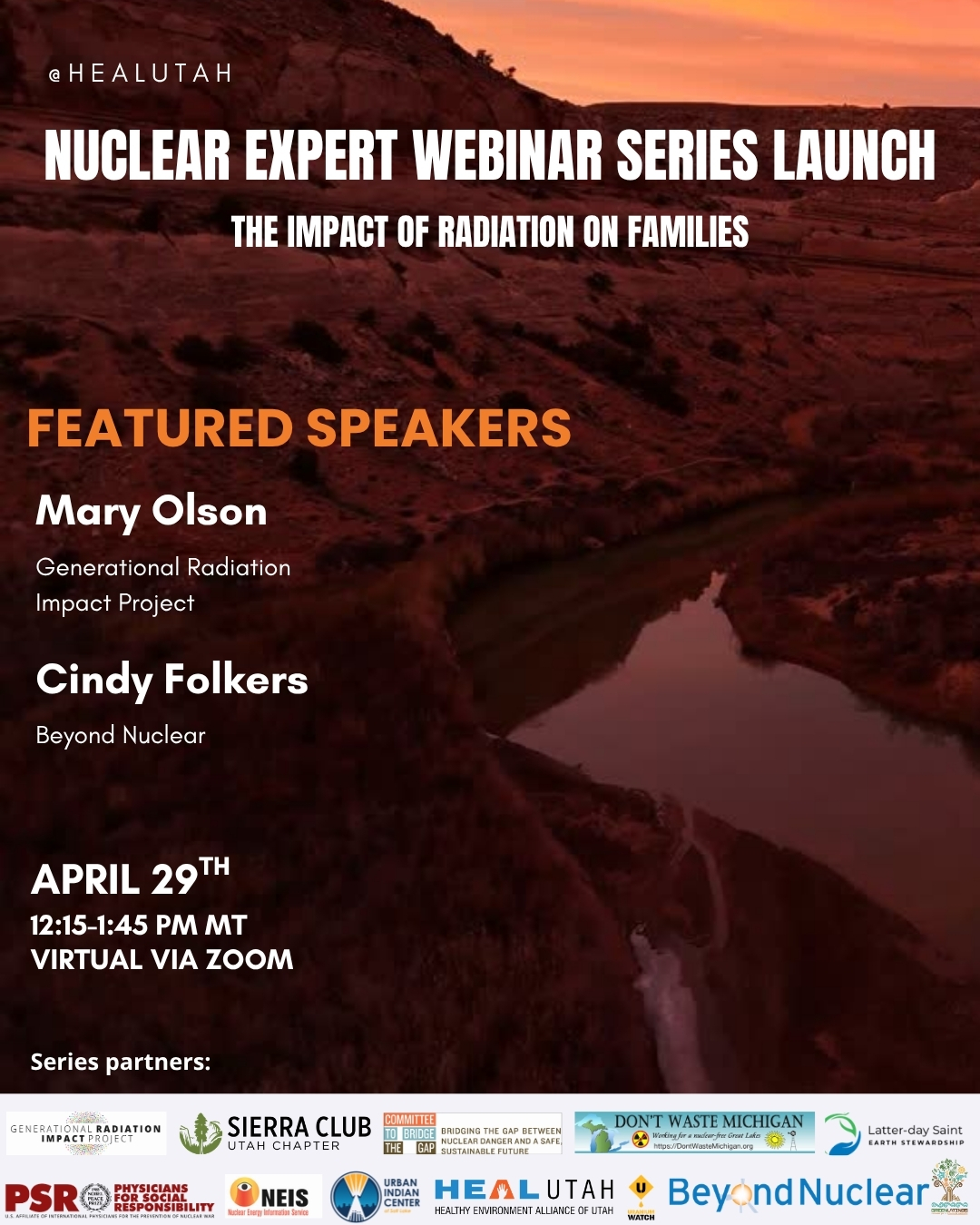
29 April – Nuclear Expert Webinar #1 – Radiation Impacts on Families with Mary Olson and Cindy Folkers
- 12:15 PM MT – 1:45 PM MT
- Location: Virtual – REGISTER TODAY

4 May -West Suburban Peace Coalition to discuss Iran war at May Educational Forum
Monday, May 4, 7:00 – 8:00 PM Central Standard Time
Title: : How Trump’s Narrative Tries to Shape the Reality of the War on Iran.
Contact Walt Zlotow, zlotow@hotmail.com 630 442 3045 for further information
14 May – online event From Bombs to Data Centres: the Face of Nuclear Colonialism
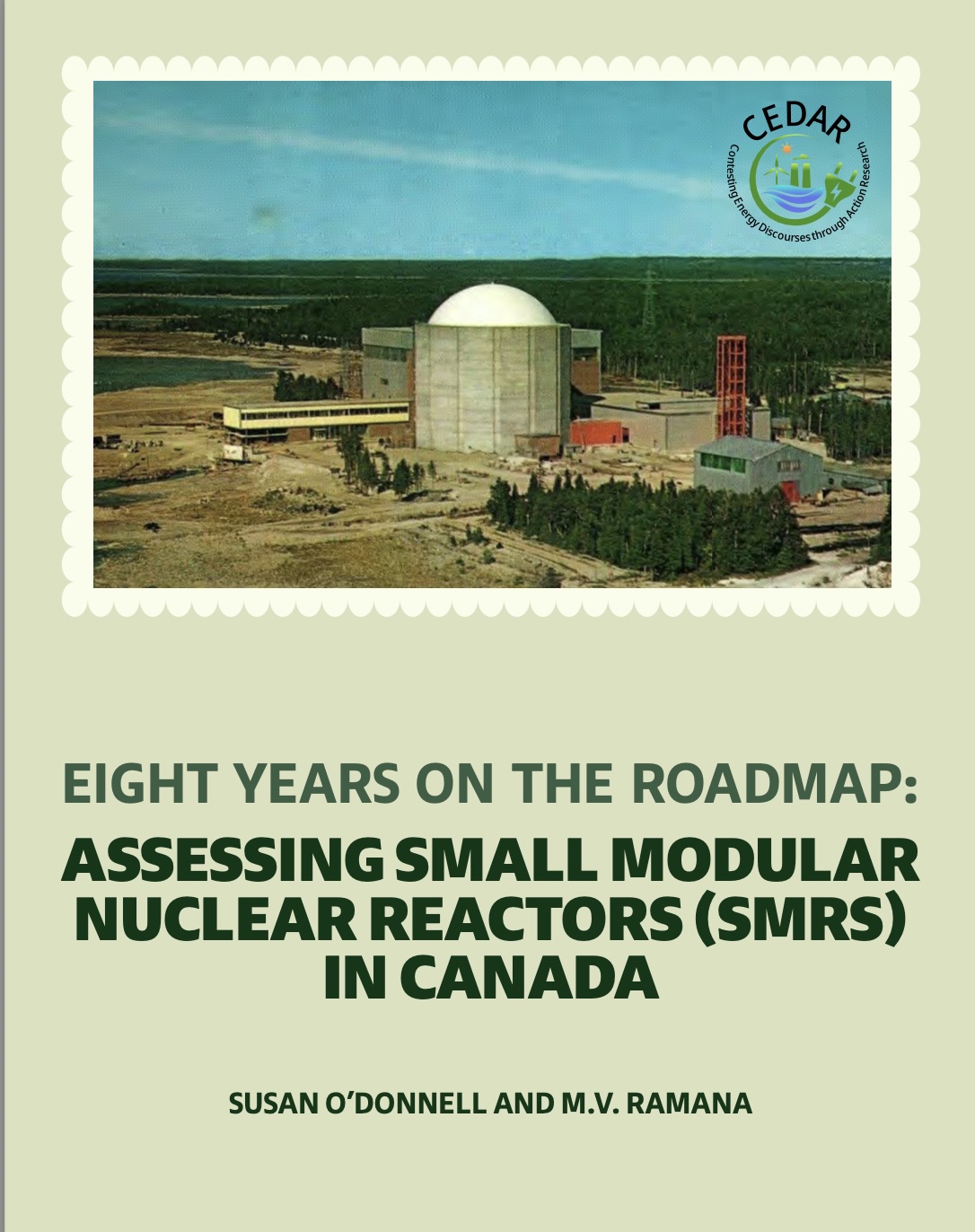

Pine Ridge Uranium is the real threat, not Tehran- Tell Burgum: Stop the Extraction.
Chernobyl: The Lost Tapes – A good documentary on Chernobyl on SBS available On Demand for the next 3 weeks– https://www.sbs.com.au/ondemand/tv-program/chernobyl-the-lost-tapes/2352741955560
To see nuclear-related stories in greater depth and intensity – go to https://nuclearinformation.wordpress.com
-
Archives
- April 2026 (288)
- March 2026 (251)
- February 2026 (268)
- January 2026 (308)
- December 2025 (358)
- November 2025 (359)
- October 2025 (376)
- September 2025 (257)
- August 2025 (319)
- July 2025 (230)
- June 2025 (348)
- May 2025 (261)
-
Categories
- 1
- 1 NUCLEAR ISSUES
- business and costs
- climate change
- culture and arts
- ENERGY
- environment
- health
- history
- indigenous issues
- Legal
- marketing of nuclear
- media
- opposition to nuclear
- PERSONAL STORIES
- politics
- politics international
- Religion and ethics
- safety
- secrets,lies and civil liberties
- spinbuster
- technology
- Uranium
- wastes
- weapons and war
- Women
- 2 WORLD
- ACTION
- AFRICA
- Atrocities
- AUSTRALIA
- Christina's notes
- Christina's themes
- culture and arts
- Events
- Fuk 2022
- Fuk 2023
- Fukushima 2017
- Fukushima 2018
- fukushima 2019
- Fukushima 2020
- Fukushima 2021
- general
- global warming
- Humour (God we need it)
- Nuclear
- RARE EARTHS
- Reference
- resources – print
- Resources -audiovicual
- Weekly Newsletter
- World
- World Nuclear
- YouTube
-
RSS
Entries RSS
Comments RSS
 nuclear-news