France’s 58 Nuclear Fuel Pools Must Be Safer, Watchdog Says
…When asked about the prospect of extensive work on EDF’s existing spent-fuel ponds, Chief Executive Officer Henri Proglio said he wasn’t aware of the “specifics.”
“It’s nothing serious in any case”…
Tara Patel
At each of Electricite de France SA (EDF)’s 58 nuclear reactors, there’s a water tank that stores spent atomic fuel rods, keeping them cool and trapping deadly radiation. The country’s atomic watchdog is concerned they aren’t safe enough.
“Significant safety improvements have to be made,” Thomas Houdre, director of reactors at Autorite de Surete Nucleaire, said in an interview, making the regulator’s strongest comments on the issue so far. “There is no way of managing an accident in a spent-fuel pool. We want the possibility of this happening to be practically eliminated.”
Since Japan’s Fukushima disaster in 2011, many countries have scrambled to reassess dangers posed by earthquakes, terrorists or worker mistakes. Electricite de France, or EDF, is being asked to review its cooling facilities and the world’s biggest atomic operator must resolve concerns of regulators in order to win permission to extend the lives of its reactors.
France’s pools are similar to those in any atomic nation: after searing hot rods are removed from the reactor, they’re submerged in water for as long as two years to cool their temperature and provide a shield from release of dangerous radiation emissions. Should their cooling systems falter and pools overheat, as happened in a Fukushima reactor pool, an unprecedented accident is possible.
“Regulators have focused on fuel ponds as part of the Fukushima follow-up,” according to Tony Roulstone, an atomic engineer who directs the University of Cambridge’s nuclear energy masters program in the U.K. “It’s not a bigger issue than before, it’s just getting more attention.”
Improve Safety
Measures to improve safety include more water supplies, better power supplies, more stored water and improved external protection, he said.
Safety concerns at spent-fuel ponds come amid debate about whether Paris-based EDF should be allowed to operate existing French reactors for as long as six decades.
The regulator is carrying out in-depth inspections on each of the utility’s generators after 30 years of operation to determine if they can function for another 10 to 40 years. EDF is already facing 55 billion euros ($74 billion) of spending through 2025 on safety and life extensions. Revising fuel-cooling systems would add to the bill.
“Existing pools have some deficiencies compared with third-generation reactors,” Houdre said in the interview, referring to the latest atomic generator model called the EPR, developed by Areva SA (AREVA) and being built in France, Finland, China and planned for the U.K.
Extensive Work
When asked about the prospect of extensive work on EDF’s existing spent-fuel ponds, Chief Executive Officer Henri Proglio said he wasn’t aware of the “specifics.”
“It’s nothing serious in any case” and won’t mean big changes to the 55 billion-euros earmarked by the utility for works on reactors, he said in an interview.
The French watchdog wants all EDF’s plants as close as possible to the EPR’s safety standards. On spent-fuel ponds, it has already rejected the utility’s proposals for post-Fukushima remedies and reactor-life extensions, according to Houdre.
“EDF’s first proposal was to make fuel storage more dense. To leave less space and pack more in,” Houdre said. “We think they haven’t explored all possible means to accommodate storage needs and improve storage safety.”
In the panic-stricken days of the Fukushima disaster meltdown, television images were beamed worldwide showing rescue workers desperately trying to replace lost water in the roof-top pools with helicopter drops and water cannons.
Safety Regulators
International safety regulators were concerned that water may boil away and trigger a nuclear chain reaction, fire and explosions, spewing radiation into the atmosphere. While the worst didn’t come to pass in Japan, safety reviews in many countries are trying to avoid worst-case scenarios.
The fuel pool at Fukushima’s unit 4, which came closest to boiling dry, is again grabbing headlines as workers began a delicate operation last month to remove the fuel rods. It will last until the end of next year.
At EDF, which uses about 1,200 tons of nuclear fuel a year, rods are used up after four or five years, when they are removed from reactor cores and stored for one or two years in pools adjacent to the reactor building, according to the utility’s website.
The initial cooling period allows for a lowering of radioactivity before the rods are transported for treatment at Areva’s facility at La Hague. Once there, the rods are stored in another pool for a decade. The water cools the rods and acts as a shield from gamma radiation.
Double Concrete
The fuel pond for the future EPR has added safety features and is more protected than at existing stations. The EPR’s pool is protected by a double concrete shield as well as two cooling systems, according to information on Areva’s website.
Last year, EDF declared a “major safety event” after it was discovered that fuel storage pools at the Cattenom plant lacked mouths on valves on cooling pipes that would prevent water from siphoning out. The utility began checking all pools and making changes which are scheduled to be completed by March.
1 Comment »
1 This Month
26 April – Chernobyl: Inside the Meltdown airs on National Geographic on Sunday 26th April from 4pm

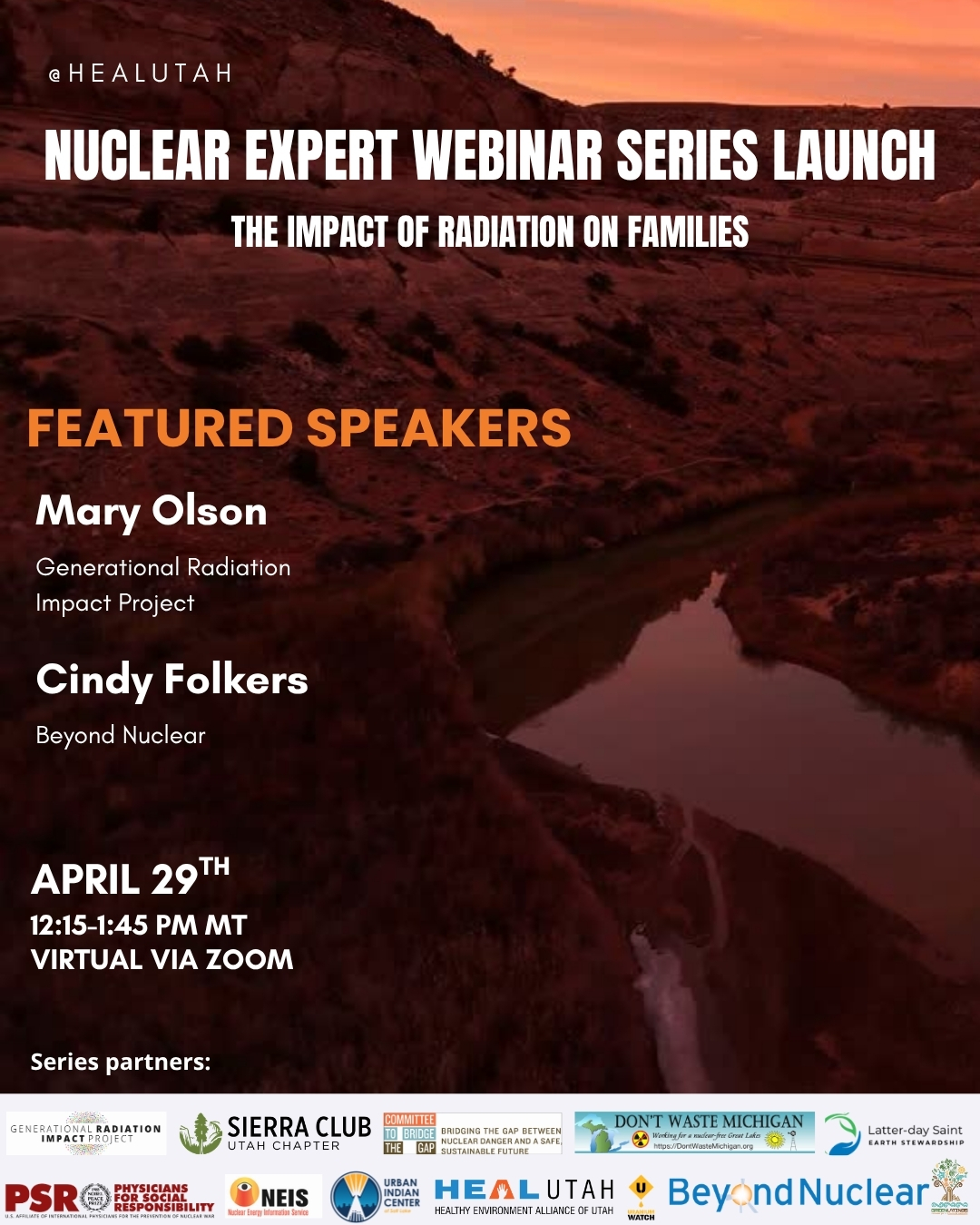
29 April – Nuclear Expert Webinar #1 – Radiation Impacts on Families with Mary Olson and Cindy Folkers
- 12:15 PM MT – 1:45 PM MT
- Location: Virtual – REGISTER TODAY

4 May -West Suburban Peace Coalition to discuss Iran war at May Educational Forum
Monday, May 4, 7:00 – 8:00 PM Central Standard Time
Title: : How Trump’s Narrative Tries to Shape the Reality of the War on Iran.
Contact Walt Zlotow, zlotow@hotmail.com 630 442 3045 for further information
14 May – online event From Bombs to Data Centres: the Face of Nuclear Colonialism

Pine Ridge Uranium is the real threat, not Tehran- Tell Burgum: Stop the Extraction.
Chernobyl: The Lost Tapes – A good documentary on Chernobyl on SBS available On Demand for the next 3 weeks– https://www.sbs.com.au/ondemand/tv-program/chernobyl-the-lost-tapes/2352741955560
To see nuclear-related stories in greater depth and intensity – go to https://nuclearinformation.wordpress.com
-
Archives
- April 2026 (305)
- March 2026 (251)
- February 2026 (268)
- January 2026 (308)
- December 2025 (358)
- November 2025 (359)
- October 2025 (376)
- September 2025 (257)
- August 2025 (319)
- July 2025 (230)
- June 2025 (348)
- May 2025 (261)
-
Categories
- 1
- 1 NUCLEAR ISSUES
- business and costs
- climate change
- culture and arts
- ENERGY
- environment
- health
- history
- indigenous issues
- Legal
- marketing of nuclear
- media
- opposition to nuclear
- PERSONAL STORIES
- politics
- politics international
- Religion and ethics
- safety
- secrets,lies and civil liberties
- spinbuster
- technology
- Uranium
- wastes
- weapons and war
- Women
- 2 WORLD
- ACTION
- AFRICA
- Atrocities
- AUSTRALIA
- Christina's notes
- Christina's themes
- culture and arts
- Events
- Fuk 2022
- Fuk 2023
- Fukushima 2017
- Fukushima 2018
- fukushima 2019
- Fukushima 2020
- Fukushima 2021
- general
- global warming
- Humour (God we need it)
- Nuclear
- RARE EARTHS
- Reference
- resources – print
- Resources -audiovicual
- Weekly Newsletter
- World
- World Nuclear
- YouTube
-
RSS
Entries RSS
Comments RSS
 nuclear-news
[…] France’s 58 Nuclear Fuel Pools Must Be Safer, Watchdog Says […]
Pingback by Nuclear reactors should operate for only 4o years! Anglais et Francais – Greenpeace « nuclear-news | February 27, 2014 |