Nuclear disaster monitoring drone could help Fukushima

http://eandt.theiet.org/news/2013/nov/radiation-drone.cfm
A large semi-autonomous drone capable of monitoring radiation levels after a release of nuclear material in the environment has been developed by Bristol University researchers.
The unmanned aerial system (UAV), called the ARM, can also measure surface temperature and provide photographs of the affected area.
The team believes the system could be very valuable in situations such as the Fukushima Daichi nuclear disaster.
“By using light-weight and low-cost unmanned aerial vehicles systems, we can immediately and remotely determine the spread and intensity of radiation following any such event,” said Dr Tom Scott, the project lead and Director of the Interface Analysis Centre in the University’s School of Physics. “The systems have sufficient in-built intelligence to deploy them following an incident and are effectively disposable if they become contaminated.”
Teams operating in high-risk areas would thus be able to obtain accurate information about the radiation levels they would be exposed to if they entered the area.
The project was jointly funded by the Engineering and Physical Sciences Research Council and nuclear decommissioning company Sellafield.At the same time, the Bristol University team has been developing a similar drone, capable of flying inside buildings.
The ARM drone was successfully tested in various weather conditions including snow, rain and high winds. The sensitivity of its sensors and accuracy of on-board computers was verified during field trials at radioactively contaminated sites in southwest Romania and naturally occurring anomaly site in Cornwall.
The University of Bristol is now working closely with the National Nuclear Laboratory to offer this technology to Japan as a helpful tool for environmental surveying during the on-going Fukishima clean-up operations and in the surround prefecture. The team is also developing a UAV mapping system and exploration algorithms for projects relating to the detection of buried explosives and depleted uranium ordnance.
2 Comments »
1 This Month
26 April – Chernobyl: Inside the Meltdown airs on National Geographic on Sunday 26th April from 4pm

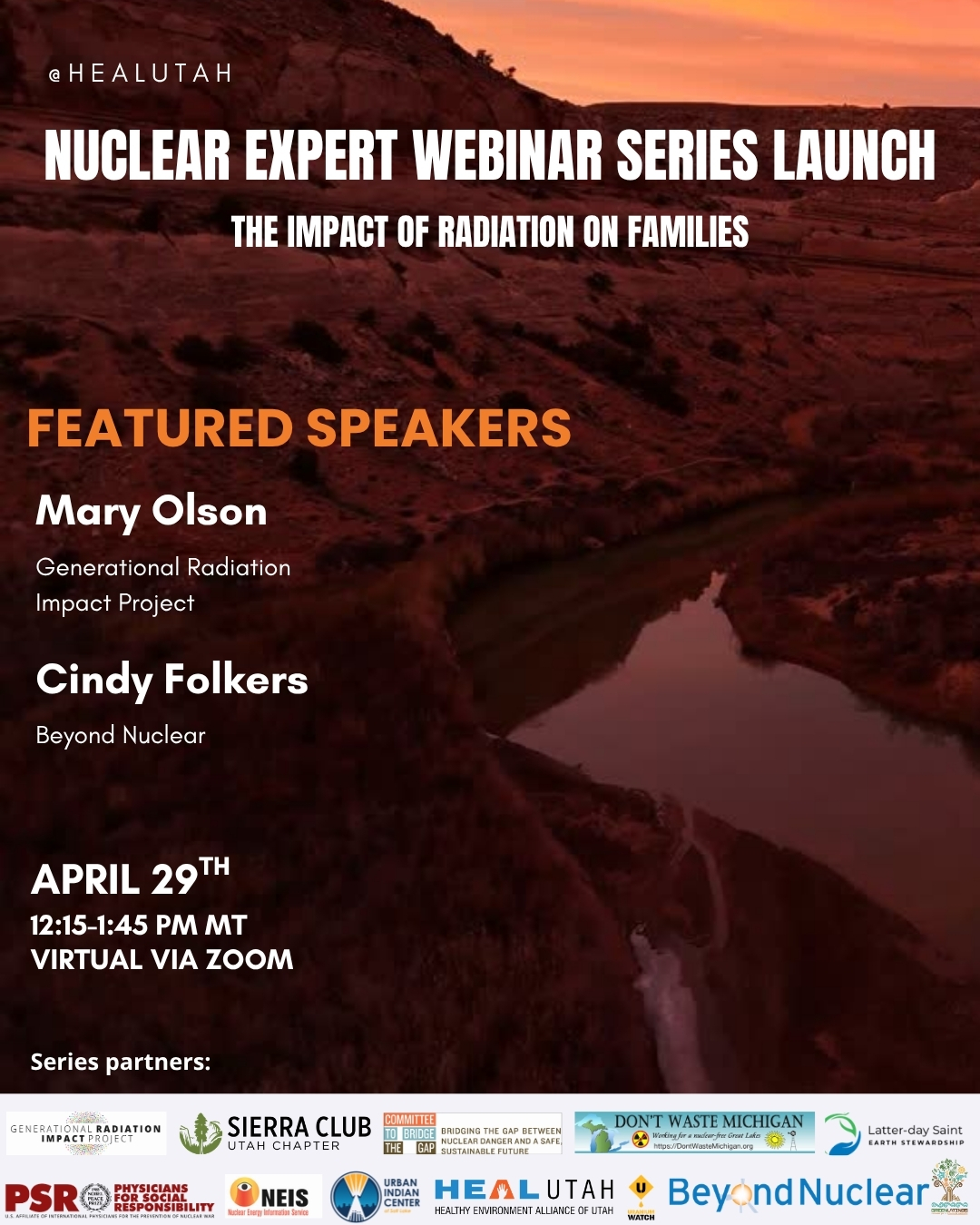
29 April – Nuclear Expert Webinar #1 – Radiation Impacts on Families with Mary Olson and Cindy Folkers
- 12:15 PM MT – 1:45 PM MT
- Location: Virtual – REGISTER TODAY

4 May -West Suburban Peace Coalition to discuss Iran war at May Educational Forum
Monday, May 4, 7:00 – 8:00 PM Central Standard Time
Title: : How Trump’s Narrative Tries to Shape the Reality of the War on Iran.
Contact Walt Zlotow, zlotow@hotmail.com 630 442 3045 for further information
14 May – online event From Bombs to Data Centres: the Face of Nuclear Colonialism

Pine Ridge Uranium is the real threat, not Tehran- Tell Burgum: Stop the Extraction.
Chernobyl: The Lost Tapes – A good documentary on Chernobyl on SBS available On Demand for the next 3 weeks– https://www.sbs.com.au/ondemand/tv-program/chernobyl-the-lost-tapes/2352741955560
To see nuclear-related stories in greater depth and intensity – go to https://nuclearinformation.wordpress.com
-
Archives
- April 2026 (327)
- March 2026 (251)
- February 2026 (268)
- January 2026 (308)
- December 2025 (358)
- November 2025 (359)
- October 2025 (376)
- September 2025 (257)
- August 2025 (319)
- July 2025 (230)
- June 2025 (348)
- May 2025 (261)
-
Categories
- 1
- 1 NUCLEAR ISSUES
- business and costs
- climate change
- culture and arts
- ENERGY
- environment
- health
- history
- indigenous issues
- Legal
- marketing of nuclear
- media
- opposition to nuclear
- PERSONAL STORIES
- politics
- politics international
- Religion and ethics
- safety
- secrets,lies and civil liberties
- spinbuster
- technology
- Uranium
- wastes
- weapons and war
- Women
- 2 WORLD
- ACTION
- AFRICA
- Atrocities
- AUSTRALIA
- Christina's notes
- Christina's themes
- culture and arts
- Events
- Fuk 2022
- Fuk 2023
- Fukushima 2017
- Fukushima 2018
- fukushima 2019
- Fukushima 2020
- Fukushima 2021
- general
- global warming
- Humour (God we need it)
- Nuclear
- RARE EARTHS
- Reference
- resources – print
- Resources -audiovicual
- Weekly Newsletter
- World
- World Nuclear
- YouTube
-
RSS
Entries RSS
Comments RSS
 nuclear-news
[…] Nuclear disaster monitoring drone could help Fukushima (nuclear-news.net) […]
[…] Nuclear disaster monitoring drone could help Fukushima (nuclear-news.net) […]