China – Fukushima contamination reaches the 20 degrees north latitude – IAEA are still silent on lack of monitoring.
Posted by Nuclear-news.net
Author- Arclight2011
25 August 2013

Below is a collection of links in which I try to describe the IAEA`s part in the lack of monitoring of radionuclides off the coast of Japan and some of the politics involved. The Iaea quickly became the central organisation that the pacific countries had to rely on for testing of radionuclides in water, fish and sediment in the whole of the Pacific.
I could find little results for measured data and China have commented that the pollution is continuing to spread in Japanese waters. China claims its territorial waters are apparently at an acceptable levels of contamination.
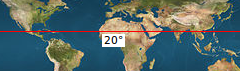
The Chinese report outlines the need for testing off the coast of Japan and states that the contamination has reached the 20 degrees north latitude (see diagram below )
The Chinese are working with the IAEA. The IAEA has done little research these past few years and now are just setting up groups and training to monitor the situation. This is the same thing they have been saying all along. As the IAEA speak but dont DO! There seems precious little testing being done and therefore little data for scientists to work with.
China has done testing but needs to save a much pressed Chinese Sea fisheries from collapse. The Chinese are starting to target bloggers who say “illegal thoughts ” concerning Fukushima et al. (link provided) to bring them in line with the censorship and harassment of their Japanese anti nuclear blogger counterparts.
It might be worth noting that China has a BIG investments in nuclear technology and have many trade deals with the west that are NOT impacted by other disputes (Japan for example). This is helped by the IAEA and those they represent.
China is developing a MOX plutonium fuel cycle and waste processing technology. So, China needs to play down the Daichi Number 3 MOX explosion and the contamination from MOX during normal processing operations. The IAEA is fully supporting China with their MOX future plans and covering up the MOX explosion so as to not burden the MOX industry with new Fukushima style regulations.
Despite Fukushima, IAEA sees global progress on nuclear safety

* IAEA says significant progress made on safety globally
* Greenpeace disagrees, says “not much” achieved
Aug 23 (Reuters) – Japan may be suffering persistent problems with its wrecked Fukushima nuclear power plant, but the U.N. atomic agency says “considerable progress” has been made globally in the past year to strengthen reactor safety.
http://uk.reuters.com/article/2013/08/23/nuclear-iaea-safety-idUKL6N0GO1BD20130823
Extracts from supporting articles
08-25-2013
China’s State Oceanic Administration says the seas within China’s territory have not been directly affected by radioactive pollutants from Japan’s Fukushima Nuclear Power Plant.
The State Oceanic Administration has been monitoring the open seas in the west Pacific Ocean for three consecutive years since the Fukushima Nuclear disaster.
Results show the impact of radioactive pollutants in the sea has expanded, with radioactive substances from the Fukushima plant detected at around 20 degrees north latitude. It says, however, that the pollutants do not threaten the safety of seas administered by China.
http://english.cntv.cn/program/newsupdate/20130825/102557.shtml
10 August 2013
An IAEA expert mission composed of 16 experts from eight countries and IAEA staff visited Fukushima Prefecture from July 21 to 26, to start implementation of the “Practical Arrangements,” a set of signed agreements between the Fukushima Prefecture and the IAEA.
The three-year assistance plan focuses on issues of remediation, decontamination and low level radioactive waste management in Fukushima Prefecture. The remediation efforts aim to prevent the movement of radioactive contaminants into waterways, the food chain or air.
The IAEA team also conferred with Fukushima Prefectural officials on the various steps taken for the safe management of materials that contain traces of low level of radioactive nuclides, assistance for temporary storages sites for possible contaminated materials. Another issue discussed during the meeting was to undertake a survey of radionuclides in the environment, including its absorption in soil, and the examination of status radionuclides in rivers and lakes and mapping surveys of the Fukushima Prefecture for dissemination to the public.
http://ens-newswire.com/2013/08/10/fukushimas-radioactive-leaks-to-the-pacific-alarm-japan/
Beijing August 25, 2013
The latest monitoring data showed that contaminated water areas have expanded, but no immediate impact on waters under the jurisdiction of China has been reported, the State Oceanic Administration (SOA) said.
The SOA has carried out regular monitoring of the Western Pacific Ocean since the Fukushima nuclear accident in March 2011, state-run Xinhua news agency reported today.
Follow-up monitoring will be continued to safeguard China’s maritime rights and interests, it said, adding monitoring can also be conducted in waters near Fukushima to detect new developments in the nuclear crisis.
The Fukushima Monitoring Database
(FMD) was developed by the IAEA’s Incident and Emergency Centre (IEC) to provide Member States and the public with a record of the results of radiological monitoring performed in Japan that was officially reported to the IAEA during the emergency phase of the accident, which ended on 16 December 2011 when Cold Shutdown Condition was achieved.
The IAEA would like to acknowledge the cooperation of the Government of Japan during the preparation of this database.
12 December 2012
A joint project between the IAEA, 20 IAEA Member States and three non-Member States from the Asia and Pacific region is building the analytical skills and infrastructure needed to monitor the region’s marine environment and derive high-quality data to evaluate the possible impact of the release of radioactivity.
Launched in July 2011, training events and expert missions have taken place at the IAEA’s Environment Laboratory in Monaco and in Korea during the first year of the project. Member States are gaining experience in using quality management systems for marine water radioactivity measurements, as well as on quality assurance and data management.
http://www.iaea.org/newscenter/news/2012/radioactiverelease.html
Prime minister Noda goes to China to cut a secret deal on nuclear in late 2011. does this ensure Chinese co-operation on matters concerning food contamination etc??
CNNC 18/11/11 China fuel cycle
The China Institute for Atomic Energy expects two 40t/yr MOX plants to be operating by about 2018.
http://www.world-nuclear.org/WNA/Publications/Weekly-Digest/Archive/Archive-2011/#.UhoU1rxx0nk
China says that its transparent in nuclear matters and this is supported by the IAEA. Yet we see worrying articles such as this:
Papers support move against online ‘rumour-mongers’
But some worry detentions by Beijing police just another attempt by central government to stifle online criticism
The China Youth Daily said it saw a “clear chain of cybercrime in the Erma case”, but said there were also concerns that some in authority might attack dissidents under the guise of “governance”. It said excessive intervention could negatively affect people’s freedom of expression.
The Beijing Times praised the arrests, saying the creation and spreading of internet rumours were out of control. It suggested that subversive elements were using hot-button issues to stir up, confuse and sometimes directly attack people. It cited the case of the man who helped create a public panic after claiming that radiation from Japan’s Fukushima nuclear power plant had polluted the sea around Shandong .
Excessive radiation found in sea organisms off China
Updated: 2011-08-24 21:12
(Xinhua)
BEIJING – Biological samples taken from waters in the Western Pacific region east of Fukushima, Japan show excessive radiation levels, said a statement from China’s State Oceanic Administration on Wednesday.
The administration suggested that government agencies intensify radiation testing of marine products from the targeted waters to protect public health in China.
According to the statement, the levels of strontium-90, a radioactive isotope of strontium, found in squids are 29 times higher than the average background level of samples taken from China’s coastal waters.
This indicates that these waters have been clearly affected by radioactive material that leaked from the crippled nuclear power plant in Fukushima during the massive earthquake and tsunami disaster on March 11, the statement said.
The samples were also found to contain argentum-110m and cesium-134, which are normally difficult to detect in biological samples from China’s coastal waters, the statement said.
The administration sent professional personnel to these waters in June to monitor the impact of the nuclear crisis at the Fukushima Daiichi nuclear power plant, as well as its impact on China’s territorial waters.
During their 18-day voyage ending on July 4, the monitoring team collected air, water and biological samples from the target areas.
Radioactive cesium-137 and strontium-90 have been detected in all water samples while cesium-134 has been found in 94 percent of the samples, the statement said.
The highest amounts of cesium-137 and strontium-90 in the samples were 300 times and 10 times, respectively, the amount of natural background radiation in China’s territorial waters.
http://www.chinadaily.com.cn/china/2011-08/24/content_13184472.htm
China conducts second radiation monitor in Pacific Ocean By Yu Jianbin (People’s Daily Overseas Edition),
December 29, 2011 Edited and translated by People’s Daily Online
A marine monitoring team dispatched by China’s State Oceanic Administration accomplished the mission of monitoring radiation in the western Pacific Ocean for the second time, and returned to Xiamen on Dec. 27 aboard the Xiangyanghong 09 scientific exploration ship.
The monitoring team sailed about 6,100 nautical miles in 30 days, and monitored radiation in the air over and water in the western Pacific Ocean as well as radiation-sensitive sea creatures, chemistry and dynamic environments.
This is the second time that China has monitored radiation in international waters in the western Pacific Ocean.
2 Comments »
1 This Month

4 May -West Suburban Peace Coalition to discuss Iran war at May Educational Forum
Monday, May 4, 7:00 – 8:00 PM Central Standard Time
Title: : How Trump’s Narrative Tries to Shape the Reality of the War on Iran.
Contact Walt Zlotow, zlotow@hotmail.com 630 442 3045 for further information
14 May – online event From Bombs to Data Centres: the Face of Nuclear Colonialism
To see nuclear-related stories in greater depth and intensity – go to https://nuclearinformation.wordpress.com
-
Archives
- May 2026 (37)
- April 2026 (356)
- March 2026 (251)
- February 2026 (268)
- January 2026 (308)
- December 2025 (358)
- November 2025 (359)
- October 2025 (376)
- September 2025 (257)
- August 2025 (319)
- July 2025 (230)
- June 2025 (348)
-
Categories
- 1
- 1 NUCLEAR ISSUES
- business and costs
- climate change
- culture and arts
- ENERGY
- environment
- health
- history
- indigenous issues
- Legal
- marketing of nuclear
- media
- opposition to nuclear
- PERSONAL STORIES
- politics
- politics international
- Religion and ethics
- safety
- secrets,lies and civil liberties
- spinbuster
- technology
- Uranium
- wastes
- weapons and war
- Women
- 2 WORLD
- ACTION
- AFRICA
- Atrocities
- AUSTRALIA
- Christina's notes
- Christina's themes
- culture and arts
- Events
- Fuk 2022
- Fuk 2023
- Fukushima 2017
- Fukushima 2018
- fukushima 2019
- Fukushima 2020
- Fukushima 2021
- general
- global warming
- Humour (God we need it)
- Nuclear
- RARE EARTHS
- Reference
- resources – print
- Resources -audiovicual
- Weekly Newsletter
- World
- World Nuclear
- YouTube
-
RSS
Entries RSS
Comments RSS
 nuclear-news
http://readersupportednews.org/pm-section/212-212/18947-fukushima-nuclear-disaster-we-are-all-on-the-beach
[…] China – Fukushima contamination reaches the 20 degrees north latitude – IAEA are still s… […]
Pingback by Fukushima Leak Worse than Thought, Decontamination a JOKE. Update 8/27/13 | Family Survival Protocol - Microcosm News | August 28, 2013 |